

Introduction
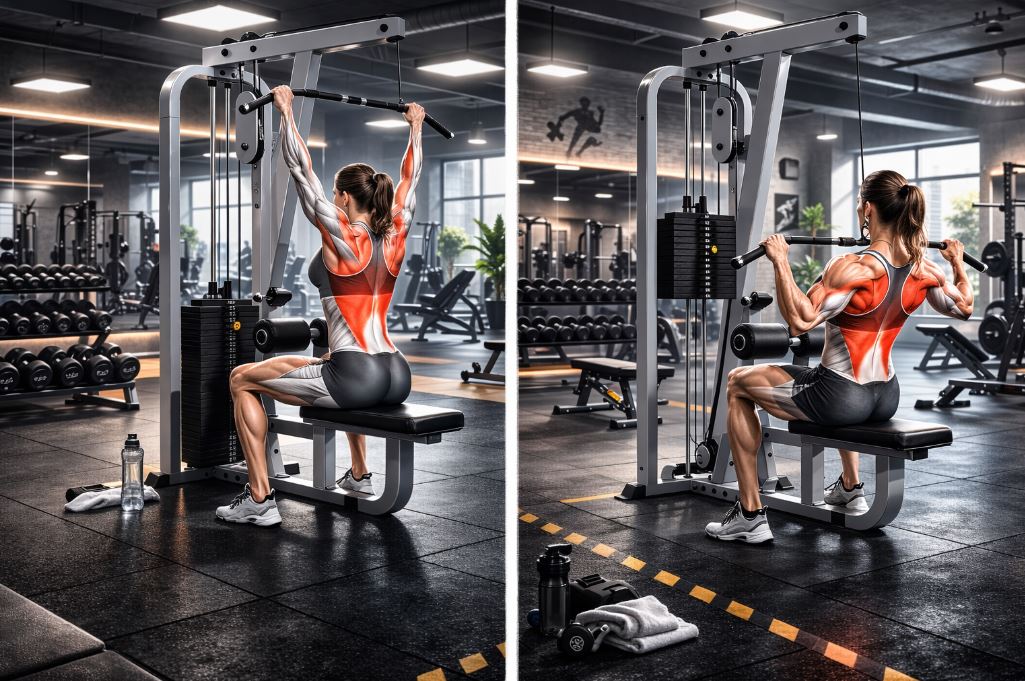
The wide-grip lat pulldown is one of the most effective machine-based exercises for developing back width, especially for lifters who lack the upper-body strength to perform strict pull-ups. Because the movement is performed on a cable machine with adjustable resistance, it allows gradual strength progression while maintaining high control and stability.
Unlike rowing variations that emphasize back thickness, the wide-grip lat pulldown targets the latissimus dorsi through shoulder adduction and extension in the frontal plane. The wide grip increases upper-lat emphasis and contributes to the visual “V-taper” physique — a key goal in bodybuilding and physique development.
For beginners, this exercise serves as a foundational progression toward pull-ups. For advanced lifters, it remains a powerful hypertrophy tool when executed with strict scapular control and controlled tempo.
Required Equipment
To perform the wide-grip lat pulldown correctly, you need:
- Lat pulldown machine (high pulley system)
- Long straight bar attachment
- Adjustable thigh pads for stabilization
Because the movement is machine-based, resistance is easily adjustable, making it suitable for progressive overload at all strength levels.
Other Names for Wide-Grip Lat Pulldown
This exercise may also be referred to as:
- Wide Overhand Lat Pulldown
- Wide-Grip Pulldown
- Front Lat Pulldown
- Wide-Grip Front Pulldown
- Pronated Lat Pulldown
Although terminology varies, the defining characteristic is the wide pronated grip combined with pulling the bar to the upper chest.
How to Perform the Wide-Grip Lat Pulldown
Starting Position (Setup)
Proper setup ensures a lat-dominant pull rather than excessive arm involvement.
- Sit facing the weight stack.
- Secure your knees firmly under the thigh pads.
- Place your feet flat on the floor.
- Grip the bar wider than shoulder-width using an overhand grip.
- Allow arms to extend fully overhead.
- Maintain a neutral spine with only a slight 5–10° lean backward.
- Keep your chest lifted and shoulders depressed.
Key cue: Think “chest up, shoulders down” before initiating the pull.
Execution (Movement Phase)
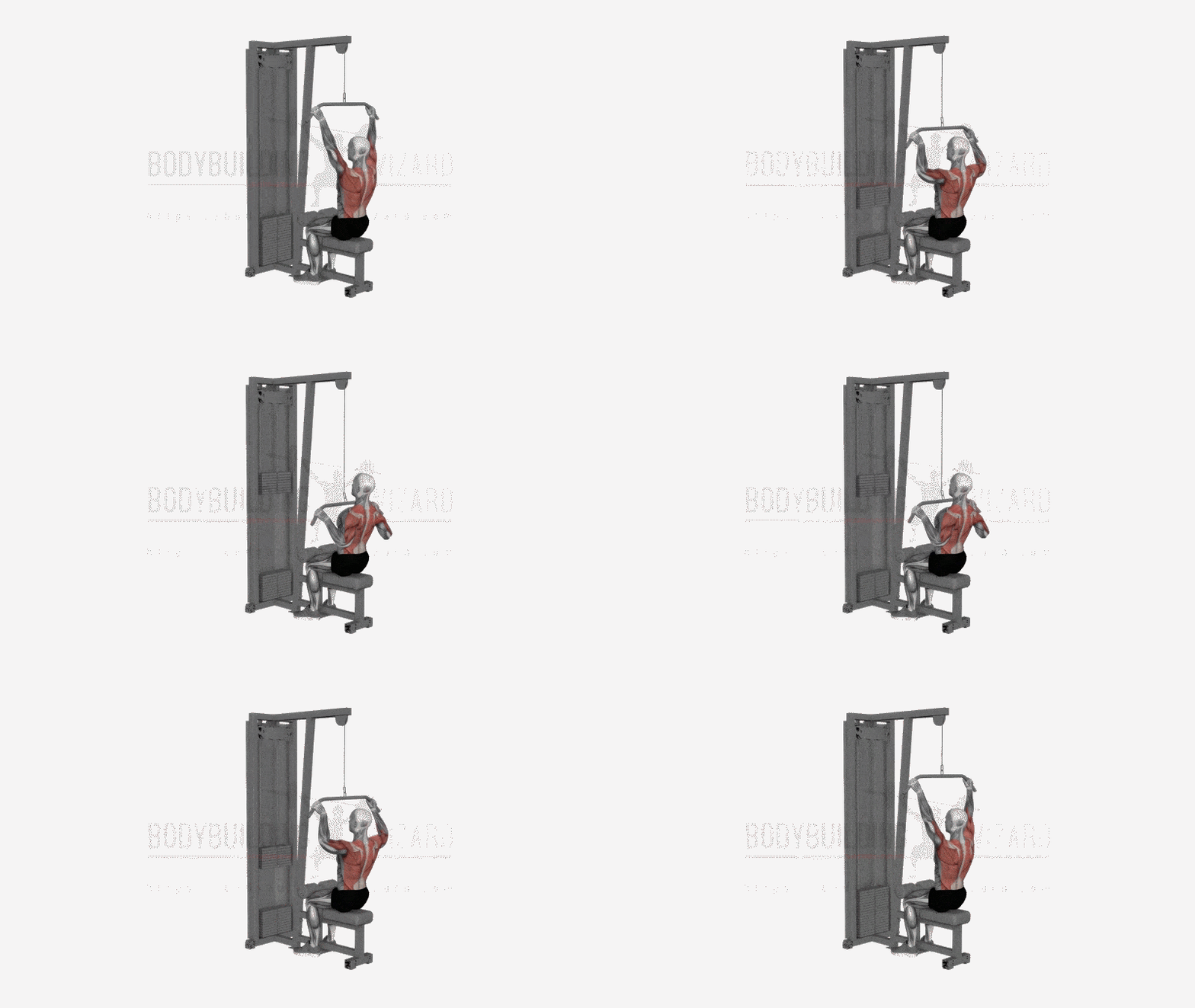
- Initiate the movement by pulling your shoulder blades down and back.
- Drive elbows downward toward your sides.
- Pull the bar in front of your face toward the upper chest (below the chin).
- At full contraction, elbows should be slightly behind your torso.
- Squeeze the lats for 1–2 seconds.
- Slowly return the bar to the starting position over 3–4 seconds.
The bar should travel vertically in front of the body — not behind the neck.
Technique Optimization Tips for the Wide-Grip Lat Pulldown
Here are key strategies to maximize back width activation and maintain joint safety during wide-grip lat pulldowns:
- Keep torso lean minimal (5–10° only).
- Avoid turning the movement into a row.
- Pull elbows down, not back.
- Do not swing or generate momentum.
- Maintain scapular depression throughout.
- Control the eccentric phase (3–4 seconds).
- Do not let the shoulders elevate at the top.
A useful mental cue: “Drive elbows into your back pockets.”
Mechanical Resistance Analysis
The wide-grip lat pulldown provides relatively constant tension due to cable resistance. Unlike pull-ups, where resistance decreases slightly near the top, the machine maintains load consistency throughout the movement.
The wide grip increases the shoulder abduction angle, slightly reducing biceps contribution and increasing upper-lat recruitment. However, going excessively wide reduces the range of motion and may stress the shoulders.
Compared to neutral or reverse grip variations, the wide-grip version emphasizes width more than thickness.
Common Mistakes
Even experienced lifters often compromise lat activation.
- Leaning too far backward
- Pulling the bar behind the neck
- Using excessive momentum
- Pulling to the stomach instead of the chest
- Allowing the shoulders to shrug upward
- Rising out of the seat
Behind-the-neck pulldowns increase stress on the shoulder external rotators and strain the cervical spine. Research has shown front pulldowns produce superior muscle activation with reduced injury risk.
Muscles Involved in Wide-Grip Lat Pulldown
Understanding muscle recruitment improves training precision.
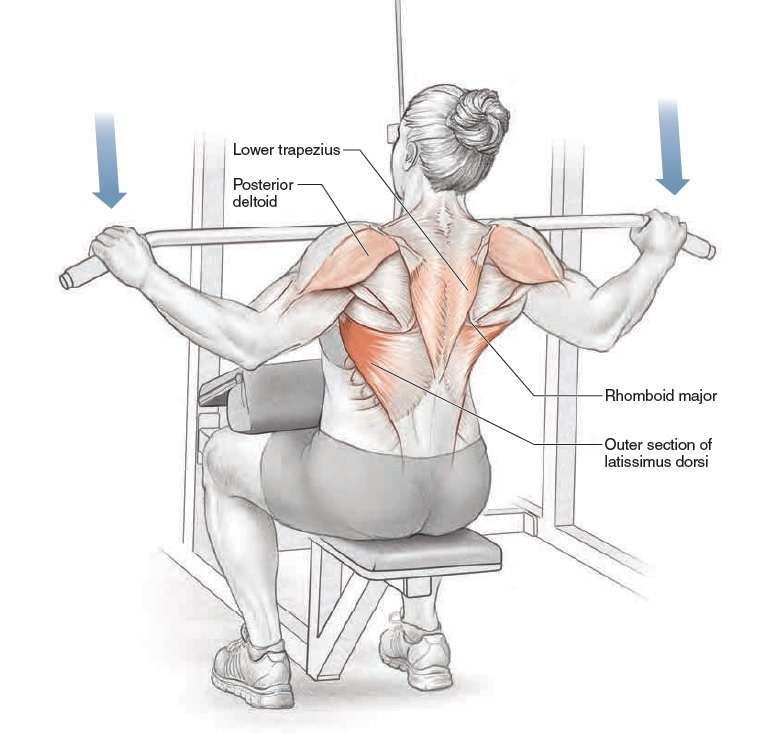
MAIN MUSCLES:
Latissimus dorsi, teres major
SECONDARY MUSCLES:
Rhomboids, middle trapezius, posterior deltoid
ASSISTING MUSCLES:
Biceps brachii (short & long head), brachialis, brachioradialis
ANTAGONISTS:
Pectoralis major (upper fibers), anterior deltoid
Wide-Grip Lat Pulldown Pros and Cons
The wide-grip lat pulldown is one of the most popular vertical pulling exercises for back development, but, like any movement, it has both advantages and limitations that should be understood before programming it strategically.
Advantages
- Excellent for building back width
A wide, pronated grip increases upper-lats recruitment and helps create the visual V-taper effect that defines a wide back. When performed with proper scapular depression, it strongly stimulates the outer lat fibers. - Adjustable resistance for all levels
Unlike pull-ups, resistance can be precisely modified. This makes the exercise suitable for beginners, building strength, and advanced lifters targeting hypertrophy with controlled loads. - Safer than heavy pull-ups for beginners
Because the body is stabilized and resistance is adjustable, joint stress is generally lower compared to struggling through poorly controlled pull-ups. - Easy to progressively overload
Increasing weight in small increments is simple with a machine stack, making progressive overload systematic and measurable. - Controlled movement pattern
The guided cable path allows lifters to focus on muscle contraction and tempo rather than on balance and stabilization. - An effective stepping stone toward pull-ups
It builds the foundational vertical pulling strength necessary to eventually perform strict bodyweight pull-ups.
Potential Drawbacks
Despite its benefits, the wide-grip lat pulldown is not without limitations.
- Less core activation than pull-ups
Because the body is seated and stabilized, the core and hip musculature are less engaged than in free-hanging pull-ups. - Easy to cheat with torso lean
Many lifters excessively lean backward and turn the exercise into a row, reducing lat emphasis and increasing upper-back dominance. - An overly wide grip can stress the shoulders
Excessive grip width reduces range of motion and may increase shoulder joint stress without improving lat activation. - Machine-dependent
The exercise requires specific equipment, limiting its availability in minimalist or home gym setups.
Many lifters believe that going as wide as possible automatically builds a wider back. In reality, excessively wide grips reduce range of motion and often decrease lat activation.
I’ve consistently found that a grip just slightly wider than shoulder-width, combined with strict scapular control and a slow eccentric, produces far better hypertrophy results than ego-driven wide pulling.
Wide-Grip Lat Pulldown Variations
Small grip adjustments, attachment changes, or pulling angles significantly alter muscle recruitment patterns, mechanical advantage, and overall training emphasis. Understanding these differences allows you to target either back width or thickness more strategically.
Reverse-Grip (Underhand) Lat Pulldown
This variation uses a narrow underhand grip, similar to a chin-up. The shoulder position shifts into greater extension, increasing activation of the lower latissimus dorsi fibers and the biceps brachii. Because of a stronger elbow flexor contribution, most lifters can handle heavier loads. While the wide-grip version emphasizes width, the reverse grip tends to build more depth and thickness in the mid-back.
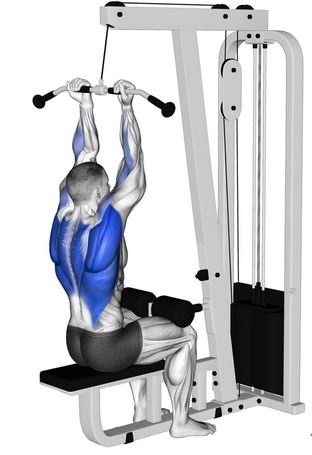
Neutral-Grip Lat Pulldown (Parallel Handles / Triangle Attachment)
Using a neutral grip places the shoulders in a mechanically stronger and more joint-friendly position. This often allows the lifter to use heavier resistance with better scapular depression control. The movement tends to distribute stress more evenly across the lats and mid-back, making it an excellent hybrid for both width and thickness development.
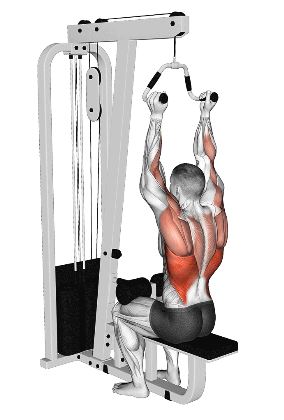
Behind-the-Neck Lat Pulldown
In this variation, the bar is pulled behind the head toward the upper trapezius. Although once popular in bodybuilding circles, research has shown that the traditional front pulldown produces equal or superior lat activation with lower injury risk. Pulling behind the neck places the shoulders in excessive external rotation and increases stress on the cervical spine and shoulder joint. For most lifters, the front pulldown is the safer and more effective option.

Single-Arm Lat Pulldown
Performing the movement unilaterally increases anti-rotational core activation and improves mind–muscle connection. It also helps correct strength imbalances between sides and allows a greater focus on scapular control. This variation is especially useful for lifters struggling with asymmetrical lat development.
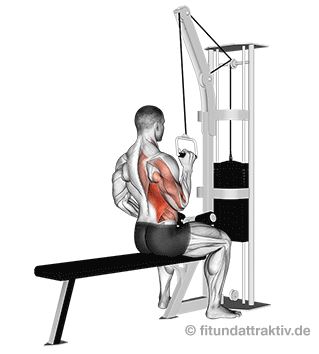
Parallel Bar Handle (Wide Neutral Grip)
Some machines offer wide parallel handles instead of a straight bar. This setup maintains the same vertical pulling pattern while slightly reducing shoulder stress and improving wrist comfort. It preserves lat emphasis while improving joint alignment.
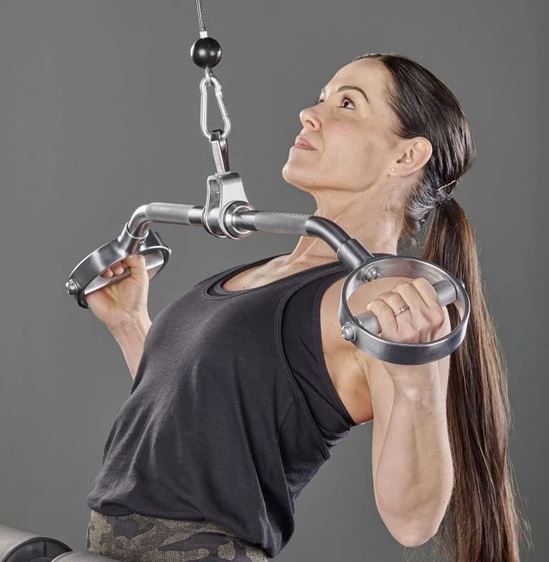
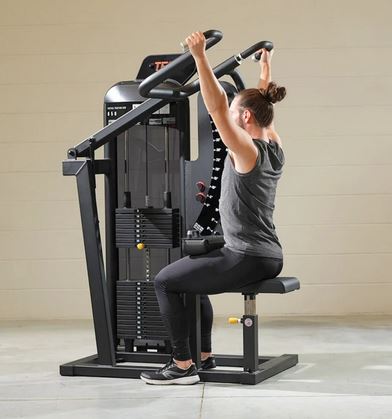
Vertical Traction Machine
Plate-loaded vertical traction machines replicate the pulldown movement in a fixed path, often allowing heavier loads with reduced stabilization demands. These machines can be useful for pure hypertrophy work but offer less neuromuscular control than cable-based pulldowns.
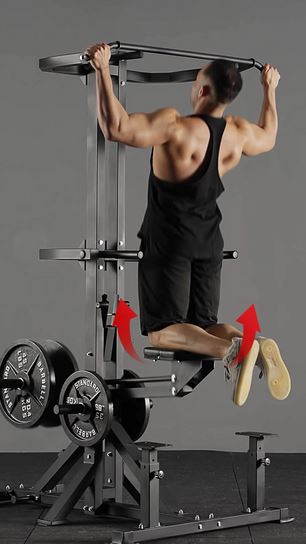
Assisted Pull-Up (Functional Progression)
Although technically a separate exercise, assisted pull-ups serve as a direct progression from lat pulldowns. They introduce full-body stabilization while still allowing adjustable assistance, bridging the gap toward strict bodyweight pull-ups.
Alternative Exercises for Back Width (Vertical Pulling Focus)
If the wide-grip lat pulldown machine is unavailable, similar vertical pulling movements can effectively target the latissimus dorsi and maintain a width-focused stimulus.
Pull-Ups
Pull-ups are the bodyweight equivalent of the lat pulldown and remain the gold standard for vertical pulling strength. They require full-body stabilization and high relative strength, while strongly activating the upper and outer latissimus dorsi fibers.
Assisted Pull-Ups
Assisted pull-ups reduce bodyweight load while preserving the vertical pulling pattern. They serve as a direct progression from lat pulldowns and help bridge the gap toward strict pull-ups.
Chin-Ups
Chin-ups use a supinated (underhand) grip and increase biceps involvement compared to wide-grip pull-ups. While they shift some emphasis toward the lower lat fibers and arm flexors, they still maintain a vertical pulling pattern that contributes to overall back width. Chin-ups are particularly effective for building relative strength and serve as a natural progression from machine-based pulldown variations.
Neutral-Grip Pull-Ups
Neutral-grip pull-ups are performed with the palms facing each other, placing the shoulders in a more natural, joint-friendly position. This grip often allows smoother scapular depression and can feel stronger for many lifters compared to a wide pronated grip. While they may slightly reduce upper-lat emphasis compared to wide-grip pull-ups, they still effectively develop back width while minimizing shoulder strain. For lifters with shoulder discomfort, this variation is often the most sustainable long-term option for vertical pulling.
Straight-Arm Lat Pulldown (Cable Pullover)
The straight-arm lat pulldown is especially effective for improving mind–muscle connection and reinforcing proper lat activation patterns. While it does not replace heavy vertical pulling for strength development, it is an excellent hypertrophy and activation-focused width exercise.
Kneeling Lat Prayer Pulldown
This cable-based variation emphasizes shoulder extension and lat engagement while minimizing biceps involvement. It is particularly effective for isolating the lats in a vertical or semi-vertical plane.
Complementary Exercises for Back Thickness
While vertical pulling movements primarily build back width and enhance the V-taper appearance, horizontal rowing exercises contribute more to mid-back density and overall thickness. For complete back development, both movement patterns should be included in a structured training program.
Barbell Row
A classic horizontal pull that emphasizes scapular retraction and builds mid-back thickness.
T-Bar Row
Provides a stable rowing angle and allows heavier loading for density development.
Seated Cable Row
Offers controlled horizontal pulling with constant tension, improving mid-back engagement.
One-Arm Dumbbell Row
Enhances unilateral strength and adds depth to the lats and rhomboids.
Where This Exercise Fits in a Workout
Perform 3–4 sets of 8–15 repetitions.
Best programming approaches:
- Primary vertical pull on back day
- After heavy compound rows
- As a hypertrophy-focused accessory
- As a progression toward strict pull-ups
Wide-Grip Lat Pulldown vs Pull-Ups
| Criteria | Wide-Grip Lat Pulldown | Pull-Ups |
|---|---|---|
| Resistance | Adjustable | Bodyweight |
| Core Activation | Low–Moderate | High |
| Skill Requirement | Low | Moderate–High |
| Progressive Overload | Easy | Harder |
| Functional Strength Carryover | Moderate | High |
| Back Width Potential | High | Very High |
Conclusion: Pull-ups remain the gold standard for vertical pulling strength and overall development. However, the wide-grip lat pulldown offers superior load control, accessibility, and greater flexibility for hypertrophy-specific programming. Ideally, both movements should be incorporated into a comprehensive back program.
Why Some Lifters Can Pulldown More Than Their Bodyweight but Still Can’t Do a Pull-Up
Many lifters are surprised when they can perform wide-grip lat pulldowns with a load exceeding their bodyweight, yet struggle to complete a single strict pull-up. The key difference lies in the demands for stabilization and total-body coordination.
During a lat pulldown, the body is seated and supported, eliminating the need to stabilize the hips, core, and scapulae in a free-hanging position. In contrast, a pull-up requires full-body tension, scapular control, grip endurance, and the ability to move your entire body mass through space.
Additionally, lat pulldowns allow slight torso lean and mechanical adjustments that improve leverage, while pull-ups demand strict relative strength — strength in relation to your bodyweight. In short, lat pulldowns measure isolated pulling strength, whereas pull-ups measure integrated, real-world pulling capacity.
Final Thoughts
The wide-grip lat pulldown is one of the most effective machine-based exercises for building back width and developing the visual V-taper physique. When executed with strict scapular control, minimal torso lean, and controlled tempo, it becomes a powerful hypertrophy tool rather than just a beginner substitute for pull-ups.
Used strategically within a structured back-training program, the wide-grip lat pulldown can significantly enhance lat development and prepare lifters for advanced vertical pulling variations.

Does the wide-grip lat pulldown build back width?
Yes. The wide-grip lat pulldown emphasizes the upper and outer fibers of the latissimus dorsi, which contribute directly to back width and the V-taper appearance. When performed with proper scapular depression and controlled tempo, it is one of the most effective machine-based exercises for developing visible lat width.
What muscles does the wide-grip lat pulldown work?
The primary muscle worked is the latissimus dorsi. Secondary muscles include the teres major, rhomboids, middle trapezius, and posterior deltoids. The biceps brachii and forearm flexors assist during elbow flexion.
Is wide grip better than neutral grip for lat development?
A wide grip emphasizes upper-lat width slightly more due to increased shoulder abduction. A neutral grip, however, often allows heavier loading and may be more shoulder-friendly. Both grips are effective, but the wide grip is typically preferred when the primary goal is back width.
Why can I lat pulldown more than my bodyweight but cannot do a pull-up?
Lat pulldowns are performed in a seated, stabilized position with adjustable resistance. Pull-ups require full-body stabilization, grip endurance, and relative strength — strength in relation to bodyweight. The machine reduces stabilization demands, making the pulldown mechanically easier despite higher load numbers.
Should I pull the bar to the chest or behind the neck?
The bar should be pulled to the upper chest. Pulling behind the neck increases shoulder joint stress and cervical spine strain without improving lat activation. Front pulldowns are both safer and biomechanically more efficient.
How wide should my grip be on lat pulldowns?
Your grip should be slightly wider than shoulder-width. Excessively wide grips reduce range of motion and may increase shoulder strain without significantly increasing lat activation. Optimal width balances comfort, control, and full contraction.
Is the wide-grip lat pulldown good for beginners?
Yes. Because resistance is adjustable and the movement is machine-supported, it is an excellent beginner-friendly alternative to pull-ups. It helps build foundational vertical pulling strength safely and progressively.
Can the wide-grip lat pulldown replace pull-ups?
It can build similar muscle groups, but it does not fully replace pull-ups. Pull-ups require greater core activation and relative strength. Ideally, both exercises should be included in a balanced back training program.
How many reps should I perform for back width?
For hypertrophy and width development, 8–15 repetitions per set are generally effective. Slower eccentric control (3–4 seconds) and a brief squeeze at the bottom improve lat engagement.
Is the wide-grip lat pulldown bad for shoulders?
When performed with proper form and moderate grip width, it is generally safe. Problems arise from excessive grip width, pulling behind the neck, or leaning back excessively. Maintaining scapular depression and controlled movement protects the shoulder joint.
