
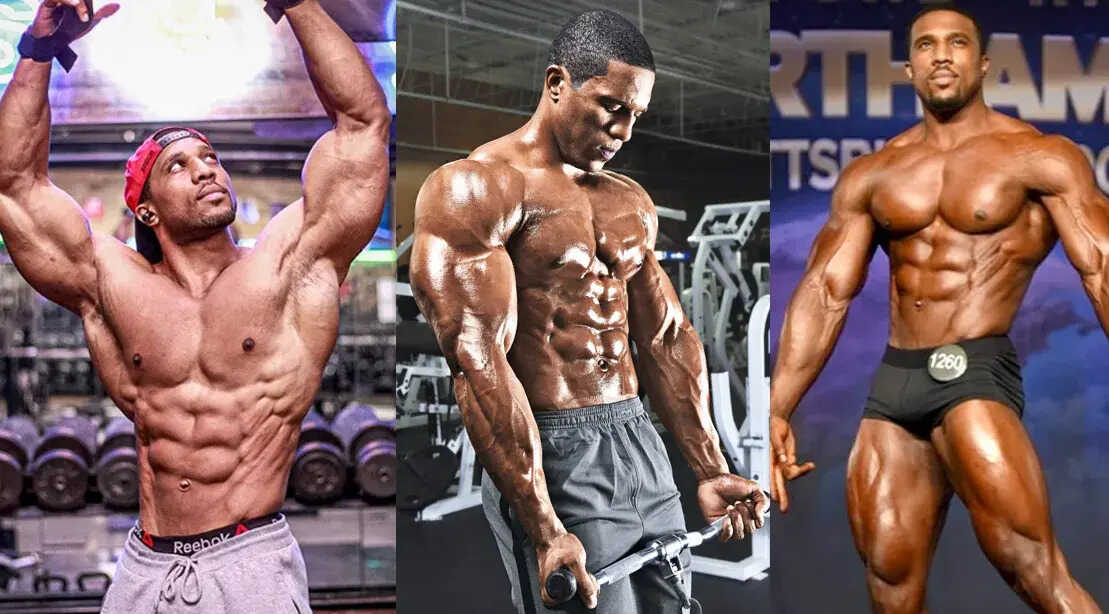
When you think of professional bodybuilders, visions of massive, sculpted muscles come to mind. These athletes dedicate countless hours to perfecting their physique, displaying what seems to be incredible strength. But here’s a question for you: does bigger muscle always mean greater strength? Despite their impressive appearance, the answer might surprise you.
Bodybuilders train primarily for muscle size (hypertrophy), not for strength. While they look strong, their functionality in real-life situations does not necessarily reflect this. In other words, bodybuilders focus on aesthetics and symmetry, aiming to increase muscle mass rather than develop functional strength. In stark contrast, those who train specifically for strength—like powerlifters or strongman competitors—might not have the same muscle size but possess a different kind of power.
This article explores the reasons why having bigger muscles doesn’t always equate to greater strength and explores the real-life applications (or lack thereof) of a bodybuilder’s strength.
What is the difference between muscle size (hypertrophy) and muscle strength?
Hypertrophy refers to the increase in the size of muscle cells, which leads to larger muscle mass. It’s achieved through consistent training that focuses on lifting moderate to heavy weights for a higher number of repetitions, typically in the range of 8-12 reps per set. This form of training increases the overall volume and density of your muscles, making them appear bigger.
On the other hand, muscle strength is the ability of a muscle to exert force during an activity. Training for strength aims to enhance the neuromuscular system, enabling muscles to generate greater force. Strength gains usually come from lifting heavier weights for fewer repetitions, generally between 1-5 reps per set. This type of training not only boosts your maximal strength but also improves muscle coordination and overall power output.
While hypertrophy focuses more on the aesthetic and volumetric growth of muscles, strength training emphasizes the muscles’ functional capacity to produce force, impacting your ability to perform various physical tasks effectively.
Therefore, bigger muscles do not necessarily equate to greater strength. Hypertrophy training increases muscle size but does not always improve the muscle’s ability to generate force. Conversely, strength training enhances the muscle’s functional capacity to exert force, often without a significant increase in muscle size.
Bodybuilders often prioritize hypertrophy over strength, focusing on muscle isolation exercises that maximize muscle growth. This type of training does not necessarily translate to functional strength, which is the ability to perform real-life activities that require coordinated muscle action and force production.
Therefore, while bodybuilders may appear strong due to their large muscles, their training does not necessarily make them stronger in a functional sense. Real-life strength requires the ability to perform complex, coordinated movements that are often not part of a bodybuilder’s training routine.
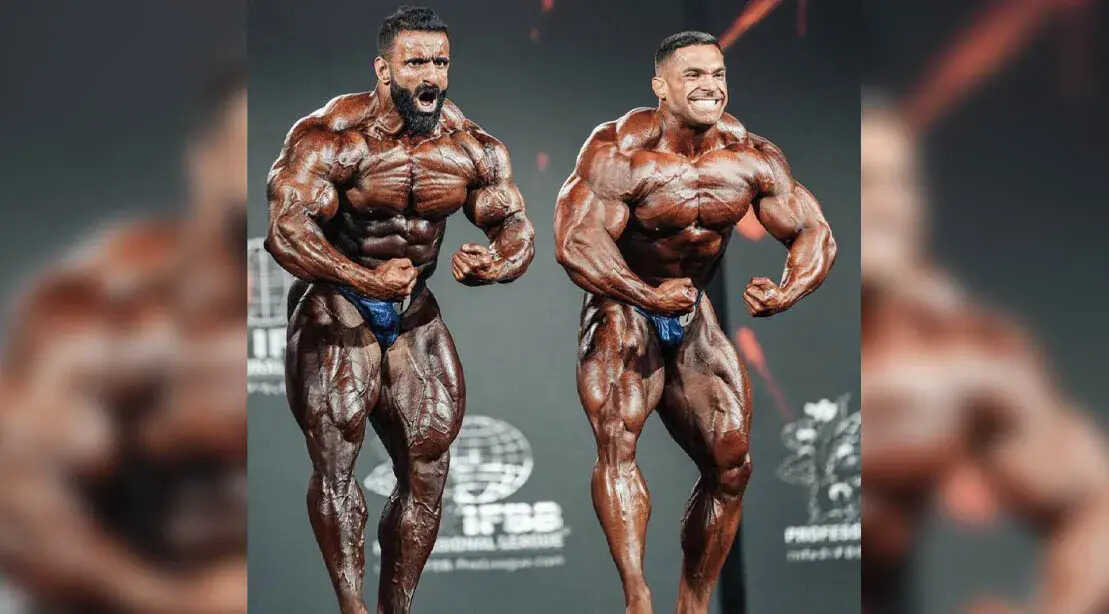
How do bodybuilders’ training routines differ from those of strength athletes?
Bodybuilders focus primarily on muscle size (hypertrophy), which involves training with moderate weights and high repetitions. Their routines often feature isolation exercises that target specific muscle groups to achieve a balanced, aesthetically pleasing physique. In contrast, strength athletes, such as powerlifters and strongmen, prioritize increasing their maximal strength. This means they focus on lifting heavier weights for fewer repetitions, often emphasizing compound movements like squats, deadlifts, and bench presses that recruit multiple muscle groups simultaneously. While a bodybuilder’s regimen aims for muscle symmetry and volume, a strength athlete’s routine is designed to maximize functional strength and performance, which is more applicable to real-world tasks.
What are the main factors that contribute to functional strength?
- Multi-Directional Movement: Engages muscles in various planes of motion, increasing overall functional capacity.
- Dynamic Movements: Incorporates activities like kettlebell swings and bodyweight exercises that mimic real-life movements.
- Endurance: Builds stamina to perform daily tasks efficiently without fatigue.
- Balance and Coordination: Enhances your ability to stabilize and control your body during complex tasks.
- Power and Agility: Develops explosive strength and quickness, essential for dynamic actions.
- Flexibility and Mobility: Ensures your joints can move freely, reducing the risk of injury during everyday activities.
- Minimal Equipment: Often performed with little to no equipment, making it accessible and practical for daily use.
Bodybuilders typically focus on isolated muscle movements rather than multi-directional or dynamic movements. While they may achieve impressive muscle size, their training routines often neglect elements like endurance, balance, and coordination. Power and agility exercises are also not usually prioritized in traditional bodybuilding. Flexibility and mobility receive minimal attention, which can lead to an increased risk of injury. Additionally, bodybuilders rely heavily on gym equipment, making their workouts less accessible and practical for daily use compared to functional training.
Can bigger muscles lead to greater strength in practical, real-life scenarios?
In real-life scenarios, strength is often about more than just the ability to lift heavy weights. It involves the capacity to perform a variety of movements efficiently, maintain balance and stability, and adapt to unpredictable situations. Bodybuilders, with their focus on aesthetics and muscle size, may not develop the comprehensive skill set required for such tasks. Functional training, which includes exercises that mimic real-life movements, is more effective in building practical strength.
Consider the bench press, a staple exercise in bodybuilding that primarily targets the chest, shoulders, and triceps. Outside the gym, when would you realistically need to mimic this movement? Perhaps if you’re pushing a heavy object off your chest, which is rare in everyday life.
Now, let’s compare this with an experienced worker in a sawmill or construction site. These workers are consistently required to lift, carry, push, and pull objects, often in awkward positions and unstable environments. This dynamic form of strength involves multiple muscle groups and real-world functional movements. While a bodybuilder might excel at pushing heavy weights in a controlled environment, they may struggle with the uneven terrain and variable loads found in such physically demanding jobs. Therefore, the practical strength developed through functional training is far more applicable to real-life scenarios.

Why might bodybuilders’ strength be considered less useful in everyday activities?
While bodybuilders undoubtedly develop large, visually impressive muscles, the training they undergo often doesn’t translate well into functional strength for real-life scenarios. Bodybuilding routines typically focus on isolated movements that target specific muscle groups. These exercises aim to induce hypertrophy, maximizing muscle growth rather than improving the practical strength needed for daily tasks.
In contrast, functional strength involves the ability to efficiently and effectively perform various movements that mimic daily activities. Think of lifting a heavy box, carrying groceries, or even playing a sport. These tasks require a coordinated effort of multiple muscle groups working together, rather than isolated actions. Bodybuilders’ training often lacks this multi-joint, full-body approach, making their physical prowess less applicable to the dynamic demands of everyday life.
Moreover, many bodybuilding exercises are performed using machines that guide movements along fixed paths. While this can be beneficial for isolating muscles and reducing the risk of injury, it doesn’t prepare the body for the unpredictability and variability of real-world tasks. Functional training, on the other hand, emphasizes free weights and bodyweight exercises that require balance, coordination, and core stability—skills that are more aligned with practical strength.
Example 1.
Picture a bodybuilder who’s adept at the leg press machine, effortlessly adding weight each week. Yet, when it comes to shoveling a driveway full of snow, they might struggle. This everyday task demands functional strength incorporating balance, rotational power, and stamina. A person trained in functional exercises, such as kettlebell swings or weighted carries, would find this chore considerably more manageable. The repetitive, isolated leg movements of the leg press don’t prepare the bodybuilder for the varied, dynamic motions required for effective snow shoveling.

Example 2.
As another example, for instance, a bodybuilder might excel at performing bicep curls and achieving significant muscle growth in their arms. However, when it comes to carrying multiple heavy grocery bags from the car to the house, a person trained in functional strength with a focus on grip strength, core stability, and multi-joint movements would find the task easier. This is because the bodybuilder’s isolated bicep strength doesn’t effectively translate to the complex, whole-body effort required for such an everyday activity.
In summary, while bodybuilders may exhibit impressive muscle size, their specialized training methods do not equip them with the functional strength necessary for many everyday activities. This distinction highlights why their muscle power might be considered less useful when it comes to real-life applications.
What does the current science say about why bigger isn’t always better in the world of muscle-building?
Recent findings reveal that, despite their larger appearance, bodybuilders’ muscles do not necessarily translate to increased strength. The study highlighted that even though the muscle fibers were bulkier, they generated less force, indicating inferior quality. At the cellular level, the muscles of bodybuilders do not compare favorably to those of power athletes (like weightlifters or sprinters) or even to average, physically active men with no weight training.
Conducted by Hans Degens of Manchester Metropolitan University, the research involved muscle cells from 12 bodybuilders, six power athletes, and 14 control subjects (average men, physically active but not performing weight training). By stimulating these cells and measuring the isometric contractions—where muscle fires without joint movement—the researchers assessed both the size and speed of the force produced. This allowed them to calculate the specific force, which is the force per unit area of the muscle. A higher specific force indicates better muscle quality.
The results showed that while the muscle fibers of bodybuilders were significantly larger than those of the control group, they had a lower specific force, implying poorer muscle quality. In contrast, the power athletes, who engaged in resistance training with lighter weights lifted rapidly, had muscle qualities similar to the controls but could produce force more swiftly, showcasing greater muscle power. This indicates that simply having bigger muscles does not equate to an increase in muscle quality.
Recent studies have found that although bodybuilders may have large muscles, muscle strength does not necessarily continue to grow alongside muscle size beyond a certain point.
In summary, while the impressive physiques of bodybuilders are a testament to their dedication and rigorous training for hypertrophy, this does not necessarily equate to functional strength or real-life applicability. In other words, bodybuilders are not nearly as strong as they may seem at first glance. Professional bodybuilders are often the ‘paper tigers’ of the weightlifting world, with muscles that may look formidable but don’t always translate into practical strength. Their training, focused primarily on muscle size rather than functional power, often falls short in terms of improving real-world performance (as shown in many examples throughout this article).
As the current science suggests, bigger isn’t always better when it comes to strength and functionality. Muscle strength does not necessarily continue to grow alongside muscle size beyond a certain point. So, while their muscles may be big, in many cases, they’re not built for strength in a way that matters most in everyday life. It’s more or less muscles just for show.
