


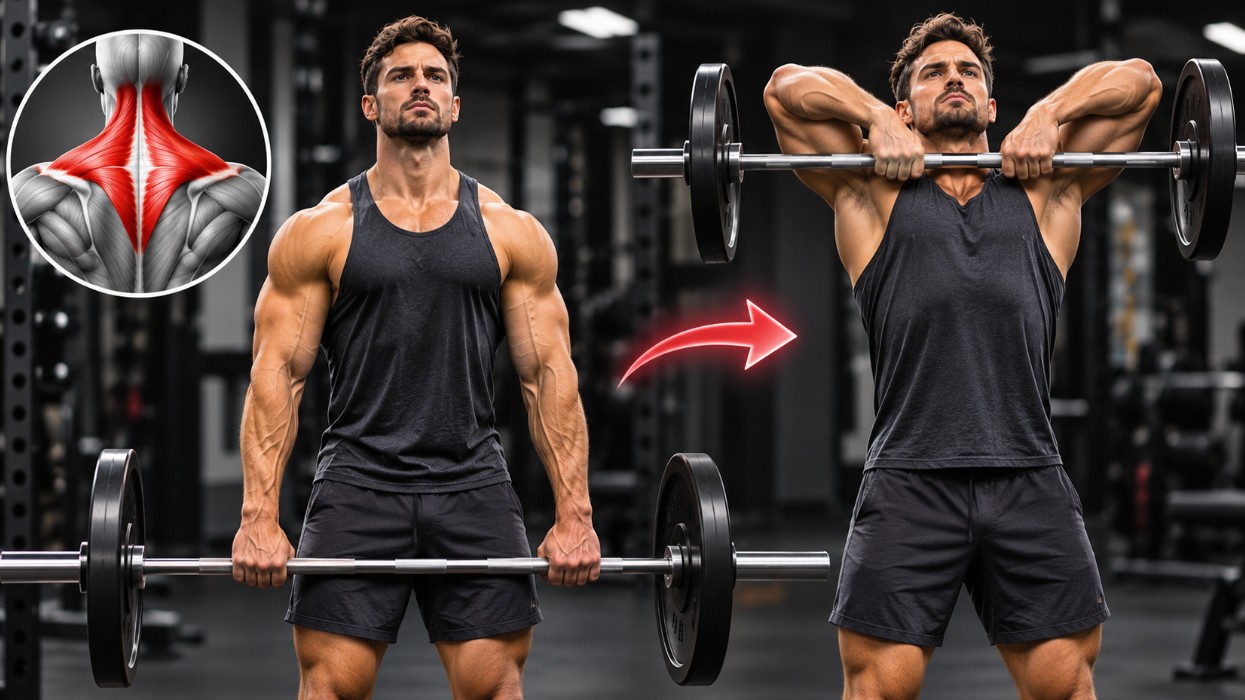
The upright row for traps is a barbell upright row performed with a high elbow path: instead of stopping when the upper arms reach shoulder height, you keep pulling until the elbows travel well above the shoulders and the shoulders rise toward the ears. This version shifts more work to the upper trapezius, while the lateral deltoids still contribute strongly.
That extra height comes at a price, and it’s important to be honest about it. Lifting the arms above shoulder level while they’re rotated inward is the position most associated with shoulder irritation during upright rows. A review on the topic advised keeping the arms at or below shoulder height and lowering the pull further if it causes symptoms. The high-elbow version deliberately goes beyond that limit, so it suits only lifters with healthy, pain-free shoulders who use moderate loads and good technique.
If your goal is the side delts rather than the traps, our guide to the barbell upright row for shoulders covers the shoulder-height version. In this guide, you’ll learn how to perform the upright row for traps with proper form, who should avoid it, which muscles it works, and how it compares with the barbell shrug.
The upright row for traps is a barbell upright row in which the bar is pulled close to the body with an overhand grip until the elbows travel well above shoulder height and the shoulder girdle elevates at the top of the movement. Compared with the shoulder-height version, it places more emphasis on the upper trapezius and the scapular upward rotators, while the lateral deltoids still work substantially. It requires pain-free shoulders, because the arms are raised above shoulder level in internal rotation.
Clients often ask me why I teach two different upright rows. The answer is how high the elbows go. In the shoulder version, I stop the pull when the upper arms reach about shoulder height, which keeps the work focused on the lateral delts and keeps the shoulder joint in a more comfortable range. In the trap version, the elbows keep traveling up, the shoulder blades rotate upward, and the shoulders rise toward the ears at the top. That last part is where the traps take over.
I only use the trap version with clients who have no shoulder pain, can lift their arms overhead comfortably, and are willing to use moderate weights. For everyone else, I program the shoulder-height upright row for the delts and shrugs for the traps. That combination covers both muscles without asking the shoulder to work in a position it doesn’t like.
— Krunoslav, Ph.D. in Kinesiology
Other Names for the Upright Row for Traps
You’ll come across this exercise under several names:
- High-elbow upright row – describes the elbow path.
- Trap upright row – an informal gym name.
- Upright row to the chin – a classic bodybuilding description of the bar height.
- Full-range upright row – some coaches use this for the version that goes above shoulder height.
The barbell high pull, used in weightlifting, looks similar but is an explosive movement driven by the hips and legs, so it’s a different exercise.
Required Equipment
You need standard barbell equipment:
- Olympic barbell or EZ-bar. An EZ-bar is often more comfortable for the wrists.
- Weight plates. Use smaller plates so you can increase the load in small steps.
- Wrist straps (optional). Wrist straps are rarely necessary because the loads on this exercise are moderate.
How to Do the Upright Row for Traps
The upright row for traps depends on a controlled bar path and an upright torso. Start with an empty bar to find the height your shoulders tolerate before adding weight.
Starting Position
Pick up the bar from a power rack or from the floor, then:
- Hold the bar with an overhand grip about shoulder width; a very narrow grip increases the strain on the shoulders. See our guide to grip types and widths.
- Stand tall with your feet about hip-width apart and your knees slightly bent.
- Let the bar hang at arm’s length in front of your thighs, with your arms straight.
- Keep your chest up, your spine neutral, and your shoulders relaxed and slightly back.
- Brace your trunk and keep your head and neck neutral.

Execution
From the starting position, pull with control:
- Pull the bar straight up close to your body by driving your elbows up and out to the sides.
- Keep your elbows higher than your hands throughout the pull, and avoid bending your wrists sharply.
- Continue past shoulder height, letting the elbows rise well above the shoulders as the bar reaches your upper chest.
- At the top, let the shoulders rise toward your ears, then pause briefly.
- Lower the bar under control along the same path until your arms are fully extended.
- Exhale during the pull and inhale as you lower the bar.
Stop the pull at the highest point that feels completely comfortable. If you feel pinching or pain at the front or top of the shoulder, lower the height or switch to the shoulder-height version.
Video Demonstration
The video below shows the upright row for traps from start to finish. Notice how the elbows lead the movement and keep rising after the upper arms pass shoulder height.
Watch the top of each rep closely. Keep the torso upright, keep the bar close to the body, and finish by raising the shoulders toward the ears. Filming yourself from the side makes it easy to see whether you lean back to get the bar higher.
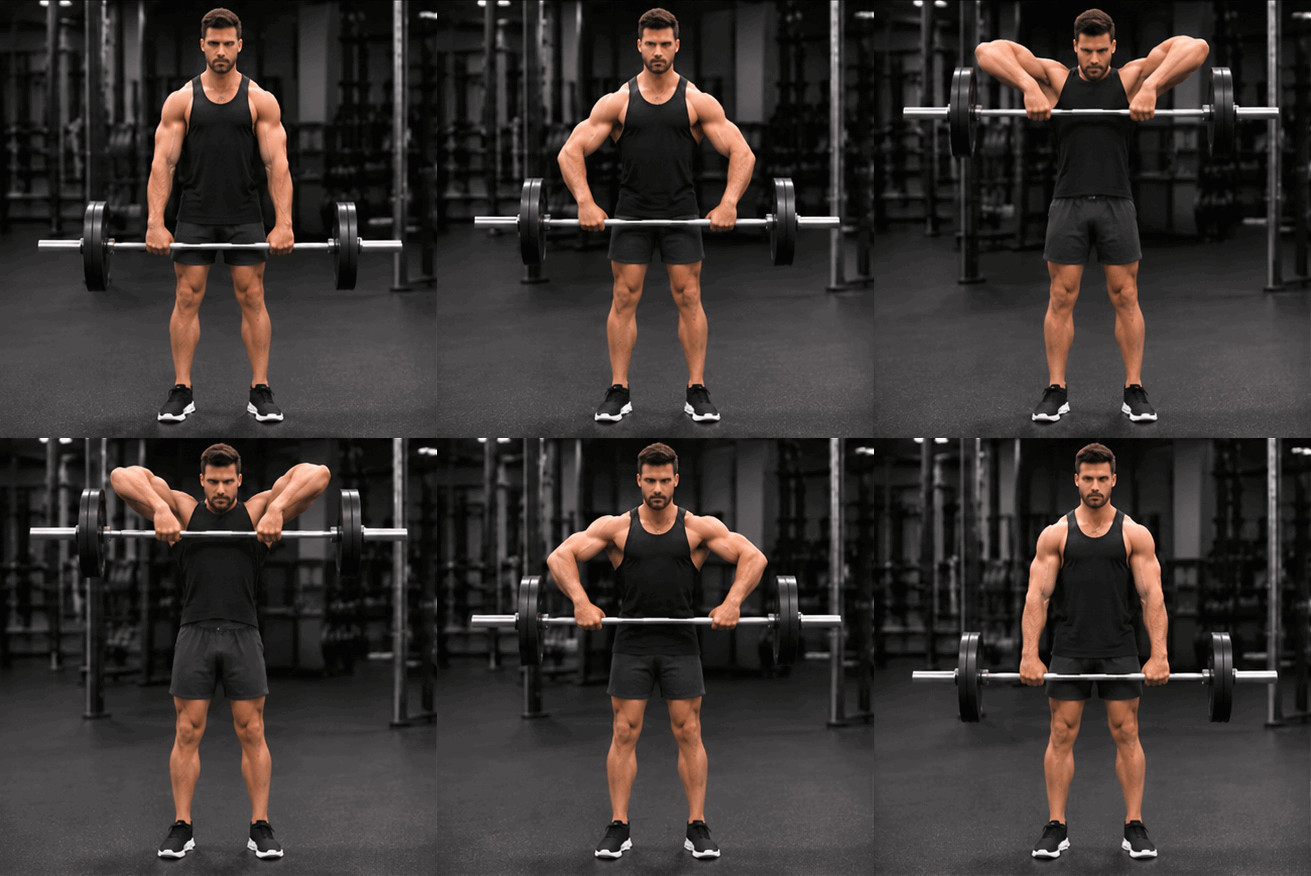

The most common mistake I see on the upright row for traps is what I call the “limbo.” To get the bar higher, the lifter leans further and further back with every rep, like a limbo dancer sliding under the stick. The bar reaches the chin, but only because the torso moved out of the way, not because the elbows and traps lifted it.
With clients, I ask them to stand with their back close to a wall or a vertical bench pad, so they can feel when the torso starts to lean. Then I take some weight off. The reps get lighter, but the elbows finally travel high, and most clients feel their upper traps burning in a way they never did when they leaned back.
Quick Form Checklist
Check these points before and during every set:
- Overhand grip about shoulder width, not very narrow
- Torso upright, no leaning back
- Elbows lead and stay higher than the hands
- Elbows rise well above shoulder height, shoulders lift at the top
- Pain-free range only, controlled lowering
On the upright row, grip width decides how high your elbows can travel and how much strain the shoulders take. This is the overview I give my clients:
| Grip | Elbow Path | Typical Characteristics |
|---|---|---|
| Narrow (hands close together) | Elbows can rise very high | Classic bodybuilding style; more internal rotation and biceps involvement; I don’t use it |
| About shoulder width | Elbows rise well above the shoulders | My standard setup for the trap version; a balance between height and comfort |
| Wide (about twice shoulder width) | Elbows rise only slightly above the bar | Strong deltoid and trap activity, but the high-elbow finish is limited |
I start clients with a grip about shoulder width. It still lets the elbows travel well above the shoulders, which is what the trap version needs, without the extreme inward rotation of the classic narrow grip. The wide grip is excellent for the delts, but it limits how high the elbows can go, so it’s closer to the shoulder version.
Research supports moving away from the narrow grip. In an EMG study, deltoid and trapezius activity increased as the grip got wider, while biceps activity decreased. That suggests the narrow grip isn’t the trap builder it’s often said to be. The shoulder-width grip is my compromise between that finding and the high elbow path this version requires.
— Krunoslav, Ph.D. in Kinesiology
Technical Emphasis & Targeting Adjustments
Small changes in how you pull shift the emphasis between the delts and the traps. Use these cues as practical adjustments:
- Elbows above the shoulders at the top → more upper-trap involvement. The higher the elbows travel, the more the shoulder blades have to rotate upward and lift.
- Finish with a shrug → more upper-trap work. Letting the shoulders rise toward the ears at the top completes the trap’s part of the movement.
- Stop at shoulder height → more lateral-delt emphasis. Ending the pull lower turns the exercise into the shoulder version and favors the lateral deltoids.
- Elbows lead, wrists stay relaxed → less forearm and biceps work. Thinking about the elbows rather than the hands keeps the arms from curling the bar.
- Lower for about 2–3 seconds → more control. A slower descent keeps tension on the traps and avoids dropping the bar.
Common Upright Row for Traps Mistakes
Most mistakes on this exercise come from chasing height or weight. Watch for these:
- Leaning back to lift the bar. Leaning back makes the bar rise without the elbows doing the work and adds momentum. Stay upright and reduce the load.
- Using a very narrow grip. Hands close together increase the inward rotation of the shoulders. Use a grip about shoulder width.
- Pulling through pain. Pain or pinching at the top of the shoulder signals you to stop, not push through. Lower the height or switch exercises.
- Letting the bar drift away from the body. A bar that swings forward loads the shoulders awkwardly. Keep it close throughout.
- Bending the wrists sharply. Leading with the hands and curling the wrists strains the forearms. Let the elbows lead.
Find your pain-free ceiling with an empty bar before every session. Do a set of eight to ten slow reps with just the bar, raising the elbows a little higher on each rep. The first height at which you feel any pinching, tightness, or discomfort at the top or front of the shoulder is your ceiling for that day.
Then load the bar and keep every working rep just below that point. Some days your shoulders will tolerate more height than others, and that’s normal. Training this way lets you get the trap benefit of the high pull without turning it into an exercise you regret the next morning.
Mechanical Considerations
Once the arms rise above shoulder height, the shoulder blades have to rotate upward to make room for the upper arm, and that’s where the trapezius becomes more involved. Anatomical research shows that the upper trapezius fibers run mostly horizontally to the clavicle, so they raise the shoulder mainly by rotating the clavicle and help rotate the scapula upward together with the lower fibers, rather than lifting it straight up. The higher the elbows travel, the more of this upward rotation and elevation the movement requires.
No study appears to have directly compared the high-elbow upright row with the shoulder-height version. However, related research points in the same direction: in a shrug study, raising the arms about 30 degrees out to the sides produced higher upper and lower trapezius activity than a standard shrug with the arms at the sides. That study used light dumbbells in a rehabilitation setting, but it supports the idea that arm position, not just the shrug itself, affects how hard the traps work.
Muscles Worked by the Upright Row for Traps
The upright row for traps is a compound exercise involving the shoulder girdle, the shoulder joint, and the elbow:
MAIN
- Upper trapezius – elevates the shoulder girdle and helps rotate the scapula upward as the elbows rise.
- Lateral deltoid – abducts the arm, lifting the elbows out to the sides.
SECONDARY
- Anterior deltoid – assists in raising the arms.
- Middle and lower trapezius – help control and upwardly rotate the scapula, along with the serratus anterior.
- Elbow flexors – the biceps brachii, brachialis, and brachioradialis bend the elbows.
- Levator scapulae – assists in lifting the shoulder blades at the top; see our guide to the muscles of the neck.
STABILIZERS
- Rotator cuff – stabilizes the shoulder joint in a demanding position.
- Forearm muscles – hold the bar and keep the wrists stable.
- Abdominals and other core muscles – keep the torso upright.
Pros and Cons
The upright row for traps is a useful exercise for the right lifter, with clear limitations:
Advantages
- Trains traps and delts together. A single exercise covers the upper traps and the lateral deltoids.
- Longer range for the traps than shrugs. The traps work through upward rotation as well as elevation.
- Simple equipment. A barbell or EZ-bar is all you need.
- Easy to adjust. Changing the height shifts the emphasis between traps and delts.
Potential Drawbacks
- Higher shoulder stress. Raising the arms above shoulder level in internal rotation isn’t suitable for everyone; read our article Are Upright Rows Bad? for more context.
- Moderate loads only. Heavy weights increase the risk and usually ruin the technique.
- Wrist discomfort. A straight bar can strain the wrists; an EZ-bar helps.
- Not ideal for maximal trap loading. For heavy trap work, the barbell shrug is easier to load.
Safety Considerations
Because the arms travel above shoulder height, this version demands more care than most trap exercises. Shoulder position matters: in an MRI study, pulling the shoulder blades back increased the space beneath the acromion, while rounding them forward reduced it. That study looked at static positions rather than lifting, but it’s a good reason to keep the chest up and the shoulders back throughout the pull. Keep these points in mind:
- Only with pain-free shoulders. If you have a history of shoulder impingement, rotator cuff problems, or pain when raising your arms, use the shoulder-height version or shrugs instead.
- Respect your pain-free ceiling. Stop each rep below the height where any discomfort appears.
- Keep the loads moderate. Heavy upright rows to the chin offer little extra benefit and increase shoulder strain.
- Stay upright. Leaning back to lift more weight changes the shoulder position and adds stress to the lower back.
Upright Row for Traps Variations
These variations let you change the equipment or make the exercise more comfortable:
EZ-Bar Upright Row for Traps
Difficulty: Intermediate
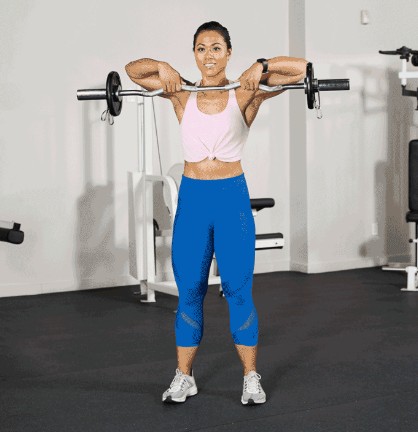
Use the angled grips of an EZ-bar. They reduce wrist strain and are often more comfortable for the forearms.
Cable Upright Row for Traps
Difficulty: Intermediate
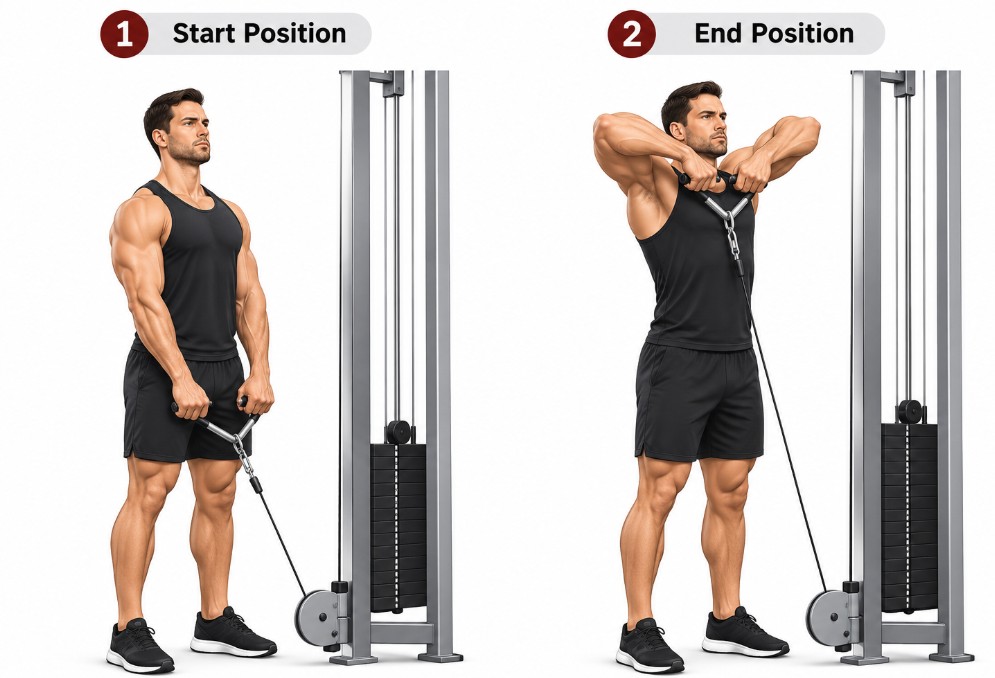
Perform the high-elbow pull at a low pulley with a straight bar or rope. The cable keeps tension throughout the movement; see our cable upright row guide for the basics.
Dumbbell Upright Row for Traps
Difficulty: Intermediate
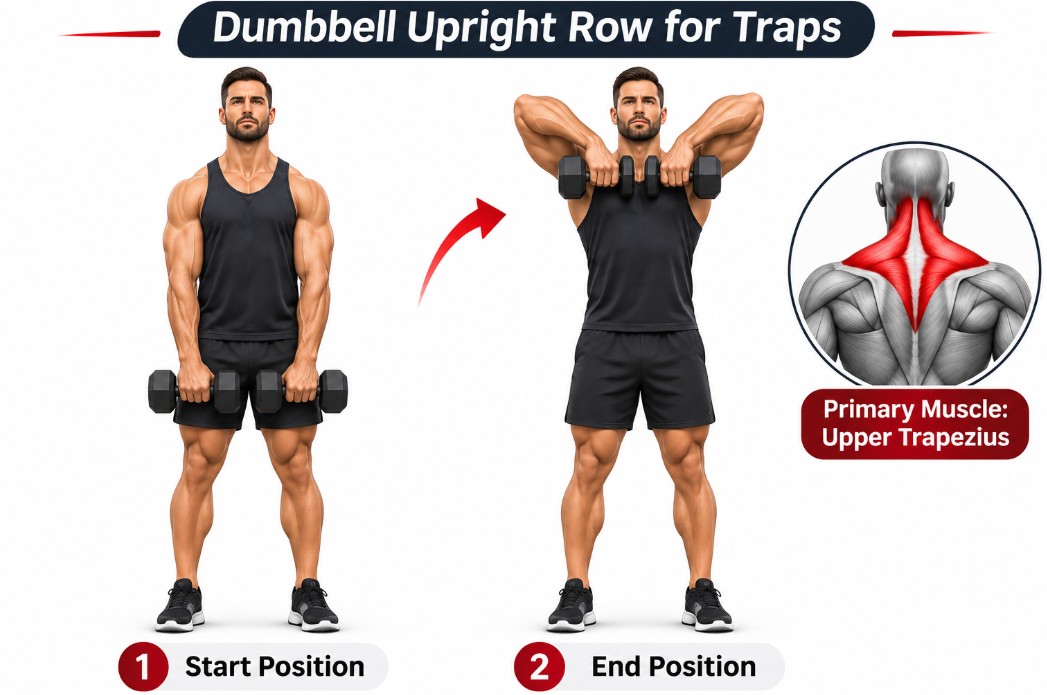
Use two dumbbells, which let each arm follow its own path and often feel easier on the shoulders. Our dumbbell upright row guide covers the technique.
Smith Machine Upright Row for Traps
Difficulty: Beginner to intermediate
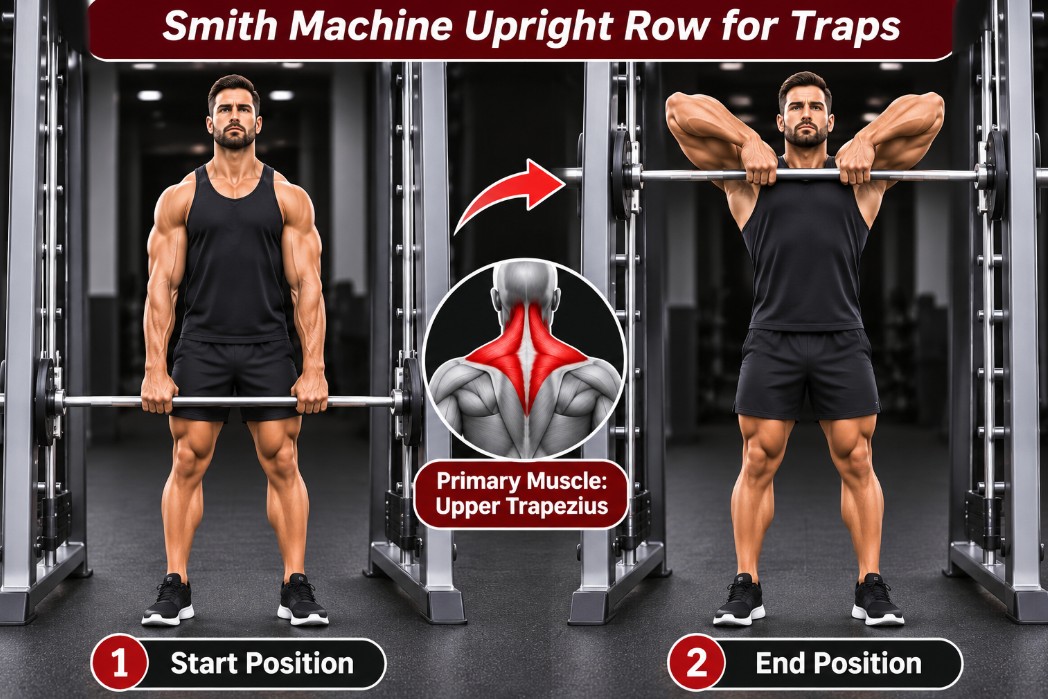
The guided bar keeps the path close to the body. The Smith machine upright row guide explains when this version makes sense.
Replacement Exercises
If the high-elbow position doesn’t suit your shoulders, these exercises train the traps without it:
- Dumbbell Shrug. The dumbbell shrug trains the upper traps with the arms at your sides.
- Hex Bar Shrug. Hex bar shrugs allow heavy loading with a neutral grip.
- Overhead Barbell Shrug. The overhead barbell shrug trains the upper traps with the scapulae already rotated upward, without the internal rotation of the upright row.
- Cable Shrug. The cable shrug keeps constant tension on the traps.
- Farmer’s Walk. The farmer’s walk trains the traps isometrically under heavy loads.
- Behind-the-Back Barbell Shrug. The rear shrug offers another barbell trap exercise with a different hand position.
How to Program the Upright Row for Traps
Use the box below as a starting point and adjust it to your goals and training split.
Show full programming guideHide programming guide ▾
| Goal | Sets | Reps | Rest | Tempo |
|---|---|---|---|---|
| Hypertrophy | 3–4 | 10–15 | 60–90 s | Controlled pull, brief pause, 2–3 s lowering |
| Moderate loading (experienced, pain-free) | 3 | 8–10 | 90 s | Strict, no leaning back |
| Muscular endurance | 2–3 | 15–20 | 45–60 s | Steady, controlled |
Moderate loads and higher reps are the safest way to use this exercise, and they’re effective too: muscle growth has been reported across a broad spectrum of loads and repetition ranges, provided sets are taken reasonably close to failure.
- Near the end of a back, shoulder, or upper-body session
- After shrugs, as a lighter trap exercise with a longer range of motion
- As a combined trap-and-delt exercise in time-efficient workouts
- Only on days when your shoulders feel completely comfortable
Add reps first, then a small amount of weight, but only if the extra load doesn’t change your torso position or shorten your pain-free range. Apply progressive overload conservatively on this exercise.
Upright Row for Traps vs Barbell Shrug
Both exercises train the upper traps, but they do it in very different ways:
| Feature | Upright Row for Traps | Barbell Shrug |
|---|---|---|
| Joints involved | Shoulder girdle, shoulder, elbow | Shoulder girdle only |
| Scapular movement | Upward rotation and elevation | Mainly elevation |
| Other muscles | Lateral and anterior delts, elbow flexors | Minimal |
| Typical load | Moderate | Heavy |
| Shoulder stress | Higher; arms above shoulder height | Low |
| Suitable for | Lifters with pain-free shoulders | Almost everyone |
| Best for | Training traps and delts together | Heavy, focused trap training |
The main difference is the range of scapular movement and the shoulder position. The upright row for traps takes the shoulder blades through upward rotation and elevation and involves the delts, but it requires the arms to rise above shoulder height. The barbell shrug focuses on elevation only, allows heavier loads, and suits almost everyone.
Neither is better overall. Many lifters use shrugs as their main trap exercise and add the upright row for traps as a lighter, longer-range option when their shoulders tolerate it. For a complete approach, see our ultimate guide to trapezius exercises.
Final Thoughts
The upright row for traps is a high-elbow variation of the barbell upright row that shifts more work to the upper traps. Use a grip about shoulder width, keep the torso upright, and pull the elbows well above the shoulders, but only as high as your shoulders allow without discomfort.
Treat it as an option for lifters with healthy shoulders, not as an essential exercise, and use shrugs as your main trap builder. To understand the joint at the center of this exercise, read our guide to the role of the scapula in bodybuilding.
Frequently Asked Questions
What muscles does the upright row for traps work?
It mainly works the upper trapezius and lateral deltoids, with help from the front delts, the middle and lower traps, and the elbow flexors.
How is it different from the upright row for shoulders?
The elbows travel well above shoulder height and the shoulders rise at the top, which shifts more work to the traps.
Is the upright row bad for your shoulders?
Not for everyone, but the high-elbow version places the shoulders in a more demanding position. Use it only if your shoulders are pain-free.
What grip width should I use?
A grip about shoulder width is a good balance. A very narrow grip increases shoulder strain.
Should I pull the bar to my chin?
Pull as high as you can without any discomfort. For many lifters, that’s the upper chest rather than the chin.
Is the upright row better than shrugs for traps?
Neither is better overall. Shrugs allow heavier loads; the upright row trains the traps through a longer range.
Can I use an EZ-bar?
Yes. An EZ-bar is often more comfortable for the wrists.
How heavy should I go?
Use moderate weights that let you stay upright and pull smoothly for 10–15 reps.
Who should avoid this exercise?
Anyone with shoulder pain, impingement, or rotator cuff problems should choose shrugs or the shoulder-height upright row instead.
