



Introduction
The cable upright row is a controlled, cable-based variation of the upright row that targets the lateral deltoids and upper traps while providing more consistent tension throughout the movement. In my experience, this version often feels smoother and easier to control compared to barbell or dumbbell variations.
One of the biggest advantages of using a cable is the constant resistance profile. Unlike free weights, which can vary in tension depending on position, the cable keeps the muscles engaged throughout the entire range of motion. This makes it a valuable option for lifters who want more controlled and consistent muscle activation.
At the same time, the cable upright row still requires attention to technique. Grip width, elbow position, and range of motion all influence how the exercise feels and which muscles are emphasized. While many lifters find this variation more comfortable, it is still important to perform it with proper alignment and control.
When used correctly, the cable upright row can be an effective and versatile exercise for building shoulder width and upper-back development, while offering a more controlled alternative to traditional upright row variations.
Other Names for the Cable Upright Row
The cable upright row is sometimes referred to by different names depending on the equipment used or gym terminology. While the wording may vary, all of these refer to the same movement pattern performed using a cable machine.
- Upright pulley row
- Cable high pull (partial variation)
- Low pulley upright row
- Cable shoulder pull
- Rope upright row (when using a rope attachment)
In practice, these names may reflect different attachments or slight setup variations, but the core movement remains the same—a vertical pull targeting the shoulders and traps with constant cable tension.
Required Equipment for the Cable Upright Row
The cable upright row requires a cable setup, but it offers more versatility than free-weight variations due to adjustable resistance and attachment options.
- Cable machine (low pulley) – provides the resistance for the movement
- Attachment (straight bar or rope) – determines grip style and comfort
Optional (but helpful):
- Adjustable pulley height – allows fine-tuning of the resistance angle
- Mirror (if available) – helps monitor elbow position and movement path
- Lifting straps – useful if grip becomes a limiting factor
From a training standpoint, the choice of attachment can significantly affect how the exercise feels. A straight bar offers a more traditional upright row feel, while a rope allows for a more natural hand position and often improves shoulder comfort.
How to Perform the Cable Upright Row with Proper Form
The cable upright row is one of the most controlled variations of this movement, but it still requires proper setup and execution. In my experience as a coach, the cable makes the movement smoother—but only if you maintain correct positioning and avoid rushing the reps.
Starting Position (Setup)
A proper setup ensures consistent tension and a clean movement path from the start.
- Stand facing a low pulley cable machine
- Attach a straight bar or rope to the cable
- Grip the attachment with an overhand grip (or neutral grip if using a rope)
- Stand upright with feet shoulder-width apart
- Keep your chest up, core braced, and spine neutral
- Let your arms extend fully with the attachment near your upper thighs
- Maintain slight tension in the cable (do not let it go completely slack)

Movement (Execution)
The goal is to pull the cable upward using controlled, elbow-driven movement.
- Pull the attachment upward along your torso
- Lead with your elbows, keeping them higher than your wrists
- Keep the attachment close to your body throughout the movement
- Raise until your elbows reach approximately shoulder height
- Avoid pulling higher than shoulder level
- Pause briefly at the top to reinforce control
- Lower the attachment slowly back to the starting position
- Maintain constant tension throughout the entire movement
The key point to understand here is that the cable provides constant resistance, which makes control even more important—if you lose positioning, the tension shifts immediately, reducing the effectiveness of the exercise.
If your elbows rise above shoulder level, the emphasis shifts away from the deltoids and onto the trapezius, while also increasing unnecessary stress on the shoulder joint.
Video Demonstration
Watching a proper demonstration is especially helpful for the cable upright row, since small details like attachment choice, elbow path, and body positioning can significantly affect both comfort and effectiveness.
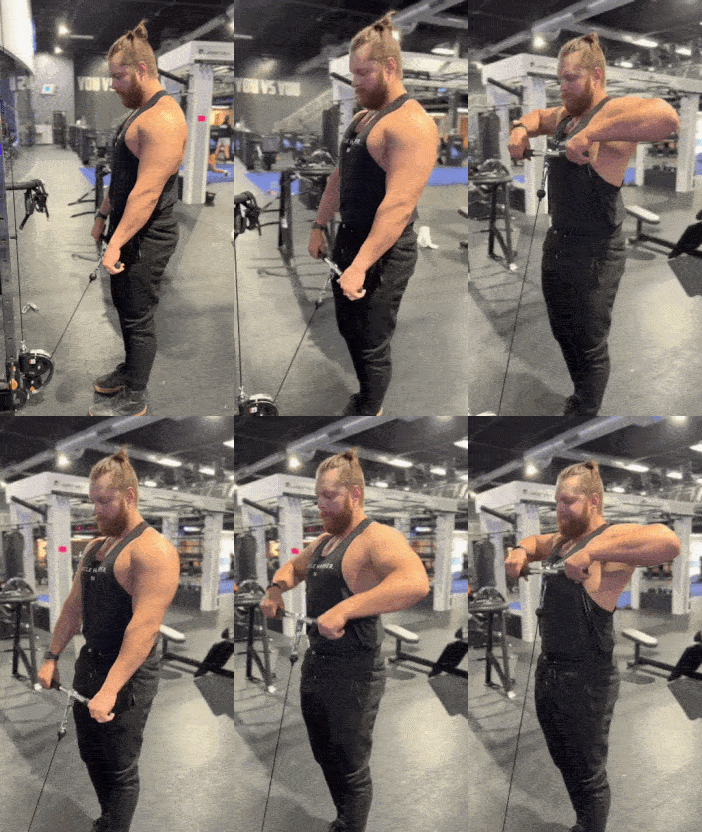
What I often see in practice is that lifters underestimate how important cable positioning is. Even small changes in distance from the machine or in body alignment can noticeably affect how the exercise feels and which muscles do the work.
Muscles Worked in the Cable Upright Row
Primary Muscles
The primary muscles generate the main force in the movement. In the cable upright row, the lateral deltoid (middle head) and the upper trapezius work together to lift the arms and elevate the shoulders under constant tension.
Secondary Muscles
Secondary muscles assist the primary movers and help guide the movement. These include the anterior deltoid, supraspinatus, and parts of the upper back, which contribute to smooth, coordinated lifting.
Stabilizing Muscles
Stabilizing muscles maintain joint alignment and body control throughout the exercise. In this movement, the rotator cuff muscles, serratus anterior, and core musculature help keep the shoulders stable and the torso properly aligned.
Supporting Muscles
Supporting muscles assist indirectly by contributing to grip strength and elbow movement. These include the biceps brachii, forearm flexors, and upper-back muscles such as the rhomboids, which help control the cable attachment during the lift.
How the Cable Upright Row Works: Biomechanics & Mechanics
The cable upright row follows the same general movement pattern as other upright row variations, but the cable changes how resistance is applied and how the muscles are loaded. In real training scenarios, this often makes the movement feel smoother and more controlled.
Key Joint Actions
- Shoulder abduction and elevation – the arms move outward and upward, driven by the lateral deltoids and upper traps
- Elbow flexion – the elbows bend as the attachment is pulled upward
- Scapular elevation – the shoulder blades rise slightly as the movement approaches the top
Constant Tension Advantage
- The cable provides continuous resistance throughout the entire range of motion
- Unlike free weights, there is no point at which tension significantly drops
- This helps maintain consistent muscle activation from start to finish
Effect of Body Positioning
- Standing closer to the cable creates a more vertical pull
- Stepping slightly back changes the angle, shifting emphasis toward rear delts and traps
- Small positional changes can significantly affect how the exercise feels
Role of Grip Width
- A wider grip increases emphasis on the lateral deltoids
- A narrower grip shifts more load to the upper trapezius
- Attachment choice (bar vs rope) also influences hand position and comfort
Range of Motion Control
- The movement typically ends at shoulder height
- Pulling higher increases trap involvement and shoulder stress
- The cable allows better control of the top position compared to free weights
Resistance Profile
- Resistance is cable-based, meaning it remains relatively constant
- This creates a smoother force curve compared to gravity-based exercises
- Encourages controlled tempo and consistent tension
Common Mechanical Errors
- Pulling too high above shoulder level
- Using excessive weight and momentum
- Letting the attachment drift away from the body
- Standing too far or too close, altering the resistance angle
The most important factor is how well you control both the movement path and your body position—this is what determines whether the cable variation feels precise and effective.
Technique Optimization Tips
The cable upright row allows for precise control, but that also means small technical adjustments can greatly influence how the exercise feels and which muscles are emphasized. In most cases, the key is to use the cable’s constant tension to your advantage without sacrificing positioning.
- Adjust your distance from the cable. Standing closer emphasizes a vertical pull, while stepping back shifts more load toward the rear delts and traps.
- Choose the right attachment. A rope often allows a more natural grip and reduces shoulder stress compared to a straight bar.
- Lead with your elbows. Focus on driving the elbows upward rather than pulling with the hands.
- Keep the attachment close to your body. This improves leverage and maintains proper mechanics.
- Stop at shoulder height. Going higher increases stress on the shoulder joint and shifts emphasis to the traps.
- Maintain constant tension. Avoid letting the cable go slack at the bottom of the movement.
- Use controlled tempo. Smooth, steady reps maximize muscle engagement and reduce risk.
- Select an appropriate load. Too much weight often leads to poor positioning and loss of control.
What really makes a difference is how well you control both your body position and the cable path—this is where this variation truly stands out.
Cable Upright Row Benefits and Drawbacks
The cable upright row combines the classic upright row movement pattern with the advantages of cable resistance, making it one of the most controlled variations of this exercise. In many training situations, it offers a smoother and more consistent alternative to free-weight versions.
Benefits
- Provides constant tension throughout the movement. This helps maintain consistent muscle activation from start to finish.
- Allows a smoother resistance profile. The cable reduces sudden changes in load compared to free weights.
- Offers adjustable movement angles. Small changes in body position can shift muscle emphasis.
- Can feel more joint-friendly for some lifters. The controlled path often reduces strain on the shoulders and wrists.
- Versatile attachment options. Using a rope or bar allows customization of grip and comfort.
Drawbacks
- Still requires proper technique. Poor execution can reduce effectiveness or increase joint stress.
- Limited loading potential compared to barbells. Heavier strength-focused work is more difficult.
- Setup dependent. Requires access to a cable machine and proper attachment.
- Can feel awkward without proper positioning. The distance from the cable significantly affects the movement.
- Not suitable for all shoulder structures. Some individuals may still experience discomfort.
The key point to understand is that while the cable version offers more control, it still depends on proper technique and positioning to be effective and safe.
Cable Upright Row Variations
The cable upright row offers more versatility than free-weight versions, mainly due to adjustable attachments and positioning. In real training scenarios, these variations can significantly change comfort, resistance feel, and muscle emphasis.
Straight Bar Cable Upright Row
This is the classic version, using a short, straight-bar attachment that closely mimics the barbell upright row but with smoother resistance.
Rope Cable Upright Row
Using a rope allows your hands to separate at the top of the movement, which often feels more natural and reduces shoulder stress.
Wide-Grip Cable Upright Row
Taking a wider grip shifts more emphasis toward the lateral deltoids and may improve shoulder comfort.
Narrow-Grip Cable Upright Row
A closer grip increases involvement of the upper trapezius but may feel less comfortable for some lifters.
Single-Arm Cable Upright Row
Performing the movement one arm at a time improves control and allows you to focus on each side individually.
Lean-Back Cable Upright Row
Standing slightly farther from the cable changes the resistance angle and can increase involvement of the rear delt and traps.
Cable Upright Row with Pause
Adding a brief pause at the top helps reinforce control and increases time under tension.
The most important factor is choosing the variation that allows you to maintain proper alignment, controlled execution, and consistent tension throughout the movement.
Replacement Exercises for the Cable Upright Row
If the cable upright row doesn’t suit your structure or you want to diversify your training, there are several effective alternatives that target the lateral deltoids and upper traps using different resistance profiles and movement patterns. In many cases, these options allow for equally effective—if not more comfortable—execution.
- Barbell Upright Row
- Dumbbell Upright Row
- EZ-bar Upright Row
- Dumbbell Lateral Raise
- Seated Dumbbell Lateral Raise
- One-Arm Cable Lateral Raise
- Two-Arm Cable Lateral Raise
- Machine Lateral Raise
- Incline Side-Lying Lateral Raise
- Leaning Dumbbell Lateral Raise
- Face Pull (for upper back and shoulder stability)
For a complete overview of all recommended movements and variations, explore our full lateral deltoid exercise database, where you can find the best options for building shoulder width and balanced development.
Where This Exercise Fits in a Workout
The cable upright row is best used as a controlled compound accessory movement within your shoulder or upper-body training. In practical programming, it often serves as a more precise and consistent alternative to free-weight upright rows.
- After primary compound lifts. It fits well after overhead presses or rows when transitioning to accessory work.
- As a controlled shoulder and trap builder. The constant tension makes it ideal for focused hypertrophy work.
- As a more stable upright row variation. A good option for lifters who want more control than the barbell or dumbbell versions offer.
- In hypertrophy-focused sessions. Works best with moderate loads and controlled tempo.
- As a finishing movement. Can be used to fully fatigue the lateral deltoids and traps with constant tension.
The key point to understand is that this exercise works best for refining control and maintaining consistent tension, rather than as a primary heavy lift.
Sets and Reps Recommendations
The cable upright row is best performed with moderate loads and controlled repetitions, taking full advantage of the cable’s constant tension. In real training scenarios, this exercise works best when the focus is on precision and muscle engagement rather than heavy loading.
- Sets: 2–4 per workout
- Reps: 10–15 per set
- Tempo: Smooth lift with a controlled, slightly slower lowering phase
- Rest time: 45–75 seconds between sets
Additional Programming Tips
- Choose a weight that allows you to maintain consistent tension throughout the entire set
- Avoid pulling above shoulder height to reduce unnecessary shoulder stress
- Focus on elbow-driven movement rather than simply lifting the attachment
- Maintain proper body position relative to the cable for optimal resistance angle
- Consider using higher reps to fully benefit from the cable’s constant tension
What really makes a difference is how well you control both the movement and the resistance—this is where the cable variation truly stands out.
Cable Upright Row vs. Dumbbell Upright Row
The cable upright row and the dumbbell upright row share a similar movement pattern, but the type of resistance significantly changes how the exercise feels and performs. In real training scenarios, this comparison highlights the difference between constant tension and movement freedom.
| Training Factor | Cable Upright Row | Dumbbell Upright Row |
|---|---|---|
| Resistance Type | Cable (constant tension) | Gravity-based |
| Movement Feel | Smooth and controlled | More natural and free |
| Tension Profile | Consistent throughout | Varies across the range |
| Stability | Higher | Moderate |
| Movement Freedom | Moderate | High |
| Joint Comfort | Often higher | Often higher (but variable) |
| Coordination Demand | Moderate | Higher |
| Loading Potential | Moderate | Moderate |
| Best Use | Control and tension | Natural movement and flexibility |
Conclusion: The cable upright row is ideal for maintaining constant tension and controlled execution, making it a strong choice for hypertrophy-focused training. The dumbbell upright row, on the other hand, offers greater freedom of movement and adaptability to individual mechanics.
For most lifters, combining both variations provides the best balance between control, comfort, and effective muscle activation.
Closing Thoughts
The cable upright row is one of the most controlled and consistent variations of the upright row, making it a valuable option for lifters who want to train the shoulders and traps with precision. In many cases, the constant tension provided by the cable helps reinforce better movement quality and muscle engagement.
At the same time, this exercise is not automatically “easier” or “safer” just because it uses a cable. Proper positioning, grip width, and range of motion still play a major role in how effective—and comfortable—the movement is. Small adjustments in how you stand or pull can significantly change the outcome.
This is best viewed as a refinement tool rather than a primary strength exercise. It works well for controlled hypertrophy work, especially when paired with other upright row variations and lateral raises.
Ultimately, the goal is to use the cable upright row to maintain consistent tension, proper alignment, and pain-free execution—because that’s what leads to long-term progress.
Is the cable upright row better for muscle activation than free weights?
In many cases, yes. The cable provides continuous tension, which can help maintain consistent muscle activation throughout the entire movement.
Can changing my distance from the cable affect results?
Yes. Standing closer creates a more vertical pull, while stepping back slightly shifts the emphasis toward the rear delts and upper traps.
Should I use a rope or a straight bar for cable upright rows?
It depends on comfort. A rope often allows a more natural hand position, while a straight bar feels more structured and stable.
Is the cable upright row good for beginners?
Yes, it can be a good starting point because the cable provides more control. However, proper technique is still essential.
Why does this exercise feel smoother than barbell upright rows?
The cable system reduces abrupt changes in resistance, making the movement feel more fluid and controlled.
Does this exercise help improve mind-muscle connection?
Yes. The constant tension and controlled movement make it easier to focus on the target muscles.
Can I use this exercise for high-rep training?
Absolutely. It works particularly well with moderate weight and higher repetitions due to the consistent resistance.
Is this exercise necessary for shoulder development?
No. It’s optional, but it can be a valuable addition for variety and controlled tension.
No. It’s optional, but it can be a valuable addition for variety and controlled tension.
The biggest advantage is consistent resistance throughout the movement, which helps maintain tension even at the bottom position.
