

Introduction
When it comes to fueling training, nothing is more misunderstood—and more critical—than carbohydrates. While some fear carbs as the enemy of fat loss, the truth is simple: carbohydrates and exercise go hand in hand. Carbs are the body’s preferred energy source, particularly during moderate to high-intensity activities like strength training, sprinting, or bodybuilding workouts.
In this guide, we’ll explore everything you need to know about carbohydrates: what they are, their role in performance and recovery, how they influence hormones, when to eat them, and how much you actually need. Whether you’re an athlete, a bodybuilder, or just someone training hard, mastering your carbohydrate strategy can mean the difference between progress and frustration. Additionally, if you’re new to the topic of sports nutrition, be sure to start with our Fundamentals of Bodybuilding Nutrition: A Complete, Beginner-Friendly Guide, which lays the groundwork before delving deeper into carbohydrates.
What Are Carbohydrates?
Carbohydrates are one of the three main macronutrients (alongside protein and fat). They are molecules made of carbon, hydrogen, and oxygen, and serve primarily as the body’s most efficient source of energy.
When you eat carbohydrates, your body breaks them down into glucose, which enters the bloodstream. Glucose can be:
- used immediately for energy, or
- stored in the muscles and liver as glycogen, the main fuel reserve for exercise.
Without sufficient glycogen, intense exercise performance drops significantly.
The Role of Carbohydrates in Exercise Performance
Why do carbs matter so much in training?
- Energy for high-intensity exercise: Glycogen is the preferred fuel for lifting weights, sprinting, and circuit training.
- Delaying fatigue: Adequate carbohydrate stores help sustain performance for longer sessions.
- Supporting recovery: Carbs after training restore glycogen, speeding up recovery for the next workout.
- Muscle sparing: With enough carbs, the body uses less protein for fuel, preserving muscle tissue.
Classification of Carbohydrates
Carbohydrates can be grouped in different ways, depending on whether we consider their chemical structure, their effect on blood sugar levels, or the extent of their digestion. Understanding these categories helps athletes choose the right type of carbs at the right time.
1. Simple vs. Complex Carbohydrates
Simple Carbohydrates
These are sugars made of one or two units (monosaccharides and disaccharides), such as glucose, fructose, and sucrose.
- Sources: Fruit, honey, table sugar, candy, fruit juices.
- Role in training: They provide quick energy because they are digested rapidly and raise blood sugar fast. Useful immediately before, during, or after exercise, but less ideal as a main source throughout the day.
Complex Carbohydrates
These are polysaccharides (longer chains of sugar units) found in starchy foods and fiber.
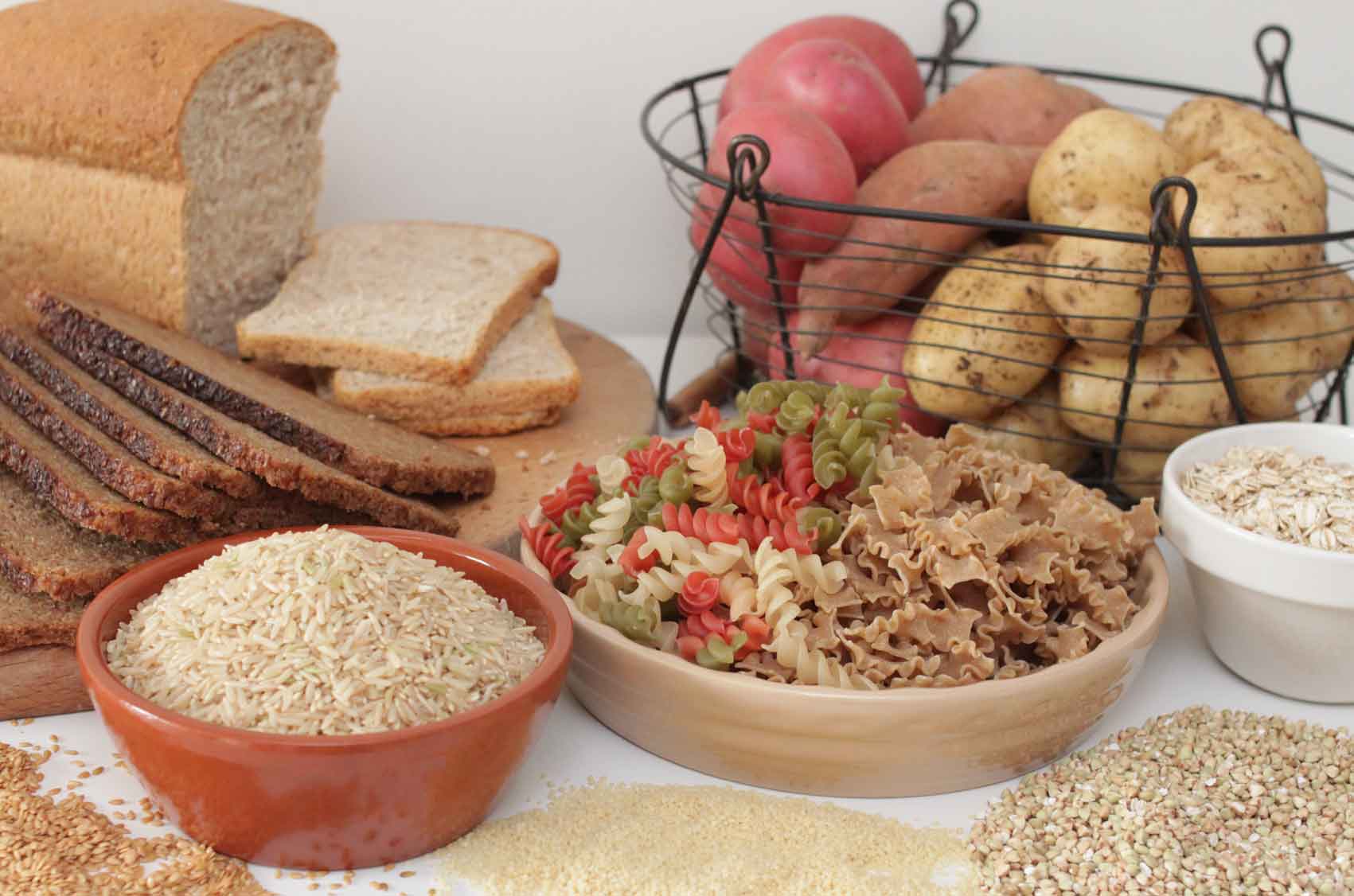
- Sources: Rice, oats, potatoes, beans, whole-grain pasta, and bread.
- Role in training: Provide slower, steadier energy, stabilize blood sugar, and keep you fuller for longer. Perfect as the foundation of daily meals and pre-workout fuel.
2. Natural vs. Processed Carbohydrates
Natural Carbohydrates
Found in whole foods such as fruits, vegetables, legumes, and whole grains. They provide not just carbs, but also vitamins, minerals, fiber, and phytonutrients. These are nutrient-dense choices that support overall health as well as performance.
Processed Carbohydrates
Found in foods like white bread, pastries, candy, sugary cereals, and soda. They are often stripped of fiber and micronutrients, making them energy-dense but nutrient-poor. While they can be helpful in very specific moments (e.g., post-workout for rapid glycogen replenishment), relying on them too heavily can lead to energy crashes and nutrient deficiencies.
3. Fast-Digesting vs. Slow-Digesting Carbohydrates
Another helpful way to classify carbs is by how quickly they are digested and absorbed. This overlaps with the concept of the glycemic index.
- Fast-digesting carbs: White rice, sports drinks, ripe bananas → best immediately after or during training.
- Slow-digesting carbs: Oats, sweet potatoes, legumes → best for steady energy throughout the day.
| Classification | Examples | Characteristics | Best Use in Training & Nutrition |
|---|---|---|---|
| Simple Carbohydrates | Fruit juice, candy, honey, sugar, ripe bananas | Quickly digested, rapid blood sugar spike, short-lasting energy | Useful pre-workout (fast fuel), intra-workout for long sessions, or post-workout for glycogen replenishment |
| Complex Carbohydrates | Oats, brown rice, potatoes, beans, whole-grain pasta | Slow digestion, steady energy release, high in fiber and micronutrients | Base of daily meals, excellent pre-workout (1–2 h before), supports satiety and stable energy |
| Natural Carbohydrates | Fruits, vegetables, legumes, whole grains | Nutrient-dense: provide fiber, vitamins, minerals, phytonutrients | Should make up 80–90% of carb intake; foundation of a healthy bodybuilding diet |
| Processed Carbohydrates | White bread, pastries, sugary cereals, soda | Energy-dense, nutrient-poor, often low in fiber | Limited use; can be used post-workout for quick glycogen restoration, but avoid as a dietary staple |
| Fast-Digesting Carbohydrates | White rice, sports drinks, cornflakes, dextrose | High glycemic index, rapid absorption | Best during or immediately after exercise when rapid energy is needed |
| Slow-Digesting Carbohydrates | Sweet potatoes, lentils, whole oats, apples | Low to medium glycemic index, steady blood sugar | Best for sustained energy throughout the day, prevents energy crashes, and is a great pre-workout base |
The Glycemic Index and Glycemic Load
The Glycemic Index (GI) measures how quickly a carbohydrate food raises blood glucose. However, it doesn’t account for how much of that food you eat.
- Low GI (≤55): Oats, lentils, apples. Slow digestion, steady energy.
- Medium GI (56–69): Brown rice, sweet potato. Moderate release.
- High GI (≥70): White rice, cornflakes, sports drinks. Rapid spike.
Glycemic Load (GL) adjusts GI for portion size, giving a more realistic picture of how a serving affects blood sugar.
| GI Category | Food Examples | GI Range | Best Use in Training & Nutrition |
|---|---|---|---|
| Low GI (≤55) | Oats, barley, beans, lentils, apples, pears, cherries, milk, yogurt, carrots, peanuts | 30–55 | Ideal for steady all-day energy, base meals, pre-workout fuel (1–2 h before training) |
| Medium GI (56–69) | Brown rice, sweet potato, corn, pineapple, couscous, orange, banana (ripe), rye bread | 56–69 | Balanced meals, good pre-workout carbs, useful in moderate-intensity sessions |
| High GI (≥70) | White rice, white bread, cornflakes, baked potato, watermelon, sports drinks, rice cakes, and honey | 70+ | Post-workout for rapid glycogen replenishment; occasional intra-workout fuel for long/high-intensity sessions |
👉 Example:
Watermelon
- GI ≈ 72 (high)
- But a normal serving (120 g) contains only ~6 g of available carbs
- GL = 72 × 6 ÷ 100 = 4.3 → low impact
Even though watermelon has a high GI, the small amount of carbs per serving means its real effect on blood sugar is low.
White Rice
- GI ≈ 70 (high)
- A serving (150 g cooked) contains ~40 g carbs
- GL = 70 × 40 ÷ 100 = 28 → high impact
Here, the combination of high GI and high carb content creates a much larger blood sugar spike.
Carbohydrates and Hormones
Carbs don’t just fuel your body—they influence hormones that dictate performance, appetite, and recovery.
- Insulin: An anabolic hormone. Eating carbs triggers insulin release, which helps shuttle glucose (and amino acids) into muscle cells.
- Cortisol: A stress hormone. Low-carb diets can elevate cortisol, increasing fatigue and impairing recovery.
- Leptin & Ghrelin: Hormones that regulate hunger. Carbs help maintain leptin, signaling fullness and metabolic health.

When to Eat Carbohydrates (Timing Strategies)
Carbohydrate timing is not the “make-or-break” factor for physique results — your total daily intake matters most. However, fine-tuning your carb intake can boost performance, improve recovery, and help keep hunger under control.
Pre-Workout Carbohydrates
Carbs eaten before training provide a readily available source of glucose and glycogen. This improves strength, endurance, and focus.
- Timing: 1–2 hours before training.
- Best choices: Moderate-GI carbs with some protein.
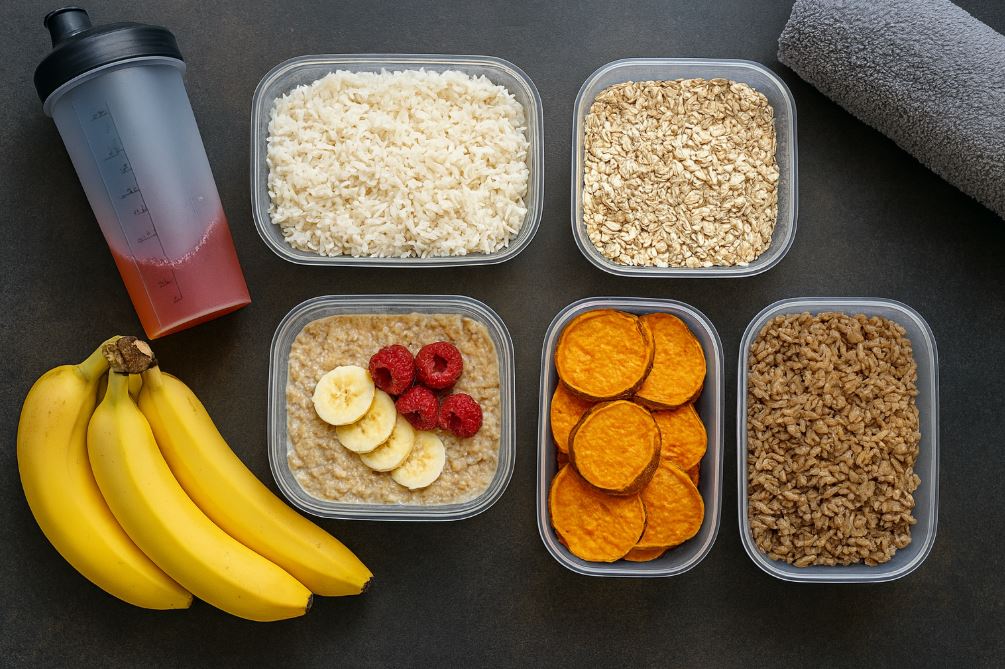
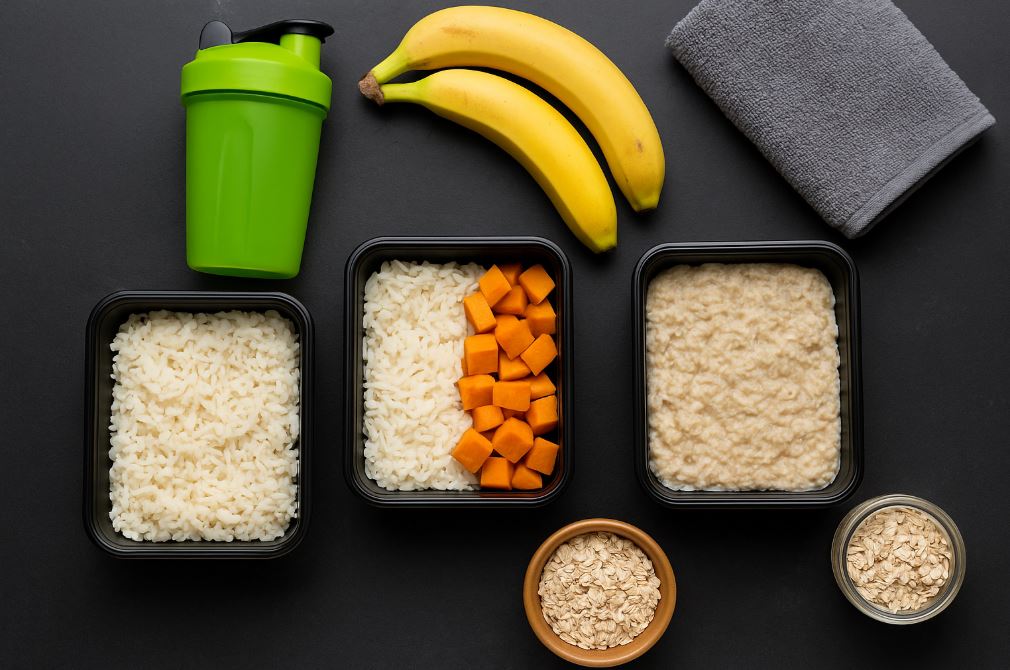
- Examples: Oats with banana and whey, rice with chicken, whole-grain toast with peanut butter.
⚡ Coach’s Note:
Clients who train on an empty stomach often feel flat and weak. Even a small snack (like a banana + whey shake) can dramatically improve performance compared to training fasted.
Intra-Workout Carbohydrates
For training sessions longer than 75–90 minutes, especially high-volume bodybuilding or endurance work, small doses of fast-digesting carbs can maintain intensity.
- Timing: Every 30–40 minutes during long sessions.
- Best choices: Sports drinks, dextrose, maltodextrin, gels, or even ripe fruit.
- Amount: 15–30 g carbs per hour.
👉 Example: 500 ml sports drink with 25 g carbs sipped gradually during training.

Post-Workout Carbohydrates
After intense training, muscles are susceptible to nutrients — the so-called anabolic window. Carbs at this time:
- Replenish glycogen stores.
- Trigger insulin release to shuttle nutrients into muscle.
- Reduce cortisol levels, speeding up recovery.
- Timing: Within 1–2 hours post-training.
- Best choices: High-GI carbs paired with protein.
- Examples: White rice + chicken, baked potato + salmon, whey shake + banana + honey.
⚡ Coach’s Note:
For bodybuilders training 5–6 days per week, consistent post-workout carbs are non-negotiable. Skip this meal too often, and you’ll feel the impact in your next session.
Evening Carbohydrates
The myth that carbs at night “turn into fat” has been debunked. What matters is your 24-hour calorie balance. Evening carbs may actually:
- Enhance sleep quality by supporting the production of serotonin and melatonin.
- Reduce late-night cravings.
- Aids overnight muscle recovery when paired with slow-digesting protein.
- Best choices: Lower-GI carbs combined with protein.
- Examples: Cottage cheese with oats, casein shake with berries, sweet potato with turkey.
⚡ Coach’s Note:
Some of my clients get their best sleep when they include a carb-based dinner. Instead of fearing carbs after 6 PM, learn to use them strategically.
| Timing | Why It Matters | Recommended Amount | Best Carb Choices | Example Meals/Snacks |
|---|---|---|---|---|
| Pre-Workout (1–2 h before) | Provides glucose for immediate energy, tops up glycogen stores, and improves focus and strength | 0.5–1.0 g/kg bodyweight | Oats, rice, whole-grain bread, banana, sweet potato | Oatmeal with banana + whey, rice with chicken, toast with peanut butter |
| Intra-Workout (during sessions >75–90 min) | Maintains energy, delays fatigue, sustains performance in long/high-volume workouts | 15–30 g carbs per hour | Sports drink, dextrose, maltodextrin, ripe fruit, gels | 500 ml sports drink with 25 g carbs, banana halfway through training |
| Post-Workout (0–2 h after) | Rapid glycogen replenishment, reduces cortisol, enhances recovery, and muscle protein synthesis | 0.8–1.2 g/kg bodyweight | White rice, potatoes, sports drink, honey, rice cakes | White rice + chicken breast, baked potato + salmon, whey shake + banana + honey |
| Evening/Pre-Sleep | Supports recovery, may improve sleep quality, and reduces late-night cravings | 0.5–1.0 g/kg bodyweight (depending on daily needs) | Oats, sweet potato, berries, whole grains | Cottage cheese + oats, casein shake + berries, turkey with sweet potato |
Recommended Carbohydrate Intake
General Population
- 45–65% of daily calories (according to WHO/USDA guidelines).
- Focus on whole grains, fruits, vegetables, and legumes.
Athletes & Bodybuilders
- 3–7 g per kg bodyweight (adjusted for training intensity and goals).
- In calorie terms: 45–55% of total energy.
- Higher end for endurance athletes or during bulking; lower end for cutting phases.
| Goal | Carbs (g/kg bodyweight) | Example for an 80-kg athlete |
|---|---|---|
| Maintenance | 4–5 g/kg | 320–400 g/day |
| Muscle Gain | 5–7 g/kg | 400–560 g/day |
| Fat Loss | 3–4 g/kg | 240–320 g/day |
To make this process easier, we’ve developed a Carbohydrate Intake Calculator: Optimal Intake for Muscle Gain & Weight Loss, which helps you quickly estimate the number of carbs you need based on your body weight, goals, and activity level.
Common Myths About Carbohydrates
Carbohydrates are surrounded by myths that confuse athletes and the general population alike. Many of these misconceptions come from oversimplified diet trends or fitness marketing. Let’s break down the most common myths and see what the science (and real-world coaching experience) actually says.
| Myth | The Reality | Coach’s Insight |
|---|---|---|
| “Carbs make you fat.” | Only a calorie surplus leads to fat gain, not carbs themselves. Carbs are stored as glycogen first and only turned into fat if total energy exceeds needs. | I’ve seen athletes drop fat while eating 300+ g carbs daily, because their calories and training were balanced. |
| “No carbs after 6 PM.” | Timing is far less important than total daily intake. Evening carbs can aid recovery and improve sleep. | Many of my clients sleep better with a carb-based dinner—ditch the clock rule and focus on your 24-hour nutrition. |
| “Low carb is superior for muscle gain.” | Muscle growth requires energy, and carbs are the most efficient training fuel. Low-carb diets often compromise strength and volume. | Strength athletes perform best with steady carb intake. Cutting carbs too much is the fastest way to stall progress. |
| “Sugar is always bad.” | Sugar in excess is harmful, but fast carbs have a role—especially post-workout or during long sessions. | A banana or sports drink after training isn’t “junk food”—it’s smart recovery fuel. |
| “Carbs are non-essential nutrients.” | True in a strict biochemical sense (the body can make glucose), but practically, carbs are essential for high-intensity performance. | In my coaching practice, lifters who avoid carbs always struggle with energy and recovery. |
Carbohydrates and Body Composition
Carbohydrates don’t just influence training performance—they directly affect how your body gains muscle or loses fat. The right carb strategy makes the difference between building lean mass and spinning your wheels.
Carbohydrates and Muscle Gain
When the goal is hypertrophy (muscle growth), carbohydrates provide the training fuel needed for heavy lifting and high training volume. Glycogen is what allows you to squeeze out extra reps, recover faster between sets, and train hard enough to stimulate new growth.
- Energy surplus with carbs: In a lean bulk, carbs should make up the majority of the calorie surplus. They allow protein to be used for muscle repair rather than burned for energy.
- Insulin’s role: Carbohydrates stimulate insulin, an anabolic hormone that not only helps shuttle glucose into muscles but also enhances amino acid uptake, creating an environment conducive to growth.
- Visible effect: Full glycogen stores draw water into the muscle, making the muscles appear fuller and harder. Many lifters notice they look “flat” when carb intake is too low.
Carbohydrates and Fat Loss
Carbs also have a role when the goal is to lose fat while preserving lean mass. Cutting carbs too drastically can backfire, because:
- Training intensity drops: With depleted glycogen, workouts suffer—fewer reps, less weight, slower progress.
- Muscle loss risk: Without carbs, the body may increase protein breakdown for fuel, threatening muscle mass.
- Hormonal effects: Low-carb diets can suppress leptin (a satiety hormone) and elevate cortisol, both of which make fat loss harder long-term.
Instead of eliminating carbs, smart strategies work better:
- Keep carbs around workouts for energy and muscle protection.
- Base most carbs on nutrient-dense, fiber-rich sources to control hunger.
- Use carb cycling (higher carbs on training days, lower on rest days) if fat loss plateaus.
| Goal | Recommended Intake (g/kg bodyweight) | % of Total Calories | Best Carb Sources | Coach’s Advice |
|---|---|---|---|---|
| Muscle Gain (Bulking/Lean Mass Phase) | 5–7 g/kg (sometimes up to 8 g/kg for very high-volume athletes) | 50–55% | Rice, oats, potatoes, pasta, fruit, legumes, whole grains | Don’t fear high carb intake — it fuels volume and intensity. Keep protein steady and let carbs drive growth. |
| Fat Loss (Cutting/Deficit Phase) | 3–4 g/kg (sometimes down to 2 g/kg for short periods) | 40–50% | Vegetables, berries, oats, sweet potatoes, brown rice, quinoa | Keep carbs centered around workouts to preserve strength. Don’t slash carbs completely—performance and recovery will suffer. |
| Maintenance (Weight Stability) | 4–5 g/kg | 45–50% | Mix of whole-food carbs: rice, fruit, legumes, potatoes, oats | Great for lifestyle athletes. Adjust up or down slightly depending on weekly energy balance. |
These numbers are starting points, not strict rules. In my coaching practice, I always look at performance indicators (strength, energy, sleep, recovery). If those drop, carbs are usually the first lever I adjust—often by as little as ±30–50 g/day. Minor tweaks beat extreme changes.
Coach’s Practical Advice
- Start with protein and calorie targets, then adjust carbs based on performance.
- Use complex carbs as your daily base, and fast carbs strategically around workouts.
- Track how you feel: if strength and energy dip, carbs are usually the first place to look.
Conclusion & Key Takeaways
Carbohydrates and exercise are inseparable. Carbs provide the energy that fuels performance, support hormonal balance, and speed recovery. When used intelligently—with the right types, timing, and amounts—they become your ally in building muscle, losing fat, and sustaining long-term athletic performance.
