



Introduction
The close-grip barbell bench press is one of the most valuable compound exercises for building triceps strength, pressing power, and overall upper-body development. While many lifters think of it only as a triceps movement, this exercise also trains the chest and anterior deltoids, making it an extremely efficient addition to any serious strength or hypertrophy program.
What makes the close-grip bench press especially important for triceps development is its ability to combine heavy loading with strong elbow extension demands. Unlike lighter isolation exercises, this movement allows you to overload the triceps with substantial weight while still using a familiar pressing pattern. For that reason, it is often used by bodybuilders, powerlifters, and strength athletes who want bigger arms and a stronger lockout in the standard bench press.
Other Names for the Close-Grip Barbell Bench Press
This exercise is referred to by several different names depending on the coaching style, training background, or gym culture. Knowing these alternative names can help you recognize the movement across different programs and exercise databases.
- Close-grip bench press
- Close-grip barbell bench press
- Narrow-grip bench press
- Close-hand bench press
- Triceps bench press
- Barbell close-grip press
Required Equipment
The close-grip barbell bench press uses standard gym equipment, but correct setup matters more here than many lifters realize. Because the exercise is usually performed with challenging loads, safety and bar control should always come first.
- Barbell – the main implement used for loading the exercise
- Flat bench – provides a stable pressing surface
- Power rack or bench press station – allows safe unracking and reracking
- Weight plates – used to progressively overload the movement
- Bar collars – keep the plates secure
- Optional spotter – strongly recommended for heavier sets
How to Perform the Close-Grip Barbell Bench Press
Proper execution is essential if you want this exercise to emphasize the triceps without turning into an awkward or uncomfortable press. The goal is not to force the hands into an ultra-narrow position, but to create a bar path and elbow angle that allow the triceps to contribute heavily while maintaining good pressing mechanics.
Starting Position (Setup)
Lie flat on the bench with your head, upper back, and glutes in contact with the bench. Plant your feet firmly on the floor to create lower-body stability and help generate full-body tension.
Grip the bar with a pronated grip slightly inside shoulder width. Unrack the bar and hold it above the mid-chest with your elbows extended. Before lowering the bar, pull your shoulder blades together, keep your chest lifted, and brace your torso so your upper body remains stable throughout the set.

Movement (Execution)
Lower the bar under control toward the lower chest or upper sternum area while keeping your elbows relatively close to your torso. The exact touch point may vary slightly depending on your build, but the bar should not drift excessively high toward the neck.
Pause briefly or lightly touch the chest, then press the bar back up by extending the elbows and driving it upward in a controlled motion. Keep your wrists stacked over your forearms, maintain upper-back tightness, and avoid letting the elbows flare too early during the press.
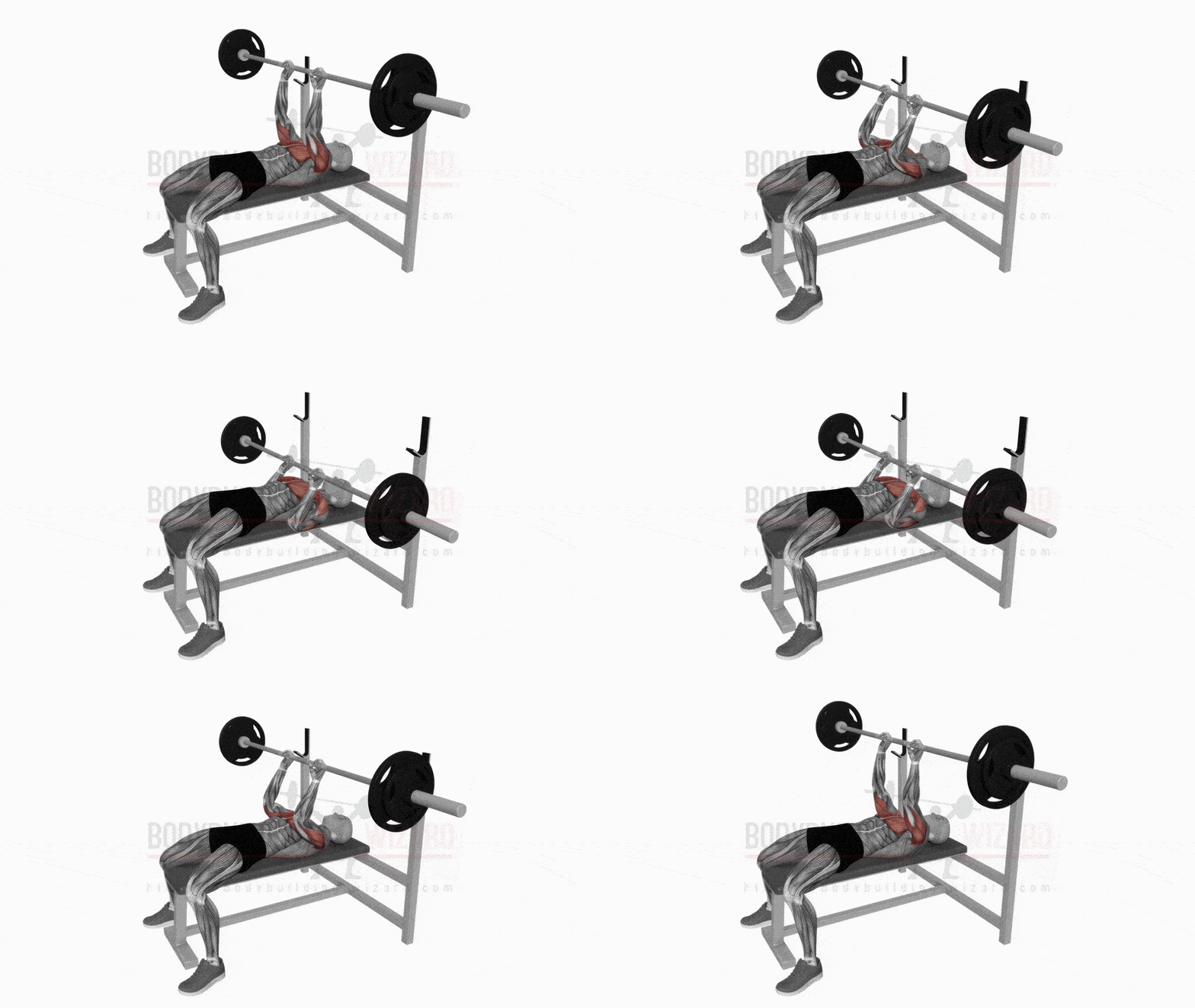
A close grip does not mean placing your hands extremely close together. In most cases, a grip that is just inside shoulder width is enough to increase triceps involvement while still keeping the wrists, elbows, and shoulders in a strong and safe pressing position.
Video Demonstration
Watching a good demonstration can make a major difference with the close-grip bench press because small technique details matter. Grip width, elbow angle, bar path, and setup tension all influence whether the exercise truly targets the triceps and remains comfortable on the shoulders and wrists.
Below, you can insert a video demonstration showing how to perform the close-grip barbell bench press with proper control, a safe range of motion, and a stable pressing position.
When watching the demonstration, focus on the fact that the elbows are usually kept closer to the torso than in a standard bench press, but not pinned unnaturally against the ribs. Also notice that the grip is narrower, not extremely narrow. This balanced positioning is what allows the movement to load the triceps heavily without putting unnecessary stress on the wrists and shoulders.
Muscles Worked in the Close-Grip Barbell Bench Press
The close-grip bench press is a compound pressing exercise, which means several muscles work together to move and stabilize the bar. Although the triceps are the main emphasis, the chest and shoulders still play an important supporting role.
- Primary muscles: triceps brachii
- Secondary muscles: pectoralis major, anterior deltoids
- Stabilizing muscles: rotator cuff, upper back, scapular stabilizers, forearms, core
- Antagonist muscles: biceps brachii, posterior deltoids, upper back pulling musculature
Because the movement involves both elbow extension and pressing mechanics, it can build triceps size in a way that isolation movements alone often cannot. At the same time, it teaches the body to apply triceps strength in a more athletic and transferable pattern.
Biomechanics of the Close-Grip Barbell Bench Press
Understanding the biomechanics of this exercise helps explain why it is so effective for both triceps development and pressing performance. Compared with a standard bench press, a narrower grip changes the movement’s leverage and generally increases the relative demand on the elbow extensors.
During the lowering phase, the elbows flex and the shoulders move into horizontal abduction. During the pressing phase, the triceps extend the elbows while the chest and anterior deltoids assist in driving the bar upward. Because the hands are placed closer together, the triceps typically contribute more to the lift than they would in a wider-grip bench press.
Another important point is that the close-grip bench press often emphasizes the mid-to-top range of motion, which is why it is frequently used to improve lockout strength. Lifters who struggle to finish presses often benefit from stronger triceps, and this exercise directly addresses that weakness.

Technique Optimization Tips
Small technical adjustments can make a major difference in how effective and joint-friendly the close-grip bench press feels. The goal is to create a smooth, controlled press that loads the triceps heavily without turning the lift into an unstable wrist-dominant movement.
- Use a grip that is slightly inside shoulder width, not excessively narrow
- Keep your wrists stacked over the forearms as much as possible
- Maintain upper-back tightness throughout the set
- Lower the bar to a consistent chest touch point
- Keep the elbows closer to the torso, but do not force them inward unnaturally
- Press the bar with control rather than bouncing it off the chest
- Brace the torso and keep your feet planted to improve stability
Quick Form Checklist
Before each set, run through these key cues to improve execution and consistency.
- Grip is close, but not too narrow
- Shoulder blades are retracted and stable
- Chest is up, and feet are planted
- Wrists stay stacked over the forearms
- Elbows track close to the body
- Bar lowers under control
- Press is smooth and powerful
In my coaching experience, one of the biggest mistakes lifters make with the close-grip bench press is turning it into a wrist-heavy, overly narrow press. They bring the hands too close together because they assume that “closer” automatically means “more triceps.” In reality, that usually makes the lift less stable and less comfortable. What I usually recommend is using a grip that is just slightly inside shoulder width, then focusing on clean elbow tracking, a stable upper back, and a controlled bar path. That setup almost always produces better triceps loading and far better long-term progress than forcing an ultra-close hand position.
Technical Emphasis & Targeting Adjustments
Minor setup and execution changes can influence how the movement feels and which tissues take the most stress. These adjustments do not completely change the nature of the exercise, but they can shift the emphasis in useful ways.
- Slightly narrower grip: generally increases triceps demand, but only up to a point
- More controlled eccentric: improves tension and bar control
- Pause on the chest: increases pressing discipline and starting strength
- Touching slightly lower on the torso often improves elbow alignment for many lifters
- Using a powerlifting-style setup can improve stability and load potential
- Using a flatter torso and less arch may slightly reduce load but increase strictness
Common Mistakes for the Close-Grip Barbell Bench Press
The close-grip barbell bench press is a highly productive exercise, but it can easily become inefficient if the setup is poor. Most mistakes happen because lifters misunderstand what “close grip” really means or because they sacrifice technique in order to move more weight.
- Using an excessively narrow grip. This is probably the most common error. Bringing the hands too close together often increases wrist strain and makes the lift awkward without meaningfully improving triceps stimulation.
- Letting the wrists bend back too much. Excessive wrist extension weakens bar control and can make the lift uncomfortable. Keep the bar positioned so the wrists stay as stacked and stable as possible.
- Flaring the elbows too early. If the elbows flare aggressively during the press, the movement starts to resemble a more chest-dominant bench press. Controlled elbow tracking usually keeps the triceps under greater tension.
- Bouncing the bar off the chest. Using momentum at the bottom reduces muscular control and increases joint stress. Lower the bar under control and press it smoothly.
- Losing upper-back tightness. If the shoulder blades move around during the set, the bar path becomes less consistent, and pressing stability drops. A stable upper back is a major part of safe and efficient benching.
- Lifting the hips or losing leg drive. Even though this is a triceps-focused press, it is still a full-body barbell movement. Poor leg stability often leads to poor pressing mechanics.
Close-Grip Barbell Bench Press Pros and Cons
Like any major compound exercise, the close-grip bench press has both clear strengths and a few limitations. Understanding both sides helps you place it intelligently within your training plan.
Benefits
#1 Excellent overload potential for the triceps
Unlike many isolation exercises, the close-grip bench press allows the triceps to handle relatively heavy loads. That makes it highly effective for both strength and hypertrophy.
#2 Strong carryover to other pressing movements
This exercise can improve lockout strength in the standard bench press, incline press, and overhead press because the triceps play a major role in the lockout phase of those lifts.
#3 Efficient compound upper-body training
The movement trains the triceps, chest, and shoulders simultaneously. This makes it especially valuable when you want more work from fewer exercises.
#4 Easy to progress over time
Because it is a barbell lift, tracking and progressing the load is simple and practical.
Downsides
#1 Can irritate wrists or elbows if the grip width is poor
An excessively narrow grip often creates more problems than benefits.
#2 Not a pure isolation exercise
If the goal is to completely isolate the triceps, other movements such as overhead extensions or pushdowns may be more precise.
#3 Requires good bench press technique
Lifters with poor barbell pressing mechanics may need to improve their setup and control before getting the most out of this exercise.
Close-Grip Barbell Bench Press Variations
The standard close-grip barbell bench press is already highly effective, but several variations can slightly change the stimulus, training purpose, or comfort level. These alternatives can help you keep progress moving while addressing individual needs.
Paused Close-Grip Barbell Bench Press Variation
In this variation, the bar is paused briefly on the chest before being pressed upward. The pause removes elastic rebound, forcing the lifter to generate force from a dead stop. This makes the movement especially useful for improving control, starting strength, and disciplined pressing mechanics.

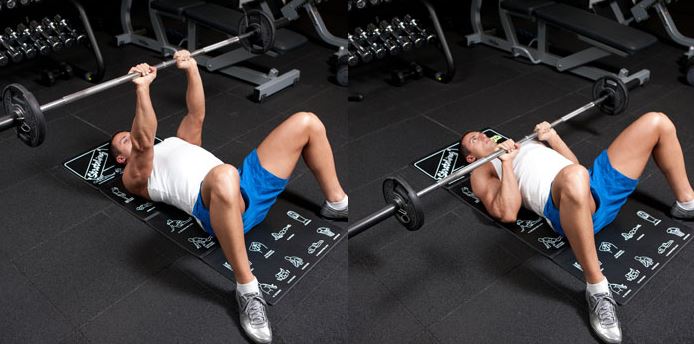
Close-Grip Barbell Floor Press Variation
This version is performed while lying on the floor rather than on a bench. The reduced range of motion usually shifts more emphasis toward the lockout portion of the lift and often makes the movement more comfortable for lifters with shoulder discomfort. It is an excellent variation for triceps strength and heavy pressing practice.
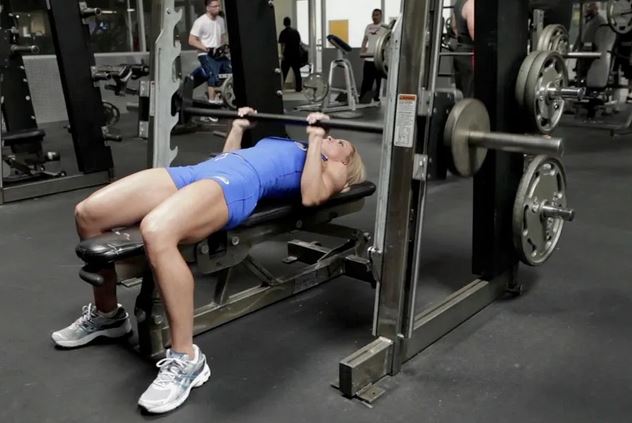
Smith Machine Close-Grip Bench Press Variation
The Smith machine version follows a guided bar path, which can make the exercise easier to stabilize. Because less attention is needed for balancing the bar, some lifters use this variation to focus more directly on triceps fatigue and hypertrophy. However, the fixed path may not feel equally natural for everyone.
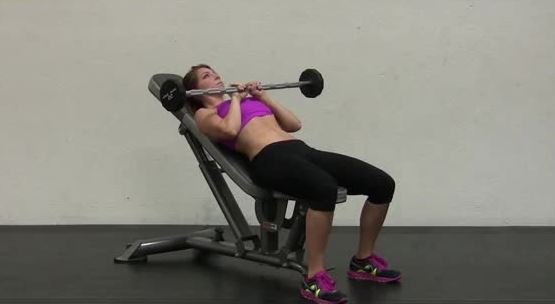
Incline Close-Grip Barbell Bench Press Variation
Performing the movement on an incline bench shifts a bit more work toward the upper chest and anterior deltoids while still heavily challenging the triceps. This can be a useful variation for lifters who want pressing variety or who wish to combine triceps emphasis with upper-chest training.
Close-Grip Dumbbell Bench Press Variation
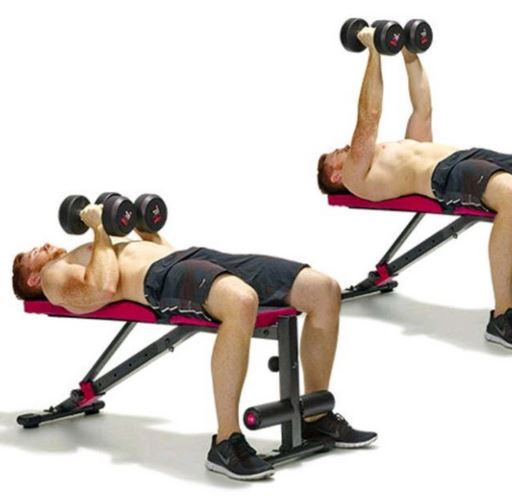
This variation uses dumbbells rather than a barbell. The neutral or semi-pronated hand position often feels more natural on the wrists and shoulders, and the independent movement of each arm can help improve muscular balance. It is a strong alternative for lifters who do not tolerate barbell pressing well.
Replacement Exercises (Substitutes)
If the close-grip barbell bench press is unavailable, uncomfortable, or simply not the best fit for a given phase of training, several other exercises can train the triceps effectively while still contributing to pressing strength or arm hypertrophy.
- Seated dumbbell triceps extension
- Assisted triceps dip (using assisted pull-up machine)
- Close-grip push-ups
- Parallel bar triceps dips – body weight dips
- Bench dips – dips behind the back
- Seated machine dips
- Dumbbell neutral-grip bench press
- Resistance band-assisted triceps dips
- EZ bar lying triceps extension (EZ-bar skull crushers)
- Incline EZ bar lying triceps extension
- Cable lying triceps extension
- Lying dumbbell triceps extension
- Seated EZ bar overhead triceps extension
These exercises can be rotated based on equipment availability, joint comfort, and whether your goal is more strength, more muscle, or a combination of both.
If you want to explore more options, check out our complete database of triceps exercises, where you can find detailed guides for a wide range of movements designed to build stronger and more developed triceps.
Where This Exercise Fits in a Workout
The close-grip bench press can be used in several different ways depending on the training goal. Because it is a relatively demanding compound movement, it is often placed earlier in the workout than isolation exercises.
In strength-focused routines, it may be used as a main triceps press or as a secondary press after the standard bench press. In hypertrophy programs, it often works well after one major chest press and before smaller triceps isolation work. Some lifters also use it on arm-focused days as their heavy triceps builder before moving on to exercises like skull crushers or cable extensions.
Because it combines overload potential with strong triceps emphasis, this is one of the best movements for building a workout around progressive triceps strength.
Sets and Reps Recommendation
The ideal set-and-rep scheme depends on whether your goal is strength, hypertrophy, or a blend of both. Since the close-grip bench press is a compound barbell exercise, it responds well to slightly lower rep ranges than many isolation triceps movements.
Strength emphasis:
4–5 sets of 4–6 repetitions
Strength + hypertrophy blend:
3–4 sets of 6–8 repetitions
Muscle hypertrophy:
3–4 sets of 8–10 repetitions
For most lifters, the 6–8 rep range is an excellent starting point because it allows meaningful loading while still preserving good technique and bar control.
Close-Grip Barbell Bench Press vs. EZ-Bar Skull Crushers
Both exercises are highly effective for building the triceps, but they do so in very different ways. The close-grip bench press is a compound press that allows heavier loading and greater carryover to pressing strength, while skull crushers are an isolation exercise that places more direct stress on elbow extension with less assistance from the chest and shoulders.
| Training Factor | Close-Grip Barbell Bench Press | EZ-Bar Skull Crushers |
|---|---|---|
| Exercise Type | Compound | Isolation |
| Primary Movement | Elbow extension + horizontal pressing | Elbow extension |
| Muscles Emphasized | Triceps, chest, anterior deltoids | Triceps brachii |
| Load Potential | High | Moderate |
| Stability Requirement | Moderate to high | Moderate |
| Best Use | Triceps strength, pressing power & compound hypertrophy | Triceps isolation & hypertrophy |
The close-grip bench press is usually the better choice when you want to build stronger presses and overload the triceps with heavier weights. The EZ-bar skull crusher is often the better option when you want more direct triceps isolation and a movement that limits chest involvement.
For many lifters, the smartest approach is not to choose one over the other, but to use both in the same program. The close-grip bench press can provide the heavy compound stimulus, while skull crushers can finish the triceps with more direct isolation work.
Final Thoughts
The close-grip barbell bench press is one of the most important triceps-building exercises you can include in a strength or hypertrophy program. It combines the overload potential of a barbell press with a bar path and elbow position that place major demands on the triceps, making it a powerful tool for bigger arms and stronger lockouts.
When performed with a sensible grip width, stable upper-body positioning, and controlled bar path, this exercise can deliver excellent long-term results. It is especially valuable for lifters who want more than just a pump-based triceps movement and are looking for a serious exercise that builds both muscle and pressing performance.
Is the close-grip bench press better for triceps than regular bench press?
Yes, the close-grip bench press places significantly greater emphasis on the triceps because the narrower hand position reduces the contribution of the chest and increases elbow extension demands. While the chest still assists the movement, the triceps perform a larger portion of the pressing work.
How narrow should your grip be during a close-grip bench press?
Most lifters should grip the bar slightly inside shoulder width, not extremely narrow. A grip that is too close can place unnecessary stress on the wrists and elbows without improving triceps activation. The ideal grip allows the forearms to stay vertical at the bottom of the lift.
Does the close-grip bench press build chest muscles too?
Yes. Even though the triceps are the primary movers, the pectoralis major and anterior deltoids still contribute significantly to the pressing movement. This makes the exercise a compound lift rather than a pure isolation movement.
Why do powerlifters often use the close-grip bench press?
Powerlifters frequently use this exercise as an accessory movement to strengthen the lockout phase of the standard bench press. Because the triceps are responsible for finishing the press near the top, strengthening them can improve overall bench press performance.
Is the close-grip bench press safer for the shoulders than regular bench press?
For many lifters, yes. The tucked-elbow position commonly used in the close-grip bench press can reduce shoulder stress compared with wide-grip pressing. However, proper technique and shoulder stability are still essential for safety.
Should the bar touch the chest during a close-grip bench press?
In most cases, the bar should lightly touch the lower chest or upper sternum before being pressed upward again. Touching the chest helps maintain a consistent bar path and ensures a full range of motion.
What is the biggest technical mistake in the close-grip bench press?
One of the most common mistakes is letting the elbows flare outward too early during the press. This shifts the emphasis toward the chest and shoulders instead of the triceps and can also increase shoulder strain.
Can beginners perform the close-grip bench press safely?
Yes, beginners can perform the exercise safely as long as they start with moderate weights and proper setup. Learning to maintain upper-back tension, stable wrist alignment, and controlled bar movement is more important than lifting heavy weight.
Is the close-grip bench press effective for building bigger arms?
Absolutely. Because the triceps make up roughly two-thirds of the upper arm, strengthening them through compound movements like the close-grip bench press can significantly contribute to overall arm size.
Should the close-grip bench press be placed early or late in a workout?
If your goal is strength development, the exercise is usually performed earlier in the workout while the muscles are fresh. If the goal is additional triceps hypertrophy, it can also be used later in the session after heavier chest presses.
