


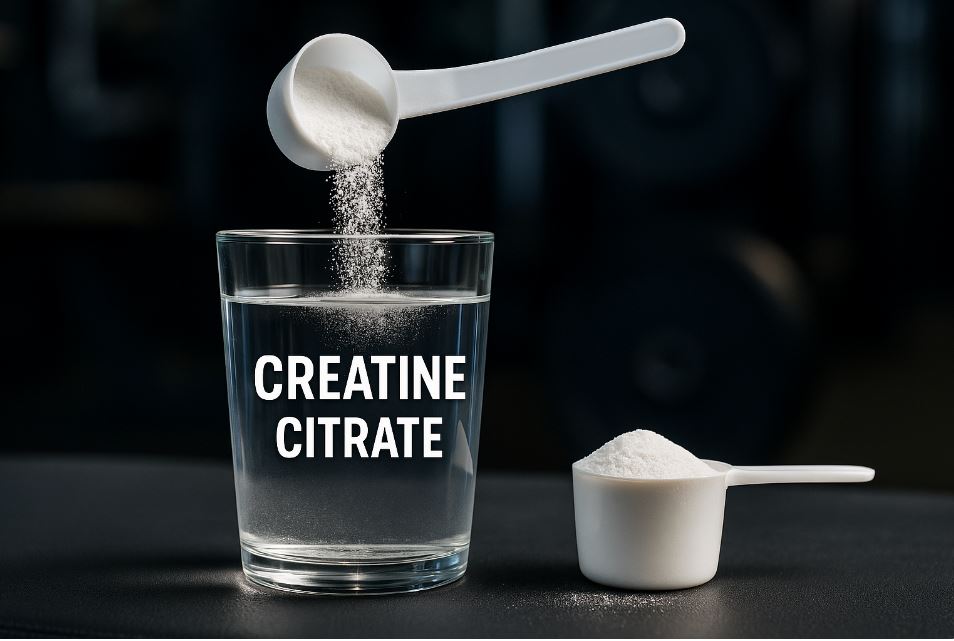
Creatine supplements have been a cornerstone in the fitness and bodybuilding world for decades. Among the many forms available, Creatine Citrate has often been marketed as a superior alternative due to its better solubility and potential for fewer digestive issues. But does it truly offer an edge over the tried-and-true creatine monohydrate? Let’s break it down.
What is Creatine Citrate?
Creatine citrate is simply creatine bound to citric acid. The rationale behind this formulation is straightforward: citric acid increases solubility in water, allowing the powder to dissolve more easily compared to the monohydrate.
Manufacturers claim that this better solubility makes it easier to drink, reduces stomach upset, and potentially improves absorption. It’s also often said to have a slightly better taste than monohydrate, which some people find sandy or chalky.
In essence, creatine citrate isn’t a “new” molecule with altered performance properties; it’s the same creatine, just delivered in a more soluble form.
Mechanism of Action — How It Works
Like all creatine supplements, creatine citrate works by increasing intramuscular phosphocreatine stores, which in turn fuels ATP (adenosine triphosphate) regeneration during high-intensity, short-duration exercise (like weight lifting).
The citric acid component does not alter creatine’s biological mechanism. Once ingested and absorbed, it delivers creatine to the muscles in a manner similar to monohydrate. The supposed advantage lies only in improved solubility and potential digestive comfort.
Potential Benefits of Creatine Citrate
The benefits most frequently attributed to creatine citrate include:
- Better solubility in water – it dissolves more easily than monohydrate, which can help people who dislike the gritty texture. This makes it easier to mix into shakes or even plain water without leaving residue at the bottom of the glass.
- Possibly fewer gastrointestinal issues – for individuals who experience bloating, stomach cramps, or mild nausea with monohydrate, citrate may feel gentler on the digestive system. Its improved solubility could reduce undissolved particles that sometimes irritate the stomach lining.
- Better taste and mixability – citric acid adds a slightly tangy flavor, which some users prefer. This makes it more appealing for athletes who dislike the bland or chalky taste of monohydrate powder.
- Potentially faster absorption – although not consistently proven in studies, some supplement companies market citrate as being absorbed into the bloodstream more quickly due to its solubility. While performance benefits don’t appear greater, it may shorten the time needed for plasma creatine levels to rise after ingestion.
You may never display the razor-sharp conditioning of Lou Ferrigno, Jay Cutler, or Ronnie Coleman, yet both creatine citrate and monohydrate still support fuller muscles and consistent strength gains.
Drawbacks and Limitations
Despite the appealing marketing claims, creatine citrate has some important drawbacks that every athlete should be aware of:
- More expensive – compared to monohydrate, creatine citrate typically costs noticeably more per serving. For long-term users or those running extended cycles, the price difference can add up quickly, making it less practical for budget-conscious athletes.
- Lower creatine content per gram – because a portion of the molecule is made up of citric acid, creatine citrate delivers less pure creatine per gram than monohydrate. In practice, this means you need larger doses to achieve the same effect, which further increases cost and reduces convenience.
- No superior performance evidence – current scientific studies consistently demonstrate that creatine citrate does not outperform creatine monohydrate in muscle strength, hypertrophy, or endurance outcomes. While it dissolves more easily, this improved solubility has not translated into measurable athletic advantages.
- Limited availability and variety – unlike monohydrate, which comes in countless powder, capsule, and flavored forms, creatine citrate is less common and harder to find. This limited selection may restrict choices for athletes who prefer certain formats (e.g., capsules over powder).
Creatine Citrate Pros
Creatine Citrate Cons
Research and Scientific Evidence
Several studies have compared creatine citrate (along with other types of creatine) to monohydrate and found no significant differences in performance or outcomes.
- Peeters, B. M., et al. (1999).Effect of oral creatine monohydrate and creatine phosphate supplementation on maximal strength indices, body composition, and blood pressure. The Journal of Strength and Conditioning Research.
- Found that both monohydrate and citrate improved performance, but neither outperformed the other.
- Volek, J.S., et al. (1999).Performance and muscle fiber adaptations to creatine supplementation and heavy resistance training. Medicine & Science in Sports & Exercise.
- Confirmed that strength gains were similar regardless of the creatine form used.
- Jäger, R., et al. (2007).Comparison of new forms of creatine in raising plasma creatine levels. Journal of the International Society of Sports Nutrition.
- Reported that creatine citrate increased plasma creatine, but not more effectively than monohydrate.
Dosage and Usage Guidelines
Because creatine citrate contains less creatine per gram, larger servings are needed to match monohydrate doses.
- Standard dose: To equal the effect of 5 g monohydrate, you would need closer to 6–7 g of creatine citrate.
- Loading phase: Similar to monohydrate (20 g/day split into 4 doses for 5–7 days), though not required.
- Maintenance phase: 3–5 g/day (monohydrate equivalent), meaning 4–7 g of citrate depending on purity.
It mixes well with water or juice, making it convenient for daily use.
Results / Expected Outcomes
Supplementation with creatine citrate provides outcomes very similar to monohydrate:
- Increased muscular strength during resistance training, particularly in short, high-intensity bouts.
- Enhanced sprint and explosive performance, with some users noticing quicker bursts of power in sports requiring repeated sprints or jumps.
- Faster recovery between sets allows for slightly higher training volume and reduced fatigue over multiple sessions.
That said, the magnitude of these results does not exceed that of monohydrate. In other words, it works—but not better. For most athletes, the strength, power, and recovery benefits are indistinguishable from those seen with creatine monohydrate. Some anecdotal reports suggest slightly improved solubility and fewer stomach issues compared to monohydrate, but scientific evidence does not show superior physiological adaptations.
Side Effects of Creatine Citrate
Creatine citrate is generally safe when taken in appropriate dosages. Side effects are similar to those seen with monohydrate:
- Mild gastrointestinal upset (though often less frequent than with monohydrate).
- Water retention (an expected outcome of creatine use).
- No specific additional risks linked to citrate form.
Tips for Choosing the Right Creatine Citrate Supplement
When selecting a creatine citrate product, consider the following:
- Check purity – avoid products with unnecessary fillers or proprietary blends.
- Look for reputable brands with third-party testing.
- Mind the dosage – make sure you’re aware of the effective creatine content per serving.
Lab-Tested Results You Can Trust
Not all creatine supplements are created equal. My latest 2025 guide ranks the cleanest, safest, and most effective options based on real testing and coaching experience.
Read the Expert Review →Creatine Citrate vs Creatine Monohydrate
Below is a side-by-side, practical comparison of Creatine Citrate and Creatine Monohydrate across key criteria, with a concise verdict in the last column.
Bottom Line (Conclusion)
Creatine citrate offers better solubility and possibly less stomach discomfort, but it does not provide superior performance benefits compared to monohydrate. It’s more expensive and less creatine-dense, making it a less practical choice for most athletes.
If your primary concern is effectiveness, creatine monohydrate remains the gold standard. Citrate is best reserved for individuals seeking comfort and taste rather than performance gains.
All information in this article is grounded in reputable scientific research and has been carefully reviewed by qualified experts in the field. Our aim is to present accurate, balanced, and transparent content, providing readers with well-rounded insights that consider different perspectives.
Throughout the article, you may find numbered citations (1, 2, 3) that link directly to peer-reviewed studies and credible scientific sources, allowing you to explore the evidence in greater depth.
The information provided in this article is intended for general informational and educational purposes only. It should not be considered medical advice or a substitute for professional consultation. Dietary supplements are not meant to diagnose, treat, cure, or prevent any disease, and their effectiveness may vary between individuals.
Always consult a qualified healthcare professional before starting any new supplement regimen—especially if you are under 18, pregnant, breastfeeding, have a medical condition, or take prescription medications.
The author and the Bodybuilding Wizard website are not responsible for any health issues, side effects, or adverse outcomes resulting from the use or misuse of supplements discussed herein. Use supplements only as directed by the manufacturer and prioritize a balanced diet, proper training, and recovery as the foundation of your fitness journey.
