
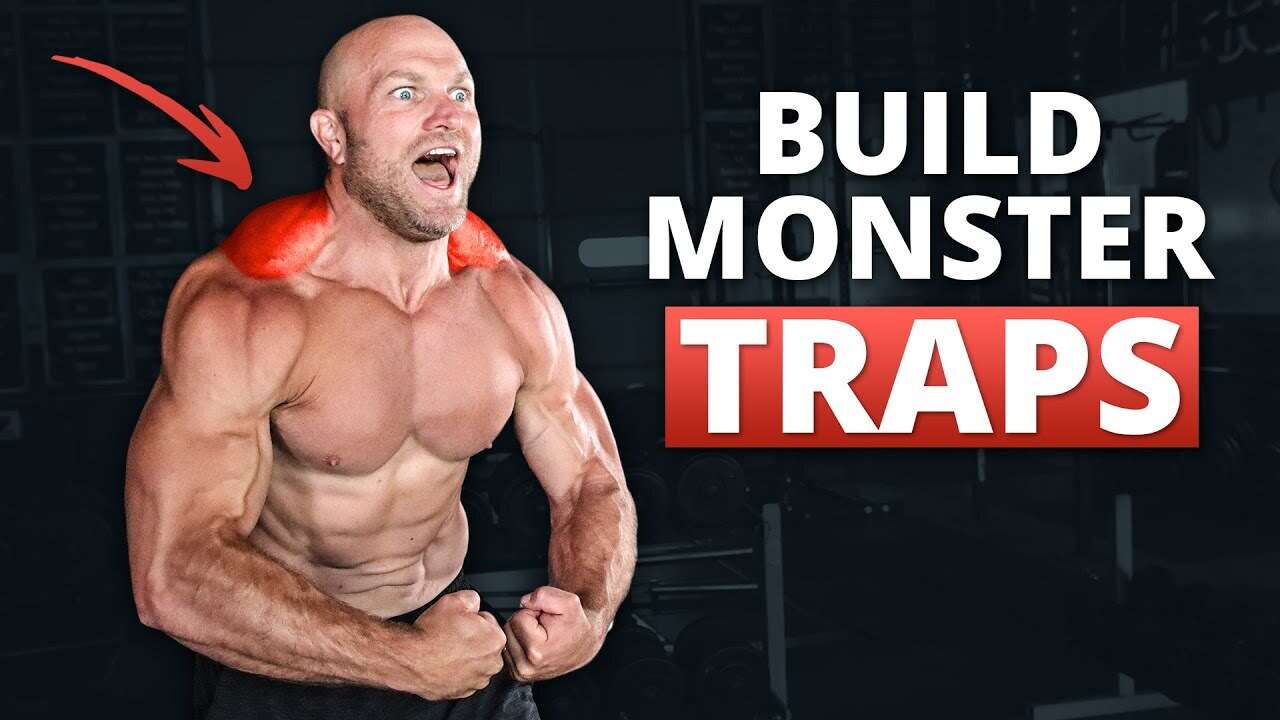
Looking to build monster trapezius muscles? Look no further! Trapezius muscle exercises are finally here! Building strong and well-defined traps is a goal for many fitness enthusiasts. This is for a good reason. Well-developed traps are crucial for maintaining proper shoulder function (avoiding shoulder injuries) and stability. The traps work together with your rotator cuff muscles to support your shoulder joint and ensure smooth, coordinated movement. In addition, having strong traps improves your sporting abilities and everyday fitness, gives you confidence, and keeps you standing tall. Well-built traps help football players
and wrestlers to get that “no neck” look.
In this article, we’ll share with you some killer exercises that will help you achieve those impressive traps you’ve always wanted. When it comes to building monster trapezius muscles, it’s important to incorporate a variety of exercises into your training routine. While heavy barbell shrugs and dumbbell shrugs & holds are great for targeting the trapezius muscles, there are a few additional exercises that can take your trap development to the next level. Each listed exercise will be backed up with detailed instructions, tips, and a clear video presentation of the correct technique of performance.
Brief anatomy of the trapezius muscles
The trapezius (often referred to as trap) is a large superficial diamond-shaped (triangular-shaped) muscle that extends from the back of the neck to the mid-back and draws the shoulder blades backward and upwards – as well as turning the head and bending it backward.
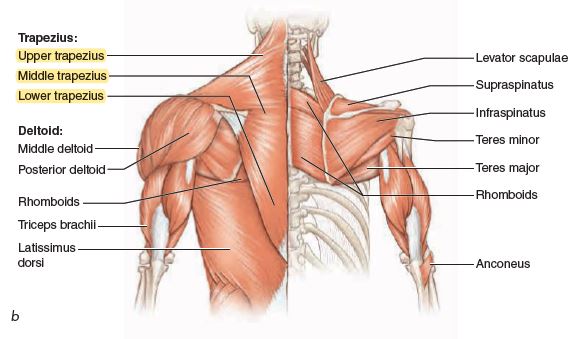
The trapezius muscles are anatomically divided into 2 major parts (middle traps are really not that special):
- Upper-trapezius muscles. These muscles raise the shoulders. The upper trapezius muscles are useful in contact sports, combat sports, and shot put. Other than the strength they provide, they also protect the neck. Aesthetically, the trapezius muscles create an impressive look that can be seen even through clothing. A large neck and impressive trapezius muscles are ideal for frightening an opponent. This is a classic combination in ultimate fighting and boxing. When you do shoulder shrugs, it is usually the upper trapezius that does the work. This is the part we focus on here. Another exercise for the trapezius is the upright row (as described in the shoulder section) using a close grip.
- Lower-trapezius muscles. These muscles perform the opposite task of the upper trapezius muscles by lowering the arms. They are antagonistic to the upper trapezius, and they also bring the shoulder blades together. For athletes, the purpose of the lower trapezius is, above all, to stabilize, and therefore protect, the shoulder joint. A weak lower-trapezius muscle encourages deltoid injuries. For this reason, it is much more important to develop the lower trapezius than the upper trapezius. The primary exercises that work the lower trapezius are rows and lateral raises done while leaning forward.
Scientific studies show a large disparity in development between the upper and lower trapezius in strong athletes. When athletes are compared with sedentary people who have the same body weight, the athletes have much stronger upper-trapezius muscles than sedentary people. However, in the lower trapezius, athletes are no stronger than sedentary people. This is an imbalance that will negatively affect performance. You should correct this common imbalance as soon as possible by doing more rowing and more lateral raises for the back.
If you are more interested in the anatomy of your traps (muscle shape, size, location, function, muscle origin, and insertion), we refer you to our article which deals exclusively with the anatomy of the trapezius.
The best exercise to target the trapezius muscle
The best exercise for this muscle is, without doubt, shrugs, which duplicate exactly the trapezius’s major function. Shrugs build the trapezius muscles in the space between your neck and shoulder. You can perform shrugs using a barbell, dumbbells, or machine.
The other exercise is the upright row. The upright row exercise primarily works the traps, but they get a lot of help from the medial deltoids. The higher you raise your arms, the more the upper trapezius is recruited and the less the lateral (medial) delts are involved.
| Exercise name | Variations |
|---|---|
| Primary trapezius exercises | |
| Shrugs | Olympic barbell shrugs |
| Hex bar shrugs | |
| Smith machine shrugs | |
| Machine shrugs | |
| Dumbbell shrugs | |
| Weight plates shrugs | |
| Cable shrugs | |
| Rear shrugs | |
| Dumbbell decline shrugs | |
| Dumbbell incline shrugs | |
| Upright rows [1] | Barbell upright rows |
| EZ bar upright rows | |
| Cable upright rows | |
| Resistance band upright rows | |
| Dumbbells upright row | |
| Smith-machine upright rows | |
| Secondary trapezius exercises | |
| Rows [2] | Seated cable rows |
| Bent-over barbell rows | |
| Freestanding T-bar rows | |
| Chest-supported T-bar rows | |
| Face pulls | Cable face pulls |
| Resistance band face pulls | |
| Farmer's walk (Farmer's carry) | Dumbbells walk |
| Kettlebells walk | |
| Trap bar carry (walk) | |
| Rickshaw carry (walk) | |
| Deadlifts | Barbell deadlift |
[1] When doing upright rows use a close grip, raise the bar close to your body vertically upward as high as you can (until it reaches your chin). Raising the elbows only to a shoulder level will emphasize your delts.
[2] When doing classic rowing exercises to hit the trapezius pull the bar up higher toward the chest. A low trajectory toward the abdomen works the latissimus dorsi.
When it comes to trapezius exercises, there are plenty of options to choose from. Our exercise database contains many trapezius exercises (including the upper-, middle-, and lower-trapezius muscle fibers) you can choose from. However, not all trap exercises are created equal (while they all have their unique advantages), and some may be more effective than others in achieving your desired results (maximal muscle growth). Since you can’t do them all, we’re sure you want to know the best trap exercises to include in your back or shoulder workout routine – those that provide total muscle stimulation. We’ve done the work to compare them for you and to make the list of those who really stand out with their ability to promote the greatest growth.
How did we choose exercises? As usual, we took the science into account. These exercises were chosen based on their proven results in the lab, ease of learning and performing, total muscle stimulation and intensity, popularity among lifters and bodybuilders, and availability of equipment in commercial gyms. By incorporating a combination of these exercises into your routine, you can effectively target and develop your traps.
Here’s how to perform some of the exercises listed in the table above.
Primary trapezius exercises: Different versions of shrugs
Shrugs earn their reputation as one of the best exercises for sculpting mountainous traps. They specifically target the trapezius muscles, which span your neck, shoulders, and upper back. Because the exercise focuses on this area, your trapezius will work harder compared to other exercises, leading to impressive muscular development and growth. Besides their efficacy, what is truly unique about shrugs is their versatility.
#1 Barbell shrugs
HOW TO DO IT:
- Stand upright and hold a barbell with both hands in front of your thighs, palms facing your body (overhand grip). Your hands should be slightly wider than shoulder-width apart.
- Take a deep breath and shrug your shoulders upwards towards your ears (don’t roll them back), ensuring you keep the bar close to your body at all times.
- Hold this contraction for a moment, squeezing your traps at the top.
- Slowly lower the barbell back to the starting position while keeping your back straight and your gaze forward.
COACH’S TIP (PERFORMANCE POINTERS):
- As you get more comfortable, increase the weight to further challenge your traps.
- You can also use a reverse grip if the weight is heavy (perform one set with the right hand overhand and the left hand underhand and switch on the following set).
- The higher the bar is raised, the harder the trapezius works.
- Do not roll or rotate the shoulders – lift the bar straight up and down.
- Your arms do no more than hold the weights.
#2 Hex bar (trap bar) shrugs
The hex bar shrugs allow you to use a neutral grip which is the best hand position for performing shrugs. This trapezius exercise is a great alternative to barbell shrugs because hex bars put less strain on your lower back than a regular barbell.
HOW TO DO IT:
- Start by standing in the center of a hex or trap bar, feet shoulder-width apart. Ensure the bar is properly loaded with weights on each side.
- Bend your knees slightly, pushing your hips back to reach down and grasp the handles on each side of the bar. Select a grip that feels most comfortable – typically, palms can face your body (neutral grip).
- Engage your core and straighten your back. This is your starting position.
- Keeping your arms straight and focusing on using your shoulder muscles, raise the bar by shrugging your shoulders upward towards your ears. Remember, it’s not about lifting the bar with your arms but elevating your shoulders.
- Hold at the top of the movement for a moment, maximizing muscle contraction in your trapezius.
- Gently lower the bar back to the starting position, allowing your shoulders to stretch downwards under the weight’s control.
COACH’S TIP (PERFORMANCE POINTERS):
- Avoid tilting your head in any direction, bending your elbows, or jutting your chin forward.
- Stop rolling your shoulders during shrugs. In other words, raise your shoulders straight up towards your ears (don’t roll them back or forward), keeping your arms straight.
- Always raise your shoulders as high as possible, as if you were trying to touch your trapezius muscles to your ears.
- As you lower the trap bar, allow your shoulders to drop down (to sink) as far as possible – this stretches the trapezius and increases the range of motion.
#3 Barbell wide shrugs
When you perform shrugs with a shoulder-width grip, you primarily target the upper trapezius. It’s an effective exercise for adding mass and thickness to your upper traps. However, when you opt for a wider grip, you change the focus to the middle traps as well. This happens because the wider grip needs extra stabilization which the middle traps provide, as well as the additional work of lifting the barbell upwards. Thus, wide-grip shrugs are an excellent way to develop a more balanced trap development by engaging both the upper and middle portions of your trapezius muscles. However, a wider grip works the deltoid as well.
HOW TO DO IT:
- Start by standing upright, your feet shoulder-width apart, and hold a barbell in front of you with a wider-than-shoulder-width grip.
- Your hands should be facing towards your body and your arms should be fully extended.
- Keep your back straight and now shrug your shoulders upwards towards your earlobes. Ensure you do not bend your elbows while doing so.
- Once you feel a squeeze in your trapezius muscles, pause for a second.
- Slowly lower the barbell back to the starting position.
COACH’S TIP (PERFORMANCE POINTERS):
- The movement should come from your shoulders, not your biceps. So keep your arms straight throughout the movement.
- Raise your shoulders as high as possible, as if you were trying to touch your trapezius muscles to your ears.
#4 Behind-the-back barbell shrug (rear shrug)
When you execute a barbell shrug with the bar behind your hips, otherwise known as a rear shrug, it engages scapular retraction. This action pulls your shoulders back, placing greater emphasis on the mid-fibers of your trapezius muscle. Furthermore, carrying out a rear shrug prompts good posture by naturally maintaining your shoulders in a backward position and enhancing chest prominence.
HOW TO DO IT:
- Stand upright and hold a barbell with a shoulder-width grip, or, as shown in the video, with a wider-than-shoulder-width grip.
- Position the barbell behind your body, resting it against the rear of your thighs. This is your starting position.
- Begin the exercise by shrugging your shoulders straight upwards towards your ears, focusing on the contraction in your trapezius muscles.
- Hold this peak contraction for a brief moment before slowly lowering the barbell back down to the starting position.
COACH’S TIP (PERFORMANCE POINTERS):
- When performed correctly, this will stimulate the mid-fibers of your trapezius muscles and promote shoulder stability.
- Be sure to use a weight that allows you to maintain good form throughout the exercise.
#5 Dumbbell shrugs
Dumbell shrug is another great exercise for developing monster traps.
HOW TO DO IT:
- Stand tall with your feet hip-width apart and hold a dumbbell in each of your hands at your sides. Ensure your palms are facing your body. This is your starting position.
- Keeping your arms straight, shrug your shoulders as high as you can. Imagine you’re trying to touch your shoulders to your ears.
- Hold this contracted position for a moment as you squeeze your trapezius muscles hard.
- Slowly lower the weights back to the initial position as you control the resistance. This full range of motion is crucial to ensure effective muscle engagement.
- Repeat the steps for the recommended amount of repetitions.
COACH’S TIP (PERFORMANCE POINTERS):
- Don’t roll your shoulders backward or forward as you lift. This can lead to shoulder impingement.
- Keep control over the weights at all times – don’t let them control you! A slow and steady pace is more effective than speed.
- Resist the urge to use your biceps to lift the weights. Remember, this exercise is for your traps. Keeping your arms straight helps ensure that your traps do the work.
- If possible, look at yourself in a mirror from the side to keep your form in check.
- Gradually increase your weights as you get comfortable. Stronger traps will allow you to handle more weight safely.
#6 Smith-machine shrugs
When it comes to sculpting monster traps, performing Smith-machine shrugs is an excellent choice. The fixed path of the Smith machine helps to isolate the traps; there’s less risk of improper form leading to injury. However, the same fixed path can also limit the recruitment of stabilizer muscles.
HOW TO DO IT:
- Position yourself in a Smith machine with your feet shoulder-width apart.
- Grab the bar with a little more than a shoulder-width grip.
- Stand upright, pull your shoulders back, and lift the weight off the rack. You are now starting in the neutral position.
- Begin the movement by shrugging your shoulders upwards as high as you can. Take a moment to flex your traps at the top.
- Control the descent back to the neutral position. Do not rush this movement; keeping it slow and controlled will increase the tension and hence the effectiveness of the exercise.
- Repeat this movement for your desired number of reps.
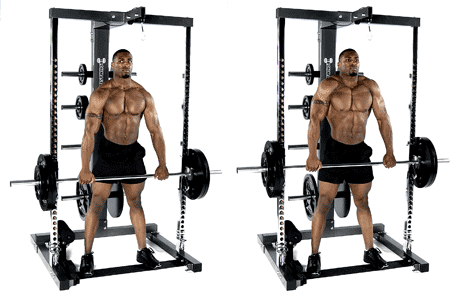
COACH’S TIP (PERFORMANCE POINTERS):
- Don’t roll your shoulders backward or forward as you lift. This can lead to shoulder impingement.
- The higher the bar is raised, the harder the trapezius works.
- Your arms do no more than hold the weights.
- You can also perform rear shrugs using the Smith machine
#7 Weight plate shrugs
HOW TO DO IT:
- Stand with your feet shoulder-width apart, your knees slightly bent, and your back straight.
- Pick up a weight plate in each hand.
- Let your arms hang straight down at your sides with your palms facing inward, towards each other.
- While keeping the rest of your body still, shrug your shoulders upwards, towards your ears, as high as you can. Imagine you are trying to touch your shoulders to your ears.
- Hold the top position for a second or two to maximize the contraction in your trapezius muscles.
- In a controlled manner, lower your shoulders back down to the starting position.
- Repeat for the recommended number of repetitions.
COACH’S TIP (PERFORMANCE POINTERS):
- Avoid using your biceps to lift the weight plates.
- Make sure to perform each rep with a controlled and slow movement, both on the way up and on the way down.
#8 Dumbbell decline shrugs (chest-supported incline shrugs)
Now let’s dive into another power-packed trapezius building exercise: the dumbbell decline shrugs, also known as chest-supported incline shrugs. This exercise is a great way to isolate and blast your traps.
HOW TO DO IT:
- Start by setting an adjustable bench at a 45-degree incline. Make sure you’re facing the bench.
- Grab a pair of dumbbells and lay chest-down on the incline bench, allowing your arms to hang straight down.
- Maintain a neutral neck position; this allows you to solely target your traps.
- Slowly shrug your shoulders upwards towards your ears. Pause at the top for maximum contraction.
- Lay weight equally on both feet, keeping your body stable throughout.
- Slowly release the shrug and lower the dumbbells guided by control. Feel the stretch at the bottom.
- Repeat this for the recommended amount of repetitions for effective results.
COACH’S TIP (PERFORMANCE POINTERS):
- Maintain a slow and controlled motion throughout. This will help stimulate maximum muscle activation and prevent injuries.
- Don’t jerk or bounce the weight up. Instead, concentrate on pulling the weight up using your traps.
- Go for lighter weights to maintain form and control instead of over-straining with weights too heavy for comfort.
#9 Dumbbell incline shrugs (back-supported shrugs)
HOW TO DO IT:
- Set the bench to about 45-degree angle. This would provide the necessary back support and the right angle for performing the exercise.
- Sit down on the incline bench ensuring to press your back firmly against the pad.
- Hold a pair of dumbbells at arm’s length along your sides, ensuring your palms are facing towards your torso.
- Keep your feet flat on the floor and stabilize your body.
- Lift the dumbbells upwards by shrugging your shoulders as high as possible towards your ears. Try to make the motion as if you’re trying to touch your shoulders to your ears but without bending your elbows.
- Pause at the top of the shrug for a second or two to maximize muscle engagement, then lower the weights back down to the starting position.
COACH’S TIP (PERFORMANCE POINTERS):
- Begin with lighter weights to ensure you can perfectly execute the form. Gradually add weight as you become comfortable with the technique.
- Contract your traps properly at the top of the movement and hold that contraction for a second or two. This will allow maximum muscle fiber recruitment.
- Make sure to keep your arms straight during the exercise. Bending your elbows may engage the arm muscles instead of targeting the traps.
Primary trapezius exercises: Different versions of upright rows
The execution of an upright row, specifically the pulling movement, activates the trapezius muscles tremendously. During the upright row, your traps help elevate your shoulder blades – a function inherent to them and crucial for a lift. This key involvement throughout the exercise results in significant muscle activation and can result in sizeable gains if performed consistently. Moreover, the flexibility of upright row variations enables you to diversify your training, keeping your workouts exciting and adaptable to your ability.
#1 Barbell upright rows
Upright rows are another important group of exercises to target trapezius muscles.
HOW TO DO IT:
- Start by standing straight and holding a barbell with your hands spaced a little narrower than shoulder-width apart.
- Let the barbell hang in front of your thighs and ensure your grip is overhand.
- Maintain a slight bend in your elbows, and keep your back straight throughout the exercise.
- Begin the movement by lifting the barbell close to your body, until the barbell almost touches your chin. Your elbows must be raised high and should always be over your wrists.
- Slowly lower the barbell down to the starting position and repeat the movement.
COACH’S TIP (PERFORMANCE POINTERS):
- Perform the exercise slowly and maintain constant tension on the traps.
- Raise the bar close to your body vertically upward as high as you can (until it reaches your chin). Raising the elbows only to a shoulder level will emphasize your lateral delts.
- Avoid using excessively heavy weights that could lead to injury. Gradual progression of weight is beneficial to muscle growth.
#2 EZ-bar upright rows
The curved shape of the EZ bar allows for a more natural grip, leading to less strain and greater comfort for your wrists.
HOW TO DO IT:
- Stand tall with your feet shoulder-width apart. Hold the EZ bar in front of you with an overhand grip, palms facing your body, and hands slightly narrower than shoulder-width apart.
- Keep your shoulders down and back, brace your core, and look straight ahead.
- Keeping the bar close to your body, lift it straight up towards your chin, leading with your elbows. Your elbows should always be higher than your forearms.
- Pause for a second when the bar reaches just below your chin.
- Lower the bar back down slowly to the starting position.
COACH’S TIP (PERFORMANCE POINTERS):
- The smaller and lighter build of the EZ bar makes it more adaptable for different fitness levels and body types.
- Because the EZ bar is usually shorter than an Olympic bar, it’s easier to manage and can be used in tighter spaces, making it ideal for home gyms.
#3 Cable upright rows
HOW TO DO IT:
- Select an appropriate weight on the cable machine and attach a short straight bar to the low pulley. Stand in front of the machine, feet shoulder-width apart.
- Pick up the bar using a pronated (overhand, palms facing you) grip with the hands slightly less than shoulder-width apart.
- Begin with your arms fully extended and your back straight. This will be your starting position.
- As you keep your torso stationary, pull the bar up by raising your elbows. Keep the bar close to your body as you lift it, and continue the upward movement until it nearly touches your chin. To maximize the trapezius muscle stimulation, focus on pulling the weight with the traps and not your hands.
- Slowly lower the bar back to the starting position while controlling the weight. Repeat the movement for the prescribed amount of repetitions.
COACH’S TIP (PERFORMANCE POINTERS):
- Maintain a straight back all through the workout. It is crucial to reduce the risk of sustaining any back injuries and also to engage the trapezius muscles effectively.
- Raise the bar close to your body vertically upward as high as you can (until it reaches your chin). Raising the elbows only to a shoulder level will emphasize your lateral delts.
- Focus on ‘feeling’ the muscle work; it’s commonly referred to as the mind-muscle connection. Visualizing your traps doing the brunt of the work can lead to more accurate muscle engagement and recruitment.
#4 Resistance band upright rows
Upright rows with resistance bands are a great way to effectively target your trapezius muscles without adding extra strain on your joints.
HOW TO DO IT:
- Start by positioning yourself with both feet at the center of the resistance band.
- Ensure that the D-handle is securely attached to each side of the band. This will comfortably allow grip during the exercise process.
- Flex your knees slightly, while maintaining a straight back.
- Holding each D-handle, your palms should be facing down and your arms starting position should be fully extended.
- Proceed to pull the handles upwards, leading with your elbows. Ideally, you want to lift until your elbows are above your shoulder height. Make sure to keep the bands close to your body throughout the movement.
- Hold the position briefly at the top and then slowly lower the handles back to the starting position.
COACH’S TIP (PERFORMANCE POINTERS):
- Always make sure to choose a resistance band that is most suitable for your fitness level. Bands come in different resistance levels, start with light resistance and gradually move to heavier ones as your strength progresses.
- Make sure your movements are controlled and slow, especially when you’re lowering the band back to the starting position. Avoid jerking movements as they might lead to muscle strain or injuries.
- Always keep your torso stable and avoid leaning back as you lift your elbows. This will prevent any potential back problems.
#5 Dumbbell upright rows
HOW TO DO IT:
- Stand up straight with a dumbbell in each hand, arms fully extended, and palms facing your torso. This is your starting position.
- Flex your elbows and lift the dumbbells to your side until they nearly touch your chin. The dumbbells should follow a close line to your body with your elbows driving the motion.
- Make sure to engage your traps as you bring the weights up by squeezing these muscles together.
- Hold this position for a moment to feel the burn in your traps.
- Finally, slowly lower the dumbbells back to the starting position.
COACH’S TIP (PERFORMANCE POINTERS):
- Always keep your movements slow and controlled — this is not about how fast you can lift, but about working your muscles thoroughly.
- Avoid using your wrists or pulling from your shoulders; the lift should come from your traps and upper back.
- Always maintain a straight back. Bending your back can lead to injury.
- Too much weight could lead to improper form. If you can’t finish the required reps with good form, lower your weight.
- A gradual increase in weight over time will help develop your traps without risk of injury.
#6 Smith-machine upright rows
HOW TO DO IT:
- Begin by placing the Smith machine bar at a height that’s comfortable for you. Stand upright facing the bar, with feet hip-width apart.
- Grip the bar using a pronated (palms facing you) grip that is slightly wider than shoulder-width apart.
- Keeping your back straight and shoulders pulled back slightly, lift the bar by pulling your elbows up and to the side.
- Continue lifting the bar until it’s even with your chin, all the while, visualize trying to pinch your shoulder blades together. Feel the contraction in your traps.
- Hold this position for a moment to better engage your traps.
- Lower the bar slowly back to the starting position, ensuring to maintain control of the movement rather than allowing the weight to drop quickly.
- Repeat this exercise for the recommended amount of repetitions.

COACH’S TIP (PERFORMANCE POINTERS):
- Maintain strict form throughout the entire exercise. Improper form can lead to injuries and also hinder the progress of your trap development.
- Raise the bar close to your body vertically upward as high as you can (until it reaches your chin). Raising the elbows only to a shoulder level will emphasize your lateral delts.
- Your wrists and forearms should be used as hooks to hold the weight, meaning all the lifting work is done by your traps and shoulders.
Secondary trapezius exercises: rows
Classic rowing exercises (used for developing back thickness) belong to a secondary choice of exercises. They will hit the trapezius muscle only when performed in a very specific way. In most cases, this means pulling the bar up higher toward the chest. A low trajectory toward the abdomen works the latissimus dorsi.
#1 Seated cable rows
HOW TO DO IT:
- Position yourself on the cable row machine. Plant your feet on the platform and sit upright with your back slightly arched and your chest out.
- Grab the cable handle (or short bar) with both hands, keeping your arms fully extended and your hands aligned with your torso.
- Pull the handle towards your chest while keeping your torso stationary.
- The rep is complete when your elbow has passed your back. Don’t let your back hunch, and make sure you squeeze your shoulder blades together at the top of the movement.
- Gradually release the handle back to the starting position. The slower the release, the more you work your traps.
COACH’S TIP (PERFORMANCE POINTERS):
- At the top of the movement, hold the contraction for a second or two to maximize trap engagement.
- To target the trapezius, pull the handles or the bar through a high trajectory towards the chest. A low trajectory toward the abdomen works the latissimus dorsi.
- Incorporate a squeezing motion at your peak contraction. Imagine pinching a pencil between your shoulder blades – this helps to target the traps more intensely.
- Spacing your hands farther apart will target the outer trapezius, whereas placing your hands closer together will focus on the inner portion of the trapezius.
- A pronated (overhand) grip tends to target the upper and middle trapezius, whereas a neutral (thumbs up) grip hits the middle and lower trapezius. A supinated (underhand) grip switches the focus to the latissimus dorsi.
#2 Bent-over barbell rows
HOW TO DO IT:
- Stand up straight while holding a barbell, palms facing down. Ensure your grip is wider than shoulder width.
- Bend your knees slightly and bring your torso forward, keeping your back straight, almost parallel to the floor.
- Keeping the torso stationary, lift the barbell higher toward the chest area.
- Slowly lower the barbell back to the starting position, maintaining control and feeling the stretch in your lats and traps.
COACH’S TIP (PERFORMANCE POINTERS):
- Move the barbell slowly and under control both while raising and lowering it.
- To target the trapezius, pull the barbell through a high trajectory towards the chest. A low trajectory toward the abdomen works the lower lats.
#3 Freestanding T-bar rows
HOW TO DO IT:
- Stand over the end of a loaded T-Bar, your feet shoulder-width apart for the balanced base and knees slightly bent.
- Bend your torso at about a 45-degree angle. It’s essential to keep your back straight to prevent injury and promote effective targeting of the traps.
- Grip the handles with both hands, pulling the bar upwards towards your chest.
- Contract your trapezius muscles as you lift the weight, making sure to lead the movement with your elbows.
- Lower the bar steadily, fully extending your arms and feeling a stretch in your traps.
COACH’S TIP (PERFORMANCE POINTERS):
- To target the trapezius, pull the barbell through a high trajectory towards the chest. A low trajectory toward the abdomen works the lower lats.
#4 Chest-supported T-bar rows
HOW TO DO IT:
- Position yourself on the chest support of a T-bar row machine. Ensure your feet are firmly planted on the ground.
- Grab the handles with a wider than shoulder-width grip.
- Keep your back flat and gently pull the bar towards your chest while keeping your elbows as close to your body as possible.
- Hold the contraction briefly before lowering the weight back to the initial position in a controlled manner.
COACH’S TIP (PERFORMANCE POINTERS):
- Maintain focus on your traps throughout the movement to promote better muscle engagement and activation.
- To target the trapezius, pull the handles through a high trajectory towards the chest. A low trajectory toward the abdomen works the lower lats.
Secondary trapezius exercises: face pulls
Face pulls, whether performed with a cable or resistance band, are fantastic exercises for targeting the trapezius muscles. This is primarily because face pulls involve a considerable degree of upper back activation, specifically hitting the upper and mid trapezius.
#1 Cable face pulls
HOW TO DO IT:
- Stand in front of a pulley system and adjust the cable to your chest height.
- Grab the rope attachment with both palms facing down and step back to create tension on the cable.
- Stand tall with a chest-out posture, bracing your core and maintaining a slight bend in your knees.
- Keep your elbows higher than your wrists, and pull the ropes towards your face until your hands reach your ears.
- Squeeze your shoulder blades together and pause for a moment before you bring the ropes back to the start position.
COACH’S TIP (PERFORMANCE POINTERS):
- Maintain a controlled tempo. Going too fast might increase the risk of injuries and decrease the exercise’s effectiveness.
- Ensure your body is stationary. Avoid any unwanted movements such as using your momentum to pull the cable.
- Focus on squeezing your shoulder blades together when the rope reaches your face. This guarantees a better muscle activation level.
- Make sure you feel the tension in your traps and rhomboids.
#2 Resistance band face pulls
HOW TO DO IT:
- Stand up straight, with your feet shoulder-width apart. Secure the resistance band at chest height, either by tying it to a sturdy object or using a door anchor attachment.
- Grab the ends of the band with each hand, palms down. Step back until the band is taut, keeping your arms extended in front of you. This is your starting position.
- Engage your core and pull the band towards your face, spreading your hands aside as you do. Your elbows should flare out to the sides.
- Squeeze your shoulder blades together and pause briefly at the end of the motion. Slowly return to the starting position, maintaining tension on the band.
COACH’S TIP (PERFORMANCE POINTERS):
- Keep your body rigid and avoid swaying back and forth
- Start with a band that provides moderate resistance and increase it as your strength improves.
Secondary trapezius exercises: Farmer’s walk (Farmer’s carry)
The trapezius muscles can significantly benefit from this exercise as the substantial weights induce necessary strain for muscle growth while maintaining good form engages the smaller stabilizing muscles. This exercise maximizes trap development and encourages functional strength. It’s a high-resistance isometric contraction that translates to massive growth and definition in your traps.
#1 Dumbbells walk (carry)
HOW TO DO IT:
- Stand tall, holding a dumbbell in each hand at arm’s length by your sides. Opt for weights that match your strength level but still present a tangible challenge.
- Engage your core and stand up straight. Keep your shoulders drawn backward – ensure they’re not slouching forward.
- Now, simply start walking. Take small, quick steps forward for 30 seconds to a minute.
- Try to keep your steps as steady and controlled as possible. Don’t allow the dumbbells to sway around dramatically, which might require more grip strength than you think.
- Once you’ve reached your limit, safely place the dumbbells back on the floor.
COACH’S TIP (PERFORMANCE POINTERS):
- Start with weights you can handle comfortably and progressively increase the weight over time.
- Your back should be straight and your shoulders pulled back throughout.
- Avoid slouching or bending as this can lead to back problems and compromise the effectiveness of the exercise.
- Keep gripping the weights tightly: It’s not just about walking, but also sustaining the grip on the weights.
Secondary trapezius exercises: Traditional deadlifts
Deadlifts are an exceptionally potent exercise for your trapezius muscles. Why, you might ask? When you perform a deadlift, the trapezius muscles, particularly the middle and lower traps, play a crucial role in stabilizing the shoulder blades and the spine. This posterior chain engagement during the pull phase makes deadlifts an incredibly effective compound movement for developing your traps.
#1 Traditional (classic) deadlift
HOW TO DO IT:
- Bend over and grab the barbell with your hands slightly wider than your shoulder width. This setup ensures maximum grip strength and minimum stress on your wrists and elbows.
- Bend your knees until your shins touch the barbell. Maintain a neutral spine position to protect your back.
- Lift your chest, straighten your back, and look ahead. This aligns your body in the most effective position for the lift. This is your starting position.
- Take a deep breath, brace your core, and stand up with the weight. The magic happens here – you engage your total body, including the traps, as you pull the barbell against gravity.
- At the top of the movement, shrug your shoulders and pull the barbell up a bit more using your traps. The extra effort here focuses specifically on your trapezius muscles.
- Lower the bar back down by pushing your hips back and bending your knees. Control is the name of the game here; avoid dropping weight rapidly and risking injury.
COACH’S TIP (PERFORMANCE POINTERS):
- Your feet should be positioned directly under your hips, with your toes pointing slightly outwards.
- Before the lift, ensure your back is straight, chest out, and the bar is in contact with your shins. This alignment reduces the strain on your back and focuses the effort on your traps.
- Make an upward movement by pushing down through your heels, engaging your core, and lifting your chest at the same time. The power should come from your legs and hips, not your lower back.
- The bar should move in a straight vertical line during the lift and descent. Keeping the bar close to your body reduces unnecessary strain on your lower back and keeps your trapezius muscles engaged.
- At the top of the lift, pause for a second before lowering the weights. This quick pause stimulates your muscle fibers and results in greater gains for your traps.
Quick traps training tips
Trapezius training can be paired with shoulders or back. Most bodybuilders train the traps after the shoulders because their primary interest is in developing the upper portion of the traps. The upper traps are involved in most deltoid exercises. Therefore, they are sufficiently warmed up after training shoulders.
However, because it is technically a back muscle and assists during many back exercises, upper traps are often trained with the back (at the end of your back workout). Most lifters typically pick one or two exercises for trap workouts and perform three to eight sets. If both a barbell and a dumbbell trap exercise are done in the same workout, the barbell exercise is typically done first.
Don’t be shy about lifting heavy. Your trapezius muscles thrive with heavier weights. Also, incorporate variety into your trap workouts. Don’t limit yourself to one or two exercises. Rotate between different types of shrugs and upright rows. Experiment with angles, hand positions, and equipment variations to target different areas of your traps.
When training your traps always focus on the contraction at the top of the movement, then slowly lower your weight. Ignore the temptation to just let gravity take over.
Last but not least, remember that traps are endurance muscles. They’re involved in movements throughout your entire day. For that reason, they can stand up to some serious volume. A higher rep range, around 12-20 reps per set, can effectively fatigue these muscles and spur their growth.
One common mistake when working out the trapezius muscles is neglecting the lower and middle traps. Many people focus solely on the upper traps, which can lead to an imbalance in muscle development and potentially cause neck and shoulder pain. It’s important to include exercises that target all parts of the trapezius to ensure balanced muscle growth and function.
Closing thoughts: Best Exercises for Building Massive Traps
Many bodybuilders tend to neglect trapezius development because small traps will give an illusion of greater shoulder width. Judges at important contests always look for thickness which only the traps can impart to the upper back. Relatively heavy trapezius musculature is essential for an impressive, muscular pose.
The shoulder shrug and upright row are enough to give the traps a little extra work when combined with middle back exercises in a sound weight training program.
Don’t be afraid to do trap work for fear of looking like a Neanderthal. In fact, you stand a better chance of not looking like one if you work your traps. Increasing the strength of the upper back, scapulae, and neck muscles keeps a tight posture and may reduce some of the “hunching over” (kyphosis) that sometimes occurs later in life. Working the traps can help maintain function and independence down the road.
So make sure you always incorporate one or two exercises that target your trapezius area into your back or shoulder workout. The exercises presented in this article will add size and mass to your upper back and stimulate muscle growth and hypertrophy in the shortest time. Along with growth-focused nutrition and supplementation, this can be your action plan for killer traps!
