
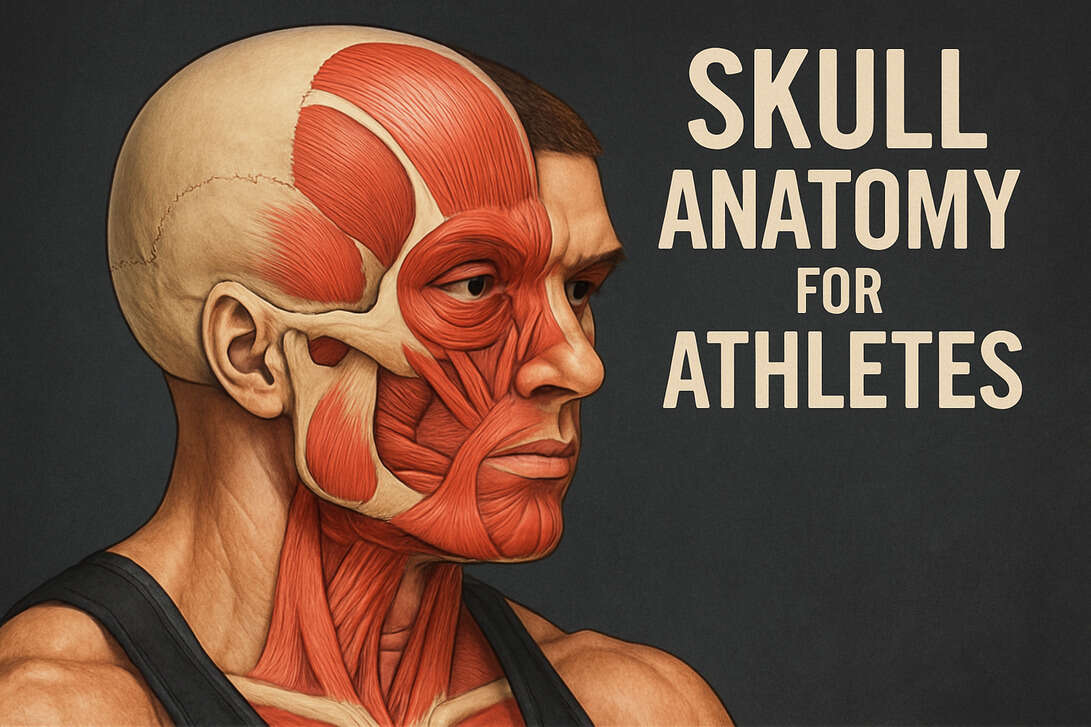
As a fitness coach deeply invested in the mechanics of the human body, I often emphasize that understanding your anatomy isn’t just for doctors or physical therapists. Even as athletes, bodybuilders, and everyday gym-goers, knowing how your body is built can enhance your training, prevent injuries, and improve performance. Today, we’re diving into the skull—an often overlooked but incredibly important part of your skeletal system. Skull anatomy for bodybuilders highlights the structural foundation of the head, revealing how cranial and facial bones influence muscular engagement, neck alignment, and overall athletic performance.
What Is the Skull? Basic Anatomy Explained Simply
The human skull is a bony structure that forms the head. It’s composed of 22 bones (8 cranial and 14 facial), and its primary functions include:
- Protecting the brain
- Supporting facial structures
- Providing attachment sites for muscles
Main Sections of the Skull
| Section | Description |
|---|---|
| CRANIUM | Encases and protects the brain (e.g., frontal, parietal bones) |
| FACIAL BONES | Shapes the face and includes bones like the maxilla and mandible |
| MANDIBLE | The lower jaw, the only movable skull bone |
These bones are connected via joints called sutures, which are mostly immovable.

I. Cranium (Braincase)
These are the 8 bones that form the cranium, which protects the brain:
| Bone Name | Description |
|---|---|
| Frontal bone | Forehead; forms the front part of the skull |
| Parietal bones (2) | Form the sides and roof of the cranium |
| Temporal bones (2) | Located on the sides; house the inner ear |
| Occipital bone | Back and base of the skull |
| Sphenoid bone | Butterfly-shaped bone at the skull’s base |
| Ethmoid bone | Located between the eyes; part of the nasal cavity and orbit |
II. Facial Bones
There are 14 bones that shape the face, nose, and upper jaw:
| Bone Name | Description |
|---|---|
| Nasal bones (2) | Bridge of the nose |
| Lacrimal bones (2) | Tiny bones at the inner corners of the eyes |
| Zygomatic bones (2) | Cheekbones |
| Maxillae (2) | Upper jaw bones |
| Palatine bones (2) | Back portion of the hard palate |
| Inferior nasal conchae (2) | Inside the nasal cavity |
| Vomer | Forms the lower part of the nasal septum |
III. Mandible (Lower Jaw)
| Bone Name | Description |
|---|---|
| Mandible | The only moveable bone of the skull; supports the lower teeth |
Why Should Athletes and Bodybuilders Care About the Skull?
You might think: “I’m focused on squats and bench presses—why should I care about my skull?”
Here’s why:
1. Breathing and Oxygen Intake
A well-aligned jaw and nasal cavity facilitate better breathing during intense training. That means improved oxygen delivery to your muscles, which is crucial for both performance and recovery.
2. Neck and Head Stability
Many strength athletes ignore neck training. The skull is the anchor point for key cervical (neck) muscles. A stable skull-to-neck relationship reduces the risk of concussions, whiplash, and poor posture.
3. Jaw Clenching Under Load
Heavy lifts often lead to involuntary jaw clenching. This activates muscles like the masseter, one of the strongest muscles in terms of weight. Over time, improper clenching can cause TMJ disorders or headaches.
4. Helmet Fit and Protection in Contact Sports
For athletes in football, rugby, or martial arts, understanding your skull shape is crucial for ensuring a proper helmet fit, which is essential for brain protection.
Common Skull-Related Issues in Fitness
| Condition | Description | Prevention / Management |
| TMJ Dysfunction | Pain in the jaw joint due to grinding or clenching | Use of mouthguards during lifting, posture |
| Tension Headaches | Often from neck strain or skull-muscle tightness | Stretching, neck mobility work |
| Postural Misalignment | Forward head posture affecting skull-neck balance | Corrective exercises, ergonomic awareness |
Ways to Correct or Improve Jaw Alignment
As a coach, I often see jaw misalignment impact performance indirectly—from neck pain to headaches and even reduced sleep quality, which can affect recovery and strength gains. So, it’s not just a cosmetic or dental issue—it can interfere with your lifting, posture, and energy.
| Method | Description | Notes |
|---|
| Postural Correction | Poor posture, especially forward head posture, can affect jaw alignment. Strengthening your neck and upper back muscles and practicing proper posture helps. | Important for lifters who spend a lot of time under load (e.g., squats, overhead presses). |
| Jaw Exercises | Simple exercises like gentle resistance movements (e.g., placing fingers under the chin and opening the mouth slowly) can help strengthen jaw muscles and improve alignment. | Can be done daily, especially if there’s clicking or discomfort. |
| Myofunctional Therapy | Involves retraining tongue and facial muscles to rest properly, chew correctly, and breathe through the nose. | Usually done with a specialist, but has strong support for long-term results. |
| Mouthguards/Nightguards | Custom dental guards help protect the teeth and promote better alignment, especially if you grind your teeth at night. | Helpful for athletes under stress or with clenching habits. |
| Orthodontic Treatment | Braces or clear aligners can help align the bite and jaw. | More invasive and long-term, but sometimes necessary. |
| TMJ Physical Therapy | A physical therapist specialized in TMJ can help relieve pain and guide alignment corrections through manual therapy and specific exercises. | Highly recommended for athletes with chronic jaw pain or dysfunction. |
| Stress Management | Stress causes jaw clenching and tightness in facial muscles. Mindfulness, breathing, and relaxation techniques can help. | Great for overall well-being and recovery, too. |

Training Tips: Supporting Skull Health
Here’s what I recommend as a coach:
✔️ Incorporate Neck Training
Use resistance bands or harnesses to strengthen neck flexors and extensors. This adds protection and posture support.
✔️ Practice Jaw Awareness
Avoid clenching your jaw excessively during heavy lifts. Some lifters benefit from using a custom-fit mouthpiece.
✔️ Monitor Breathing Patterns
Ensure nasal breathing is clear to improve oxygen intake. Consider breathing exercises if you have a deviated septum or chronic congestion.
✔️ Don’t Ignore Headaches
Frequent training-induced headaches and dizziness may be related to skull-muscle tension or cervical misalignment. Seek a physical therapist if persistent.
My Insight as a Coach
Over the years, I’ve seen athletes who plateaued in performance because they ignored small yet crucial areas like head and neck positioning. Once we added neck strengthening, corrected jaw alignment (explained above), and improved breathing techniques, their overall strength and focus improved dramatically.
Never underestimate the importance of understanding your own headspace—literally.
Understand how this bone interacts with the spine, limbs, and major joints. View the entire skeleton in a clean, interactive model designed for learning.
Explore Full Skeleton →Conclusion: Skull Anatomy for Bodybuilders
The skull might not be as “glamorous” as biceps or pecs, but it’s central to your athletic health and training longevity. Knowing how it functions helps you breathe better, protect your neck, and improve posture—all of which translate to stronger lifts and fewer injuries.
So next time you look in the mirror, don’t just admire your muscle gains. Take a moment to appreciate the bone that holds it all together—your skull.
💬 Coach’s Corner: Skull Anatomy FAQs for Lifters
Think the skull is just about protecting your brain? Think again. Your head position, neck stability, and even breathing can make or break your lifts. Here are the key questions lifters ask about skull anatomy — and the answers that will help keep your form, focus, and strength on point.
Why should bodybuilders care about skull anatomy?
Understanding skull anatomy helps optimize breathing, improve posture, reduce headaches, and enhance neck alignment—all of which impact training safety and performance.
Can poor jaw alignment affect athletic performance?
Yes. Misaligned jaws can lead to TMJ dysfunction, headaches, poor oxygen intake, and imbalance in neck muscles—hindering focus and stability during heavy lifts.
How does the skull connect to neck strength?
The skull anchors several cervical muscles. Strengthening this area improves head stability, reduces injury risk, and contributes to better posture in compound lifts.
Is jaw clenching during lifting dangerous?
Excessive jaw clenching can cause muscle strain, TMJ pain, or even dental issues. Using a mouthguard and practicing jaw awareness can help mitigate risks.
Can breathing problems be related to skull structure?
Absolutely. Nasal cavity shape, septum deviation, and jaw alignment—all part of skull anatomy—affect breathing efficiency, which impacts endurance and oxygen delivery.
Do athletes benefit from training their neck and jaw muscles?
Yes. Strengthening these muscles can improve posture, enhance shock absorption (especially in contact sports), and reduce tension headaches.
What are common skull-related injuries in contact sports?
Concussions, skull fractures, and jaw dislocations are frequent. Proper helmet fit, neck strengthening, and awareness of skull anatomy help reduce risk.
How can tension headaches be connected to the skull?
Tight muscles attached to the skull—like the temporalis or suboccipitals—can create tension headaches, especially from poor posture or overtraining.
Should bodybuilders use mouthguards during training?
Mouthguards help reduce jaw pressure, protect teeth, and minimize TMJ stress—especially during heavy compound lifts or intense strength training.
Can understanding skull anatomy help with posture correction?
Definitely. Awareness of cranial balance and head position helps align the neck and spine, leading to better lifting mechanics and injury prevention.
