



Lying cable biceps curl is a somewhat unusual isolation exercise for the biceps. Although it is unusual to see a man lying on the floor in front of a cable pulley machine, this exercise will for sure target your bicep muscles very effectively. However, since there are so many biceps exercises doing the same job even more effectively without the need to lie on the gym floor and attract strange looks, we actually do not recommend this exercise. In this post, you will find out how to perform lying biceps curls safely and effectively in order to achieve maximal gains.
Lying cable biceps curl exercise instructions
STARTING POSITION (SETUP):
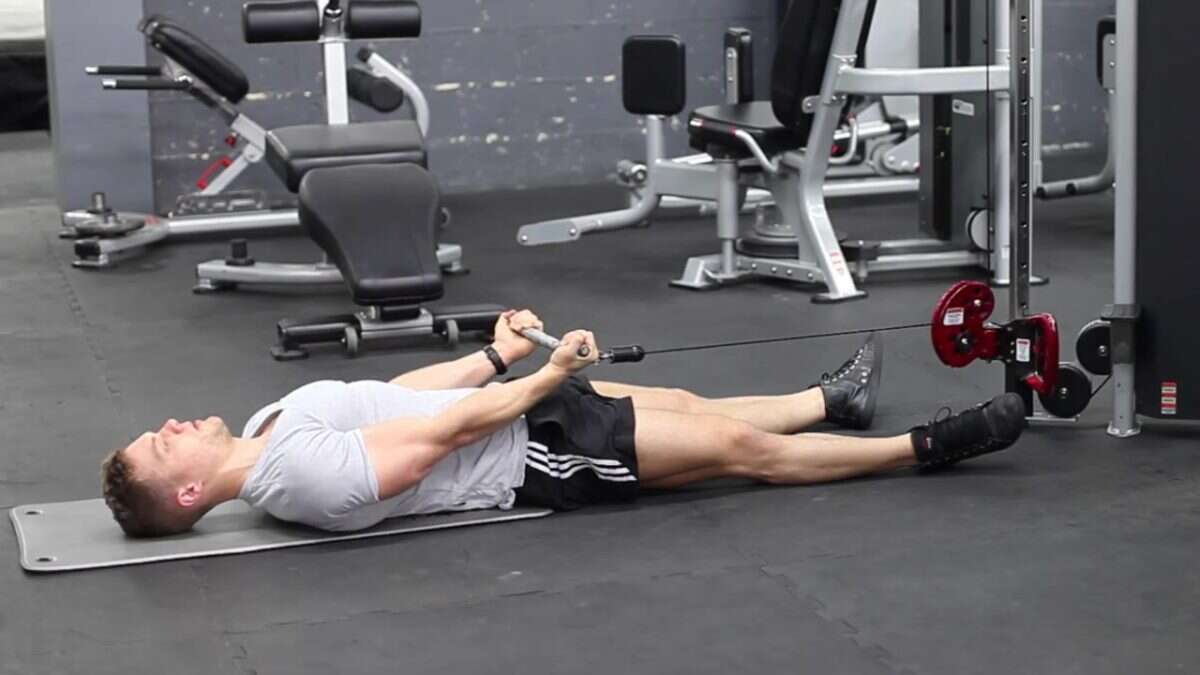
- Adjust the cable pulley machine so the handle is on the lowest setting. Attach a short straight bar and select the weight you want to use.
- Grab the bar with an underhand (supinated) grip so that your palms are facing up and your hands approximately shoulder-width apart.
- Lie flat on your back with your arms fully extended and your feet resting against the cable pulley machine.
- This will be your starting position.
EXECUTION (ACTION):
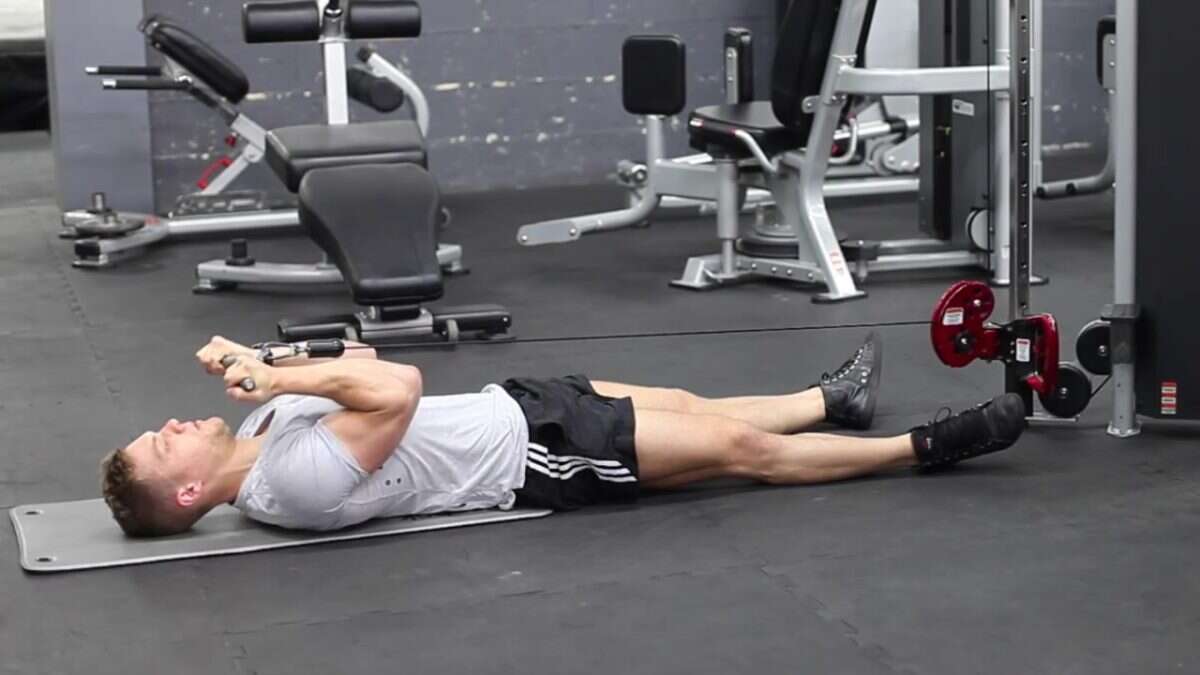
- Contract your biceps and curl the bar slowly and under control towards your shoulders while keeping your elbows tucked by your sides.
- Squeeze the biceps at the top of the movement, pause for or second, and then slowly and under control lower the bar back to the starting position.
- Repeat for the desired number of repetitions (aim for 8–12 reps with a weight that’ll give you a fair challenge).
Key advantages of doing lying cable biceps curls
- Isolate your biceps muscles because the rest of your body is completely stabilized. It’s difficult to cheat – swinging and rocking the body to help lift, pulling your elbows back to shorten the movement, etc.
- Effectively eliminate any momentum provided by the legs and torso (because of the lying position).
- Provide a perfect biceps contraction by separating the elbow movement from the rest of the body.
- The cable pulley machine provides uniform resistance throughout the movement.
Key performance pointers (additional tips & tricks)
When doing lying cable biceps curls always keep in mind the following performance pointers:
- Avoid allowing your body to come off the floor.
- Make sure to squeeze the biceps at the top of the movement.
- Don’t allow your elbows to come up as your curl the bar up.
- Keep your elbows stationary and tucked at your sides.
- Lower the weight all the way down until your arms are fully extended.
Muscles worked in lying cable biceps curls
The lying cable biceps curl primarily engages the biceps brachii – the two-headed muscle on the front of your arm that merges into one muscle belly near the elbow. More specifically:
- Main muscles: biceps, brachialis, brachioradialis
- Secondary muscles: pronator teres, extensor carpi radialis longus, flexor digitorum superficialis, flexor carpi radialis
- Antagonists: triceps, anconeus
Exercise variations
These are the exercise variations you can perform using the same equipment – a cable pulley machine.
- High-Pulley Curl
- Standing Cable Curls
- Cable Preacher Curls
- Cable Rope Hammer Curls
- Standing One-Arm Cable Biceps Curl
Replacement exercises for the lying cable biceps curls
With all the different types of biceps curls to choose from, you can say goodbye to workout boredom. Try these curls for every need and fitness level. You can use straight barbells, dumbbells, resistance bands, or special machines.
- EZ-Bar Preacher Curl
- One-Arm Dumbbell Preacher Curl
- EZ-bar spider curls
- Incline Dumbbell Biceps Curl
- Straight Bar Standing Bicep Curl
- Machine Biceps Curl
- Standing One-Arm Dumbbell Curl Over Incline Bench
- Supinating Dumbbell Biceps Curls
- Standing Hammer Dumbbell Curl
- Dumbbell Concentration Curl
- Standing EZ-Bar Curl
- Dumbbell Curl Over Incline Bench
- Bayesian Cable Curl
Cable lying biceps curls Vs. standing curls using free weights
The many popular biceps curl exercises are redundant variations of the same theme. For example, let’s compare the cable lying biceps curl to any standing curl variation using free weights (dumbbell curls, EZ-bar curls, or barbell curls).
Sure, the cable lying biceps curl is performed with a cable instead of a free weight, and it’s also performed while lying supine on the floor instead of standing upright. However, when you look at how the cable-lying biceps curl places mechanical tension across the biceps during elbow flexion, it becomes obvious that it’s not much different from the standing variations.
During any biceps curls, the most mechanical tension is on the biceps when your forearm is at a 90-degree angle to the line of force because this is where you have the least mechanical advantage on the load. Therefore, during all standing free-weight biceps curls, the most mechanical tension is on the biceps – provided you don’t cheat by allowing your elbows to drift forward – when your elbow is bent at 90 degrees. The trouble is, we see the same thing happening when you do cable lying curls.
Closing thoughts
Not only are cable lying biceps curls and standing free-weight curls redundant, but the standing free-weight curl variations duplicate one another. Although these exercises may appear different, they basically work the biceps in the same way. Don’t get us wrong! This isn’t to say that cable-lying biceps curls are a waste of time. This simply means that you don’t need to go through the extra trouble of getting on the floor to do this exercise thinking it provides unique strength benefits to your biceps, different from doing dumbbell standing biceps curls with free weights.
If you like doing lying cable biceps curls because it helps you keep your elbows back against the floor, there’s no reason to stop doing them. Just know that you can accomplish the same thing more easily by standing with your back and elbows against a wall while doing free-weight biceps curls.
