



Introduction
The lying plate press is a simple but surprisingly demanding chest exercise. You lie on a flat bench, hold a light weight plate vertically between your palms, and press it from your chest to arm’s length, squeezing as hard as you can for the entire set. It is essentially the lying version of the Svend press.
The plate itself is light, and that is exactly the point. The challenge doesn’t come from the weight but from the constant squeeze that keeps the plate from slipping out of your hands. That inward pressure forces the chest to work throughout every rep, creating a strong contraction that many lifters feel right up to the middle of the chest, where the pecs meet the sternum.
Because of that feeling, the lying plate press has become a popular choice for lifters who want a fuller, more “complete” look near the center of the chest. It won’t replace heavy pressing, and it won’t build mass on its own, but as a finisher, it is a simple way to end a chest workout with a strong, focused squeeze using nothing more than a single weight plate.
The lying plate press is a chest exercise performed on a flat bench, in which a light weight plate is held vertically between the palms and pressed from the chest to arm’s length while being squeezed firmly throughout the movement. The inward squeeze adds an isometric horizontal adduction effort to the press, training the pectoralis major, with the triceps brachii and anterior deltoids assisting.
Other Names for Lying Plate Press
The exercise goes by several names that describe how you hold the plate.
- Plate squeeze press
- Plate pinch press
- Lying Svend press
- Supine plate press
- Bench plate squeeze press
Required Equipment
The lying plate press requires almost no equipment, making it one of the easiest chest exercises to do anywhere.
- One light weight plate (usually 5–10 kg or 10–25 lb), ideally with smooth sides
- A flat bench (or the floor)
- Optional second plate for the two-plate variation
How to Perform Lying Plate Press
The technique is simple, but the quality of the squeeze determines how effective the exercise is.
Starting Position
Sit on the bench with the plate before lying back, so you can set your grip securely.
- Hold a weight plate vertically between your palms, like clapping cymbals together
- Squeeze the plate with the heels of your palms, fingers pointing up or slightly forward
- Lie back on a flat bench with your feet flat on the floor
- Bring the plate to your lower chest with your elbows bent and close to your body
- Squeeze your shoulder blades gently together against the bench
- Start squeezing the plate hard before the first rep

Execution (Action Phase)
Keep the squeeze constant from the first rep to the last, both on the way up and on the way down.
- Exhale and press the plate up to arm’s length (see our guide on breathing technique)
- Keep squeezing the plate as hard as you can throughout the press
- Hold the top position for 1–2 seconds while squeezing even harder
- Inhale and lower the plate slowly back toward your chest
- Stop when the edge of the plate lightly touches your lower chest or sternum
- Keep your elbows tucked close to your body at the bottom
Move slowly and deliberately. Fast reps turn the exercise into a light press, while slow, controlled reps with a constant squeeze keep the chest working throughout the set.
Video Demonstration
Watching the lying plate press helps you understand how to hold the plate and how slowly to perform the movement.
In the video below, notice how the lifter holds the plate vertically between the palms, presses it up slowly while maintaining the squeeze, and pauses briefly at the top. Lower the plate with control until it touches the lower chest, keeping the elbows close to the body.

The lying plate press is one of the most humbling exercises I teach. I have watched lifters who bench well over 100 kg grab a 25 kg plate, confidently lie back, and discover within three reps that squeezing a plate is a completely different game. Either their arms start shaking like a phone on vibrate, or the plate slowly slides toward their chest while they pretend everything is under control.
With my clients, I start with a 5 or 10 kg plate, and nobody complains after the first set. The weight is not the point here; the squeeze is. If you can relax your hands at any point and the plate would still stay in place, you are not squeezing hard enough. If you have to fight just to keep it from slipping, it is too heavy.
Quick Form Checklist
Run through these cues before every set to make sure the squeeze stays effective.
- Light plate, held vertically
- Squeeze with the heels of the palms
- Elbows close to the body at the bottom
- 1–2 second squeeze at the top
- Slow, controlled lowering to the lower chest
Technical Emphasis & Targeting Adjustments
Small adjustments to the squeeze, tempo, and bench angle can change how the lying plate press feels and where you notice the work.
- Harder squeeze → more chest tension. The harder you press your palms into the plate, the greater the inward effort the chest must produce. This isometric contraction continues throughout the entire rep.
- Longer pause at the top → stronger contraction. Holding the plate at arm’s length for 2–3 seconds while squeezing harder increases time under tension in the shortened position.
- Slower lowering → more control. Lowering the plate over 3 seconds keeps the chest engaged and prevents the squeeze from fading. Learn more about eccentric training and why the lowering phase matters.
- Very narrow hand position → more triceps involvement. Because the hands are pressed together, the triceps work hard during the press. Research on the bench press shows that narrower grips increase triceps activity, so expect the triceps to take on more of the load.
- Incline bench → more upper chest involvement. Setting the bench to about 30 degrees shifts some of the work to the upper chest and front delts.
Common Mistakes
The lying plate press is simple, but a few common mistakes can take the chest almost completely out of the exercise.
- Using a plate that is too heavy. A heavy plate forces you to focus on not dropping it instead of squeezing it. Choose a 5- or 10-kg plate and focus on the squeeze.
- Relaxing the squeeze on the way down. Many lifters squeeze hard on the way up and relax on the way down. Keep the pressure constant throughout the entire rep.
- Gripping with the fingertips. Pinching the plate with the fingers tires the forearms quickly and makes the plate slip. Press with the heels of your palms and keep the fingers relaxed.
- Letting the elbows flare out. When the elbows drift out to the sides at the bottom, the movement becomes awkward and harder to control. Keep them close to your body throughout the set.
- Rushing the reps. Fast reps reduce the time the chest spends under tension and turn the exercise into a light press. Move slowly and pause at the top of every rep.
Squeeze the plate with the heels of your palms, not your fingertips. Keep your fingers relaxed and pointing up or slightly forward, so they only guide the plate instead of gripping it.
When lifters pinch with their fingers, the forearms often fatigue first and the plate starts to slip before the chest has done much work. Pressing through the heels of the palms lets you squeeze much harder with less grip fatigue, and many lifters find the chest contraction becomes noticeably easier to feel.
Mechanical Considerations
The lying plate press combines a pressing movement, shoulder flexion and elbow extension, with a constant inward effort. Squeezing the plate requires the chest to produce horizontal adduction isometrically, which is one of the main functions of the pectoralis major. You can read more about these joint actions in our guide to anatomical movements. Because the hands stay pressed together, the triceps also contribute significantly to the press.
The external load is very light, so most of the difficulty comes from how hard you squeeze. Research shows that muscle can grow across a wide range of loads when sets are taken close to failure, but one study found that very light loads (around 20% of maximum) produced smaller gains in muscle size than heavier loads. Since the squeeze is self-regulated, it is also hard to know how close to failure a set really is. No study has examined the lying plate press directly, so it is best used as a finisher rather than a main chest builder. As a compound exercise, it involves the chest, triceps, and front delts together.
Muscles Worked in Lying Plate Press
MAIN MUSCLES
SECONDARY MUSCLES
STABILIZERS
ANTAGONISTS
Can the Lying Plate Press Build Your Inner Chest?
The lying plate press is often recommended for “inner chest” development, and it is easy to see why: the strong squeeze creates a noticeable contraction near the middle of the chest, where the pecs attach to the sternum. However, strong evidence doesn’t show that any exercise selectively builds the inner portion of the chest, since the pectoralis major works as a whole during pressing movements.
The “depth” and separation you see near the sternum depend mainly on overall chest size, your body fat level, and your individual anatomy, including where your muscles attach. Our articles on good genetics for bodybuilding and whether you can change the shape of your muscles explain this in more detail. The plate press can help you build and feel your chest, but the most reliable way to create a fuller look near the sternum is to build the whole chest and reduce body fat.
Lying Plate Press Pros and Cons
The lying plate press is a useful finishing exercise, but it has clear limitations.
Advantages
- Minimal equipment. All you need is a single weight plate and a bench, or even just the floor. It is easy to include in any workout, including home training.
- Strong, easy-to-feel contraction. The constant squeeze makes the chest contraction easy to feel. Many lifters use it to practice feeling their chest work.
- Light external load. Because the plate is light, you can add the exercise at the end of a workout without heavy loading. It is also a simple warm-up before chest training.
- Beginner-friendly. The movement is easy to learn and requires no special setup. Beginners can use it to practice the squeeze before trying the dumbbell squeeze press.
Potential Drawbacks
- Not a mass builder on its own. The external load is very light, which limits its potential for building chest size. It should complement heavier pressing exercises, not replace them.
- Hard to progress. Heavier plates quickly become difficult to hold. Progress mostly comes from tempo, pauses, and reps rather than load.
- Effort is subjective. How hard you squeeze is up to you, so the difficulty can vary a lot from set to set and from lifter to lifter.
- Grip can limit the set. The hands and forearms may tire before the chest, especially if you pinch the plate with your fingers. This is partly why it also works as a grip exercise.
Safety Considerations
The lying plate press is one of the lowest-risk chest exercises, but a few precautions still apply.
- Plate slipping. A plate that slides out of your hands can hit your face or chest. Use a light plate with smooth sides, squeeze firmly, and never let the plate travel over your face.
- Shoulder discomfort. The movement is usually well tolerated, but never ignore pain. Stop if you feel pinching or sharp pain, and learn more about shoulder joint anatomy.
- Wrist discomfort. Holding the plate with bent wrists can aggravate wrist injuries. Keep your wrists straight, with the plate pressed between the heels of your palms.
- Previous pectoral strain. Although the load is light, the hard squeeze creates a strong contraction. Lifters recovering from a pectoral strain should start with a gentle squeeze and increase the effort gradually.
Lying Plate Press Variations
Two-plate squeeze press
Difficulty: Similar to the standard version
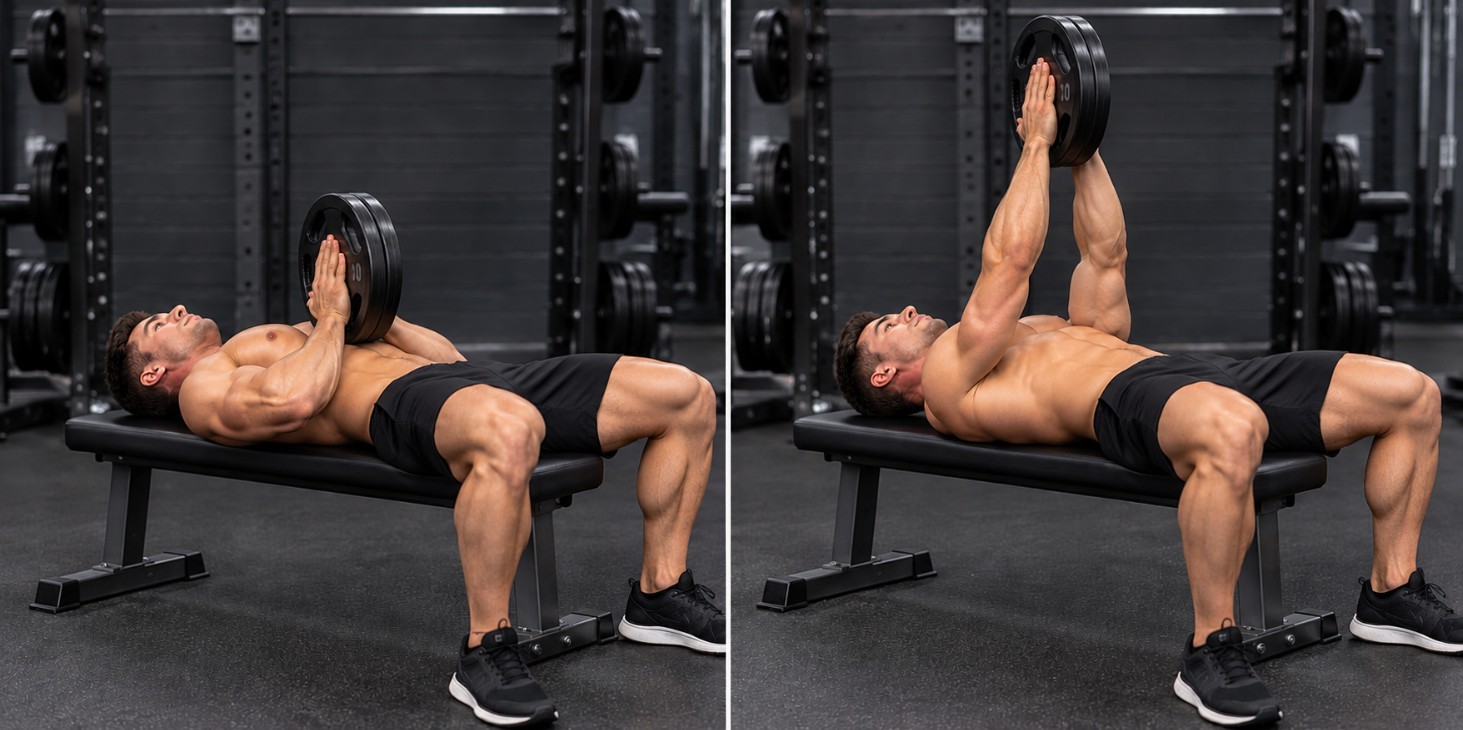
Pressing two plates together between your palms offers a larger, flatter surface to squeeze. Many lifters find it easier to squeeze hard this way, since they can focus entirely on keeping the plates together.
Incline lying plate press
Difficulty: Similar to the standard version

Performing the exercise on a bench set to about 30 degrees shifts some of the work toward the upper chest and front delts. Lower the plate to your upper chest in this position.
Standing plate press (Svend press)
Difficulty: Similar to the standard version

Perform the standing version by pressing the plate forward from the chest instead of upward. It requires no bench and adds a small core-stability challenge, making it a good option for home training.
Floor plate press
Difficulty: Easier than the standard version

Lying on the floor limits the range of motion, since your upper arms stop on the ground. It is a good option when no bench is available and an easy way to learn the squeeze.
Isometric plate squeeze hold
Difficulty: Harder than the standard version

Instead of pressing, hold the plate at arm’s length and squeeze it as hard as you can for 20–30 seconds. This variation maximizes the time the chest spends contracting and works well as a final burnout set.
Replacement Exercises (Substitutes) for the Lying Plate Press
If you want to vary your finishing work, these exercises also combine pressing with an inward squeeze or target the pectoralis major through horizontal adduction. For more options, see our list of the most effective middle chest exercises.
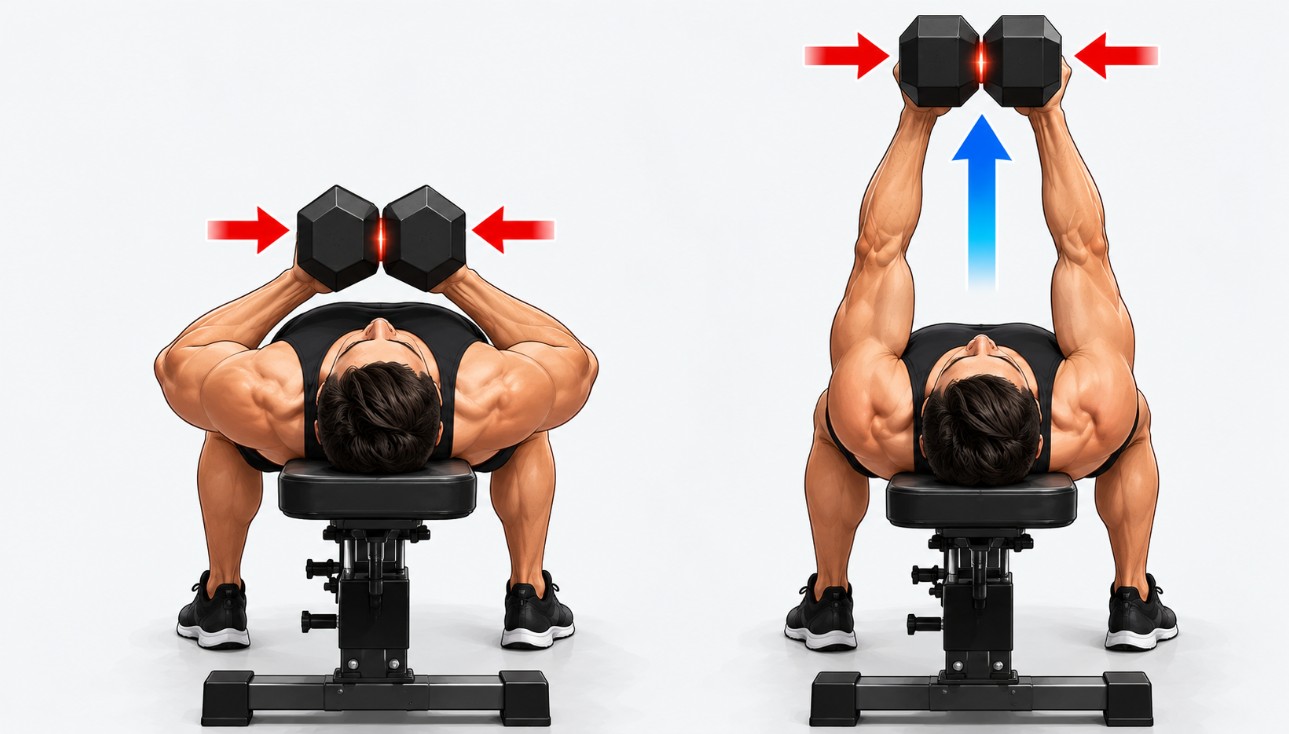
- Dumbbell squeeze press. The dumbbell squeeze press uses the same squeezing principle but lets you use heavier loads. It is the natural next step once the plate press feels easy.
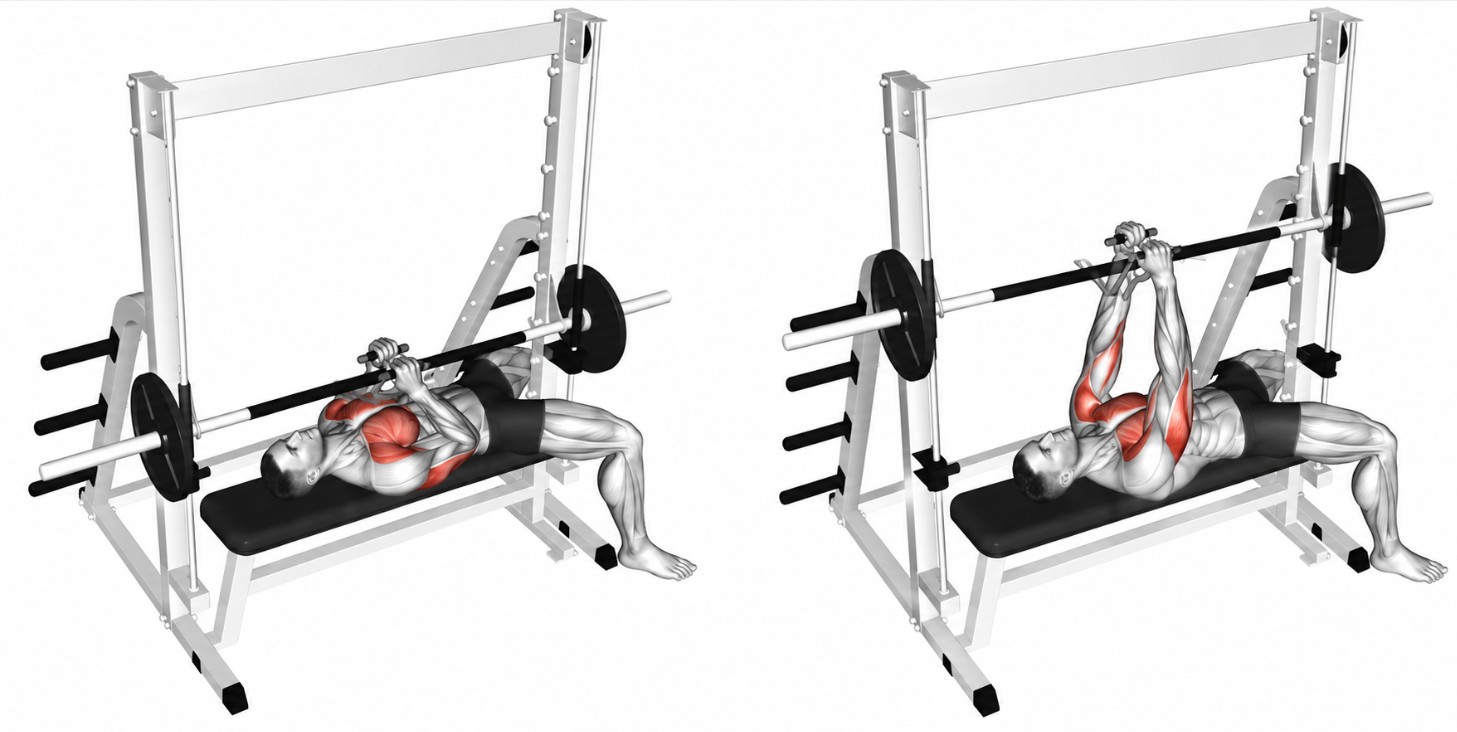
- Smith machine hex press. The Smith machine hex press uses a V-bar on a guided bar path and allows heavier, close-grip pressing with an optional inward squeeze.
- Incline dumbbell champagne press. The incline dumbbell champagne press combines an incline press with an inward dumbbell movement. It is a great option for the upper chest.

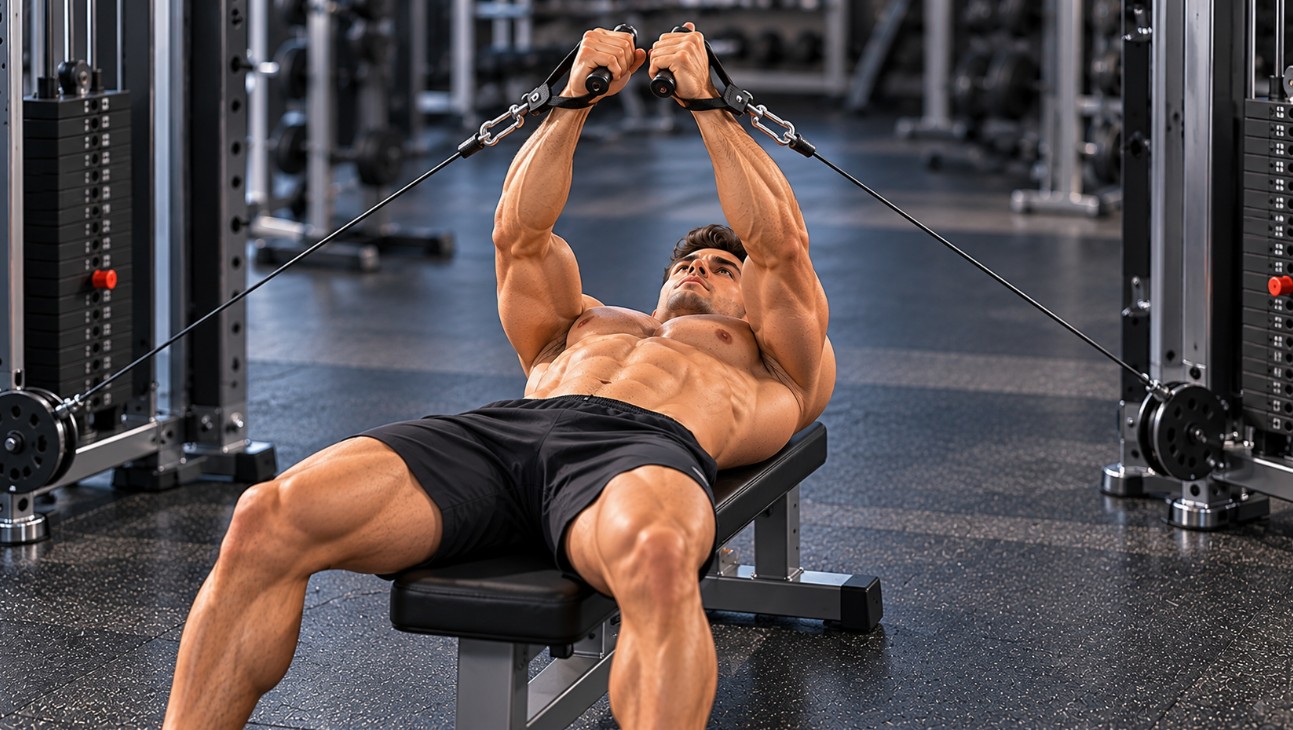
- Flat bench cable fly. The flat bench cable fly keeps constant cable tension on the chest through horizontal adduction.
- Incline cable fly. The incline cable fly trains the same movement pattern on an incline bench, with more emphasis on the upper chest.

- Pec-deck fly. The pec-deck fly isolates the chest with a guided arc and a strong squeeze at the end of each rep.

How to Program the Lying Plate Press
How you program the lying plate press depends on whether you use it as a finisher, for high-rep pump work, or as a warm-up.
Show full programming guideHide programming guide ▾
| Goal | Sets | Reps | Rest | Tempo |
|---|---|---|---|---|
| Chest finisher | 2–3 | 12–20 | 30–60 s | 2–3 s lowering, 1–2 s squeeze at top |
| High-rep pump work | 2–3 | 20–30 | 30–45 s | Steady, constant squeeze |
| Warm-up / activation | 1–2 | 10–15 | 30 s | Slow, focus on the squeeze |
Muscle growth can occur across a wide range of repetitions when sets are taken close to failure, so treat these numbers as guidelines rather than strict rules. Adjust your rest periods between sets based on how recovered you feel.
- As the last exercise of a chest workout, when the goal is a strong squeeze and pump
- As a post-exhaustion exercise right after a heavy pressing set
- As a light warm-up before chest training to practice the squeeze
- In home workouts, where a single weight plate may be the only equipment available
Apply progressive overload mainly through tempo and time under tension rather than load: slow the lowering phase, lengthen the pause at the top, or add reps. Move to a heavier plate only when you can keep a hard, steady squeeze on every rep without the plate slipping.
Lying Plate Press vs Svend Press (Comparison Table)
| Criteria | Lying Plate Press | Svend Press |
|---|---|---|
| Body Position | Lying on a flat bench | Standing |
| Pressing Direction | Upward from the chest | Forward from the chest |
| Equipment | Weight plate and bench | Weight plate only |
| Core Stability Demand | Low (bench-supported) | Moderate |
| Typical Load | Light | Light |
| Squeeze Mechanism | Constant inward pressure on the plate | Constant inward pressure on the plate |
| Best Use | Chest finisher on a bench | Finisher or home workout without a bench |
Both exercises use the same basic principle: a light plate squeezed hard between the palms throughout a pressing movement. The main difference is body position, as the lying version is supported by the bench, while the standing version requires you to stabilize your whole body.
No study has compared the two directly, so the choice mostly comes down to equipment and preference. The lying version is ideal at the end of a bench-based chest workout, while the Svend press is perfect when no bench is available. Many lifters alternate between them to vary their finishing work.
Final Thoughts
The lying plate press is a simple, low-equipment way to finish your chest workout with a strong, focused squeeze. With nothing more than a light weight plate, it teaches you to feel your chest contract and keeps the pecs working through every inch of the movement.
It won’t build a massive chest on its own, and no exercise can isolate the “inner” chest. But as part of a program built around heavier pressing and enough total volume, as explained in our guide to the best rep range for hypertrophy, the plate press can be a satisfying and useful finishing exercise. Keep the plate light, squeeze hard, and move slowly.
Frequently Asked Questions
What is the lying plate press?
The lying plate press is a chest exercise in which you squeeze a weight plate between your palms and press it from your chest to arm’s length while lying on a flat bench. The constant squeeze adds an inward effort that makes the chest contraction easy to feel.
What muscles does the lying plate press work?
It primarily works the pectoralis major, with help from the triceps brachii and anterior deltoids. The forearm and hand muscles also work to keep the plate from slipping.
Does the lying plate press build the inner chest?
There is no strong evidence that any exercise selectively builds the inner chest. The plate press trains the whole pectoralis major, but the strong squeeze makes the contraction especially easy to feel near the midline of the chest.
How heavy should the plate be?
Most lifters do best with a 5 or 10 kg (10–25 lb) plate. The plate should be light enough that you can squeeze it hard on every rep, but heavy enough that you can’t relax your hands without it slipping.
What is the difference between the lying plate press and the Svend press?
The lying plate press is performed on a bench, pressing the plate upward. The Svend press is performed standing, pressing the plate forward from the chest. Both use the same squeezing principle.
Can the lying plate press build chest mass?
It can contribute to chest development, but it is not an effective primary mass builder, because the external load is very light. It works best as a finisher alongside heavier pressing exercises.
Where should the plate touch my chest?
Lower the plate until its edge lightly touches your lower chest or sternum. Keep your elbows close to your body at the bottom of the movement.
Should I use one or two plates?
Both work. Two plates pressed together offer a larger surface for your palms and can make it easier to squeeze hard. Many lifters find this version more comfortable.
Can I do the lying plate press at home?
Yes. You only need a single weight plate and a bench, or even the floor. It is one of the easiest chest exercises to include in home workouts.
How many reps should I do on the lying plate press?
Most lifters use 12–20 reps per set with a slow tempo and a one- to two-second squeeze at the top. As a finisher, 2–3 sets are usually enough.
