



Introduction
Strong, well-developed shoulders are built with a combination of free-weight and machine-based pressing. In my experience, the machine shoulder press can be a very useful tool for lifters who want a more stable pressing environment, better control over the movement, and a more direct focus on the deltoids without worrying as much about balancing the weight.
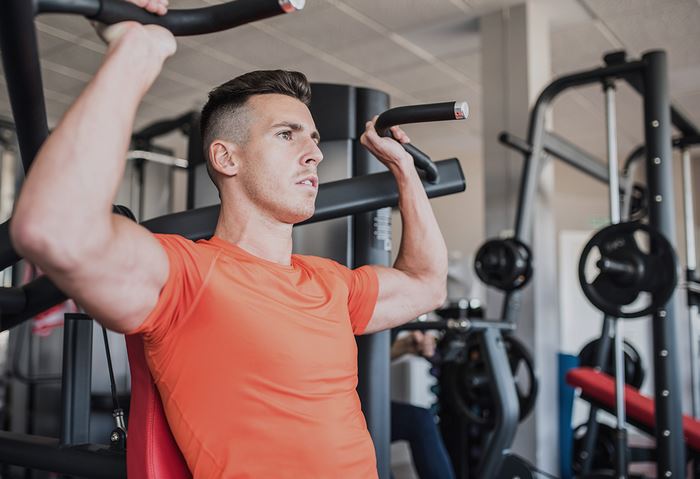
The machine shoulder press is a compound shoulder exercise that mimics the general pressing pattern of a dumbbell or barbell overhead press, but with support from a guided path or fixed-handle system. This makes it especially appealing to beginners, lifters training close to failure, and anyone who wants to reduce the stability demands of free-weight pressing while still training the anterior and lateral deltoids hard.
I also think this exercise deserves a more balanced reputation than it sometimes gets. Yes, machine presses do reduce the role of stabilizers compared to dumbbells or barbells, but that does not make them “bad” or ineffective. It simply means they are a different tool—one that can be excellent for hypertrophy, safer progression, and focused shoulder work when used correctly.
Alternative Names for the Machine Shoulder Press
This exercise is commonly referred to by several similar names depending on the machine design, the brand, or the training style. Knowing these alternative names can help you recognize the movement more easily across workout plans and gym settings.
- Machine shoulder press
- Shoulder press machine
- Machine overhead press
- Seated machine shoulder press
- Seated shoulder press machine
- Machine military press
- Plate-loaded shoulder press
- Selectorized shoulder press
In practice, most of these names describe the same basic movement pattern. The main differences usually come from the type of machine, the handle path, and whether the machine uses a weight stack or plate-loaded resistance.
Equipment Needed for the Machine Shoulder Press
One of the biggest advantages of the machine shoulder press is that you do not need much equipment beyond the machine itself. That simplicity is one of the reasons I often recommend it to beginners or lifters who want a more straightforward shoulder press setup.
- Shoulder press machine – the main piece of equipment, available in selectorized or plate-loaded versions
- Adjustable seat settings – essential for aligning the handles properly with your shoulders
- Weight stack or weight plates – depending on the machine design, used to set resistance
Optional (but useful):
- Stable footwear – helps keep your feet planted and your body position consistent
- Towel or pad adjustment awareness – useful for comfort and better positioning on some machines
From my experience, the most overlooked detail is not the weight—it’s the machine setup. If the seat height or handle position does not match your body structure, the movement can feel awkward and the shoulders may never get loaded as well as they should.
How to Perform the Machine Shoulder Press
Executing the machine shoulder press correctly is mostly about proper setup and controlled movement. In my experience, once the machine is adjusted to your body, the exercise becomes much more effective and far safer than most people expect.
Starting Position (Setup)
A proper setup ensures that the load is placed on the shoulders rather than shifting stress to the joints or surrounding muscles.
- Adjust the seat height so that the handles align with your shoulders or slightly below
- Sit with your head, upper back, and glutes firmly against the pads
- Keep your feet flat on the floor for stability
- Grip the handles with a pronated (palms forward) or neutral grip, slightly wider than shoulder-width
- Keep your elbows slightly in front of your body, not flared excessively outward
- Brace your core to maintain a stable torso

Movement (Execution)
The goal is to press the handles upward using the shoulders while maintaining control throughout the entire range of motion.
- Press the handles upward in a controlled, vertical path
- Extend your arms until your elbows are nearly straight, but not aggressively locked out
- Pause briefly at the top to maintain tension
- Lower the handles slowly back to shoulder level
- Avoid letting the weight stack rest between repetitions
- Maintain constant control throughout the movement
One of the biggest advantages of the machine shoulder press is that it allows you to focus almost entirely on pushing with the shoulders, without worrying about balancing the weight. Use this to your advantage by slowing down your reps and really concentrating on deltoid activation rather than just moving the handles.
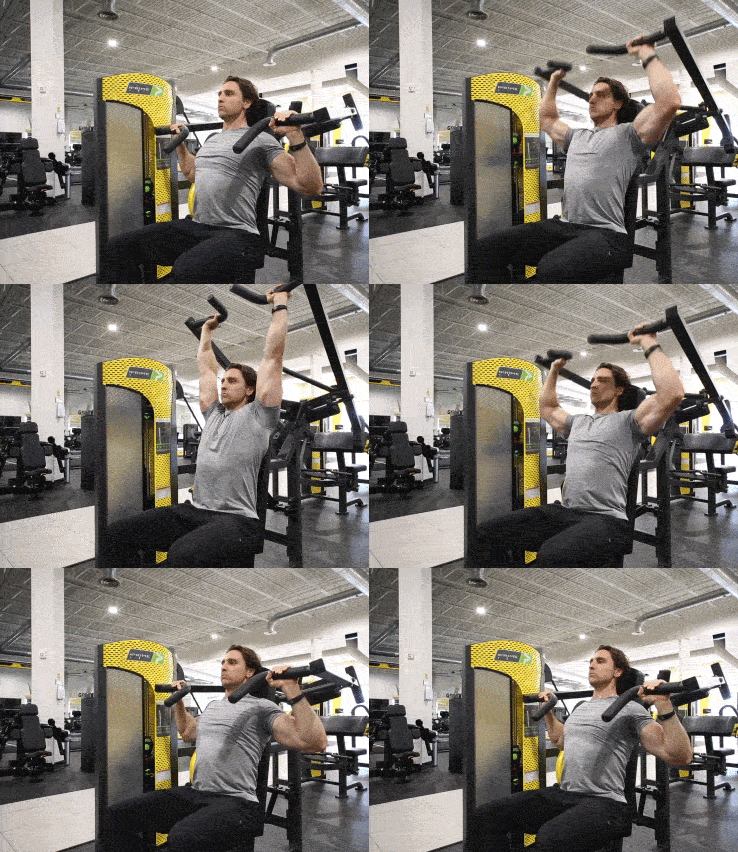
Video Demonstration & Proper Form Breakdown
Watching a proper demonstration is one of the easiest ways to understand the correct setup, handle path, and overall control required for the machine shoulder press, especially since different machines may have slightly different movement patterns.
Muscles Worked in the Machine Shoulder Press
Understanding which muscles are involved in the machine shoulder press helps you better control the movement and focus on proper execution. While the machine provides support, the shoulders still perform the majority of the work.
- Primary muscles: anterior deltoids, lateral deltoids
- Secondary muscles: triceps brachii, upper trapezius, serratus anterior
- Stabilizing muscles: core musculature, scapular stabilizers
- Antagonist muscles: latissimus dorsi, posterior deltoids, biceps brachii
How the Machine Shoulder Press Works: Biomechanics & Mechanics
Understanding how the machine shoulder press works can help you get more out of the exercise, rather than just pushing the weight up and down. In my experience, once you understand the mechanics, it becomes much easier to maintain tension in the deltoids and avoid unnecessary joint stress.
At its core, this movement combines shoulder flexion/abduction with elbow extension. Because the machine guides the path, the shoulders can focus more directly on producing force, while the triceps assist in extending the arms.
Key Biomechanical Actions
- Shoulder joint movement – flexion and slight abduction driven by the anterior and lateral deltoids
- Elbow joint movement – extension performed by the triceps brachii
- Scapular movement – controlled upward rotation and stabilization
- Core involvement – minimal compared to free weights, but still important for posture
Resistance & Machine Advantage
One of the defining characteristics of the machine shoulder press is the guided resistance path, which changes how the exercise feels compared to free weights.
- The machine reduces the need for balance and coordination
- More effort can be directed toward the target muscles (deltoids)
- The resistance is often more consistent due to the machine’s design (cams or plate-loaded arms)
- It allows for safer training closer to muscular failure
Range of Motion & Efficiency
- In the bottom position, the shoulders are under stretch and ready to produce force
- Through the mid-range, the deltoids generate most of the force
- At the top, the triceps contribute more as the elbows approach extension
- Maintaining a controlled range of motion ensures constant tension on the muscles
From a coaching perspective, the machine shoulder press is a great example of how reducing stability demands can actually improve muscle-focused training. When balance is no longer the limiting factor, it becomes much easier to keep tension exactly where you want it—on the deltoids—especially when the goal is hypertrophy rather than full-body coordination.
Technique Optimization Tips
Small adjustments in setup and execution can significantly improve the feel of the machine shoulder press and its effectiveness in targeting the shoulders. In my experience, this is where most people leave results on the table.
- Set the seat height correctly. Handles should align with or slightly below shoulder level for optimal pressing mechanics.
- Keep your back fully supported. Maintain contact with the pad to prevent unnecessary spinal movement.
- Use a controlled tempo. Avoid rushing reps—slower execution increases muscle tension.
- Avoid locking out aggressively. Keep slight tension in the triceps at the top.
- Do not let the weight stack rest. Maintain constant tension throughout the set.
- Keep your elbows slightly in front of your body. This improves shoulder alignment and reduces joint stress.
- Choose the grip that feels most natural. Neutral grips are often more joint-friendly for many lifters.
- Focus on pushing through the elbows. This can help shift emphasis away from the hands and into the deltoids.
Technical Emphasis & Targeting Adjustments
Small adjustments in setup and execution can significantly change how the machine shoulder press feels and which muscles contribute the most. In my experience, this is especially important with machines because even slight changes in seat height, grip, or posture can completely alter the movement pattern.
- Seat height adjustment. Lower seat positions often increase front delt involvement, while slightly higher positions can shift more emphasis toward the lateral deltoids.
- Neutral grip (palms facing each other). Typically more joint-friendly and often allows a smoother pressing motion.
- Pronated grip (palms forward). Feels more similar to traditional barbell pressing and may increase activation of the front delt.
- Elbow positioning. Keeping elbows slightly in front of the body tends to reduce shoulder stress and improve pressing efficiency.
- Range of motion control. Lowering the handles fully (without losing tension) increases stretch and muscle activation.
- Tempo manipulation. Slower reps increase time under tension, while controlled pauses improve stability and control.
- Single-arm machine press (if available). Can help correct imbalances and improve unilateral control.
- Back support usage. Keeping full contact with the pad reduces compensations and keeps the load on the shoulders.
From a coaching standpoint, the most important adjustment is often the simplest: take the time to properly set up the machine so it fits your body—not the other way around.
Machine Shoulder Press Pros and Cons
The machine shoulder press is often debated in strength training circles. In my experience, it’s neither “better” nor “worse” than free weights—it simply serves a different purpose. Understanding its advantages and limitations will help you decide how to use it effectively.
Key Benefits
- Beginner-friendly. The guided path makes it easier to learn the movement safely.
- Reduced stability demands. Allows more focus on the target muscles without worrying about balance.
- Safer for training close to failure. Lower risk than free weights when pushing at high intensity.
- Consistent resistance. Many machines provide smooth and predictable loading.
- Joint-friendly option. Often more comfortable for lifters with shoulder or stability issues.
- Easy setup and progression. Simple to adjust weight and perform consistently.
Potential Downsides
- Limited stabilizer involvement. Does not develop balance and coordination as well as free weights.
- Fixed movement path. May not suit every individual’s biomechanics perfectly.
- Less functional carryover. Transfers less to real-world or athletic movement patterns.
- Machine dependency. Requires access to specific equipment.
- Can feel unnatural for some lifters. Especially if the machine does not match body proportions.
From a coaching perspective, the machine shoulder press is best viewed as a tool for hypertrophy and controlled training, rather than a replacement for free-weight pressing. Use it to focus on muscle tension and safe progression, not as a substitute for developing overall strength and stability.
Machine Shoulder Press Variations
Although the machine shoulder press is already a guided movement, there are still several variations that can slightly change the feel of the exercise, improve comfort, or target the shoulders in a different way. In my experience, these variations are less about drastically changing the exercise and more about finding what works best for your structure and goals.
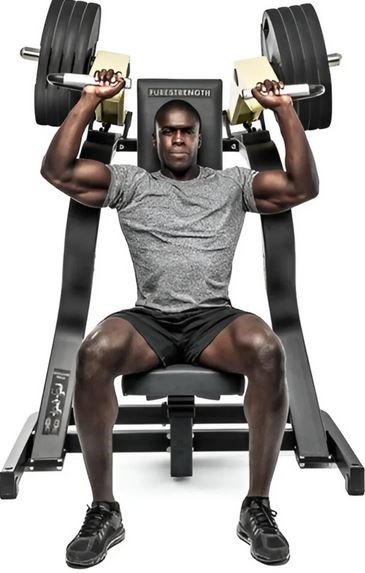
Plate-Loaded Machine Shoulder Press
This version uses weight plates instead of a selectorized stack. It often feels more “free” and closer to dumbbell pressing, allowing for slightly more natural movement and heavier loading.
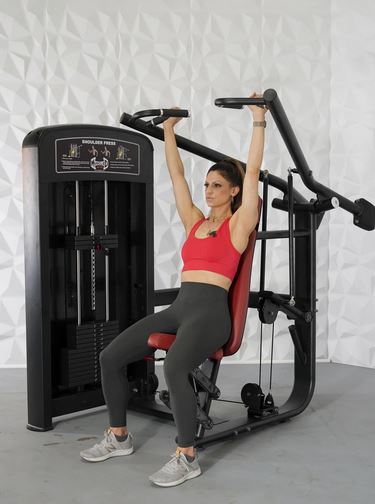
Selectorized (Weight Stack) Shoulder Press
This is the most common version found in gyms. It provides smooth resistance, easy weight adjustments, and is especially beginner-friendly due to its simplicity and stability.
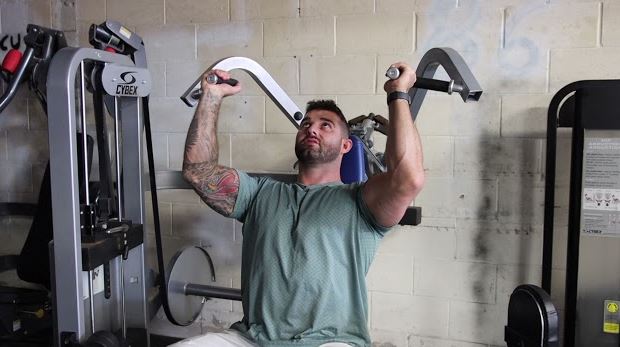
Neutral-Grip Machine Shoulder Press
Performed with palms facing each other, this variation is typically more comfortable for the shoulders and wrists. Many lifters find that it reduces joint stress and allows a more natural pressing path.
Pronated-Grip Machine Shoulder Press
This is the classic version with palms facing forward. It closely mimics barbell shoulder pressing and often provides a stronger anterior delt emphasis.
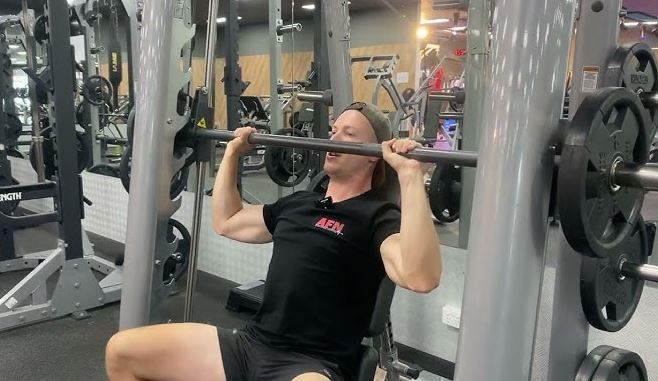
Smith Machine Shoulder Press
A Smith machine can be a good compromise between a bar and an easy-to-use convergent machine.
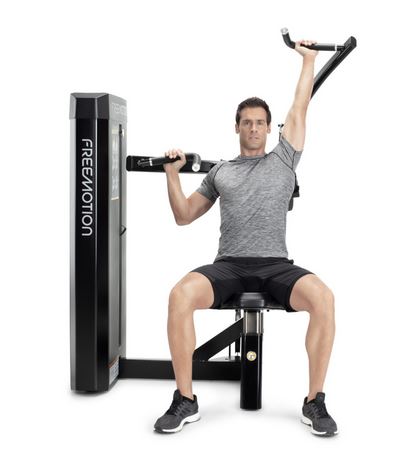
Single-Arm Machine Shoulder Press
If the machine allows unilateral movement, this variation can help correct imbalances and improve control. It also increases core involvement slightly compared to bilateral pressing.
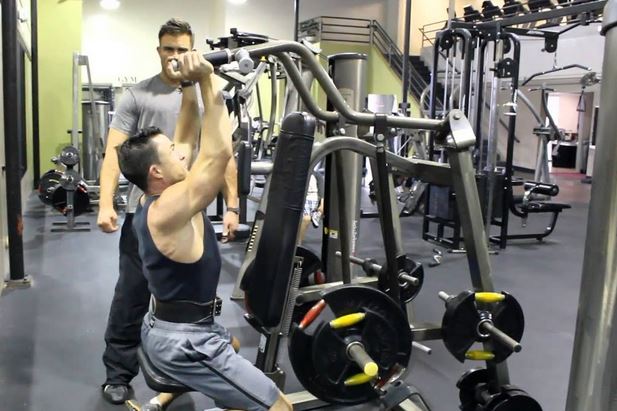
Facing Backward (Reverse Setup) Variation
On some machines, you can sit facing the backrest and press from that position. This can slightly change the pressing angle and the way the shoulders are engaged, though it should be used cautiously and only if the setup feels natural and safe.
Replacement Exercises (Substitutes)
If the machine shoulder press is not available or you prefer other training methods, there are several effective alternatives that target the same primary muscles. Discover the best front delt exercises and how to combine them into a smart, balanced routine.
- Barbell shoulder press (standing)
- Seated barbell shoulder press (front military press)
- Dumbbell shoulder press (standing)
- Seated dumbbell shoulder press
- Arnold press
- Smith machine shoulder press
- Landmine press
- Z-press
- Handstand push-up
- Dumbbell Cuban press
- Barbell Cuban press
Where This Exercise Fits in a Workout
The machine shoulder press is one of the most versatile shoulder exercises and can be used in several different ways depending on your training goal. In my experience, its biggest strength is that it allows you to train hard with less concern about balance and stability.
- As a primary shoulder exercise.
This is especially effective for beginners or lifters who prefer a more controlled environment. You can place it early in the workout and focus on progressive overload. - As a safer alternative to free weights.
If you’re training alone or pushing close to failure, the machine lets you go hard without a spotter. - After compound free-weight presses.
It works well as a follow-up exercise to continue training the shoulders with less fatigue from stabilization demands. - In hypertrophy-focused sessions.
The machine is ideal for controlled reps in the 8–12 or 10–15 range, where you can maintain constant tension and focus on muscle activation.
From a coaching perspective, I often use the machine shoulder press when the goal is to maximize shoulder fatigue safely, especially toward the end of a workout or during higher-volume training phases.
Machine Shoulder Press vs. Dumbbell Shoulder Press
Both the machine shoulder press and the dumbbell shoulder press are excellent exercises for developing the shoulders, but they differ significantly in terms of stability, muscle activation, and overall training effect. In my experience, understanding when to use each is more important than deciding which one is “better.”
| Training Factor | Machine Shoulder Press | Dumbbell Shoulder Press |
|---|---|---|
| Exercise Type | Compound (guided) | Compound (free weight) |
| Stability Demand | Low | High |
| Primary Muscles | Anterior + lateral deltoids | Anterior + lateral deltoids |
| Stabilizer Involvement | Minimal | Significant |
| Load Potential | Moderate to high | Moderate |
| Hypertrophy Focus | High (isolated tension) | High (functional tension) |
| Coordination Required | Low | High |
| Safety | Higher (especially alone) | Moderate (spotter recommended) |
| Best Use | Controlled hypertrophy work | Strength + coordination |
Conclusion: The machine shoulder press is ideal when you want a more stable, controlled environment to focus on muscle tension and train safely close to failure. The dumbbell shoulder press, on the other hand, develops greater coordination, stabilizer strength, and overall functional pressing ability.
For most lifters, the best approach is not choosing one over the other, but combining both—using dumbbells for strength, coordination, and stabilizer development, and machines for controlled hypertrophy and safer high-intensity work.
Bottom Line
The machine shoulder press is a highly effective and often underrated exercise for building strong, well-developed shoulders. While it doesn’t replace free-weight pressing, it offers unique advantages—especially in terms of stability, safety, and focused muscle activation.
In my experience, this exercise works best when used strategically. It can serve as a primary movement for beginners, a safe way to push intensity without a spotter, or a controlled hypertrophy tool to finish off the shoulders after heavier compound lifts.
The key is to treat it as what it really is: not a shortcut, but a different tool. When combined with free-weight exercises like the dumbbell or barbell shoulder press, the machine shoulder press can play an important role in building both size and strength in a balanced and efficient way.
Is the machine shoulder press safer than free-weight shoulder presses?
In most cases, yes. The guided movement path reduces the risk of losing control of the weight, making it a safer option—especially for beginners or when training close to failure without a spotter.
Can the machine shoulder press help improve my barbell or dumbbell press?
Yes, to a certain extent. It can build pressing strength and muscle mass in the shoulders and triceps, but it won’t fully develop stabilizer muscles needed for free-weight lifts.
What is the ideal seat height for the machine shoulder press?
The handles should align with your shoulders or slightly below. If the seat is too high or too low, it can negatively affect joint alignment and reduce exercise effectiveness.
Why does the machine shoulder press feel easier than dumbbells?
Because the machine stabilizes the movement for you. With fewer balance demands, more energy can be directed toward pushing the weight, which often makes the exercise feel easier.
Can I build strong shoulders using only machines?
You can build muscle, but not optimal strength and coordination. Machines are excellent for hypertrophy, but combining them with free weights usually produces better overall results.
Should I fully lock out my elbows at the top?
It’s better to avoid an aggressive lockout. Keeping a slight bend in the elbows maintains muscle tension and reduces unnecessary joint stress.
Why do different shoulder press machines feel so different?
Machines vary in design, handle path, and resistance curve. Some follow a straight path, while others use converging or diverging movement patterns, which changes how the exercise feels.
Is a neutral grip better than a pronated grip on the machine?
For many people, yes. A neutral grip often feels more natural and reduces stress on the shoulders and wrists, but the best option depends on individual comfort.
Can I use the machine shoulder press for heavy strength training?
Yes, but it’s better suited for controlled hypertrophy work. While you can lift heavy, machines are most effective when used with good form and moderate rep ranges.
Is it okay to rely on machines if I have shoulder discomfort?
In many cases, yes. Machines can provide a more controlled and joint-friendly environment, making them a good option when free-weight pressing causes discomfort.
