

Close Menu
Bodybuilding Wizard

    Subscribe to Updates

    Join our mailing list to receive the latest updates from our team.

    Facebook X (Twitter) Instagram
    Trending
    • Decline Machine Press (Hammer Strength Decline Press): How To, Muscles Worked, Benefits & Alternatives
    • Ring Dips: How To, Muscles Worked, Benefits & Alternatives
    • Reverse-Grip Incline Dumbbell Press: How To, Muscles Worked, Benefits & Alternatives
    • Landmine Chest Press: How To, Muscles Worked, Benefits & Alternatives
    • Reverse-Grip Bench Press: How-To, Muscles Worked, Benefits & Alternatives
    • Dumbbell Squeeze Press (Hex Press): How To, Muscles Worked, Benefits & Alternatives
    • Muscle-Tendon Unit: How Muscles Transfer Force to Bones
    • Anatomical Position and Directional Terms: A Guide for Lifters
    RSS Facebook X (Twitter) LinkedIn YouTube Pinterest Instagram
    Bodybuilding Wizard
    Subscribe Login
    • Home
    • Tools
      • Interactive Muscle Anatomy
      • Interactive Human Skeleton
      • Bodybuilding & Fitness Calculators
      • Dietary & Nutrition Calculators
      • Body Measurement Calculators
      • Fitness Tests
      • Bodybuilding Glossary
      • DIY Projects
    • Training
      • Weight training basics
      • Advanced bodybuilding
      • Strength training for women
      • Workout programs
      • Home weight training programs
      • Cardio workout
      • Exercise equipment
      • Weight training accessories
      • Weight lifting injuries
      • Weight training for sports
    • Exercises
      • Chest exercises
        • Middle chest exercises
        • Upper chest exercises
        • Lower chest exercises
      • Back exercises
        • Middle back (latissimus dorsi)
        • Upper back (trapezius)
        • Lower back (erector spinae)
      • Arm exercises
        • Bicep exercises
        • Tricep exercises
        • Forearm exercises
        • Grip-strengthening exercises
      • Shoulder exercises
        • Front deltoid
        • Side deltoid
        • Rear deltoid
        • Rotator Cuff
        • Scapular & Shoulder Stability
        • Neck strengthening exercises
      • Leg and glute exercises
        • Quadricep exercises
        • Hamstring exercises
        • Calf exercises
        • Glute & Hip exercises
        • Shin exercises
      • Abdominal exercises
        • Upper abdominal exercises
        • Lower abdominal exercise
        • Oblique exercises
      • Core exercises
      • Kettlebell exercises
      • Foam rolling & Stretching
      • Explosive (dynamic) lifts
    • Motivation
      • Greatest physiques
      • Motivation techniques & tips
      • Events and competitions
      • Latest fitness news
      • Videos
        • Funny gym reels
        • Motivational videos
        • Funny workout videos
      • Pictures
      • Quotes
      • Funny Fitness
      • Transformations
    • Diet
      • Nutrition Fundamentals
      • Diet Types & Strategies
      • Foods & Superfoods for Athletes
      • Muscle Building & Performance Nutrition
      • Weight Loss & Fat Management
      • Food Psychology & Myths
      • Recipes & Meal Ideas
    • Supplements
      • Supplements Review
      • Muscle Building Supplements
      • Anabolic Steroids
      • Fat Burners & Weight Loss
      • Pre-Workout & Energy Boosters
      • Recovery & Sleep Aids
      • Cognitive & Nootropic Support
      • General Supplement Advice
      • Health Supplements
        • Joint & Bone Support
        • Gut Health & Digestion
        • Vitamins & Minerals
        • Superfoods & Greens
      • Steroid Alternatives
    • Anatomy
      • Upper-Body Muscles
      • Lower-Body Muscles
      • Bones & Skeletal Anatomy
      • Muscle Growth & Genetics
      • Joints, Tendons & Connective Tissue
      • Hormones & Endocrine System
      • Physiology & Body Systems
      • Body Composition & Fat
      • General Anatomy & Basics
    • Health
    Bodybuilding Wizard
    You are at:Home»Diet»Food Psychology & Myths»Protein Supplements versus Real Food
    protein supplements versus real food
    Food Psychology & Myths

    Protein Supplements versus Real Food

    No Comments6 Mins ReadkrunoslavBy krunoslavApril 17, 2021Updated:September 13, 2025
    Share
    Facebook Twitter Pinterest LinkedIn Email Tumblr WhatsApp Telegram

    When you look at the ads in almost any sports publication, you cannot help but notice the supplement industry is hard at work promoting protein supplements: powders, bars, shakes, meal replacements, etc. Their goal: to convince athletes at all costs they need extra protein from supplements to build muscles and recover from exercise.

    For this reason many frenzied athletes, bodybuilders, marathoners, and recreation gym-goers are worried their standard diets are protein deficient and inadequate to support their sports program. They commonly ask: What’s the best protein supplement? Only few of them will ask questions like: Do I even need a protein supplement in the first place? Can I get the protein I need only through standard foods?

    This article compares protein supplements with the real high protein foods. We will discuss the various advantages of protein supplements and protein rich foods so you can make informed decisions regarding your sports diet.

    First things first: understanding the importance of protein

    It has been established that athletes and bodybuilders need more protein to insure fast recovery and new muscle growth. If you’re highly active, a good general guideline for your daily amount of protein is 1.5 grams of protein per kilogram of total body weight. With this information in hand, it’s time to take an in-depth look at protein supplements and high quality dietary proteins.

    So what are protein supplements?

    Protein supplements are sources of protein and nutrients, and food products used to help bodybuilders and athletes fulfill their required daily protein intake requirements. Protein supplement types include protein powders, protein bars, weight gainers, and meal substitutes.

    In general, protein supplements contain more than 20 to 30 grams of protein per serving and are supplemented with vitamins and minerals. Protein supplements do come in various varieties, ranging from fruit-flavored protein powders to cookie and cream-flavored weight gainers, to protein bars flavored with peanut butter.

    What are high quality dietary proteins?

    Quality dietary proteins come from lean meats (preferably naturally raised), eggs, and fish, as well as plant-based, protein-rich foods such as beans, lentils, and seeds. Some nuts, such as almonds, also contain a fair amount of protein. Some legumes, such as black beans and lentils, double as a protein and a good carbohydrate.
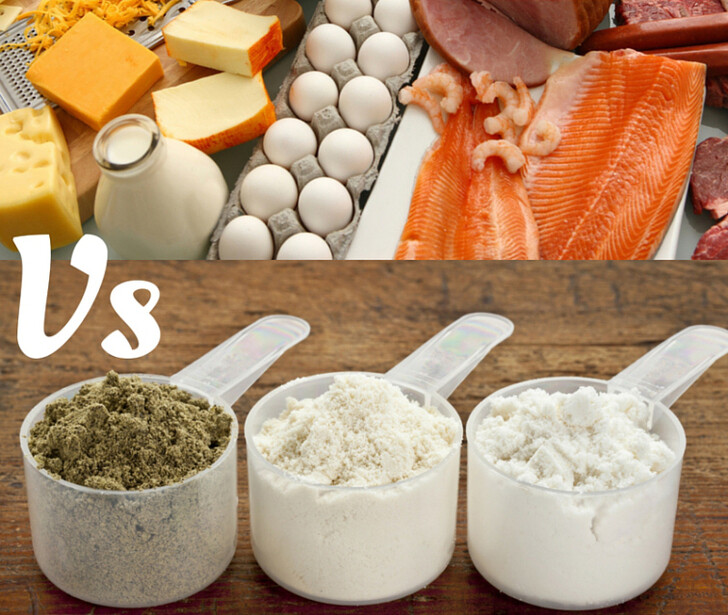
    real protein foods versus protein shakes

    Advantages of protein supplements

    • Protein foods that are easily digested are better consumed early in the morning and after exercise. At these times, the BV value of whey protein makes this the ideal source of protein.
    • Certain protein supplements have a higher biological value than real foods.
    • Amino acids often fortify protein supplements, making them a multi-dimensional protein food.
    • Most protein powders and supplements have little to no fat content. This is often not a case with real foods.
    • Protein supplements usually have a more full and healthy source of protein.
    • Protein supplements are much less temperature-sensitive and, generally, require no refrigeration or heating.
    • Many protein foods will help to satisfy your sweet tooth as low-calorie means.
    • A protein supplement is an easy and convenient way to increase the protein concentration in your diet without increasing calories too much.
    • Protein supplements are convenient for someone with a hectic schedule. It is easier to drink a protein shake than it is to buy, prepare, and cook whole foods. You need only a few seconds to prepare a shake. Also, if you are unable to prepare a whole meal, a protein supplement (shake, bar, etc) is of course a better option than going without.
    • Protein supplements come is a wide range of flavours, which can completely remove some of the “blandness” that comes with a high protein diet.
    • Adding protein can be cost-effective. Some protein foods can be quite expensive per 30 gram serving, such as beef and fish.
    • A protein shake can be easier on the stomach before bed.
    • Additives to protein are more comfortable, requiring little to no cleaning.
    • Weight gainers offer high-calorie, easily degraded, and less filling foods.
    • Protein supplements can be helpful in certain medical situations. For example, an athlete with anorexia may be more willing to consume a proteins hake then eat tuna, cottage cheese or chicken. Patients with cancer or AIDS often benefit from protein supplements if they are unable to eat well.

    Advantages of real food

    • Protein foods such as eggs, string cheese, milk, and tuna can be more cost-effective than certain protein supplements.
    • Real food is more versatile. It can be used in conjunction with other foods for just about any craving or occasion. Sipping on a protein shake is nowhere near as satisfying as a real meal.
    • You know exactly what you’re eating and where it came from.
    • Shakes can cause stomach and digestive bloating for some individuals.
    • Milk and eggs are nutritional grand slams.
    • Beef has been shown in studies to pack on more muscle mass than other forms of protein.
    • Certain protein supplements can have a greater variance of actual listed ingredients.
    • A variety of real foods can provide a nutritional depth that is hard to achieve with protein supplements.
    • Protein food offer vitamins, minerals, carbohydrates and healthy fats unavailable in protein powder. Therefore, getting too much protein from supplements rather than whole foods means you are missing out on a lot of nutrition found only in whole food.

    Closing thoughts: Protein Supplements versus Real Food

    We always say real food, not dust, builds muscle. What we mean by this is that protein supplements should only be used alongside a good diet and not in place of real food. You should never rely on protein supplements as our main source of protein. Natural sources are always preferred over supplements and you should stick to the real meals as your general protein source.

    However, that does not mean that there is no place for supplements as well. As you have seen both shakes and whole foods have their benefits and disadvantages. To keep your body constantly in positive nitrogen balance, you should consume a complete protein every three hours. For many people, eating this often is nearly impossible. That is when a high quality protein supplement is the most helpful. Finding a combination of both is the best option for your health.

    Our rule of thumb, limit your use of protein powders to when you feel that your body really needs a quick and fast supply of protein like post workout and stick to foods high in protein throughout the day. If you choose to supplement with protein powder, try to keep supplemented protein under 20% of total protein intake (and preferably closer to 10%). This will ensure that you are getting the bulk of your protein from healthy, nutrient dense sources like lean meat (lean beef, turkey and chicken breasts), eggs, legumes and lentils, whole grains, cheese, etc.

    Share. Facebook Twitter Pinterest LinkedIn Tumblr Email WhatsApp
    krunoslav
    • X (Twitter)

    Hey! My name is Kruno, and I'm the owner and author of Bodybuilding Wizard. I am a licensed fitness trainer with a Ph.D. in kinesiology. Throughout my career, I have dedicated myself to helping individuals achieve their health and fitness goals through personalized training programs. In addition to my academic qualifications, I have completed various specialized courses, including certifications in nutrition and strength training, which have further enhanced my ability to provide comprehensive fitness guidance. I started this website back in late 2014, and it has been my pet project ever since. My goal is to help you learn proper weight training and nutrition principles so that you can get strong and build the physique of your dreams!

    Related Posts

    The New Approach to Muscle Builders: How Serious Lifters Are Using Supplements to Build Strength Faster

    Healthy Diet for Fitness: A Coach’s Practical Guide to Eating for Energy, Performance, and Real Results

    Does Meal Frequency Matter? The 6-Meals-a-Day Myth Explained

    Leave A Reply Cancel Reply

    You must be logged in to post a comment.

    WE ARE SOCIAL
    • Facebook 3.6K
    • Twitter
    • YouTube 134
    • Instagram
    RECENT POSTS
    October 10, 2026

    Decline Machine Press (Hammer Strength Decline Press): How To, Muscles Worked, Benefits & Alternatives

    October 10, 2026

    Ring Dips: How To, Muscles Worked, Benefits & Alternatives

    October 6, 2026

    Reverse-Grip Incline Dumbbell Press: How To, Muscles Worked, Benefits & Alternatives

    October 4, 2026

    Landmine Chest Press: How To, Muscles Worked, Benefits & Alternatives

    October 3, 2026

    Reverse-Grip Bench Press: How-To, Muscles Worked, Benefits & Alternatives

    RECENT COMMENTS
    • Justin Dew on Designing your own home gym
    • krunoslav on How Skeletal Muscles Are Named: A Simple Guide to Muscle Names
    • Christina on How Skeletal Muscles Are Named: A Simple Guide to Muscle Names
    • igtropin on Stiff-Leg Deadlift: Proper Form, Muscles Worked & Hamstring Growth Guide
    • teragon labs on Barbell Back Squat: Proper Form, Benefits, Muscles Worked & Expert Tips
    LATEST GALLERIES

    Subscribe to Updates

    Join our mailing list to receive the latest updates from our team.

    ABOUT
    ABOUT

    We are a group of bodybuilding enthusiasts and this is our effort to have all the details about bodybuilding on a single website. We strive to educate and inform our visitors so that they can make the correct training, nutrition, and supplement decisions on their own. Bodybuilding Wizard will make your dream body your reality and take you to a whole new level!

    POPULAR POSTS
    April 2, 2014

    Lying Leg Curl: Complete Guide to Hamstring Isolation, Strength & Muscle Growth

    February 18, 2019

    How Skeletal Muscles Are Named: A Simple Guide to Muscle Names

    March 28, 2014

    Free weights: The main tool for building muscles

    BODYBUILDING WIZARD
    Bodybuilding Wizard Footer Logo
    Facebook X (Twitter) Instagram Pinterest YouTube
    • About
    • Authors
    • Editorial Policy
    • Write for us
    • Privacy
    • Contact
    • Terms of Use
    • Advertising
    • FAQ
    Copyright © 2014-2026 BodybuildingWizard. All rights reserved. Powered by WordPress. Made with love and lots of caffeine.

    Type above and press Enter to search. Press Esc to cancel.

    Sign In or Register

    Welcome Back!

    Login to your account below.

    Lost password?