



Introduction
When it comes to forearm training, most lifters focus almost exclusively on wrist curls—neglecting the equally important extensor muscles on the top of the forearm. This imbalance not only limits overall development but also increases the risk of overuse injuries and reduces grip efficiency in compound lifts.
The reverse barbell wrist curl directly targets these often-overlooked muscles, helping you build stronger, more balanced forearms. By training wrist extension rather than flexion, this exercise plays a key role in improving grip stability, control, and endurance, especially during movements like deadlifts, rows, and pull-ups.
From a coaching perspective, I see this exercise as essential for anyone serious about long-term strength and joint health. Strong forearm extensors don’t just improve aesthetics—they help stabilize the wrist, enhance lifting mechanics, and support heavier loads across your entire training program.
In this guide, you’ll learn how to perform the reverse barbell wrist curl with proper technique, which muscles it targets, and how to use it effectively to build stronger, more resilient forearms.
Other Names for the Reverse Barbell Wrist Curl
Before moving forward, it’s useful to know that this exercise is referred to by several names depending on the gym, equipment, or training style.
- Reverse wrist curl
- Overhand wrist curl
- Reverse forearm curl
- Wrist extension curl
- Barbell wrist extension
- Seated reverse wrist curl
- Reverse grip wrist curl
- Forearm extensor curl
Required Equipment
To perform the reverse barbell wrist curl correctly, you don’t need much equipment—but proper setup is essential for comfort, control, and joint safety.
- Barbell (straight or EZ bar)
→ A straight bar works well, but an EZ bar can reduce wrist strain for some lifters - Flat bench or thighs (support surface)
→ Used to support your forearms and isolate the wrist movement - Weight plates
→ Start light—this exercise does not require heavy loading - Optional: wrist wraps
→ Can provide extra support if you experience discomfort
How to Perform the Reverse Barbell Wrist Curl
To maximize effectiveness and minimize strain, focus on controlled wrist movement and proper forearm positioning. This exercise is typically performed on a bench, but it can also be done with your wrists positioned at the end of your knees.
Starting Position (Setup)
- Sit on a flat bench with your feet firmly planted on the floor
- Place your forearms on your thighs or across the bench, palms facing down (pronated grip)
- Position your wrists so they are hanging just off the edge of your knees or the bench
- Hold a barbell with your hands about shoulder-width apart
- Keep your forearms stable and in contact with the support surface throughout the set
Movement (Execution)
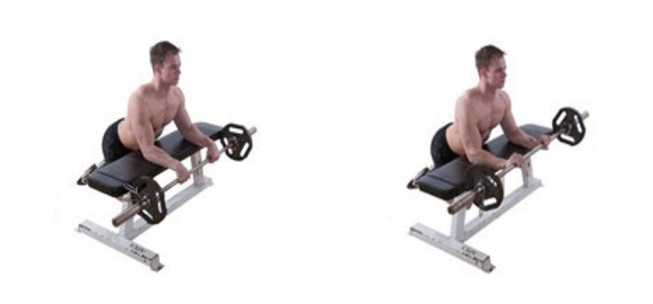
- Slowly lower the barbell by flexing your wrists downward, allowing a controlled stretch
- Reverse the motion by extending your wrists upward, lifting the back of your hands toward you
- Squeeze your forearm extensors at the top for a brief moment
- Lower the weight back down in a slow, controlled manner
- Keep the movement isolated to the wrists—do not involve the elbows or shoulders
Key focus:
Use a moderate range of motion and strict control to fully engage the forearm extensor muscles without placing unnecessary stress on the joints.
Video Demonstration
Before adding this exercise to your routine, it’s helpful to see proper form in action. The reverse barbell wrist curl may look simple, but small details like wrist positioning and control make a big difference.
What to pay attention to while watching:
- Movement comes only from the wrists (not elbows)
- Controlled tempo—no bouncing or jerking
- Full but safe range of motion
- Forearms remain firmly supported throughout the set
Watching proper execution will help you isolate the forearm extensors and avoid unnecessary strain.

Muscles Worked in the Reverse Barbell Wrist Curl
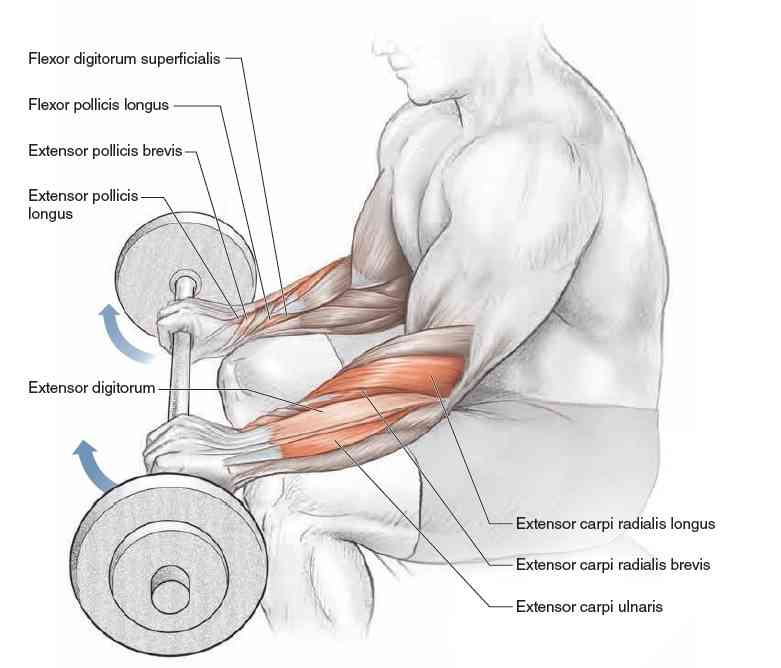
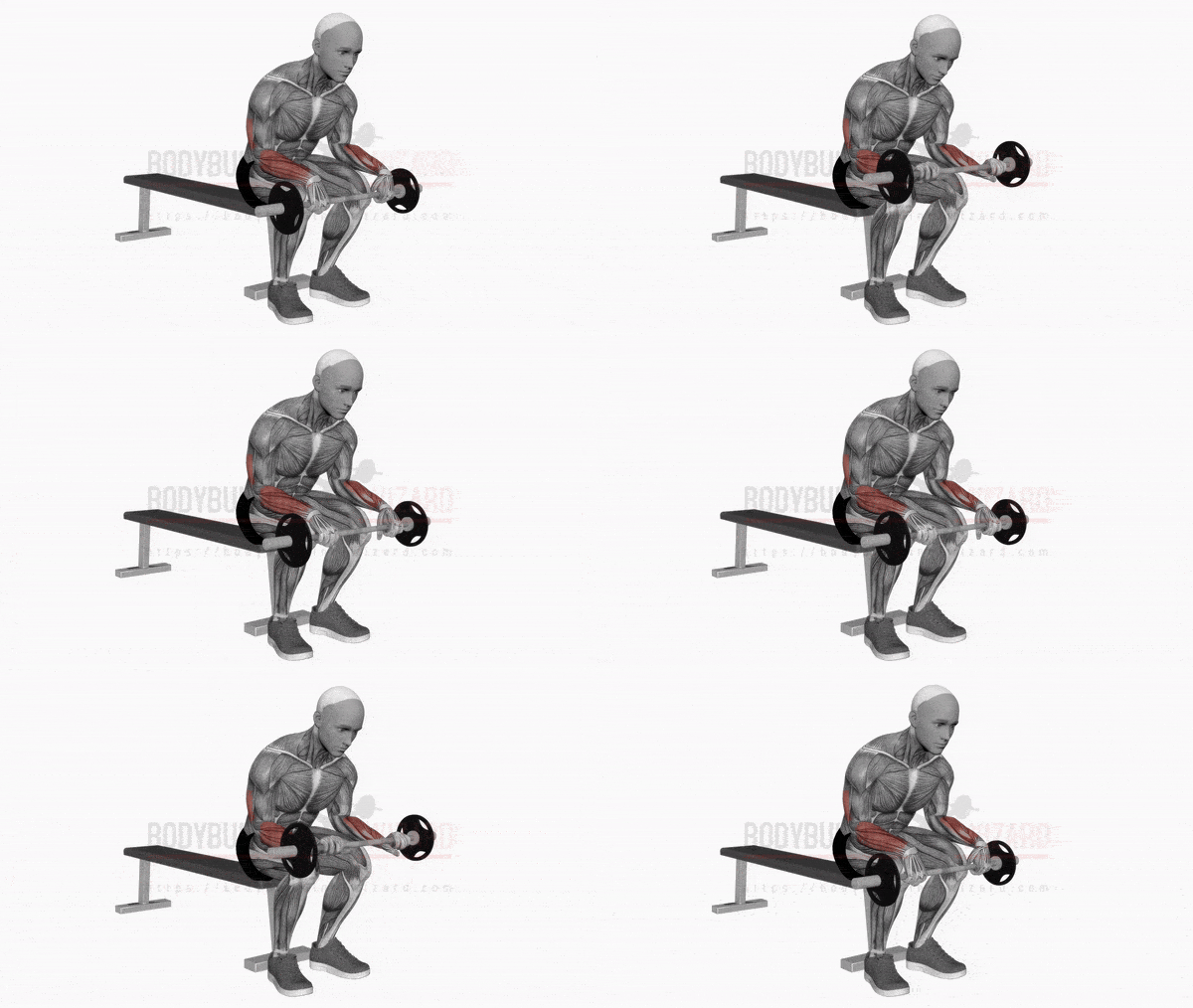
- Primary: Forearm extensors (extensor digitorum)
- Secondary: Extensor carpi radialis longus & brevis, extensor carpi ulnaris
- Synergists: Brachioradialis
- Antagonists: Forearm flexors (flexor carpi radialis, flexor carpi ulnaris, palmaris longus)
Biomechanics of the Reverse Barbell Wrist Curl
Understanding the biomechanics of this exercise helps you perform it more effectively and safely, especially since it involves smaller, more injury-prone joints.
- Primary Joint Action: Wrist extension
- Joint Involved: Radiocarpal (wrist joint)
- Plane of Motion: Sagittal plane
- Type of Contraction:
→ Concentric: wrist extension (lifting phase)
→ Eccentric: controlled wrist flexion (lowering phase) - Stabilization:
→ Forearms remain fixed against thighs or bench
→ Elbows and shoulders act as stabilizers (minimal movement) - Muscle Function:
→ Forearm extensors generate force to lift the bar
→ Flexors act as antagonists and assist in control during lowering
Technique Optimization Tips
Before increasing weight or volume, refining your technique is essential—small adjustments can significantly improve forearm activation and reduce unnecessary strain on the wrists.
- Keep your forearms fully supported and stable at all times
- Use a light to moderate weight to maintain strict form
- Focus on controlled tempo (especially during the lowering phase)
- Move only at the wrist joint—no elbow involvement
- Avoid excessive range that causes wrist discomfort
- Squeeze the extensors briefly at the top position
- Keep your grip firm but not overly tense to avoid fatigue spillover
- ✔ Keep your forearms fully supported on your thighs or the bench
- ✔ Use a pronated (overhand) grip
- ✔ Move only at the wrist joint
- ✔ Lift the bar with a controlled wrist extension
- ✔ Lower the weight slowly and under control
- ✔ Avoid using momentum or elbow movement
- ❌ Using too much weight and losing wrist control
- ❌ Letting the forearms lift off the support surface
- ❌ Using momentum or elbow movement instead of wrist extension
- ❌ Lowering the bar too quickly without control
- ❌ Forcing an excessive range of motion that irritates the wrists
- ❌ Ignoring wrist discomfort instead of adjusting load or equipment
In my experience, one of the biggest mistakes lifters make is training forearms only from the flexor side and completely ignoring the extensors. Everyone wants forearms like Popeye, but most people train only half the forearm and then wonder why their wrists still feel weak or unstable.
The truth is, stronger forearm extensors can make a noticeable difference in wrist control, grip stability, and overall balance around the joint. That becomes especially important if you do a lot of pulling, curling, or gripping work and want to stay healthy long term.
So yes — train your flexors, but don’t neglect the other side. If you want forearms that not only look strong but also perform like they should, reverse wrist curls deserve a regular place in your routine.
Technical Emphasis & Targeting Adjustments
Small adjustments in grip, wrist angle, and equipment choice can slightly change how the reverse barbell wrist curl feels and how effectively it targets the forearm extensors.
- Use a straight bar for a more traditional wrist extension pattern
- Switch to an EZ bar if a straight bar feels uncomfortable on the wrists
- Keep your hands at a natural width to reduce joint stress
- Use a moderate range of motion rather than forcing excessive extension
- Pause briefly at the top of the movement to improve extensor contraction
- Perform the exercise with your wrists at the end of your knees for a slightly freer movement path
- Slow down the eccentric phase to increase time under tension
Pros and Cons of the Reverse Barbell Wrist Curl
Before including this exercise in your routine, it’s important to understand where it excels and where it may have limitations. While highly effective, it works best when combined with other forearm movements.
Benefits
#1 Targets Often Neglected Forearm Extensors
Most lifters overtrain flexors and ignore extensors—this exercise helps restore muscular balance and improve overall forearm development.
#2 Improves Grip Stability
Stronger extensors enhance wrist stability, which can improve control and performance in compound lifts like rows and deadlifts.
#3 Reduces Injury Risk
Balanced forearm strength can help reduce the risk of overuse injuries such as wrist pain and elbow issues.
#4 Simple and Accessible
Requires minimal equipment and can be performed in almost any gym setup.
#5 Great for Muscle Definition
Helps add visible detail to the top of the forearms, contributing to a more complete look.
Drawbacks
#1 Limited Load Potential
You won’t be able to use heavy weights, which may limit strength progression compared to larger compound movements.
#2 Can Feel Unnatural for Beginners
The wrist extension movement may feel awkward or weak at first.
#3 Wrist Discomfort Is Possible
Some lifters may experience discomfort, especially with a straight bar.
#4 Easy to Perform Incorrectly
Using momentum or lifting the forearms can significantly reduce effectiveness.
Bottom line: The reverse barbell wrist curl is essential for balanced forearm development, but it should be used alongside other grip and forearm exercises for best results.
Reverse Barbell Wrist Curl Variations
Before sticking to one version, it’s worth knowing that small changes in equipment or setup can make this exercise more comfortable and slightly alter muscle activation.
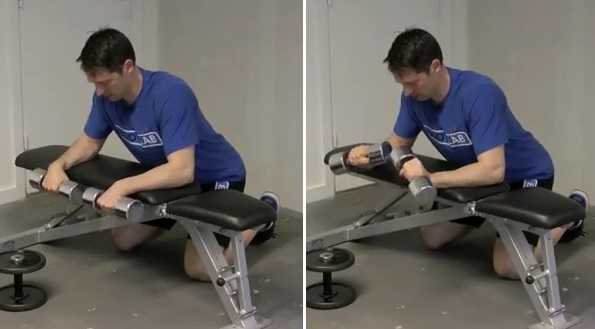
- Reverse Dumbbell Wrist Curl
Performed with dumbbells instead of a barbell. This allows a more natural wrist position, reduces strain, and enables unilateral training.
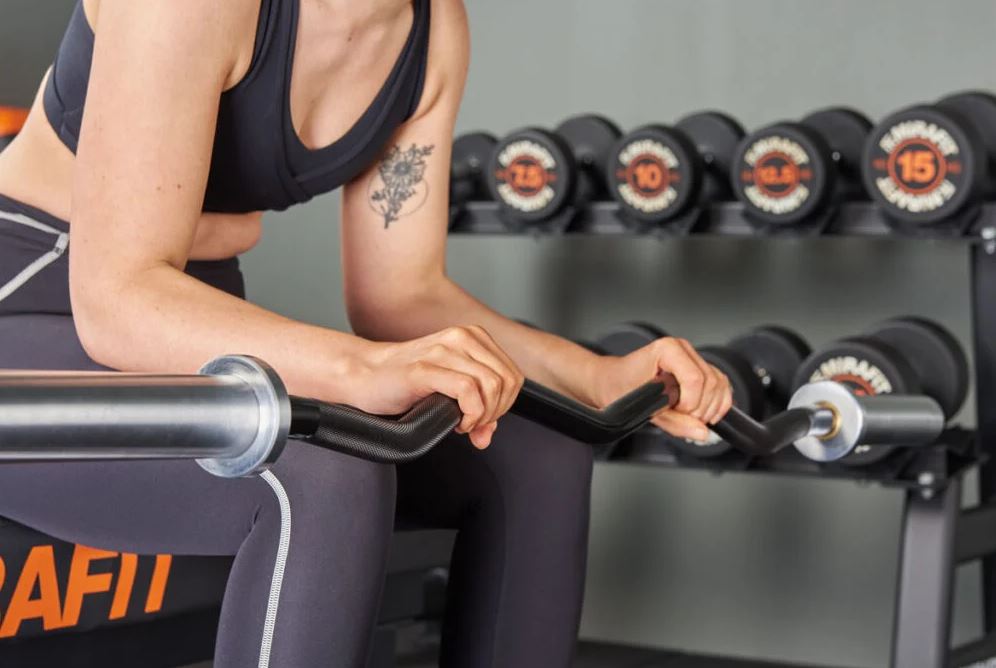
- EZ Bar Reverse Wrist Curl
Uses an EZ bar instead of a straight bar. The angled grip can feel more comfortable and joint-friendly for many lifters.
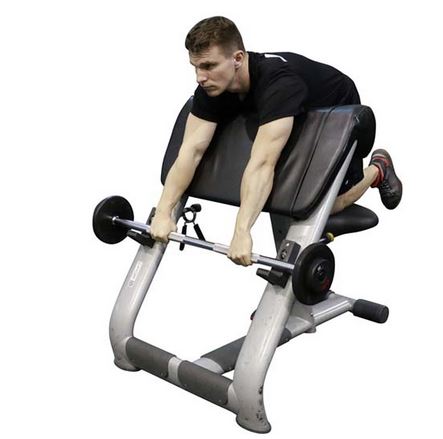
- Preacher Bench Reverse Wrist Curl
Performed with your forearms resting on the incline pad of a preacher bench. This setup improves stability and can further isolate the forearm extensors.
- Reverse Wrist Curl Over a Bench
Instead of using your thighs, place your forearms across a flat bench. This can provide a more consistent support surface and better control.

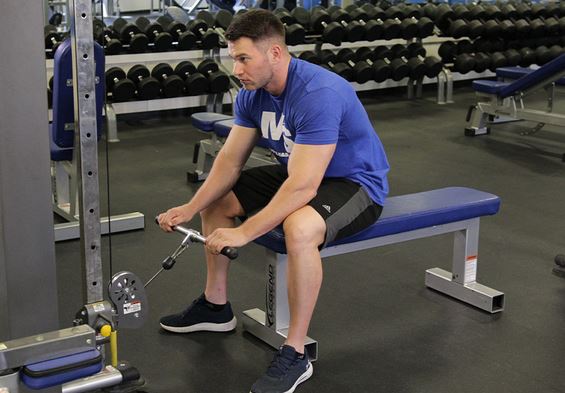
- Cable Reverse Wrist Curl
Uses a low pulley cable instead of free weights. This provides more constant tension throughout the movement.
Key idea: Choose the variation that feels most comfortable on your wrists while still allowing strict and controlled execution.
Replacement Exercises (Substitutes)
If you’re looking to add variety or don’t have access to a barbell setup, there are many effective alternatives that target the forearm extensors and overall grip.
For a complete list of options, explore our forearm exercise database, where exercises are categorized by equipment, difficulty level, and training goal—making it easy to find the best substitute for your needs.
Where This Exercise Fits in a Workout
The reverse barbell wrist curl is best used as an accessory or finisher exercise, with a focus on forearm balance and wrist stability.
- Perform it at the end of your workout after the main lifts
- Ideal for arm day, back day, or dedicated forearm sessions
- Pairs well with wrist curls or grip exercises for balanced development
- Use moderate to high reps (12–20) for best results
Small muscle, big impact—perfect for finishing your session with targeted forearm work.
Reverse Barbell Wrist Curl vs. Seated Barbell Wrist Curl
Before choosing between these two exercises, it’s important to understand that they target opposite sides of the forearm and serve different but complementary roles.
| Feature | Reverse Barbell Wrist Curl | Seated Barbell Wrist Curl |
|---|---|---|
| Primary Focus | Wrist extensors | Wrist flexors |
| Muscle Activation | Top of the forearm | Underside of the forearm |
| Grip Carryover | Improves stability | Improves grip strength |
| Load Potential | Lower | Higher |
| Range of Motion | Moderate | Moderate to high |
| Joint Stress | Can be higher (if poorly performed) | Generally lower |
| Skill Requirement | Moderate | Low |
| Best Rep Range | 12–20 reps | 10–15 reps |
| Training Role | Balance & injury prevention | Size & strength |
Conclusion: Both exercises are essential for complete forearm development. The reverse barbell wrist curl strengthens the often-neglected extensors, improving wrist stability and joint health, while the seated barbell wrist curl focuses on building flexor size and strength.
Best approach: Train both. Balanced forearms not only look better but also perform better—and reduce the risk of injury over time.
Final Thoughts
The reverse barbell wrist curl is a simple yet highly effective exercise for developing stronger, more balanced forearms. By targeting the often-neglected extensor muscles, it plays a key role in improving wrist stability, grip support, and long-term joint health.
While it may not be the most popular movement in the gym, consistently incorporating it into your routine can make a noticeable difference—not just in appearance but in overall performance.
Why are forearm extensors important for strength training?
Forearm extensors play a crucial role in stabilizing the wrist during heavy lifts, helping maintain proper bar control and reducing the risk of strain or injury.
Can weak extensors limit my performance in compound lifts?
Yes, weak extensors can reduce grip stability, causing earlier fatigue in exercises like deadlifts, rows, and pull-ups—even if your primary muscles are strong enough.
Is the reverse wrist curl necessary if I already train grip strength?
Yes, because most grip exercises emphasize flexors. Without direct extensor training, imbalances can develop over time.
What is the best tempo for reverse wrist curls?
A slow and controlled tempo works best—especially during the lowering phase—to maximize muscle activation and reduce joint stress.
Should I train extensors and flexors on the same day?
Yes, training both in the same session is often ideal for balanced development and improved recovery.
How long does it take to see results in forearm development?
Forearms typically respond relatively quickly, with noticeable improvements in strength and endurance within a few weeks of consistent training.
Can this exercise help prevent wrist or elbow pain?
Yes, strengthening the extensors can help reduce the risk of overuse injuries, especially those caused by muscle imbalances.
Is it better to use high reps or low reps for this exercise?
Higher reps (12–20) are generally more effective due to the small size and endurance nature of the forearm muscles.
Can I perform reverse wrist curls without a barbell?
Yes, you can use dumbbells, cables, or resistance bands as effective alternatives.
How does grip width affect this exercise?
A natural grip width is best. Too wide or too narrow can increase wrist stress and reduce efficiency.
