



Introduction
The standing leg curl is one of the most effective unilateral hamstring isolation exercises for developing knee-flexion strength, muscular balance, and posterior thigh definition. Unlike the lying leg curl, which trains both legs simultaneously, the standing variation works one leg at a time, making it highly effective for correcting left-to-right strength imbalances and improving mind–muscle connection.
Because the movement is machine-based and highly stable, the standing leg curl allows lifters to focus almost entirely on hamstring contraction without significant lower-back involvement. This makes it an excellent option for beginners learning how to activate the hamstrings properly, as well as advanced lifters seeking additional isolation work after compound posterior chain exercises.
The standing leg curl is especially useful in bodybuilding-style leg training because it directly targets the hamstrings through controlled knee flexion while minimizing assistance from the glutes and spinal erectors. When performed with strict tempo and full range of motion, it can produce an intense hamstring contraction that is difficult to replicate with many free-weight exercises.
Required Equipment
To perform the standing leg curl correctly, you need:
- Standing leg curl machine
- Adjustable roller pad
- Stable support handles
Most standing leg curl machines position the torso slightly forward, which helps stabilize the body and improve hamstring isolation during knee flexion. Because the exercise is performed one leg at a time, proper machine alignment is especially important for maintaining smooth movement mechanics and reducing knee stress.
Other Names for the Standing Leg Curl
This exercise may also be referred to as:
- Single-Leg Leg Curl
- Standing Hamstring Curl
- Unilateral Leg Curl
- Single-Leg Hamstring Curl
- Machine Standing Leg Curl
Although names vary slightly, all versions involve unilateral knee flexion performed in a standing position against resistance.
How to Perform the Standing Leg Curl
Starting Position (Setup)
Proper setup is critical for maintaining hamstring tension and preventing unnecessary hip or lower-back compensation during the movement.
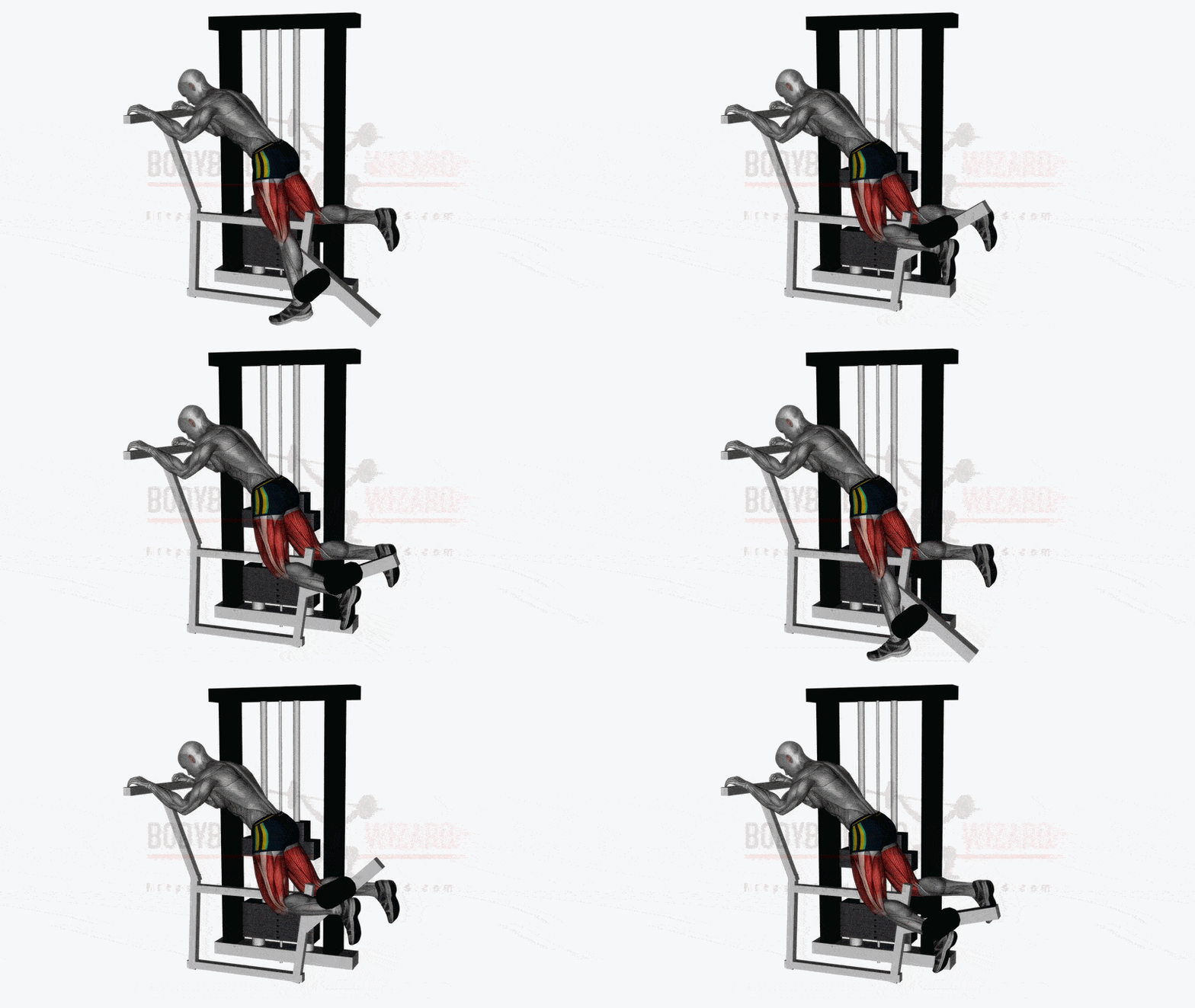
- Stand facing the machine with your torso upright or slightly leaned forward.
- Position one ankle behind the roller pad.
- Align your working knee with the machine’s pivot point.
- Keep the non-working leg slightly bent for balance and support.
- Grip the machine handles firmly.
- Maintain a neutral spine and stable hips throughout the exercise.
A slight forward torso lean is often more comfortable and may reduce excessive quadriceps tension at the start of the movement.

Execution (Movement Phase)
- Initiate the movement by contracting the hamstrings.
- Curl your heel upward toward your glutes in a controlled arc.
- Continue until maximal comfortable knee flexion is reached.
- Squeeze the hamstrings hard for 1 second at the top.
- Slowly lower the weight over 3–4 seconds.
- Stop just before the weight stack touches down to maintain constant tension.
The movement should remain smooth and controlled from start to finish, without swinging the hips or relying on momentum.
Technique Optimization Tips for the Standing Leg Curl
Small adjustments in positioning and tempo can significantly improve hamstring activation and overall exercise quality.
- Keep the hips stable throughout the movement.
- Avoid arching the lower back excessively.
- Control the eccentric phase slowly.
- Point the toes slightly downward to reduce calf dominance.
- Do not kick the weight upward using momentum.
- Maintain tension at the bottom instead of resting on the stack.
- Focus on pulling through the hamstrings rather than simply moving the pad.
A useful cue is: “Pull the heel toward the glute while keeping the hips quiet.”
Mechanical Resistance Analysis
The standing leg curl isolates the hamstrings during knee flexion, allowing each leg to be trained independently. Because only one leg works at a time, the exercise demands greater neuromuscular control and often produces a stronger mind–muscle connection compared to bilateral leg curl variations.
The unilateral setup also helps expose and correct left-to-right strength imbalances that may go unnoticed during lying or seated leg curls. In many cases, lifters discover one hamstring is significantly weaker or less coordinated than the other.
Like other machine-based hamstring curls, resistance is typically greatest near peak contraction, where the hamstrings are maximally shortened. Controlled eccentrics are particularly valuable because they increase time under tension and improve overall hamstring recruitment.
Common Mistakes
Even though the standing leg curl is a relatively simple machine exercise, poor technique can still reduce hamstring activation and increase unnecessary joint stress.
- Using excessive momentum
- Swinging the hips during the curl
- Hyperextending the lower back
- Letting the weight stack touch down between reps
- Performing fast, uncontrolled eccentrics
- Failing to align the knee with the machine axis
- Using too much weight and shortening the range of motion
One of the most common mistakes is turning the exercise into a hip movement instead of a strict knee-flexion exercise. The hamstrings should initiate and control the entire motion.
Muscles Involved in the Standing Leg Curl
Understanding muscle recruitment helps improve exercise precision and overall hamstring development.
MAIN MUSCLES:
Hamstrings (biceps femoris, semitendinosus, semimembranosus)
SECONDARY MUSCLES:
Gastrocnemius, gracilis, sartorius
ASSISTING MUSCLES:
Popliteus, plantaris
ANTAGONISTS:
Standing Leg Curl Pros and Cons
The standing leg curl is highly effective for isolating the hamstrings while simultaneously improving unilateral control and muscular balance. Because the movement is machine-based and relatively stable, it works well for both beginners and advanced lifters.
Advantages
- Excellent unilateral hamstring training
Working one leg at a time helps identify and correct strength imbalances between sides. - Strong mind–muscle connection
Many lifters feel better hamstring activation during unilateral curls compared to bilateral machine variations. - Low spinal loading
The movement places minimal stress on the lower back compared to free-weight posterior-chain exercises. - Beginner-friendly mechanics
The machine stabilizes the movement, making proper hamstring isolation easier to learn. - Useful for rehabilitation and injury prevention
Single-leg training can improve knee stability and muscular coordination around the joint.
Potential Drawbacks
Despite its benefits, the standing leg curl also has limitations.
- Limited loading potential
Most standing leg curl machines do not allow extremely heavy resistance. - Balance can become a limiting factor
Some lifters struggle to stabilize properly during unilateral work. - Less stretch emphasis than seated leg curls
The hamstrings are not trained in as lengthened a position as during seated variations. - Machine availability varies
Many gyms prioritize lying or seated leg curl machines instead of standing versions.
Many lifters underestimate how valuable unilateral hamstring training can be. In reality, side-to-side imbalances are extremely common and often become noticeable only when exercises are performed one leg at a time.
As a coach working with athletes and physique-focused lifters, I’ve consistently found that standing leg curls improve hamstring awareness, muscular symmetry, and contraction quality far better than most people expect — especially when performed with slow eccentrics and strict hip control.
Standing Leg Curl Variations
Small adjustments in machine setup, body position, or exercise style can subtly alter hamstring recruitment and the overall training emphasis. Using multiple variations over time can also help reduce adaptation and improve long-term hamstring development.
Lying Leg Curl
The lying leg curl trains both hamstrings simultaneously in a stable prone position. Compared to the standing version, it generally allows slightly heavier loading and stronger peak contraction.

Seated Leg Curl
The seated leg curl places the hamstrings under greater stretch because the hips remain flexed throughout the exercise. Many lifters find this variation especially effective for hypertrophy.

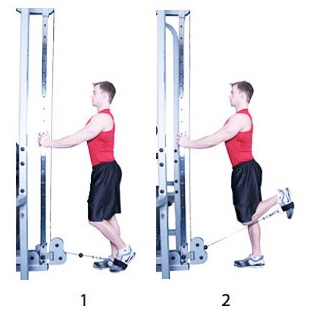
Cable Standing Leg Curl
Using a low cable attachment instead of a machine provides greater freedom of movement and maintains continuous tension throughout the range of motion. It also increases stabilization demands slightly.
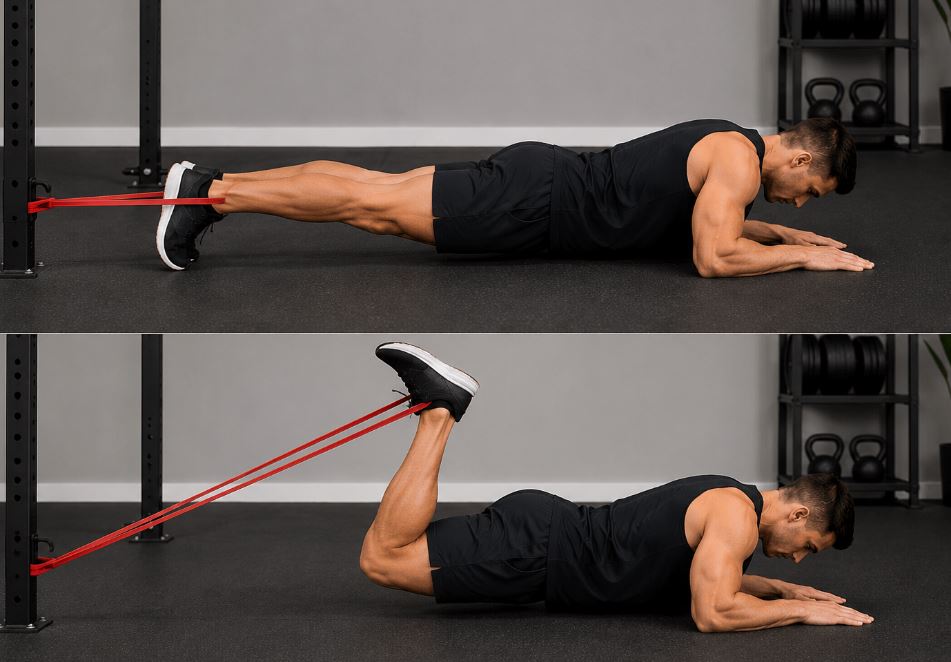
Resistance Band Leg Curl
Resistance bands provide accommodating resistance, making the movement easier at the bottom and harder near peak contraction. This variation works well for home workouts and rehabilitation settings.
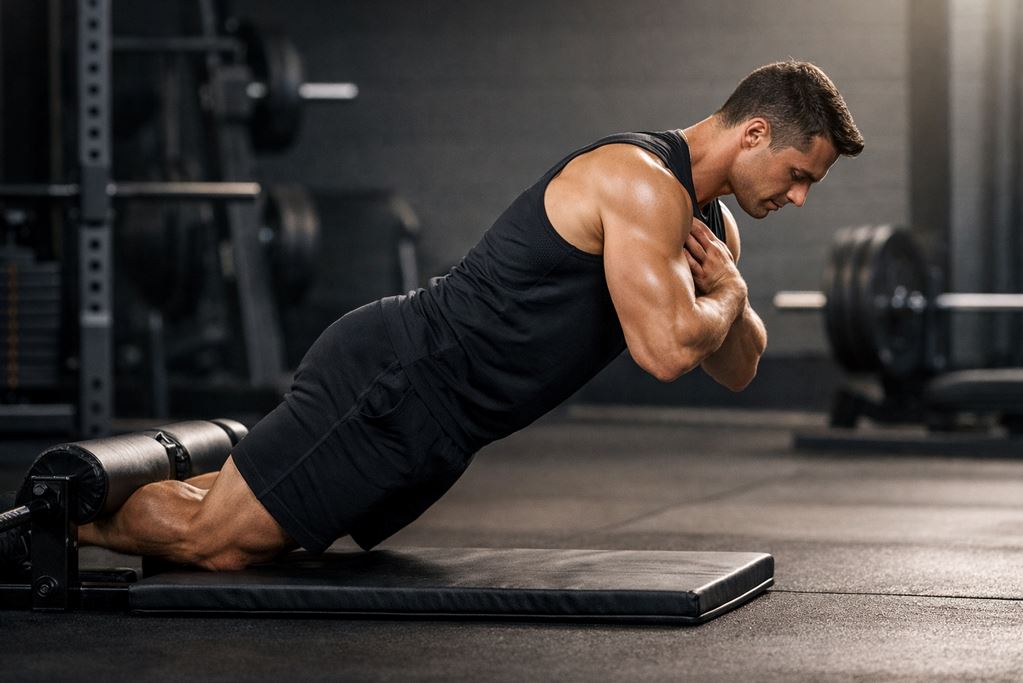
Nordic Hamstring Curl
The Nordic hamstring curl is an advanced eccentric-focused exercise known for its exceptional hamstring-strengthening and injury-prevention benefits. It is significantly more demanding than standard machine leg curls.
Alternative Exercises for Hamstring Development
Although the standing leg curl is highly effective for isolating the hamstrings, combining it with hip-dominant posterior-chain exercises usually produces more complete lower-body development.
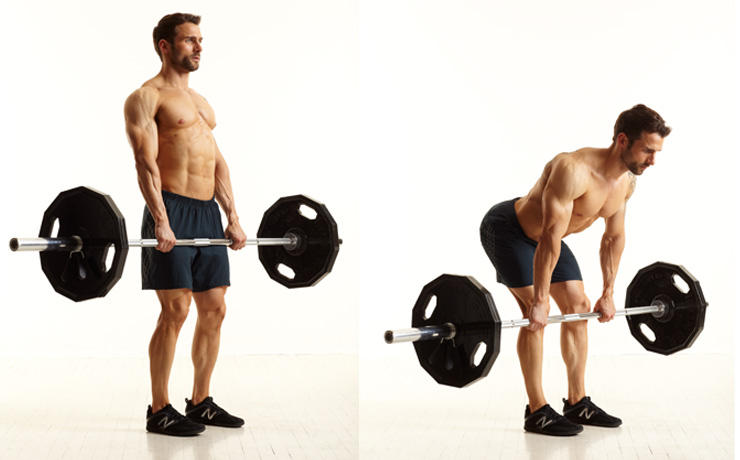
Romanian Deadlift
The Romanian deadlift emphasizes the hamstrings through loaded hip hinging and significant stretch under tension. It is one of the best exercises for overall posterior-chain hypertrophy and strength.
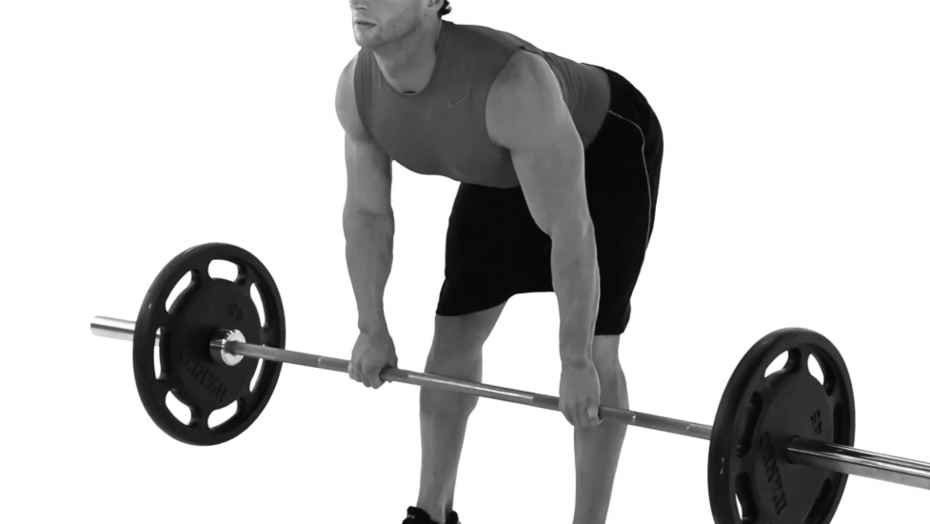
Stiff-Leg Deadlift
The stiff-leg deadlift emphasizes the hamstrings through loaded hip hinging with minimal knee flexion. Compared to standing leg curls, it places the hamstrings under greater stretch and develops the posterior chain more functionally.
Glute-Ham Raise
The glute-ham raise combines knee flexion and hip extension into one challenging movement. It develops both hamstring strength and posterior-chain coordination.

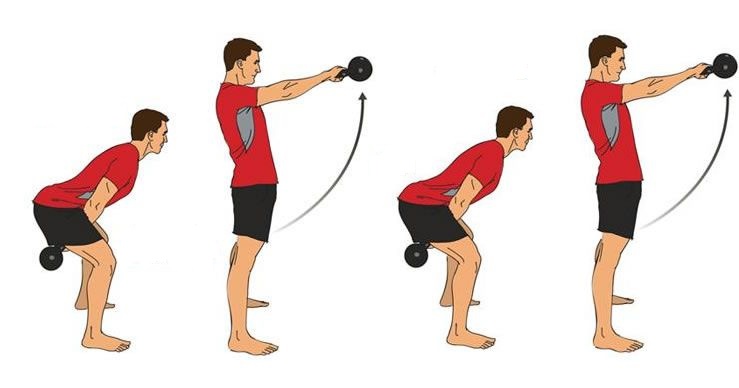
Kettlebell Swing
Kettlebell swings train explosive hip extension while dynamically loading the posterior chain. They are especially useful for athletic performance and conditioning.
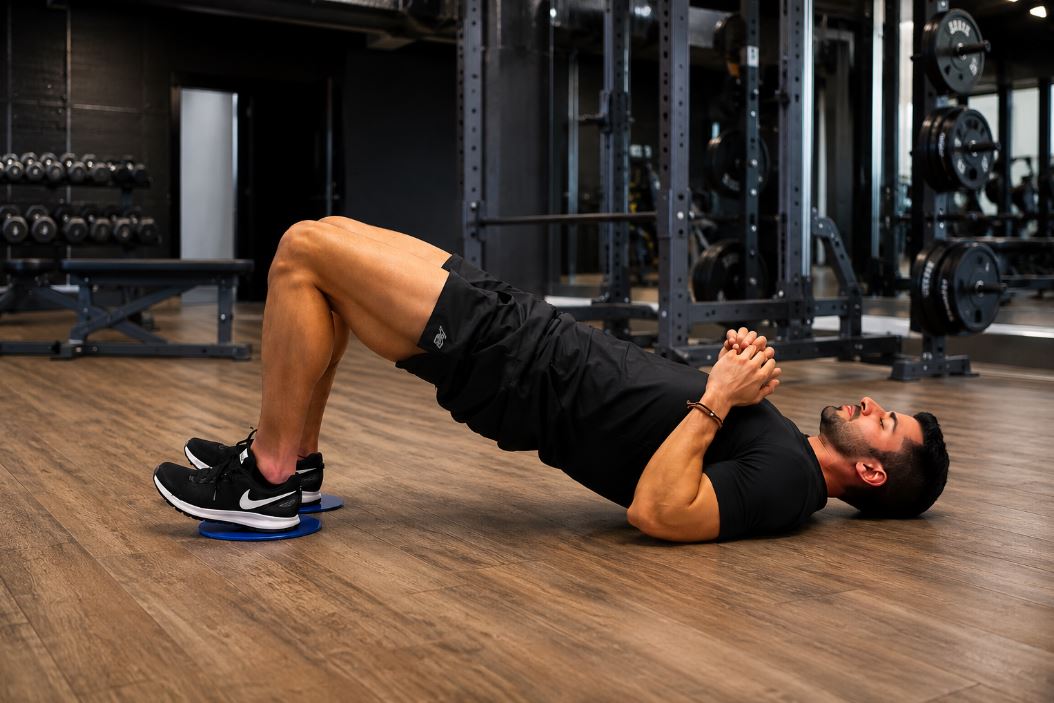
Sliding Leg Curl
Sliding leg curls mimic the mechanics of machine leg curls using bodyweight resistance. They are surprisingly effective for home training and eccentric hamstring development.
Standing Leg Curl vs Lying Leg Curl
Both exercises are highly effective for hamstring isolation, but differences in body position, stability, and unilateral involvement slightly change how the hamstrings are trained. Understanding these distinctions helps you choose the best variation for your training goals and overall leg program.
Conclusion: Both exercises are excellent for hamstring hypertrophy and knee-flexion strength. The standing leg curl is especially valuable for unilateral development and correcting muscular imbalances, while the lying leg curl generally allows greater loading and overall stability.
Why Unilateral Hamstring Training Matters
Many lifters unknowingly develop significant differences in strength and coordination between their left and right hamstrings. Bilateral exercises often hide these imbalances because the stronger side compensates for the weaker one.
Unilateral exercises like the standing leg curl force each hamstring to work independently, improving muscular symmetry, neuromuscular coordination, and movement control. This becomes especially important for athletes involved in sprinting, jumping, and directional changes, where side-to-side strength differences may increase injury risk.
Single-leg training can also improve mind–muscle connection because it allows greater focus on one hamstring at a time. For many lifters, this leads to better contraction quality and more balanced lower-body development.
Final Thoughts
The standing leg curl is one of the best unilateral machine exercises for isolating the hamstrings, improving muscular balance, and strengthening knee flexion mechanics with minimal lower back stress.
When performed with controlled tempo, strict hip stability, and a full range of motion, it becomes far more than a simple accessory movement. Used strategically within a balanced lower-body program, the standing leg curl can significantly improve hamstring development, muscular symmetry, and overall posterior-chain function.
Is the standing leg curl better for fixing hamstring imbalances?
Yes. Because the exercise trains one leg at a time, it prevents the stronger side from compensating for the weaker one. Many lifters discover noticeable left-to-right strength differences only after introducing unilateral hamstring work.
Why does the standing leg curl often create a stronger hamstring “burn”?
Unilateral training typically improves focus and neuromuscular recruitment. Since only one hamstring works at a time, many lifters experience a stronger mind–muscle connection and greater local fatigue compared to bilateral leg curl variations.
Should athletes prioritize unilateral hamstring exercises?
In many cases, yes. Sprinting, cutting, and jumping occur primarily one leg at a time, so unilateral hamstring strength and coordination are extremely important for athletic performance and injury resilience.
Is it normal to feel the calves during standing leg curls?
Yes, to a degree. The gastrocnemius crosses the knee joint and assists during knee flexion. However, excessive calf involvement usually means the hamstrings are weak, fatigued, or poorly activated.
Why is slow lowering important during standing leg curls?
The eccentric phase creates high levels of mechanical tension within the hamstrings, which is critical for muscle growth and tissue resilience. Controlled lowering also reduces momentum and improves overall exercise quality.
Can standing leg curls improve sprint performance?
Indirectly, yes. Stronger hamstrings contribute to knee flexion power, sprint mechanics, and deceleration control. While standing leg curls alone will not maximize speed, they can strengthen an important weak link in the posterior chain.
Should standing leg curls be done before or after compound leg exercises?
For most hypertrophy-focused programs, standing leg curls work best after compound movements like squats or Romanian deadlifts. However, some lifters use them first as a pre-activation exercise to improve hamstring recruitment during heavier lifts.
Are standing leg curls safer for the lower back than deadlift variations?
Generally yes. The machine stabilizes the movement and minimizes spinal loading, making standing leg curls much less demanding on the lower back than hip-hinge exercises like stiff-leg deadlifts or Romanian deadlifts.
