



Introduction
The standing barbell wrist curl is a classic isolation exercise that strengthens the forearm flexor muscles responsible for wrist flexion and grip strength. Although forearm training is often overlooked in many strength programs, strong forearms play a crucial role in exercises such as deadlifts, rows, and pull-ups, as well as in many sports that require a powerful grip and wrist stability.
Unlike the more common seated variation, the standing barbell wrist curl requires the lifter to control the barbell while the arms hang freely in front of the body, increasing the demand on the forearm muscles and handgrip. This variation also encourages better coordination between the wrist flexors and finger flexors, both of which contribute to overall forearm strength.
When performed with proper technique and controlled movement, the standing barbell wrist curl can help improve grip endurance, forearm hypertrophy, and wrist stability, making it a valuable addition to any complete arm or upper-body training routine.
Other Names for the Standing Barbell Wrist Curl
The standing barbell wrist curl may also be referred to by several alternative names depending on gym terminology or slight variations in how the exercise is performed.
- Barbell Wrist Curl
- Standing Wrist Curl
- Standing Wrist Flexion
- Standing Forearm Curl
- Standing Barbell Forearm Curl
Required Equipment
The standing barbell wrist curl requires minimal equipment, which makes it a simple and accessible exercise for developing forearm strength. The key requirement is a barbell that allows you to perform controlled wrist flexion while maintaining a stable standing position.
Common equipment used for this exercise includes:
- Barbell – the primary resistance used to train the wrist flexor muscles. Both standard and Olympic barbells can be used.
- Weight plates – adjustable loading allows you to progressively increase resistance as forearm strength improves.
- Optional wrist straps or chalk – some lifters use these to improve grip security when performing higher repetitions or heavier sets.
Since the movement involves a short range of motion and relatively small muscles, moderate weights are usually sufficient to effectively challenge the forearm flexors.
How to Perform the Standing Barbell Wrist Curl
The standing barbell wrist curl is a simple isolation exercise, but proper wrist positioning and controlled movement are essential to effectively target the forearm flexor muscles.
Starting Position (Setup)
- Stand upright holding a barbell in front of your thighs with a supinated grip (palms facing upward).
- Position your hands about shoulder-width apart or slightly narrower.
- Let your arms hang fully extended toward the floor.
- Keep your elbows close to your sides and completely stationary.
- Allow the barbell to rest primarily in your fingers rather than deep in the palms.
- Maintain an upright posture with your chest up and shoulders relaxed.

Movement (Execution)
- Begin the movement by flexing your wrists upward, curling the barbell using only the forearm muscles.
- Allow the bar to roll slightly from your fingers toward your palms as you lift it.
- Raise the barbell through a short controlled range of motion until your wrists are fully flexed.
- Pause briefly at the top and squeeze your forearm muscles.
- Slowly lower the bar by extending your wrists, allowing the bar to roll back toward your fingertips.
- Maintain strict control throughout the movement, avoiding any elbow or shoulder motion.
Video Demonstration
Watching a proper demonstration of the standing barbell wrist curl can help you better understand the correct movement mechanics and how the forearm muscles should work during the exercise.
When observing the technique in the video below, pay attention to the following key points:
- The arms remain completely stationary while only the wrists move.
- The barbell travels through a short range of motion, driven entirely by wrist flexion.
- The bar rolls slightly into the fingers at the bottom, allowing a greater stretch of the forearm muscles.
- The movement is slow and controlled, without swinging or using momentum.

Muscles Worked in the Standing Barbell Wrist Curl
The standing barbell wrist curl primarily targets the forearm flexor muscles, which bend the wrist and contribute to grip strength. Because the exercise involves controlled wrist flexion while holding a barbell, several forearm and hand muscles participate in the movement.
- Primary muscles: Flexor carpi radialis, flexor carpi ulnaris, palmaris longus
- Secondary muscles: Flexor digitorum superficialis, flexor digitorum profundus, flexor pollicis longus
- Stabilizing muscles: Brachioradialis, forearm stabilizers, hand muscles
- Antagonist muscles: Extensor carpi radialis, extensor carpi ulnaris, extensor digitorum
Biomechanics of the Standing Barbell Wrist Curl
The standing barbell wrist curl is a single-joint isolation exercise that primarily targets the wrist. The exercise is driven by wrist flexion, the primary biomechanical function of the forearm flexor muscles.
During the movement, the forearms remain stationary while the wrists act as the pivot point, allowing the barbell to move through a short arc. Because the resistance comes from gravity acting on the barbell, the forearm flexors must generate force to raise the weight by bending the wrists upward.
Several biomechanical characteristics define this exercise:
- Primary joint action: Wrist flexion
- Joint involved: Wrist joint
- Primary movers: Forearm flexor muscles
- Stabilization role: Forearm and hand muscles stabilize the barbell while maintaining grip
- Resistance type: Gravity-based free-weight resistance
An important biomechanical detail of this exercise is the barbell’s rolling motion into the fingers at the bottom of the movement, which increases the stretch on the forearm flexors and places additional demand on the finger flexor muscles responsible for grip strength.
Technique Optimization Tips
Although the standing barbell wrist curl is a relatively simple exercise, small technical adjustments can significantly improve forearm activation and training effectiveness.
- Keep your arms completely stationary. Only the wrists should move during the exercise; avoid bending the elbows or swinging the shoulders.
- Allow the bar to roll slightly into your fingers. This increases the stretch on the forearm flexors and improves the range of motion.
- Use controlled repetitions. Slow, deliberate movement maintains constant tension in the forearm muscles.
- Avoid excessive weight. Using too much weight often causes momentum and reduces the isolation of the wrist flexors.
- Focus on full wrist flexion. Curl the bar upward until the wrists are fully flexed and the forearm muscles are strongly contracted.
- Maintain a secure grip. Keep the bar balanced in your hands to prevent instability during the movement.
Use the following checklist to ensure you are performing the standing barbell wrist curl with proper technique and maximizing forearm activation.
- ✔ Stand upright with a barbell held in front of your thighs using a supinated (underhand) grip
- ✔ Keep your arms straight and elbows fully extended
- ✔ Maintain your forearms stationary throughout the movement
- ✔ Allow the barbell to roll slightly into your fingers at the bottom for a greater stretch
- ✔ Curl the bar upward using only your wrists
- ✔ Squeeze the forearm muscles briefly at the top of the movement
- ✔ Lower the bar slowly and under control
- ✔ Use moderate weight to maintain strict form
- ✔ Avoid swinging your arms or bending the elbows
Technical Emphasis & Targeting Adjustments
Small adjustments in grip, range of motion, and execution style can change the degree to which the forearm muscles are stimulated during the standing barbell wrist curl.
Grip Width Adjustment
A shoulder-width or slightly narrower grip is typically the most comfortable, allowing the wrists to move naturally. A narrower grip can increase forearm tension, while a wider grip may reduce wrist mobility and make the exercise feel less controlled.
Finger Roll for Greater Forearm Activation
Allowing the barbell to roll down toward the fingertips at the bottom of the movement increases the stretch on the forearm flexors. This technique also activates the finger flexor muscles, improving overall grip strength.
Controlled Tempo for Maximum Tension
Performing the movement at a slow, controlled tempo helps maintain constant tension in the forearm muscles. Rapid repetitions often reduce muscle engagement and shift emphasis away from the target muscles.
Range of Motion Emphasis
Lower the bar until the wrists are fully extended, then curl upward until the wrists are maximally flexed. Using the full available range of motion ensures better muscle activation and more effective forearm training.
Even though the standing barbell wrist curl looks simple, several common technique errors can reduce its effectiveness or place unnecessary stress on the wrists.
- ❌ Moving the elbows or entire arms instead of isolating the movement at the wrists
- ❌ Using excessive weight, which forces you to swing the bar or shorten the movement
- ❌ Performing only partial repetitions instead of using a full wrist extension and flexion
- ❌ Keeping the bar only in the palms instead of allowing it to roll toward the fingertips
- ❌ Using momentum or fast repetitions instead of controlled wrist movement
- ❌ Poor grip balance, causing the barbell to tilt or shift during the lift
- ❌ Neglecting wrist control, especially during the lowering phase
Standing Barbell Wrist Curl Pros and Cons
Like most isolation movements, the standing barbell wrist curl offers clear benefits for forearm development but also comes with a few limitations. Understanding both helps you use the exercise more effectively within your training routine.
Benefits
#1 Direct strengthening of the wrist flexor muscles
This exercise specifically targets the forearm flexors, which are responsible for wrist flexion and grip support in many upper-body movements.
#2 Improves grip strength for other lifts
Stronger forearms help stabilize the bar in exercises such as deadlifts, rows, pull-ups, and curls, making the wrist curl a useful accessory movement.
#3 Simple and accessible exercise
The movement requires only a barbell and minimal space, making it easy to include in most training programs.
#4 Effective isolation for forearm hypertrophy
Because the movement occurs almost entirely at the wrist joint, the forearm muscles receive focused mechanical tension, which supports hypertrophy.
Downsides
#1 Limited range of motion
Wrist flexion occurs through a relatively small movement arc, which means the exercise provides less overall mechanical work compared to larger compound lifts.
#2 Easy to perform incorrectly
Many lifters unintentionally move their elbows or shoulders, which reduces the isolation of the forearm muscles.
#3 Can place stress on the wrists if overloaded
Using excessive weight or poor technique may lead to unnecessary strain on the wrist joint and forearm tendons.
#4 Grip fatigue can limit performance
Because the barbell must be held in the hands throughout the set, grip fatigue may become a limiting factor before the forearm muscles are fully challenged.
Unfortunately, I often notice that most lifters completely neglect direct forearm training and skip this muscle group altogether, often without realizing how important it really is. Strong forearms are essential for grip strength, and grip strength becomes a limiting factor in many major compound exercises such as the deadlift, barbell rows, pull-ups, and even heavy curls.
In other words, you can have strong back muscles or powerful biceps, but if your grip gives out first, you will never fully express that strength. Forearm training also plays an important role in wrist stability, better control of free weights, and more balanced arm development, which is something many people only realize once their progress starts stalling.
That is why I believe forearm exercises should not be treated as optional. Even a small amount of consistent forearm work can improve your performance in other lifts, strengthen weak links in your upper body, and help build the kind of muscular arms that look complete rather than unfinished.
Standing Barbell Wrist Curl Variations
Several variations of the wrist curl can be used to change the angle of the movement, improve stability, or place slightly different emphasis on the forearm muscles. Including different variations can help provide more complete forearm development.
#1 Seated Barbell Wrist Curl
This is the most common wrist curl variation. The forearms rest on the thighs or on a bench, stabilizing the arms and allowing you to focus entirely on wrist movement. Because the arms are supported, many lifters find it easier to control the weight and maintain strict form.

#2 Behind-the-Back Barbell Wrist Curl
In this variation, the barbell is held behind the body against the glutes with the palms facing backward. The wrists are then flexed upward to lift the bar. This position changes the angle of the wrist flexors and often produces a strong contraction in the forearms.

#3 Standing Dumbbell Wrist Curl
Instead of a barbell, dumbbells are used while standing. This allows each wrist to move independently, which may improve muscle balance and control. Dumbbells can also feel more comfortable for lifters with limited wrist mobility.

#4 Seated Dumbbell Wrist Curl
This variation combines the stability of the seated position with the independent movement of dumbbells. Each forearm rests on the thigh while the wrist flexes upward to lift the weight. It is particularly useful for strict forearm isolation.
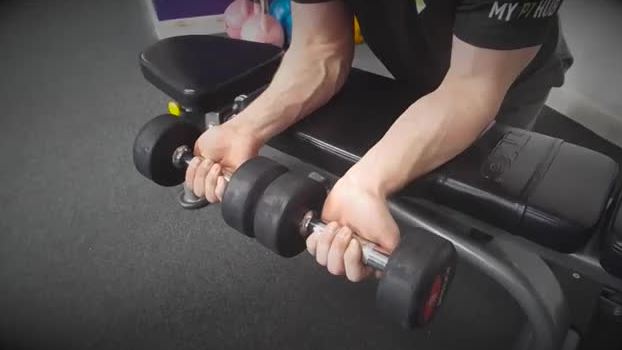
#5 Preacher Bench Wrist Curl
This variation is performed using the incline pad of a preacher bench, which provides excellent support and isolation for the forearms. Place your forearms on the pad with your wrists hanging slightly over the edge, then perform the wrist curl movement by flexing the wrists upward. The preacher setup minimizes any unwanted arm movement, making it one of the best options for strict form and maximum forearm isolation.

#6 Reverse Wrist Curl (Wrist Extension)
Although technically the opposite movement, reverse wrist curls are commonly paired with wrist curls to ensure balanced development of the forearm extensors. Training both flexors and extensors helps maintain wrist health and reduces the risk of overuse injuries.

Replacement Exercises (Substitutes)
If the standing barbell wrist curl does not fit your training environment, equipment availability, or personal preference, several other forearm exercises can serve as effective substitutes. Many of these movements target the same wrist flexor muscles while offering slightly different mechanics or grip demands.
You can explore these forearm movements in our comprehensive forearm exercise database, which covers numerous exercises designed to improve grip strength, forearm size, and wrist stability.
Where This Exercise Fits in a Workout
The standing barbell wrist curl is typically used as an accessory isolation exercise to strengthen the forearm flexors and improve grip endurance. Because the forearm muscles are relatively small and fatigue quickly, this exercise is most effective when placed toward the end of a workout.
In most training programs, wrist curls are included after larger compound lifts that already involve grip and forearm engagement.
After Upper-Body or Arm Training
The most common placement is at the end of an upper-body, pull, or arm workout. By this point, the forearms have already been indirectly trained through exercises such as rows, pull-ups, and curls, making wrist curls an ideal finishing movement.
After Back or Pull Workouts
Back training typically involves heavy pulling movements that demand strong grip strength. Performing wrist curls after exercises such as deadlifts, barbell rows, or lat pulldowns can further challenge the forearm flexors and reinforce grip endurance.
During Dedicated Forearm Training
Some lifters prefer to include direct forearm training sessions. In this case, the standing barbell wrist curl is often paired with exercises such as reverse wrist curls, hammer curls, or wrist rollers to target the forearms from multiple angles.
Typical Programming
For most lifters, the following structure works well:
- 2–4 sets
- 10–20 repetitions per set
- Controlled tempo with full wrist range of motion
Higher repetition ranges are generally recommended because the forearm muscles respond well to time-under-tension and endurance-based training.
Standing Barbell Wrist Curl vs. Seated Barbell Wrist Curl
Both the standing and seated barbell wrist curls target the forearm wrist flexors. However, the seated version provides more stability, while the standing version requires greater grip control and body coordination.
| Feature | Standing Barbell Wrist Curl | Seated Barbell Wrist Curl |
|---|---|---|
| Body Position | Performed standing with the bar held in front of the thighs | Performed seated with forearms supported on thighs or a bench |
| Stability | Lower stability; requires more control | Higher stability due to arm support |
| Forearm Isolation | Slightly less isolated | Greater isolation of wrist flexors |
| Weight Control | Harder to control heavy loads | Easier to maintain strict form |
| Grip Demand | Higher grip stabilization is required | Grip demand is slightly lower |
| Beginner Friendliness | Moderate | More beginner-friendly |
Conclusion: While both variations effectively train the forearm flexors, the seated barbell wrist curl is generally better for strict isolation and technique control. The standing barbell wrist curl, on the other hand, can provide additional grip engagement and may feel more natural for some lifters. For most training programs, the seated version is the primary choice, while the standing variation works well as an alternative or occasional variation.
Final Thoughts on the Standing Barbell Wrist Curl
The standing barbell wrist curl is a simple but effective isolation exercise for strengthening the forearm flexor muscles. Although the movement involves a relatively small range of motion, consistent training can significantly improve wrist strength, grip endurance, and overall forearm development.
While many lifters focus primarily on larger muscle groups, the forearms play a critical role in almost every upper-body exercise. Strong forearms help stabilize the bar during pulling and curling movements and improve performance in exercises that require a secure grip.
For best results, the standing barbell wrist curl should be performed with controlled technique, moderate weight, and a full range of wrist motion. When combined with exercises that target the forearm extensors—such as reverse wrist curls—it can help build balanced, resilient forearm muscles.
Ultimately, incorporating direct forearm training into your routine can enhance both strength and aesthetics, making exercises like the standing barbell wrist curl a valuable addition to a well-rounded training program.
- ✔ The standing barbell wrist curl is an isolation exercise that primarily targets the forearm flexor muscles
- ✔ It helps improve grip strength, which is essential for compound lifts like deadlifts, rows, and pull-ups
- ✔ Proper form requires keeping the arms stationary and moving only at the wrists
- ✔ Allowing the bar to roll into the fingers increases range of motion and forearm activation
- ✔ Moderate weight and controlled tempo are more effective than heavy, momentum-based repetitions
- ✔ Combining wrist curls with reverse wrist curls ensures balanced forearm development
How often should you train forearms for optimal growth?
Forearms can recover relatively quickly, so training them 2–4 times per week is effective for most lifters. Their high endurance capacity means they respond well to frequent stimulation.
Are wrist curls enough to build big forearms?
No, wrist curls mainly target the flexors. For complete development, you should also include extensor work (reverse wrist curls) and compound movements like hammer curls.
Should you train forearms at the start or end of a workout?
Forearms should usually be trained at the end of your workout. Training them first can reduce grip strength and negatively affect performance in compound lifts.
What rep range works best for forearm exercises?
Forearms respond best to moderate to high reps (12–20+) with controlled tempo. They are endurance-dominant muscles, so time under tension is key.
Can weak forearms limit strength progress in other lifts?
Yes, weak forearms often become the bottleneck in pulling exercises like deadlifts and rows, preventing you from fully utilizing stronger muscle groups like the back.
Is it better to use straps instead of training grip strength?
Lifting straps can be useful for heavy sets, but relying on them too much may slow down grip development. A balanced approach is recommended.
Why do forearms grow slower than other muscles?
Forearms are used constantly in daily activities, so they are already highly adapted to endurance work, making hypertrophy slower compared to less-used muscle groups.
Can forearm training help prevent injuries?
Yes, strengthening the forearms improves wrist stability and tendon resilience, which may help reduce the risk of issues like tennis elbow or wrist strain.
What is more important: heavy weight or control in wrist curls?
Control is far more important. Using heavy weight often reduces range of motion and shifts tension away from the forearm muscles.
Do genetics play a role in forearm size?
Yes, forearm size is influenced by muscle belly length and tendon insertions, but consistent training can still significantly improve both size and strength.
