

Introduction
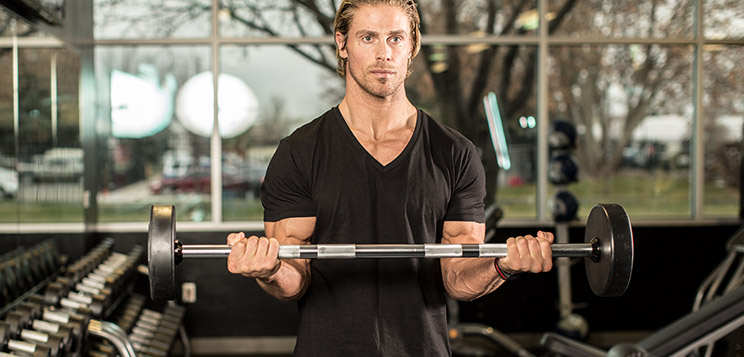
The standing barbell curl is one of the most fundamental and effective exercises for building bigger, stronger biceps. For decades, it has been a cornerstone movement in bodybuilding and strength training programs because it allows lifters to use relatively heavy loads while directly targeting the elbow flexors.
Unlike many isolation movements performed on machines or benches, the standing barbell curl combines high mechanical tension with simple biomechanics. This makes it one of the best exercises for developing overall arm mass, particularly when performed with strict technique and progressive overload.
Because the barbell allows both arms to work together, the exercise provides a powerful stimulus to the biceps brachii, brachialis, and forearm muscles, making it a true classic mass-building movement.
Other Names for the Standing Barbell Curl
Although the standing barbell curl is the most widely used term, the exercise also goes by several names depending on training style or coaching terminology.
- Standing biceps curl
- Standing barbell biceps curl
- Straight bar curl
- Barbell arm curl
- Classic barbell curl
Required Equipment
The standing barbell curl requires very little equipment, which is one reason it has remained a staple exercise in gyms for decades.
- Standard straight barbell
- Weight plates
- Optional lifting belt for heavy sets
How to Perform the Standing Barbell Curl
Correct technique is essential because this exercise allows the use of relatively heavy loads. Strict mechanics ensure that the biceps remain the primary movers rather than the lower back or shoulders.
Starting Position
A proper setup ensures that the movement begins with tension on the biceps while maintaining a stable posture.
- Stand upright with feet about shoulder-width apart
- Hold a barbell using a supinated grip
- Hands slightly wider than shoulder width
- Arms fully extended
- Bar resting lightly against the thighs
- Elbows close to the torso
Your torso should remain upright and stable throughout the entire movement.
Execution (Action Phase)
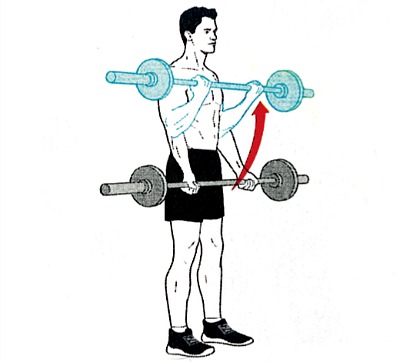
Once the correct starting position is established, the movement should be performed with controlled elbow flexion.
- Curl the barbell upward toward your shoulders
- Keep your elbows close to your body
- Avoid swinging the torso
- Pause briefly at the top contraction
- Lower the bar slowly under control
- Fully extend the arms at the bottom
Strict technique ensures maximal tension on the biceps throughout the entire range of motion.
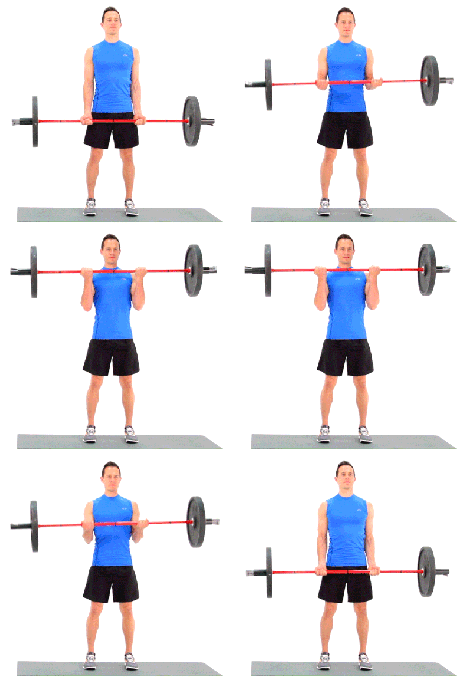
Video Demonstration
Watching a correct demonstration can significantly improve your understanding of proper lifting mechanics. Observing a skilled lifter perform the movement helps reinforce correct posture, elbow positioning, and tempo control.
In the video below, focus on the following technical details:
- Stable torso position
- Elbows remaining close to the sides
- Controlled eccentric lowering phase
- No excessive body swing
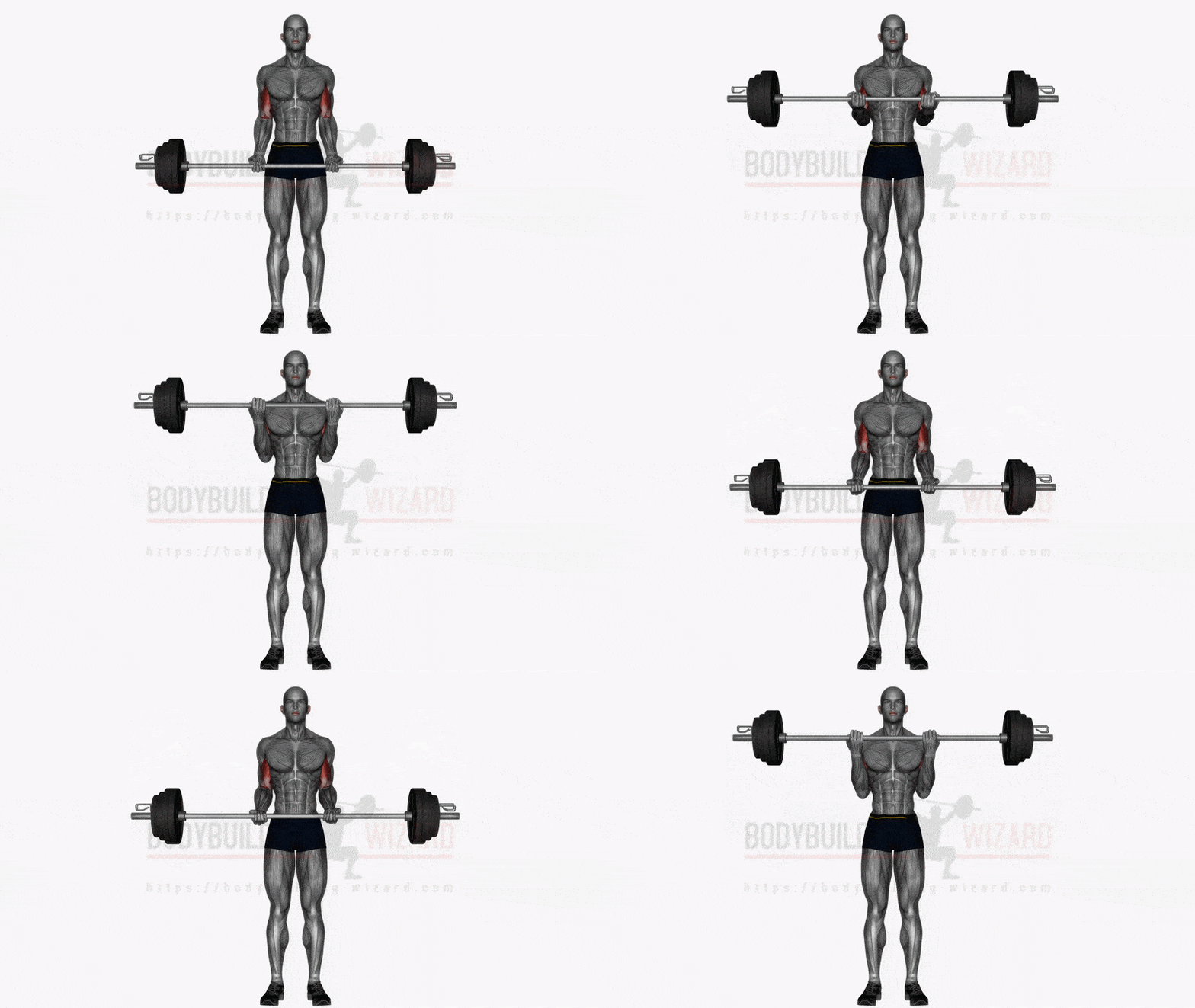
Biomechanics of the Standing Barbell Curl
Understanding the biomechanics of the standing barbell curl helps lifters perform the exercise more efficiently and maximize biceps activation. The movement primarily involves elbow flexion, with the upper arm remaining relatively stationary next to the torso.
- Primary joint action – elbow flexion. The main movement occurs at the elbow joint as the forearm moves toward the upper arm. This action is driven primarily by the biceps brachii with assistance from the brachialis and brachioradialis.
- Supinated grip mechanics. Because the barbell is held with an underhand (supinated) grip, the biceps brachii contribute strongly to both elbow flexion and forearm stabilization.
- Stable shoulder position. During a strict standing barbell curl, the shoulder joint should remain relatively fixed. Excessive forward movement of the elbows introduces shoulder flexion and shifts part of the workload to the anterior deltoids.
- Resistance curve. The exercise becomes most challenging around the mid-range of the movement, when the forearms approach horizontal relative to the floor, and the biceps must produce maximum torque against gravity.
- Role of stabilizing muscles. Although the biceps perform the main movement, the core, forearms, and upper-back muscles help stabilize the body and maintain proper posture during the lift.
Technique Optimization Tips
Small adjustments in technique can significantly increase the effectiveness of the standing barbell curl.
- Keep the elbows stationary
- Use controlled tempo
- Avoid torso swinging
- Focus on the full range of motion
- Squeeze the biceps at peak contraction
These refinements maximize muscle tension and reduce the risk of injury.
From my experience as a fitness coach, the biggest mistake lifters make with the standing barbell curl is allowing their body to move too much during the lift. For the best results, I always emphasize keeping both the upper and lower body stable so that the biceps perform the majority of the work.
I also recommend keeping the elbows fixed close to the torso and avoiding any forward movement of the arms. When the elbows drift forward, the shoulders start assisting the lift, which reduces the tension placed directly on the biceps.
If you find that your torso starts leaning back or swinging during the movement, that usually means the weight is too heavy. In that case, reduce the load and focus on strict technique.
In my coaching experience, strict standing barbell curls with controlled tempo will build bigger biceps far more effectively than lifting heavier weights with poor technique.
Quick Form Checklist
Before each set, reviewing a few key technical cues can dramatically improve consistency and performance.
- Chest up
- Core tight
- Elbows close to the torso
- Full arm extension
- Controlled tempo
- Avoid body swinging
Technical Emphasis & Targeting Adjustments
Small grip adjustments can slightly alter muscular emphasis during the exercise.
- Wide grip → slightly more emphasis on the short head of the biceps
- Narrow grip → slightly more emphasis on the long head
- Strict tempo → increased hypertrophy stimulus
- Heavier loads → greater strength development
Although these differences exist, the standing barbell curl remains a balanced biceps developer regardless of grip width.
As a coach, I often see lifters trying to turn the standing barbell curl into a full-body movement by swinging the torso and using excessive weight. While this might allow heavier loads, it drastically reduces the tension placed directly on the biceps. For maximal arm development, focus on controlled repetitions and keep your elbows fixed by your sides. Heavy cheating curls have their place occasionally, but strict barbell curls remain one of the most reliable tools for building dense, powerful biceps.
Common Mistakes
Even though the standing barbell curl is a relatively simple exercise, several technical errors can reduce biceps activation and increase the risk of injury.
- Swinging the torso. Using body momentum to lift the bar reduces tension on the biceps and shifts stress toward the lower back.
- Elbows drifting forward. When the elbows move in front of the body, the anterior deltoids begin to assist the lift, reducing the workload on the biceps.
- Using excessive weight. Lifting too heavy often leads to poor technique, including leaning back and uncontrolled movement.
- Partial range of motion. Not fully extending the arms at the bottom or failing to reach peak contraction at the top reduces the overall training stimulus.
- Rapid lowering of the barbell. Dropping the weight too quickly during the eccentric phase eliminates valuable muscle tension and decreases hypertrophy potential.
Muscles Worked in Standing Barbell Curl
Although the standing barbell curl is primarily known as a biceps exercise, several additional muscles assist in stabilizing the elbow and controlling the barbell’s path. Understanding these muscles helps improve your mind-muscle connection and overall exercise execution.
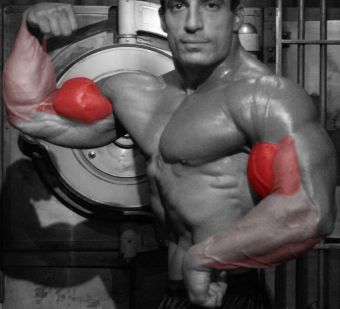
| Muscle | Role in the Exercise |
|---|---|
| Biceps brachii | The primary muscle responsible for elbow flexion and the main driver of the lifting phase of the barbell curl. |
| Brachialis | Located beneath the biceps, this muscle assists in elbow flexion and contributes to overall arm thickness. |
| Brachioradialis | A forearm muscle that helps stabilize the elbow joint and assists during the curling motion. |
| Forearm flexors | These muscles help maintain grip strength and stabilize the barbell throughout the movement. |
| Anterior deltoids (stabilizing role) | The front deltoids assist in stabilizing the shoulder joint when the elbows are fixed against the torso. |
| Core muscles | The abdominal and lower back muscles help stabilize the torso and maintain posture during the lift. |
Standing Barbell Curl Pros and Cons
Like any exercise, the standing barbell curl offers specific advantages and limitations depending on training goals. Understanding these factors helps determine when and how to include the movement in your arm training routine.
Advantages
- Excellent biceps mass builder. The standing barbell curl allows lifters to handle relatively heavy loads compared with many other isolation exercises. Because both arms work together with a stable barbell, the exercise creates high mechanical tension on the biceps, making it one of the best movements for building overall arm size.
- Balanced development of both biceps heads. Unlike certain variations that emphasize a specific portion of the muscle, the standing barbell curl provides fairly balanced activation of both the long and short heads of the biceps. This makes it a reliable exercise for developing overall arm symmetry.
- Simple and effective exercise. The movement requires minimal equipment and can be performed in almost any gym environment. Its simple mechanics also make it accessible for beginners while still being effective enough for advanced lifters.
- Allows progressive overload. Because the barbell provides stable loading, it is easy to gradually increase weight over time. This progressive overload is one of the most important factors in long-term muscle growth.
Potential Drawbacks
- Greater potential for cheating. Because the exercise is performed standing, lifters often swing the torso or lean backward to help lift heavier weights. This reduces tension on the biceps and increases stress on the lower back.
- Wrist discomfort for some lifters. The straight bar position places the wrists in full supination. For some people, this position can feel uncomfortable, especially when lifting heavy loads.
- Less isolation than some machine variations. While the standing barbell curl is excellent for mass building, exercises such as preacher curls or concentration curls may provide greater biceps isolation.
Why the Standing Barbell Curl Builds More Biceps Mass Than Most Curl Variations
The standing barbell curl has remained a cornerstone of biceps training for decades because it allows lifters to use heavier loads than most other curl variations. This combination of mechanical tension and full range of motion makes it one of the most effective exercises for building overall biceps size.
| Key Factor | Explanation |
|---|---|
| Heavier loading potential | Compared with dumbbell or cable curls, the barbell allows both arms to work together, which typically enables lifters to use heavier weights. Greater loading increases mechanical tension, one of the primary drivers of muscle hypertrophy. |
| Balanced activation of both biceps heads | With a supinated grip and elbows kept close to the torso, the standing barbell curl effectively recruits both the long and the short head of the biceps brachii. |
| Full elbow flexion range | The exercise allows a wide range of motion from near-full arm extension to peak contraction, thereby stimulating the biceps through a substantial portion of the strength curve. |
| High mechanical tension throughout the set | Because the resistance comes directly from gravity acting on the barbell, the biceps must maintain constant effort to control both the lifting and lowering phases of the movement. |
| Foundation exercise for arm development | For these reasons, many strength coaches and bodybuilders consider the standing barbell curl a fundamental mass-building exercise that forms the backbone of effective biceps training programs. |
For these reasons, the standing barbell curl is widely considered the most effective classic exercise for building overall biceps mass.
Standing Barbell Curl Variations
Several variations of the standing barbell curl can slightly change muscle emphasis, comfort, or training stimulus.
EZ-Bar Curl
This variation uses an EZ-bar instead of a straight barbell. The angled grip places the wrists in a more natural position, which many lifters find more comfortable during heavier sets.
Wide Grip Barbell Curl
Using a grip wider than shoulder width slightly increases activation of the short head of the biceps. This variation is often used to emphasize the inner portion of the biceps.
Close-Grip Barbell Curl
A narrow grip places slightly greater emphasis on the long head of the biceps, which contributes to the overall peak of the muscle.
Cheat Barbell Curl
In this version, lifters intentionally use a small amount of body momentum to move heavier weights. While this technique should not replace strict curls, it can occasionally be used by advanced lifters to overload the biceps.
Replacement Exercises (Substitutes)
If a barbell is unavailable or you want additional variety in your training program, several exercises replicate similar elbow-flexion mechanics.
- EZ-Bar Preacher Curl
- Supinating Dumbbell Biceps Curls
- Machine Biceps Curl
- High-Pulley Curl
- Bayesian Cable Curl
- Standing Cable Curls
- Standing EZ-Bar Curl
- Dumbbell Curl Over Incline Bench
- EZ-bar Spider Curls
- Cable Preacher Curls
Each of these movements emphasizes the biceps slightly differently while maintaining similar muscle recruitment.
Where This Exercise Fits in a Workout
Because the standing barbell curl allows relatively heavy loading, it is often used as a primary mass-building movement in a biceps workout.
Typical programming guidelines include:
- 3–4 sets
- 6–12 repetitions
Best used:
- Early in a biceps workout
- After compound pulling exercises
- As a primary strength builder for the arms
Strength Standards / Load Guidelines
The amount of weight used in the standing barbell curl varies depending on experience level, training history, and overall body strength. Because this exercise directly targets the biceps while also requiring upper-body stability, most lifters will typically use a lighter load compared with compound pulling movements such as rows or pull-ups.
The following guidelines provide a rough reference for relative strength levels in the standing barbell curl:
- Beginner: about 20–30% of body weight for controlled sets of 8–12 repetitions
- Intermediate: around 35–50% of body weight while maintaining strict technique
- Advanced: approximately 50–60% or more of body weight for heavy working sets
These values should be considered only general benchmarks, not strict rules. The primary goal of the standing barbell curl is to maintain strict elbow flexion and controlled movement, ensuring the biceps do most of the work rather than the lower back or shoulders.
In practice, a lifter will benefit far more from consistent progressive overload and proper technique than from simply chasing heavier weights.
From a coaching perspective, the standing barbell curl remains one of the most reliable exercises for building overall biceps mass. However, many lifters reduce its effectiveness by chasing heavier weights too quickly. Instead of focusing only on load, prioritize controlled repetitions and a strong peak contraction. When performed strictly with progressive overload, this classic movement can remain a cornerstone of arm development for years.
Standing Barbell Curl vs. Standing Dumbbell Curl
Both exercises target the biceps through elbow flexion, but their mechanics and training effects differ.
| Criteria | Standing Barbell Curl | Standing Dumbbell Curl |
|---|---|---|
| Primary target | Biceps brachii | Biceps brachii |
| Loading potential | Higher | Moderate |
| Range of motion | Slightly limited | Greater freedom of movement |
| Stability | Higher | Lower |
| Isolation | Moderate | Slightly greater |
| Progressive overload | Excellent | Good |
The standing barbell curl is generally superior for maximal loading and overall biceps mass development, while the standing dumbbell curl offers slightly greater freedom of movement and unilateral control.
For optimal results, many lifters include both exercises within their training programs.
Final Thoughts
The standing barbell curl has remained one of the most effective arm-building exercises in strength training for a reason. Its simple mechanics, ability to handle heavy loads, and balanced biceps activation make it an essential movement for anyone seeking bigger arms.
When performed with strict technique and progressive overload, this classic exercise can produce impressive improvements in both biceps size and arm strength.
What is a standing barbell curl?
The standing barbell curl is a classic biceps exercise performed by lifting a barbell upward while keeping the elbows close to the torso. It primarily targets the biceps brachii and allows heavier loading than most dumbbell curl variations.
What muscles do standing barbell curls work?
Standing barbell curls primarily work the biceps brachii, while the brachialis and brachioradialis assist during elbow flexion. Forearm flexors and shoulder stabilizers also contribute to controlling the barbell during the lift.
Why are standing barbell curls considered a mass-building exercise?
Standing barbell curls are considered a mass builder because they allow greater mechanical tension and heavier loading than most other curl variations. Higher loading potential increases the stimulus for muscle growth.
Should the elbows move during a standing barbell curl?
No. The elbows should remain close to the sides of the torso throughout the movement. Allowing the elbows to move forward shifts part of the workload to the shoulders and reduces biceps tension.
How heavy should standing barbell curls be?
Most lifters achieve optimal hypertrophy using a weight that allows 6–10 controlled repetitions per set. The load should be heavy enough to challenge the biceps while still allowing strict technique.
Are barbell curls better than dumbbell curls?
Barbell curls are generally better for maximal loading and overall biceps mass, while dumbbell curls allow a more natural arm path and better unilateral control. Many training programs include both exercises for complete biceps development.
Is the standing barbell curl safe for beginners?
Yes. Beginners can safely perform standing barbell curls by starting with moderate weight and focusing on strict technique. Learning proper elbow positioning and controlled tempo is essential for preventing injury.
Should you use a straight bar or an EZ bar for barbell curls?
Both bars are effective. A straight bar allows strong supination and maximum biceps activation, while an EZ bar can reduce wrist stress for lifters who experience discomfort with a straight bar.
Where should standing barbell curls appear in a workout?
Standing barbell curls are typically performed early in a biceps workout because they allow heavier loading and greater strength output when the muscles are fresh.
Can standing barbell curls build bigger biceps?
Yes. When performed with progressive overload and proper technique, standing barbell curls are one of the most effective exercises for building thicker and stronger biceps.
Are standing barbell curls enough for biceps growth?
Standing barbell curls can build significant biceps mass because they allow heavy loading and strong stimulation of both heads of the biceps. However, most effective training programs include several curl variations to target the biceps from different angles and improve overall arm development. Combining barbell curls with exercises such as supinating dumbbell curls, hammer curls, and incline curls usually produces the best results.