
⚠️ Educational Disclaimer: This article is intended solely for educational and informational purposes. It does not promote or encourage the use of anabolic steroids, including Superdrol (Methasterone). All content is based on publicly available research, scientific literature, and real-world observations. The use of anabolic steroids without proper medical supervision can result in serious health risks, including liver damage, hormonal disruption, cardiovascular complications, and long-term endocrine dysfunction. In many countries, possession or use of such substances without a prescription is illegal. Always consult a qualified healthcare provider before considering the use of any performance-enhancing compounds.
📌 History and Development
Superdrol, known chemically as Methasterone, is one of the most potent and controversial oral anabolic steroids ever introduced into the bodybuilding world. Originally synthesized in the 1950s by pharmaceutical research teams, Methasterone was never released for medical use. However, decades later, it re-emerged in supplement stores under the commercial name “Superdrol,” falsely marketed as a legal prohormone.
This deceptive branding allowed Superdrol to evade regulatory scrutiny and gain popularity among athletes and bodybuilders. Its strong anabolic effects with no estrogenic activity made it a favorite among those looking for fast, dry muscle gains. Eventually, due to a growing number of reports about liver damage and other severe side effects, Superdrol was banned and listed as a controlled substance in many countries. Despite this, it remains widely available on the black market and in underground labs, often under generic or disguised labels.
📌 How Superdrol Works in the Body
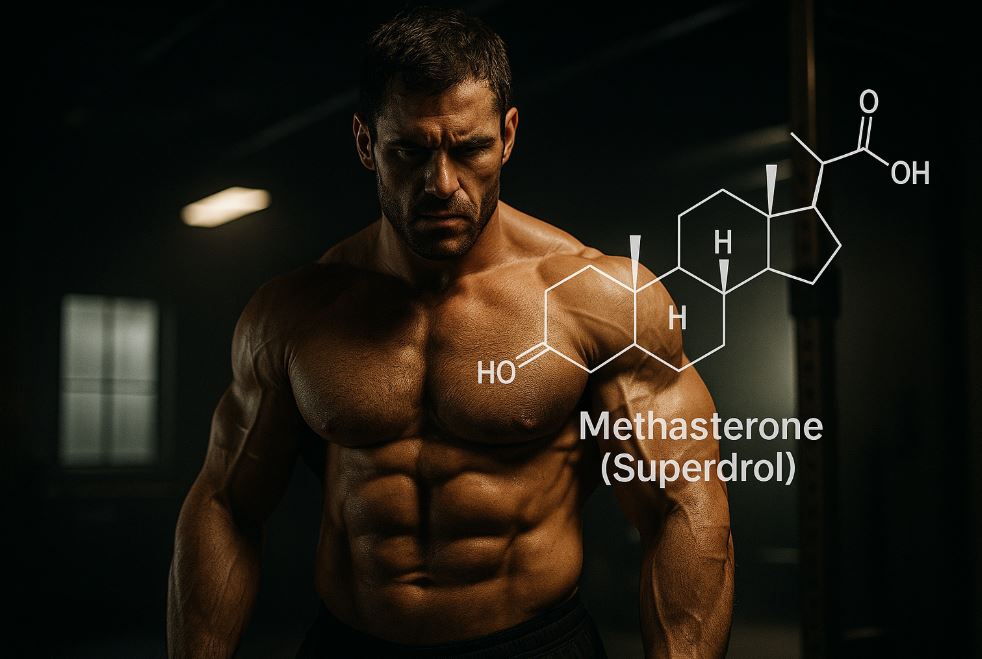
Superdrol is a 17α-alkylated derivative of dihydrotestosterone (DHT), designed to be orally active. This modification allows it to survive liver metabolism and enter the bloodstream intact, but also makes it particularly toxic to the liver.
What makes Superdrol unique is its combination of extremely high anabolic activity and relatively low androgenic impact. It does not convert into estrogen (no aromatization), so there is minimal water retention and no risk of gynecomastia from estrogen buildup.
Inside the body, Superdrol binds to androgen receptors in muscle tissue, stimulating protein synthesis and nitrogen retention. This creates a highly anabolic environment, accelerating recovery and muscle hypertrophy. Superdrol also increases red blood cell count, enhancing oxygen transport and endurance. However, due to its oral nature and chemical structure, it can significantly disrupt cholesterol levels, liver enzyme activity, and hormone regulation.
📌 Method of Administration and Half-Life
Superdrol is administered orally and typically comes in tablet form. It has a relatively short half-life of approximately 6 to 8 hours, which means daily or twice-daily dosing is common to maintain stable blood levels.
Standard dosing ranges from 10 to 30 mg per day, with cycle lengths typically lasting 3 to 5 weeks. Due to its hepatotoxic nature, Superdrol should never be used for extended periods. Even short cycles can lead to noticeable elevations in liver enzyme levels, and stacking Superdrol with other hepatotoxic substances greatly increases this risk.
Because of the strain it places on the liver, it is strongly advised to use liver support supplements such as NAC (N-acetylcysteine), TUDCA, or milk thistle during a Superdrol cycle.
📌 Potential Benefits for Bodybuilders
This superdrol steroid guide would be incomplete without highlighting the impressive anabolic effects of Methasterone. Superdrol is known for delivering rapid and noticeable gains in lean muscle mass. Users frequently report gains of 8 to 12 pounds within a few weeks of use, often with little to no water retention.
Strength gains are equally dramatic. Many users experience significant improvements in compound lifts such as squats, bench presses, and deadlifts in just two weeks. Superdrol enhances the user’s strength-to-weight ratio, making it a favorite among powerlifters and strength athletes during offseason bulking phases.
Aesthetically, the compound provides a “dry and hard” look due to its non-aromatizing nature. This leads to improved vascularity, muscle fullness, and density. It is often used before photoshoots or competitions to achieve a sharper appearance without the bloat caused by other steroids.
However, it is essential to emphasize that these benefits are short-term and come with substantial health risks.
📌 Side Effects and Risks
As impressive as its benefits may sound, Superdrol is notorious for its severe side effects and toxicity. This section of the Superdrol steroid guide focuses on the mechanisms behind its risks.
The most critical concern is liver toxicity. Superdrol is a 17α-alkylated compound, meaning it passes through the liver without being broken down. While this allows for oral bioavailability, it significantly stresses hepatocytes and can cause elevated ALT and AST levels, cholestasis, and even jaundice or liver failure in extreme cases.
Another serious issue is its effect on cholesterol. Superdrol lowers HDL cholesterol while raising LDL cholesterol, increasing the risk of arteriosclerosis and cardiovascular disease. It also often causes elevations in blood pressure due to increased vascular resistance and fluid retention within the blood vessels.
Superdrol severely suppresses natural testosterone production by disrupting the hypothalamic-pituitary-gonadal (HPG) axis. By signaling to the hypothalamus that androgen levels are high, the brain stops producing luteinizing hormone (LH) and follicle-stimulating hormone (FSH), leading to reduced endogenous testosterone and testicular shrinkage. Without proper post-cycle therapy (PCT), this suppression can persist long after the steroid has cleared from the body.
Psychologically, Superdrol can cause mood swings, irritability, aggression, and insomnia. These effects may be linked to changes in dopamine and serotonin activity in the brain.
While it does not convert to estrogen, Superdrol has been associated with gynecomastia in rare cases, possibly due to its impact on prolactin levels or estrogen sensitivity. Joint discomfort, decreased libido, and lethargy are also frequently reported side effects.
📌 Superdrol at a Glance: Quick Facts
| 💉 Superdrol (Methasterone) – Steroid ID Card | |
|---|---|
| Chemical Name | 17α-Methyl-2α,17β-dihydroxy-5α-androstan-3-one |
| Common Name | Superdrol |
| Steroid Class | Oral Anabolic-Androgenic Steroid (AAS), DHT derivative |
| Anabolic Rating | 400–800 (very high) |
| Androgenic Rating | 20 (low) |
| Half-Life | 6–8 hours |
| Administration | Oral (tablets) |
| Aromatization | None |
| Estrogenic Side Effects | Very unlikely (no aromatization), but possible via prolactin |
| Liver Toxicity | Extremely High (C17α-alkylated) |
| Detection Time | 2–4 weeks |
| WADA Status | Banned at all times |
| Legal Status (US/EU) | Controlled substance (Schedule III in US), illegal without prescription |
| Typical Dose Range | 10–30 mg/day (not recommended) |
| Cycle Duration | 3–5 weeks max |
📌 Legal Status and Detection in Sports
Superdrol is currently banned by all major sporting organizations, including the World Anti-Doping Agency (WADA), which classifies it under “anabolic agents – other.” It is illegal to possess or distribute in countries like the United States unless prescribed for research purposes.
Its detection time is estimated to be 2 to 4 weeks, depending on dosage, metabolism, and testing method. Because of its high risk of detection and health concerns, it is rarely used by professional or tested athletes.
📌 Superdrol vs. Other Steroids
To better understand Superdrol’s profile, it is helpful to compare it with other popular oral steroids.
| Steroid | Anabolic Rating | Androgenic Rating | Aromatization | Water Retention | Liver Toxicity | Detection Time |
|---|---|---|---|---|---|---|
| Superdrol | ~400–800 | ~20 | None | None | Very High | 2–4 weeks |
| Dianabol | 90–210 | 40–60 | Yes | High | High | 3–5 weeks |
| Winstrol | 320 | 30 | None | None | High | 3–4 weeks |
| Anavar | 322–630 | 24 | None | None | Mild | 2–3 weeks |
Superdrol stands out for its dry gains and extreme potency, but also for being more toxic than its counterparts. Anavar is often considered safer but less impactful in terms of raw muscle gain. Dianabol and Winstrol fall somewhere in between.
📌 Myths and Misconceptions
One of the most common myths about Superdrol is that it is simply a “legal supplement.” This misunderstanding stems from its early marketing as a prohormone, despite being a fully active anabolic steroid. In reality, Superdrol was never legally approved for human use.
Another misconception is that because Superdrol does not aromatize, it does not require post-cycle therapy. The truth is that suppression of testosterone is extremely pronounced, and skipping PCT can lead to long-term endocrine dysfunction.
Some also believe that short cycles are completely safe. However, research and real-world reports show that even two-week cycles can lead to significant elevations in liver enzymes and cardiovascular strain.
📌 Misuse and Overuse in Bodybuilding
Superdrol is often misused as a “kickstarter” compound at the beginning of a bulking cycle. While this can provide rapid results, it also introduces unnecessary toxicity at the start of a cycle. Others run it for more than six weeks, combine it with other orals, or take excessive doses, believing that more equals better. These practices exponentially increase health risks and should be strongly discouraged.
📌 PCT and Recovery
Due to the severe suppression of natural hormone production, post-cycle therapy after Superdrol use is mandatory. The typical PCT protocol includes selective estrogen receptor modulators such as Clomid (Clomiphene Citrate) and Nolvadex (Tamoxifen Citrate), starting within 2 to 3 days after the final dose.
A common 4-week protocol includes:
- Clomid: 50/50/25/25 mg per day
- Nolvadex: 40/40/20/20 mg per day
Users should also monitor hormone levels and lipid profiles during and after the cycle to assess recovery and prevent long-term damage.
📌 Conclusion
This Superdrol steroid guide demonstrates that while Superdrol offers rapid, dry, and powerful muscle gains, it does so at a significant physiological cost. It is not a compound for beginners or casual gym-goers. The level of liver toxicity, endocrine disruption, and cardiovascular stress it imposes far outweighs the temporary physical rewards for most users.
Superdrol should only be considered by experienced athletes who fully understand the risks and have the medical supervision, bloodwork tracking, and post-cycle recovery strategies in place to mitigate its dangers.
📌 Key Takeaways
- Superdrol (Methasterone) is an extremely potent oral anabolic steroid derived from dihydrotestosterone (DHT).
- Originally synthesized in the 1950s, it resurfaced in the 2000s under supplement branding but was later banned due to health concerns.
- It provides rapid, dry muscle gains and dramatic strength increases without water retention or estrogenic side effects.
- Superdrol does not aromatize but is highly hepatotoxic due to its 17α-alkylated structure.
- Even short cycles (3–5 weeks) can cause severe liver strain and cardiovascular disturbances.
- It severely suppresses natural testosterone production, requiring full post-cycle therapy (PCT) for hormonal recovery.
- The compound drastically impacts cholesterol levels, increasing the risk of heart disease.
- Superdrol is banned by all major sports organizations and is classified as a controlled substance in many countries.
- Despite its short detection window, it is not suitable for athletes under testing or health-conscious users.
- Only highly experienced users with access to medical monitoring should even consider using Superdrol, and even then, with extreme caution.
References
- WebMD. (n.d.). Methasterone [Fast Facts]. Retrieved from https://www.webmd.com/vitamins/ai/ingredientmono-1657/methasterone-%5Bfast-facts%5D#dosing
- Joseph, J. F., & Parr, M. K. (2015). Synthetic androgens as designer supplements. Current Neuropharmacology, 13(1), 89–100.
- U.S. Anti-Doping Agency (USADA). (2019, September 24). What Should Tested Athletes Know About GW1516? Spirit of Sport Education. Retrieved from https://www.usada.org/spirit-of-sport/education/what-should-athletes-know-gw1516/
- PubChem. (n.d.). Methasterone. National Center for Biotechnology Information. Retrieved from https://pubchem.ncbi.nlm.nih.gov/compound/Methasterone
