

The femur, commonly known as the thighbone, earns its reputation as the longest and strongest bone in the human body, playing a crucial role in our ability to stand, walk, run, and perform various physical activities. But what exactly makes the femur so remarkable? Understanding its role and how it contributes to your body’s functionality can give you deeper insight into its significance.
As a central component of the skeletal system, it connects the pelvis to the knee joint and serves as an essential support structure for the lower limb. Understanding the anatomy and function of the femur is vital for comprehending various aspects of human movement, biomechanics, and injury mechanisms. This article will explore the details of the femur’s anatomy, including its location, appearance, size, the muscles that attach to it, and its blood supply.
The importance of knowing the anatomy of the femur in bodybuilding
Knowing the major bones, especially the femur, is crucial for every bodybuilder and fitness enthusiast. Why is this important? Understanding the structure and function of your bones, such as the mighty femur, can unlock the key to optimizing movement, preventing injuries, and enhancing overall performance. Without this foundational knowledge, you risk missing essential insights into how to lift correctly, improve stability, and maximize your strength training results. Whether squatting heavy weights or sprinting at your top speed, this knowledge equips you to make the most of your workouts while maintaining your body’s health and efficiency.
What is the femur?
The femur, commonly known as the thighbone, is the prominent bone in your upper leg and the largest and strongest bone in the human body. It can support up to 30 times the weight of an adult. It connects your hip joint to your knee joint, which is crucial in helping your body’s weight and enabling leg movement. Understanding its anatomy is essential for comprehending how it functions with other skeletal and muscular systems.
The anatomy of the femur
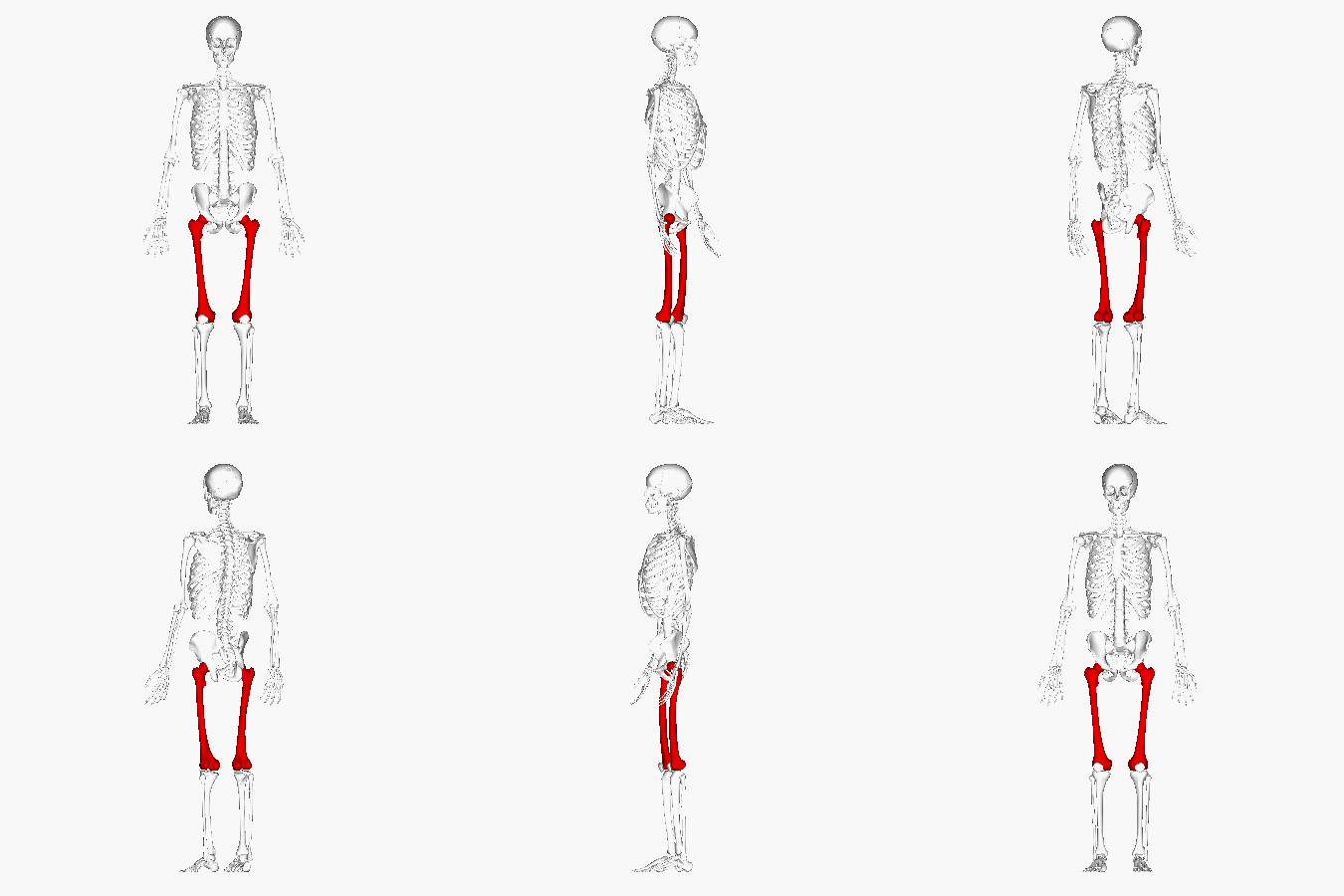
I. Location
The femur, or thighbone, is your body’s longest and strongest bone. It runs from the hip to the knee and is a crucial support structure, allowing for various movements. As the primary bone of the thigh, it helps connect the upper body to the lower, facilitating walking, running, and jumping.
II. Appearance
The femur can be divided into three main sections: the proximal aspect, the shaft, and the distal aspect.
Femur Proximal Aspect: The proximal end of the femur features a rounded head that fits into the acetabulum of the pelvis, forming the hip joint. This spherical head is crucial for the hip joint’s ball-and-socket movement.
Femur Shaft: The femur’s shaft is slightly arched and cylindrical. It is a strong, thick structure that provides weight-bearing stability. It is somewhat broader at the top than at the center, offering extra strength and support.
Femur Distal Aspect: The distal end of the femur is cuboid in form, characterized by two large, oblong eminences called the condyles. These structures play a key role in forming the knee joint, assisting in articulation with the tibia, and protecting the knee.
III. Size
The femur size varies among individuals, influenced by age, sex, and overall height. On average, an adult human femur measures approximately 18 inches (45 cm) in length, but this can range from about 14 to 20 inches (35 to 51 cm). The diameter also varies, typically being more prominent in males than females, reflecting differences in muscle mass and overall skeletal structure. This size and strength are crucial for supporting the body’s weight and enabling movement.
IV. Muscles Attached to the Femur
The femur serves as an anchor for several essential muscle groups. Key muscles attached to the femur include the quadriceps and hamstrings, responsible for extending and flexing the knee, and the gluteal muscles, which aid in hip movements. Additionally, the adductor muscles are involved in the movement of the legs towards the body’s midline.
V. Blood Supply
The blood supply to the femur is crucial for its health and function. The primary blood supply comes from the profunda femoris artery, a femoral artery branch. This artery and its branches ensure that the bone receives the nutrients required for maintenance and repair. Adequate blood flow also supports the surrounding muscles and tissues, contributing to the overall functionality of the lower limb.
Functions (what does the femur do?)
The femur, a critical component of your skeletal system, plays several essential roles. Primarily, it supports the weight of your upper body, enabling you to stand, walk, run, jump, and engage in various athletic activities. The femur’s robust structure can endure significant mechanical stress while maintaining stability and movement efficiency.
Moreover, the femur is a key player in forming both the hip and knee joints, allowing for a wide range of motion. It acts as a pivot for leverage, vital for efficient locomotion. Muscle attachment sites on the femur are crucial for the movement and stability of these joints. For instance, muscles around the hip aid in lifting and rotating your thigh, while those near the knee ensure its bending and straightening. This orchestrated movement is necessary not only for daily activities but also for complex sports motions.
Additionally, the femur plays an integral role in hematopoiesis, the process of blood cell formation. The bone marrow within the femur produces red blood cells, white blood cells, and platelets, contributing to maintaining your body’s overall health and function.
In short, your femur has several important jobs, including:
- Supports the body’s weight during standing and walking.
- Facilitates movement by acting as a lever for the hip and knee joints.
- Serves as an attachment point for muscles, aiding in mobility and stability.
Common injuries and conditions that affect the femur
- Femur Fractures: These occur when the thighbone breaks due to high-impact trauma like car accidents or falls. Symptoms include significant pain, swelling, and an inability to move the leg. Treatment often involves surgery and immobilization to ensure proper realignment and healing.
- Osteoporosis: A condition characterized by weakened bones, making the femur more susceptible to fractures, especially in the elderly. It often develops silently and is diagnosed following a fracture.
- Patellofemoral Pain Syndrome: Commonly known as “runner’s knee,” this condition causes pain around the kneecap. It often arises from overuse, injury, or imbalances in muscle strength.
- Slipped Capital Femoral Epiphysis: This disorder often affects adolescents, and it occurs when the femoral head slips off the neck of the femur. Early detection is crucial to managing the condition effectively.
- Femoroacetabular Impingement: This occurs when extra bone grows along one or both of the bones that form the hip joint, causing them to rub together. This can damage the joint over time and lead to pain and limited motion.
Sports-Related Injuries: Athletes, particularly those participating in high-impact sports, are at risk of specific femur injuries. One common issue is stress fractures, often resulting from repetitive impact and overuse in sports like running or basketball. Stress fractures generate deep thigh pain that grows worse with activity but gets better with rest. Femoroacetabular impingement, another concern, frequently affects athletes engaging in repetitive hip movements, such as soccer or hockey, leading to pain and decreased range of motion. Improved training techniques and preventive measures can help reduce the risk of these injuries.
Common treatments for femurs
- Immobilization: Often the first step in treatment, immobilization involves keeping the femur in place using splints or braces to facilitate healing and prevent further injury.
- Surgery: For severe fractures, surgery might be necessary. Various surgical options, such as internal fixation with rods, plates, or screws, stabilize the bones and promote proper alignment and healing.
- Traction: Used primarily for maintaining proper alignment of a fractured femur, traction can be employed in some cases to gently pull the bone back into position.
- Physical Therapy: Essential for recovery, physical therapy helps regain strength and mobility in the leg muscles, improving overall functionality post-injury or surgery.
- Medication: As part of the treatment plan, doctors might prescribe pain relievers and anti-inflammatory medications to manage pain and inflammation.
- Weight Management: Maintaining a healthy weight can decrease the stress on the femur and other bones, aiding in healing and preventing future injuries.
- Bone Health Supplements: Supplements like calcium and vitamin D can support bone health and are often recommended, especially in cases involving osteoporosis or reduced bone density.
Tips for keeping the femur healthy
- Engage in Regular Exercise: Weight-bearing exercises, like walking and squats, help maintain bone density and strengthen the muscles supporting the femur, reducing the risk of fractures. Strength training can increase bone density in the femur by up to 3% annually.
- Nutrition for Bone Health: Ensure your diet is rich in calcium and vitamin D, which are critical for maintaining strong bones. Foods such as dairy products, leafy greens, and fortified cereals can be beneficial.
- Maintain a Healthy Weight: Keeping a healthy weight reduces unnecessary stress on the femur and associated joints, decreasing the risk of injury.
- Perform Stretching and Balance Exercises: Incorporate activities that enhance flexibility and balance, such as yoga or tai chi, which can prevent falls and improve posture.
- Avoid Smoking and Excessive Alcohol Use: Smoking and excessive alcohol consumption can negatively impact bone health, weakening the femur over time.
- Regular Check-ups: Schedule periodic check-ups with your healthcare provider, including bone density tests if recommended, to monitor bone health and catch any issues early.
Comparison with other leg bones
Regarding the leg bones, the femur stands out for several reasons. Unlike the tibia and fibula, which are the lower leg bones, the femur is located in the upper part of the leg. The tibia, often called the shinbone, is the second-largest bone in the body and supports most of the weight transferred through the knee and ankle. In contrast, the fibula, running parallel to the tibia, primarily serves for muscle attachment and provides lateral stability to the ankle.
The femur is longer and stronger than the tibia and fibula, which allows it to support a significant amount of weight and pressure. Its robust structure is crucial for activities that require powerful movements, such as jumping or running. In contrast, the tibia, although strong, bears weight alongside the femur but doesn’t have the same capacity for forceful propulsion.
Another unique aspect is the articulation points. The femur connects to the hip joint at its proximal end and to the knee joint at its distal end, providing an extensive range of motion necessary for walking and sprinting. The tibia and fibula, however, primarily articulate with the ankle bones, contributing more to stability and balance rather than wide ranges of motion.
In terms of anatomy, the femur also exhibits a more complex structure, with a proximal head that fits into the pelvis acetabulum, a slightly curved shaft, and a distal end that features smooth surfaces for articulating with the tibia and patella. This complexity is unmatched by the relatively straightforward straight shaft of the tibia and the slender profile of the fibula.
Trainer’s Note
As a fitness trainer with years of experience working with athletes and everyday gym-goers, I’ve come to truly appreciate the importance of understanding the femur—not just as a bone, but as a foundational structure in nearly every powerful movement we perform. Whether you’re doing a heavy squat, sprinting across the field, or simply climbing stairs, your femur is doing a tremendous amount of work behind the scenes.
What fascinates me the most is how many people overlook the skeletal system when planning their training. They focus on muscles—and rightfully so—but knowing how the femur supports and coordinates with those muscles can dramatically improve how you train, how you move, and how you recover. Personally, I believe that the more you understand your anatomy, the better your performance becomes.
I always encourage my clients to think beyond the surface: learn how your body is built, how it moves, and how to protect it. The femur isn’t just the strongest bone in your body—it’s one of your greatest training assets. Respect it, strengthen the muscles around it, and you’ll build a foundation for long-term strength, speed, and injury prevention.
Conclusion
Understanding the femur’s anatomy and function is paramount in medicine, sports, personal health, and fitness. As a central player in your body’s mobility and strength, maintaining the health of your femur can significantly enhance your overall well-being. By being mindful of potential injuries and adopting preventative measures, you can ensure your femur effectively supports your active lifestyle. Remember, a strong femur fortifies your physical structure and can be a key asset in reaching your fitness goals.
Here are some of the most common questions about femur anatomy and bodybuilding performance.
Why is the femur important for bodybuilders?
The femur, being the longest and strongest bone in the body, plays a crucial role in supporting weight during compound movements like squats and deadlifts, essential for muscle growth and strength development.
How does the femur contribute to lower body strength?
It serves as the primary attachment point for major muscles such as the quadriceps, hamstrings, and glutes, facilitating powerful leg movements and stability during training.
What exercises target the femur effectively?
Compound exercises like squats, lunges, and leg presses engage the femur extensively, promoting bone density and muscular development in the lower body.
Can femur injuries impact bodybuilding progress?
Yes, injuries like fractures can significantly hinder mobility and training capacity, requiring extended recovery periods and potentially leading to muscle atrophy if not managed properly.
How can bodybuilders prevent femur-related injuries?
Incorporating proper warm-ups, progressive overload, balanced training routines, and ensuring adequate calcium and vitamin D intake can help maintain femur health and prevent injuries.
Does the femur's length affect athletic performance?
Femur length can influence leverage and biomechanics during lifts, affecting range of motion and force production, which may necessitate technique adjustments for optimal performance.
What role does the femur play in posture and balance?
It acts as a central support structure for the lower body, contributing to upright posture and balance, which are vital for executing exercises safely and effectively.
How does aging affect the femur in athletes?
With age, bone density can decrease, making the femur more susceptible to fractures. Regular weight-bearing exercises and proper nutrition are key to mitigating this risk.
Are there specific signs of femur stress to watch for?
Persistent thigh pain, swelling, or discomfort during movement may indicate stress on the femur, warranting medical evaluation to prevent serious injuries.
Can strengthening the femur enhance overall athletic performance?
Absolutely. A strong femur supports better force transmission, stability, and power in lower body movements, contributing to improved athletic performance and reduced injury risk.
