

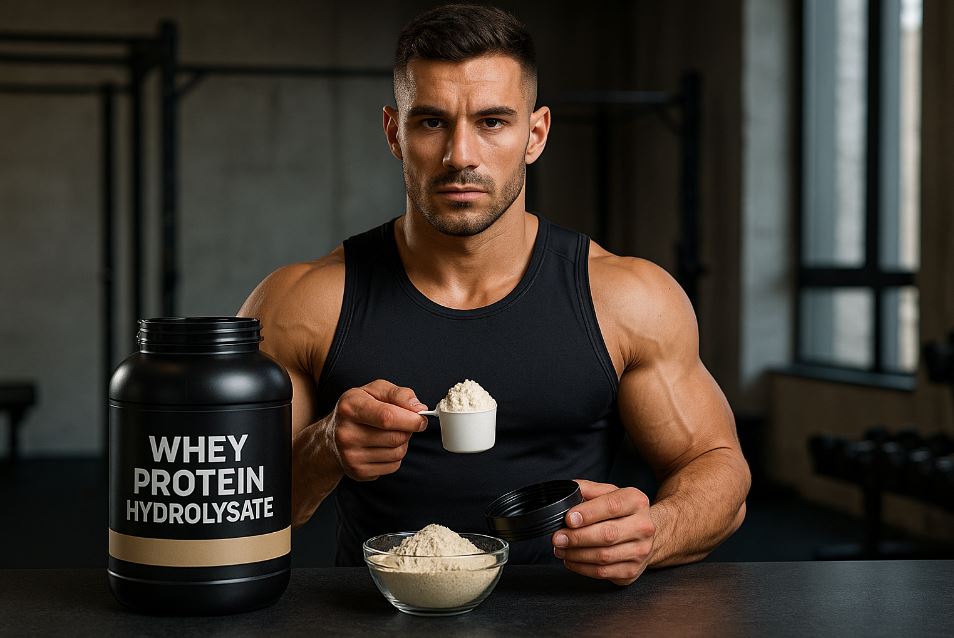
Whey protein hydrolysate (WPH) is a specialized form of whey protein that undergoes an additional processing step known as enzymatic hydrolysis. This process breaks down the protein into smaller peptide chains, allowing for faster digestion and absorption than any other type of whey.
For bodybuilders and athletes who demand rapid recovery, WPH offers a unique advantage — delivering amino acids into the bloodstream in record time, reducing muscle breakdown, and kick-starting the repair process almost instantly.
Discover why whey protein hydrolysate is often the first choice for elite athletes, post-surgery patients, and those with sensitive digestion who want maximum protein efficiency.
What is Whey Protein Hydrolysate (WPH)? — Definition and Forms
Whey protein hydrolysate is a pre-digested whey protein [1] created by breaking down long protein chains (polypeptides) into shorter segments (peptides) using enzymes. This process mimics the first stage of digestion, meaning your body has less work to do when breaking it down.
WPH can come in two primary forms:
- Partially hydrolyzed WPH – retains some intact proteins, offering a balance between fast absorption and a less bitter taste.
- Extensively hydrolyzed WPH – almost fully broken down into di- and tri-peptides [4], providing the fastest absorption possible.
💡 Coach’s Take: In my experience, WPH is unmatched for situations where rapid recovery is essential, such as after two-a-day training sessions or competition weekends.
How WPH is Made — Production Process
WPH starts as regular whey protein concentrate (WPC) or isolate (WPI). It then undergoes enzymatic hydrolysis, where specific enzymes (such as proteases) break down the protein structure.
Production Steps:
- Filtration – Removes fat, carbs, and most lactose (depending on the starting whey).
- Enzymatic Hydrolysis – Introduces enzymes that break down peptide bonds [4].
- Deactivation – Heat treatment stops the enzymatic activity.
- Drying & Packaging – Resulting powder has shorter peptides, making it faster to digest.
This extra step is what gives WPH its unique edge — it bypasses much of the digestive process, allowing amino acids to enter the bloodstream quicker.
Nutritional Profile of WPH
WPH offers an extremely high protein percentage with almost no fats or carbohydrates. Its amino acid profile remains intact, ensuring optimal muscle recovery and growth.
WPH typically contains:
- Protein: 80–90% (depending on starting whey and degree of hydrolysis)
- Carbohydrates: 0.5–3%
- Fat: 0.5–2%
- Lactose: <1% (often negligible)
- Amino Acid Profile: Rich in branched-chain amino acids (BCAAs), especially leucine, for triggering muscle protein synthesis.
💡 Coach’s Take: This near-zero lactose content makes WPH an excellent choice for athletes with lactose intolerance.
Proven Benefits for Bodybuilding & Sports
The biggest advantage of WPH is its rapid absorption, which supports faster muscle repair after intense training. This makes it a preferred option for post-workout nutrition and for athletes with limited recovery windows.
- Ultra-fast absorption – Short peptides pass through the intestinal wall quickly, delivering amino acids to muscles in minutes [3].
- Reduced digestive stress – Less work for the gut, ideal for those with sensitive digestion or post-workout nausea.
- Enhanced muscle recovery – Faster amino acid delivery [5] reduces muscle breakdown [2] and supports quicker repair.
- Lower allergenic potential – Hydrolysis reduces exposure to intact proteins that can cause allergies.
- Better nitrogen retention – Supports an anabolic environment longer after training.
💡 Coach’s Take: I’ve seen athletes bounce back from heavy lifting days faster with WPH than with any other protein source.
Potential Drawbacks & Risks
Despite its advantages, WPH comes with a higher price point and a noticeably bitter taste due to its hydrolyzed peptides. These factors can make it less appealing for casual users compared to other whey forms.
- Higher cost – The extra processing makes WPH more expensive than WPC or WPI.
- Bitter taste – Short peptides can have a noticeable bitterness.
- Limited availability – Fewer brands offer high-quality WPH.
💡 Coach’s Tip: If taste is a deal-breaker, choose a flavored WPH or blend it with WPI.
Recommended Dosage & Best Timing
WPH is most effective immediately after training when the body’s need for amino acids is at its peak. Its rapid absorption ensures quick delivery of nutrients [5] to recovering muscles.
- Standard dose: 20–30g per serving.
- Best timing: Immediately post-workout, or first thing in the morning after fasting.
- With carbs: Pairing WPH with fast-digesting carbs (e.g., dextrose, maltodextrin) speeds up glycogen replenishment.
Best Combinations (Stacks)
- WPH + Creatine – Improves strength recovery and muscle energy stores.
- WPH + Beta-Alanine – Enhances muscular endurance.
- WPH + Carb Powder – Ideal for glycogen restoration after intense training.
WPH vs WPC vs WPI — Comparison Table
| Feature | WPC | WPI | WPH |
|---|---|---|---|
| Protein Content | 70–80% | 85–90% | 80–90% |
| Lactose Content | Moderate | Very Low | Very Low (<1%) |
| Absorption Speed | Moderate | Fast | Very Fast |
| Digestive Ease | Good | Very Good | Excellent |
| Taste | Creamy | Clean/Neutral | Bitter |
| Cost | Low | Medium | High |
| Best For | General fitness | Cutting/lean mass | Rapid recovery & lactose intolerance |
Table Summary: This table clearly shows that WPH outperforms other whey types in terms of speed of absorption and digestive ease, making it a premium option for specific recovery needs.
Who Should Use WPH?
- Competitive athletes training multiple times per day.
- Individuals with sensitive digestion or lactose intolerance.
- Bodybuilders during intense cutting phases with short recovery windows.
It won’t transform you into the aesthetic powerhouse of Frank Zane, Chris Bumstead, or Lou Ferrigno, but whey protein does provide the building blocks of lean muscle.
Who Should Avoid WPH?
- Casual gym-goers who don’t need ultra-fast absorption [5].
- Athletes on a tight supplement budget.
- Anyone who prefers a creamy taste over slightly bitter notes.
Tips for Choosing the Right Whey Protein Hydrolysate (WPH)
Whey protein hydrolysate offers ultra-fast absorption — making it ideal for recovery — but its quality can vary significantly.
- Degree of Hydrolysis: Look for a DH (degree of hydrolysis) rating of at least 10–15% for faster digestion without an overly bitter taste.
- Base Protein Quality: Ensure the hydrolysate is made from a high-quality WPI or WPC base to maintain a strong amino acid profile.
- Minimal Bitterness Masking: Many WPH products mask bitterness with excessive sweeteners — choose brands that keep flavoring balanced.
- Third-Party Verification: Opt for products tested for purity, heavy metals, and protein content accuracy.
- Intended Use: Select WPH if you train multiple times a day, are in competition prep, or have digestive sensitivity to other protein forms.
Health Benefits of Whey Protein Hydrolysate
Whey protein hydrolysate (WPH) is often recognized for its rapid absorption and superior digestibility, but it also offers several potential health benefits supported by research:
- Enhanced Muscle Recovery – Due to its pre-digested form, WPH delivers amino acids quickly to the muscles, reducing soreness and accelerating recovery after intense exercise.
- Reduced Allergenic Potential – The hydrolysis process breaks down proteins into smaller peptides, making WPH potentially easier to tolerate for individuals sensitive to regular whey protein.
- Improved Protein Synthesis – Studies suggest WPH can trigger a stronger anabolic response [6] compared to intact whey, helping to maintain or build lean muscle mass.
- Supports Gut Health – Some bioactive peptides in WPH may have anti-inflammatory properties [6] that can benefit digestive health.
- May Aid Blood Sugar Control – The fast absorption rate can improve insulin response and help regulate post-meal blood sugar levels.
Conclusion
Whey protein hydrolysate stands out as the fastest-digesting form of whey protein, designed for athletes who prioritize speed of recovery and maximum nutrient delivery. Its pre-digested nature allows amino acids to enter the bloodstream in record time, reducing muscle breakdown and accelerating repair. While it carries a higher price tag and a slightly bitter taste, for competitive athletes, post-injury recovery, or those with sensitive digestion, the benefits can far outweigh the drawbacks.
💡 Coach’s Take: Over the years, I’ve seen WPH make a noticeable difference for athletes in high-intensity phases — it’s the go-to choice when every minute of recovery counts.
The information provided in this article is intended for general informational and educational purposes only. It should not be considered medical advice or a substitute for professional consultation. Dietary supplements are not meant to diagnose, treat, cure, or prevent any disease, and their effectiveness may vary between individuals.
Always consult a qualified healthcare professional before starting any new supplement regimen—especially if you are under 18, pregnant, breastfeeding, have a medical condition, or take prescription medications.
The author and the Bodybuilding Wizard website are not responsible for any health issues, side effects, or adverse outcomes resulting from the use or misuse of supplements discussed herein. Use supplements only as directed by the manufacturer and prioritize a balanced diet, proper training, and recovery as the foundation of your fitness journey.
