



If you’ve been on the lookout for natural remedies to boost your exercise and athletic performance, you’ve undoubtedly come across ginseng. This remarkable little root is often hailed as a hidden gem within the fitness community. But you can’t help but wonder, “Can Ginseng supplements really enhance my athletic performance?” Well, you’re in the right place to unravel this mystery. This article will delve deep into the science and studies behind ginseng, shedding light on its potential benefits for sports performance. Trust us, it’s going to be an enlightening journey!
Ginseng, a root renowned for its potent properties, has been used in traditional medicine for centuries. But does scientific evidence support its use for athletic performance? Let’s find out.
- Get a thorough understanding of ginseng and its properties
- Discover the science behind how ginseng could impact your exercise routines
- Explore the pros and cons of ginseng as an exercise supplement
What is ginseng?
Ginseng is an oval-shaped root that has been valued in traditional medicine, specifically in Asia and North America, for thousands of years. This humble plant is famed for its fleshy roots and is characterized by the presence of ginsenosides, unique compounds believed to be responsible for its medicinal properties. The term ‘ginseng’ typically refers to the slow-growing perennial plants belonging to the Panax genus in the family Araliaceae.
Now, you might be wondering about the main types of ginseng. Well, there are mainly two types that you’ll run into most frequently. One is Panax ginseng, often referred to as Asian, Korean, or red ginseng. It’s primarily grown in Korea and is highly regarded for its potential to boost energy, promote healing, and enhance cognitive function.
The second one is Panax quinquefolius, or American ginseng, predominantly found in North America. This type is lauded for its calming effects and is often used to reduce stress, promote relaxation, and aid digestion. Although these two are the prime types, it’s good to remember there are several other species that people classify as ginseng, including Siberian ginseng, although it’s not a true ginseng and lacks ginsenosides.

What are the active ingredients in ginseng supplements?
The active ingredients in ginseng supplements are primarily a group of compounds known as ginsenosides. These are saponin molecules, which are a class of chemical compounds found in particular abundance in various plant species. Ginsenosides are unique to the ginseng plant and are the primary bioactive constituents that contribute to the herb’s medicinal properties.
Ginsenosides are classified into two main groups: the Rb1 group, which includes Rb1, Rb2, Rc, and Rd, and the Rg1 group, which includes Rg1 and Re. Each ginsenoside has a different effect on the body, contributing to the wide range of potential health benefits associated with ginseng.
Another important component of ginseng is polysaccharides, complex carbohydrates that have antioxidant properties. Additionally, ginseng contains polyacetylenes, which are organic compounds with anti-inflammatory, anti-fungal, and anti-cancer properties.
Other active ingredients in ginseng include essential oils, which contribute to the plant’s aroma and flavor, and have potential therapeutic benefits. Ginseng also contains amino acids, peptides, and vitamins, particularly B vitamins, which are essential for energy metabolism.
Lastly, ginseng contains phytosterols, plant compounds that are structurally similar to cholesterol.
What are the supposed health benefits of taking ginseng?
This ancient herb, which has been used for centuries in traditional medicine, is gaining popularity in the modern world for its potential health benefits. But are these benefits real or just anecdotal? Let’s dive in.
The health benefits of ginseng are believed to lie within the ginsenosides, the active compounds found within the plant. Consuming ginseng is said to:
- Aid in lowering blood sugar levels.
- Play a role in strengthening the immune system.
- Possibly enhance brain function.
- Contribute to fighting fatigue and increasing energy levels
Researchers have also explored the potential of ginseng in various other areas such as mood enhancement, endurance augmentation, and the treatment of conditions like cancer, hepatitis C, high blood pressure, high cholesterol levels, heart disease, fatigue, flu, erectile dysfunction, and menopausal symptoms.
Despite showing promise, it’s important to note that the evidence supporting its definitive effectiveness still isn’t concrete. More scientific studies are required to fully validate ginseng’s value as a health supplement.
Even if ginseng is useful (at least to some extent) for treating some of the listed medical conditions, there’s another problem. Quality and medicinal potential can vary significantly among different ginseng supplements. It’s important for you to verify the list of ingredients before buying any ginseng product. Why? Because some might provide only a minimal or no real quantity of actual ginseng. What’s worse, these supplements could also carry other unidentified substances.
Ginseng and exercise performance: separating fact from fiction
Many athletes swear by ginseng supplements to enhance their exercise performance. But what does the science say about these claims? The clear answer still remains elusive due to the nature of such studies. However, we could summarise the claimed benefits:
Boosts Energy: Due to the ‘adaptogen’ capabilities of ginseng, many believe it can help ‘adapt’ the body to stressful situations, such as extreme physical activity, thus providing a boost of energy.
Reduces Fatigue: Similarly, some users claim that ginseng can help combat fatigue, enabling athletes to train longer and harder. This may be particularly beneficial for endurance sports where fatigue management is critical.
Enhances Recovery: Ginseng is also purported to have anti-inflammatory properties, which could potentially aid in post-exercise recovery.
Supports Muscle Growth: Some claim that ginseng can enhance muscle growth and development, possibly due to its supposed ability to regulate metabolic functions.
Despite these numerous claims, it’s essential to note that the effectiveness of ginseng supplements can significantly vary depending upon various factors like dosage, how it’s processed, and individual sensitivity. Moreover, while some studies support these benefits to some extent, others (better designed) contradict them. While myriad animal studies have continually shown a distinct advantage of exercise related to ginseng and ginsenosides, it’s important to note that the dosages administered in these studies have been substantially higher—up to a full 100 times—compared to the dosages typically prescribed to humans. Therefore, athletes and fitness enthusiasts should approach ginseng use cautiously and preferably under the supervision of a healthcare professional. Unfortunately, ginseng supplements and athletic performance most likely don’t go hand in hand.
What scientific studies exist on ginseng’s impact on athletic performance?
Better-designed studies conducted during the 1990s (and thereafter) on the ergogenic effects of ginseng found no (or little) evidence to support taking ginseng supplements in order to improve exercise or athletic performance. Here are the results:
| Study | Type of the study | Participants | Formulation | Duration | Conclusion |
|---|---|---|---|---|---|
| Van Schepdael1 | randomized, double-blind, crossover | 43 female triathletes | 400 mg/d G115 | 10 weeks | Reduced blood lactate during a second 10-week period |
| Cherdrungsi2 | randomized, double-blind, four groups | 41 students | 150 mg bid standardized extract | 8 weeks | No clear synergistic action between exercise and ginseng |
| Engels3 | randomized, double-blind | 19 healthy adult females | 200 mg/d G115 | 8 weeks | No significant ergogenic effects |
| Engels4 | randomized, double-blind | 36 healthy adult males | 200 or 400 mg/d G115 | 8 weeks | No significant ergogenic effects |
| Kolokouri5 | randomized, double-blind | 24 healthy adult females | 400 mg/d | 8 weeks | No significant ergogenic effects of standardized extract |
| Engels6 | randomized, double-blind | 12 aerobically fit young adults | 1 g/d ginseng root | 60 days | No significant ergogenic effects |
| Lifton7 | randomized, double-blind, crossover | 11 well-trained amateur cyclists | 3 g/d ginseng | 13 days | No significant ergogenic effects |
| Allen8 | randomized, double-blind, crossover | 28 moderately fit adults | 200 mg/d 7% ginsenoside standardized extract | 21 days | No significant ergogenic effects |
What are the potential side effects of taking ginseng supplements?
Before you consider adding ginseng supplements to your daily regimen to enhance athletic performance, you should be aware of potential side effects. Although generally safe for most adults when taken in moderation, some people may experience adverse reactions.
Common side effects can include headaches, sleep problems, digestive issues, and changes in blood pressure. Ginseng can cause nervousness and jitters, similar to those experienced with excessive caffeine intake. Some individuals may report experiencing allergic reactions such as rashes or asthma attacks, although this is relatively rare.
It’s crucial to remember that ginseng may interact negatively with certain medications, especially those for depression, diabetes, and blood clotting. Ginseng may also not be suitable for people with hormone-sensitive conditions since it can act like estrogen in the body.
Always consult your healthcare provider before beginning any new supplement regimen, especially if you’re currently on medication or have an existing health condition.
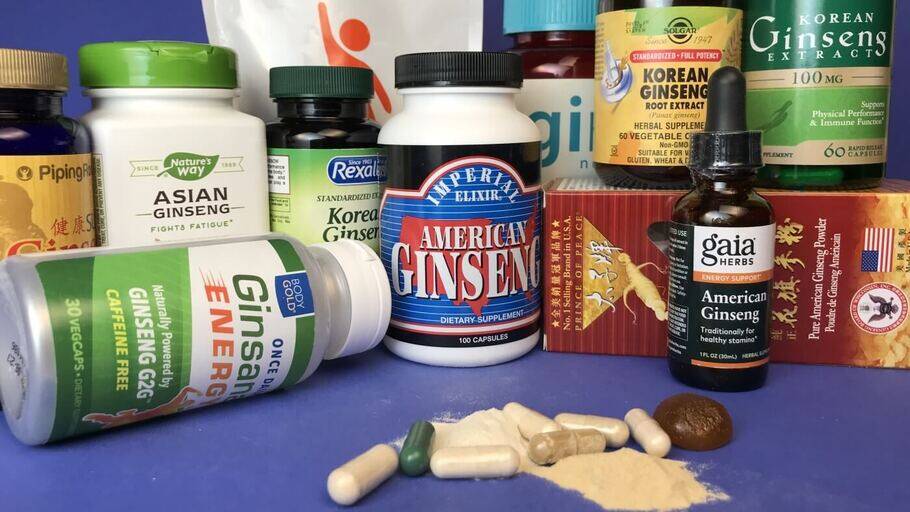
Ginseng dosage
Setting a standard dosage for ginseng isn’t a straightforward task due to various factors. Among these are the fluctuating quality and active components found in different ginseng supplements, which often differ from one manufacturer to another. So always stick to your product’s instructions. Consequently, defining a one-size-fits-all dose is quite challenging.
However, based on various scientific studies, it has been suggested that a customary day-to-day dose should consist of 200 milligrams of Panax ginseng extract or anywhere between 0.5-2 grams of the dried root. If consumed as a capsule, a daily dosage generally fluctuates between 100-600 milligrams. It is generally recommended to start on the lower side, gradually increasing as your body adapts. Higher isn’t always better, particularly when it comes down to herbal supplements. As with any supplement, monitor your body’s responses and adjust accordingly.
It’s crucial to procure your ginseng from a dependable source, as the costliness of the root is attractive to unethical manufacturers who may adulterate the ginseng or include less than what is proclaimed on the product’s labeling. Choose products from trusted manufacturers who ensure their supplements meet rigorous testing and quality assurance protocols.
Top-rated ginseng supplements
If you decide to purchase a ginseng supplement, here’s the list that might help:
- Nature’s Bounty Ginseng Complex: This is a popular choice among fitness enthusiasts. It blends three types of ginseng – Korean, American, and Red Chinese – to support energy and mental alertness.
- Now Foods Panax Ginseng: A well-renowned supplement from a reliable manufacturer. It promises to promote overall wellness and boost energy levels.
- Nature’s Way Korean Red Ginseng: Known for its quality and potency, this supplement aims to rejuvenate and invigorate the performance of individuals.
- Woohoo Natural Pure American Ginseng: This supplement is made with 100% pure American Ginseng and is known for enhancing endurance and reducing fatigue.
- Auragin Authentic Korean Red Ginseng: Made with high-quality, authentic Korean Red Ginseng, this supplement is recognized for its potential to help decrease stress and boost energy levels.
- Nutrivein Pure Korean Red Panax Ginseng: This product provides an extra-strength dose and is praised for its efficacy in promoting vitality and mental clarity.
- Puritan’s Pride American Ginseng: A well-established supplement that contains American Ginseng extract, which may aid in enhancing athletic performance and reducing post-exercise fatigue.
Numerous studies provide little or no evidence that various doses and preparations of ginseng supplements improve performance in athletes or recreational exercisers.
References
- Van Schepdael P. Les effects du ginseng G115 sur la capacité physique de sportifs d’endurance. [The effects of ginseng G115 on the physical capacity of endurance sports.] Acta Ther 1993;19:337-347.
- Cherdrungsi P, Rungroeng K. Effects of standardized ginseng extract and exercise training on aerobic and anaerobic exercise capacities in humans. Korean J Ginseng Sci 1995;19:93-100.
- Engels HJ, et al. Failure of chronic ginseng supplementation to affect work performance and energy metabolism in healthy adult females. Nutr Res 1996;16:1295-1305. Abstract available as Engels HJ, et al. Effect of chronic ginseng intake on metabolic responses during and in the recovery from graded maximal exercise [abstract]. Med Sci Sports Exerc 1995;27(Suppl): S147.
- Engels HJ, Wirth JC. No ergogenic effects of ginseng (Panax ginseng C.A. Meyer) during graded maximal aerobic exercise. J Am Diet Assoc 1997; 97:1110-1115. Abstract available as Engels HJ, Wirth JC. No ergogenic effects of ginseng (Panax ginseng C.A. Meyer) during graded maximal aerobic exercise [abstract]. Int J Sport Nutr 1998;8:202.
- Kolokouri I, et al. Effect of chronic ginseng supplementation on short duration, supramaximal test performance [abstract]. Med Sci Sports Exerc 1999;31(Suppl): S117.
- Engels HJ, et al. Effect of ginseng (G115) on maximal aerobic exercise performance in aerobically fit young adults [abstract]. The XXVI FIMS World Congress of Sports Medicine Abstracts 1998; Champaign (IL): Federation International de Medicine Sportive; 1998:33.
- Lifton B, et al. The effect of ginseng on acute maximal aerobic exercise [abstract]. Med Sci Sports Exerc 1997;29(Suppl): S249.
- Allen JD, et al. Ginseng supplementation does not enhance healthy young adults’ peak aerobic exercise performance. J Am Coll Nutr 1998;17:462-466.
Ginseng supplements for enhanced athletic performance
Although ginseng has been lauded for its potential ability to enhance exercise and athletic performance, it’s crucial to temper expectations. The truth is, that current scientific evidence falls short in supporting the notion that ginseng truly boosts athletic prowess or exercise capabilities. So if you're a recreational exerciser or a serious athlete banking on ginseng to push your performance boundaries, it's time to reevaluate. Unfortunately, ginseng supplements and athletic performance don't go hand in hand.
Pros
- Build immunity
- Regulate blood sugar
- Improve focus
- Reduce inflammation
Cons
- Expensive supplement
- Can cause anxiety and insomnia
- Ineffective in increasing sports performance
- Most supplements contain minimal quantity of actual ginseng
-
Boosts Energy
-
Reduces Fatigue
-
Enhances Recovery
-
Supports Muscle Growth
-
Increases Endurance
