


Introduction
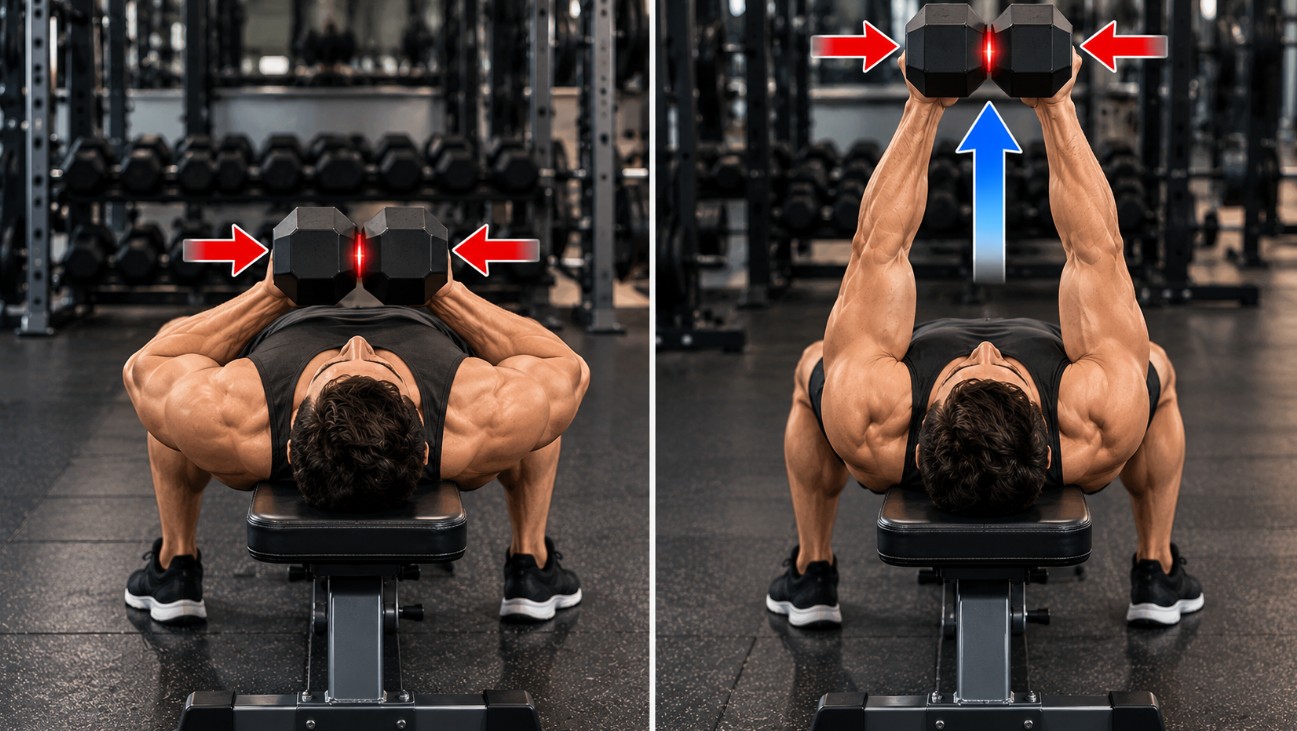
The dumbbell squeeze press, often called the hex press, is a chest exercise in which you press two dumbbells held firmly together while lying on a flat bench. It looks similar to a close-grip flat bench dumbbell press, but one crucial difference remains: throughout the entire set, you actively squeeze the dumbbells together.
That squeeze changes how the chest works. During a regular dumbbell press, the weights simply move up and down, while in the squeeze press, the chest also has to push the arms toward each other the whole time. This combination of pressing and constant inward pressure creates a strong, continuous contraction that many lifters feel more clearly than in almost any other pressing exercise.
The squeeze press requires only a pair of dumbbells and a bench, making it useful in commercial gyms and home workouts. It is also relatively easy on the shoulders, thanks to the narrow neutral grip and tucked elbows, which makes it a smart addition to almost any chest routine.
The dumbbell squeeze press (also called the hex press) is a chest exercise performed lying on a flat bench, where two dumbbells are pressed firmly together with a neutral grip and kept in contact throughout the entire set. The active squeeze adds an isometric horizontal adduction component to the pressing movement, keeping constant tension on the pectoralis major while the triceps brachii and anterior deltoids assist the press.
Other Names for Dumbbell Squeeze Press
The exercise is known by several names, most of which describe either the squeeze itself or the type of dumbbells typically used.
- Hex press
- Dumbbell hex press
- Crush press
- Squeeze bench press
- Neutral-grip dumbbell squeeze press
Required Equipment
You need very little equipment for the squeeze press, but the type of dumbbells makes a noticeable difference. If you’re setting up a home gym, our guide on choosing the right type of dumbbells can help.
- A pair of dumbbells, ideally hexagonal (hex) dumbbells with flat sides
- A flat bench (or the floor for the floor press variation)
How to Perform Dumbbell Squeeze Press
The squeeze press is simple to learn, but maintaining the squeeze throughout the set is what makes it effective.
Starting Position
Get into position carefully, as you need to press the dumbbells together before the first rep.
- Sit on the edge of a flat bench with a dumbbell resting on each thigh
- Lie back and bring the dumbbells to your chest, then press them up over your chest
- Hold the dumbbells with a neutral grip, palms facing each other
- Press the dumbbells firmly together so they touch along their entire length
- Plant your feet flat on the floor and keep your head, upper back, and glutes on the bench
- Pull your shoulder blades slightly back and down into the bench
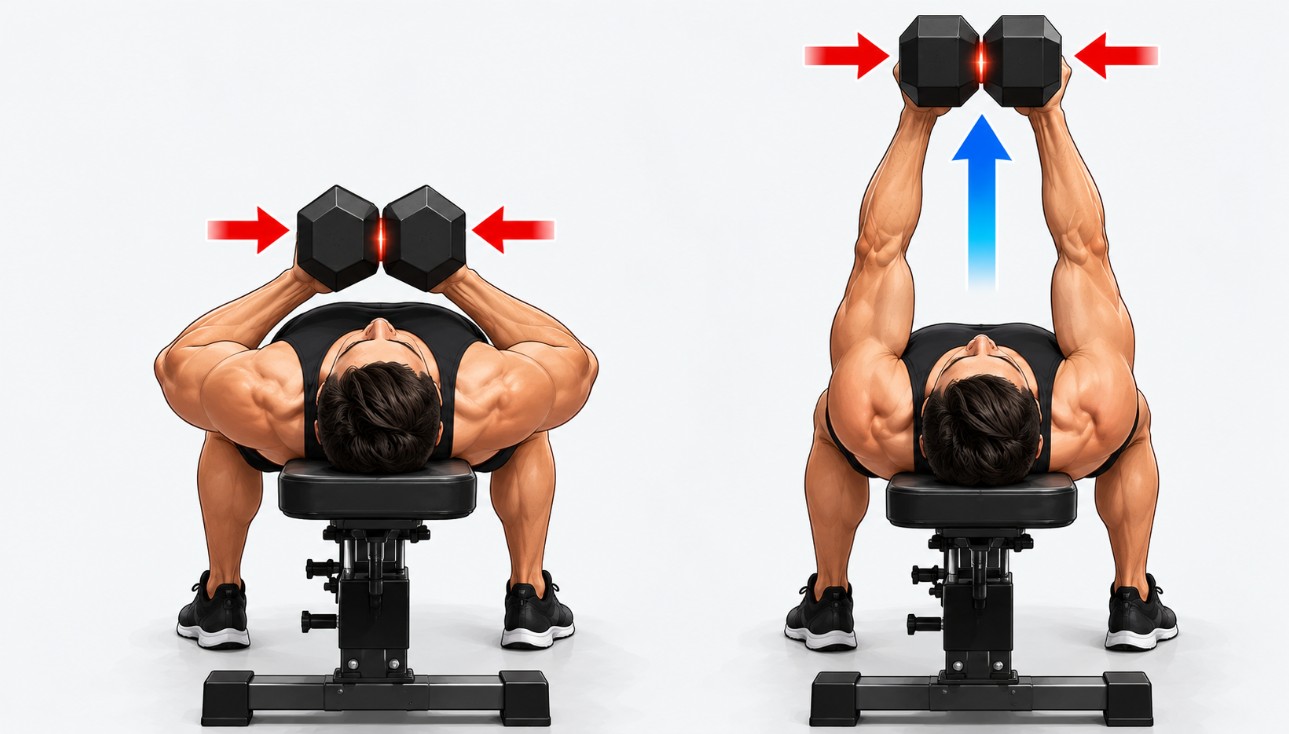
Execution (Action Phase)
The key is to keep the dumbbells pressed together from the first rep to the last, even as fatigue sets in.
- Inhale and lower the dumbbells slowly toward your lower chest (see our guide on breathing technique)
- Keep squeezing the dumbbells together throughout the lowering phase
- Keep your elbows tucked at roughly 30–45 degrees from your torso
- Lightly touch your lower chest with the dumbbells
- Exhale and press the dumbbells back up while squeezing them even harder
- Stop just short of locking out your elbows and begin the next rep
If the dumbbells separate at any point during the set, reduce the weight or end the set, since the squeeze is what defines the exercise.
Video Demonstration
Watching the squeeze press helps you see how the dumbbells should stay in contact throughout the entire movement.
In the video below, notice how the lifter keeps the dumbbells pressed tightly together, lowers them with control to the lower chest, and presses them back up without the weights drifting apart. The elbows stay tucked close to the body, and the movement is smooth and deliberate.

The squeeze press has a funny way of turning into a regular close-grip press without anyone noticing. On the first rep, everyone squeezes like they are trying to crush a walnut between the dumbbells. By the fourth rep, the dumbbells have quietly drifted a few centimeters apart, and the only thing still being squeezed is the lifter’s patience. And if you try it with round dumbbells, they roll against each other like two stubborn magnets.
With my clients, I use two simple rules. First, grab hex dumbbells whenever possible, because their flat sides stay together. Second, choose a weight noticeably lighter than your regular dumbbell press, and end the set the moment the dumbbells separate. The squeeze is the exercise, and without it, you are just doing a different press.
Quick Form Checklist
Run through these cues before every set to make sure the squeeze press stays effective.
- Dumbbells pressed together along their full length
- Neutral grip, palms facing each other
- Elbows tucked at 30–45 degrees
- Dumbbells touch the lower chest
- Squeeze never released during the set
Technical Emphasis & Targeting Adjustments
Small adjustments to squeeze intensity, touch point, and tempo can change how the squeeze press stimulates the chest.
- Harder squeeze → more chest tension. The harder you press the dumbbells together, the more the chest must work to maintain the inward pressure. This isometric contraction continues throughout the entire rep.
- Lower chest touch point → more comfortable shoulders. Lowering the dumbbells to the bottom of your sternum keeps your elbows tucked and your shoulders stable. Lowering toward the upper chest tends to flare the elbows and shift stress onto the shoulders.
- Narrow neutral grip → more triceps involvement. The close hand position increases the demand on the triceps. Research on the bench press confirms that narrow grips produce higher triceps activity, so expect your triceps to work hard.
- Slower eccentric → greater time under tension. Lowering the dumbbells over 2–3 seconds increases time under tension while you maintain the squeeze. Learn more about eccentric training and why the lowering phase matters.
- Squeeze-focused reps → stronger mind-muscle connection. Consciously pushing the dumbbells through each other helps build a stronger mind-muscle connection with the chest.
Common Mistakes
Most squeeze press mistakes come down to one problem: losing the squeeze. Several of them overlap with typical bench press mistakes as well.
- Letting the dumbbells separate. When the dumbbells drift apart, the exercise turns into a regular close-grip press and loses its main benefit. Keep them firmly in contact and end the set if you can no longer hold them together.
- Using too much weight. Too-heavy loads make it impossible to maintain the squeeze and often lead to shortened reps. Use dumbbells noticeably lighter than your regular dumbbell press.
- Flaring the elbows. Letting the elbows drift out to the sides pulls the dumbbells apart and increases stress on the shoulders. Keep your elbows tucked close to your body throughout the movement.
- Bending the wrists back. Allowing the wrists to extend under the load places unnecessary strain on the wrist joints. Keep your wrists straight, with your knuckles pointing toward the ceiling.
- Cutting the range of motion short. Stopping halfway down reduces the work done by the chest. Lower the dumbbells until they lightly touch your lower chest on every rep.
Start every set with a two-second pre-squeeze. Once the dumbbells are above your chest, press them together as hard as you can for two seconds before you begin the first rep. Think about trying to push one dumbbell straight through the other.
This short isometric hold “switches on” the chest before the first rep, so you don’t need two or three warm-up reps to find the contraction. It also sets the squeeze intensity you should maintain for the rest of the set, which makes it easier to notice when fatigue starts to pull the dumbbells apart.
Mechanical Considerations
The squeeze press combines two actions at once. The pressing movement is driven mainly by shoulder flexion and elbow extension, while the active squeeze requires the chest to produce continuous horizontal adduction, a main function of the pectoralis major. During a regular dumbbell press, the load simply acts downward, so the chest has little reason to pull the arms together, especially near the top. In the squeeze press, the lifter generates inward pressure, which keeps the chest under tension even at lockout and applies the principle of continuous tension.
No published study has directly measured muscle activity during the squeeze press, so its benefits are based on biomechanical reasoning and practical experience rather than direct evidence. Research on similar exercises offers useful clues: studies show that dumbbell presses produce chest activation similar to barbell pressing, and that narrower grips with tucked elbows reduce the load on the shoulder joint. As a compound exercise, the squeeze press trains the chest, triceps, and front delts together.
Muscles Worked in Dumbbell Squeeze Press
MAIN MUSCLES
SECONDARY MUSCLES
STABILIZERS
ANTAGONISTS
Dumbbell Squeeze Press Pros and Cons
The squeeze press is a unique chest exercise with clear strengths, but it also has limitations worth considering.
Advantages
- Constant chest tension. The active squeeze keeps the chest working throughout the entire rep, including the top. Many lifters feel their chest more clearly than in regular pressing exercises.
- Shoulder-friendly. The narrow neutral grip and tucked elbows reduce stress on the shoulder joint. It is often a good option for lifters who experience discomfort during wide-grip pressing.
- Minimal equipment. All you need is a pair of dumbbells and a bench, or even just the floor. This makes the exercise ideal for home training.
- Effective with lighter loads. Because the squeeze adds intensity, you can train the chest hard without heavy weights. This makes it useful when joints need a break from heavy pressing.
Potential Drawbacks
- Limited loading potential. Maintaining the squeeze limits how much weight you can use. It is not the best choice for building maximal pressing strength.
- Smaller stretch at the bottom. With the dumbbells pressed together, the range of motion at the shoulder is shorter than in a regular dumbbell press. The chest is not loaded as much in the stretched position.
- Triceps may fatigue first. The narrow grip places significant demand on the triceps. In some lifters, the triceps give out before the chest is fully fatigued.
- Limited research. The squeeze press has not yet been studied directly. Biomechanics and practical experience support its effectiveness, but not specific scientific data.
Safety Considerations
The squeeze press is one of the more joint-friendly pressing exercises, but a few precautions still apply.
- History of shoulder pain. The narrow grip and tucked elbows usually make this exercise well tolerated, but never ignore pain. Stop if you feel pinching or sharp pain, and learn more about shoulder joint anatomy.
- Previous pectoral strain. Lifters recovering from a pectoral strain should start with light weights and a gentle squeeze. Increase the intensity gradually and only after medical clearance.
- Wrist discomfort. Holding the dumbbells with bent-back wrists can aggravate wrist injuries. Keep the wrists straight and use hex dumbbells to prevent the weights from rolling.
- Elbow irritation. Squeezing heavy dumbbells with maximal effort can irritate the tendons around the elbow, especially in lifters prone to tennis elbow. Use moderate loads and avoid gripping harder than necessary.
Dumbbell Squeeze Press Variations
Incline dumbbell squeeze press
Difficulty: Similar to the standard version
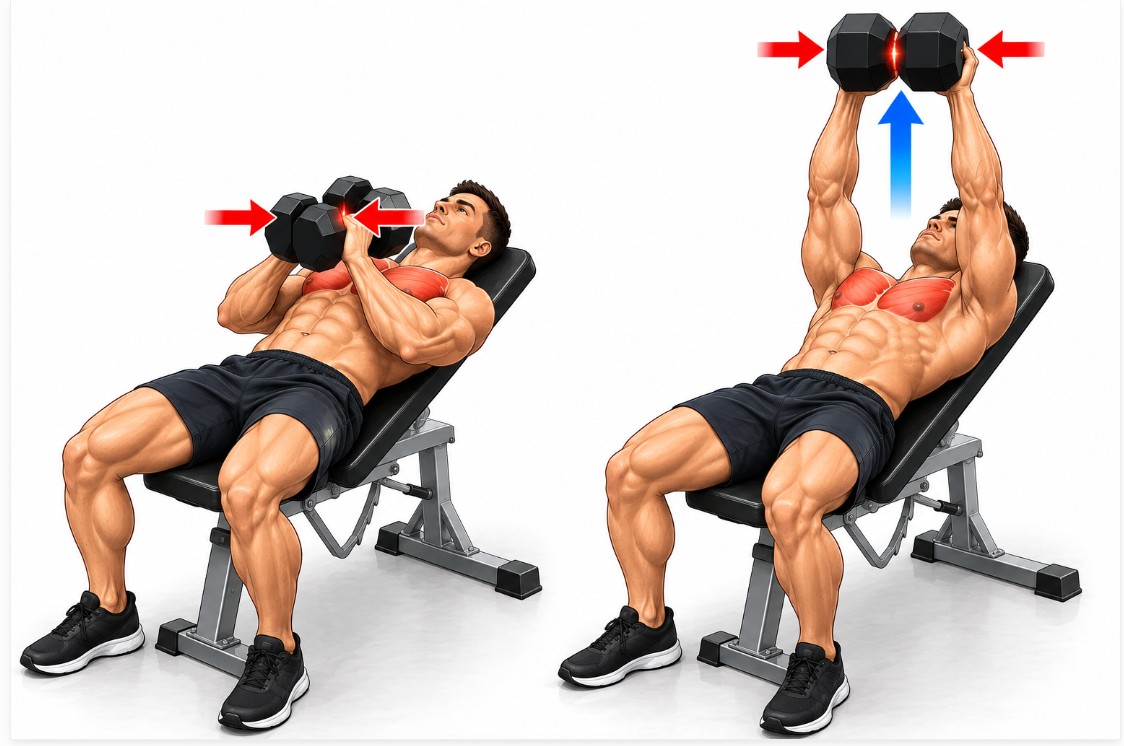
Setting the bench to an incline of about 30 degrees shifts more emphasis onto the clavicular (upper) head of the chest and the anterior deltoids. It combines the squeeze benefits with the upper-chest focus of the incline dumbbell bench press. Keep the dumbbells touching the upper chest at the bottom.
Smith machine hex press
Difficulty: Easier than the standard version

Perform the Smith machine hex press with a V-bar attachment on the Smith machine bar, using a close neutral grip. The guided bar path removes the need to stabilize the dumbbells, and you can still press your hands toward each other on the handle for an extra squeezing effort.
Floor squeeze press
Difficulty: Easier than the standard version
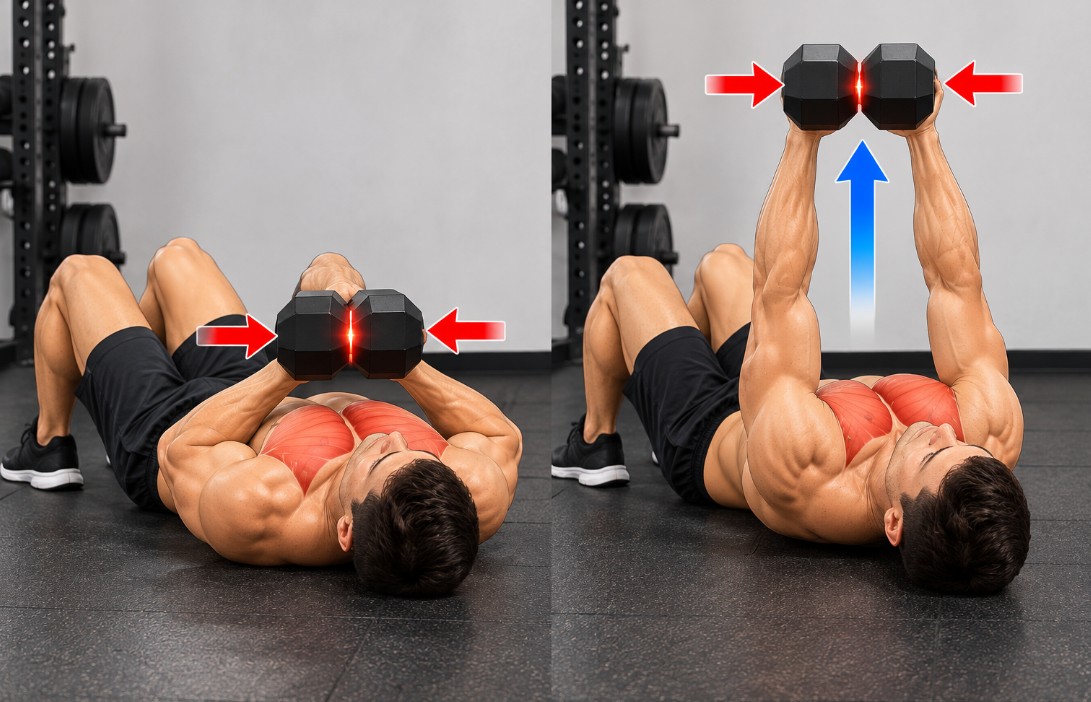
Performing the squeeze press lying on the floor limits the range of motion, since your upper arms stop on the floor. This makes it very shoulder-friendly and a great option for home training when you don’t have a bench.
Single-dumbbell squeeze press
Difficulty: Easier than the standard version
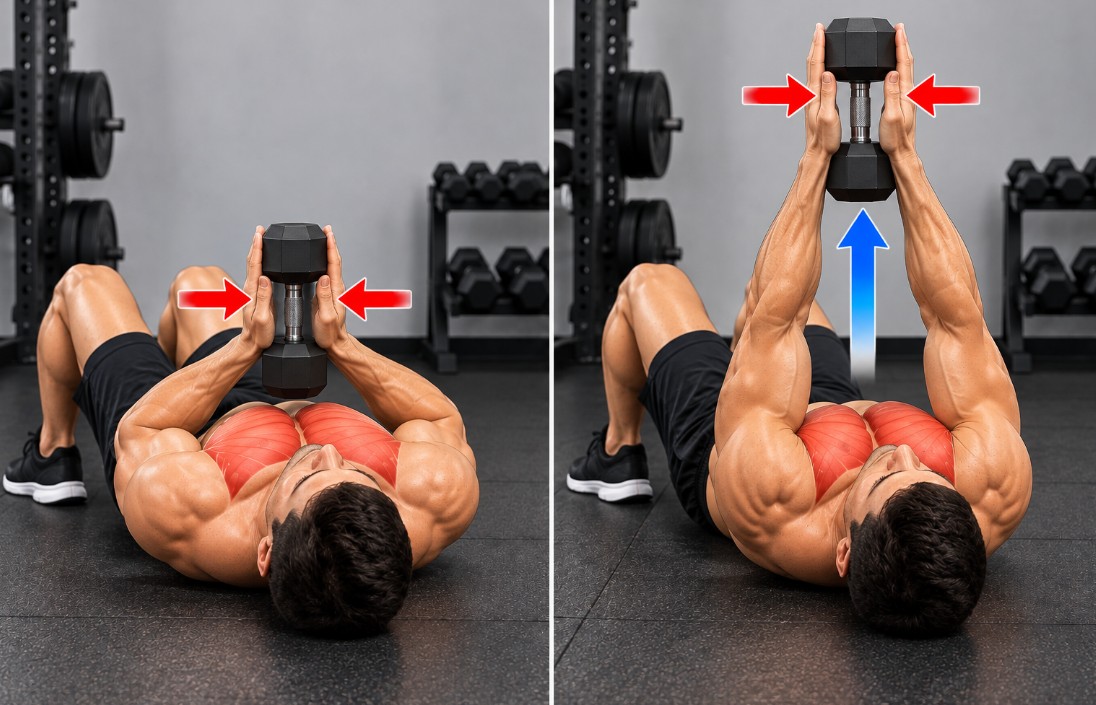
Hold one dumbbell vertically between your palms and press it up while squeezing it from both sides to create a similar chest contraction with less load. It is a good way to learn the squeeze pattern before moving on to two dumbbells.
Paused dumbbell squeeze press
Difficulty: Harder than the standard version
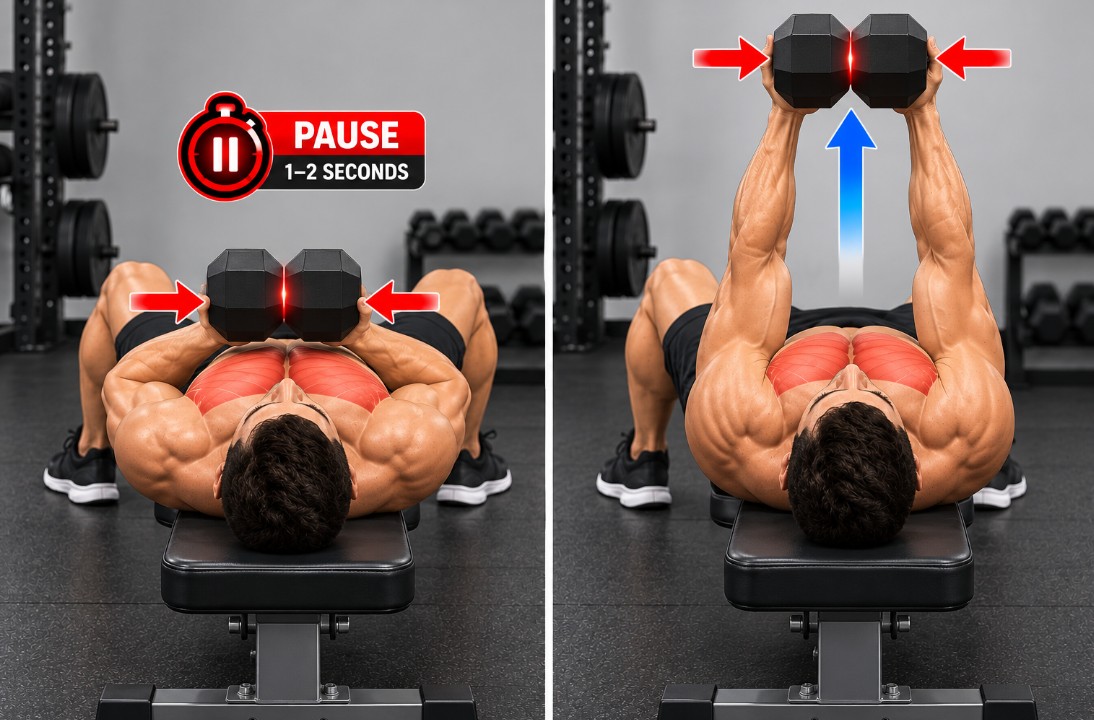
Holding the dumbbells on your chest for 1–2 seconds before each press removes any rebound and forces you to maintain the squeeze in the most challenging position. Use a lighter weight and keep the dumbbells completely still during the pause.
Replacement Exercises (Substitutes) for the Dumbbell Squeeze Press
If you want to vary your training, these exercises also combine pressing with inward pressure or target the pectoralis major in a similar way. For more options, see our list of the most effective middle chest exercises.
- Flat bench dumbbell press. The regular dumbbell press allows heavier loads and a deeper bottom stretch. It is a great companion exercise to the squeeze press in the same workout.

- Lying plate press. The lying plate press uses a weight plate squeezed between the palms instead of dumbbells. It creates a similar inward pressure and strong chest contraction.

- Svend press. The Svend press is performed standing and involves pressing a plate forward while squeezing it. It is an excellent finisher that requires minimal equipment.

- Close-grip barbell bench press. The close-grip bench press uses a narrow grip on a barbell and allows heavier loading. It places even more emphasis on the triceps.

- Machine fly. The machine fly isolates the chest through horizontal adduction without involving the triceps. It is a good alternative when the triceps fatigue too early during the squeeze press.

- Barbell floor press. The barbell floor press limits the range of motion and is easy on the shoulders. It lets you use heavier loads while keeping your elbows in a safe position.

How to Program the Dumbbell Squeeze Press
How you program the squeeze press depends on your training goal, experience level, and where it fits in your chest workout.
Show full programming guideHide programming guide ▾
| Goal | Sets | Reps | Rest | Tempo |
|---|---|---|---|---|
| Hypertrophy | 3–4 | 8–15 | 60–90 s | 2–3 s lowering, constant squeeze |
| Strength-focused | 3–4 | 6–8 | 90–120 s | Controlled lowering, forceful press |
| Muscular endurance | 2–3 | 15–20 | 30–60 s | Steady, continuous |
Muscle growth can occur across a wide range of repetitions when sets are taken close to failure, so treat these numbers as guidelines rather than strict rules. Adjust your rest periods between sets based on how recovered you feel.
- After heavy barbell or dumbbell presses as a second chest exercise
- As the main press for lifters who need a shoulder-friendly option
- In a superset with dumbbell flyes for a complete dumbbell chest finisher
- In home workouts where dumbbells and a bench are the only equipment available
Apply progressive overload by adding reps before adding weight: once you complete all sets at the top of your rep range without the dumbbells separating, move up to the next pair. You can also progress by slowing the lowering phase or adding a one-second pause on the chest.
Dumbbell Squeeze Press vs Dumbbell Bench Press (Comparison Table)
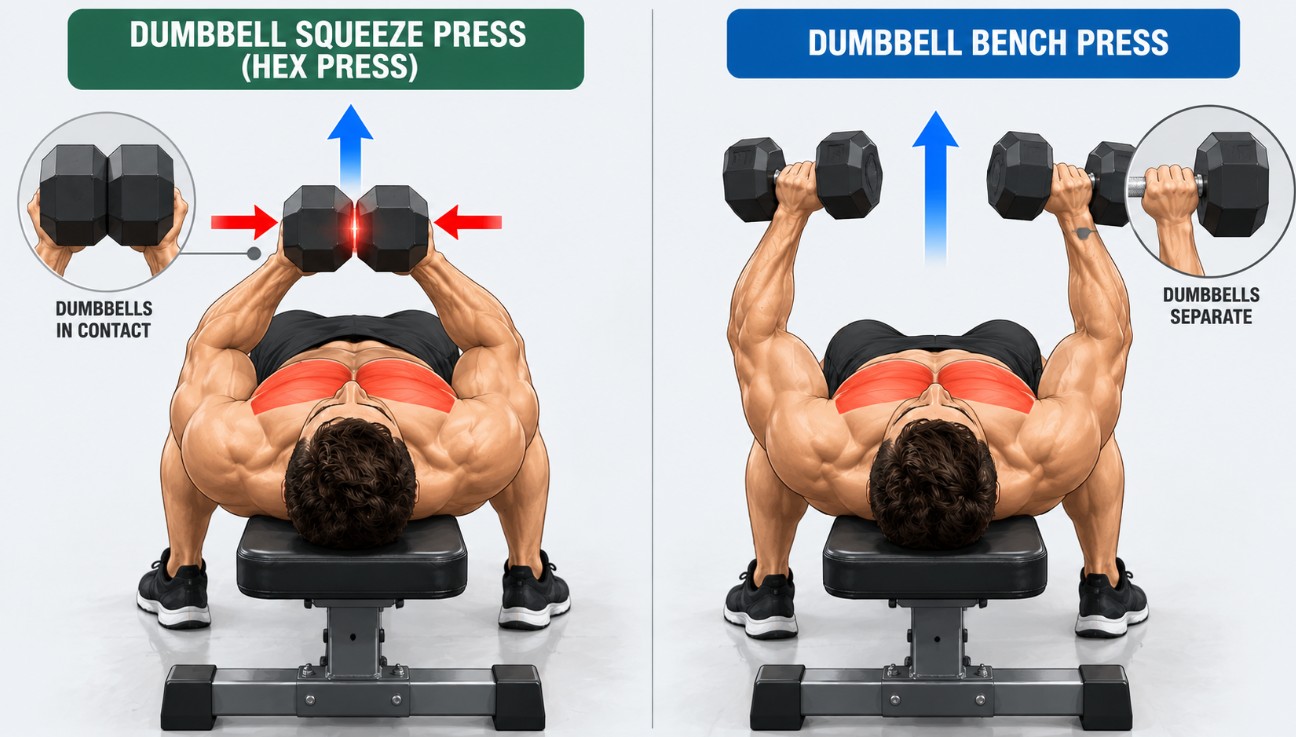
| Criteria | Dumbbell Squeeze Press | Dumbbell Bench Press |
|---|---|---|
| Grip | Neutral, dumbbells pressed together | Pronated or neutral, wider |
| Chest Tension at the Top | High (active squeeze) | Low |
| Stretch at the Bottom | Smaller | Larger |
| Typical Load | Lighter | Heavier |
| Triceps Involvement | Higher | Moderate |
| Shoulder Stress | Lower | Moderate |
| Best For | Chest contraction, finishers, shoulder-friendly pressing | Strength, size, stretch-focused pressing |
The regular dumbbell bench press remains the better choice for heavy loading and training the chest in a deep stretched position. It is one of the foundational chest exercises and should form the core of most dumbbell-based chest programs.
The squeeze press complements it perfectly by providing constant tension and a strong contraction at the top, where the regular press is weakest. Using both in the same program covers the chest’s full strength curve. If you’re deciding between dumbbells and a barbell in general, read our comparison of dumbbells vs. barbells.
Final Thoughts
The dumbbell squeeze press is a simple but highly effective way to add constant tension to your chest training. By pressing the dumbbells together throughout the set, you force the chest to work in both directions at once, creating a contraction that is easy to feel and hard to replicate with other exercises.
Use hex dumbbells, choose a lighter weight than usual, and never let the squeeze fade. Combined with a heavier press such as the dumbbell bench press or a stretch-focused movement like the dumbbell fly, the squeeze press can become a valuable part of a well-rounded chest routine.
Frequently Asked Questions
What is the dumbbell squeeze press?
The dumbbell squeeze press is a chest exercise in which you press two dumbbells held firmly together with a neutral grip while lying on a flat bench. The active squeeze keeps tension on the chest throughout the entire movement.
Is the squeeze press the same as the hex press?
Yes. The names are used interchangeably. It is called the hex press because it is usually performed with hexagonal dumbbells, whose flat sides make it easier to keep the weights pressed together.
What muscles does the dumbbell squeeze press work?
The squeeze press primarily targets the pectoralis major. The triceps brachii and anterior deltoids assist the press, while the rotator cuff and serratus anterior help stabilize the shoulders.
Does the squeeze press build the inner chest?
You cannot isolate the “inner chest” as a separate muscle, since the pectoralis major contracts along its entire length. The squeeze press trains the whole chest, but the constant squeeze makes the contraction especially easy to feel near the midline.
Is the squeeze press better than the regular dumbbell bench press?
Neither is strictly better. The regular dumbbell press allows heavier loads and a deeper stretch, while the squeeze press offers constant chest tension and is easier on the shoulders. Many lifters use both in the same program.
How heavy should the dumbbells be for the squeeze press?
Use dumbbells noticeably lighter than your regular dumbbell press. Choose a weight that lets you keep the dumbbells pressed together for every rep of the set. If they start to separate, the weight is too heavy.
Can I use round dumbbells for the squeeze press?
You can, but hex dumbbells work better, as their flat sides stay in contact without rolling. With round dumbbells, press the handles and heads together firmly and use a slightly lighter weight.
Where should the dumbbells touch my chest?
Lower the dumbbells to your lower or mid-chest, around the bottom of your sternum. This position keeps the elbows tucked and the shoulders in a comfortable, stable position.
Is the squeeze press good for people with shoulder pain?
It is often better tolerated than wide-grip pressing because the narrow neutral grip keeps the elbows close to the body. Anyone with persistent shoulder pain should still consult a medical professional before training through it.
Can I do the squeeze press without a bench?
Yes. The floor squeeze press is performed lying on the floor, which limits the range of motion slightly but keeps all the benefits of the squeeze. It is a great option for home training.
