


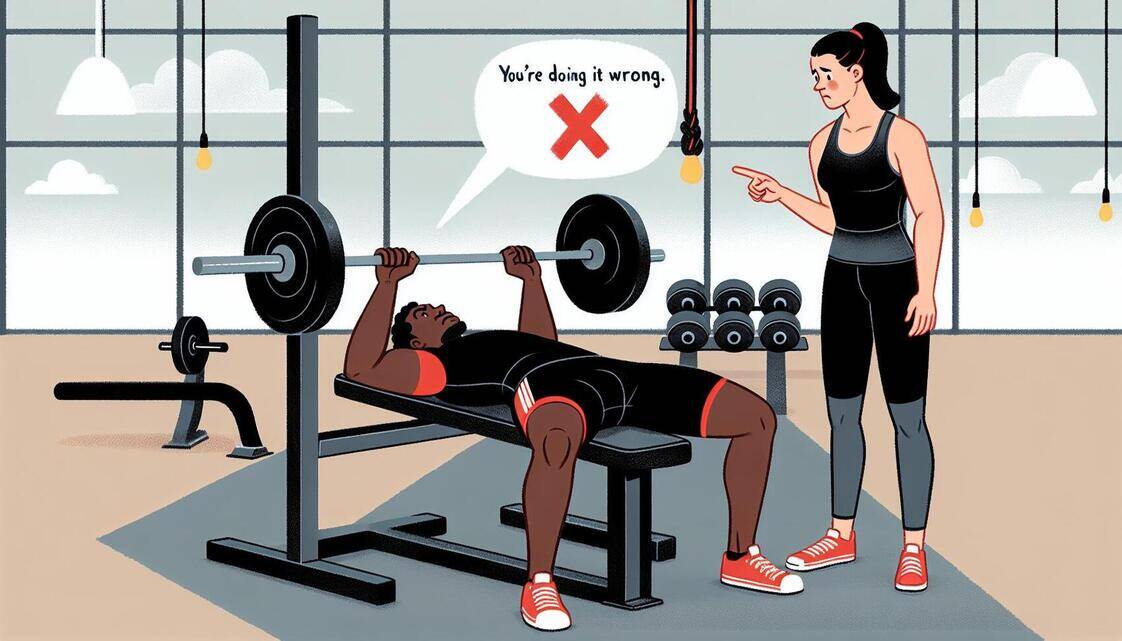
I’ve been coaching athletes and everyday gym-goers for over a decade, and if there’s one lift that consistently gives people trouble, it’s the bench press. This powerhouse exercise can help build a strong chest, shoulders, and triceps, but it’s also riddled with pitfalls that can hamper your progress. You might think you know your way around a barbell, but let me tell you, even seasoned lifters make some critical mistakes. Trust me, I’ve seen it all!
If your goal is to sculpt a massive chest, the bench press simply cannot be skipped. While push-ups are a great exercise in their own right, they just don’t match the muscle-building power of a well-executed bench press. Embrace this foundational lift and watch your chest gains soar!
When you’re bench pressing, the smallest errors can lead to significant setbacks or even injuries. But don’t worry—I’m here to guide you through the most common bench press mistakes and how to avoid them.
1. Lifting Too Much Weight
One of the most common bench press mistakes is trying to lift too much weight too soon. This often stems from a desire to hit milestone weights or keep up with peers. Unfortunately, overloading the bar can compromise your form, make you more susceptible to injury, and actually impede your progress over time. Common signs you’re lifting too much include struggling to control the bar, relying heavily on spotters, or frequently failing your reps.
Solution: Focus on gradual progression. Start with a weight that allows you to perform the exercise with proper form for all your reps and sets. Aim to increase the weight by small increments—about 5% to 10%—every week or two. This methodical approach helps you build strength safely and consistently. Additionally, listen to your body and avoid maximal lifts more than once a week to prevent overtraining and give your muscles enough time to recover.
2. Incorrect Grip Width
Your grip width plays a crucial role in the effectiveness and safety of the bench press. Gripping the bar too wide can place undue stress on your shoulders, potentially leading to injury over time. On the other hand, a grip that’s too narrow can limit your range of motion and affect your ability to lift heavier weights. 30% of bench press injuries are related to poor grip technique.
Solution: To find the right grip width, start by placing your small finger on the outer ring of the bar (if your bar has rings). Lower the bar to rest on your lower chest. If your forearms angle inward, your grip is too narrow; if they angle outward, your grip is too wide. Aim to have your wrists, forearms, and elbows stacked directly under the bar.
Incorporate this proper grip width into your bench press routine to stabilize your lift and reduce the risk of shoulder and wrist injuries. Adjust as necessary until you find the most comfortable and effective grip for your body.
3. Flaring Elbows Out
Flaring your elbows out wide during the bench press is a common issue that can severely impact your performance and increase the risk of injury. When your elbows flare out excessively, it places undue strain on your shoulder joints and reduces the power you can generate. Ideally, you should aim for an elbow angle between 45 to 70 degrees, which allows for a more efficient and safer lift. 70% of gym-goers experience shoulder pain due to improper bench press form.
Solution: To correct this, focus on tucking your elbows in slightly as you lower the bar. This adjustment helps align the bar path more efficiently with the chest fibers and reduces shoulder strain. Additionally, keeping your forearms vertical as you bring the bar down will help maintain the proper elbow angle. Practicing this form not only safeguards your joints but also maximizes the drive you gain from your chest and triceps muscles.

4. Inadequate Warm-Up
Warming up is not just an optional part of your workout; it is crucial to your bench press performance and overall safety. Skipping or half-heartedly going through a warm-up can set you up for poor lifts and increase the chances of injury. An optimal warm-up should get your heart rate up and your body sweating within 15 minutes. 25% of bench press injuries are due to lifting too heavy without proper warm-up.
Solution: Here’s how to do it right: start with some mobility exercises to loosen up your joints, followed by activation drills to wake up your muscles. Finally, get into light loading with warm-up sets that gradually increase in weight. This structured approach ensures you’re primed and ready, significantly decreasing the likelihood of injury and improving your overall performance.
5. Not Using Your Legs
One common mistake during the bench press is not utilizing your legs effectively. This error can severely limit your power and stability, making it harder to lift heavier weights. When you don’t engage your legs, you’re missing out on a crucial force transfer from your lower body to your upper body, which is essential for a strong and steady lift.
Solution: Proper foot placement is key. Make sure your feet are firmly planted on the ground with a slight backward angle, creating a solid base. Focus on driving through your heels as you press the bar up, almost as if you’re trying to push your feet through the floor. This will help engage your quads and glutes, providing additional support and stability. Keep your chest lifted and your back slightly arched to maximize this leg drive, making your bench press more powerful and efficient.
6. Improper Bar Path
Many lifters don’t realize that the path the bar follows during a bench press is crucial for optimizing strength and minimizing injury risk. If the bar doesn’t follow a straight, efficient path, you’re likely not hitting the correct muscles adequately, and you may be placing unnecessary stress on your shoulders and wrists.
An improper bar path often looks like a looping or zigzag motion, which can throw off your balance and form. This mistake typically results from either an incorrect set-up or failure to engage important muscle groups such as the lats and upper back. Essentially, you’re wasting energy and not getting the most out of your lift.
How to Fix It:
- Focus on the bar path: Aim to lower the bar to your lower chest or nipple line to ensure your elbows stay in a proper position.
- Ensure a straight line: From the moment you unrack the bar, it should move in a near-straight line down and up. Visualize pressing the bar up and slightly back towards your head as you extend your arms.
- Strong set-up: Position the bar directly over your eyes when unracked, and keep your wrists stacked over your elbows.
- Engage your lats and upper back: This provides a stable base and helps maintain the linear path.
By refining the bar path, you’ll find your bench press more efficient and your likelihood of injury greatly reduced.
7. Arching Your Back Excessively
When you arch your back excessively during a bench press, you’re not just risking injury, you’re also limiting the effectiveness of your workout. This mistake usually stems from trying to lift more weight than you can handle, causing your lower back to bear the brunt of the load. This excessive arching can put undue stress on your spine and intervertebral discs, leading to potential long-term damage.
How to avoid this mistake:
- Focus on the thoracic arch: Engage your upper back and thoracic spine to create a natural, slight arch. Your lower back should remain stable and not take on excessive pressure.
- Keep the glutes on the bench: Ensuring your glutes stay firmly planted helps to prevent exaggerating the arch in your lower back.
- Lift the chest: Instead of arching your lower back, lift your chest towards the bar to shorten the range of motion and increase power generation.
- Use proper weight: Reduce the temptation to arch by lifting a weight you can manage with proper form. Prioritize technique overload to ensure a safer and more effective workout.
- Consistent practice: Regularly practice bench press with a focus on maintaining the natural curve of your spine and proper engagement of your upper back muscles.
8. Inconsistent Rest Periods
When your rest periods are all over the place, your body doesn’t get the consistent recovery it needs between sets. This inconsistency can lead to less effective workouts and slower gains, as your muscles aren’t fully prepared to handle the next lift. Moreover, it messes with your ability to gauge progress since your performance can vary widely depending on how rested you are.
Solution: Keep your rest periods between sets consistent. Ideally, for strength training, rest 3-5 minutes between heavy sets to allow your muscles and central nervous system to recover fully. For hypertrophy, a rest period of 1-2 minutes may be more effective. Use a timer to keep track, and avoid distractions that could extend your rest time unintentionally.
9. Not Engaging Your Upper Back
One of the most overlooked yet crucial elements in executing a successful bench press is engaging your upper back. When you fail to activate these muscles, you compromise the stability and efficiency of your lift. This often leads to common form issues such as a flat back, which reduces upper back support or allows your shoulders to roll forward, causing undue strain and less engagement from your chest.
Solution: To rectify this, start by retracting your shoulder blades before you even begin the lift. Think of pinching them together and down onto the bench. This action not only stabilizes your shoulder joints but also creates a strong platform from which to press. Additionally, maintain a slight arch in your thoracic spine to keep your chest lifted, ensuring that your shoulders don’t take over the movement. By engaging your upper back, you distribute the load more evenly and can lift more efficiently and safely.
10. Neglecting Progressive Overload
Without gradually increasing the weight or intensity, your muscles will not grow stronger, leading to plateaus. Solution:
Solution: Implement progressive overload by gradually increasing the weight, reps, or sets. Maintain a workout log to track your progress and make small adjustments over time.

11. Partial Range of Motion
Ignoring the importance of a full range of motion can significantly impair your progress. When you decrease the range of motion (ROM), you inadvertently limit the muscle engagement and the overall effectiveness of the exercise. This often results in incomplete muscle development and can cause imbalances. For instance, in the bench press, reducing the ROM might let you lift heavier weights, but you’re sacrificing form and function for numbers.
Solution: To avoid this pitfall, ensure you lower the bar all the way down until it touches your chest before pressing it back up. This full ROM maximizes muscle activation and promotes balanced strength development. Also, maintain proper elbow positioning, aiming for an angle between 45 and 70 degrees to prevent unnecessary strain. Including accessories like dumbbell presses can help reinforce using a full ROM, as they naturally allow for a greater range of movement compared to the barbell bench press.
A pro tip is to focus on your chest level while pressing back up. If you feel any discomfort, it might be a sign that you need to adjust your form or gradually increase your range of motion. Always prioritize quality over quantity for sustained progress and injury prevention.
12. Failing to Maintain a Consistent Tempo
Tempo is the speed at which you perform each phase of the bench press, including the eccentric (lowering) and concentric (lifting) movements. Failing to maintain a consistent tempo can disrupt your muscle engagement and hinder your strength development. Many lifters rush their reps, making it difficult to focus on proper form and muscle control.
Solution: Set a specific tempo for your bench press routine and stick to it. A common approach is to lower the bar in three seconds, pause for one second, and press it up in one second. This controlled pace ensures you’re engaging the correct muscles and maximizing the efficacy of each rep. Additionally, using a metronome app or counting in your head can help you maintain consistency and prevent rushing through the exercises.
13. Bouncing off the Chest
Bouncing the bar off your chest can be tempting when you’re struggling with heavier weights, but it’s a surefire way to impede your progress and risk injury. When you bounce, you’re essentially using the recoil to cheat the rep, which diminishes muscle engagement and control. This can lead to muscle imbalances and even serious injuries like rib damage or a torn pectoral muscle.
Solution: Focus on controlling the descent of the bar. Lower the weight slowly and touch your chest lightly. Pause briefly at the bottom before pressing the bar back up. This controlled movement ensures that your muscles are fully engaged throughout the lift. Additionally, consider reducing the weight if you find it difficult to avoid bouncing. Mastering the movement with lighter weights builds a solid foundation of strength and control, which you can then progressively overload with heavier weights over time.
14. Not Keeping Your Butt on the Bench
When you lift your butt off the bench during a bench press, you effectively recruit more muscle groups, which may make the lift feel easier. However, doing so puts undue stress on your lower back, risking injury and reducing the exercise’s effectiveness for your chest and triceps.
Solution: To keep your butt on the bench, focus on engaging your glutes and maintaining a stable, flat position throughout the lift. You can also try driving your feet onto the floor to increase stability. Ensure your bench height and foot placement allow you to keep your glutes in contact with the bench without arching excessively or straining your spine.
15. Not Retracting the Shoulder Blades
Failing to retract your shoulder blades is a common bench press mistake that can undermine your performance. When you don’t pull your shoulder blades back and down, you lose a crucial component of stability. This not only makes the lift less efficient but also puts undue stress on your shoulders, increasing the risk of injury. Moreover, loose shoulder blades result in a longer bar path, making it more difficult to complete the lift successfully.
Solution: Here’s how you can fix this:
- Focus on Setup: Before you even start your lift, lie on the bench and actively squeeze your shoulder blades together. Think about trying to hug the bench with your upper back.
- Keep Them Retracted: Maintain this retracted position throughout the entire lift. Your shoulder blades should be pressed firmly into the bench from start to finish.
- Enhance Stability: With your shoulder blades retracted, keep your head, shoulder blades, and butt in constant contact with the bench. This provides maximum stability and leverage for a stronger press.
- Practice Regularly: Retracting your shoulder blades might feel unnatural at first. Include shoulder blade retraction drills into your warm-up routine to make it second nature.
Adopting these techniques will not only protect your shoulders but also enhance your overall bench press performance.
How can beginners identify if they are making these mistakes?
As a beginner, identifying your mistakes in the bench press can feel overwhelming. However, being aware of common errors is the first critical step in improving your form and technique. Let’s explore some practical ways to pinpoint these pitfalls early on so you can correct them before they hamper your progress.
- Self-Observation: Use mirrors or record yourself to analyze your form.
- Feedback from Experienced Lifters: Ask for tips and pointers from seasoned gym-goers or trainers.
- Pain and Discomfort: Pay attention to any pain or discomfort during or after lifting; it often signals improper form.
- Stalled Progress: If you’re not seeing improvements over time, you might be making one of these mistakes.
- Uneven Lifting: Notice if one side of the bar is consistently higher than the other during your lift.
- Unstable Bar Path: Check if the bar is moving in an inconsistent or shaky manner.
- Fatigue Onsets Early: Feeling excessively tired early in your set can indicate improper technique.
- Consult Resources: Use online tutorials, guides, or fitness apps that show proper form and common mistakes.
Conclusion
Understanding and addressing these common bench press mistakes can transform your training experience, making each session more effective and injury-free. Remember to focus on both form and function; perfecting your technique ensures that you’re not just lifting heavier but lifting smarter. Start incorporating these tips into your workouts, and you’ll likely see noticeable improvements in both your strength and muscle development. Happy lifting!
