


Introduction
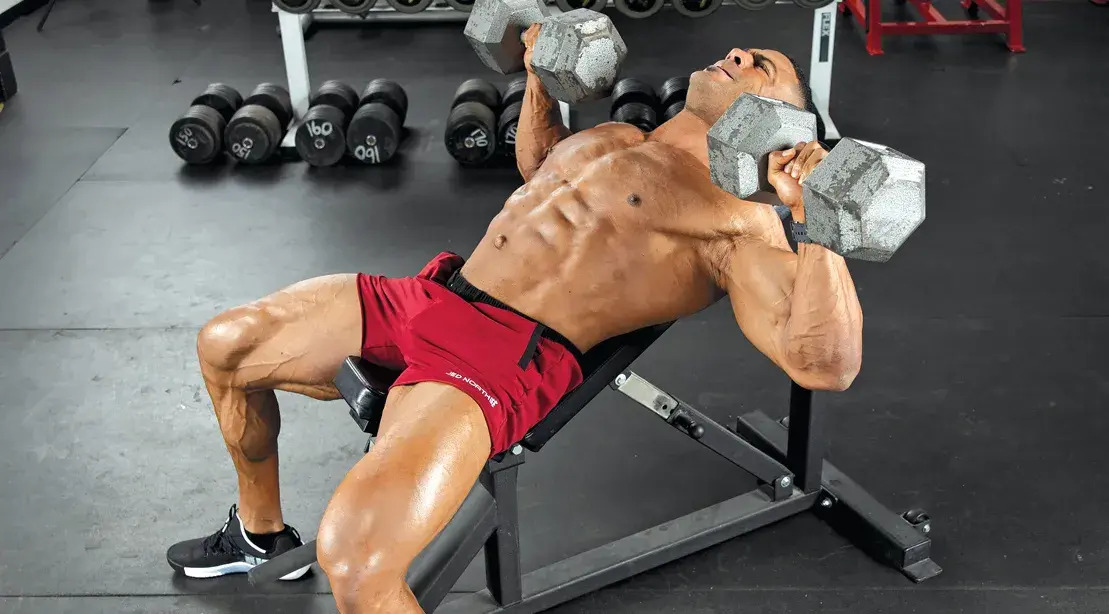
The Incline Dumbbell Bench Press is one of the most effective upper-chest exercises for building balanced chest development, pressing stability, and hypertrophy across the clavicular fibers of the pectoralis major. By inclining the torso, the direction of pressing shifts the mechanical load to the upper chest while still allowing significant loading. Compared with barbell pressing variations, dumbbell pressing requires each arm to move independently, increasing stabilization demands and improving muscular balance between the left and right sides of the body.
When performed with proper bench angle selection, controlled eccentric tempo, and stable scapular positioning, the incline dumbbell press effectively recruits the upper chest, engaging the anterior deltoids and triceps. Because the movement allows a greater range of motion than barbell pressing, many lifters experience improved mind-muscle connection and deeper stretch-mediated hypertrophy stimulus, making it a cornerstone exercise in upper-chest-focused training programs.
Required Equipment
Performing the incline dumbbell press requires only a few standard pieces of gym equipment, making it accessible in nearly all training environments.
- Adjustable incline bench
- Pair of dumbbells
- Optional: spotter for heavier sets
Execution Guide for the Incline Dumbbell Bench Press
A. Initial Setup
Correct bench positioning and shoulder-blade stability determine how effectively the upper chest is loaded throughout the movement.
- Set the bench to approximately 30–45°.
- Sit on the bench with dumbbells resting on your thighs.
- Lie back while bringing the dumbbells to shoulder level.
- Keep feet flat on the floor to establish full-body stability.
- Retract and depress the shoulder blades to create a stable pressing platform.
- Hold the dumbbells slightly wider than shoulder-width apart, with palms facing forward or inward.
- Maintain a slight natural arch in the lower back while keeping glutes in contact with the bench.
Key cue: Keep the chest lifted and shoulders pulled back before initiating each repetition.

B. Pressing Phase
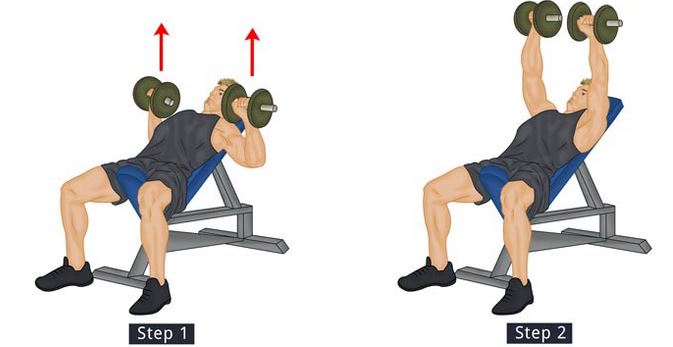
The objective is to control pressing along an angled path while maintaining symmetrical arm movement.
- Inhale and slowly lower the dumbbells toward the upper chest.
- Keep elbows positioned approximately 30–60° away from the torso.
- Lower until the upper arms reach chest level or a comfortable stretch is achieved.
- Pause briefly at the bottom to eliminate momentum.
- Exhale and press the dumbbells upward until the arms are nearly straight.
- Bring the weights together at the top without allowing them to collide.
- Lower again along the same path under full control.
Movement path: The dumbbells travel in a slightly arcing path downward toward the upper chest and return along the same controlled trajectory.
Technique Optimization Tips
Small adjustments in body positioning and pressing mechanics can significantly enhance upper-chest activation and movement efficiency.
- Select a moderate incline angle to maintain chest emphasis rather than shoulder dominance.
- Lower the dumbbells slowly to increase stretch-mediated hypertrophy stimulus.
- Maintain shoulder-blade retraction throughout the set.
- Keep forearms approximately vertical at the bottom position.
- Avoid touching the dumbbells together at the top to maintain continuous tension.
- Focus on pressing through the elbows rather than the hands.
- Keep your feet firmly planted to stabilize your torso.
- Use symmetrical tempo to ensure balanced left-to-right development.
- Avoid excessive elbow flare that may increase shoulder stress.
Resistance Curve Insight
Because dumbbells move freely in space, resistance is governed by gravity and changes relative to joint angles throughout the repetition. The bottom position, where the chest is stretched and the elbows are flexed, often presents the greatest mechanical challenge due to less favorable leverage. As the dumbbells move toward lockout, leverage increases, making the movement easier.
This resistance profile makes the incline dumbbell press particularly effective for hypertrophy training, as the deeper stretch and longer range of motion generate strong mechanical tension in the lengthened position—a key factor associated with muscle growth.
Video Demonstration — Incline Dumbbell Bench Press Technique
Watching the movement performed correctly helps reinforce proper bench setup, dumbbell positioning, and pressing mechanics. Focus on maintaining shoulder stability, symmetric arm movement, and a controlled tempo throughout the full range of motion to ensure balanced muscle recruitment and safe execution.

Frequent Technical Errors in the Incline Dumbbell Bench Press
Even well-trained lifters occasionally make small technical mistakes that reduce effectiveness or increase shoulder stress.
- Setting the bench angle too steep and shifting the emphasis to the shoulders
- Allowing the shoulders to roll forward during pressing
- Lowering the weights unevenly between sides
- Using excessive weight that shortens the range of motion
- Colliding the dumbbells together at the top
- Losing foot stability and lifting the feet from the floor
- Descending too quickly and losing control
- Lowering the dumbbells too far can cause shoulder injury; it is safer to terminate the descent when the dumbbells reach chest level
Muscles Engaged in the Incline Dumbbell Bench Press
Understanding muscle involvement helps optimize technique and programming.
Primary Muscles

Secondary Muscles
Stabilizers
The only difference between this exercise and the incline barbell bench press is that, in order to stabilize the dumbbells, your body needs to recruit more muscle fibers to keep the weight balanced.
A mistake I regularly notice in the gym is lifters setting the incline bench much higher than necessary, unintentionally shifting most of the workload to the shoulders. When the bench angle is adjusted slightly downward and the focus shifts to keeping the elbows positioned directly under the weights, the upper chest immediately becomes far more involved in the press.
One coaching method that consistently improves control is introducing a brief pause in the bottom position. Holding the dumbbells or bar for a moment on the upper chest removes momentum, stabilizes the movement, and makes it much easier to maintain proper pressing mechanics — particularly for lifters who struggle to feel the upper portion of the chest working during incline pressing.
Incline Dumbbell Bench Press Variations
Several incline dumbbell press variations allow adjustments in stability demand, muscle emphasis, and training stimulus.
- Neutral-grip incline dumbbell press – Palms facing each other reduces shoulder stress and may improve pressing comfort. The neutral-grip position emphasizes the triceps while also reducing strain on the shoulder joints.

- Variable-Grip Incline Dumbbell Bench Press. Rotate your wrists inward by 90 degrees as you lift, so your palms are oriented toward each other at the top of the motion (neutral grip). Then rotate your wrists back as you lower the weight to return them to the starting position (palms facing forward). In other words, rotate the dumbbells during the press so your palms face each other at lockout.

- Alternating incline dumbbell press: Pressing one arm at a time increases core-stability demands and corrects imbalances.
- Low-incline dumbbell press – A lower bench angle slightly increases overall chest contribution.
- Incline dumbbell squeeze press – Pressing dumbbells together increases chest contraction intensity.
- Paused incline dumbbell press – Pausing at the bottom improves control and strength of the chest.
- Single-arm incline dumbbell press – Enhances unilateral strength and coordination.
Key Benefits of the Incline Dumbbell Bench Press
This exercise offers multiple performance and hypertrophy benefits, making it a staple in upper-chest training programs.
- Greater range of motion compared to barbell pressing
- Improved muscular balance between the left and right sides
- Enhanced upper-chest activation due to independent arm movement
- Reduced joint stress from the natural pressing path
- Effective hypertrophy stimulus from stretch-mediated tension
- Strong carryover to other pressing exercises
- Suitable for both beginners and advanced lifters
- Excellent secondary compound movement after heavy barbell pressing
Alternative / Replacement Exercises
If you want to diversify your training, several pressing movements effectively target the upper chest. Explore the full selection in our Upper Chest Exercise Database, where all incline pressing movements are categorized in one place.
- Incline barbell bench press
- Smith-machine incline bench press
- Incline dumbbell champagne press
- Machine incline press
- Decline push-ups
- Incline cable press
Incline Dumbbell Bench Press vs. Incline Barbell Bench Press
| Criteria | Incline Dumbbell Bench Press | Incline Barbell Bench Press |
|---|---|---|
| Stability requirement | Higher | Moderate |
| Strength potential | Moderate | Higher |
| Range of motion | Greater | Moderate |
| Muscle balance development | Higher | Moderate |
| Progressive overload | Moderate | Easy |
| Shoulder comfort | Often higher | Moderate |
| Skill requirement | Moderate | Moderate |
Conclusion: Dumbbells excel at improving range of motion, muscular balance, and stabilization demands, whereas the barbell incline press allows greater loading for maximal strength development. Using both exercises within a training program typically produces the best upper-chest hypertrophy results.
Dumbbells are often underestimated because they usually require lighter weights than barbells, yet in practice they can be even more demanding. Since each arm moves independently, stabilizing muscles must work continuously to control the weights, which often makes sets feel harder despite the lower load.
When coaching lifters who struggle to “feel” their upper chest during barbell pressing, I frequently switch them to incline dumbbells for several training cycles. The increased range of motion and freedom of movement allow the shoulders to settle into a more natural path, and many athletes immediately notice stronger chest activation and improved pressing control.
Progression Tips for Beginners
Beginners often find dumbbell pressing slightly unstable at first, which is completely normal. Early training should focus on coordination and symmetrical movement before gradually increasing load.
- Begin with light dumbbells to learn the correct pressing path.
- Practice symmetrical lowering and pressing to avoid strength imbalances.
- Perform multiple warm-up sets before working sets.
- Increase weight gradually once 12 controlled repetitions can be completed.
- Maintain a full range of motion while progressing the load.
- Use a spotter when attempting heavier sets.
Where This Exercise Fits in a Workout
Perform 3–4 sets of 8–15 repetitions using controlled tempo. The incline dumbbell bench press is best used as a primary hypertrophy movement early in upper-chest workouts, or as a secondary pressing exercise after incline barbell presses.
Final Thoughts
The incline dumbbell bench press remains one of the most effective exercises for developing the upper chest due to its extended range of motion, independent arm movement, and strong hypertrophy stimulus. When performed with proper incline angle, stable scapular positioning, and controlled tempo, the exercise delivers consistent mechanical tension to the clavicular fibers of the pectoralis major. When combined with barbell and cable pressing variations, it plays a key role in achieving balanced chest development and long-term progression in pressing strength.
What muscles does the incline dumbbell bench press work?
The incline dumbbell bench press primarily targets the upper portion of the pectoralis major while also engaging the anterior deltoids, triceps, and stabilizing shoulder muscles.
Is incline dumbbell bench press better than barbell incline press?
Neither is universally better. Dumbbells provide greater range of motion and muscle balance development, while barbells allow heavier loading for maximal strength.
What is the best bench angle for incline dumbbell press?
A bench angle between 30° and 45° typically provides the best balance of upper-chest activation and shoulder comfort.
Why can I lift less weight with dumbbells than with a barbell?
Because each arm works independently, additional stabilizing muscles must engage, which usually reduces the amount of weight that can be lifted.
Should beginners use incline dumbbell bench press?
Yes, beginners can benefit from the exercise because it improves coordination, stability, and muscle balance while allowing controlled progression.
How many sets of incline dumbbell bench press should I do?
Most hypertrophy programs recommend 3–4 sets of 8–15 repetitions depending on training experience and goals.
Does incline dumbbell press build the entire chest?
Yes, the entire chest is activated, but the incline angle places slightly greater emphasis on the upper chest fibers.
Should dumbbells touch at the top of the press?
No, keeping the dumbbells slightly apart maintains continuous muscle tension and better chest activation.
Can incline dumbbell press replace barbell pressing?
It can temporarily replace it, but combining both movements generally produces the best chest development.
Is incline dumbbell press safe for shoulders?
When performed with proper bench angle and shoulder-blade positioning, the exercise is generally shoulder-friendly and allows a natural pressing path.
