


Introduction
The incline barbell bench press is one of the most effective compound pressing exercises for developing upper-chest thickness, pressing strength, and balanced chest aesthetics. By positioning the torso at an incline, the movement shifts mechanical emphasis toward the clavicular (upper) fibers of the pectoralis major while still allowing substantial load capacity compared with many machine or cable variations. For this reason, the incline barbell press is a foundational exercise in hypertrophy-focused chest programs and strength-development routines.
When performed with the correct bench angle, scapular positioning, and controlled pressing mechanics, the exercise strongly recruits the upper chest and engages the anterior deltoids and triceps as assisting muscles. Because the movement requires full-body stabilization, it also develops pressing coordination and strength transfer that benefits many other pushing exercises.
Equipment Needed
To perform the incline barbell bench press safely and effectively, only standard free-weight equipment is required.
- Incline adjustable bench
- Barbell and weight plates
- Bench press rack, or power rack
- Optional: spotter for heavy sets
Step-by-Step Instructions for the Incline Barbell Bench Press
A. Starting Position (Setup)
Proper bench angle, scapular positioning, and grip width strongly influence upper-chest activation and pressing mechanics.
- Adjust the bench to approximately 30–45 °.
- Lie back on the bench with your head, upper back, and glutes firmly supported.
- Place your feet flat on the floor to create a stable base.
- Retract and depress the shoulder blades to create a stable pressing platform.
- Grip the bar slightly wider than shoulder width using a pronated grip.
- Unrack the bar with straight arms and position it above the upper chest.
- Maintain a slight natural arch in the lower back while keeping glutes in contact with the bench.
Key cue: Keep the chest lifted and shoulder blades locked back before beginning each repetition.

B. Movement (Execution)
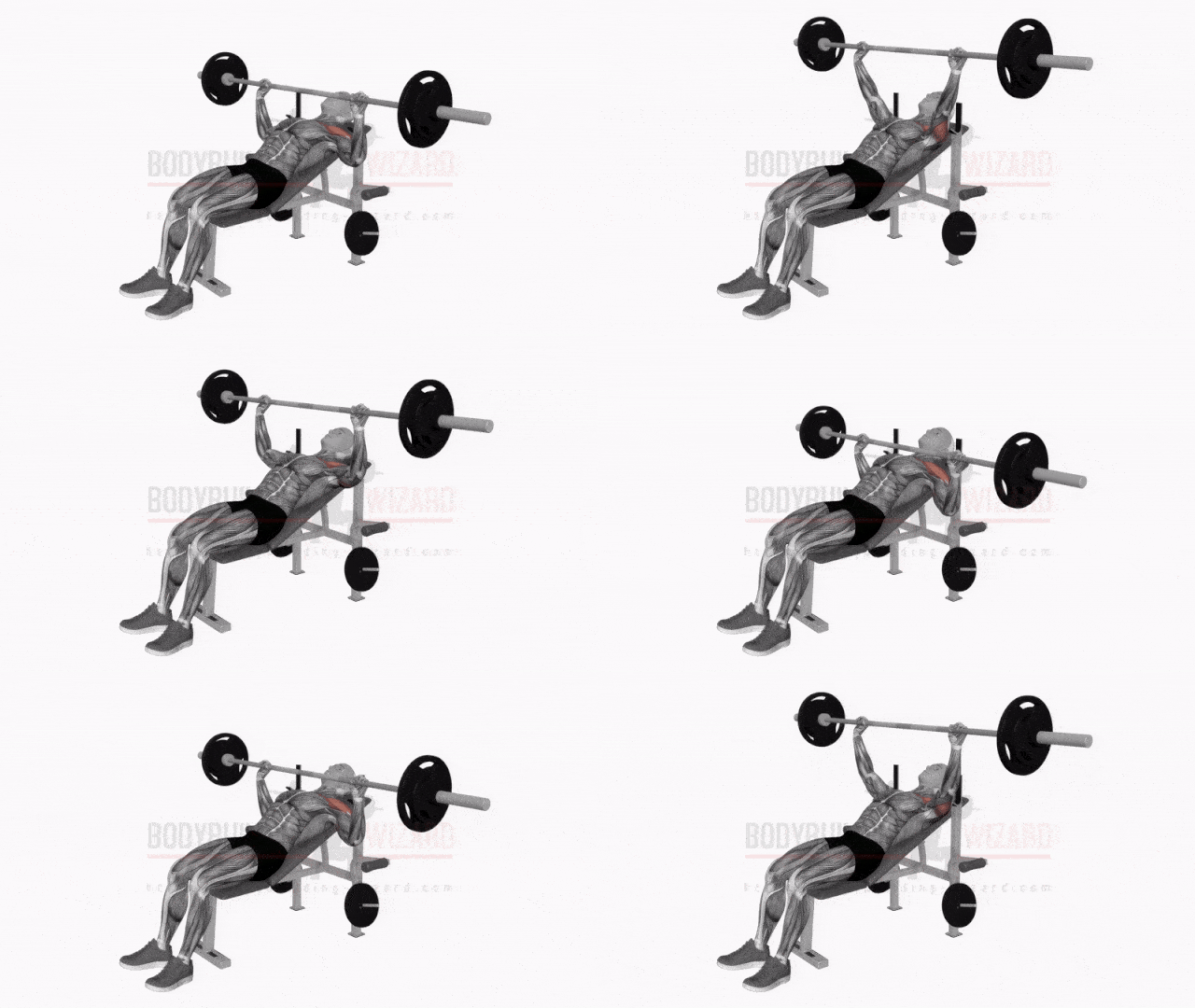
The goal of the movement is controlled pressing along a slightly angled path, keeping tension focused on the upper chest.
- Inhale and slowly lower the barbell toward the upper chest just below the collarbone.
- Keep elbows positioned approximately 30–60° away from the torso.
- Pause briefly at the bottom without bouncing the bar off the chest.
- Exhale and press the bar upward until the arms are nearly straight.
- Maintain shoulder-blade retraction and chest elevation throughout the movement.
- Lower the bar again under full control, maintaining the same movement path.
Movement path: The bar travels diagonally from above the shoulders down to the upper chest and returns along the same controlled path.
Performance Tips (Coach’s Cues)
Small technical adjustments can significantly improve upper-chest activation and pressing efficiency.
- Set the incline angle to 30 °- 45 ° to maximize upper-chest emphasis. Steeper inclines of 60 degrees or more switch focus to the anterior deltoid.
- Keep the shoulder blades retracted throughout the entire set.
- Lower the bar slowly to increase muscle tension and control.
- Maintain forearms nearly vertical when the bar reaches the chest.
- Drive the bar upward by pushing through the elbows rather than the hands.
- Keep the chest lifted and avoid collapsing the shoulders forward.
- Avoid locking the elbows aggressively at the top of each repetition.
- Use a spotter during heavy sets to ensure safety and build confidence in your performance.
- Focus on a controlled eccentric phase lasting 2–3 seconds.
Resistance Curve Insight
Because the incline barbell bench press uses free-weight resistance, the load relative to gravity remains constant throughout the movement, but mechanical leverage varies significantly across the range of motion. The bottom portion of the lift, where the elbows are flexed and the chest is stretched, typically presents the greatest mechanical challenge. As the bar approaches lockout, leverage improves, and the movement becomes easier.
Understanding this resistance profile enables lifters to apply techniques such as controlled eccentrics, paused repetitions in the stretched position, and moderate rep ranges to maximize the hypertrophic stimulus in the upper chest.
Video Demonstration — Incline Barbell Bench Press Technique
Watching a proper demonstration reinforces proper bench setup, bar path, and shoulder positioning. When performing the exercise, pay particular attention to maintaining a stable upper-back position, a controlled descent, and a consistent bar path toward the upper chest to ensure optimal upper-chest activation and safe pressing mechanics.
Common Mistakes in the Incline Barbell Bench Press
Even experienced lifters sometimes make technical errors that reduce effectiveness or increase the risk of injury.
- Setting the bench too steep, shifting emphasis to the shoulders
- Lowering the bar too low on the chest
- Allowing the shoulders to roll forward during pressing
- Using excessive weight that shortens the range of motion
- Bouncing the bar off the chest
- Lifting the feet off the floor and losing stability
- Flaring the elbows excessively
Progression Tips for Beginners
Beginners often find that the bar path feels unstable during the incline barbell bench press, which is completely normal. Early training stages should focus on learning proper bar control, consistent movement mechanics, and stable shoulder positioning before progressively increasing the load. Follow the progression steps below to build confidence and pressing strength safely.
- Start by practicing the movement with an empty Olympic bar to learn correct setup, bar path, and shoulder positioning.
- Perform multiple light warm-up sets to develop coordination and control before adding weight.
- Gradually increase the load in small increments while maintaining a stable bar path and full range of motion.
- Prioritize smooth, controlled repetitions rather than lifting heavier weights too early.
- Once you can perform 10–12 technically perfect repetitions for several sets, begin progressive overload by adding small weight increases each session.
- Consider using a spotter during early training sessions to build confidence and improve safety as you learn the movement.
- If stability remains a challenge, temporarily incorporate incline dumbbell presses or Smith-machine incline presses to reinforce pressing mechanics before returning to the barbell version.
Consistent technical practice during the first weeks of training significantly improves long-term pressing strength and helps prevent common beginner mistakes.
Muscles Engaged in the Incline Barbell Bench Press
Understanding the muscle involvement improves mind-muscle connection and programming decisions.
Primary Muscles
Secondary Muscles
Stabilizers
Let’s be honest for a moment — no chest exercise can truly isolate only one “part” of the pectoral muscle. The pectoralis major always contracts as a whole unit whenever you press, fly, or push. What changes from exercise to exercise is not which muscle works, but which fibers receive slightly more mechanical emphasis due to the angle of pressing and the direction of force.
The incline barbell bench press still trains the entire chest, but the inclined torso position shifts the stress slightly toward the clavicular (upper) fibers, which is why this movement plays such an important role in building a fuller, more balanced chest. Think of it not as isolating the upper chest, but as giving that region the extra stimulus it often lacks in flat pressing routines.
Incline Barbell Bench Press Variations
Several variations allow adjustments in muscle emphasis, stability, and training stimulus.
- Incline dumbbell bench press – Using dumbbells increases range of motion and unilateral stability demands, often improving muscle balance and upper-chest activation.
- Smith machine incline press – The guided bar path improves stability and allows lifters to focus on controlled hypertrophy training.
- Reverse-grip incline bench press – A supinated grip may increase upper-chest recruitment while reducing shoulder stress for some lifters.
- Low-incline barbell press – Using a lower incline angle increases chest involvement while slightly reducing anterior-deltoid contribution.
- Pause incline bench press – Pausing at the bottom improves strength off the chest and enhances control.
- Incline close-grip bench press – A narrower grip increases triceps involvement while maintaining upper-chest activation.
Many lifters treat exercise variations as random alternatives, but in reality each variation should be selected based on a specific training goal. Small changes such as grip width, equipment choice, or stability level can meaningfully alter loading potential, muscle recruitment patterns, and joint comfort, which is why different incline pressing variations exist in the first place.
When your goal is maximal strength, heavier and more stable setups like the barbell incline press often work best. If the priority is muscle balance, joint comfort, or improved mind-muscle connection, dumbbells, machines, or paused variations may be the smarter option. The key is not asking which variation is “best,” but which variation best matches the adaptation you are trying to achieve in that phase of training.
Key Benefits of the Incline Barbell Bench Press
The incline barbell bench press offers several training advantages that make it a core upper-chest exercise.
- Strong emphasis on upper-chest hypertrophy
- Allows heavier loading compared to many incline machine variations
- Improves overall pressing strength
- Enhances shoulder stability and pressing coordination
- Develops balanced chest aesthetics by targeting undertrained upper fibers
- Transfers well to athletic pushing movements
- Provides progressive overload potential over long training cycles
- Suitable for both hypertrophy and strength programs
Alternative / Replacement Exercises
If you want to diversify your training, several pressing movements effectively target the upper chest. Explore the full selection in our Upper Chest Exercise Database, where all incline pressing movements are categorized in one place.
- Incline dumbbell bench press
- Smith-machine incline bench press
- Incline dumbbell champagne press
- Machine incline press
- Decline push-ups
Incline Barbell Bench Press vs. Flat Barbell Bench Press
| Criteria | Incline Barbell Bench Press | Flat Barbell Bench Press |
|---|---|---|
| Stability requirement | Moderate | Moderate |
| Strength potential | High | Highest |
| Upper-chest activation | High | Moderate |
| Chest isolation | Moderate | Moderate |
| Safety without a spotter | Moderate | Moderate |
| Skill requirement | Moderate | Moderate |
| Functional strength transfer | High | Very high |
Conclusion: The incline barbell bench press excels in targeting the upper chest and improving balanced chest development, while the flat bench press remains superior for maximal pressing strength. Combining both exercises within the same program typically produces the most complete chest development.
One of the most common things I see in the gym is lifters setting the incline bench far too steep — essentially turning the exercise into a shoulder press without realizing it. The moment I lower the angle slightly and cue them to “drive the elbows under the bar,” their upper chest suddenly starts working the way it should.
A simple coaching trick I use is asking lifters to pause the bar lightly on the upper chest for one second. That tiny pause eliminates momentum, improves control, and instantly makes the movement feel more stable and chest-dominant — especially for those struggling to feel their upper pecs during pressing movements.
Most lifters quickly notice that the weight they can handle on the incline barbell bench press is usually lower than on the flat bench press — and that is completely normal. The incline position reduces the mechanical contribution of the stronger middle and lower chest fibers while placing a greater portion of the workload on the upper chest and anterior deltoids, which are typically smaller and less powerful muscle groups.
In addition, the inclined torso changes the pressing angle and shoulder mechanics, often creating a slightly longer effective lever arm at the shoulder joint. This combination of altered muscle contribution and less favorable leverage explains why pressing strength is generally lower on incline movements. Rather than viewing this as a limitation, consider it a useful indicator that the exercise is successfully shifting the training emphasis toward the upper chest.
Where This Exercise Fits in a Workout
Perform 3–5 sets of 6–12 repetitions, depending on whether the goal is hypertrophy or strength development. The incline barbell bench press works best as the primary upper-chest compound movement early in the workout, followed by incline dumbbell presses, cable fly variations, or machine pressing exercises.
Conclusion
The incline barbell bench press remains one of the most effective upper-chest exercises for building pressing strength, muscular size, and balanced chest development. With proper bench angle selection, controlled bar path, and stable scapular positioning, the exercise delivers consistent mechanical tension to the clavicular fibers of the pectoralis major. When programmed alongside flat pressing and cable movements, it plays a crucial role in achieving complete chest hypertrophy and long-term gains in pressing strength.
What muscles does the incline barbell bench press work?
The incline barbell bench press primarily targets the upper (clavicular) portion of the pectoralis major while also engaging the anterior deltoids, triceps, and stabilizing muscles of the shoulder girdle.
What is the best bench angle for incline barbell bench press?
A bench angle between 30° and 45° generally provides the best balance between upper-chest activation and shoulder comfort.
Is incline bench press better than flat bench press?
Neither is universally better. Incline presses emphasize the upper chest, while flat presses allow greater overall pressing strength and balanced chest development.
Why can I lift less weight on incline bench press?
Incline pressing places more demand on the upper chest and anterior deltoids, which are typically weaker than the muscle groups used in flat bench pressing.
Should beginners perform incline barbell bench press?
Yes, beginners can safely perform the exercise using moderate loads and proper setup, ideally with a spotter for safety.
How many sets of incline barbell bench press should I do?
Most hypertrophy programs use 3–5 sets of 6–12 repetitions depending on the training goal.
Does incline bench press build the entire chest?
Yes, the entire pectoralis major is activated, but the incline angle increases emphasis on the upper chest fibers.
Can incline bench press replace flat bench press?
Incline presses can complement flat presses but typically should not completely replace them in balanced chest programs.
Should elbows be flared during incline bench press?
Moderate elbow positioning (approximately 30–60° from the torso) is generally safest and most effective for pressing strength.
Is incline bench press necessary for chest development?
While not mandatory, it is one of the most effective exercises for improving upper-chest thickness and balanced chest aesthetics.
