


Introduction
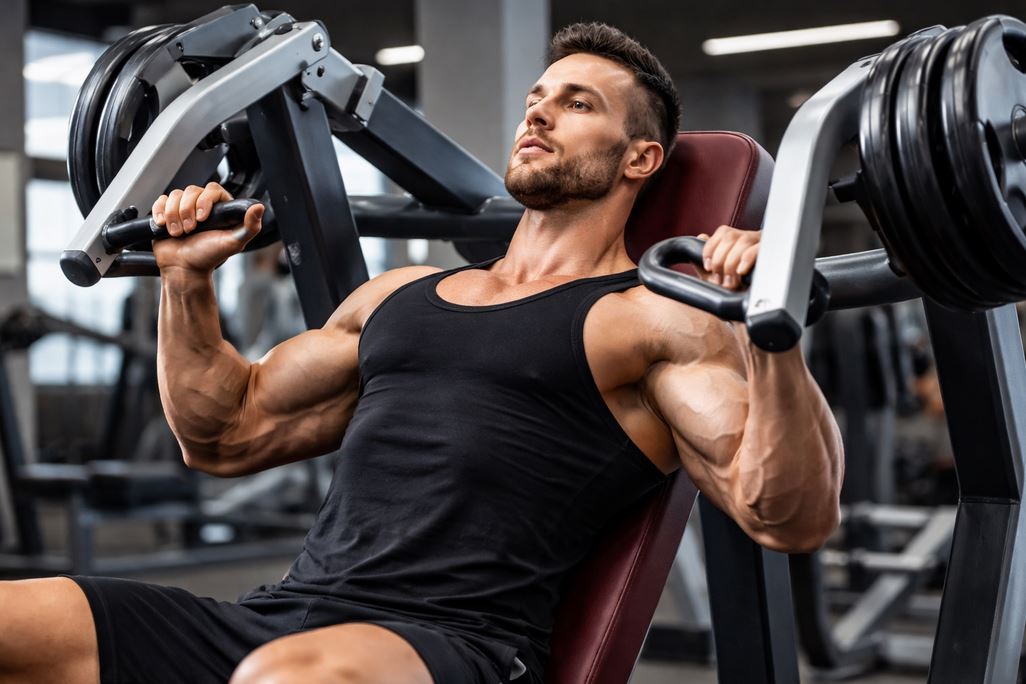
The Machine Incline Chest Press is a highly effective upper-chest pressing exercise that develops strength, muscular size, and controlled pressing mechanics, with a lower stability requirement than free-weight variations. By positioning the torso at an incline and guiding the movement along a fixed resistance path, the machine version allows trainees to focus almost entirely on chest activation, controlled tempo, and consistent repetition quality. For beginners and intermediate lifters, this often leads to faster technical learning and safer progressive overload.
When performed correctly, the machine incline chest press primarily targets the clavicular (upper) fibers of the pectoralis major, while the anterior deltoids and triceps assist the pressing motion. Because the machine stabilizes the load, many lifters experience improved mind-muscle connection and reduced shoulder strain compared with barbell or dumbbell incline presses, making the exercise valuable in both hypertrophy-focused programs and during rehabilitation or technique-refinement phases.
Required Equipment
The incline chest press machine requires only the machine itself, making setup quick and accessible in most commercial gyms.
- Incline chest press machine (selectorized or plate-loaded)
- Adjustable seat mechanism
- Optional: lifting gloves for grip comfort
How to Do the Machine Incline Chest Press?
Initial Setup
Correct machine adjustment determines how effectively the upper chest is loaded throughout the movement.
- Sit on the machine with your feet flat on the floor.
- Adjust the seat height so the handles align with the upper chest or shoulder level.
- Position your back firmly against the backrest with a neutral spine.
- Grip the handles using either a neutral or pronated grip.
- Retract the shoulder blades slightly and lift the chest.
- Position the elbows slightly below shoulder height for comfortable pressing mechanics.
Key cue: The handles should align with the upper chest rather than the mid chest.

Pressing Phase
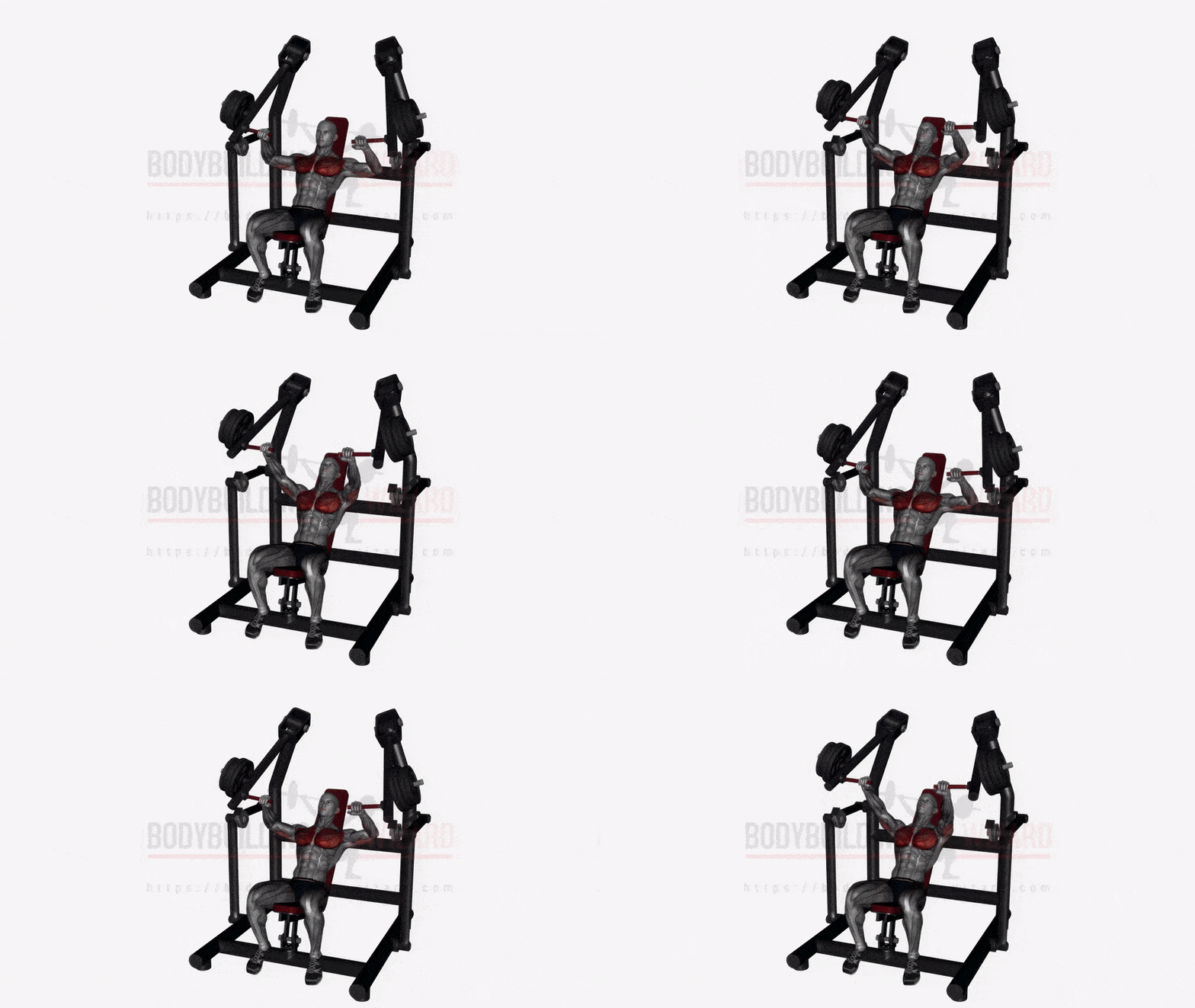
The objective is controlled pressing along the machine’s guided path while maintaining stable shoulder positioning.
- Inhale and slowly allow the handles to move toward your torso.
- Lower until the handles reach chest level while maintaining scapular stability.
- Pause briefly without relaxing muscular tension.
- Exhale and press the handles forward until your arms are nearly straight.
- Avoid aggressive elbow lockout at the top.
- Return along the same controlled path while maintaining continuous tension.
Movement path: The handles travel along a fixed diagonal pressing path determined by the machine design.
Technique Optimization Tips
Here are some important tips to improve pressing mechanics, maximize upper-chest activation, and maintain long-term shoulder safety during the incline chest press on a machine.
- Adjust the seat height before each set to match your body proportions.
- Keep the chest lifted and shoulders pulled back throughout the movement.
- Maintain constant tension by preventing the weight stack from touching between repetitions.
- Press through the elbows rather than focusing on the hands.
- Use controlled tempo during both the pressing and lowering phases.
- Keep the feet firmly planted for full-body stability.
- Avoid excessive forward shoulder movement during the press.
- Select a load that allows a full range of motion without compensation.
Mechanical Resistance Analysis
Most incline press machines use cams or lever systems designed to provide relatively consistent resistance throughout the range of motion. This stable resistance profile allows lifters to maintain continuous muscular tension during both the eccentric and concentric phases, making the exercise highly effective for hypertrophy-focused training. Because stabilization demands are reduced, trainees can often focus more effectively on controlled tempo and muscular contraction compared to free-weight pressing movements.
Common Mistakes
Even with machine guidance, technical mistakes can reduce effectiveness.
- Incorrect seat height leading to poor pressing mechanics
- Allowing the shoulders to round forward
- Locking elbows aggressively at the top
- Using excessive weight that shortens the range of motion
- Letting the weight stack rest between repetitions
- Losing foot stability during pressing
Muscles Involved in Machine Incline Chest Press
Whether using a barbell, a machine, or dumbbells, incline presses target the often lagging upper pecs.
- MAIN MUSCLES: upper pectoralis major (clavicular area), triceps, deltoids (anterior)
- SECONDARY MUSCLES: deltoids (medial), coracobrachialis, serratus anterior, subscapularis
- ANTAGONISTS: latissimus dorsi, biceps, deltoids (posterior)
Exercise Pros and Cons
The machine incline chest press offers several benefits that make it valuable across all training levels, but, like any exercise, it also has limitations to consider when designing a balanced training program.
Advantages
- Safe pressing option for beginners
- Reduced stabilization demands improve chest isolation
- Allows controlled tempo for hypertrophy training
- No spotter required
- Quick weight adjustments for efficient workouts
- Effective accessory movement after heavy free-weight pressing
- Supports consistent progressive overload
- Useful during rehabilitation or technique-refinement phases
Potential Drawbacks
- Lower stabilization demand may reduce functional strength transfer
- A fixed movement path may not perfectly match every individual’s shoulder mechanics
- Typically allows less maximal loading compared to free-weight pressing
- May reduce the development of coordination and stabilizing musculature
- Some machines offer limited adjustability for body proportions
One of the biggest advantages of machine pressing is the ability to focus purely on muscular contraction without worrying about balancing the load. When coaching beginners, I often start them on the incline press machine because it allows them to learn proper pressing mechanics and chest activation before progressing to more technically demanding free-weight movements.
Even advanced lifters benefit from including machine incline presses during hypertrophy phases. Because stability demands are reduced, it becomes easier to control tempo, perform higher-rep sets safely, and accumulate additional training volume without excessive joint stress.
Machine Incline Chest Press Variations
Different machine designs and grip choices can slightly alter muscle emphasis.
- Neutral-grip machine incline press (palms facing each other) – Provides a more natural shoulder position and may reduce joint stress.
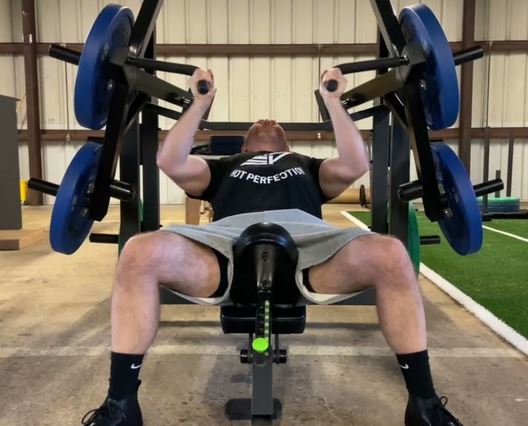
- Wide-grip incline machine press – Slightly increases chest activation by emphasizing horizontal adduction.
- Single-arm machine incline press – Helps correct strength imbalances and increases stabilization demand.
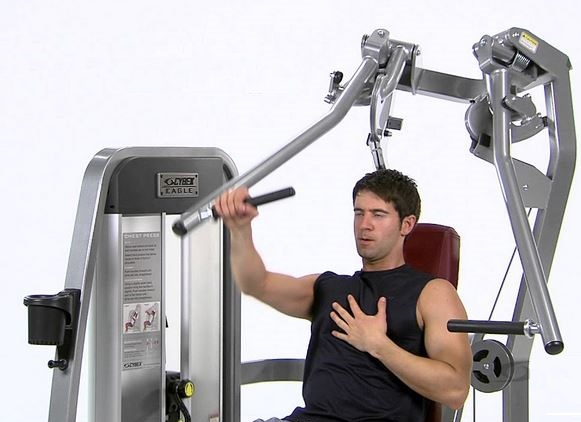
- Plate-loaded incline press machine – Allows heavier loading and more strength-focused training.
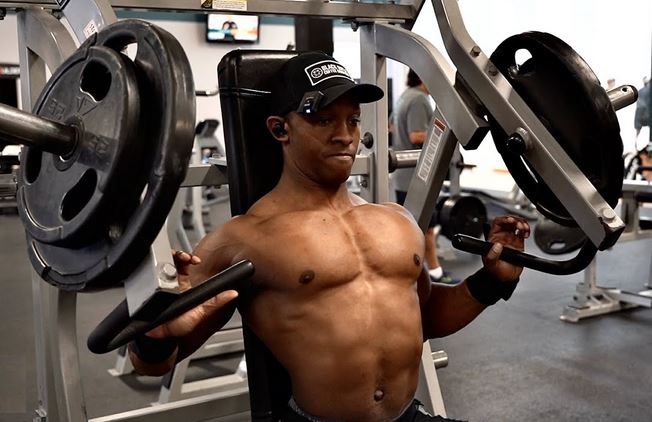
- Hammer Strength incline press – Provides a converging pressing path that mimics natural arm movement.
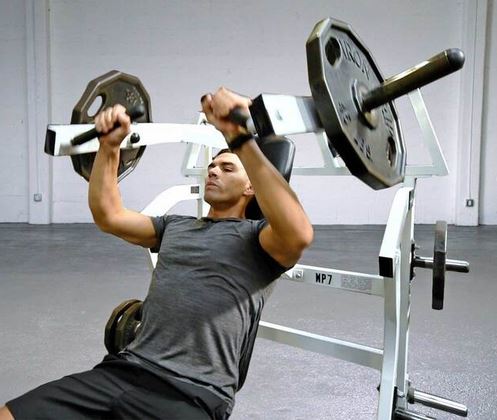
- Alternating-arm incline press – Improves coordination and muscular balance.
Alternative Exercises
If variety is needed, several other pressing exercises effectively target the upper chest.
- Incline barbell bench press
- Incline dumbbell bench press
- Smith-machine incline bench press
- Incline dumbbell champagne press
- Decline push-ups
Machine Incline Chest Press vs. Incline Barbell Bench Press
| Criteria | Machine Incline Press | Incline Barbell Press |
|---|---|---|
| Stability requirement | Low | Moderate |
| Strength potential | Moderate | Higher |
| Chest isolation | Higher | Moderate |
| Skill requirement | Low | Moderate |
| Safety without a spotter | Very high | Moderate |
| Progressive overload | Easy | Requires technique |
Conclusion: The machine incline chest press excels in safety, muscle isolation, and controlled hypertrophy training, while the incline barbell press remains superior for developing maximal pressing strength. Combining both movements typically produces the best upper-chest development.
Beginner Progression Strategy
Beginners can use the machine incline press to learn pressing mechanics safely.
- Begin with light weight to practice the full range of motion.
- Focus on smooth tempo and shoulder stability.
- Gradually increase the resistance once you can comfortably perform 12–15 repetitions.
- Maintain consistent seat positioning across sessions.
- Progressively overload using small weight increases.
Where This Exercise Fits in a Workout
Perform 3–4 sets of 8–15 repetitions. The exercise works well as either a primary pressing movement in beginner programs or as a secondary hypertrophy exercise following heavy free-weight pressing.
Final Thoughts
The incline chest press is one of the most practical and effective exercises for developing the upper chest, thanks to its stability, safety, and ability to maintain consistent muscular tension throughout the movement. When combined strategically with free-weight pressing variations, it plays an essential role in building balanced chest hypertrophy, improving pressing mechanics, and supporting long-term training progression.
What muscles does the machine incline chest press primarily target?
The machine incline chest press primarily targets the clavicular (upper) fibers of the pectoralis major. Supporting muscles include the anterior deltoids and triceps, while stabilizing muscles such as the serratus anterior and rotator cuff assist in maintaining proper shoulder positioning during the movement.
Is the machine incline chest press effective for building upper chest mass?
Yes. Because the incline angle shifts the pressing line upward, the exercise places greater mechanical emphasis on the upper chest compared to flat pressing movements. Combined with the machine’s stability, this allows consistent loading, controlled tempo, and reliable progressive overload—three key factors for hypertrophy.
Is the machine incline press better than the barbell incline press?
Neither is universally better. The machine incline press offers greater safety, easier technique learning, and improved muscle isolation, while the barbell incline press is superior for developing maximal pressing strength and stabilizer recruitment. Using both in a program often produces the best results.
What is the best seat height for the machine incline chest press?
The optimal seat height positions the handles at the level of the upper chest or slightly below shoulder height when seated. This alignment ensures that the pressing path targets the upper chest rather than shifting the load excessively to the shoulders.
Should beginners start with the machine incline chest press?
Yes. The guided movement path makes it easier for beginners to learn proper pressing mechanics, maintain safe shoulder positioning, and build foundational pressing strength before progressing to free-weight incline presses.
How many sets and reps are recommended for the machine incline chest press?
For hypertrophy-focused training, 3–4 sets of 8–15 repetitions are typically recommended. Lower rep ranges can be used for strength development, while higher rep ranges are effective for metabolic stress and muscle endurance.
Why does the machine incline press sometimes feel easier than free-weight pressing?
Because the machine stabilizes the resistance path, fewer stabilizing muscles are required. This allows trainees to focus more directly on pressing force production and chest contraction, often making the exercise feel more controlled and efficient.
Can the machine incline chest press replace free-weight incline pressing?
It can temporarily replace it, especially during rehabilitation, beginner training, or high-volume hypertrophy phases. However, for long-term strength development, combining machine and free-weight pressing variations is generally recommended.
Should elbows be fully locked at the top of the movement?
Aggressive elbow lockout is usually unnecessary and may increase joint stress. Stopping slightly short of full lockout helps maintain continuous muscular tension and protects the elbow joints.
When should the machine incline chest press be placed in a workout?
It can serve as the primary pressing movement in beginner programs or as a secondary compound exercise after heavier barbell or dumbbell incline presses to accumulate additional upper-chest training volume safely.
