

Close Menu
Bodybuilding Wizard

    Subscribe to Updates

    Join our mailing list to receive the latest updates from our team.

    Facebook X (Twitter) Instagram
    Trending
    • Decline Machine Press (Hammer Strength Decline Press): How To, Muscles Worked, Benefits & Alternatives
    • Ring Dips: How To, Muscles Worked, Benefits & Alternatives
    • Reverse-Grip Incline Dumbbell Press: How To, Muscles Worked, Benefits & Alternatives
    • Landmine Chest Press: How To, Muscles Worked, Benefits & Alternatives
    • Reverse-Grip Bench Press: How-To, Muscles Worked, Benefits & Alternatives
    • Dumbbell Squeeze Press (Hex Press): How To, Muscles Worked, Benefits & Alternatives
    • Muscle-Tendon Unit: How Muscles Transfer Force to Bones
    • Anatomical Position and Directional Terms: A Guide for Lifters
    RSS Facebook X (Twitter) LinkedIn YouTube Pinterest Instagram
    Bodybuilding Wizard
    Subscribe Login
    • Home
    • Tools
      • Interactive Muscle Anatomy
      • Interactive Human Skeleton
      • Bodybuilding & Fitness Calculators
      • Dietary & Nutrition Calculators
      • Body Measurement Calculators
      • Fitness Tests
      • Bodybuilding Glossary
      • DIY Projects
    • Training
      • Weight training basics
      • Advanced bodybuilding
      • Strength training for women
      • Workout programs
      • Home weight training programs
      • Cardio workout
      • Exercise equipment
      • Weight training accessories
      • Weight lifting injuries
      • Weight training for sports
    • Exercises
      • Chest exercises
        • Middle chest exercises
        • Upper chest exercises
        • Lower chest exercises
      • Back exercises
        • Middle back (latissimus dorsi)
        • Upper back (trapezius)
        • Lower back (erector spinae)
      • Arm exercises
        • Bicep exercises
        • Tricep exercises
        • Forearm exercises
        • Grip-strengthening exercises
      • Shoulder exercises
        • Front deltoid
        • Side deltoid
        • Rear deltoid
        • Rotator Cuff
        • Scapular & Shoulder Stability
        • Neck strengthening exercises
      • Leg and glute exercises
        • Quadricep exercises
        • Hamstring exercises
        • Calf exercises
        • Glute & Hip exercises
        • Shin exercises
      • Abdominal exercises
        • Upper abdominal exercises
        • Lower abdominal exercise
        • Oblique exercises
      • Core exercises
      • Kettlebell exercises
      • Foam rolling & Stretching
      • Explosive (dynamic) lifts
    • Motivation
      • Greatest physiques
      • Motivation techniques & tips
      • Events and competitions
      • Latest fitness news
      • Videos
        • Funny gym reels
        • Motivational videos
        • Funny workout videos
      • Pictures
      • Quotes
      • Funny Fitness
      • Transformations
    • Diet
      • Nutrition Fundamentals
      • Diet Types & Strategies
      • Foods & Superfoods for Athletes
      • Muscle Building & Performance Nutrition
      • Weight Loss & Fat Management
      • Food Psychology & Myths
      • Recipes & Meal Ideas
    • Supplements
      • Supplements Review
      • Muscle Building Supplements
      • Anabolic Steroids
      • Fat Burners & Weight Loss
      • Pre-Workout & Energy Boosters
      • Recovery & Sleep Aids
      • Cognitive & Nootropic Support
      • General Supplement Advice
      • Health Supplements
        • Joint & Bone Support
        • Gut Health & Digestion
        • Vitamins & Minerals
        • Superfoods & Greens
      • Steroid Alternatives
    • Anatomy
      • Upper-Body Muscles
      • Lower-Body Muscles
      • Bones & Skeletal Anatomy
      • Muscle Growth & Genetics
      • Joints, Tendons & Connective Tissue
      • Hormones & Endocrine System
      • Physiology & Body Systems
      • Body Composition & Fat
      • General Anatomy & Basics
    • Health
    Bodybuilding Wizard
    You are at:Home»Training»Fitness calculators & tests»Bodybuilding and fitness calculators»Navy Physical Readiness Test Calculator
    Bodybuilding and fitness calculators

    Navy Physical Readiness Test Calculator

    No Comments6 Mins ReadkrunoslavBy krunoslavFebruary 13, 2025Updated:February 24, 2025
    navy physical readiness test calculator
    Share
    Facebook Twitter Pinterest LinkedIn Email Tumblr WhatsApp Telegram

    Embarking on a journey with the United States Navy? One crucial milestone you’ll encounter is the Navy Physical Readiness Test (PRT). The PRT assesses your strength, endurance, and overall fitness to ensure that sailors meet the physical demands of naval service. It’s not just a test; it’s a testament to your ability to engage actively in naval operations while maintaining peak health and readiness. 

    In this article, you’ll discover everything you need to know about the Navy PRT, from its components and scoring to tips for preparing and excelling. Whether you’re a recruit or an experienced sailor, understanding the PRT is essential for success. Here’s what you can expect: 

    • An overview of the Navy PRT components
    • How the PRT is scored and what it means for you
    • Strategies to prepare and improve your performance
    • Easy-to-use Navy physical readiness test calculator
    • What is the Navy Physical Readiness Test?
    • Navy Physical Readiness Test Events
    • How to Use the Navy PRT Chart?
    • Navy PRT Standards Scoring
    • PRT Standards for Altitudes Less Than 5000 Ft
    • PRT Standards for Altitudes Greater Than 5000 Ft
    • Navy PRT success strategies 
    • Related Calculators
    • Conclusion: Benefits of using the Navy Physical Readiness Test Calculator
    Navy PRT Calculator
    Inch Calculator LogoInch Calculator

    What is the Navy Physical Readiness Test?

    The Navy Physical Readiness Test, or PRT, ensures sailors are fit and ready for duty. It’s a fitness check that includes exercises such as push-ups, planks, and running or swimming. These activities help measure sailors’ strength, endurance, and overall fitness levels, ensuring they meet the Navy’s health and readiness standards.

    navy prt standards scoring

    Navy Physical Readiness Test Events

    The Navy Physical Readiness Test (PRT) comprises multiple events designed to assess different aspects of physical fitness. These events ensure that sailors maintain a fitness level conducive to performing their duties effectively. 

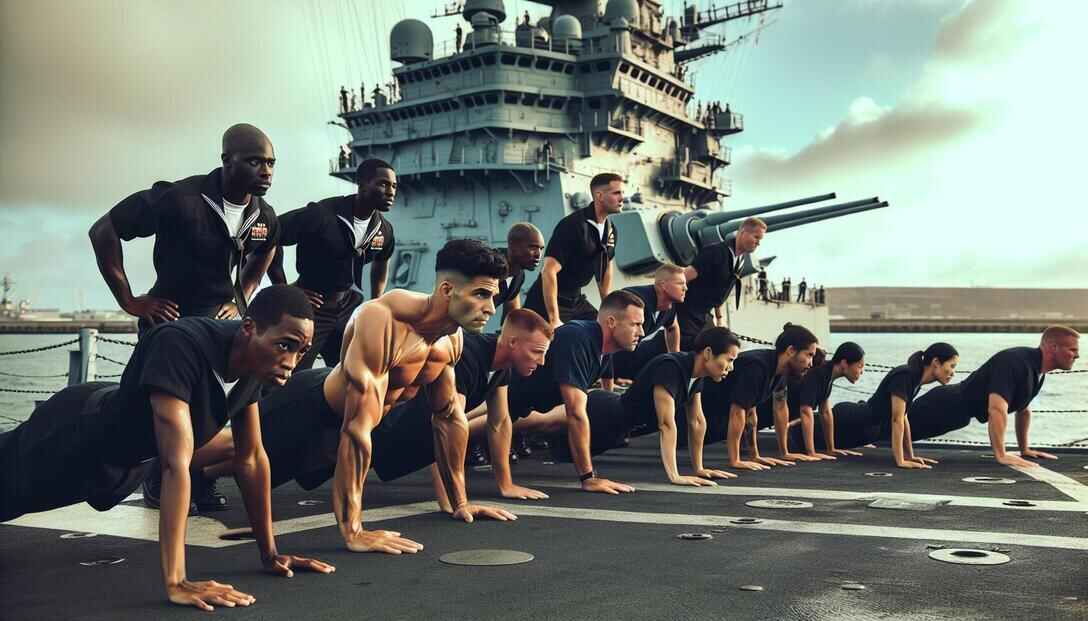
    1. Push-ups: This event measures upper-body muscular endurance. Participants must complete as many push-ups as possible within a specified time. To be counted, these push-ups must be performed with proper form, which involves lowering yourself until your arms are at least parallel to the ground before pushing back up. 

    2. Core Endurance – Plank: The plank is a vital component in evaluating core endurance. This exercise requires maintaining a stable position on your forearms and toes, engaging your core for a prescribed amount of time. The plank effectively tests the strength and stability of your core muscles, which are essential for overall fitness and performance.

    3. Cardio Options – Running or Swimming: Cardiovascular endurance is tested through one of four options. These options allow sailors to choose based on their strengths and circumstances. The run is conducted on a track or flat course, while the swim occurs in a pool. Each option comes with its own set of standards and scoring. 

    • The 1.5-mile run;
    • The 450-meter run;
    • The 500-yard swim; or
    • The 2-kilometer row.

    The altitude is essential when assessing physical readiness.

    Special adjustments are recommended when conducting the Navy Physical Readiness Test at elevations higher than 5,000 feet. The reduced oxygen at such altitudes can affect your performance, notably in aerobic exercises like the 1.5-mile run. Training and acclimatization at these elevations can help improve your results. 

    How to Use the Navy PRT Chart?

    The Navy PRT encompasses three key components: 

    • Forearm Plank: Hold your plank for as long as you can.
    • Push-ups: Complete as many as possible within a 2-minute timeframe.
    • Run or Swim: Choose between a 1.5-mile run, a 450-meter swim, a 2-kilometer row, or a 500-yard swim.

    A perfect score in the PRT is 300 points across all three events. 

    It’s essential to know that the Navy PRT charts provide separate guidelines for males and females, also considering your age. Requirements differ depending on your age bracket, so be sure to check the specific standards that apply to you!

    As a sailor, you must achieve at least 50 points on each event, also known as the Satisfactory (Medium) performance level.

    Navy PRT Standards Scoring

    Here, you’ll find a complete breakdown of scores for each event and the overall Navy PRT assessment.

    PointsPerformance
    CategoryLevel
    100OutstandingHigh
    95Medium
    90Low
    85ExcellentHigh
    80Medium
    75Low
    70GoodHigh
    65Medium
    60Low
    55SatisfactoryHigh
    50Medium
    45Probationary—
    Table 1: Single discipline grading
    PointsPerformance
    CategoryLevel
    300OutstandingHigh
    295Medium
    270Low
    255ExcellentHigh
    240Medium
    225Low
    210GoodHigh
    195Medium
    180Low
    165SatisfactoryHigh
    150Medium
    135Probationary—
    Table 2: Overall Navy PRT assessment

    PRT Standards for Altitudes Less Than 5000 Ft

    Refer to the following score charts (pages 19-30) to find your event scores for altitudes below 5,000 feet in the PRT standards.

    PRT Standards for Altitudes Greater Than 5000 Ft

    Please refer to the following score charts (pages 31-42) to find your event scores for altitudes greater than 5,000 feet in the PRT standards.

    Navy PRT success strategies 

    Preparation and strategy are key to excel in the Navy Physical Readiness Test (PRT). Here, we’ll focus on proven approaches to ensure you pass with flying colors: 

    • Consistent Training Routine: Develop a balanced training schedule incorporating cardiovascular exercises like running and swimming, strength training for the core and upper body, and flexibility exercises such as stretching or yoga. Consistency over time beats burst training right before the test.
    • Target Your Weaknesses: Identify the areas where your performance is lacking. If your run time needs improvement, consider interval training; if you struggle with push-ups or curl-ups, incorporate resistance training or targeted core workouts.
    • Proper Nutrition: Maintain a diet that fuels your body efficiently. Focus on high-protein, moderate carbohydrates, and healthy fats balanced throughout your meals. Staying hydrated is equally crucial, so drink ample water, significantly when increasing your physical activity.
    • Rest and Recovery: Get enough sleep and rest days for your body to recover. Overtraining can lead to injuries or burnout, negatively impacting your readiness and performance.
    • Monitor Progress: Monitor your improvement over time. Regularly assess your performance in each event and adjust your training regimen accordingly. Use wearable tech or apps to measure and motivate progress.
    • Simulate Test Conditions: Practice under conditions similar to the actual test, including the time of day, attire, and equipment. This will help you acclimate and reduce anxiety when test day comes.
    • Learn Test Strategies: Understand the scoring system and where you can maximize your points—for instance, pace yourself to maintain form while performing push-ups or curl-ups rather than racing through.
    • Mental Preparation: Visualize success and mentally rehearse each part of the test. A positive mindset and focused breathing techniques can do wonders for managing nerves and boosting overall performance.

    By implementing these strategies, you’ll prepare to pass the Navy PRT and set up the foundation for sustained physical fitness throughout your naval career.
    navy prt calculator

    Related Calculators

    • U.S. Navy Body Fat Calculator
    • ACFT (Army Combat Fitness Test) Calculator
    • US Air Force PT Test Calculator
    • US Army Body Fat Percentage Calculator

    Conclusion: Benefits of using the Navy Physical Readiness Test Calculator

    To wrap up, the Navy Physical Readiness Test is essential to ensuring that all Naval personnel maintain fitness that meets operational demands. From understanding the required standards to preparing effectively, it’s all about being ready for any challenge. The Navy physical readiness test calculator is a helpful tool in your preparation toolkit. This resource can simplify the process of tracking your performance and identifying areas for improvement. With easy calculations, you can set realistic goals and boost your chance of success. We hope this guide has been informative and motivating on your journey to physical readiness!

    Share. Facebook Twitter Pinterest LinkedIn Tumblr Email WhatsApp
    krunoslav
    • X (Twitter)

    Hey! My name is Kruno, and I'm the owner and author of Bodybuilding Wizard. I am a licensed fitness trainer with a Ph.D. in kinesiology. Throughout my career, I have dedicated myself to helping individuals achieve their health and fitness goals through personalized training programs. In addition to my academic qualifications, I have completed various specialized courses, including certifications in nutrition and strength training, which have further enhanced my ability to provide comprehensive fitness guidance. I started this website back in late 2014, and it has been my pet project ever since. My goal is to help you learn proper weight training and nutrition principles so that you can get strong and build the physique of your dreams!

    Related Posts

    Heart Rate Training Zones Calculator

    Running Pace, Distance & Time Calculator

    Push-Ups Calorie Calculator

    Leave A Reply Cancel Reply

    You must be logged in to post a comment.

    WE ARE SOCIAL
    • Facebook 3.6K
    • Twitter
    • YouTube 134
    • Instagram
    RECENT POSTS
    October 10, 2026

    Decline Machine Press (Hammer Strength Decline Press): How To, Muscles Worked, Benefits & Alternatives

    October 10, 2026

    Ring Dips: How To, Muscles Worked, Benefits & Alternatives

    October 6, 2026

    Reverse-Grip Incline Dumbbell Press: How To, Muscles Worked, Benefits & Alternatives

    October 4, 2026

    Landmine Chest Press: How To, Muscles Worked, Benefits & Alternatives

    October 3, 2026

    Reverse-Grip Bench Press: How-To, Muscles Worked, Benefits & Alternatives

    RECENT COMMENTS
    • Justin Dew on Designing your own home gym
    • krunoslav on How Skeletal Muscles Are Named: A Simple Guide to Muscle Names
    • Christina on How Skeletal Muscles Are Named: A Simple Guide to Muscle Names
    • igtropin on Stiff-Leg Deadlift: Proper Form, Muscles Worked & Hamstring Growth Guide
    • teragon labs on Barbell Back Squat: Proper Form, Benefits, Muscles Worked & Expert Tips
    LATEST GALLERIES

    Subscribe to Updates

    Join our mailing list to receive the latest updates from our team.

    ABOUT
    ABOUT

    We are a group of bodybuilding enthusiasts and this is our effort to have all the details about bodybuilding on a single website. We strive to educate and inform our visitors so that they can make the correct training, nutrition, and supplement decisions on their own. Bodybuilding Wizard will make your dream body your reality and take you to a whole new level!

    POPULAR POSTS
    April 2, 2014

    Lying Leg Curl: Complete Guide to Hamstring Isolation, Strength & Muscle Growth

    February 18, 2019

    How Skeletal Muscles Are Named: A Simple Guide to Muscle Names

    March 28, 2014

    Free weights: The main tool for building muscles

    BODYBUILDING WIZARD
    Bodybuilding Wizard Footer Logo
    Facebook X (Twitter) Instagram Pinterest YouTube
    • About
    • Authors
    • Editorial Policy
    • Write for us
    • Privacy
    • Contact
    • Terms of Use
    • Advertising
    • FAQ
    Copyright © 2014-2026 BodybuildingWizard. All rights reserved. Powered by WordPress. Made with love and lots of caffeine.

    Type above and press Enter to search. Press Esc to cancel.

    Sign In or Register

    Welcome Back!

    Login to your account below.

    Lost password?