

In the competitive world of bodybuilding and athletics, the anabolic steroid Winstrol (Stanozolol) stands out as one of the most recognized compounds for cutting and performance enhancement. Known for its ability to promote lean muscle retention while shedding excess fat, Winstrol has been a favorite among competitive bodybuilders for decades. However, behind its benefits lie significant health risks that demand careful consideration. In this article, we’ll cover its history, mechanisms, potential benefits, side effects, detection times, and more — all for educational purposes only. This article does not encourage or endorse the use of illegal substances.
📌 What is Winstrol (Stanozolol)?
📌 History of Winstrol
Pharmaceutical company Winthrop Laboratories developed Stanozolol in 1962 for medical uses, including the treatment of angioedema (swelling disorders) and anemia. Soon after, athletes discovered Winstrol’s ability to improve strength and performance without significant mass gain. It gained notoriety when Canadian sprinter Ben Johnson tested positive for Winstrol at the 1988 Olympics, leading to one of the biggest doping scandals in sports history.
In bodybuilding circles, Winstrol is often used during the cutting phase — when the goal is to maintain muscle mass while reducing body fat. This characteristic stems from its inability to aromatize into estrogen, thus eliminating water retention and producing a dry, chiseled look.
📌 How Winstrol Works
At the biochemical level, Winstrol functions by binding to androgen receptors (AR) in skeletal muscle tissue and other androgen-sensitive cells. This binding triggers a cascade of genetic and enzymatic events:
- Gene Activation – Once bound, the Winstrol–androgen receptor complex translocates to the cell nucleus and binds to specific DNA sequences known as androgen response elements (AREs). This promotes transcription of genes responsible for muscle protein synthesis.
- Increased Protein Synthesis – Elevated transcription of muscle-building genes accelerates ribosomal activity, leading to faster assembly of contractile proteins such as actin and myosin. This results in improved muscle density and recovery.
- Enhanced Nitrogen Retention – Winstrol improves the muscle’s nitrogen balance, keeping it in an anabolic (muscle-building) state even during caloric restriction. Nitrogen is a critical component of amino acids — the building blocks of protein.
- Reduction of SHBG – Winstrol significantly reduces sex hormone-binding globulin, a protein that binds testosterone in the bloodstream. Lower SHBG means more free (bioavailable) testosterone, amplifying the anabolic environment.
- Red Blood Cell Stimulation – By increasing erythropoiesis, Winstrol raises red blood cell count, enhancing oxygen delivery to muscles. This not only improves endurance but also speeds up recovery between intense training sessions.
- No Aromatization – Winstrol cannot be converted into estrogen via the aromatase enzyme. This prevents water retention and estrogen-related side effects, producing a harder and leaner muscle appearance.
This combination of gene activation, metabolic enhancement, and hormonal modulation explains why Winstrol is so effective for cutting without the bloated look often associated with bulking steroids.
📌 Method of Administration
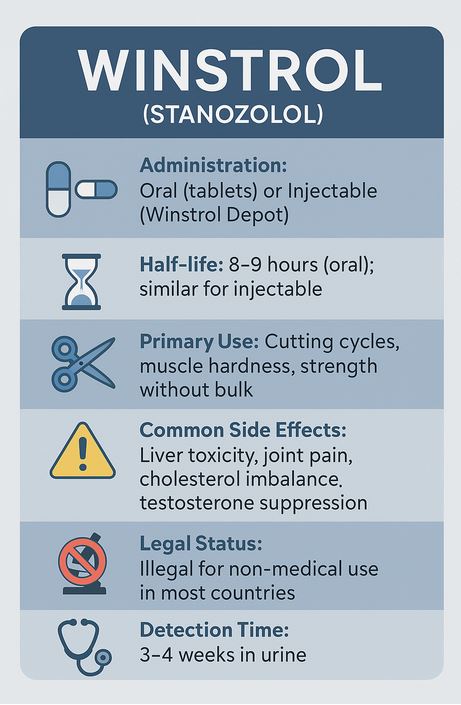
Winstrol (Stanozolol) is available in two distinct forms — oral tablets and injectable suspension — each with unique advantages, drawbacks, and usage considerations. While both deliver the same active compound, their effects on the liver, absorption rate, and convenience differ.
| Form | Delivery | Half-life (approx.) | Typical dosing | Hepatotoxicity | Pros | Cons | Notes |
|---|---|---|---|---|---|---|---|
| Oral tablets | By mouth (17-α-alkylated) | ~8–9 h |
Men: 25–50 mg/day Women: 5–10 mg/day Duration: 6–8 weeks |
Higher (first-pass liver metabolism) | Easy administration; steady daily control; no injections | Liver strain; possible GI discomfort; HDL↓/LDL↑; joint dryness | Often split into 2 daily doses to stabilize blood levels |
| Injectable suspension (water-based) | Intramuscular injection | ~20–24 h |
50 mg EOD to 50 mg ED (advanced) Duration: 6–8 weeks |
Lower vs oral (still monitor enzymes) | Bypasses most first-pass metabolism; slightly steadier levels | Frequent injections; site irritation; requires sterile technique | Rotate sites; consider daily or EOD schedule for stability |
Administration Considerations
- Always use sterile injection techniques for the injectable form to prevent infection.
- Rotate injection sites to avoid irritation and scar tissue buildup.
- Oral Winstrol can be taken with or without food, but taking it with a small meal may reduce gastrointestinal discomfort.
Both methods require careful monitoring of liver enzymes, cholesterol levels, and joint health, as side effects can develop quickly even with moderate doses.
📌 Potential Benefits (Informational Only)
- Harder, drier appearance during cutting cycles.
Winstrol reduces subcutaneous water retention by blocking estrogenic activity, resulting in muscles that appear more defined and vascular, which is especially valuable before competitions. - Increased strength without significant weight gain.
By enhancing phosphocreatine synthesis and boosting ATP regeneration in muscle cells, Winstrol supports powerful contractions, helping athletes improve performance without adding bulk. - Improved speed and agility.
Winstrol’s anabolic properties are said to strengthen tendons and ligaments (though this is a controversial debate), potentially aiding explosive movements and sprinting ability. - Enhanced muscle endurance.
By stimulating red blood cell production, Winstrol can improve oxygen transport to muscles, delaying fatigue during intense training sessions. - Improved muscle hardness and vascularity.
Due to its non-estrogenic nature, Winstrol promotes a dry, vascular, and defined appearance. This “stage-ready” look is highly sought after during bodybuilding competitions.
📌 Side Effects and Health Risks
Despite its popularity, anabolic steroid Winstrol carries serious risks. Here’s how these side effects develop:
- Liver toxicity can cause permanent damage with prolonged use.
Like other 17-alpha-alkylated steroids, Winstrol resists breakdown in the liver, which stresses hepatocytes and raises liver enzymes, potentially leading to liver failure if abused. - Joint pain and discomfort.
Winstrol reduces collagen synthesis and depletes joint lubrication by lowering estrogen levels, leading to “dry” joints that feel stiff or painful during heavy lifting. - Cholesterol imbalance increases cardiovascular risk.
Winstrol significantly suppresses HDL (good cholesterol) and elevates LDL (bad cholesterol), which can contribute to the development of atherosclerosis, high blood pressure, and heart disease. - Hair loss and acne in genetically predisposed individuals.
Because Winstrol is a DHT derivative, it increases androgen activity in skin and scalp follicles, which can accelerate hair loss and promote the formation of acne. - Testosterone suppression, leading to hormonal imbalances.
External androgen use signals the hypothalamus and pituitary gland to reduce natural testosterone production, causing hypogonadism if proper Post-Cycle Therapy (PCT) isn’t followed.
📌 Winstrol (Stanozolol) ID Card
Winstrol (Stanozolol) — Steroid ID Card
| Attribute | Details |
|---|---|
| Chemical Class | Dihydrotestosterone (DHT) derivative |
| Forms | Oral (17-aa) tablets; Injectable water-based suspension |
| Half-life | Oral ~8–9 h · Injectable ~20–24 h |
| Aromatization | None — no estrogenic water retention |
| Anabolic / Androgenic Ratio | ~320 : 30 (high anabolic, relatively low androgenic) |
| Typical Dosing (non-medical) | Men: Oral 25–50 mg/day · Inj 50 mg EOD–ED Women: Oral 5–10 mg/day |
| Primary Uses | Cutting, muscle hardness, strength without weight gain |
| Key Risks | Liver strain (oral), adverse lipids (HDL↓/LDL↑), joint dryness/pain, testosterone suppression |
| Detection Window | Weeks to months (long metabolites detectable in urine) |
| Medical Use | Historically: hereditary angioedema, some anemias (now rare) |
| WADA Status | Prohibited at all times (in & out of competition) |
| Legal Status | Controlled substance in many countries; prescription-only where allowed |
📌 Legal Status of Winstrol
In the United States, the anabolic steroid Winstrol is listed as a Schedule III controlled substance under the Anabolic Steroid Control Act. Possession or distribution without a valid prescription is illegal and can result in substantial fines and prison sentences.
In Canada, Stanozolol is regulated under the Controlled Drugs and Substances Act and requires a prescription for legal use.
In the United Kingdom and much of Europe, Winstrol is available only with a prescription and is prohibited for non-medical purposes. Several countries also impose strict import/export controls, making online purchases from unregulated sources illegal.
From a sports governance perspective, Winstrol is on the World Anti-Doping Agency (WADA) prohibited list. Athletes testing positive for Stanozolol face immediate disqualification and potential multi-year bans from competition.
Buying Winstrol from underground laboratories or online sources carries both legal and health risks, as counterfeit products are commonly available.
For an official reference, check the DEA’s controlled substances list, which includes Stanozolol.
📌 Winstrol vs. Other Popular Steroids
While Winstrol is best known for its cutting-phase muscle hardening and strength-boosting properties, other anabolic steroids may excel in mass building, joint support, or overall safety. Understanding these differences is essential for athletes and bodybuilders to make informed, goal-specific choices.
Winstrol vs. Anavar
Both are popular for cutting cycles, but Anavar is milder on the joints and liver. Winstrol creates a harder, drier look but increases the risk of joint pain and cholesterol issues more than Anavar.
Winstrol vs. Dianabol
Dianabol is best suited for bulking, providing rapid mass gains and significant water retention, while Winstrol is favored for cutting, enhancing definition, and improving strength without bloating.
Winstrol vs. Masteron
Masteron, another DHT derivative, also creates a dry, aesthetic appearance. However, Masteron tends to be less hepatotoxic but requires injections only, whereas Winstrol offers the option of oral administration.
Winstrol vs. Deca-Durabolin
Deca is primarily used for bulking and joint support, the opposite of Winstrol’s dry, cutting-oriented profile. While Deca promotes mass gain and soothes joint discomfort, Winstrol often dries out the joints and can lead to stiffness. Combining them is sometimes done to offset Winstrol’s joint side effects.
Winstrol vs. Primobolan
Primobolan is one of the mildest anabolic steroids, valued for its low side-effect profile and ability to help preserve lean mass over long cycles. Winstrol is faster-acting and more dramatic in improving muscle hardness, but also more likely to cause liver strain and joint issues. Primobolan is often preferred by those prioritizing safety and gradual results.
Winstrol vs. Trenbolone
Trenbolone is significantly more potent in both cutting and bulking contexts, offering extreme strength and physique changes. Winstrol is milder and better suited for those seeking definition without the heavy androgenic side effects that Trenbolone can cause. Tren carries a much higher risk of night sweats, insomnia, and cardiovascular strain.
| Criteria | Winstrol (Stanozolol) |
Anavar (Oxandrolone) |
Masteron (Drostanolone) |
Primobolan (Methenolone) |
Trenbolone (Acetate) |
|---|---|---|---|---|---|
| Primary Goal | Cutting, muscle hardness, strength boost | Cutting, lean gains, mild strength | Hardness, anti-estrogen synergy | Lean preservation, long-term cuts | Extreme recomposition, max strength |
| Water Retention | None | None | None | None | None |
| Muscle Hardness | High | Medium | High | Medium | Very High |
| Strength Gain | Medium–High | Medium | Medium | Low–Medium | Very High |
| Hepatotoxicity | High (oral) / Moderate (inj) | Moderate | Low | Low | Low |
| Lipid Impact | High (HDL↓ / LDL↑) | Moderate | Moderate | Moderate | High |
| Joint Impact | Dryness / pain risk | Low | Low–Medium | Low | Medium (indirect) |
| Best Use Case | Pre-contest hardening without size gain | Gentle cut, low side effects | Stacked for added hardness and estrogen control | Extended cutting with minimal risk | Short aggressive cut with extreme changes |
📌 How Winstrol Is Misused in Bodybuilding
Many bodybuilders misuse Winstrol in high doses or for prolonged periods to enhance physique hardness before competitions. Some stack it with Trenbolone or Testosterone for more dramatic results, but this dramatically increases the risk of severe cholesterol imbalance, joint injury, and permanent liver damage. Others mistakenly believe Winstrol is “safe” because it doesn’t aromatize, underestimating its impact on joints and cardiovascular health.
📌 Post-Cycle Therapy (PCT) After Winstrol
Even though anabolic steroid Winstrol does not convert to estrogen, it still suppresses natural testosterone. Proper PCT with SERMs like Clomid or Nolvadex helps restore natural hormonal balance, prevents prolonged hypogonadism, and maintains lean tissue gained during a cycle.
📌 Myths and Misconceptions About Winstrol
- “Winstrol is safe because it doesn’t aromatize.”
Although it avoids estrogenic side effects like gynecomastia, it carries serious risks for the liver, joints, and cholesterol. - “Injectable Winstrol isn’t hepatotoxic.”
False — both oral and injectable Winstrol are 17-alpha-alkylated, stressing the liver equally. - “Winstrol helps joints because it increases strength.”
Quite the opposite; Winstrol often causes joint dryness and pain by lowering collagen synthesis.
📌 Conclusion
Winstrol is a powerful anabolic steroid known for promoting a lean, dry, and defined physique. However, its risks — including liver toxicity, cholesterol imbalance, joint pain, and testosterone suppression — often outweigh any short-term benefits. This Winstrol steroid guide is for educational purposes only. Always consult a qualified medical professional before considering any performance-enhancing substances.
📌 Disclaimer
This article is intended for informational and educational purposes only. Neither the author nor the Bodybuilding Wizard website encourages, recommends, or in any way promotes the use of illegal substances, including anabolic steroids. The use of anabolic steroids without medical supervision can be dangerous to your health and may be unlawful in many countries. If you have questions about your health, sports performance, or supplementation, please consult a qualified medical professional or a licensed trainer.
✅ Key Takeaways: Anabolic Steroid Winstrol (Stanozolol)
1️⃣ Winstrol (Stanozolol) is a DHT-derived anabolic steroid available in oral and injectable forms, mainly used during cutting cycles.
2️⃣ It creates a hard, dry, vascular look by reducing water retention and promoting muscle definition.
3️⃣ Winstrol does not aromatize to estrogen, thereby avoiding gynecomastia; however, it often causes joint discomfort by lowering estrogen and collagen synthesis.
4️⃣ It significantly impacts cholesterol by lowering HDL and raising LDL, increasing cardiovascular risks.
5️⃣ Both oral and injectable Winstrol are hepatotoxic due to 17-alpha-alkylation, stressing the liver equally.
6️⃣ Proper Post-Cycle Therapy (PCT) is essential to restore natural testosterone levels after Winstrol use.
7️⃣ This Winstrol steroid guide is for educational purposes only and does not endorse or recommend steroid use.
What is Winstrol used for?
Winstrol is primarily used by athletes and bodybuilders during cutting cycles to achieve a hard, dry, and defined appearance without significant water retention.
Does Winstrol cause water retention?
No. Unlike many steroids, Winstrol does not aromatize to estrogen, so it doesn’t cause water retention. This makes it popular for maintaining a lean, vascular look.
How does Winstrol increase strength?
Winstrol enhances phosphocreatine synthesis in muscle cells, improving ATP regeneration. This supports more powerful muscle contractions, increasing strength without adding bulk.
Can Winstrol cause joint pain?
Yes. Winstrol lowers estrogen and collagen synthesis, which reduces joint lubrication and elasticity, leading to stiffness, pain, and higher injury risk.
Is oral Winstrol as liver-toxic as injectable Winstrol?
Yes. Both forms are 17-alpha-alkylated, meaning they stress the liver similarly. Injectable Winstrol bypasses the digestive tract but still requires liver processing.
How long is Winstrol detectable in a drug test?
Winstrol metabolites can be detected in urine tests for 3–4 weeks after the last dose, depending on cycle length and dosage.
Does Winstrol lower natural testosterone?
Yes. Winstrol suppresses the hypothalamic-pituitary-gonadal axis, lowering natural testosterone production. This is why Post-Cycle Therapy (PCT) is essential.
Can women take Winstrol safely?
While some women have used low doses, Winstrol carries a high risk of virilization side effects like deepened voice, facial hair, and menstrual issues. It’s generally unsafe for women.
Is it legal to buy Winstrol online?
In most countries, it’s illegal to buy or possess Winstrol without a prescription. Online sources often sell counterfeit or contaminated products, posing legal and health risks.
What is the main difference between Winstrol oral vs. injectable?
Both contain the same active compound (Stanozolol), but injectable Winstrol (Winstrol Depot) can avoid some digestive discomfort. However, both forms are hepatotoxic and carry similar risks.
Reviewed & Fact-Checked By:
- Dr. Alex Novak, MD – Sports Medicine Specialist
- Kelley V., MPH, MS, CSCS – Strength & Conditioning Coach
- Kruno O., PhD in Kinesiology – Certified Fitness Trainer
All facts, medical claims, and scientific references in this article have been reviewed for accuracy by the above experts before publication.
