


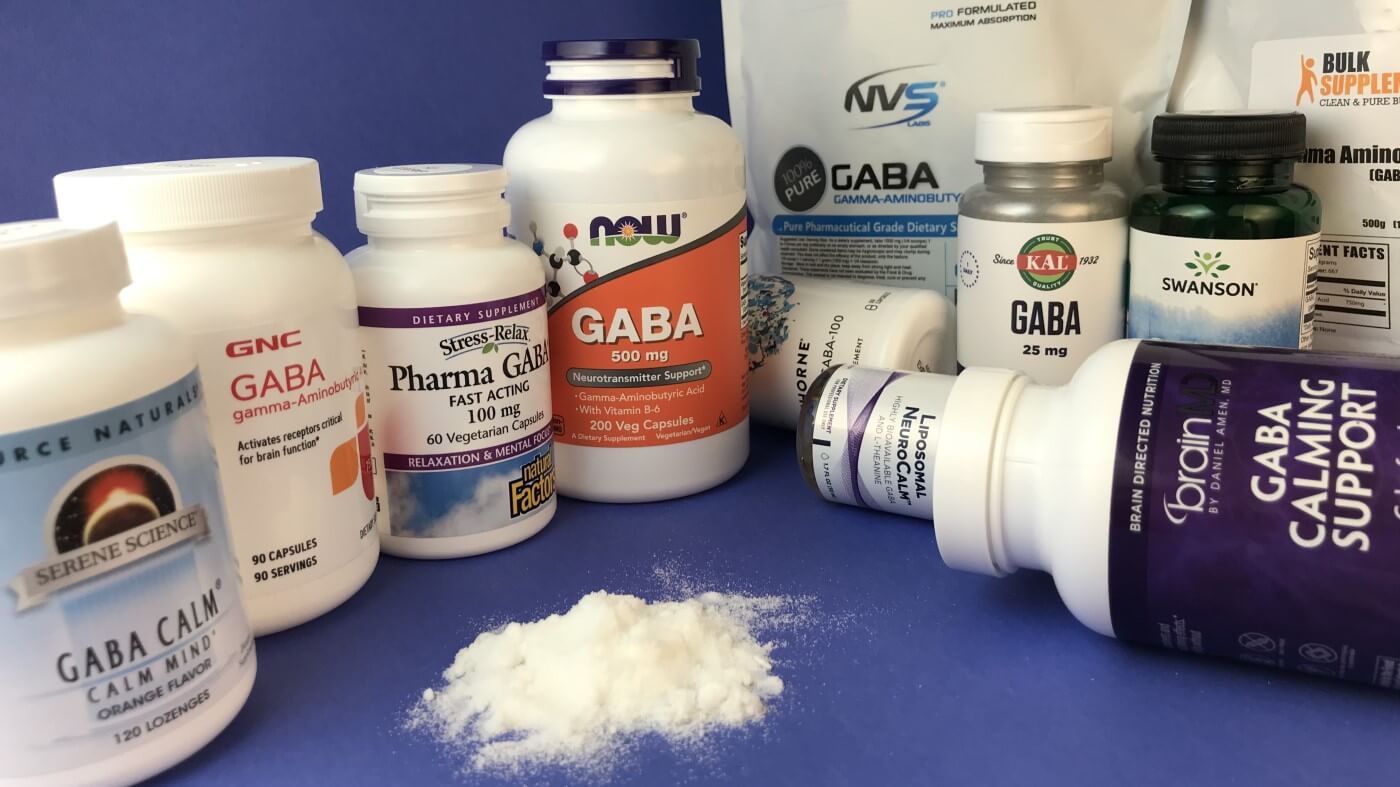
Have you ever heard of GABA and wondered what it is or why it’s important? Well, you’re in the right place! GABA, also known as Gamma-Aminobutyric Acid, plays a crucial role in our bodies, contributing significantly to our brain function and overall well-being. In this guide we’ll explore what GABA exactly is, how it works, its presence in foods, its benefits, and dosages – and examine possible side effects and who should consider GABA supplements. We’ll even discuss why it might be particularly useful for athletes.
What is GABA?
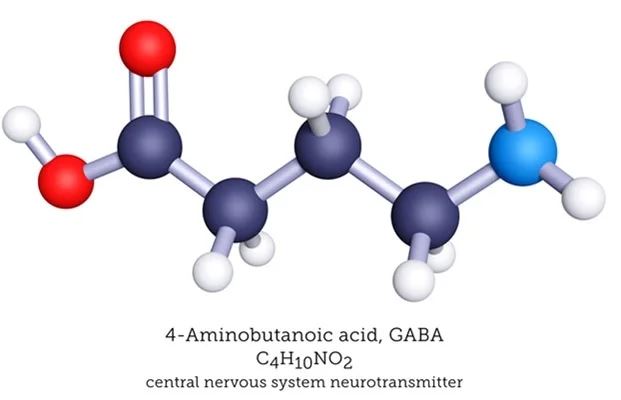
Gamma-aminobutyric acid, commonly known as GABA, is an essential neurotransmitter prevalent in the human brain and nervous system. As an inhibitory neurotransmitter, GABA has a significant role in reducing neuronal excitability and controlling nerve signals. This key function aids in maintaining the balance between activity and rest in your nervous system.
How does GABA function in the human body (mechanism of action)?
GABA’s mechanisms largely revolve around decreasing neural activity. It does so by blocking certain nerve transmissions, essentially serving as a barrier preventing excessive neuronal firing. This biochemical property of GABA plays a vital role in preventing states of over-excitement within the nervous system, contributing to its overall efficacy in managing anxiety, fear, and stress responses.
The GABAA receptors hold significant importance in physiological activities. The distribution of these receptors in the central nervous system (CNS) greatly influences the functions associated with GABA. The varying subtypes of GABAA receptors contribute to their differentiation and assignment to specific roles and regions within the CNS.
What are the health benefits associated with GABA?
- GABA holds a key role in promoting calmness and reducing stress and anxiety. This crucial neurotransmitter lowers brain activity, allowing you to relax and get a better night’s sleep. Extremely useful in combating compulsive behavior and dealing with conditions like ADHD, GABA’s abilities aren’t merely restricted to mental health.
- GABA possibly imparts positive effects in dealing with various neurodegenerative diseases. There’s much research linked with it playing a part in the treatment or prevention of Huntington’s Disease, Epilepsy, and even Parkinson’s. It’s thought that the naturally inhibiting nature of GABA on neurotransmissions might play a role in warding off seizures and the shivers associated with Parkinson’s.
- There is some evidence suggesting GABA may help manage anxiety disorders, schizophrenia, autism spectrum disorder, major depression, and insomnia, [5] [6] [7] although more research is necessary.
- Additionally, GABA supplements are heavily marketed for their potential to enhance mood regulation and alleviate stress. They offer a natural way to promote relaxation in scenarios where anxiety and unrest may otherwise take hold. However, it’s fundamental to note that scientific backing for these perks isn’t as robust, and more research into understanding this potential correlation is ongoing.
GABA is undeniably beneficial for your body. The calming influence on your brain, the potential relief from neurodegenerative diseases, and the improved stress response underscore its importance. But, the real question remains: Is the same level of benefits attainable through taking GABA supplements? As you will see later in this article, the scientific consensus around these benefits isn’t quite strong.
What foods are rich in GABA?
Your body naturally produces GABA, or Gamma-Aminobutyric Acid, an amino acid that functions as a neurotransmitter in your brain. In addition to the body’s production, you can also find GABA in an assortment of foods. Foods abundant in GABA, when included in your diet, can help enhance your body’s inherent levels of this essential neurotransmitter.
- Fermented foods are a great source of GABA. This includes foods like kimchi, sauerkraut, and yogurt. These foods undergo a fermentation process that increases their GABA content. Additionally, the probiotics found in these fermented foods can also help in the production of GABA within the gut.
- Whole grains such as brown rice, oats, and whole wheat are also good sources of GABA. They contain glutamic acid, which is a precursor to GABA, meaning it helps in the production of this neurotransmitter in the body.
- Certain fruits and vegetables are also rich in GABA. This includes tomatoes, spinach, bananas, and broccoli. These foods not only provide GABA but also contain other nutrients that are beneficial for overall health.
- Beans and lentils are another good source of GABA. They contain high levels of glutamate, which is used by the body to produce GABA. Soybeans, in particular, have been found to have high GABA content.
- Finally, certain types of tea, such as green tea and oolong tea, contain GABA. In fact, there are even specially processed ‘GABA teas’ available that are made to contain a higher amount of GABA.
However, it’s important to remember that while these foods contain GABA, the amount that actually reaches the brain may be limited due to the blood-brain barrier. [5] [6] [7] Therefore, it may be beneficial to also consider other methods of increasing GABA levels, such as through supplements or lifestyle changes.
How useful GABA supplements really are?
The primary method of ingesting GABA supplements is oral, commonly in capsule or powder forms. It’s designed for ease of consumption and the dosage can be controlled effectively.
However, there’s something important you should know. Despite GABA’s critical role as a neurotransmitter in the brain, its effectiveness as an oral supplement has been questioned. This is largely due to the blood-brain barrier, a filter mechanism of the body’s capillaries that carry blood to the brain and spinal cord tissue. This barrier blocks potentially harmful substances while allowing essential nutrients to reach the brain.[4] Regretfully, orally ingested GABA appears to be one of the substances that struggle to cross this barrier in significant amounts.
So, can oral supplementation replicate the effects of GABA as a neurotransmitter? The jury is still out on this one. While some studies found benefits anecdotally reported by people using these supplements – such as reduced stress and improved mood – other research is less definitive. The scarce access of GABA to the brain via oral supplements makes it hard to ascertain whether the reported benefits are directly due to increased GABA levels in the brain or other indirect effects on the body’s nervous system. As a result, more comprehensive and conclusive research is needed to address this question.
How can GABA supplementation benefit athletes/fitness enthusiasts?
GABA supplementation can potentially (at least in theory) benefit athletes in several ways.
- It can help to improve sleep quality. GABA is a neurotransmitter that inhibits nerve transmission in the brain, calming nervous activity. This can lead to better sleep, which is crucial for athletes for recovery and performance.
- GABA also plays a role in muscle growth. It stimulates the production of Human Growth Hormone (HGH), which is involved in muscle growth and repair. This can be particularly beneficial for athletes involved in high-intensity training or strength-based sports.
- It can help reduce stress and anxiety. The calming effect of GABA can help athletes manage the mental stress that often comes with competitive sports. This can lead to improved focus and performance.
- GABA can help with fat loss. It’s believed that the increase in HGH stimulated by GABA can also help with fat metabolism. This can be beneficial for athletes looking to maintain a certain weight class or improve their body composition.
- GABA can improve exercise tolerance, potentially allowing athletes to train harder and longer. However, more research is needed in this area to fully understand the extent of this benefit.
What is the recommended dosage and potential side effects of GABA?
When it comes to the recommended dosage of GABA, it can vary widely depending on the individual’s age, health, and several other conditions. However, for adults, a common dosage is usually between 250 and 750 mg per day, taken in divided doses. Some people may take doses as high as 1,000 mg per day, but it’s always best to start with a lower dose and gradually increase it under the supervision of a healthcare provider.
Despite being a naturally occurring substance in the body, GABA supplements can have potential side effects. Some people may experience minor side effects such as stomach upset, headache, sleepiness, muscle weakness, and shortness of breath. These side effects are usually temporary and may disappear as your body adjusts to the supplement.
However, in rare cases, some individuals might experience more serious side effects like mood changes, anxiety, or hallucinations. If these occur, it’s crucial to seek medical attention immediately. It’s also worth noting that GABA may interact with certain medications, including those for depression, seizures, and high blood pressure. Therefore, it’s always recommended to consult with a healthcare provider before starting any new supplement regimen.
Pregnant or breastfeeding women, children, and individuals with certain medical conditions such as liver or kidney disease should avoid taking GABA supplements unless directed by a healthcare provider.
Like any other supplement, GABA’s dosage for athletes should be personalized depending on factors like weight, age, and training intensity. A supplemental GABA dose in the range of 3,000–5,000 mg (3–5 grams) has been used to increase growth hormone concentrations. [1] [2] [3] However, due to a lack of clinical research, it is unclear if these dosages are optimal.
How to choose a GABA supplement?
When it comes to choosing a GABA supplement, there are several factors you’ll need to consider. Firstly, you’ll need to know your individual needs. Are you dealing with stress, anxiety, or insomnia, or are you an athlete seeking to enhance performance? This could inform your choice of supplement.
Next, consider the concentration of GABA in the supplement. While there’s no standard dosage for GABA, supplements often range from 200 mg to 800 mg. Be sure to check the label, and if in doubt, consult with a healthcare practitioner before starting supplementation. Remember, too much of a good thing can be harmful.
You also want to ensure that the supplement is made by a reliable manufacturer. Look out for certifications that verify the product’s quality and purity. This information is typically provided on the product packaging or manufacturer’s website. Reading customer reviews and researching the reputation of the manufacturer can provide insights into the supplement’s efficacy and safety.
It’s crucial to be aware of the ingredients listed. Avoid supplements filled with unnecessary additives, fillers, and artificial ingredients. Opt for natural formulations whenever possible.
Finally, bear in mind that the effectiveness of GABA supplements is still a subject of ongoing research.
By taking these factors into account, you’ll be more equipped to choose a GABA supplement that best fits your needs and circumstances.

Thorne PharmaGABA-250
The Thorne PharmaGABA-250 emerges as a foremost choice among GABA supplements. It’s renowned for a remarkable purity score, usually in the approximation of 95%, and provides a well-balanced dosage fit for varied users. A consilience of user testimonials and scientific studies attest to its routine efficacy in fostering tranquillity and mitigating anxiety-related signs. The supplement’s wide acceptance is further manifested in substantial sales proportions in the GABA supplement market.
Conclusion about GABA Supplements
The effectiveness of GABA supplements is still under rigorous scientific investigation, with definitive conclusions yet to be reached.
There are speculations amongst professionals, with some suggesting the perceived benefits could be merely a placebo effect. Critics also argue that GABA supplements are blocked by the blood-brain barrier, thus rendering them unproductive.
On the other hand, certain studies have noted positive outcomes from the intake of GABA supplements.
Given the current state of research, it may be most beneficial to adopt a ‘wait-and-see’ approach at this time.
References
- Cavagnini F, Benetti G, Invitti C, Ramella G, Pinto M, Lazza M, Dubini A, Marelli A, Müller EE Effect of gamma-aminobutyric acid on growth hormone and prolactin secretion in man: influence of pimozide and domperidone. J Clin Endocrinol Metab. (1980-Oct)
- Cavagnini F, Invitti C, Pinto M, Maraschini C, Di Landro A, Dubini A, Marelli AEffect of acute and repeated administration of gamma-aminobutyric acid (GABA) on growth hormone and prolactin secretion in man.Acta Endocrinol (Copenh). (1980-Feb)
- Powers ME, Yarrow JF, McCoy SC, Borst SE Growth hormone isoform responses to GABA ingestion at rest and after exercise.Med Sci Sports Exerc. (2008-Jan)
- Löscher W, Frey HH Transport of GABA at the blood-CSF interface. J Neurochem. (1982-Apr)
- Boonstra E, de Kleijn R, Colzato LS, et al. Neurotransmitters as food supplements: the effects of GABA on brain and behavior. (https://www.ncbi.nlm.nih.gov/pmc/articles/PMC4594160/) Front Psychol. 2015 Oct 6;6:1520. Accessed 4/25/2022.
- Briguglio M, Dell'Osso B, Panzica G, et al. Dietary Neurotransmitters: A Narrative Review on Current Knowledge (https://www.ncbi.nlm.nih.gov/pmc/articles/PMC5986471/). Nutrients. 2018;10(5):591. Accessed 4/25/2022.
- de Leon AS, Tadi P. Biochemistry, Gamma-Aminobutyric Acid (https://www.ncbi.nlm.nih.gov/books/NBK551683/). [Updated 2021 May 9]. In: StatPearls [Internet]. Treasure Island (FL): StatPearls Publishing; 2021 Jan-. Accessed 4/25/2022.
