


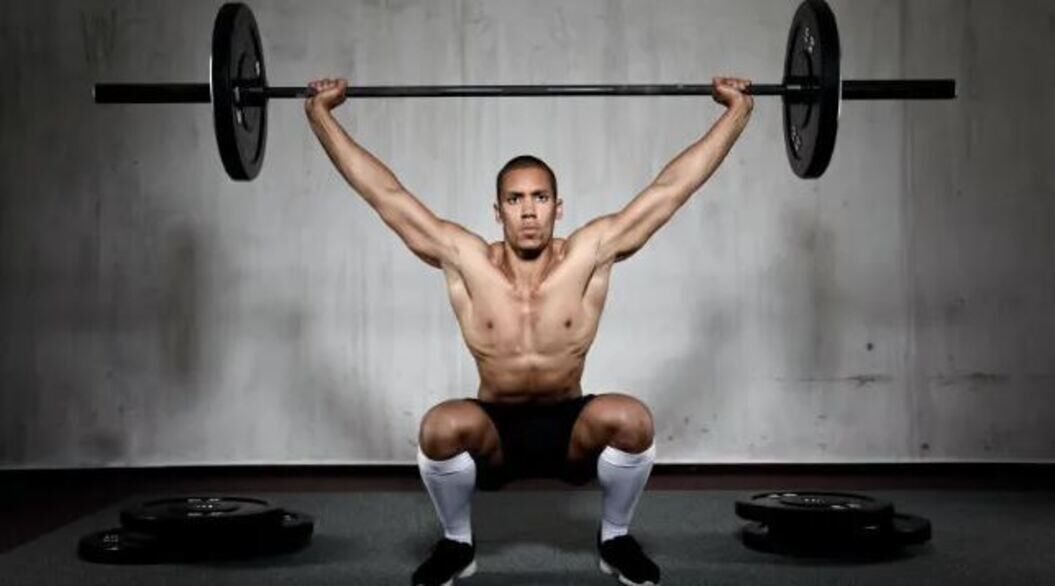
The overhead squat is a dynamic, full-body exercise that challenges your strength, coordination, and flexibility. Whether you’re an experienced lifter or a fitness enthusiast looking to diversify your workout routine, mastering this lift can bring significant benefits. It’s not just about lifting heavy—it’s about control, posture, and a deep understanding of your body mechanics. If you’ve ever watched Olympic weightlifters and marveled at their precision, the overhead squat is a fundamental part of their training.
The overhead squat is the ultimate core workout. It tests your balance, stability, and strength in ways that few exercises can. – Daniyar Ismayilov, a Turkmen weightlifter
In this guide, we’ll walk you through the detailed steps of performing an overhead squat, offer tips to enhance your performance, and highlight common mistakes to avoid. You’ll learn about the muscles engaged, how to progress towards this lift, and who should incorporate or avoid this exercise. Plus, we’ll explore variations and alternatives to ensure you get the most out of your training.
What is the overhead squat?
The overhead squat is a dynamic and complex lift where you hold a barbell overhead with your arms fully extended while performing a deep squat. This exercise requires a combination of strength, flexibility, and stability. The main characteristics of the overhead squat involve maintaining an upright torso, locked elbows, and a strong, stable overhead position as you descend into a full squat. The overhead squat is an integral part of Olympic weightlifting, particularly serving as the foundational movement for the snatch lift.
Perfect overhead squat technique
Executing the overhead squat requires precision and attention to detail. Follow these step-by-step instructions to ensure proper form and maximize your benefits:
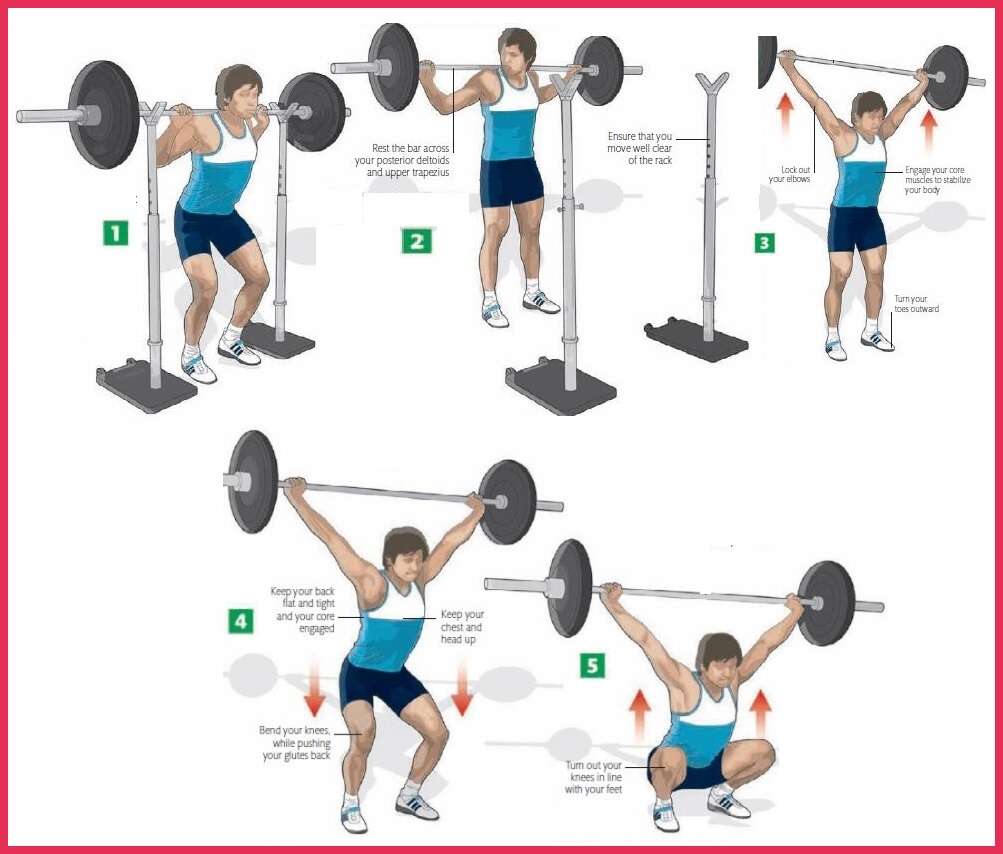
- Set Up: Begin by standing with your feet shoulder-width apart. Grip the barbell with a wide, overhand grip, slightly wider than shoulder-width.
- Position the Barbell: Press the barbell overhead, locking your elbows completely. Ensure your shoulders are active and engaged to stabilize the weight.
- Find Your Stance: Slightly turn your toes out and keep your chest up with a neutral spine. Your gaze should be straight ahead.
- Initiate the Squat: Begin by pushing your hips back, then bend your knees to lower into a squat, as if sitting back into an imaginary chair.
- Maintain the Overhead Position: Keep the barbell overhead with arms fully extended throughout the movement. Focus on keeping it aligned with the middle of your feet.
- Reach Full Depth: Lower your hips until they are below parallel with your knees. Maintain an upright torso to avoid leaning forward.
- Ascent: Push through your heels and extend your hips and knees to stand back up, keeping the barbell overhead and arms locked.
- Reset and Repeat: Ensure you are stable at the top before performing additional reps. Keep practicing to improve your form.
Performance pointers & common mistakes
Mastering the overhead squat can be challenging, but with the right approach and awareness of potential pitfalls, you can perfect this lift. Here are some additional tips and common mistakes to watch out for.
Additional Tips
- Warm-Up Thoroughly: Incorporate dynamic stretches and mobility drills specific to your shoulders, hips, and ankles to prepare your body for the movement.
- Focus on Pacing: Perform the lift in a controlled manner, emphasizing the tempo of both the descent and ascent phases to ensure stability and muscle engagement.
- Use Visual Cues: Pick a spot on the wall in front of you and focus on it to help maintain a neutral head position and upright posture.
Common Mistakes
- Incorrect Bar Position: Holding the bar too far forward or backward can throw off your balance. Aim to keep the bar directly above the middle of your feet.
- Knees Collapsing Inward: Ensure your knees track over your toes to prevent valgus knee collapse, which can lead to injuries.
- Insufficient Depth: Not squatting down to at least parallel can limit the effectiveness of the exercise. Work on mobility and flexibility to reach proper depth.
- Lack of Core Engagement: Failing to activate your core can result in poor stabilization. Keep your core tight throughout the movement to support your spine.
Muscles involved in overhead squat
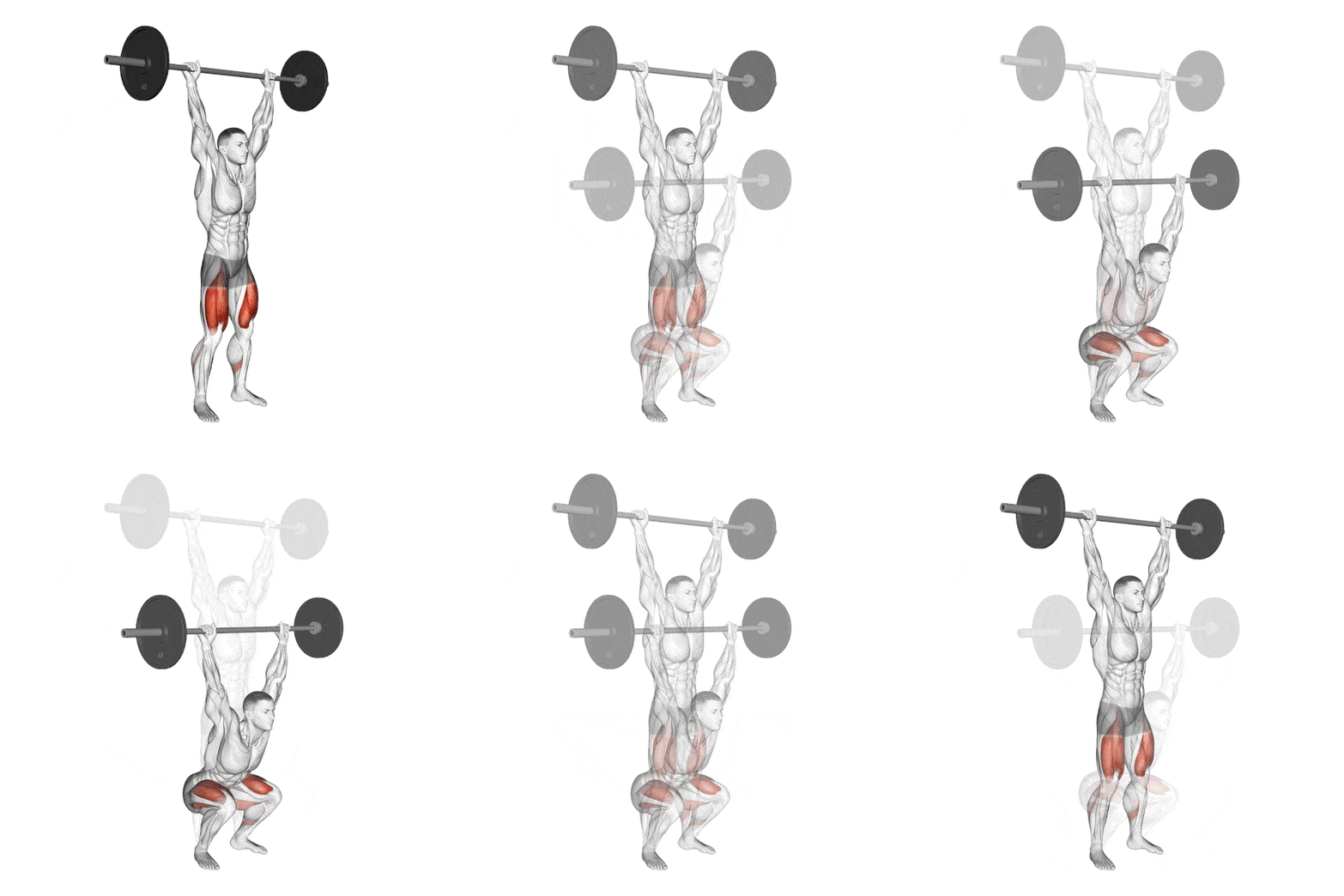
During an overhead squat, several muscle groups come into play, with different muscles taking on primary or supporting roles.

- Quadriceps: These are heavily engaged as they work to extend the knee and support the movement through the squatting phase.
- Gluteus Maximus: This muscle group is crucial for hip extension, stabilizing the lower body, and ensuring a strong ascent from the squat’s bottom position.
- Hamstrings: While they function more as stabilizers, the hamstrings still play a pivotal role in controlling the descent and ascent of the squat.
- Core Muscles: The core, including the rectus abdominis, obliques, and transverse abdominis, is engaged to provide stability and maintain an upright torso.
- Erector Spinae: These muscles along the spine help maintain a neutral back and provide spinal support throughout the lift.
- Deltoids: The deltoids, especially the anterior and medial heads, are responsible for keeping the arms steady and the barbell overhead.
- Trapezius and Rhomboids: These muscles aid in scapular stabilization, which is crucial for maintaining shoulder positioning.
- Rotator Cuff Muscles: The rotator cuff muscles, including the supraspinatus, infraspinatus, teres minor, and subscapularis, work to stabilize the shoulder joint during the overhead position.
Benefits of incorporating overhead squats into a workout routine
- Identifies Weaknesses: Overhead squats help to reveal areas of weakness or imbalances in your body, allowing for targeted improvement.
- Strengthens Major Muscle Groups: This exercise engages and strengthens major muscle groups in the lower body, including quads, hamstrings, and glutes.
- Engages Core and Upper Body: Performing overhead squats requires significant core and upper body engagement, particularly the shoulders and abdominal muscles, contributing to overall strength and stability.
- Increases Flexibility and Mobility: The movement enhances flexibility through the hips and ankles, which can translate to better movement patterns in other exercises.
- Improves Shoulder and Joint Stability: Holding a weight overhead adds a stability challenge for the shoulders and various joints, promoting joint health and function.
- Enhances Coordination and Balance: The technique demands precise coordination and balance, which can improve athletic performance in various sports.
- Reduces Risk of Injury: By improving movement patterns and strengthening stabilizing muscles, overhead squats can help reduce the risk of injuries both in and out of training environments.
What athletes could particularly benefit from overhead squats?
The overhead squat is incredibly beneficial for athletes across various sports due to its emphasis on core stability, balance, and mobility. It’s particularly useful for:
- Weightlifting: Enhances snatch technique and strengthens key muscle groups involved in lifting.
- CrossFit: Integral for many workouts, helping improve overall strength and endurance.
- Gymnastics: Aids in developing upper body and core strength crucial for holding and transitioning between positions.
- Track and Field: Improves explosive power and stability, benefiting disciplines like sprinting, jumping, and throwing.
- Martial Arts: Boosts balance, coordination, and lower body strength, which are essential for strikes and stances.
- Swimming: Enhances shoulder stability and core strength, beneficial for maintaining streamlined positions in the water.
- Football/Soccer: Increases lower body power and agility, crucial for quick direction changes and endurance.
How do you progress to overhead squats?
Progressing to overhead squats starts with mastering the basics and gradually incorporating more complex movements. Here are some key steps to follow:
- Solidify Basic Squatting Form: Ensure that your form is impeccable in basic squat exercises, such as the air squat, goblet squat, and back squat. Make sure you’re hitting the correct depth and maintaining an upright torso.
- Improve Shoulder and Thoracic Mobility: Adequate mobility in your shoulders and thoracic spine is crucial. Incorporate exercises like shoulder dislocations with a PVC pipe, wall slides, and thoracic extensions over a foam roller.
- Practice Overhead Position with Light Loads: Begin with an unloaded barbell, broomstick, or PVC pipe to practice holding the barbell overhead while performing a squat. Focus on keeping your arms locked out and the bar directly over your mid-foot.
- Work on Stability with Overhead Presses: Strengthen your shoulders and improve stability by incorporating various overhead press variations, such as the strict press, push press, and jerk.
- Incorporate the Overhead Squat in Warm-Ups: Regularly include light overhead squats in your warm-up routine to build familiarity and comfort with the movement.
- Gradually Increase Load: Once you’re comfortable with the mechanics, slowly add weight to the barbell. Progress in small increments to avoid compromising form.
- Seek Guidance: If possible, work with a coach or a more experienced lifter to get personalized feedback and cues.
Consistently practicing and gradually increasing the complexity and load of your movements will help you safely progress to a proficient overhead squat.
Effective variations and alternatives to the overhead squat
There are several variations and alternatives to the overhead squat. Beginners can benefit from using an unloaded barbell, broomstick, or PVC pipe to focus on form and stability. For those looking to advance, the single-arm dumbbell overhead squat provides an added challenge and helps improve unilateral stability and strength.
Alternatives to the overhead squat include:
- Front Squat: This variation shifts the load to the front of your body, increasing strength in the quadriceps and core stability.
- Back Squat: A traditional squat that engages the lower body muscles without the overhead requirement, making it more accessible for those with shoulder mobility issues.
- Dumbbell Squat Press: Combining the squat with a dumbbell press, this movement develops both lower and upper body strength and improves coordination.
- Goblet Squat: Holding a kettlebell or dumbbell close to your chest, this squat variation emphasizes proper form and core engagement.
- Single-Leg Squat: Also known as a pistol squat, this exercise enhances balance, coordination, and unilateral strength, targeting many of the same muscle groups as the overhead squat.
Conclusion
The overhead squat is a dynamic and multifaceted exercise that offers immense benefits to your overall fitness routine. With its focus on strength, flexibility, and stability, this lift not only challenges you physically but also enhances your athletic performance. Whether you’re looking to improve your mobility, correct muscle imbalances, or add a new dimension to your workouts, mastering the overhead squat can significantly elevate your fitness game. Try to progress slowly (to avoid injuries), pay close attention to form, and incorporate variations or alternatives if necessary. This exercise, while powerful, is not for everyone—make sure to assess your own capabilities and limitations before diving in. In doing so, you’ll pave the way for a more robust and resilient fitness journey.
