


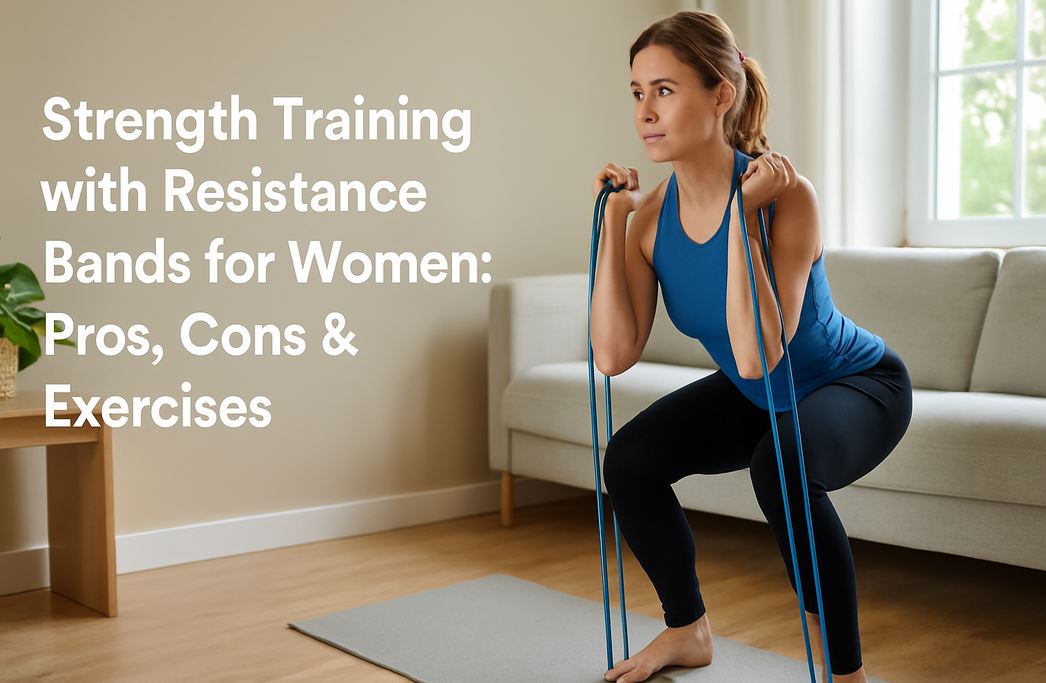
Diving into resistance band strength training for women can be a game-changer if you want to build strength, tone muscles, and stay fit at home or on the go. Resistance bands are affordable, portable, and effective for women of all ages—from beginners to experienced lifters.
As a certified strength coach, I’ve seen women achieve incredible results with just a set of bands, especially those over 40 and 50, who benefit from low-impact options to protect their joints and maintain bone density.
This guide will help you understand the benefits, drawbacks, and best exercises, and provide a detailed 4-week training plan.
✅ The Benefits of Resistance Band Strength Training
⚠️ Potential Drawbacks of Resistance Band Training
💪 Best Resistance Band Exercises for Women
Below are essential moves every woman should include in her resistance band routine. Each description includes why the exercise is effective, helping you train smarter.
🔹 Squat with Band
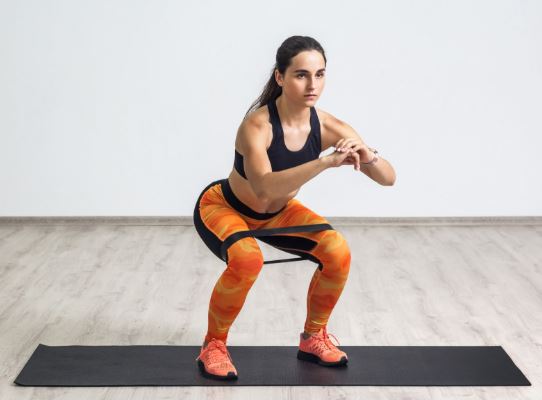
How to do it: Place a loop band above your knees. Stand with feet hip-width apart. Lower into a squat, pushing knees outward against the band. Return to standing.
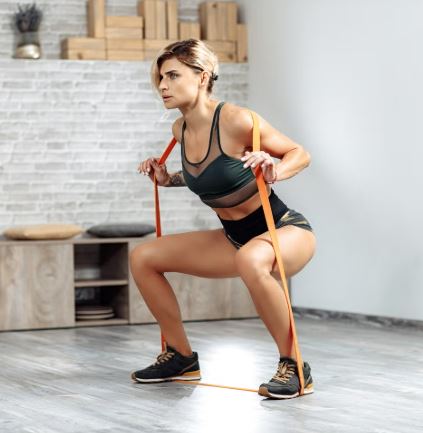
Another variation involves standing on the band with your feet shoulder-width apart while bringing the band up and over your shoulders. This creates upward resistance as you rise from the squat, increasing tension on your quadriceps and glute muscles for a more challenging movement.
Why it’s useful: Engages quads, glutes, and abductors while teaching proper knee alignment.
🔹 Band-Resisted Glute Bridge
How to do it: Lie on your back with knees bent, feet flat, band above knees. Drive hips up, pushing knees outward against the band. Lower slowly.

Another version of the exercise is to wrap a resistance band around both feet and across the front of your hips.
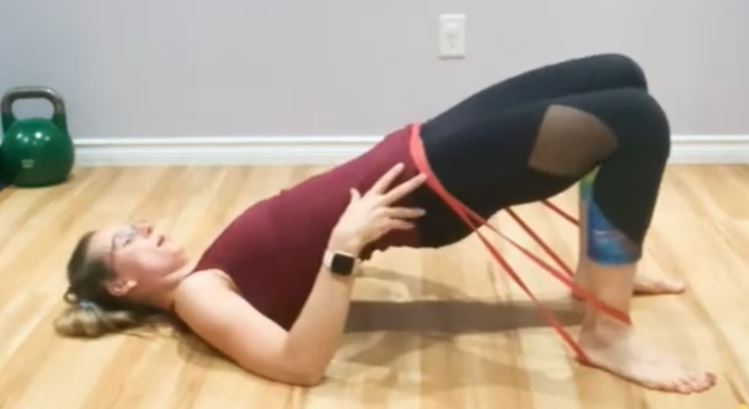
The final version involves placing a resistance band across your hips and pinning it down to the ground using your hands on either side.

Why it’s useful: Builds strong glutes, crucial for hip stability and injury prevention.
🔹 Standing Row
How to do it: Anchor band at chest height. Hold the handles, step back to create tension, pull the handles toward your ribs, and squeeze your shoulder blades.

Why it’s useful: Strengthens the upper back and improves posture, which is particularly essential for women who spend a lot of time sitting.
🔹 Overhead Press
How to do it: Stand on the band, hold handles at shoulders, press overhead until arms are straight, then lower with control.
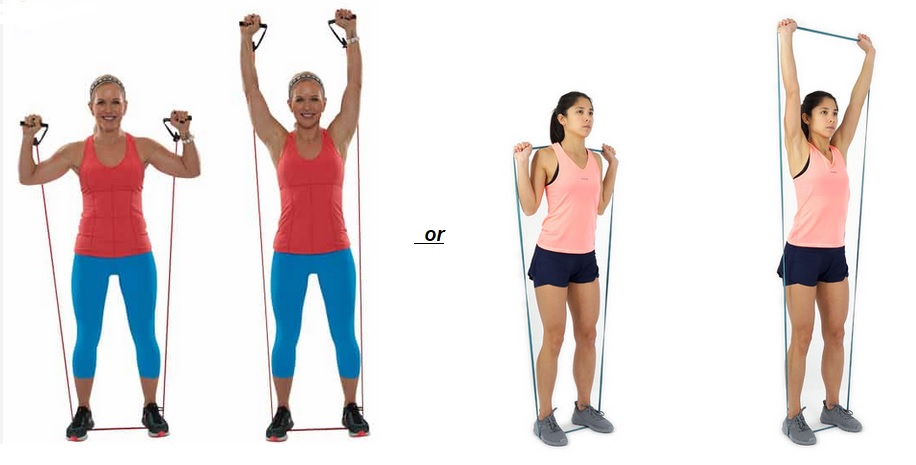
Why it’s useful: Develops shoulders and triceps, enhances upper-body strength for daily tasks.
🔹 Lateral Band Walk
How to do it: Place the band above the ankles or knees. Squat slightly, step sideways, maintaining tension.

Why it’s useful: Targets glute medius, key for hip stability and balance.
🔹 Band Chest Press
How to do it: Anchor band behind you at chest height. Hold the handles, press the arms forward until they are fully extended, then return them with control.
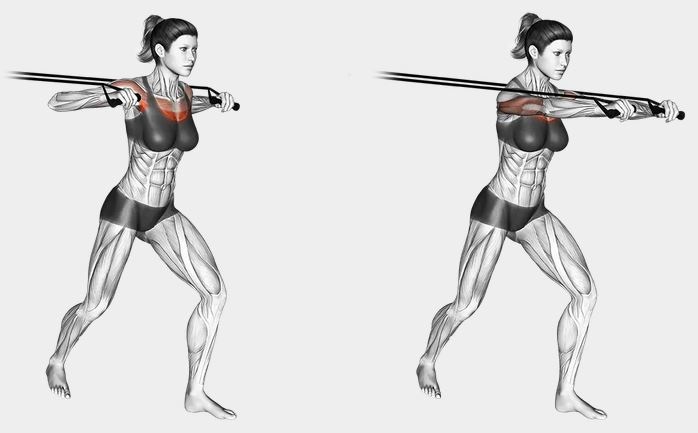
Why it’s useful: Strengthens chest and shoulders without needing a bench or weights.
🔹 Band Bicep Curl
How to do it: Stand on the band, holding the handles with palms up. Curl your hands toward your shoulders, keeping your elbows still. Lower slowly.
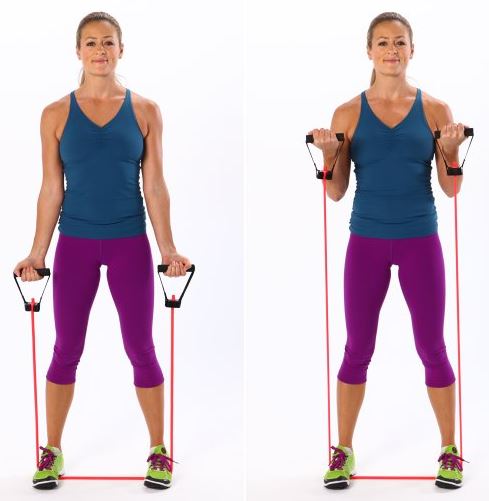
Why it’s useful: Builds biceps and grip strength, improving arm definition.
🔹 Band Triceps Extension
How to do it: Anchor band overhead, hold handles, extend arms downward, then return to start.

Why it’s useful: Tones triceps and enhances upper-arm strength for pushing movements.
Boost Your Workout Energy Safely
Discover the best pre-workout supplements for women in 2025 — clean, tested, and built to enhance strength, stamina, and focus without the crash.
Read the Full Pre-Workout Guide📅 4-Week Resistance Band Training Plan For Women
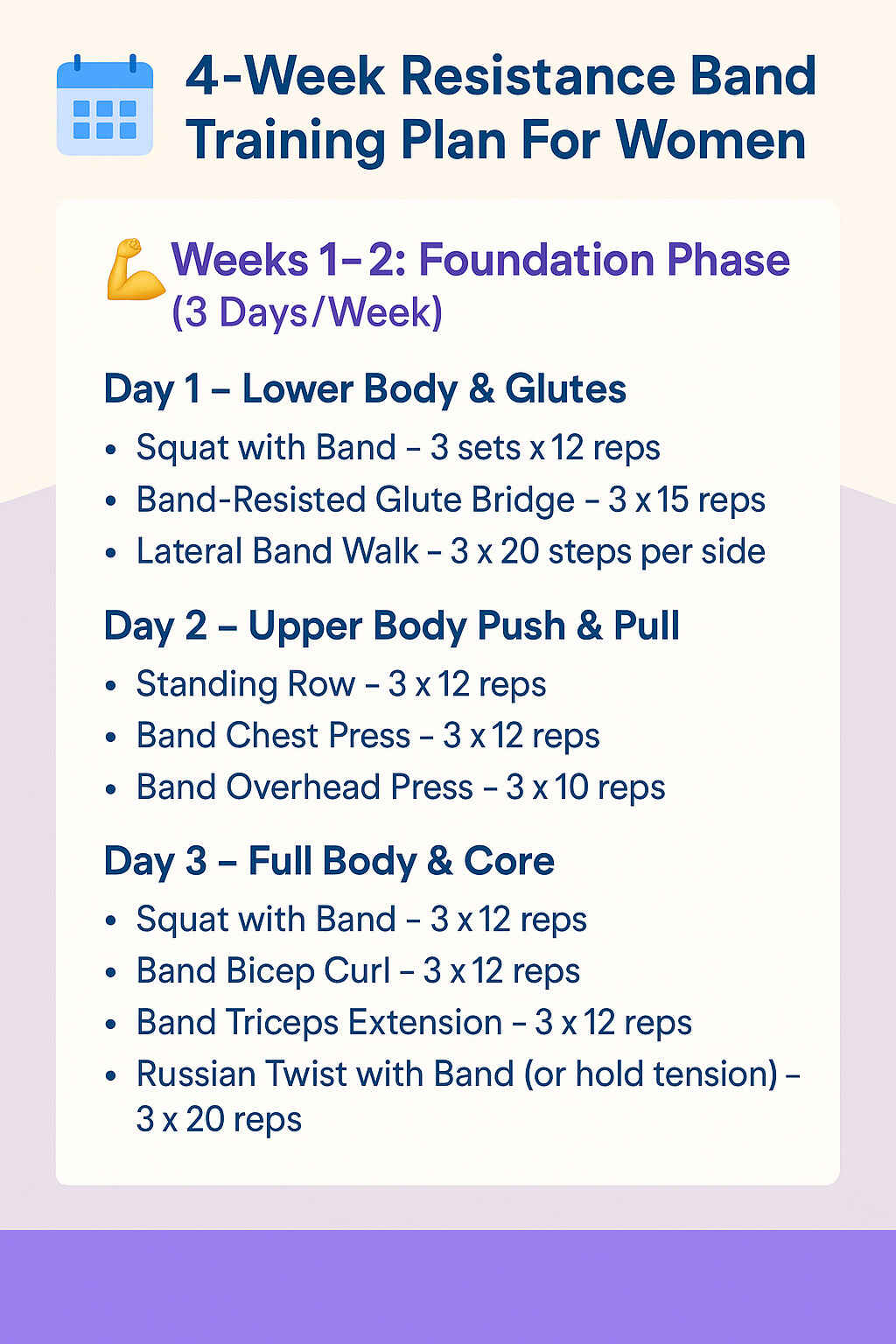
💪 Weeks 1–2: Foundation Phase (3 Days/Week)
Day 1 – Lower Body & Glutes
- Squat with Band – 3 sets x 12 reps
- Band-Resisted Glute Bridge – 3 x 15 reps
- Lateral Band Walk – 3 x 20 steps per side
Day 2 – Upper Body Push & Pull
- Standing Row – 3 x 12 reps
- Band Chest Press – 3 x 12 reps
- Band Overhead Press – 3 x 10 reps
Day 3 – Full Body & Core
- Squat with Band – 3 x 12 reps
- Band Bicep Curl – 3 x 12 reps
- Band Triceps Extension – 3 x 12 reps
- Russian Twist with Band (or hold tension) – 3 x 20 reps
💪 Weeks 3–4: Progression Phase (4 Days/Week)
Day 1 – Glute & Lower Body Focus
- Squat with Band – 4 x 12 reps
- Band-Resisted Glute Bridge – 4 x 15 reps
- Lateral Band Walk – 4 x 25 steps per side
Day 2 – Upper Body Pull
- Standing Row – 4 x 12 reps
- Band Bicep Curl – 4 x 12 reps
- Band Face Pull (if available) – 4 x 12 reps (optional advanced variation)
Day 3 – Upper Body Push
- Band Chest Press – 4 x 12 reps
- Band Overhead Press – 4 x 10 reps
- Band Triceps Extension – 4 x 12 reps
Day 4 – Full Body Burn & Core
- Squat with Band – 4 x 12 reps
- Band-Resisted Glute Bridge – 4 x 15 reps
- Lateral Band Walk – 4 x 25 steps per side
- Russian Twist with Band – 4 x 25 reps

💡 Important Notes
- Bands are amazing, but don’t forget that dumbbells and bodyweight-only workouts are excellent alternatives for at-home training variety and progression.
- Consistency is key—track your reps, sets, and resistance levels.
- Maintain good form to avoid injuries and maximize results.
🌟 Client Success Story: Sarah’s Strength Journey
Sarah, a 52-year-old busy manager, started resistance band strength training for women after reading about it on our site. She shared:
I was skeptical if bands alone could do anything for me, but I felt stronger by the second week! I loved being able to train at home without needing a gym.


As her coach, I noticed her consistency and growing confidence each week. She progressed from short 20-minute sessions to a whole 45-minute routine, proving resistance bands can work wonders for women over 50.
📌 Key Takeaways
✅ Resistance band strength training for women is a safe, joint-friendly way to build strength at home.
✅ Bands offer versatility and progressive overload without the need for heavy equipment.
✅ Including squats, rows, presses, and glute-focused exercises ensures a balanced program.
✅ Women over 40 and 50 can significantly benefit from resistance bands to maintain muscle and bone health.
✅ Progression, good form, and variety keep training effective and engaging.
What are the benefits of resistance band training for women?
Resistance bands offer joint-friendly resistance, improve muscle tone, and build strength without heavy weights. They’re versatile, affordable, and perfect for home workouts or travel. Bands also help engage stabilizer muscles, which improves balance and functional strength — especially important for women over 40 and 50.
Can resistance bands really build muscle?
Yes! Bands create constant tension throughout the range of motion, effectively stimulating muscle fibers for growth. Studies show resistance bands can induce similar muscle activation as traditional weights when used with proper form and progressive overload.
How often should women train with resistance bands?
Aim for 3–4 sessions per week, giving each muscle group 48 hours to recover. This frequency allows for consistent progress while avoiding overtraining, which is especially important when starting out or returning after a break.
Are resistance bands safe for beginners?
Absolutely. Bands allow you to adjust resistance easily, control movements, and perform exercises with minimal joint impact. They’re ideal for beginners who need to build strength safely and learn proper technique.
What muscles can women target with resistance bands?
You can train your entire body: glutes, quads, hamstrings, calves, chest, back, shoulders, biceps, triceps, and core. Bands enable isolation and compound exercises, making them excellent for a full-body workout plan.
How do you increase resistance with bands at home?
Progress by using thicker bands, shortening the band (choking up on the length), adding reps or sets, slowing tempo, or adding isometric holds. These methods help maintain progressive overload without needing heavier equipment.
Can resistance bands help with fat loss?
Yes. While bands themselves don’t burn fat, resistance training boosts metabolism by increasing lean muscle mass. Combined with a balanced diet, resistance band workouts can aid in weight loss and body recomposition.
Are resistance bands better than dumbbells?
Neither is universally better. Resistance bands excel in portability, joint-friendliness, and variable tension, while dumbbells allow precise weight increments. Many women benefit most from combining both for variety and comprehensive strength development.
What are the best resistance band exercises for glutes?
Top choices include banded squats, glute bridges, lateral band walks, and standing kickbacks. These exercises effectively activate and strengthen the gluteus maximus and medius for a firmer, stronger lower body.
How long until I see results from resistance band training?
With consistent training 3–4 times per week and a nutritious diet, most women notice increased strength, better muscle tone, and improved energy levels within 4–6 weeks. Results vary depending on fitness level and adherence to the program.
