


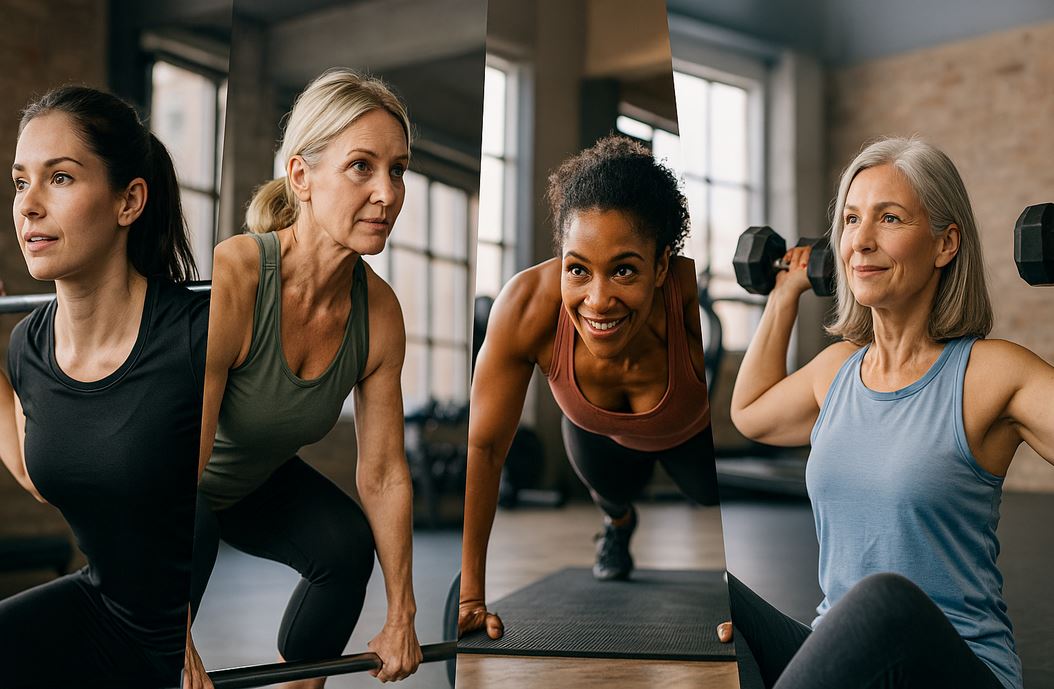
Strength training for women isn’t just a trend — it’s a life-changing tool for building physical strength, mental resilience, and lifelong health. As a trainer who has worked with hundreds of women, I’ve seen how the right plan can transform everything: posture, energy, confidence, and even how women perceive themselves. This guide covers every aspect of strength training for women, so you can train smarter, stay consistent, and reach your goals at any age.
🔹 Introduction: Why Strength Training Matters for Women
Many women still believe outdated myths, such as the notion that lifting weights will make them bulky or that cardio is the only way to stay fit. The truth? Strength training improves bone density, maintains muscle mass, boosts metabolism, and reduces injury risk — benefits that cardio alone can’t match.
Trainer’s note: One of the first things I teach my female clients is that lifting weights won’t make them “big,” but it will make them stronger, leaner (toned), and more confident.
🔹 Part 1: Strength Training Basics for Women
What Is Strength Training?
Strength training, also known as resistance training, involves exercises that cause your muscles to work against resistance, such as free weights, bands, machines, or even your body weight. The goal is to progressively challenge your muscles, stimulating them to adapt and grow stronger. This is what we refer to as muscle hypertrophy, or muscle growth.
Types of Strength Training for Women
Strength Training Types by Goal
- Maximal Strength Training – Low reps (1–5), high load; develops pure strength and neural adaptations.
- Hypertrophy Training – Moderate reps (6–12), moderate load; ideal for building muscle size and shape.
- Muscular Endurance Training – High reps (12–20+), lighter load; improves fatigue resistance for daily activities or sports.
- Power/Explosive Strength Training – Fast, explosive movements like box jumps or Olympic lifts; enhance speed and athletic performance.
- Stability & Functional Strength Training – Focuses on core, balance, and coordination (e.g., single-leg exercises, balance work).
Types by Tools & Equipment Used
- Bodyweight (great for beginners or home workouts and exercises such as squats, lunges, push-ups, pull-ups, bodyweight dips, etc.)
- Dumbbells (affordable, versatile, great for home)
- Barbells (allow heavy lifting, ideal for progressive overload and heavier lifting for maximal strength or hypertrophy)
- Machines (suitable for beginners needing stability)
- Resistance bands (portable, joint-friendly, excellent for all levels)
- Kettlebells (portable, affordable, versatile)
Essential Principles of Strength Training
- Progressive overload – gradually increasing resistance or difficulty
- Proper form (body alignment, movement mechanics, breathing and bracing, tempo, and range of motion) prevents injuries and ensures that the target muscles are worked. Proper technique & form are crucial.
- Recovery – muscles need time to rebuild; train each muscle group 2–3 times/week

🔹 Part 2: Age-Specific Strength Training
Strength training isn’t one-size-fits-all.
Strength Training for Women Over 20
Your 20s are the perfect time to lay the foundation for lifelong strength. This is when your body is primed to build muscle efficiently, recover quickly, and learn proper technique. Focus on mastering fundamental lifts — such as squats, deadlifts, rows, and presses — and progressively increase the load. Consistent strength training in your 20s sets you up for healthier bones and a faster metabolism later in life.
Strength Training for Women Over 30
In your 30s, lifestyle shifts like career growth, family planning, or increased stress can challenge workout consistency. Hormonal changes may also begin subtly affecting recovery and energy levels. Prioritize structured strength programs that fit your schedule, incorporating both compound movements for efficiency and unilateral exercises to correct imbalances. Maintaining lean muscle becomes increasingly essential as your metabolism naturally slows.
Strength Training for Women Over 40
From 40 onward, women naturally start losing muscle mass (sarcopenia) and bone density. Regular strength training helps slow these changes, keeping your metabolism strong and bones resilient.
Strength Training for Women in Their 50s
In your 50s, perimenopause and menopause can bring hormonal shifts affecting strength, energy, and recovery. Prioritize compound movements (like squats, deadlifts, rows) with controlled form.
Strength Training During Menopause
Estrogen declines sharply during menopause, leading to faster bone loss and increased fat gain. Strength training at least three times a week is one of the best ways to counteract these changes and maintain vitality.
Trainer’s note: Women in their 40s and 50s often tell me they wish they’d started strength training sooner. It’s never too late — but the sooner you start, the more you’ll benefit!
🔹 Part 3: Setting Goals & Seeing Results
How to Define Your Goals
Are you training to build muscle and sculpt your body? Do you want to improve your bone density or reduce your risk of injury? Or is your main aim to boost energy and feel more confident? Knowing your primary objective helps you choose the right exercises, training split, or full-body training approach, as well as a suitable progression plan.
- Strength & performance (e.g., lift heavier, master push-ups)
- Aesthetics & tone (e.g., more defined arms and upper body, firmer glutes)
- Health (e.g., maintain bone density, improve posture)
Tracking Progress
As you train, remember that progress comes in many forms — it’s not just about the number on the scale. Track strength improvements, such as lifting heavier weights or doing more reps, but also pay attention to non-scale victories, including better posture, increased energy, improved mood, and clothes fitting more comfortably.
- Keep a workout journal or use some fitness apps
- Take progress photos (before and after photos)
- Celebrate small wins (more reps, heavier weights)
- Reward yourself after crushing fitness goals (even the smallest ones)
Results don’t happen overnight. Building strength takes consistency, patience, and progressive overload. While some women notice changes in energy and confidence within weeks, visible muscle tone and significant strength gains often take 8–12 weeks of regular training. Avoid comparing your journey to others; your starting point, genetics, and lifestyle all influence your timeline
Common Mistakes to Avoid
- Lifting too light for too long
- Skipping recovery
- Ignoring form
Trainer’s note: One of the best ways I keep my clients motivated is by encouraging them to celebrate every milestone — whether it’s completing all sets with perfect form or moving up to a heavier weight. Small wins build momentum!
Women’s Pre-Workout: Clean Energy That Performs
Looking for safe and effective pre-workout supplements for women? Discover the top-rated options for energy, focus, and endurance — designed to support female physiology without overstimulation.
Explore the Best Women’s Pre-Workouts🔹 Part 4: Hormones, Menstrual Cycle & Strength Training
How Estrogen & Progesterone Affect Training
Estrogen boosts strength and recovery, while progesterone can increase fatigue. Tracking your cycle can help you time intense workouts for when your body naturally feels stronger (usually mid-cycle).
Strength Training Across the Menstrual Cycle
- Follicular phase (Days 1–14) – rising estrogen → best time for heavy lifting
- Ovulation (~Day 14) – estrogen peaks → maximal power and strength potential
- Luteal phase (Days 15–28) – progesterone dominance → reduce intensity if fatigued
- Menstruation (Days 1–5) – low energy for some → focus on light workouts or technique
Special Considerations
- PCOS (Polycystic Ovary Syndrome): Prioritize consistent strength training to improve insulin sensitivity and hormone balance.
- Oral contraceptives: May blunt natural hormonal fluctuations, but don’t prevent strength gains.
- Hypothyroidism (an underactive thyroid): Start gradually; fatigue can be higher, but training can boost metabolism.
Trainer’s note: One of my clients with PCOS experienced dramatic improvements in energy, weight management, and cycle regularity after starting a structured strength routine.

🔹 Part 5: Psychological Aspects & Motivation
Strength training isn’t just about physical transformation — it can reshape how you see yourself and empower you in every area of life. Understanding the psychological aspects of training helps women overcome mental barriers, build lasting motivation, and harness the confidence that comes with improving their strength.
Mindset Matters
Mindset is the foundation of success in strength training. Adopting a growth mindset — the belief that you can improve with effort and time — helps you stay consistent, even when progress feels slow. Reframing mistakes or missed workouts as learning opportunities instead of failures reduces guilt and keeps you moving forward.
Women often carry limiting beliefs that weightlifting is “not for them” or that they’re “too old” or “not athletic enough.” Challenging these thoughts and celebrating every achievement, no matter how small, builds lasting confidence and self-efficacy.
Overcoming Barriers
Life is busy, and many women juggle careers, family responsibilities, and social obligations. Lack of time, gym intimidation, or self-consciousness are common obstacles to working out. Planning short but effective workouts (20–30 minutes), finding a supportive community, or starting at home with dumbbells or bands can help overcome these barriers.
If fear of judgment holds you back, remember that most people at the gym are focused on their own workouts, not yours. Alternatively, training with a friend or hiring a coach can provide accountability and reassurance.
Mental Health Benefits
Strength training does more than sculpt your body — it boosts mental well-being by reducing anxiety and depression, balancing mood swings, and enhancing cognitive function. The endorphins released during resistance training act as natural stress relievers, while the sense of accomplishment from progressing in your workouts helps build resilience.
Regular training can also enhance sleep quality, which in turn supports mood stability and hormone balance. Over time, many women report feeling calmer, more focused, and better equipped to handle daily stressors.
Trainer’s note: I’ve seen countless clients transform mentally as well as physically. The strength they build in the gym often gives them the courage to tackle challenges in their careers, relationships, and personal goals.
🔹 Part 6: Strength Training Techniques & Equipment
Mastering Proper Technique
Perfect form (weightlifting technique) prevents injuries and ensures you target the right muscles. Learn fundamental lifts like squats, deadlifts, rows, and presses. Start light, nail the technique, then add weight.
Comparing Equipment
- Bodyweight – beginner-friendly, minimal equipment
- Dumbbells – versatile, scalable resistance
- Barbells – best for progressive overload
- Machines – ideal for isolating muscles, stability
- Resistance bands – portable, joint-friendly
- Kettlebells – combine strength and cardio with dynamic, functional movements
Choosing the right equipment is key to making your strength training safe, effective, and enjoyable. Different tools offer unique benefits depending on your goals, experience level, and where you train — whether it’s at home or in the gym.
Split vs. Full-Body Training
Full-Body Workouts
✅ In each session, you train all major muscle groups (legs, back, chest, shoulders, core).
✅ Perfect for beginners, busy women, or anyone who can only work out 2–3 times per week — every workout stimulates the whole body.
✅ Great for overall fitness and calorie burn per session.
❌ It can feel tiring if you try to cram in too many exercises or train too frequently without enough rest.
Split Routines
✅ Each workout focuses on specific muscle groups (e.g., Day 1: chest and triceps; Day 2: back and biceps; Day 3: legs and shoulders).
✅ Allows more volume and targeted work for each muscle, which can lead to better muscle growth in advanced trainees.
✅ Ideal for those who train 4+ days per week and want detailed programming.
❌ Less flexible — missing a session can leave an entire muscle group untrained for a week.
Trainer’s note: In my experience, most women see great results with full-body routines, especially in the first 6–12 months of training. I recommend switching to splits only when you’re ready for advanced muscle-building or have time for more frequent workouts.
🔹 Part 7: Sample Programs & Plans
Strength training for women should be flexible, but having a clear plan makes it easier to stay consistent. Here are three example programs you can adapt based on your schedule and goals:
✅ Beginner Full-Body Plan (2–3 Days/Week)
- Focus: Build overall strength, practice key movements
- Day 1 & 3:
• Squat – 3 x 10
• Push-Up (or Incline) – 3 x 8
• Bent-Over Dumbbell Row – 3 x 10
• Glute Bridge – 3 x 12
• Plank – 3 x 30s
✅ Intermediate Upper/Lower Split (4 Days/Week)
- Focus: Increase strength with more weekly volume
- Days 1 & 3 (Lower Body):
• Goblet Squat – 4 x 8
• Romanian Deadlift – 4 x 10
• Walking Lunges – 3 x 12/leg - Days 2 & 4 (Upper Body):
• Dumbbell Chest Press – 4 x 8
• Dumbbell Shoulder Press – 4 x 10
• Dumbbell Row – 4 x 10
• Bicep Curl + Triceps Extension Superset – 3 x 12 each
✅ At-Home Minimal Equipment Plan (3 Days/Week)
- Focus: Effective workouts with just bodyweight & bands/dumbbells
- Day 1: Full Body
• Bodyweight Squat – 3 x 15
• Push-Up – 3 x 10
• Band Row – 3 x 12 - Day 2: Glutes & Core
• Hip Thrust – 3 x 15
• Side Plank – 3 x 30s/side
• Lateral Band Walk – 3 x 20 steps/side - Day 3: Upper Body & Cardio
• Dumbbell Shoulder Press – 3 x 12
• Dumbbell Bicep Curl – 3 x 12
• Burpees or Jumping Jacks – 3 x 20
Trainer’s tip: These programs are just templates — feel free to swap exercises for ones that suit your equipment, preferences, or abilities. The most important thing is to stay consistent and gradually challenge yourself.
Useful resources:
🔹 Part 8: Nutrition & Recovery for Female Lifters
✅ Prioritize protein
- Aim for ~1.6 g per kg bodyweight daily
- Supports muscle repair and growth after strength training
- Helps maintain lean mass during fat loss phases
✅ Eat balanced meals
- Include complex carbs (oats, rice, quinoa) for energy
- Add healthy fats (avocado, olive oil, nuts) for hormone balance
- Colorful veggies & fruits = vitamins + minerals for recovery
✅ Hydrate well
- Water is essential for muscle function and energy
- Electrolytes (sodium, potassium) help during sweaty workouts
✅ Fuel pre-workout
- Small meal or snack with carbs + protein 60–90 minutes before training
- Examples: banana + Greek yogurt, or toast with nut butter
✅ Optimize post-workout nutrition
- Eat within 60 minutes after training to maximize recovery
- Include protein + carbs (e.g., protein shake + fruit or chicken + rice)
✅ Prioritize sleep
- Aim for 7–9 hours per night
- Most muscle recovery and hormone balancing happen during deep sleep
✅ Manage stress
- Chronic stress can increase cortisol, which slows muscle recovery
- Include stress-relief strategies: stretching, yoga, journaling
✅ Rest days matter
- Plan at least 1–2 full rest days weekly
- Active recovery (walking, gentle yoga) supports circulation without overtraining
✅ Adjust nutrition by goal
- To build muscle → eat a small calorie surplus
- To lose fat → slight calorie deficit, but keep protein high
✅ Listen to your body
- Fatigue, low motivation, or nagging aches may signal the need for more rest
- Take deload weeks every 6–8 weeks to recover fully
🔹 Part 9: Success Stories & Testimonials
When Karen first came to me, she was noticing more difficulty climbing stairs and lifting her grandchildren, classic early signs of sarcopenia. At 45, balancing lesson plans and family life left her little time for herself, and she feared that muscle loss was inevitable. After following the Weight Training for Women Over 40 to Prevent Muscle Loss program for twelve weeks, her transformation was remarkable.
I genuinely didn’t expect to feel this strong again. After just a few weeks, I was lifting heavier and moving more confidently. Now I can pick up my grandson without worry, and I have more energy all day long.


When Diane, a dedicated school librarian, first began our Beginner Strength Routine for Women in Their 50s, she was concerned about her early diagnosis of osteopenia and felt hesitant about lifting weights. After just four months of consistent training—three sessions per week focused on bone-stimulating compound movements and careful progression—her results were inspiring.
I never thought lifting weights at my age could reverse bone loss. Now I feel so much more confident—not just in the gym, but climbing ladders at work and playing with my grandchildren.


Olivia, a 47-year-old accountant and mother of three, had always believed she needed a gym to see results. When Olovia started the Dumbbell-Only Strength Training Plan for Women Without Gym Access, everything changed.
I honestly thought home workouts were a waste of time. I tried random YouTube videos before, but I never felt like I was getting stronger. Now, I look forward to my workouts. I don’t dread them. I feel powerful, and I know I can keep progressing — right here at home.


Tina, a 37-year-old working mom of two from Ljubljana, never thought strength training would fit into her chaotic schedule. After experiencing chronic back tightness and low energy, Tina decided it was time to make a change, but the gym was out of the question. She stumbled across our 3-week kettlebell strength plan for busy women, grabbed the 10kg kettlebell her husband had forgotten in the garage, and committed to just three sessions per week, each lasting 25 minutes.
I used to scroll past workout plans thinking, ‘Yeah, right. Who has time for this?’ Between school drop-offs, work deadlines, and cleaning Lego bricks out of the sofa, lifting kettlebells wasn’t even on my radar. The plan was simple, doable, and didn’t make me feel like I had to ‘crush it’ every day. I actually looked forward to those 30 minutes. It became my time. The kettlebell was heavy, but the plan made it feel light. I’m not trying to become a fitness influencer. I just want to feel strong—and I finally do.


Sarah, a 52-year-old busy manager, started resistance band strength training for women after reading about it on our site. She shared:
I was skeptical if bands alone could do anything for me, but I felt stronger by the second week! I loved being able to train at home without needing a gym.


When Martina, a 32-year-old software engineer, partnered with me to optimize her training, she was frustrated by inconsistent progress and unpredictable energy swings throughout her cycle. After adopting a cycle-synced approach, she experienced dramatic improvements over three months.
Mapping my heaviest lifts to the high-energy days and scaling back when I felt low has been a game-changer. Not only did my strength numbers climb, but my overall consistency and confidence skyrocketed.


When Emily, a 34-year-old Marketing Manager, first came to me, she was frustrated by her plateaued lifts and erratic energy—she worked long hours at a marketing firm and felt her workouts were inconsistent. After we implemented follicular phase strength training, everything changed: within two cycles (approximately eight weeks), Emily increased her back squat from 60 kg to 75 kg (4 sets of 6 reps) and her bench press jumped from 30 kg to 40 kg (4 sets of 6 reps). She also added two extra reps to her pull-ups, going from 3 × 3 to 3 × 5.
I can’t believe how much stronger I feel just by shifting my hardest sessions to those high-estrogen days. Not only did my numbers improve, but I had more energy and confidence both in and out of the gym.


🔹 Conclusion: My Professional Take as a Women’s Strength Coach
After working with women of all ages and backgrounds for over a decade, I truly believe that strength training for women is not just a workout routine — it’s a path to reclaiming your power, health, and confidence. Too many women still think lifting weights is only for men or worry it will make them bulky. In reality, building strength helps us stay independent, resilient, and vibrant at every stage of life.
I’ve seen women in their 20s transform their self-image, women in their 40s regain energy they thought was lost, and women in their 60s move without pain thanks to consistent strength training. But it’s not just physical: strength training empowers your mind. Every rep teaches discipline, every set builds determination.
My advice? Don’t fear the weight room or resistance bands. Start where you are, focus on form, and progress gradually. Celebrate every milestone, no matter how small. And remember: you deserve to feel strong, not just for your body, but for your whole life.
🔹 Key Takeaways
What is the best age for women to start strength training?
Women can safely start strength training at any age, but the earlier you begin, the longer you’ll benefit from increased muscle mass, stronger bones, and better metabolism. Starting in your 20s or 30s helps build a solid foundation, but women in their 40s, 50s, 60s, and beyond can still make impressive gains.
Will strength training make women bulky?
No. Most women don’t have enough testosterone to develop bulky muscles like men. Instead, strength training sculpts lean, toned muscles and helps reduce body fat, leading to a fitter, more defined physique.
How many times a week should women do strength training?
For most women, 2–4 strength sessions per week are ideal. Beginners can start with 2–3 full-body workouts, while more advanced women might do 4–5 split sessions focusing on different muscle groups.
Is it better to do full-body or split workouts for women?
Full-body workouts are best for beginners or busy women training 2–3 days per week, as they work every muscle each session. Split routines suit advanced women training 4+ times weekly, allowing more focused work on each muscle group.
How does estrogen affect strength training for women?
Estrogen supports muscle recovery and strength gains, especially during the follicular phase of the menstrual cycle. As estrogen declines with age or menopause, recovery may slow, and it becomes even more important to maintain strength training to protect bone and muscle health.
Should women strength train during their period?
Yes — light to moderate strength training is generally safe and can reduce cramps, improve mood, and maintain consistency. Listen to your body: if energy is low, prioritize rest or low-intensity movement.
Can I build muscle at home without a gym?
Absolutely! Using dumbbells, resistance bands, kettlebells, or even just your bodyweight, you can build muscle and strength effectively at home. The key is progressive overload — gradually increasing difficulty over time.
What’s the best diet for women who lift weights?
A balanced diet with sufficient protein (~1.6 g/kg bodyweight), complex carbs for energy, and healthy fats for hormone balance supports strength gains. Hydration and micronutrients (calcium, magnesium, iron) are also important.
How long does it take to see results from strength training?
Most women notice increased energy and strength within 4–6 weeks of consistent training. Visible changes in muscle tone often appear after 8–12 weeks, depending on effort, nutrition, and starting point.
Is strength training safe for women over 50 or during menopause?
Yes — in fact, it’s one of the best ways to maintain muscle, support balance, and prevent osteoporosis. Women over 50 should focus on compound movements with proper form and include exercises for bone density, like squats and deadlifts.
