



🌙 Introduction: Harnessing the Luteal Phase
The luteal phase—the two weeks between ovulation and the start of your next period—presents unique hormonal conditions that can impact energy, strength, and recovery. Progesterone rises, often bringing mild fatigue, bloating, or mood shifts, while estrogen dips from its ovulatory peak. Yet this window also offers an opportunity: by tailoring your workouts, you can protect gains made in earlier phases and support recovery when your body needs it most. In this guide, you’ll learn luteal phase training tips to maximize strength, minimize discomfort, and emerge more resilient.
🧬 Hormonal Shifts in the Luteal Phase
- Estrogen (↓): Slightly lower than follicular and ovulatory peaks, influencing joint laxity and thermoregulation.
- Progesterone (↑): Elevates body temperature, may reduce endurance, and increase perceived effort.
- Symptoms Commonly Reported: Bloating, breast tenderness, mild fatigue, mood fluctuations.
Understanding these changes helps explain why a standard high-volume program may feel overwhelming—and why strategic adjustments can keep you on track without overtaxing your system.
🎯 Training Strategies for Strength
- Moderate Intensity, Reduced Volume
- Target 70–80% of 1RM for 2–3 sets instead of 4–5 to balance stimulus and recovery.
- Unilateral & Stabilization Moves
- Exercises like split squats or single-arm presses build strength while protecting joints that may feel looser under progesterone’s influence.
- Eccentric Emphasis
- Slow, controlled 3–4 second lowering phases increase muscle tension with a lower overall load, making them ideal when energy is lower.
- Shorter, Focused Sessions
- Keep workouts to 30–40 minutes—targeted, efficient, and less draining.
Coach’s Tip: Listen to your body—if strength feels off, prioritize form and stability over load.
🏋️♀️ Best Exercises for the Luteal Phase
Each of these exercises provides targeted strength and stability benefits ideally suited to the hormonal and physical conditions of the luteal phase.
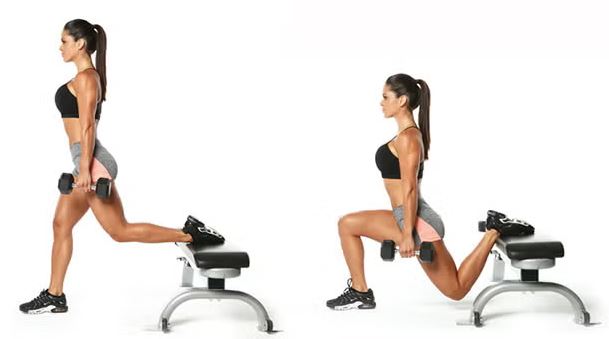
Split Squat
- Why it’s ideal: By loading one leg at a time, split squats build unilateral strength and hip stability, which guards against the joint laxity and balance shifts that elevated progesterone can introduce in the luteal phase. This exercise also engages the quads, glutes, and core without requiring heavy spinal loading.
- How to do it:
- Set-Up: Stand about two feet in front of a bench or step. Place the toes of your back foot on the bench, front foot pointing straight ahead. Hold dumbbells at your sides or keep your hands on your hips.
- Brace & Align: Engage your core, keep your chest lifted, and hips square forward.
- Lower: Bend both knees to descend until your front thigh is parallel to the floor and your back knee hovers just above the bench. Maintain a vertical shin on the front leg.
- Press Up: Drive through the front heel, squeezing the glute at the top, and return to start.
- Prescription: 3 sets of 10 reps per leg with a controlled 3-second lowering phase; rest 60-75 seconds between sets.
Single-Arm Dumbbell Press
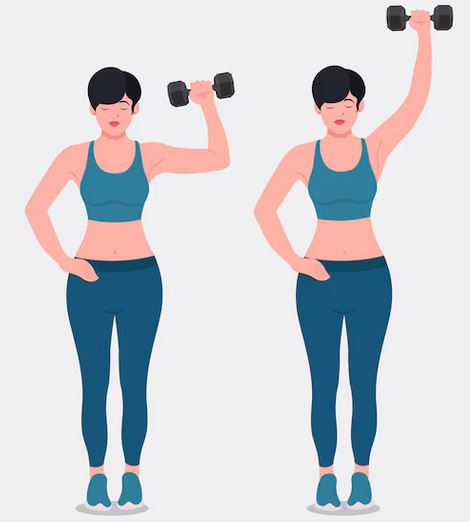
- Why it’s ideal: Performing presses one arm at a time challenges core stabilizers, preventing torso rotation and building shoulder strength while allowing you to manage overall load. This unilateral approach reduces cumulative fatigue and respects the often-lower energy reserves of the luteal phase.
- How to do it:
- Set-Up: Sit on a bench or stand with feet hip-width apart. Hold a dumbbell at shoulder level in one hand, palm facing forward. Place your opposite hand lightly on your hip.
- Core Brace: Draw your navel toward your spine to stabilize the torso and prevent side bending.
- Press: Extend the dumbbell overhead until your arm is nearly straight, but avoid locking the elbow. Keep your shoulder down and back.
- Lower: Slowly lower the weight back to shoulder height over a 3-second eccentric tempo.
- Prescription: 3 sets of 12 reps per arm; rest 45-60 seconds between sets, then switch sides.
Pallof Press
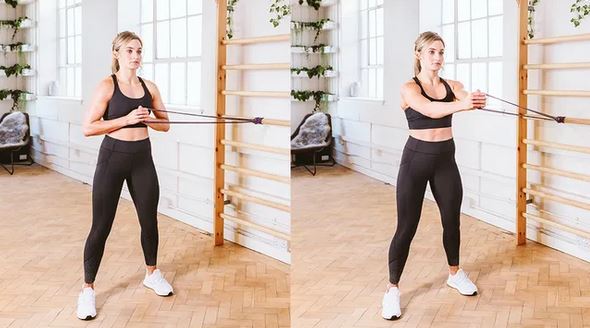
- Why it’s ideal: The Pallof press is an anti-rotation exercise that reinforces deep core stability and resists unwanted twisting, especially valuable when luteal-phase bloating and pelvic changes can compromise posture and spinal alignment. It also engages the shoulders and upper back isometrically, strengthening the trunk without heavy dynamic loading.
- How to do it:
- Set-Up: Attach a resistance band or cable at chest height. Stand perpendicular to the anchor point, holding the handle or band with both hands at your chest. Feet should be shoulder-width apart.
- Create Tension: Step away until you feel a constant pull from the band or cable.
- Press Out: Extend your arms straight in front of your chest, resisting the band’s pull, and hold for 2 seconds. Keep hips and shoulders square—no rotation.
- Return: Slowly draw your hands back to your chest over a 2-second eccentric phase.
- Prescription: 3 sets of 10 reps per side with a 2-second hold; rest 30-45 seconds between sets, then face the opposite direction and repeat.
Banded Glute Bridge
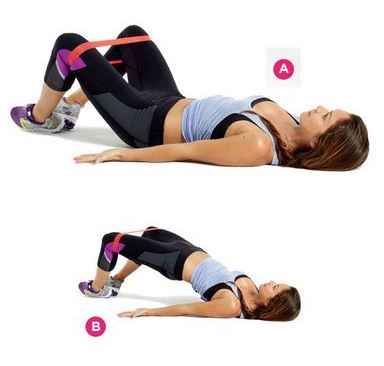
- Why it’s ideal: This variation keeps constant tension on the glutes and hamstrings without loading the spine—perfect for luteal-phase days when heavy squats feel taxing. The band forces your hips and knees to resist inward collapse, enhancing hip stability and gluteus medius activation, which can offset the joint laxity caused by elevated progesterone.
- How to do it:
- Set-Up: Lie on your back with knees bent and feet flat on the floor, hip-width apart. Place a mini-band just above your knees.
- Engage: Press your lower back into the floor, brace your core, and squeeze your glutes.
- Lift: Push through your heels to lift your hips until your thighs and torso form a straight line. Keep the band taut by pressing your knees out slightly.
- Peak & Lower: Hold the top position for 1–2 seconds, feeling maximal glute contraction. Slowly lower your hips back down over 3 seconds, maintaining band tension throughout.
- Prescription: 3 sets of 15 reps – rest 60 seconds between sets.
Dead Bug
- Why it’s ideal: This anti-extension core exercise trains your deep abdominal stabilizers without putting compressive load on your spine—perfect when bloating or mild fatigue can make load-bearing moves uncomfortable. It also promotes coordination between opposite limbs under a stable core “cylinder,” helping manage pelvic and lower-back discomfort often experienced in the luteal phase.
- How to do it:
- Set-Up: Lie on your back with arms extended toward the ceiling and knees bent at 90°, shins parallel to the floor.
- Engage: Flatten your lower back into the mat by drawing your navel toward your spine; keep this “brace” throughout the movement.
- Opposite Reach: Slowly extend your right arm overhead and your left leg toward the floor, stopping just before your foot touches. Keep your lower back anchored—no arching.
- Return & Repeat: Bring the arm and leg back to start simultaneously, then extend the opposite arm and leg. Move in a smooth, controlled 2-second out, 2-second back tempo.
- Prescription: 3 sets of 12 reps per side – rest 45 seconds between sets.

Bird Dog
- Why it’s ideal: Bird Dog trains contralateral core stability and spinal alignment without compressive load, making it especially helpful during the luteal phase when lower-back comfort and pelvic support can waver. It also engages the glutes and shoulders in a balanced, low-impact way.
- How to do it:
- Set-Up: Begin on all fours with hands under shoulders and knees under hips, back neutral.
- Brace: Draw your navel toward your spine to stabilize the torso.
- Extend Opposite Limbs: Simultaneously reach your right arm forward and left leg back until they are parallel to the floor, keeping hips and shoulders square.
- Hold & Squeeze: Pause 1–2 seconds at full extension, feeling your core and glute engagement.
- Return: Slowly draw the arm and leg back to start over 2 seconds, then switch sides.
Prescription: 3 sets of 10 reps per side, resting 30–45 seconds between sets.

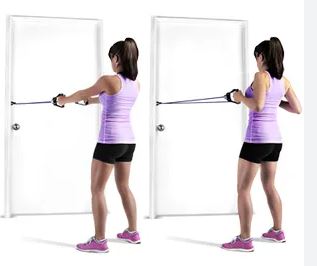
Resistance-Band Row
- Why it’s ideal: This row variation delivers continuous tension through the pulling phase, strengthening the mid-back and rear delts without the gripping fatigue of heavy free weights—ideal when energy dips are common in the luteal window.
- How to do it:
- Set-Up: Anchor a resistance band at chest height. Stand holding the band’s ends with arms extended and feet shoulder-width apart.
- Hinge & Align: Slightly hinge at the hips, maintain a neutral spine, and pull shoulders down and back.
- Pull: Retract your elbows straight back, squeezing your shoulder blades together until your hands reach your ribs.
- Pause: Hold the contraction for 1 second, feeling the mid-back engagement.
- Release: Slowly extend arms over 2–3 seconds to full stretch.
Prescription: 3 sets of 15 reps, resting 45 seconds between sets.
Goblet Squat
- Why it’s ideal: Goblet Squats load the hips and quads in a front-loaded position that encourages an upright torso and reduces lower-back strain. The lighter center of mass also allows safe depth and mobility work, perfect for maintaining leg strength during the luteal phase.
- How to do it:
- Set-Up: Hold a kettlebell or dumbbell close to your chest with both hands under the “horns.”
- Stance: Stand with feet slightly wider than hip-width, toes pointing out 10–15°.
- Descend: Push hips back, bend knees, and lower until thighs are at least parallel to the floor, keeping the weight close and chest lifted.
- Squeeze & Rise: Drive through your heels to stand, squeezing glutes at the top.
- Control: Lower in a 3-second eccentric tempo to maximize muscle tension.
Prescription: 3 sets of 12 reps, resting 60 seconds between sets.

Side Plank
- Why it’s ideal: Side Planks target the obliques and lateral core stabilizers without axial loading, helping to counteract the lateral pelvic shifts and bloating that can occur in the luteal phase. They also improve shoulder endurance in a static, low-impact hold.
- How to do it:
- Set-Up: Lie on your side with your elbow under your shoulder and legs extended, feet stacked.
- Lift Hips: Press through your elbow and the side of your bottom foot to lift your hips until your body forms a straight line from head to heels.
- Engage: Draw your navel in and squeeze your obliques to maintain a rigid plank.
- Hold: Keep shoulders down and away from ears; hold for the prescribed time.
- Switch: Lower hips with control and repeat on the opposite side.
Prescription: 3 sets of 30-45 seconds per side, resting 30 seconds between sides.

🗓️ Sample Luteal Phase Workout Template
| Day | Focus | Exercises (Sets × Reps) | Notes |
|---|---|---|---|
| Day 1 | Lower-Body Stability | Split Squat 3×10/leg Pallof Press 3×10/side Bird Dog 3×10/side | Emphasize slow eccentrics |
| Day 3 | Upper-Body Unilateral Strength | Single-Arm Dumbbell Press 3×12/arm Resistance-Band Row 3×15 Dead Bug 3×12/side | Core braced throughout |
| Day 5 | Full-Body with Recovery Focus | Goblet Squat 3×12 Banded Glute Bridge 3×15 Side Plank 3×30s/side | Keep total session ≤ 40 minutes |
🏆 Client Success Story: Ana, 37, Elementary School Teacher
When Ana, a busy elementary school teacher, first began working with me, she struggled with persistent fatigue and poor recovery in the week before her period. After implementing luteal phase training tips—shifting her strength sessions to include more unilateral work, controlled eccentrics, and shorter, focused workouts—she experienced remarkable improvements over just six weeks:
- Key Metrics
- Increased her split squat load by 15% (from 25 kg to 29 kg) on Day 18 of her cycle
- Reduced perceived exertion during her final set from an RPE of 8 down to an RPE of 6
- Reported a 30 % decrease in bloating and a 25 % improvement in sleep quality (self-tracked)
I used to dread those pre-period days, but now I look forward to my targeted luteal workouts. By following the phase-specific plan, I feel stronger, recover faster, and sleep better—even on my busiest teaching days.


Ana’s story shows how respecting the unique demands of the luteal phase, with stabilization exercises, moderate loads, and intentional recovery, can transform what used to be a low-energy week into one of your strongest and most restorative.
🛌 Recovery & Regeneration Techniques
- Active Recovery: Gentle yoga flows, light swimming, or a brisk walk can boost circulation without adding stress.
- Sleep Hygiene: Because progesterone raises body temperature, aim for cooler rooms, moisture-wicking sheets, and a consistent bedtime to ensure deep sleep.
- Stress Management: Practice box breathing (4-4-4-4), progressive muscle relaxation, or a short guided Yoga Nidra to calm the nervous system.
🍎 Nutrition Tweaks to Support the Luteal Phase
- Macronutrient Adjustments
- Slightly higher healthy fats (avocado, nuts) and complex carbs (sweet potatoes, oats) to stabilize blood sugar and energy.
- Key Micronutrients
- Magnesium (200–300 mg/day) to ease muscle tension and promote relaxation.
- Vitamin B6 (50 mg/day) to support mood and reduce bloating.
- Calcium (1,000 mg/day) for muscle function and cramp prevention.
- Hydration
- Sip water consistently; add a pinch of pink Himalayan salt if you experience water retention.
Nutrition Note: Small, frequent meals can mitigate bloating and sustain energy when progesterone slows digestion.
📝 Tracking & Listening to Your Body
- Luteal-Phase Log: Note energy, mood, and any pain before each session.
- Adjust on the Fly: If cramps or fatigue spike, swap strength moves for mobility and restorative yoga.
- When to Push vs. Rest: Use your log trends—if two consecutive workouts feel particularly heavy, consider inserting an extra recovery day.
🏁 Conclusion
The luteal phase is not a hurdle but a chance to refine your approach to strength training based on menstrual cycle rhythms. By choosing stabilizing exercises, moderating intensity, and prioritizing recovery, you’ll maintain progress, minimize discomfort, and honor your body’s natural wisdom. Track your responses, adjust as needed, and celebrate the strength—both physical and hormonal—that this phase can unlock.
