



Introduction
Strong glutes and healthy hip muscles are essential for lower-body strength, athletic performance, posture, hip stability, and injury prevention. While many people focus only on squats and deadlifts, the muscles acting on the hip joint — including the gluteus maximus, gluteus medius, gluteus minimus, hip abductors, hip adductors, hip flexors, tensor fasciae latae (TFL), and iliopsoas — all play critical roles in movement quality and lower-body function.
Unfortunately, many lifters neglect the smaller stabilizing muscles around the hips, which often leads to poor glute activation, knee instability, lower back compensation, and reduced athletic performance. In my experience as a coach, balanced hip development is one of the most overlooked aspects of lower-body training.
Although compound lower-body exercises such as the squat (front and back), hack squat, and deadlift variations (traditional and Romanian) are often considered quadriceps or hamstring exercises primarily, they also heavily involve the glutes and other hip musculature. Since these movements are already covered in detail within our quadriceps and hamstring exercise sections, this guide will focus specifically on exercises that directly target the glutes, hip abductors, hip adductors, hip flexors, and other muscles acting on the hip joint.
In this complete guide, you’ll learn:
- The major muscles involved in hip function
- Why strong glutes and hips matter
- The best glute and hip exercises by movement pattern
- Which exercises are best for strength, hypertrophy, stability, and athletic performance
- Common mistakes and how to avoid them
Hip & Glute Muscle Anatomy Overview
Before discussing the best glute and hip exercises, it’s important to understand the major muscles acting on the hip joint and their primary functions. In practice, these muscles work together during nearly every lower-body movement — from sprinting and jumping to squatting, lunging, and stabilizing the pelvis during walking.

Gluteus Maximus
The gluteus maximus is the largest and most powerful muscle in the body. It is primarily responsible for:
- Hip extension
- Explosive power production
- Sprinting and jumping mechanics
- Lower-body force generation
Exercises such as hip thrusts, glute bridges, pull-throughs, lunges, and reverse hypers place heavy emphasis on the gluteus maximus.
In my experience as a coach, weak glute max activation is extremely common in people who sit for long periods or rely too heavily on their lower back and quadriceps during training.
Gluteus Medius
The gluteus medius sits on the outer portion of the pelvis and plays a major role in:
- Hip stability
- Pelvic control
- Lateral movement
- Single-leg balance
- Knee alignment
This muscle becomes especially important during:
- Walking
- Running
- Lunges
- Step-ups
- Athletic change-of-direction movements
Weak glute medius function is often associated with poor knee tracking and hip instability.
Gluteus Minimus
The gluteus minimus lies beneath the gluteus medius and assists with:
- Hip stabilization
- Pelvic positioning
- Hip abduction
- Rotational control
Although smaller than the gluteus maximus, it still plays an important role in maintaining efficient lower-body mechanics.
Hip Abductors
The hip abductors are responsible for moving the leg away from the body and stabilizing the pelvis during movement.
These muscles are heavily involved in:
- Lateral movement
- Single-leg stability
- Running mechanics
- Athletic movement control
Exercises such as clamshells, lateral walks, and hip abduction variations directly target this muscle group.
Hip Adductors

The hip adductors are the inner-thigh muscles responsible for pulling the legs inward toward the midline of the body.
Their functions include:
- Pelvic stabilization
- Lower-body force transfer
- Hip control during walking and running
- Groin stability
Strong adductors are important not only for athletes but also for maintaining balanced lower-body mechanics.
Hip Flexors (Iliopsoas)

The iliopsoas is one of the primary hip flexors, responsible for lifting the knee toward the torso.
Hip flexors play major roles in:
- Sprinting
- Running
- Knee drive
- Athletic acceleration
- Lower-body coordination
Tight or weak hip flexors can negatively affect posture, pelvic positioning, and lower-body movement efficiency.
Tensor Fasciae Latae (TFL)

The tensor fasciae latae (TFL) assists with:
- Hip flexion
- Hip abduction
- Pelvic stabilization
- Rotational control
Although relatively small, the TFL becomes highly active during many standing and single-leg movements.
In many lifters, the TFL often becomes overactive when the glute medius is weak, which can contribute to poor hip mechanics and lateral hip discomfort.
Why Strong Glutes & Hips Matter
Strong glutes and healthy hip muscles are about far more than aesthetics. They influence nearly every major lower-body movement, including walking, sprinting, jumping, squatting, lunging, climbing stairs, and maintaining balance during single-leg movements.
In my experience as a coach, weak glutes and unstable hips are some of the most common underlying problems behind:
- Poor lower-body mechanics
- Knee instability
- Lower-back compensation
- Reduced athletic performance
- Poor glute activation during training
Improved Lower-Body Strength
The glutes are among the most powerful muscles in the human body. Strong glutes contribute heavily to:
- Hip extension power
- Squatting strength
- Sprinting mechanics
- Explosive jumping ability
- Force production during athletic movements
Exercises that improve glute strength often carry over extremely well to sports performance and compound lower-body training.
Better Hip Stability & Pelvic Control
The gluteus medius, gluteus minimus, abductors, and deep hip stabilizers help control pelvic positioning and stabilize the body during movement.
Strong hip stabilizers are especially important for:
- Walking and running mechanics
- Single-leg balance
- Lunges and step-ups
- Knee alignment
- Athletic change-of-direction movements
Weak hip stabilizers often cause the knees to collapse inward during lower-body exercises.
Reduced Lower-Back Stress
One of the most common problems I see in the gym is excessive lower-back compensation caused by weak or inactive glutes.
When the glutes fail to generate enough force during hip extension:
- The lower back often takes over
- Pelvic positioning becomes unstable
- Movement efficiency decreases
- Injury risk may increase
Proper glute training can help distribute force more effectively across the hips and lower body.
Improved Athletic Performance
Nearly every explosive athletic movement depends heavily on powerful hip extension and stable lower-body mechanics.
Strong glutes and hips can improve:
- Sprint acceleration
- Jumping ability
- Running mechanics
- Rotational power
- Change-of-direction speed
This is one reason glute-focused training is so common in sports performance programs.
Better Knee Mechanics
Strong abductors and glute medius muscles help maintain proper knee tracking during:
- Squats
- Lunges
- Running
- Jumping
- Landing mechanics
Poor hip stability often contributes to inward knee collapse and inefficient lower-body movement patterns.
Improved Glute Development & Physique
From a physique standpoint, the glutes are one of the most visually important muscle groups in the lower body. Proper glute training can improve:
- Lower-body proportions
- Glute shape and fullness
- Hip appearance
- Overall athletic physique
However, in my experience, the best long-term results usually come from balanced hip development rather than training only the gluteus maximus while neglecting smaller stabilizing muscles.
Best Glute & Hip Exercises by Movement Pattern
One of the best ways to organize glute and hip training is by movement pattern rather than by equipment type. Different movement patterns emphasize different muscles and functions around the hip joint.
For example:
- Hip extension exercises mainly target the gluteus maximus and posterior chain
- Hip abduction exercises emphasize the gluteus medius and lateral hip stabilizers
- Hip adduction exercises strengthen the inner-thigh muscles and improve pelvic stability
- Hip flexion exercises focus on knee drive and athletic hip control
- Functional unilateral exercises improve coordination, balance, and real-world lower-body strength
In my experience as a coach, balanced lower-body development comes from training all major hip functions rather than focusing solely on heavy sagittal-plane exercises like squats and deadlifts.
The following sections will break down the best glute and hip exercises by movement category, including:
- Primary muscles involved
- Main training benefits
- Best use cases
- Stability demands
- Glute hypertrophy potential
- Athletic carryover
This approach not only improves glute development and hip strength but also helps create more balanced, stable, and athletic lower-body mechanics over the long term.
Hip Extension Exercises
Hip extension is one of the most important movement patterns in lower-body training and athletic performance. It occurs whenever the hips drive backward-to-forward through powerful glute contraction.
The primary muscles responsible for hip extension are:
- Gluteus maximus
- Hamstrings
- Adductor magnus
Strong hip extension is essential for:
- Sprinting
- Jumping
- Squatting
- Deadlifting
- Climbing stairs
- Athletic acceleration
- Explosive lower-body force production
In my experience as a coach, many lifters struggle to fully activate the glutes during compound exercises. That’s why direct hip-extension exercises are often extremely valuable for improving glute strength, glute hypertrophy, and lower-body mechanics.
The following exercises place a major emphasis on the glutes and posterior chain through controlled hip-extension mechanics.
#1 Machine Hip Thrust
The machine hip thrust is one of the best exercises for maximizing glute hypertrophy through controlled loaded hip extension. Compared to traditional free-weight variations, the machine setup usually provides greater stability, easier setup, and more consistent glute tension throughout the movement.
This exercise primarily targets:
- Gluteus maximus
- Hamstrings
- Adductor magnus
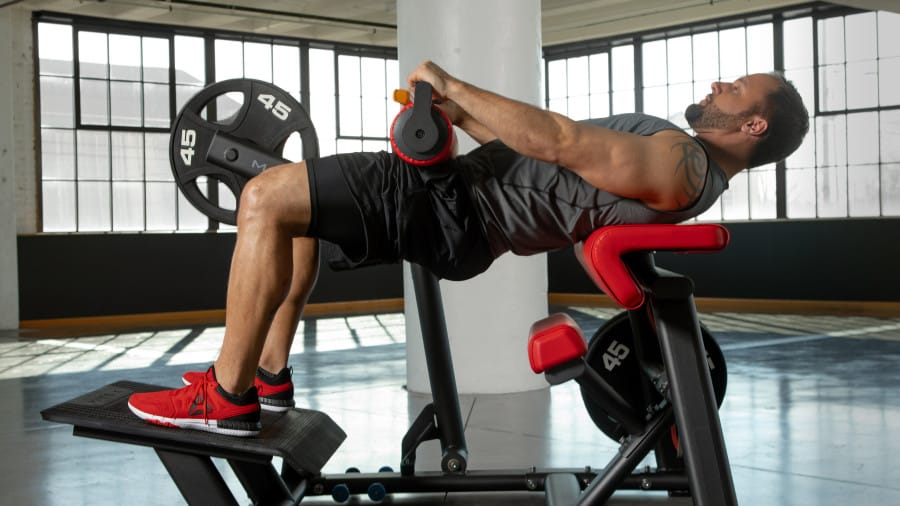
The machine hip thrust works especially well for:
- Glute hypertrophy
- Hip-extension strength
- Athletic power development
- Lower-back-friendly glute training
In my experience as a coach, many lifters feel that the glutes work more effectively on the machine version because they can focus almost entirely on glute contraction rather than balancing and stabilizing the load.
➡️ Read the full guide
#2 Barbell Hip Thrust
The barbell hip thrust is one of the most effective free-weight glute exercises for developing maximal hip-extension strength and glute size. The exercise allows heavy loading while strongly emphasizing the glutes in the shortened position near lockout.
Primary muscles involved:
- Gluteus maximus
- Hamstrings
- Adductor magnus
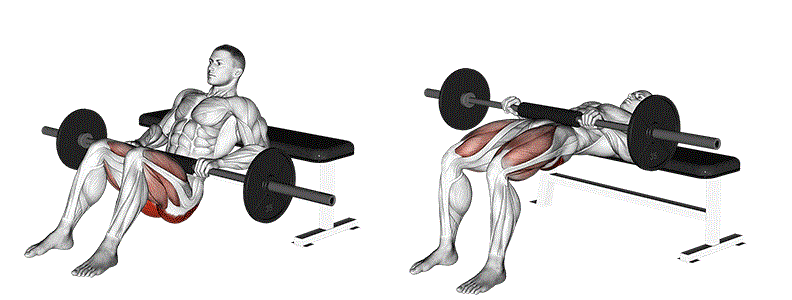
The barbell version usually requires:
- More stabilization
- Better setup positioning
- Greater coordination
- More experience with free weights
However, it also offers enormous progressive-overload potential for advanced glute development.
➡️ Read the full guide
#3 Basic Glute Bridge
The glute bridge is one of the best beginner-friendly hip-extension exercises for improving glute activation and learning proper pelvic control.

Unlike heavier hip thrust variations, the glute bridge uses simpler mechanics and minimal equipment, making it excellent for:
- Beginners
- Home workouts
- Glute activation
- Rehabilitation settings
- Lower-back-friendly training
In my experience, many lifters benefit from mastering the glute bridge before progressing to heavier hip thrust variations.
➡️ Read the full guide
#4 Cable Pull-Through
The cable pull-through is a posterior-chain exercise that trains hip extension using continuous cable resistance. The movement strongly emphasizes the glutes while also reinforcing proper hip-hinge mechanics.
Primary muscles involved:
- Gluteus maximus
- Hamstrings
- Adductor magnus

This exercise works especially well for:
- Hip-hinge training
- Glute hypertrophy
- Lower-back-friendly posterior-chain work
- Teaching proper hip mechanics
Because cable resistance remains constant throughout the movement, many people experience strong gluteal tension even with moderate loading.
➡️ Read the full guide
#5 Reverse Hyperextension
Reverse hyperextension trains hip extension while simultaneously challenging the posterior chain and lower back stabilizers. It is widely used in athletic-performance and strength-training environments.
Primary muscles involved:
- Gluteus maximus
- Hamstrings
- Erector spinae

This exercise can be especially useful for:
- Posterior-chain development
- Athletic lower-body training
- Lower-back endurance
- Glute-focused accessory work
When performed correctly, reverse hyperextension produces strong gluteal activation without excessive spinal compression.
➡️ Read the full guide
#6 Standing Hip Extension
The standing hip extension is a simple but highly effective isolation movement that targets the glutes through controlled backward leg movement.
This exercise works especially well for:
- Glute activation
- Hip-extension mechanics
- Corrective exercise work
- Beginners
- Rehabilitation programs

In my experience, standing hip extension is often underrated because it appears simple, but it can dramatically improve mind-muscle connection with the glutes.
➡️ Read the full guide
#7 Butt Blaster (Donkey Kick Machine)
The butt blaster machine, often called the donkey kick machine, isolates the glutes through a loaded kicking motion that strongly emphasizes hip extension.
Primary muscles involved:
- Gluteus maximus
- Hamstrings

This exercise is especially popular in:
- Glute-focused hypertrophy programs
- Bodybuilding training
- Women’s lower-body workouts
- High-volume glute sessions
In my experience as a coach, many lifters use the butt blaster specifically to improve glute activation after compound exercises like squats or lunges.
➡️ Read the full guide
#8 Cable Glute Kickback
The cable glute kickback isolates the glutes by targeting controlled hip extension with cable resistance. The movement creates continuous tension and strong peak glute contraction throughout the exercise.
This exercise works especially well for:
- Glute hypertrophy
- Glute activation
- High-repetition glute training
- Finisher-style lower-body work

Because the movement is highly isolated, many lifters use it to improve mind-muscle connection and glute recruitment.
➡️ Read the full guide
Hip Abduction Exercises
Hip abduction exercises focus primarily on the muscles responsible for moving the leg away from the midline of the body. These muscles play critical roles in pelvic stability, knee alignment, lateral movement, and single-leg control.
The primary muscles involved include:
- Gluteus medius
- Gluteus minimus
- Tensor fasciae latae (TFL)
Strong hip abductors are especially important for:
- Walking and running mechanics
- Single-leg balance
- Knee stability
- Athletic change-of-direction movements
- Pelvic control during lower-body training
In my experience as a coach, weak abductors and poor glute medius activation are extremely common, especially in people who spend long hours sitting or train only with sagittal-plane exercises like squats and deadlifts.
The following exercises help strengthen the lateral hip muscles while improving stability, coordination, and glute activation.
#1 Seated Machine Hip Abduction
The seated hip abduction machine isolates the lateral glutes through controlled outward leg movement while maintaining a stable seated position.
Primary muscles involved:
- Gluteus medius
- Gluteus minimus
- Tensor fasciae latae (TFL)

This exercise works especially well for:
- Glute medius development
- Beginner glute training
- Hip stability work
- Glute activation
Because the movement is highly stable and easy to learn, it is commonly used in both beginner and advanced lower-body programs.
➡️ Read the full guide
#2 Standing Machine Hip Abduction
The standing machine hip abduction places greater demands on stabilization than the seated version because the body must control pelvic positioning during the movement.
This variation is especially useful for:
- Single-leg stability
- Athletic hip control
- Functional lower-body mechanics
- Glute medius strengthening

In my experience, standing variations often translate better to athletic movement patterns because they more closely resemble the real-world demands of lower-body stabilization.
➡️ Read the full guide
#3 Cable Hip Abduction
The cable hip abduction uses constant cable resistance to train the lateral hip muscles through controlled outward leg movement.
Primary muscles involved:
- Gluteus medius
- Gluteus minimus
- Tensor fasciae latae (TFL)

This exercise works especially well for:
- Continuous muscular tension
- Glute activation
- Pelvic stability
- Athletic movement preparation
Because the cable creates resistance throughout the entire range of motion, many lifters feel strong glute medius activation even with lighter loads.
➡️ Read the full guide
#4 Mini Band Lateral Walk
The mini band lateral walk is one of the most effective glute activation exercises for strengthening the glute medius and improving lateral hip stability.
This exercise is commonly used in:
- Athletic warm-ups
- Glute activation routines
- Rehabilitation programs
- Lower-body corrective exercise work

In my experience as a coach, many lifters immediately notice improved glute engagement during squats and lunges after performing mini band walks properly.
➡️ Read the full guide
#5 Clamshell Exercise
The clamshell exercise is a simple but highly effective movement for targeting the gluteus medius and deep hip stabilizers.
This exercise works especially well for:
- Beginners
- Hip stability
- Rehabilitation settings
- Pelvic control
- Corrective exercise programs

Although it may appear easy, proper execution can produce surprisingly strong glute medius activation when performed with control and proper positioning.
➡️ Read the full guide
Hip Adduction Exercises
Hip adduction exercises target the muscles responsible for pulling the legs inward toward the midline of the body. Although these muscles are often overlooked in traditional training programs, they play major roles in lower-body stability, pelvic control, force transfer, and athletic movement efficiency.
The primary muscles involved include:
- Adductor magnus
- Adductor longus
- Adductor brevis
- Gracilis
- Pectineus
Strong adductors are important for:
- Lower-body stability
- Running and sprinting mechanics
- Change-of-direction movements
- Groin strength
- Pelvic positioning
- Single-leg control
In my experience as a coach, weak adductors are surprisingly common, especially in lifters who only focus on sagittal-plane compound exercises while neglecting lateral and stabilization-focused movement patterns.
The following exercises help strengthen the inner-thigh muscles while improving hip control and overall lower-body balance.
#1 Seated Machine Hip Adduction
The seated hip adduction machine isolates the inner-thigh muscles through controlled inward leg movement while maintaining stable body positioning.
Primary muscles involved:
- Adductor magnus
- Adductor longus
- Adductor brevis
- Gracilis

This exercise works especially well for:
- Adductor hypertrophy
- Inner-thigh strengthening
- Beginner lower-body training
- Controlled isolation work
Because the movement is simple and highly stable, it is often used in both rehabilitation and hypertrophy-oriented training programs.
➡️ Read the full guide
#2 Standing Machine Hip Adduction
The standing machine hip adduction increases the demands on stabilization by requiring the body to maintain pelvic control throughout the movement.
This variation works especially well for:
- Athletic lower-body stability
- Single-leg control
- Functional hip mechanics
- Dynamic pelvic positioning

In my experience, standing adduction exercises often transfer better to real-world athletic movement because the body must actively stabilize throughout the exercise.
➡️ Read the full guide
#3 Cable Hip Adduction
The cable hip adduction uses continuous cable resistance to strengthen the adductors through controlled inward leg movement.
Primary muscles involved:
- Adductor magnus
- Adductor longus
- Adductor brevis
- Gracilis

This exercise works especially well for:
- Continuous muscular tension
- Athletic groin strengthening
- Hip stability
- Controlled adductor development
Because cable resistance remains active throughout the movement, many people experience strong adductor activation even with relatively light resistance.
➡️ Read the full guide
Hip Flexion Exercises
Hip flexion exercises focus on the muscles responsible for lifting the knee toward the torso. These muscles are essential for sprinting, running, athletic acceleration, lower-body coordination, and efficient movement mechanics.
The primary muscles involved include:
- Iliopsoas
- Rectus femoris
- Sartorius
- Tensor fasciae latae (TFL)
Strong hip flexors are important for:
- Sprinting mechanics
- Knee drive
- Athletic acceleration
- Running efficiency
- Lower-body coordination
- Pelvic control
In my experience as a coach, many lifters either completely neglect hip-flexor training or only think about the hip flexors when they become tight or uncomfortable. However, properly trained hip flexors can significantly improve athletic movement quality and lower-body function.
#1 Standing Hip Flexion
The standing hip flexion exercise isolates the hip flexors through controlled knee drive against resistance. Depending on the variation used, resistance may come from a machine, cable system, ankle weights, or resistance bands.
Primary muscles involved:
- Iliopsoas
- Rectus femoris
- Sartorius
- Tensor fasciae latae (TFL)

This exercise works especially well for:
- Hip-flexor strengthening
- Sprint mechanics
- Athletic knee drive
- Lower-body coordination
- Running performance
In my experience, controlled standing hip flexion exercises can significantly improve lower-body movement quality, especially in athletes involved in sprinting and explosive sports.
➡️ Read the full guide
Functional & Athletic Glute & Hip Exercises
While isolation exercises are excellent for improving glute activation and strengthening specific hip muscles, functional unilateral movements are often where hip strength becomes truly athletic and transferable to real-world movement.
These exercises combine:
- Hip extension
- Hip stabilization
- Knee control
- Balance
- Coordination
- Force transfer
In practical training situations, functional lower-body exercises are extremely valuable because they challenge the glutes and hips dynamically rather than in fixed machine positions.
The primary muscles involved typically include:
- Gluteus maximus
- Gluteus medius
- Hamstrings
- Quadriceps
- Adductors
- Core stabilizers
Strong unilateral hip control is essential for:
- Sprinting
- Running
- Jumping
- Change-of-direction movements
- Athletic deceleration
- Lower-body symmetry
- Injury prevention
In my experience as a coach, many people become strong on machines yet still struggle with real-world lower-body stability and movement control. Functional unilateral exercises help bridge that gap.
#1 Walking Lunge
The walking lunge is one of the best dynamic lower-body exercises for developing glute strength, coordination, and lower-body control while moving through space.
This exercise works especially well for:
- Athletic lower-body training
- Glute hypertrophy
- Hip stability
- Lower-body coordination
- Functional strength development
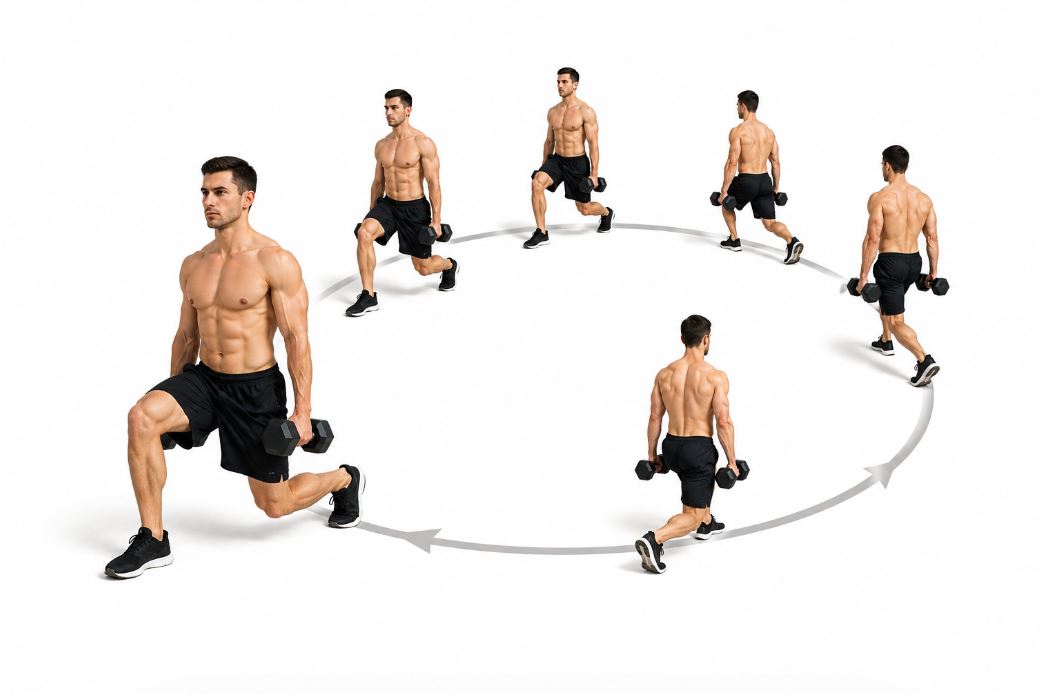
Longer step lengths generally increase glute involvement, while shorter steps shift more emphasis toward the quadriceps.
➡️ Read the full guide
#2 Reverse Lunge
The reverse lunge is a highly effective unilateral exercise that trains the glutes and legs while reducing stress on the knees compared to many forward-stepping variations.
Primary muscles involved:
- Gluteus maximus
- Quadriceps
- Hamstrings
- Gluteus medius
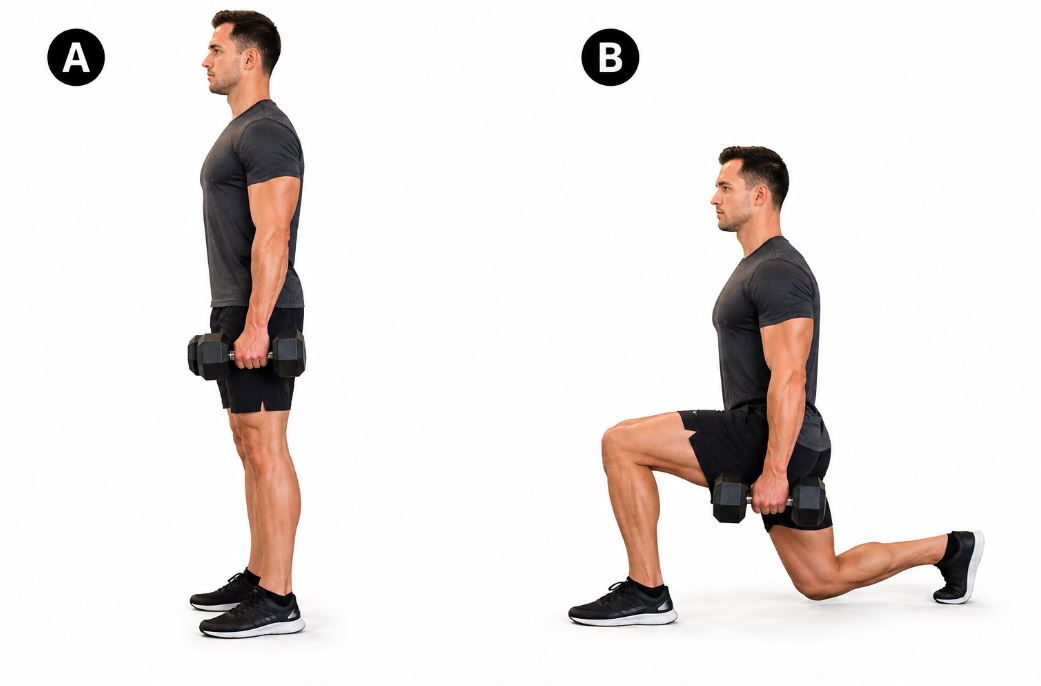
This exercise works especially well for:
- Beginner unilateral training
- Lower-body stability
- Knee-friendly lower-body workouts
- Glute-focused lunge training
In my experience, many lifters find reverse lunges easier to control and more comfortable on the knees than forward lunges.
➡️ Read the full guide
#3 Barbell Lunge
The barbell lunge allows significantly greater loading potential while training hip stability, unilateral lower-body strength, and athletic coordination.
This variation works especially well for:
- Strength development
- Glute hypertrophy
- Athletic lower-body training
- Progressive overload
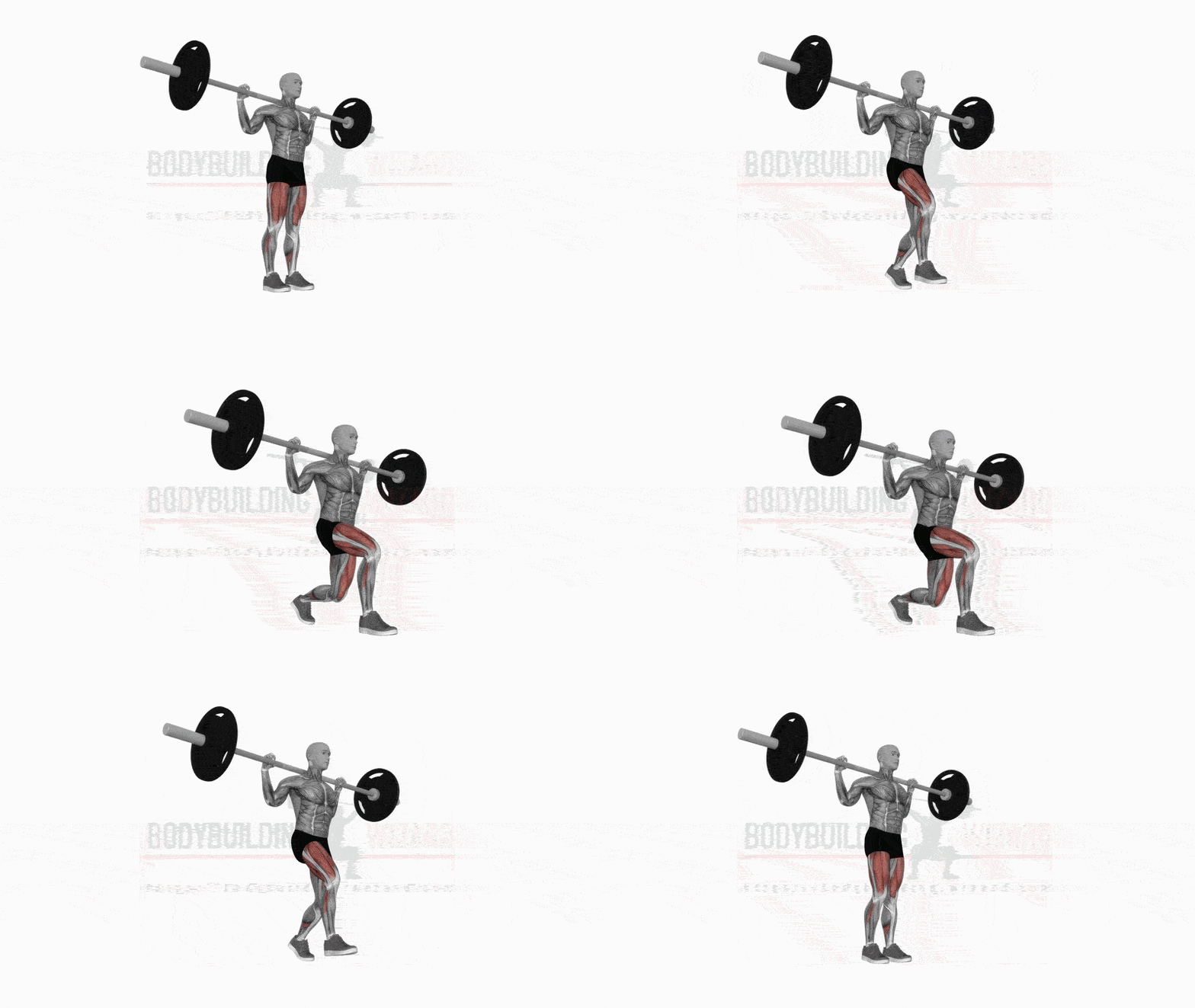
Step length can dramatically change muscular emphasis:
- Longer steps increase glute and hamstring involvement.
- Shorter steps increase quadriceps involvement
➡️ Read the full guide
#4 Dumbbell Lunge
The dumbbell lunge is one of the most versatile unilateral lower-body exercises because it combines lower-body strength, hip stability, coordination, and relatively simple loading mechanics.
This exercise works especially well for:
- Beginners and intermediates
- Functional lower-body development
- Athletic movement training
- Balanced leg development
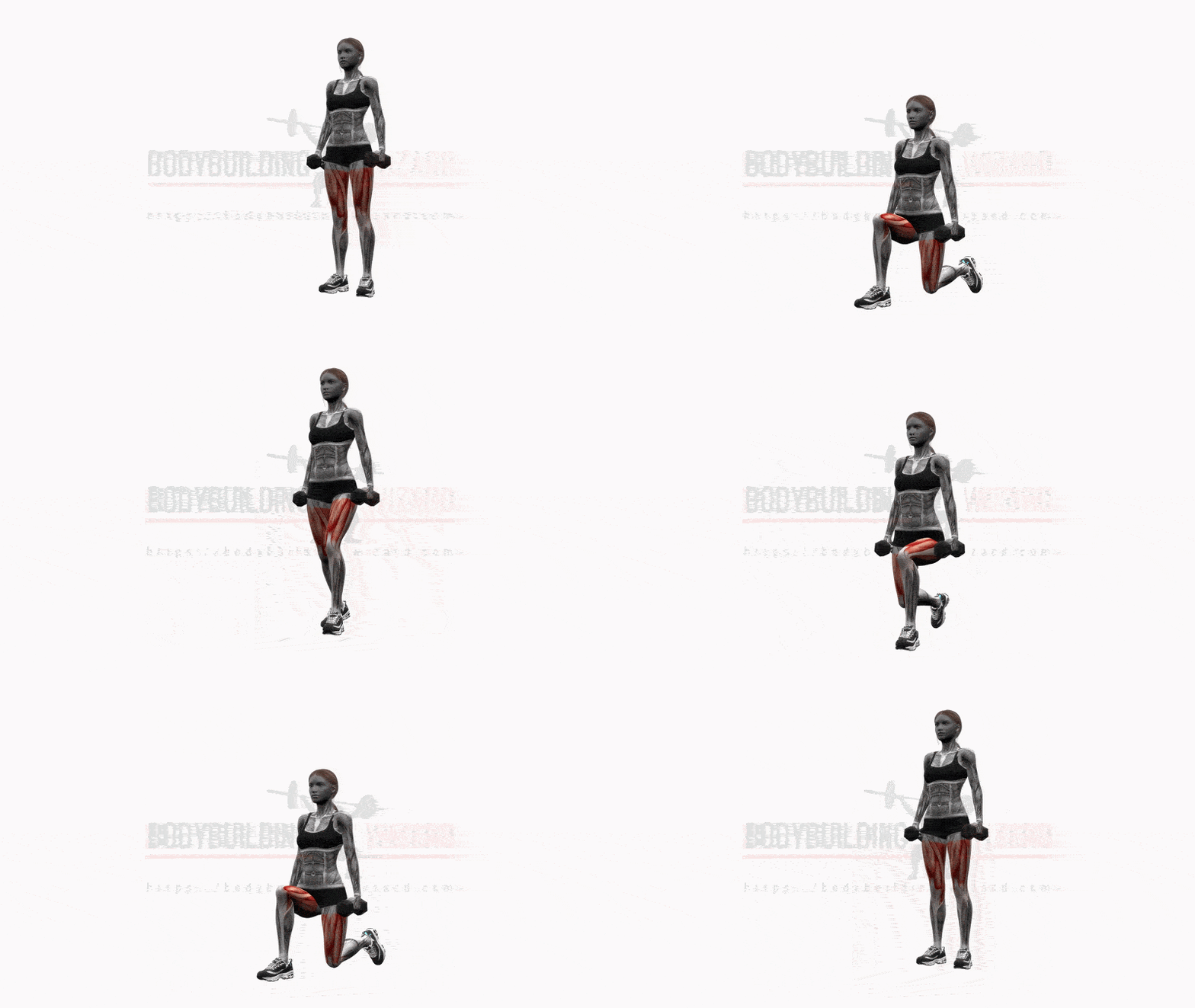
In my experience as a coach, dumbbell lunges are often easier for many people to learn and to stabilize than heavily loaded barbell variations.
➡️ Read the full guide
#4 High Box Step-Ups with Knee Raise
The high box step-up with knee raise combines powerful hip extension with dynamic knee drive and unilateral balance demands.
Primary muscles involved:
- Gluteus maximus
- Quadriceps
- Hip flexors
- Gluteus medius

This exercise works especially well for:
- Athletic power development
- Running mechanics
- Single-leg stability
- Hip-drive training
- Functional lower-body strength
Because the movement includes aggressive knee drive, it has strong carryover to sprinting and athletic acceleration.
➡️ Read the full guide
Best Glute & Hip Exercises by Goal
Different glute and hip exercises emphasize different movement patterns, muscles, and training adaptations. Some are better for maximizing glute hypertrophy, while others work better for stability, athletic performance, rehabilitation, or beginner-friendly lower-body development.
In my experience as a coach, choosing the right exercise often depends less on which movement is “best” overall and more on:
- Training goals
- Experience level
- Injury history
- Movement quality
- Equipment availability
- Individual biomechanics
The following sections highlight some of the best glute and hip exercises based on specific training goals.
Best Exercises for Glute Growth
If the primary goal is to maximize glute hypertrophy, exercises that allow strong hip extension, maintain continuous tension, and enable progressive overload usually work best.
Top choices:
- Machine Hip Thrust
- Barbell Hip Thrust
- Cable Glute Kickback
- Butt Blaster (Donkey Kick Machine)
- Cable Pull-Through
These exercises strongly emphasize the gluteus maximus and generally create excellent peak contraction and glute-focused loading.
Best Exercises for Glute Activation
Some exercises are especially useful for improving mind-muscle connection and helping lifters properly engage the glutes before heavier lower-body training.
Top choices:
In my experience, activation work often helps people who primarily feel squats and lunges in their lower back or quadriceps rather than their glutes.
Best Exercises for Hip Stability
Hip stability exercises help improve pelvic control, knee alignment, and single-leg balance during both athletic movement and everyday activities.
Top choices:
- Clamshell Exercise
- Mini Band Lateral Walk
- Standing Machine Hip Abduction
- Cable Hip Abduction
- High Box Step-Ups with Knee Raise
Strong hip stabilizers are especially important for runners, athletes, and people recovering from lower-body injuries.
Best Exercises for Athletic Performance
Athletic lower-body training requires more than isolated muscle development. The best athletic exercises combine strength, stability, coordination, and explosive hip extension.
Top choices:
- High Box Step-Ups with Knee Raise
- Walking Lunges
- Reverse Lunges
- Barbell Lunges
- Hip Thrust Variations
These exercises usually have a strong carryover to:
- Sprinting
- Jumping
- Change-of-direction speed
- Explosive lower-body force production
Best Exercises for Beginners
Beginners usually benefit most from exercises that are stable, easy to learn, and simple to control while still developing proper hip mechanics.
Top choices:
In my experience as a coach, mastering basic pelvic control and glute activation early on often significantly improves the quality of long-term lower-body training.
Best Lower-Back-Friendly Exercises
Some people need effective glute training while minimizing excessive spinal loading or lower-back stress.
Top choices:
- Machine Hip Thrust
- Glute Bridge
- Seated Hip Abduction
- Cable Hip Abduction
- Butt Blaster (Donkey Kick Machine)
These exercises generally allow strong glute activation with relatively low spinal compression compared to heavy compound lifts.
Glute & Hip Exercise Comparison Table
Choosing the right glute and hip exercise depends on your primary training goal, experience level, and available equipment. Some exercises are better for glute hypertrophy and heavy loading, while others are more effective for stability, activation, rehabilitation, or athletic movement quality.
The table below provides a quick overview of the major exercises covered in this guide.
| Exercise | Main Target | Difficulty | Equipment | Best For |
|---|---|---|---|---|
| Machine Hip Thrust | Gluteus maximus | Moderate | Machine | Glute hypertrophy |
| Barbell Hip Thrust | Gluteus maximus | Moderate–Advanced | Barbell | Heavy glute strength |
| Glute Bridge | Glutes | Beginner | Bodyweight / Band | Glute activation |
| Cable Pull-Through | Glutes & hamstrings | Moderate | Cable | Hip-hinge mechanics |
| Reverse Hyperextension | Posterior chain | Moderate | Reverse hyper machine | Lower-back-friendly posterior-chain work |
| Standing Hip Extension | Glutes | Beginner | Cable / Machine / Band | Glute activation |
| Butt Blaster | Glutes | Beginner–Moderate | Donkey kick machine | Isolated glute work |
| Cable Glute Kickback | Glutes | Beginner–Moderate | Cable | Peak glute contraction |
| Seated Hip Abduction | Glute medius | Beginner | Machine | Side-glute development |
| Standing Hip Abduction | Glute medius | Moderate | Machine | Hip stability |
| Cable Hip Abduction | Glute medius | Moderate | Cable | Continuous glute tension |
| Mini Band Lateral Walk | Glute medius | Beginner | Mini band | Glute activation |
| Clamshell Exercise | Glute medius | Beginner | Bodyweight / Band | Hip stability |
| Seated Hip Adduction | Adductors | Beginner | Machine | Inner-thigh strengthening |
| Standing Hip Adduction | Adductors | Moderate | Machine | Athletic hip control |
| Cable Hip Adduction | Adductors | Moderate | Cable | Continuous adductor tension |
| Standing Hip Flexion | Hip flexors | Beginner–Moderate | Machine / Cable | Knee drive & sprint mechanics |
| Walking Lunge | Glutes & legs | Moderate | Dumbbells / Barbell | Functional lower-body strength |
| Reverse Lunge | Glutes & quads | Beginner–Moderate | Dumbbells / Barbell | Knee-friendly unilateral training |
| Barbell Lunge | Glutes & legs | Advanced | Barbell | Heavy unilateral strength |
| Dumbbell Lunge | Glutes & legs | Moderate | Dumbbells | Functional hypertrophy |
| High Box Step-Up with Knee Raise | Glutes & hip flexors | Moderate–Advanced | Box / Dumbbells | Athletic power & balance |
In my experience as a coach, the best long-term lower-body development usually comes from combining:
- Heavy hip-extension exercises
- Glute activation work
- Hip stability exercises
- Unilateral functional movements
rather than relying only on one category of exercises.
Common Glute & Hip Training Mistakes
Even effective glute and hip exercises can produce disappointing results when movement quality, exercise balance, and proper programming are neglected. In my experience as a coach, many people train the glutes hard but still fail to develop balanced hip strength, stability, and efficient lower-body mechanics. Here are some of the biggest glute training mistakes.
Focusing Only on the Gluteus Maximus
One of the most common mistakes is focusing almost exclusively on exercises designed to build the gluteus maximus, such as hip thrusts, kickbacks, and glute bridges, while neglecting the smaller stabilizing muscles around the hips.
Although the gluteus maximus is extremely important for hip extension, power production, and glute size, the gluteus medius, gluteus minimus, abductors, and adductors also play major roles in pelvic stability, knee alignment, and single-leg control. In practice, balanced hip development usually produces far better long-term results than simply chasing glute hypertrophy alone.
Ignoring Hip Stability Training
Many lifters become strong on machines and bilateral exercises but still struggle with pelvic control, knee stability, and single-leg balance. This often happens because lateral hip stabilizers are neglected.
Exercises such as clamshells, mini band lateral walks, standing hip abduction variations, and step-ups may not look impressive, but they are often extremely valuable for improving movement quality and athletic control.
In my experience, weak glute medius function is one of the most overlooked problems in lower-body training.
Excessive Lower-Back Compensation
Another common problem is using the lower back instead of properly driving movement through the hips and glutes. This frequently occurs during hip thrusts, glute bridges, pull-throughs, and kickback variations.
When the lower back arches excessively during hip extension, glute activation typically decreases while spinal stress increases. The goal should be controlled hip extension with stable pelvic positioning rather than aggressively forcing the hips upward through lumbar extension.
Using Too Much Weight
Many people become so focused on lifting heavier resistance that they sacrifice movement quality, range of motion, and muscular control. This often leads to momentum-based repetitions, poor glute contraction, and unstable pelvic mechanics.
In my experience as a coach, moderate resistance combined with excellent glute activation and controlled repetitions usually produces far better long-term hypertrophy results than sloppy heavy training.
Neglecting Unilateral Training
Bilateral exercises are important, but relying exclusively on them may hide muscular imbalances, hip instability, and poor single-leg coordination. Exercises such as lunges, step-ups, single-leg bridges, and unilateral hip thrusts help improve lower-body symmetry, pelvic control, and the quality of athletic movement.
This becomes especially important for athletes, runners, and anyone involved in dynamic lower-body movement.
Relying Only on Isolation Exercises
Isolation exercises are excellent for activation work and targeted hypertrophy, but they should not completely replace more functional movement patterns.
For complete lower-body development, most people benefit from combining isolation work, hip-extension exercises, unilateral training, stability exercises, and athletic movement patterns rather than relying solely on machine-based glute exercises.
Choosing Exercises That Don’t Match the Goal
Not every glute or hip exercise is ideal for every individual. Beginners often benefit from simpler movements like glute bridges and machine hip thrusts, while athletes may require more functional exercises such as lunges and step-ups. People with lower-back sensitivity may tolerate machine-based movements better than heavily loaded free-weight variations.
In my experience, the best programs are usually built around movement quality, individual biomechanics, recovery capacity, and long-term consistency rather than blindly copying generic social media “booty workouts.”
Many people perform this exercise regularly, yet still struggle with glute growth because poor mechanics, weak activation, and lack of progressive overload silently limit results. If your glutes still aren’t responding properly, read our full guide on Why Your Glutes Aren’t Growing.
Sample Glute & Hip Workout Plans
The best glute and hip training programs usually combine multiple movement patterns rather than relying solely on heavy hip thrusts or machine-based isolation work. In my experience as a coach, the most effective lower-body programs typically include:
- Hip extension exercises
- Hip stability work
- Unilateral movements
- Glute activation exercises
- Functional lower-body training
The sample routines below are designed to provide balanced glute and hip development while targeting strength, hypertrophy, stability, and movement quality.
Beginner Glute & Hip Workout
This routine focuses on learning proper glute activation, pelvic control, and basic hip mechanics.
| Exercise | Sets | Reps |
|---|---|---|
| Glute Bridge | 3 | 12–15 |
| Seated Hip Abduction | 3 | 12–15 |
| Standing Hip Extension | 2–3 | 12–15 |
| Clamshell Exercise | 2–3 | 15–20 |
| Reverse Lunge | 2–3 | 10–12 per leg |
Goal: Learn proper glute activation and improve hip stability while building foundational lower-body strength.
Glute Hypertrophy Workout
This routine emphasizes glute hypertrophy through loaded hip extension and targeted glute isolation work.
| Exercise | Sets | Reps |
|---|---|---|
| Machine Hip Thrust | 4 | 8–12 |
| Barbell Hip Thrust | 3 | 6–10 |
| Cable Glute Kickback | 3 | 12–15 |
| Butt Blaster (Donkey Kick Machine) | 3 | 12–15 |
| Cable Pull-Through | 3 | 10–12 |
Goal: Maximize glute hypertrophy through heavy hip extension, peak contraction, and continuous muscular tension.
Hip Stability & Athletic Performance Workout
This routine focuses on unilateral control, pelvic stability, and athletic movement quality.
| Exercise | Sets | Reps |
|---|---|---|
| High Box Step-Ups with Knee Raise | 3 | 8–10 per leg |
| Walking Lunges | 3 | 10–12 per leg |
| Mini Band Lateral Walk | 3 | 15–20 steps |
| Standing Machine Hip Abduction | 3 | 12–15 |
| Reverse Hyperextension | 3 | 10–15 |
Goal: Improve hip stability, lower-body coordination, athletic movement quality, and unilateral strength development.
Lower-Back-Friendly Glute Workout
This routine prioritizes glute activation and hip strength while minimizing excessive spinal loading.
| Exercise | Sets | Reps |
|---|---|---|
| Machine Hip Thrust | 4 | 10–12 |
| Glute Bridge | 3 | 12–15 |
| Seated Hip Abduction | 3 | 15 |
| Cable Hip Abduction | 3 | 12–15 |
| Standing Hip Extension | 2–3 | 12–15 |
Goal: Improve glute strength and hip stability with relatively low lower-back stress.
In my experience as a coach, the best long-term results usually come from combining multiple movement patterns rather than relying only on heavy hip thrusts or isolated machine exercises. Balanced hip development requires strength, stability, coordination, and controlled movement quality working together over time.
Closing Thoughts: Best Glute Exercises
Strong glutes and healthy hip muscles are essential for far more than aesthetics alone. They influence lower-body strength, athletic performance, pelvic stability, posture, movement efficiency, and long-term joint health.
In my experience as a coach, the best results usually come from combining heavy hip-extension exercises, unilateral movements, stability work, and proper glute activation rather than relying only on a few popular “booty exercises.”
Whether your goal is to build stronger glutes, improve athletic performance, reduce lower-back stress, or develop more balanced lower-body mechanics, the exercises in this guide provide an excellent foundation for long-term progress.
The key is simple: train the hips through multiple movement patterns, focus on quality movement mechanics, and stay consistent over time.
Frequently Asked Questions
What are the best glute exercises overall?
Some of the best glute exercises include hip thrusts, glute bridges, lunges, cable pull-throughs, step-ups, and glute kickback variations. The ideal choice depends on whether your goal is glute hypertrophy, athletic performance, stability, or rehabilitation.
Which exercises target the gluteus medius most effectively?
Mini band lateral walks, clamshells, standing hip abduction, and cable hip abduction are among the best exercises for targeting the gluteus medius and improving hip stability.
Are hip thrusts better than squats for glute growth?
Hip thrusts usually create more direct glute-focused tension, especially near lockout, while squats train more total lower-body musculature. In my experience, combining both exercises is usually the best long-term strategy.
How often should you train glutes and hips?
Most people respond well to training the glutes and hips two to three times per week, depending on recovery, exercise selection, intensity, and total lower-body volume.
Can weak glutes contribute to lower-back pain?
Weak or inactive glutes often contribute to excessive lower-back compensation during hip-extension movements. Improving glute strength and pelvic stability may help reduce unnecessary lower-back stress.
What are the best hip stability exercises?
Some of the best hip stability exercises include clamshells, mini band lateral walks, step-ups, standing hip abduction variations, and unilateral lunge movements.
Do hip abductors and adductors need direct training?
Yes. Direct training of the hip abductors and adductors can improve pelvic stability, knee alignment, athletic movement quality, and overall lower-body balance.
Are lunges good for glute development?
Yes. Lunges are excellent for glute development, especially when performed with longer step lengths that increase hip-extension demands and glute involvement.
What is the best beginner glute exercise?
Glute bridges, machine hip thrusts, and seated hip abduction movements are excellent starting points because they are stable, beginner-friendly, and effective for learning proper glute activation.
Can glute training improve athletic performance?
Yes. Strong glutes and hips are essential for sprinting, jumping, change-of-direction speed, and explosive lower-body power. Proper glute training often improves overall athletic movement quality and force production.
