



Introduction
If your goal is to build strong, muscular, and well-defined legs, there’s one muscle group you simply can’t ignore—the quadriceps.
As a coach working with lifters and athletes, I’ve seen one consistent pattern: most people train legs, but very few truly understand how to target and develop the quads effectively. They either rely too heavily on a few basic movements or unknowingly shift the load to the glutes and lower back.
The result?
- Underdeveloped quads
- Imbalances in the lower body
- Stalled progress
The quadriceps are responsible for knee extension, stability, and force production, making them essential not just for aesthetics but for strength, performance, and injury prevention.
In this complete guide, you’ll learn:
- What the quadriceps are and how they function
- How to properly target them during training
- The best quadriceps exercises (step-by-step breakdowns)
- How to structure your training for maximum growth
- Common mistakes that limit your progress
Whether you’re a beginner or an advanced lifter, this guide will show you exactly how to build bigger, stronger, and more balanced legs.
What Are Quadriceps Exercises?
Quadriceps exercises are movements designed to strengthen and develop the muscles on the front of the thigh, primarily responsible for extending the knee and stabilizing the lower body during both static and dynamic movements.
These exercises can be performed with free weights, machines, or bodyweight, ranging from heavy compound lifts like squats to isolation movements such as leg extensions. When performed correctly, they help improve strength, muscle size, joint stability, and overall athletic performance.
The key to effective quadriceps training is not just choosing the right exercises, but understanding how different movements, techniques, and setups influence muscle activation.
What Are the Quadriceps?
The quadriceps are a group of four muscles located on the front of the thigh. They are one of the largest and most powerful muscle groups in the human body, playing a key role in strength, movement, and stability.
These muscles work together to extend the knee, but each one has a slightly different role depending on the movement.

The 4 Quadriceps Muscles
- Rectus Femoris
The only quad muscle that crosses both the hip and knee joints. It assists in knee extension and hip flexion, making it especially active in movements like lunges and step-ups. - Vastus Lateralis
Located on the outer side of the thigh, this is typically the largest quad muscle. It contributes heavily to overall leg size and strength. - Vastus Medialis
Found on the inner part of the thigh (often called the “teardrop” muscle), it plays an important role in knee stabilization. - Vastus Intermedius
Located beneath the rectus femoris, it assists with knee extension and works throughout most quad-dominant movements.
Primary Functions of the Quadriceps
To understand how to train the quads effectively, you need to understand what they actually do:
- Knee extension
Straightening the leg is the primary function of the quadriceps. - Lower-body strength production
Essential for movements like squats, lunges, and step-ups. - Stabilization of the knee joint
Helps keep the knee aligned and stable under load. - Control during lowering (eccentric phase)
Quads control descent in exercises like squats and lunges.
The quadriceps are not just “leg muscles”—they are the foundation of lower-body strength and movement. If they are weak or underdeveloped, every major lower-body exercise will suffer.
Why Quadriceps Exercises Matter
Quadriceps exercises are not just about building bigger legs—they are essential for improving strength, performance, joint health, and overall movement quality.
As a coach working with lifters and athletes, I’ve seen that well-developed quads often make the difference between average progress and truly impressive lower-body strength.
Strength and Performance
The quadriceps are heavily involved in nearly every lower-body movement. Strong quads allow you to generate more force in exercises like squats, lunges, and step-ups.
- Improve lifting performance in compound exercises
- Increase power for jumping, sprinting, and athletic movement
- Support better force transfer through the lower body
Muscle Growth and Aesthetics
If your goal is to build visually impressive legs, the quadriceps play a major role. They create the size, shape, and definition of the front thigh.
- Add thickness and width to your legs
- Improve overall lower-body proportions
- Enhance muscle definition
Knee Stability and Injury Prevention
The quadriceps play a critical role in stabilizing the knee joint. Weak quads can lead to poor alignment and increased injury risk.
- Help keep the knee joint properly aligned
- Reduce stress on ligaments and surrounding tissues
- Support long-term joint health
Better Movement and Function
Strong quads improve everyday movements, not just gym performance.
- Easier walking, running, and climbing stairs
- Improved balance and coordination
- Better overall movement efficiency
If you want stronger legs, better performance, and long-term joint health, training your quadriceps is not optional—it’s essential.
Types of Quadriceps Exercises
Not all quadriceps exercises are the same. Some build maximum strength, others isolate the muscle for targeted growth, while some improve balance and coordination.
As a coach working with lifters and athletes, I always emphasize that understanding these categories is key to developing well-balanced legs.
Compound vs Isolation Exercises
One of the most important distinctions is between compound and isolation movements.
Compound exercises involve multiple joints and muscle groups working together:
- Barbell back squat
- Front squat
- Leg press
- Lunges
These are essential for building overall strength and mass.
Isolation exercises focus primarily on the quadriceps:
- Leg extension
These are best for targeted muscle development and finishing work.
Bilateral vs Unilateral Exercises
Quadriceps exercises can also be divided based on how many legs are used.
Bilateral exercises (both legs):
- Squats
- Leg press
Best for building maximum strength and load capacity.
Unilateral exercises (one leg at a time):
- Bulgarian split squat
- Step-up
- Lunges
Best for:
- Fixing imbalances
- Improving coordination
- Enhancing stability
Free Weights vs Machines
Another key distinction is the type of equipment used.
- Barbell squat
- Dumbbell squat
- Lunges
Require more stability and coordination.
- Leg press
- Leg extension
- Hack squat
Allow for:
- More controlled movement
- Better isolation
- Safer high-intensity training
Strength vs Hypertrophy Focus
Different exercises also serve different training goals.
- Back squat
- Front squat
Allow heavy loading and progressive overload.
Hypertrophy-focused exercises:
- Leg press
- Hack squat
- Leg extension
Provide consistent tension and muscle fatigue.
The most effective quad training programs don’t rely on just one type of exercise—they combine compound, isolation, bilateral, and unilateral movements to fully develop the muscle.
How to Target the Quadriceps (Biomechanics Guide)
Many lifters perform leg exercises regularly—but still struggle to fully develop their quadriceps. The reason is simple: they don’t understand how technique and setup influence muscle activation.
As a coach working with lifters and athletes, I often see people unintentionally shift the load away from the quads and onto the glutes or lower back—even when doing the “right” exercises.
The good news? Small adjustments can completely change the stimulus.
1. Step Length (Lunges & Split Squats)
Step length plays a major role in determining which muscles are emphasized.
- Shorter step:
More knee flexion → greater quadriceps activation - Longer step:
More hip involvement → more glutes and hamstrings
If your goal is quad development, keep your step slightly shorter and more controlled.
2. Torso Position
Your upper body angle directly affects load distribution.
- Upright torso:
Increases knee travel → more quad emphasis - Forward lean:
Shifts load to hips → more glute activation
Staying more upright = more quads.
3. Knee Travel
One of the most misunderstood aspects of leg training.
- Allowing the knees to move forward over the toes increases quad activation
- Restricting knee movement shifts the load to the hips
Controlled knee travel is not dangerous—it’s necessary for full quad development.
4. Depth of Movement
Range of motion is critical.
- Deeper reps:
Greater knee flexion → more quad activation - Shallow reps:
Reduced muscle engagement
Training through a full range of motion leads to better results.
5. Foot Position (Machines)
Foot placement changes muscle emphasis, especially on machines.
- Lower foot placement (leg press):
More knee flexion → more quads - Higher foot placement:
More glutes and hamstrings
Want more quads? Place your feet lower.
6. Tempo and Control
How you perform each rep matters just as much as the exercise itself.
- Slow eccentric (lowering phase):
Increases time under tension - Controlled movement:
Improves muscle activation
Don’t rush your reps—control builds muscle.
Most people don’t need more exercise—they need better execution. Mastering these small adjustments will dramatically improve your ability to target and grow your quadriceps.
The Best Quadriceps Exercises
Now that you understand how the quadriceps work and how to properly target them, it’s time to apply that knowledge using the most effective exercises.
The goal here is not to overwhelm you with options, but to give you a complete system that covers:
- Heavy compound strength
- Unilateral stability and balance
- Controlled hypertrophy work
- Isolation for maximum muscle activation
As a coach working with lifters and athletes, I’ve found that combining these types of exercises is the key to building strong, well-developed, and balanced legs.
Below are the best quadriceps exercises, each with a specific role in your training.
1. Barbell Back Squat
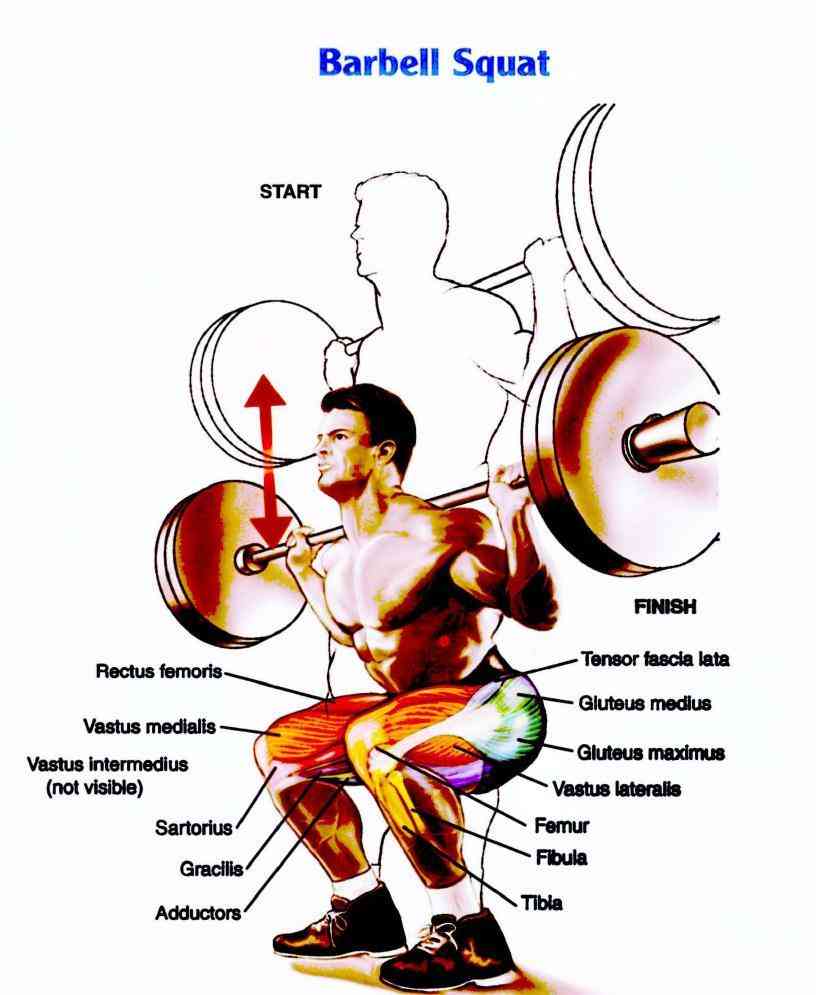
The barbell back squat is one of the most fundamental lower-body exercises for building overall strength and muscle mass. While it is often considered a full lower-body movement, it plays a significant role in quadriceps development—especially when performed with proper technique and depth.
One of the key advantages of the back squat is its ability to handle heavy loads, making it essential for long-term strength progression. However, many lifters unintentionally shift the emphasis toward the glutes and lower back by leaning too far forward or limiting knee travel.
By maintaining a more upright torso, controlled descent, and sufficient knee flexion, you can significantly increase quadriceps activation and turn this exercise into a powerful quad builder.
To perform it, position a barbell across your upper back (trapezius muscles) and stand with your feet shoulder-width apart. Brace your core, keep your chest up, and descend by bending at the hips and knees simultaneously. Lower yourself until your thighs are at least parallel to the floor, or deeper if mobility allows. Push through your mid-foot and heel to return to the starting position.
- Best for: Strength, overall leg development
- Movement Pattern: Knee extension + hip extension
- Difficulty: Intermediate to advanced
- Type: Barbell / Compound
🔗 Read full guide: (Barbell Back Squat)
2. Barbell Front Squat
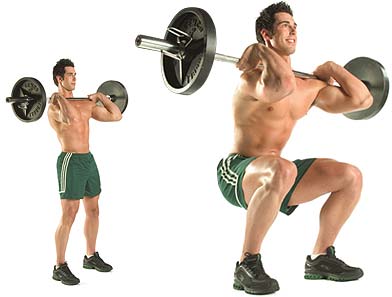
The barbell front squat is one of the most effective exercises for targeting the quadriceps. Unlike the back squat, the bar is positioned in front of the body, which naturally forces a more upright torso and greater knee flexion—two key factors for maximizing quad activation.
Because of this position, the front squat places less stress on the lower back and shifts more of the load directly onto the quadriceps. It also requires greater core strength, mobility, and control, making it both a strength-building and technique-enhancing exercise.
As a coach working with lifters and athletes, I often use front squats to correct movement patterns and improve posture, especially for those who struggle to keep their torso upright in back squats.
To perform it, place the barbell across the front of your shoulders (front rack position), keeping your elbows high and chest up. Stand with your feet about shoulder-width apart. Brace your core and descend by bending your knees and hips, keeping your torso as upright as possible. Lower yourself until your thighs are at least parallel to the floor, then drive through your mid-foot to return to standing.
- Best for: Quadriceps emphasis, posture, technique
- Movement Pattern: Knee extension (quad-dominant)
- Difficulty: Intermediate
- Type: Barbell / Compound
🔗 Read full guide: (Barbell Front Squat)
3. Leg Press

The leg press is one of the most effective machine-based exercises for building quadriceps strength and muscle size. It allows you to train the legs with heavy loads in a controlled environment, making it ideal for hypertrophy-focused training without the balance demands of free weights.
One of the biggest advantages of the leg press is that you can precisely adjust your foot placement to shift muscle emphasis. This makes it a powerful tool for targeting the quadriceps more directly than many other compound movements.
As a coach working with lifters and athletes, I often use the leg press to safely accumulate training volume and push close to muscular failure—something that can be more difficult to do with exercises like squats.
To perform it, sit in the machine with your back firmly against the pad and your feet placed on the platform about shoulder-width apart. Lower the platform by bending your knees under control, keeping your lower back in contact with the seat. Descend until your knees reach a deep angle, then push through your heels and mid-foot to extend your legs without locking out aggressively.
Quad Emphasis Tip (IMPORTANT)
- Lower foot placement on the platform:
Increases knee flexion → more quadriceps activation - Higher foot placement:
Shifts the load toward the glutes and hamstrings
For maximum quad development, keep your feet lower and controlled.
- Best for: Hypertrophy, controlled strength, safe overload
- Movement Pattern: Knee extension + hip extension
- Difficulty: Beginner to advanced
- Type: Machine / Compound
🔗 Read full guide: (Leg Press)
4. Leg Extension

The leg extension is the only true isolation exercise for the quadriceps, making it one of the most effective movements for directly targeting and fully contracting the muscle.
Unlike compound exercises, where multiple muscle groups share the load, the leg extension places nearly all the tension on the quadriceps. This makes it ideal for improving muscle definition, mind-muscle connection, and peak contraction.
As a coach working with lifters and athletes, I often use leg extensions as a finisher exercise or to pre-fatigue the quads before compound lifts. It’s also extremely useful for learning how to properly engage the quadriceps without relying on other muscles.
To perform it, sit in the machine with your back firmly against the pad and your legs positioned under the roller. Adjust the machine so your knees align with the pivot point. Extend your legs by straightening your knees until they are fully extended, then slowly lower the weight back down under control.
Quad Activation Tip (IMPORTANT)
- Pause at the top:
Maximizes quadriceps contraction - Control the lowering phase:
Increases time under tension
Avoid swinging the weight—this reduces effectiveness and increases joint stress.
- Best for: Isolation, muscle definition, finishing sets
- Movement Pattern: Knee extension (pure quad focus)
- Difficulty: Beginner
- Type: Machine / Isolation
🔗 Read full guide: (Leg Extension)
5. Bulgarian Split Squat

The Bulgarian split squat is one of the most effective unilateral exercises for building quadriceps strength and muscle mass. By elevating the rear leg, the movement places almost all the load on the front leg, creating a powerful stimulus for both strength and hypertrophy.
What makes this exercise especially valuable is its ability to combine high muscle activation with demands for balance and stability. It also allows a greater range of motion than many bilateral movements, which can further enhance quadriceps development.
As a coach working with lifters and athletes, I frequently use Bulgarian split squats to correct imbalances and improve single-leg strength. It’s also one of the best alternatives to squats when you want a strong quad stimulus with less spinal loading.
To perform it, place your rear foot on a bench behind you and stand with your front foot firmly on the ground. Keep your torso upright and descend by bending your front knee while lowering your back knee toward the floor. Go as deep as your mobility allows, then push through your front foot to return to the starting position.
Quad Emphasis Tip (IMPORTANT)
- Shorter stance (front foot closer):
More knee flexion → greater quadriceps activation - Longer stance:
Shifts more load to the glutes and hamstrings
For maximum quad focus, keep your stance slightly shorter and your torso upright.
- Best for: Unilateral strength, hypertrophy, balance
- Movement Pattern: Knee extension (quad-dominant unilateral)
- Difficulty: Intermediate
- Type: Dumbbell / Unilateral Compound
🔗 Read full guide: (Bulgarian Split Squat)
6. Step-Up

The step-up is a highly functional lower-body exercise that builds quadriceps strength while improving balance, coordination, and single-leg stability. Because it mimics real-life movement patterns, such as climbing stairs or stepping onto elevated surfaces, it has strong carryover to both everyday activities and athletic performance.
What makes the step-up especially effective is that it forces one leg to do most of the work, making it a powerful tool for correcting imbalances and developing unilateral strength.
As a coach working with lifters and athletes, I often use step-ups to build practical strength and movement control, especially in individuals who struggle with balance or asymmetry.
To perform it, stand in front of a sturdy platform or bench. Place one foot firmly on the platform and drive through that leg to lift your body upward. Avoid pushing off excessively with the back leg. Step down under control and repeat on the same leg or alternate.
Quad Emphasis Tip (IMPORTANT)
- Lower step height:
More knee flexion → greater quadriceps activation - Higher step height:
More hip involvement → increased glute activation
For quad focus, use a moderate height and stay controlled.
- Best for: Functional strength, balance, coordination
- Movement Pattern: Knee extension (unilateral)
- Difficulty: Beginner to intermediate
- Type: Dumbbell / Unilateral Compound
🔗 Read full guide: (Step-Up)
7. Dumbbell Squat

The dumbbell squat is a simple yet highly effective variation of the traditional squat, making it ideal for beginners and those training at home. While it may not allow for the same heavy loading as a barbell squat, it still provides a strong stimulus for the quadriceps when performed with proper technique.
One of the biggest advantages of the dumbbell squat is that it allows for a more natural and controlled movement pattern, which can help lifters develop proper squat mechanics before progressing to heavier barbell variations.
As a coach working with lifters and athletes, I often use dumbbell squats as a starting point for beginners or as a secondary exercise to accumulate volume without excessive joint stress.
To perform it, hold a dumbbell in each hand at your sides (or one dumbbell in front of your chest in a goblet-style position). Stand with your feet about shoulder-width apart. Brace your core and descend by bending your knees and hips, keeping your chest up and torso upright. Lower yourself until your thighs are at least parallel to the floor, then push through your mid-foot to return to standing.
Quad Emphasis Tip (IMPORTANT)
- More upright torso:
Increases knee travel → more quadriceps activation - Controlled descent:
Improves time under tension and muscle engagement
Don’t rush—control is key for quad development.
- Best for: Beginners, home workouts, technique
- Movement Pattern: Knee extension + hip extension
- Difficulty: Beginner
- Type: Dumbbell / Compound
🔗 Read full guide: (Dumbbell Squat)
8. Dumbbell Lunge

The dumbbell lunge is a versatile unilateral exercise that effectively targets the quadriceps while also improving balance, coordination, and movement control. Because each leg works independently, it is especially useful for correcting muscle imbalances and developing symmetrical strength.
One of the biggest advantages of the dumbbell lunge is its flexibility—you can easily adjust step length and technique to shift the emphasis between the quadriceps and glutes.
As a coach working with lifters and athletes, I often use dumbbell lunges to build control and stability, especially in individuals who need to improve movement quality before progressing to heavier or more complex variations.
To perform it, stand upright holding a dumbbell in each hand at your sides. Step forward with one leg and lower your body by bending both knees. Keep your torso upright and descend until your front thigh is parallel to the floor and your rear knee is just above the ground. Push through your front foot to return to the starting position, then repeat with the opposite leg.
Quad Emphasis Tip (IMPORTANT)
- Shorter step forward:
More knee flexion → greater quadriceps activation - Longer step:
More hip involvement → increased glute activation
For quad focus, keep your step slightly shorter and controlled.
- Best for: Balance, unilateral strength, coordination
- Movement Pattern: Knee extension (unilateral)
- Difficulty: Beginner to intermediate
- Type: Dumbbell / Unilateral Compound
🔗 Read full guide: (Dumbbell Lunge)
9. Barbell Lunge
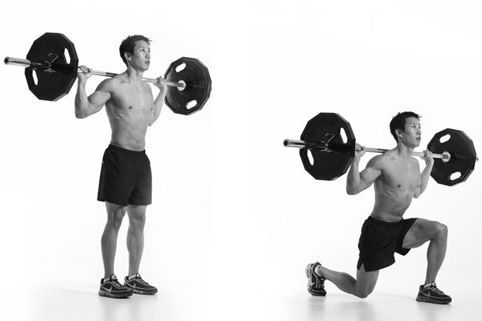
The barbell lunge is a powerful unilateral exercise that allows greater loading than dumbbell variations, making it highly effective for building quadriceps strength and muscle mass.
By placing the barbell across your upper back, you can progressively increase resistance. However, this also increases the demand for balance, coordination, and control, making proper technique essential.
As a coach working with lifters and athletes, I typically introduce barbell lunges after they have mastered dumbbell variations. They are excellent for developing strength and stability under heavier loads, but only when performed with control.
To perform it, place a barbell across your upper back (as in a squat position). Stand upright with your feet hip-width apart. Step forward with one leg and lower your body by bending both knees until your front thigh is parallel to the floor. Keep your torso upright and your core engaged. Push through your front foot to return to the starting position, then repeat on the opposite leg.
Quad Emphasis Tip (IMPORTANT)
- Shorter step:
Increases knee flexion → more quadriceps activation - Upright torso:
Keeps load on the quads rather than shifting to the hips
Control is key—don’t let the weight dictate your movement.
- Best for: Strength, progressive overload, unilateral development
- Movement Pattern: Knee extension (unilateral)
- Difficulty: Intermediate
- Type: Barbell / Unilateral Compound
🔗 Read full guide: (Barbell Lunge)
10. Hack Squat

The hack squat is one of the most effective machine-based exercises for targeting the quadriceps while maintaining high stability and control. Unlike free-weight squats, the fixed movement path allows you to focus almost entirely on the working muscles without worrying about balance.
Because of the machine setup, the hack squat naturally encourages a more upright torso and greater knee flexion, both of which significantly increase quadriceps activation. This makes it one of the best exercises for building quads in size and definition.
As a coach working with lifters and athletes, I often use the hack squat as a primary hypertrophy movement or as a follow-up to heavy squats. It allows you to push close to failure safely, making it ideal for maximizing muscle growth.
To perform it, position yourself in the machine with your back against the pad and your shoulders under the supports. Place your feet on the platform about shoulder-width apart. Lower your body by bending your knees under control, keeping your back firmly against the pad. Descend as deep as your mobility allows, then push through your feet to return to the starting position.
Quad Emphasis Tip (IMPORTANT)
- Lower foot placement:
Increases knee flexion → more quadriceps activation - Controlled depth:
Maximizes muscle stretch and tension
The hack squat is one of the best exercises for pushing the quads hard—use it wisely.
- Best for: Hypertrophy, quad isolation under load
- Movement Pattern: Knee extension (machine-guided)
- Difficulty: Beginner to advanced
- Type: Machine / Compound
🔗 Read full guide: (Hack Squat)
Other Effective Quadriceps Exercises
While the exercises covered above form the core of an effective quadriceps training program, there are many other variations that can add variety, target the muscles from different angles, and address specific weaknesses.
As a coach working with lifters and athletes, I often rotate these movements depending on the goal—whether it’s improving mobility, increasing time under tension, or simply avoiding plateaus.
Below are additional quadriceps exercises worth including in your training. For full breakdowns, you can explore each exercise in detail through our dedicated guides.
Additional Quadriceps Exercises
- Walking lunge
- Reverse lunge
- Cossack squat
- Jefferson squat
- Cyclist squat
- Spanish squat
- Tire flip
- Smith machine leg press
- Pendulum squat
- Lateral lunge
- Zercher squat
- High box step-ups with knee raise
- Dumbbell front squat
- Suspension trainer assisted pistol squat
- Kettlebell sumo squat
- Sissy squat
- Goblet squat
- Single-leg squat
- Pistol squat
- Basic bodyweight squat
- Traditional deadlift
How to Use These Exercises
These variations can be used to:
- Add variety to your training
- Target the quads from different angles
- Improve mobility and control
- Increase time under tension
- Address specific weaknesses or imbalances
You don’t need to use all these exercises at once. The key is to build your training around the core movements, then use these variations strategically to enhance your results.
Best Quadriceps Exercises by Goal
Not all quadriceps exercises serve the same purpose. Some are better for building maximum strength, others for muscle growth, while some are ideal for improving balance, coordination, or athletic performance.
As a coach working with lifters and athletes, I always tailor exercise selection based on the individual’s goal—not just what looks impressive.
Best for Beginners
If you’re new to training, your priority should be learning proper movement patterns and building basic strength.
- Dumbbell squat
- Step-up
- Leg press
- Bodyweight squat
Focus on:
- Control
- Technique
- Consistency
Best for Muscle Growth (Hypertrophy)
To build bigger, more defined quadriceps, you need exercises that allow for controlled tension and sufficient volume.
- Leg press
- Hack squat
- Bulgarian split squat
- Leg extension
Focus on:
- Moderate to high reps
- Controlled tempo
- Full range of motion
Best for Strength
To build maximum strength, prioritize exercises that allow heavy loading and progressive overload.
- Barbell back squat
- Front squat
- Barbell lunge
Focus on:
- Lower reps
- Progressive overload
- Proper form under heavy load
Best for Balance & Stability
Unilateral exercises are essential for improving coordination and fixing imbalances.
- Bulgarian split squat
- Step-up
- Dumbbell lunge
Focus on:
- Control
- Symmetry
- Stability
Best for Athletic Performance
Athletes need strength that transfers to real-world movement.
- Step-up
- Walking lunge
- Front squat
Focus on:
- Explosive control
- Movement efficiency
- Coordination
Best for Quad Isolation
When you want to target the quadriceps directly and maximize contraction:
- Leg extension
- Sissy squat
Focus on:
- Mind-muscle connection
- Slow tempo
- Peak contraction
The best results come from combining different types of exercises based on your goal—not relying on just one movement.
How to Train Quadriceps in a Leg Day
Most people don’t train quadriceps in isolation—they train them as part of a complete leg workout. Understanding how to structure your training realistically is just as important as choosing the right exercises.
As a coach working with lifters and athletes, I rarely program “quad-only days.” Instead, I focus on building leg workouts in which the quadriceps are either balanced with other muscle groups or given slightly more emphasis, depending on the goal.
Balanced Leg Day (Most People)
This is the most common and practical approach. It develops the entire lower body while still providing a strong stimulus to the quadriceps.
Example Structure
- Barbell Back Squat – 3–4 sets of 5–8 reps
- Leg Press – 3 sets of 8–12 reps
- Romanian Deadlift – 3 sets of 6–10 reps
- Hamstring Curl – 2–3 sets of 10–15 reps
- Calf Raises – 3–4 sets of 12–20 reps
In this setup, the quadriceps are trained through the first two exercises, which provide enough volume for growth when performed properly.
Quad-Focused Leg Day
If your goal is to build your quadriceps, you can structure your leg day to prioritize them while still maintaining balance.
Example Structure
- Barbell Front Squat – 4 sets of 5–8 reps
- Hack Squat – 3–4 sets of 8–10 reps
- Leg Press (low foot placement) – 3 sets of 10–12 reps
- Leg Extension – 3 sets of 12–15 reps
- Romanian Deadlift – 2–3 sets of 6–10 reps
- Lying Leg Curl – 2–3 sets of 10–15 reps
- Calf Raises – 2–4 sets of 12–20 reps
This approach increases quad volume while keeping the rest of the leg training in place. Even in quad-focused training, including at least one hip-hinge movement (such as Romanian deadlifts) and one knee-flexion exercise (such as leg curls) is essential for maintaining balanced leg development and reducing injury risk.
Minimalist Approach (Highly Effective)
Many people don’t need complex routines. In fact, great results can come from just two well-chosen quadriceps exercises.
Example Structure
- Squat variation (Back Squat or Front Squat)
5 sets × 5–8 reps - Leg Press or Bulgarian Split Squat
3–4 sets × 10–12 reps
Last set: train to failure
With only two exercises, overall results depend on training intensity and execution quality. Pushing the final set to failure ensures you reach sufficient stimulus for muscle growth and strength development even with lower exercise volume.
Do You Need a Quad-Only Day?
In most cases, the answer is no.
Quadriceps respond very well to training within a structured leg workout. A separate quad-only day is usually only necessary for:
- Advanced bodybuilders
- Individuals with significant quad lag
- Specialized training phases
For most lifters, a well-designed leg day provides everything needed for strength, growth, and balance.
How Often Should You Train Quadriceps?
One of the most common questions in lower-body training is how often you should train your quadriceps to maximize muscle growth, strength, and recovery.
As a coach working with lifters and athletes, I’ve found that the optimal frequency depends less on complex programming and more on training intensity, volume, and recovery capacity.
General Recommendation
For most people, training the quadriceps:
1–2 times per week is ideal
- Beginners: 1–2 times per week
- Intermediate lifters: 2 times per week
- Advanced lifters: 2+ times per week (with proper recovery)
Consistency matters more than frequency.
Training Frequency by Goal
Muscle Growth (Hypertrophy)
- 2 times per week works best
- Allows enough volume while maintaining recovery
- Helps improve technique and mind-muscle connection
Strength Development
- 1–2 times per week
- Focus on heavy compound movements
- Ensure full recovery between sessions
Athletic Performance
- 2–3 times per week (lower volume per session)
- Focus on movement quality, control, and coordination
Conclusion
Building strong, well-developed quadriceps is not about doing dozens of exercises—it’s about choosing the right movements, applying proper technique, and training with intent.
Throughout this guide, we’ve covered everything from anatomy and biomechanics to the most effective exercises and real-world training structure. The key takeaway is simple: the quadriceps respond best when you combine heavy compound lifts, controlled hypertrophy work, and consistent execution.
As a coach working with lifters and athletes, I’ve seen that the biggest improvements don’t come from adding more exercises, but from improving how you perform the ones that matter. Small adjustments—like better depth, more knee travel, or improved control—can completely change your results.
You don’t need a perfect program—you need a consistent, well-structured approach you can apply week after week.
Master the fundamentals, train with purpose, and your quadriceps will follow.
