



Free Weights vs. Machines? Most gyms today contain different types of resistance training equipment. These broadly fall into two categories – machines and free weights. Therefore, when you walk into a gym, one of the first decisions you face is whether to head toward the free weights or the exercise machines. Often you will find the free weights in their own area of the gym, which is usually populated by some pretty large people, while the machines occupy most of the floor space and appear more accessible and somehow “friendlier”.
So which equipment should you use to make the best use of the precious time you spend in the gym? Here never-ending debate starts its journey. Both options offer unique benefits and challenges, but which one is truly better for your workout goals? Knowing the differences between free weights and exercise machines can help you make an informed decision tailored to your personal fitness needs. In this article, we’ll break down the pros and cons of each to help you find the perfect balance for your strength training routine.
- Understand what free weights and exercise machines are
- Explore the advantages and disadvantages of each
- Learn when to use one over the other
- Discover insights from professional bodybuilders
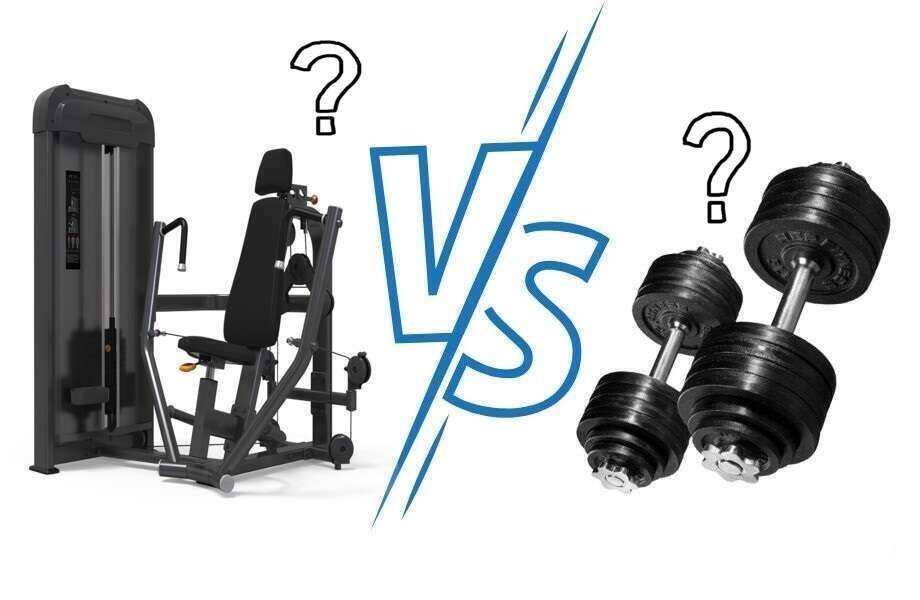
What are free weights?
Free weights are a type of exercise equipment that isn’t attached to any cables or machines. This category includes dumbbells, barbells, kettlebells, and weight plates. One of the key features of free weights is their versatility—you can use them for a wide variety of exercises that target almost every muscle group. They also promote functional fitness by allowing for natural movement patterns (wide range of motion in multiple planes) that mirror real-life activities. Additionally, free weights engage multiple muscle groups (main targeted muscles and stabilizing muscles), helping improve balance, coordination, and core strength. When you use free weights, you alone are responsible for supporting and lifting the resistance, without a machine dictating the path of motion.
- Barbells: Long bars with weights attached at each end, used for compound exercises like squats and deadlifts.
- Dumbbells: Small handheld weights available in various sizes, ideal for both isolation and compound exercises.
- Kettlebells: Weights with a handle, resembling a cannonball, excellent for dynamic movements like swings and snatches.
- Weight Plates: Flat, circular weights added to barbells, used in combination to achieve different resistance levels.
Don’t be misled by the term “free weights” – they come with a significant price tag. While you can find budget-friendly plates and bars at various sporting goods stores, top-tier equipment is costly. For instance, rubber-coated plates and those used by Olympic and elite athletes can exceed $5 per pound (per .5 kg). The bars themselves can cost over $1,200 each.

What are exercise machines?
Exercise machines are devices designed to help you perform specific movements aimed at strengthening various muscle groups. They guide your body through a controlled (fixed) range of motion, often isolating particular muscles better than free weights can. There are various types of exercise machines, ranging from plate-loaded machines, cable machines, selectorized machines, Smith machines, hydraulic machines, and cardio machines. Some key features of exercise machines include adjustable settings to accommodate different body sizes and fitness levels, guided movements to maintain proper form, and built-in weight stacks or resistance settings to customize the intensity of your workout.
Various types of exercise machines cater to different muscular needs and training goals:
- Plate-Loaded Machines: Utilize weight plates that you manually load onto the machine to increase resistance.
- Cable Machines: Offer adjustable pulleys and cables that allow a wide range of motion and versatility in exercises.
- Selectorized Machines: Feature a weight stack that you can easily adjust by moving a pin, making it convenient to change resistance quickly.
- Smith Machines: Incorporate a barbell fixed within steel rails, allowing vertical movement, and are excellent for guided weightlifting.
- Hydraulic Machines: Use hydraulic fluid to provide resistance, which can be less stressful on the joints and suitable for rehabilitation.
Now that you have a clearer understanding of both free weights and exercise machines, let’s analyze their benefits and drawbacks.
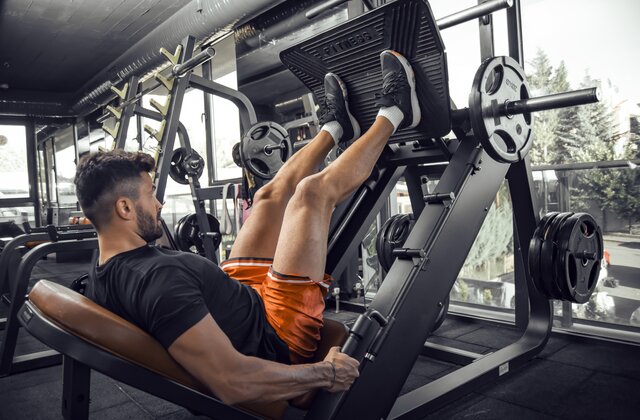
The pros and cons of using free weights
When considering the benefits and drawbacks of using free weights, it’s essential to weigh the advantages and disadvantages to determine what’s best for your fitness goals. Here’s a detailed look at the pros and cons:
Benefits
- Versatility – Free weights offer a wide range of exercises for every muscle group. You can seamlessly transition from squats to bicep curls without needing different equipment.
- Functional Fitness – Using free weights allows you to mimic natural movements and daily activities, promoting better functional fitness.
- Full Range of Motion– Free weights allow for a full range of motion, which can lead to better muscle activation and growth. This freedom of movement also helps improve functional strength, as the exercises more closely mimic real-life activities.
- Muscle Engagement – Free weights engage more muscles (not just your main muscles ), including stabilizer muscles (muscle groups that stabilize a joint), as they require you to balance and control the weight.
- Accessibility – They are easily accessible and can be used in various settings, from home gyms to commercial fitness centers.
- Cost-Effective – Generally, free weights are less expensive and take up less space compared to multiple machines.
- Enhanced Coordination – Using free weights can improve your coordination and balance as your body learns to stabilize itself during different movements.
Drawbacks
- Learning Curve – Proper form is crucial when using free weights to prevent injury, which requires a learning period or guidance from a trainer.
- Risk of Injury – Without proper form, there’s a higher risk of injuries such as strains or sprains, especially when lifting heavy weights.
- Spotter Needed – For heavy lifts, such as bench presses or squats, having a spotter is often necessary to ensure safety. Free weights can and will deviate from the “ideal” movement path, forcing you to correct and stabilize the deviation. If you do not perform a movement correctly, the weight will deviate from its path and you may not complete the lift.
- Messy Environment – Free weights require a lot of storage space, and maintaining an organized setup can be challenging.
- Intimidation Factor – Beginners might find free weights intimidating, especially in a busy gym environment.
- Increased Effort – Using free weights can be more physically demanding as it requires more energy to lift, balance, and control weights.
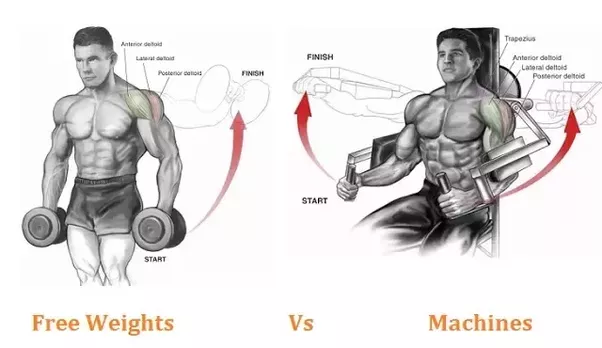
The pros and cons of using exercise machines
Exercise machines are popular in many gyms and fitness centers, offering a structured and controlled approach to strength training. Especially friendly for beginners, these machines provide a safe environment to learn and perfect form. However, like all fitness equipment, they come with their own set of advantages and drawbacks.
Benefits
- Guided Movement: Machines guide you through movements, reducing the risk of improper form.
- Isolation of Muscle Groups: They target specific muscle groups, which is beneficial for rehabilitation or focused strength training.
- Safety: Machines are generally safer as they require less balance and coordination, significantly reducing the risk of injury.
- Ease of Use: Most machines come with instructions, making them user-friendly, particularly for beginners.
- Less Effort. Machines require less effort to use than free weights. You sit on the machine, select the weight you want to lift with a pin, and perform an easily learned movement.
- Consistency: They offer consistent resistance throughout the entire range of motion, maximizing efficiency.
- Support: Machines often provide support for your body, reducing the strain on joints and minimizing fatigue.
Drawbacks
- Limited Range of Motion & Dictated Path: Machines often restrict the natural movement patterns, leading to less functional strength gains.
- Less Activation of Stabilizing Muscles: Unlike free weights, machines do not engage stabilizing muscles, which are crucial for overall strength.
- Cost and Space: They tend to be more expensive and bulky, requiring a significant investment and space.
- Accessibility: Machines can be less accessible for those who prefer home workouts.
- Overuse Injuries: Repetitive use of machines that isolate specific muscles can lead to overuse injuries.
- Real-Life Application: Machine exercises may not always translate well to real-world movements and activities.
- Seated Position: Machines often place you in a seated position; however, very few real-world physical activities or sports are performed while sitting. Seated machines do little to improve the balance and stabilization you need for real-life strength.
- Do Not Always Fit Your Body: Machines are designed and hinged to fit an “average” person. However, no one is really average; machines that are not specifically designed to fit your body can generate dangerous shearing forces at your working joints.
Situations when free weights should be your first choice
When determining whether to reach for free weights or head to the exercise machines, it’s essential to consider your goals and the specific scenarios at hand. Free weights offer a range of benefits that can make them the superior choice in many situations. Here are a few instances where free weights might be your best bet:
- Improving Functional Fitness: Free weights allow you to engage more muscles, including stabilizers, promoting movements that mimic everyday activities and enhancing your overall functional fitness.
- Versatility in Workouts: Free weights are incredibly versatile and can be used to perform a wide range of exercises, making them ideal for varied workout routines and targeting different muscle groups.
- Space and Cost Efficiency: If you’re working out at home or have limited space, free weights are more accessible and take up less room compared to bulky exercise machines.
- Naturally Aligned Movements: With free weights, you can perform exercises that reflect natural movements not constrained by the design of a machine, helping to prevent imbalances and injuries.
- Engaging Multiple Muscle Groups: Free weights work more muscles simultaneously, which can make your workouts more efficient and effective at building overall strength and muscle mass.
- Progressing with Lighter Weights: Free weights allow you to use lighter weights initially, ensuring proper form and gradual progression to prevent injury and optimize gains.
- Sports-Specific Training: If your fitness goals include improving performance in sports, free weights can better replicate the dynamic and compound movements involved in athletics.
Instances where machines might be your best bet
There are several situations where opting for machines can be more advantageous than sticking with free weights. Machines offer unique benefits that cater to specific fitness goals, especially when it comes to precision and support. Let’s analyze the instances where exercise machines might be your go-to choice (when machines beat free weights):
- Targeting Specific Muscle Groups: Machines are excellent for isolating and working on certain muscles that are hard to hit with free weights, such as abductors and adductors.
- Learning Proper Form: For beginners, machines can be helpful in teaching proper form and reducing the risk of injury by guiding you through the correct movement patterns.
- Controlled Environment: Machines offer a safer, more controlled environment, making them ideal for individuals recovering from an injury or those with limited mobility.
- Muscle Focus: If your goal is to focus intensely on a particular muscle group without engaging stabilizer muscles, machines provide the necessary support to isolate those muscles effectively.
- Rehabilitation and Therapy: For those undergoing physical therapy or rehabilitation, machines can offer the controlled and specific range of motion needed for recovery.
- Convenience and Ease of Use: Machines often come with illustrated instructions and adjustable settings, making it easier for users to jump in and start working out without much preparatory knowledge.
Conclusion: Never-ending dilemma without a reason
In the end, debating whether free weights or exercise machines are superior is rather futile. Both are exceptional tools in your muscle-building arsenal, each offering unique strengths and compensating for the other’s weaknesses. Professional bodybuilders seamlessly integrate both into their routines, capitalizing on the specific benefits each brings to the table. The shortcomings of free weights—such as the increased risk of injury from improper form—are precisely where exercise machines excel, thanks to their structured support and guided movements. Conversely, the adaptability, functional training, and broader range of motion offered by free weights are areas where machines can fall short. Therefore, for the most effective strength training regimen, embrace the versatility and complementary nature of both free weights and exercise machines. By combining them, you’ll maximize your gains and achieve well-rounded fitness results.
