


What Are Grip Strengthening Exercises?
Grip strengthening exercises are resistance training movements that target the muscles of the hand, fingers, and forearm responsible for crush grip (closing the hand around an object), pinch grip (pressing the thumb against the fingers), and support grip (holding a load against gravity without actively squeezing). A complete grip training program addresses all three, since each one tends to fail under a different kind of demand.
Introduction
I see this constantly in the gym: someone hits a new deadlift PR on paper — the bar comes off the floor, the hips and back do their job — and then the bar rolls out of their hands before they can lock it out. The legs weren’t the problem. The back wasn’t the problem. The grip gave out first, and it cost them the rep.
This happens on barbell rows, on pull-ups, on farmer’s carries, on almost every pulling movement that matters in a serious training program. Grip strength is rarely the muscle group anyone trains on purpose, and it’s almost always the first thing that fails when the weight gets heavy enough to matter. There’s also a genuinely striking research finding behind why this is worth taking seriously beyond just hitting bigger numbers: in the Prospective Urban Rural Epidemiology (PURE) study, which followed more than 139,000 adults across 17 countries, researchers found that lower grip strength was associated with a higher risk of all-cause mortality and cardiovascular death, independent of other common risk factors. Grip strength isn’t just a gym metric — it’s one of the simplest, most studied proxies for overall muscular health available.
This guide covers the 10 best grip-strengthening exercises I program for clients, organized by the type of grip each one targets — because crush, pinch, and support grip are genuinely different qualities, and a complete program needs to address all of them rather than just hammering the same pattern repeatedly. Every exercise links to a complete individual guide with full technique, common mistakes, and progression options.
Understanding Grip Strength
Grip strength isn’t a single quality — it’s a combination of distinct strength patterns that don’t automatically transfer to one another. Someone with an excellent crush grip, built from years of grippers and crushing movements, can still have a weak pinch grip and struggle to hold a plate by its edge. Our guide on hand grip types and widths covers this in more depth, but the three core categories are:
- Crush grip — closing the fingers around an object, the grip used in a handshake, a hand gripper, or wrapping the hand fully around a pull-up bar
- Pinch grip — pressing the thumb directly against the fingers without wrapping around anything, the grip used to hold a plate by its edge
- Support grip — holding a load isometrically without actively closing the hand further, the grip that fails on a heavy deadlift hold or a long farmer’s carry
Most people only discover which of these is their weak point when it fails them mid-lift. The good news is that grip strength responds well to direct training: a 2025 systematic review and meta-analysis of hand-focused strength training found measurable improvements in grip strength and manual dexterity in healthy adults, with the largest gains seen in older adults — a useful reminder that this isn’t a quality you’re simply stuck with. If you want to understand exactly why this matters for your training — and how directly it ties into the lifts you’re already doing — our guide on why grip strength matters in weight training goes into the specifics.
There’s also a fourth, related category that doesn’t fit neatly into crush, pinch, or support: wrist and finger joint conditioning. This covers the muscles and connective tissue that stabilize the wrist through repetitive rotation and the fingers under direct compressive load — qualities that matter for combat sports, climbing, and injury resilience as much as raw strength does.
How We Classified These Exercises
Rather than listing these 10 exercises in arbitrary order, this guide organizes them by the primary grip demand each one trains:
- Crush grip — exercises that train the hand actively closing around an object
- Pinch grip — exercises that train the thumb pressing against the fingers
- Support grip — exercises that train holding a load isometrically against gravity
- Wrist & finger conditioning — exercises that train wrist rotation endurance or finger joint stability under compression
A complete grip program draws from all four categories. Training only crush grip, for example, leaves the pinch and support patterns undertrained, and those are often exactly the patterns that fail first on a heavy pull.
| Exercise | Category | Difficulty | Equipment |
|---|---|---|---|
| Captains of Crush Gripper | Crush Grip | Beginner – Advanced | Hand gripper |
| Towel Pull-Up | Crush Grip | Intermediate | Pull-up bar, towel |
| Fat Grip Pull-Up | Crush Grip | Intermediate | Pull-up bar, Fat Gripz |
| Plate Pinch Hold | Pinch Grip | Beginner – Intermediate | Weight plates |
| Barbell Hold | Support Grip | Beginner – Intermediate | Barbell, rack |
| Farmer’s Walk | Support Grip | Beginner – Intermediate | Dumbbells or farmer’s handles |
| Suitcase Carry | Support Grip | Beginner | Single dumbbell or kettlebell |
| Dead Hang | Support Grip | Beginner | Pull-up bar |
| Wrist Roller | Wrist & Finger Conditioning | Beginner – Intermediate | Wrist roller device |
| Fingertip Push-Up | Wrist & Finger Conditioning | Advanced | None |
The 10 Best Grip Strengthening Exercises
Category 1: Crush Grip
Crush grip exercises train the hand actively closing around an object — the grip pattern behind a firm handshake, a hand gripper, or wrapping the hand fully around a pull-up bar.
1. Captains of Crush Gripper
Difficulty: Beginner – Advanced | Equipment: Hand gripper | Best for: Isolated, standardized crush-grip strength
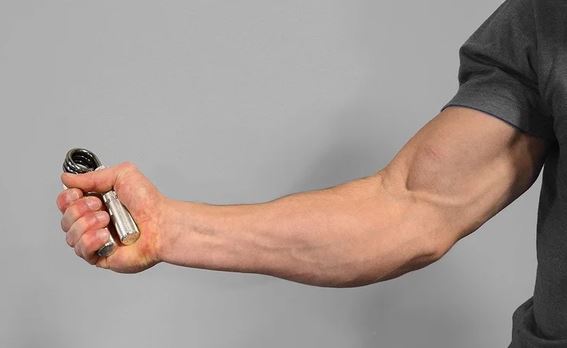
The Captains of Crush Gripper is the cleanest, most isolated crush-grip exercise available — no pulling, no carrying, no bodyweight involved, just the hand closing against a known, standardized spring resistance. Because the resistance levels are fixed and consistent, this is one of the easiest grip exercises to track real progress on over months and years.
How to do it: Set the gripper deep in the palm, fingers wrapped around one handle and the thumb against the other. Squeeze the handles together in a smooth, continuous motion until they touch, then release under control.
Common mistake: Setting the gripper too shallow, out near the fingertips, which puts the hand at a significant leverage disadvantage before the squeeze even begins.
2. Towel Pull-Up
Difficulty: Intermediate | Equipment: Pull-up bar, towel | Best for: Dynamic crush grip under bodyweight load, adapting to unstable surfaces
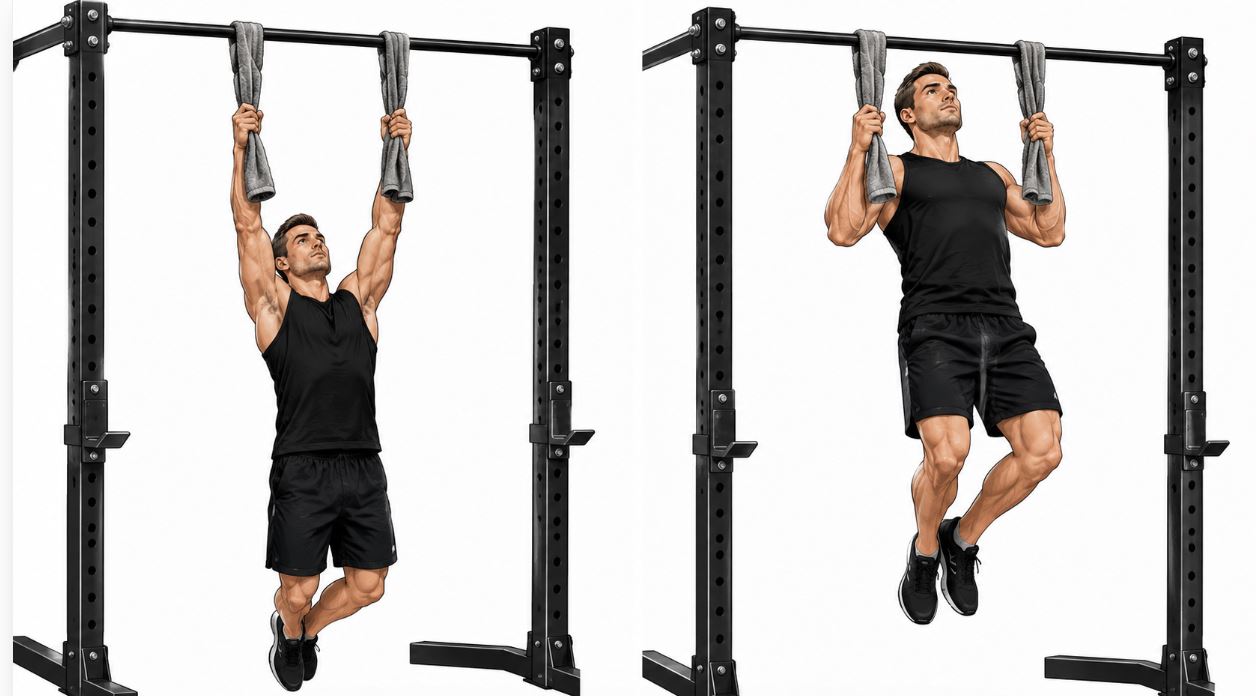
The Towel Pull-Up takes a standard pull-up and removes the bar from your hands, replacing it with a towel draped over the bar. The shifting, twisting fabric forces continuous re-gripping throughout every rep, training a crush grip that has to adapt rather than just hold static.
How to do it: Drape a towel over the bar and grip one end in each hand, close to the bar. Pull up exactly as you would a standard pull-up, squeezing the towel continuously rather than holding it passively.
Common mistake: Using a thin or slippery towel, which makes the exercise harder for the wrong reason — testing how poorly your hands grip slick fabric rather than building real pulling and grip strength.
3. Fat Grip Pull-Up
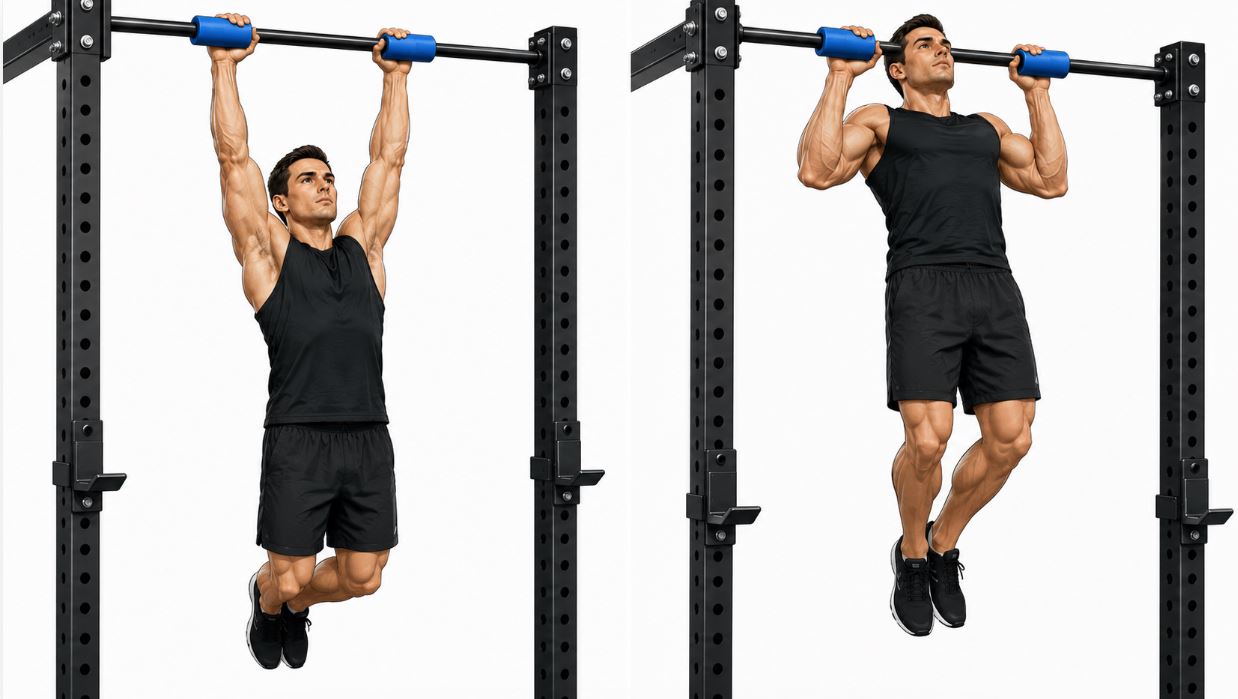
Difficulty: Intermediate | Equipment: Pull-up bar, Fat Gripz or thick bar | Best for: Trackable, maximum crush-grip overload under bodyweight load
The Fat Grip Pull-Up increases the bar’s diameter with slip-on attachments or a dedicated thick bar, then has you perform a normal pull-up. The larger diameter forces the hand into a weaker mechanical position, and because the diameter is a fixed, repeatable variable, it’s easy to track strength gains over time.
How to do it: Attach Fat Gripz to a pull-up bar or use a thick bar directly. Take your normal grip width, wrap your fingers as far around the increased diameter as you can, and pull up as you normally would.
Common mistake: Letting the hand open up slightly under fatigue — an open hand on a fat grip has almost no holding power left, so the fingers need to stay actively closed for the entire rep.
Category 2: Pinch Grip
Pinch grip exercises train the thumb pressing directly against the fingers, without wrapping the hand around anything — the pattern used to carry a plate by its edge.
4. Plate Pinch Hold
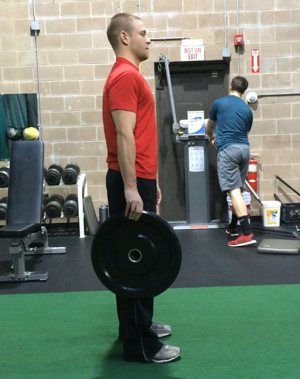
Difficulty: Beginner – Intermediate | Equipment: Weight plates | Best for: Isolated thumb and pinch-grip strength
The Plate Pinch Hold is exactly what it sounds like: gripping a weight plate between the fingers and thumb and holding it for time. It’s one of the only common exercises that directly isolates the thumb, which is rarely loaded on its own in standard lifting and is frequently the weak point behind a “strong grip” that still struggles with pinch-style tasks.
How to do it: Grip the edge of a plate (or two plates pressed smooth-side-out together) between the fingers and thumb. Stand up, holding the plate at arm’s length, and hold for the prescribed duration before lowering it under control.
Common mistake: Gripping too close to the center of the plate rather than the outer edge, which makes the hold artificially more stable and defeats the purpose of training pinch strength specifically.
Category 3: Support Grip
Support grip exercises train holding a load isometrically against gravity, without actively closing the hand further — the pattern that fails on a heavy deadlift hold or a long carry.
5. Barbell Hold
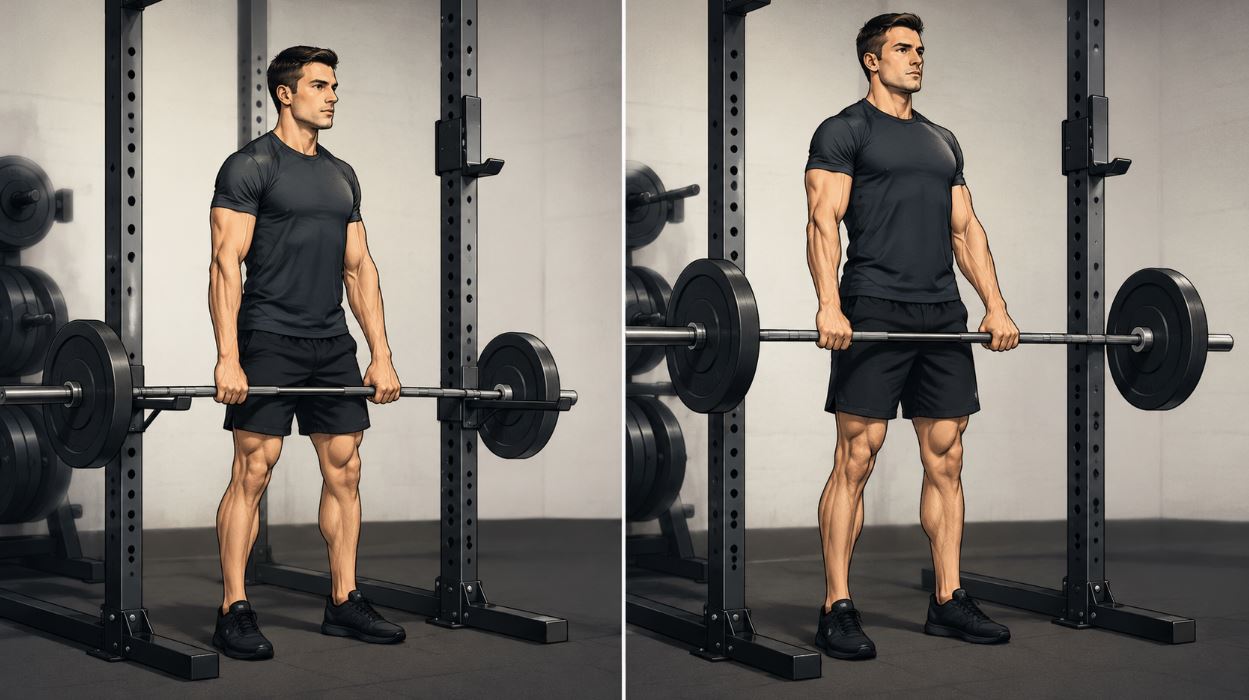
Difficulty: Beginner – Intermediate | Equipment: Barbell, rack | Best for: Direct deadlift and rack-pull grip carryover
The Barbell Hold is about as close as grip training gets to a pure carryover exercise for heavy pulls: load a bar in a rack at hip height, grip it, and hold for time. The grip pattern, bar diameter, and load are essentially identical to what you’re holding during a heavy deadlift or rack pull, with none of the technical risk of lifting the weight off the floor.
How to do it: Set a barbell in a rack at hip height. Take a double overhand grip just outside shoulder-width, lift the bar off the pins, and hold it at arm’s length with shoulders back and chest up.
Common mistake: Using lifting straps, which removes the entire training stimulus this exercise is built around.
6. Farmer’s Walk
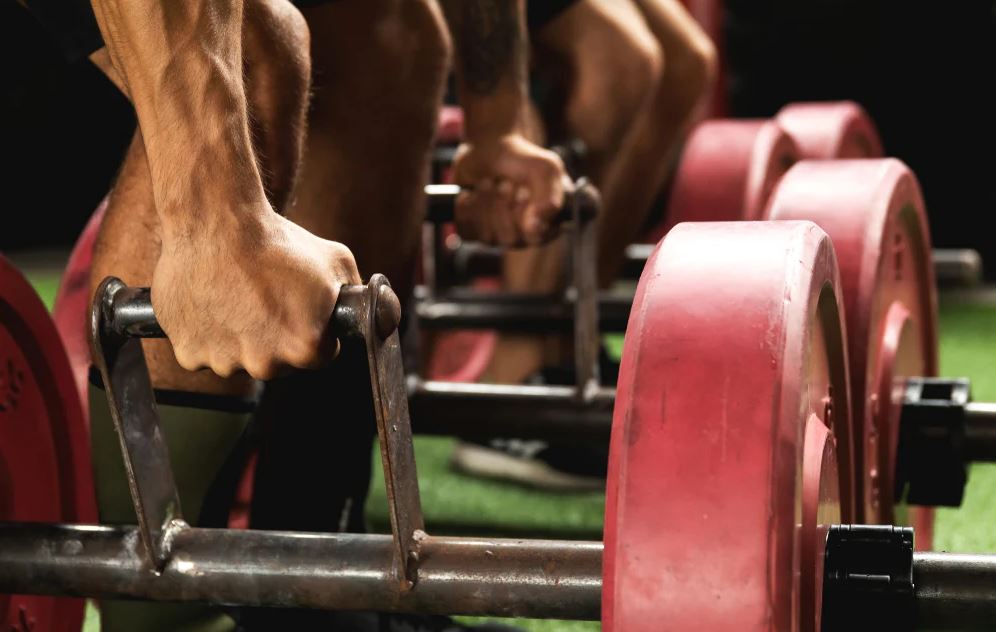
Difficulty: Beginner – Intermediate | Equipment: Dumbbells, kettlebells, or farmer’s handles | Best for: Total-body grip endurance combined with conditioning
The Farmer’s Walk loads a support grip on both sides and adds gait and balance on top of it, training grip endurance in a way that static holds don’t. Because the grip has to hold up over a sustained walk rather than a brief static hold, it builds a different kind of grip stamina than a pure isometric exercise.
How to do it: Pick up a heavy dumbbell, kettlebell, or farmer’s handle in each hand. Stand tall and walk for the prescribed distance or time, keeping the shoulders back and the core braced throughout.
Common mistake: Letting the shoulders round forward as the grip and traps fatigue, which turns a posture-positive carry into a slouched, compensated one.
7. Suitcase Carry

Difficulty: Beginner | Equipment: Single dumbbell or kettlebell | Best for: Unilateral support grip combined with anti-lateral-flexion core training
The Suitcase Carry takes the Farmer’s Walk pattern and loads only one side, the way you’d carry a suitcase. That asymmetric load adds a serious anti-lateral-flexion core demand on top of the support-grip challenge, since the torso has to actively resist tipping toward the loaded side.
How to do it: Hold a single dumbbell or kettlebell at your side. Walk for the prescribed distance or time, keeping the torso upright and resisting the urge to lean away from the weight.
Common mistake: Leaning the torso away from the load to compensate, which reduces the core stability benefit the exercise is meant to provide.
8. Dead Hang

Difficulty: Beginner | Equipment: Pull-up bar | Best for: Foundational support grip, shoulder decompression
The Dead Hang is the simplest support-grip exercise on this list: hang from a bar at arm’s length and hold the position for as long as possible. It’s an accessible entry point for support grip training and doubles as a useful shoulder decompression exercise for anyone who spends a lot of time at a desk.
How to do it: Grip a pull-up bar with hands slightly wider than shoulder-width. Let the body hang fully extended, shoulders relaxed away from the ears, and hold for the prescribed duration.
Common mistake: Shrugging the shoulders up toward the ears throughout the hold instead of allowing them to relax and decompress.
Category 4: Wrist & Finger Conditioning
This category covers grip-adjacent qualities that don’t fit neatly into crush, pinch, or support: wrist rotation endurance and finger joint stability under direct compressive load.
9. Wrist Roller

Difficulty: Beginner – Intermediate | Equipment: Wrist roller device | Best for: Wrist flexor and extensor endurance
The Wrist Roller trains the forearm by repeatedly flexing and extending the wrist as a weighted rope winds and unwinds around a handle. It’s one of the few common exercises that directly targets the extensor side of the forearm, which is rarely loaded by crush, pinch, or support-grip work.
How to do it: Hold the wrist roller at arm’s length in front of you. Roll the handle continuously in one direction to wind the rope up, then reverse direction to unwind it back down.
Common mistake: Using the shoulders or whole arm to swing the device rather than isolating the movement to wrist rotation.
10. Fingertip Push-Up
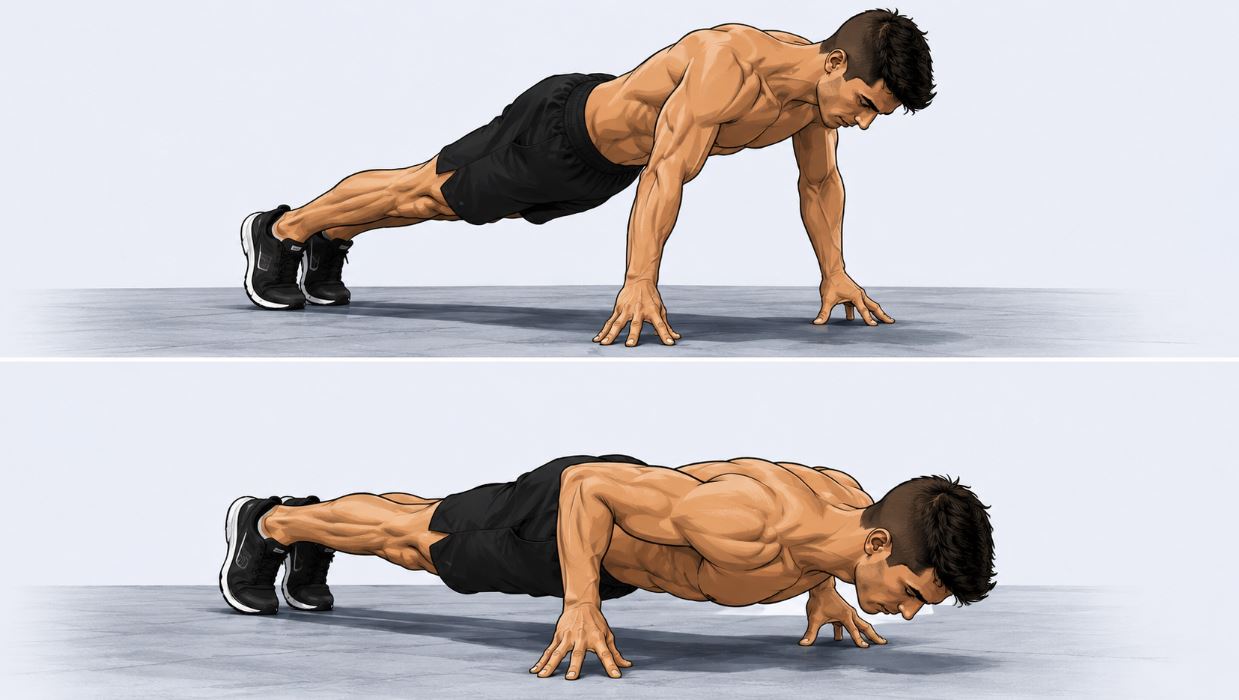
Difficulty: Advanced | Equipment: None | Best for: Finger and joint resilience under compressive load
The Fingertip Push-Up is the odd one out on this list — a standard push-up performed balanced on the fingertips rather than the flat palms. It trains the fingers and joints to support real load while held in a stable, extended position, a demand that combat sports and climbing place on the hands in ways crush or pinch training never will.
How to do it: Set up in a standard push-up position balanced on the fingertips, weight spread evenly across all ten. Lower and press back up exactly as you would a standard push-up, keeping the finger position stable throughout.
Common mistake: Progressing too fast — finger joints and tendons adapt far more slowly than the chest and triceps, so this needs more patience than the rest of a pushing program would suggest.
How to Choose the Right Exercise for Your Situation
If you are a complete beginner — start with the Dead Hang and Suitcase Carry. Both require minimal equipment and teach the fundamental support-grip pattern that most other grip exercises build on.
If your grip fails on deadlifts or rows — the Barbell Hold is the most direct fix, since it trains the exact support-grip pattern and bar diameter you’re already using on those lifts.
Furthermore, if you have a pull-up bar but no other equipment — the Dead Hang and Towel Pull-Up (using any household towel) cover support and crush grip without needing anything beyond the bar itself.
If you have gym access — add the Captains of Crush Gripper, Plate Pinch Hold, Fat Grip Pull-Up, and Wrist Roller to train all three grip types and wrist endurance with proper equipment.
Finally, if you train for combat sports or climbing — prioritize the Fingertip Push-Up and Towel Pull-Up alongside foundational crush and support work, since both train the kind of grip resilience those sports specifically demand.
Sample Grip Training Routines by Level
Beginner Grip Routine
For trainees new to direct grip training, focused on learning the foundational support and crush grip patterns.
| Exercise | Sets | Duration/Reps | Rest |
|---|---|---|---|
| Dead Hang | 3 | 20–30 sec | 60 sec |
| Suitcase Carry | 3 | 30–40 sec per side | 60 sec |
| Captains of Crush Gripper (Guide or #0.5) | 2 | 5–8 reps per hand | 60 sec |
Focus: Build comfort with basic support and crush grip patterns before adding load or duration.
Intermediate Grip Routine
For trainees ready to combine grip work with their existing pulling and carrying training.
| Exercise | Sets | Duration/Reps | Rest |
|---|---|---|---|
| Barbell Hold | 3 | 20–30 sec | 60 sec |
| Plate Pinch Hold | 3 | 15–30 sec per hand | 60 sec |
| Farmer’s Walk | 3 | 30–40 sec | 75 sec |
| Wrist Roller | 2 | 1 full roll up and down | 60 sec |
Focus: Cover all three core grip types — crush, pinch, and support — rather than repeating one pattern across every exercise.
Advanced Grip Routine
For advanced trainees who need maximum, varied grip stimulus across crush, pinch, support, and finger conditioning.
| Exercise | Sets | Duration/Reps | Rest |
|---|---|---|---|
| Fat Grip Pull-Up or Towel Pull-Up | 3 | 5–8 reps | 90 sec |
| Captains of Crush Gripper (#1+) | 3 | 5–8 reps per hand | 90 sec |
| Plate Pinch Hold | 3 | 30–45 sec per hand | 75 sec |
| Fingertip Push-Up | 2–3 | 5–10 reps | 90 sec |
Focus: Quality and full grip closure over total volume — every rep should be controlled, with momentum never substituting for actual strength.
Common Mistakes in Grip Strength Training
Relying on lifting straps for every heavy pull. Straps have a place in high-volume back training where grip genuinely isn’t the target, but using them constantly removes any opportunity for the grip to adapt. If grip is consistently the limiting factor in deadlifts or rows, that’s a sign to train it directly, not to strap it around indefinitely.
Training only one type of grip. Crush, pinch, and support grip are distinct qualities, and a strong crush grip doesn’t automatically transfer to a strong pinch or support grip. A program built entirely around hand grippers, for example, leaves pinch and support grip undeveloped — and one of those is usually what fails on the next heavy pull.
Programming grip work before compound lifts. Pre-fatiguing the hands before deadlifts, rows, or pull-ups compromises the very lifts grip training is supposed to support. Grip-specific work belongs at the end of a session, after the main compound movements.
Progressing too aggressively. Finger and wrist tendons adapt more slowly than larger muscle groups like the back or chest. Jumping to a heavier gripper, a thinner pinch plate, or more fingertip push-up volume faster than the connective tissue can handle is one of the more common ways people derail their own progress here. This matters even more for older trainees: research on resistance training dosage in older adults with sarcopenia points to a clear dose-response relationship between training volume and gains in grip strength, meaning consistent, appropriately dosed training beats sporadic, overly aggressive sessions.
Ignoring grip strength as a health marker, not just a performance one. Beyond the gym, the PURE study’s findings on grip strength and mortality risk are a reminder that this isn’t purely about lifting heavier weights — grip strength is one of the simplest, most studied indicators of overall muscular health, particularly as people age.
Conclusion
Grip strength is the quality most lifters discover they’re missing at the worst possible moment — mid-rep, on a lift that should have gone fine. It doesn’t have to stay that way. The 10 exercises in this guide cover crush, pinch, and support grips, plus wrist and finger conditioning that rounds out genuine hand resilience, and each one links to a complete individual guide with full coaching details.
Pick exercises from each category rather than just the one that sounds the most fun, progress the load and duration patiently, and you’ll stop finding out your grip is the weak link only when it costs you a rep.
If you’re still not sure why your grip feels behind despite training hard everywhere else, this article breaks down the most common reasons grip strength stalls — and exactly how to fix each one.
References
- Leong, D. P., Teo, K. K., Rangarajan, S., et al. (2015). Prognostic value of grip strength: findings from the Prospective Urban Rural Epidemiology (PURE) study. The Lancet, 386(9990), 266-273. pubmed.ncbi.nlm.nih.gov
- Hand-Focused Strength and Proprioceptive Training for Improving Grip Strength and Manual Dexterity in Healthy Adults: A Systematic Review and Meta-Analysis. (2025). pmc.ncbi.nlm.nih.gov
- Optimal dose of resistance training to improve handgrip strength in older adults with sarcopenia: a systematic review and Bayesian model-based network meta-analysis. Frontiers in Physiology. frontiersin.org
Frequently Asked Questions
How often should I train grip strength?
Two to three times per week is the productive range for most people, ideally on the same days as your pulling-focused training rather than as a separate isolated session. Grip and finger tendons recover more slowly than larger muscle groups, so more frequent training than this often produces accumulated fatigue rather than additional progress.
Will grip training help my deadlift?
Often, yes — if grip is genuinely the limiting factor on your deadlift. The Barbell Hold and Dead Hang both train the exact support-grip pattern a heavy deadlift demands, and improving that pattern directly can be the difference between locking out a new PR and watching the bar slip before you do.
Should I use lifting straps while training grip strength?
No — using straps during dedicated grip exercises removes the entire training stimulus those exercises are built around. Straps are reasonable for high-volume back training where grip isn’t the target of the session, but they shouldn’t be used during exercises specifically chosen to train the grip.
What’s the difference between crush, pinch, and support grip?
Crush grip is closing the hand around an object, like squeezing a hand gripper or wrapping the fingers fully around a pull-up bar. Pinch grip is the thumb pressing directly against the fingers without wrapping around anything, like holding a plate by its edge. Support grip is holding a load isometrically without actively closing the hand further, like the static hold at the top of a deadlift.
Can grip strength really predict health outcomes, not just gym performance?
There’s real research behind this. The PURE study, which followed over 139,000 adults across 17 countries, found grip strength to be independently associated with all-cause and cardiovascular mortality risk. That doesn’t mean training your grip alone will extend your life, but it does mean grip strength reflects something meaningful about overall muscular health beyond just how much you can lift.
