
Introduction
The leg press exercise is one of the most effective and widely used movements for building lower-body strength, with a primary focus on the quadriceps, glutes, and overall leg development. As a coach working with lifters of all levels, I often rely on the leg press as a powerful tool for increasing training volume, improving muscle activation, and safely loading the legs without the same spinal stress as free-weight exercises like the squat.
What makes the leg press especially valuable is its combination of stability and load potential. Because the movement is guided by a machine, lifters can focus almost entirely on leg drive and muscle contraction, making it easier to develop a strong mind–muscle connection—something that many beginners struggle to achieve with more complex compound lifts. At the same time, the ability to handle heavier loads makes it highly effective for hypertrophy and progressive overload.
In practice, I’ve found that the leg press is not just a “beginner alternative” to squats, but a strategic hypertrophy tool that even advanced lifters use to target the quads more directly, push beyond fatigue, and manipulate variables like foot placement to emphasize different muscle groups. When performed correctly, it can be one of the safest and most productive exercises in any leg training program.
Equipment Needed
Before getting into the execution itself, it’s important to understand that the leg press exercise requires very little setup, but proper equipment positioning makes a huge difference in both safety and effectiveness. As a coach, I’ve seen that most issues with this exercise don’t come from the movement itself—but from poor machine setup relative to the lifter’s body proportions.
- 45-degree leg press machine
- Weight plates (for plate-loaded machines)
- Flat, stable footwear (or barefoot for better force transfer)
In practice, I always emphasize that the machine should be adjusted to your individual height and limb length. The seat position determines your starting knee angle, and getting this right is critical for maintaining proper joint alignment and avoiding unnecessary stress on the lower back and knees.
Step-by-Step Instructions for the Leg Press Exercise
Executing the leg press exercise correctly starts with a precise and stable setup. As a coach, I can tell you that most long-term issues with this movement—especially lower back discomfort—almost always come from poor positioning at the start, not the movement itself. If you get the setup right, everything else becomes significantly easier and safer.
A. Starting Position (Setup)
Proper setup is essential for maximizing quad activation while protecting the knees, hips, and lower back.
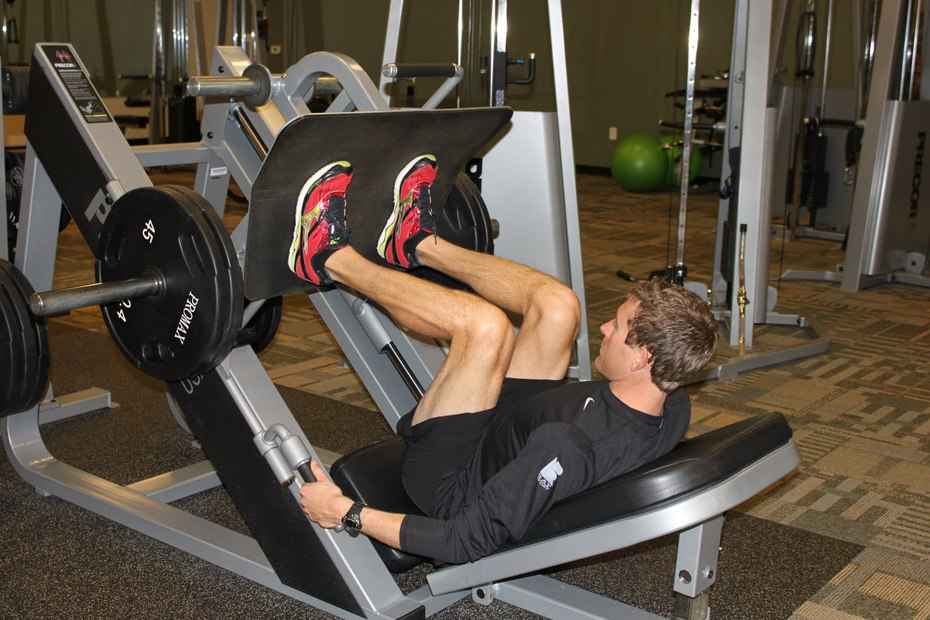
- Sit on the 45-degree leg press machine with your entire back and hips firmly pressed against the pads.
- Place your feet on the platform approximately shoulder-width apart (or slightly wider), with toes pointing slightly outward or straight ahead.
- Position your feet around the middle of the footplate to achieve a balanced distribution between quads and glutes.
- Release the safety handles and extend your legs until they are nearly straight, but do not lock your knees.
- Your knees should form roughly a 90-degree angle with your torso at the starting position.
- Keep your head relaxed against the pad and maintain a neutral spine throughout the setup.
- Brace your core lightly to stabilize your pelvis and prevent lower back rounding.
Key coaching cue: Keep your lower back glued to the pad at all times—if it lifts, the load is too heavy, or your range of motion is too deep.
B. Movement (Execution)
Once you’re properly set up, the goal of the leg press exercise is to produce controlled, consistent force through the legs—without losing alignment or tension. As a coach, I always emphasize that this is not just about moving weight from point A to point B, but about maintaining tension in the quads throughout the entire range of motion.
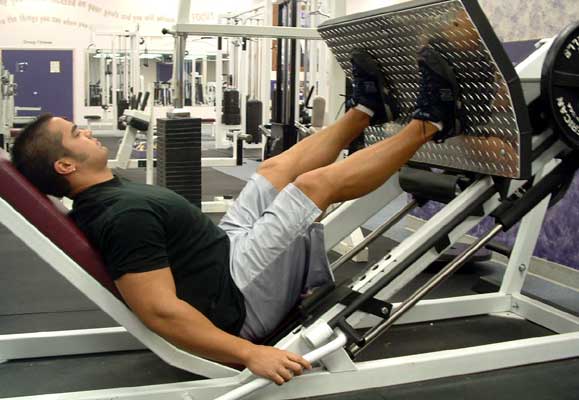
- Inhale and brace your core before initiating the movement.
- Slowly lower the platform by bending your knees, keeping your feet flat and your lower back firmly pressed against the pad.
- Continue descending until your thighs approach your torso or your knees reach approximately 90 degrees (or slightly deeper if mobility allows).
- Pause briefly at the bottom to eliminate momentum and maintain control.
- Press the platform back up by driving through your heels and mid-foot, extending your knees and hips simultaneously.
- Exhale as you push the weight upward.
- Stop just short of full knee lockout at the top to keep constant tension on the quadriceps.
Tempo recommendation: 2–3 seconds lowering phase, brief pause, controlled but powerful return.
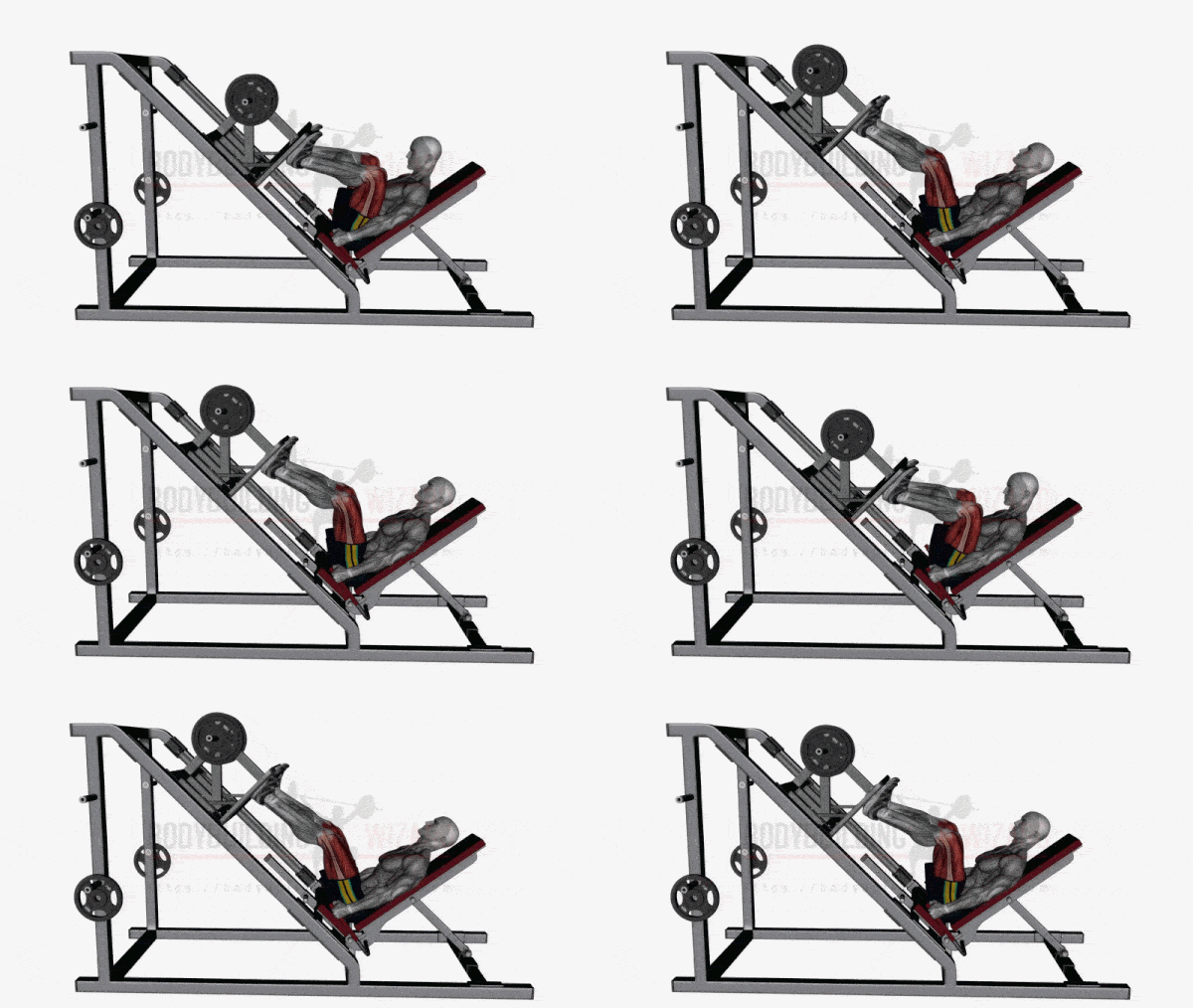
Resistance Curve Insight
One important detail many lifters overlook is how resistance changes throughout the movement. On the leg press, the load typically feels most challenging in the mid-range, where both the knee and hip joints produce high forces.
This is why controlled tempo and proper depth are so important—rushing through the middle portion or shortening the range of motion reduces overall muscle stimulation and limits the potential for hypertrophy.
Muscles Worked in the Leg Press
The leg press exercise is a compound lower-body movement that primarily targets the quadriceps while also engaging several supporting muscle groups. What makes this exercise especially valuable is its ability to isolate the legs under heavy load without requiring the same level of balance and stabilization as free-weight movements.
As a coach working with lifters and athletes, I often use the leg press to help clients better understand how to properly load and feel their quads, especially if they struggle to achieve that connection during squats.
Primary Muscles
- Quadriceps (vastus lateralis, vastus medialis, vastus intermedius, rectus femoris). The quadriceps are the primary drivers of knee extension. In most standard foot positions, they take the majority of the load, making the leg press one of the best exercises for targeted quad hypertrophy.
Secondary Muscles
- Gluteus maximus. Assists in hip extension, especially as you push the platform away from the bottom position.
- Hamstrings. Act as stabilizers and assist in controlling the descent, particularly at deeper ranges of motion.
- Adductors. Contribute to hip stability and assist in force production, especially when using a wider stance.
Stabilizers
- Core musculature. Helps maintain pelvic stability and prevents lower back rounding.
- Calves (gastrocnemius and soleus). Assist in stabilizing the ankle joint and maintaining foot pressure on the platform.
From my experience, the leg press is one of the best exercises to teach lifters how to truly fatigue their quadriceps, because it removes many of the limiting factors present in squats, such as balance and spinal stability.
However, this only works if the movement is performed with proper depth and control. If you cut the range of motion short, rush the reps, or bounce out of the bottom position, the quads never receive the full stimulus needed for serious growth.
Performance Optimization Tips (Coach’s Cues)
Once the basics are in place, small technical refinements can make a huge difference in quad activation, safety, and overall training quality. As a coach, I’ve seen that the difference between “just moving weight” and actually growing from the leg press often comes down to these details.
- Drive through your heels and mid-foot: This ensures proper force transfer and keeps tension where it should be—on the quadriceps and glutes.
- Keep your lower back glued to the pad: If your hips start lifting, you’re going too deep or using too much weight.
- Control the eccentric (lowering phase): Don’t let gravity do the work—this is where a big part of hypertrophy stimulus happens.
- Use a full, controlled range of motion: Go as deep as your mobility allows without compromising spinal position.
- Avoid full knee lockout: Stop just short of locking out to maintain constant muscle tension.
- Keep your knees aligned with your toes: This protects the joints and improves force efficiency.
- Think “push the platform away,” not “extend the knees”: This cue helps integrate the entire lower body rather than mechanically isolating the movement.
- Adjust foot placement intentionally: Don’t just place your feet randomly—use positioning to target specific muscles.
Technical Emphasis & Targeting Adjustments
One of the biggest advantages of the leg press exercise is how easily you can shift muscular emphasis by adjusting your foot placement and stance width. As a coach, I use this all the time—small changes in positioning can dramatically alter which muscles do the majority of the work.
Unlike many other compound leg exercises, the leg press allows you to systematically target different areas of the thighs without changing the exercise itself. This makes it an incredibly versatile tool for both hypertrophy and the correction of muscular imbalances.
Foot Placement (Vertical Position on Platform)
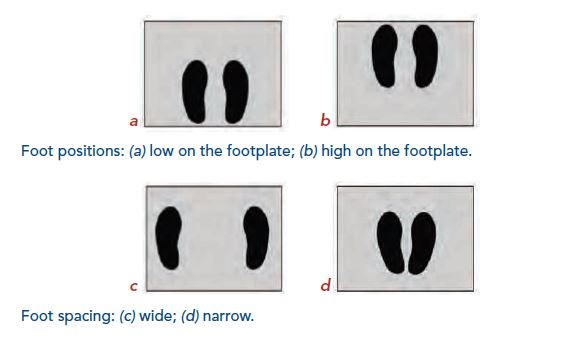
The height of your feet on the platform determines the relative contribution of the quadriceps versus the posterior chain.
| Foot Position | Muscle Emphasis |
|---|---|
| Feet low on the platform | Greater emphasis on the quadriceps (more knee flexion, less hip involvement) |
| Feet in the middle | Balanced activation of quadriceps and glutes |
| Feet high on the platform | Increased emphasis on glutes and hamstrings (more hip flexion and extension) |
Stance Width (Horizontal Foot Spacing)
Your stance width influences which portions of the quadriceps and surrounding muscles are more involved.
| Foot Spacing | Muscle Emphasis |
|---|---|
| Shoulder-width stance | Even development of the entire thigh |
| Wider stance | Increased activation of inner quads (vastus medialis), adductors, and sartorius |
| Narrow stance | Greater emphasis on outer quads (vastus lateralis) and abductors |
From my experience, most lifters underestimate how powerful small adjustments in foot placement can be during the leg press. Instead of constantly switching exercises, you can simply modify your setup to target different muscle groups more effectively within the same movement.
If your goal is quad growth, keep your feet lower and shoulder-width. If you want more glute involvement, go higher and slightly wider. This level of control is exactly what makes the leg press such a valuable tool in a well-structured leg training program.
Leg Press Variations
While the standard 45-degree leg press is the most commonly used version, there are several variations that can slightly change the feel of the movement, improve muscle targeting, or help address imbalances. As a coach, I often rotate these variations depending on the athlete’s goal—whether it’s hypertrophy, symmetry, or joint comfort.
1) Seated (Horizontal) Leg Press
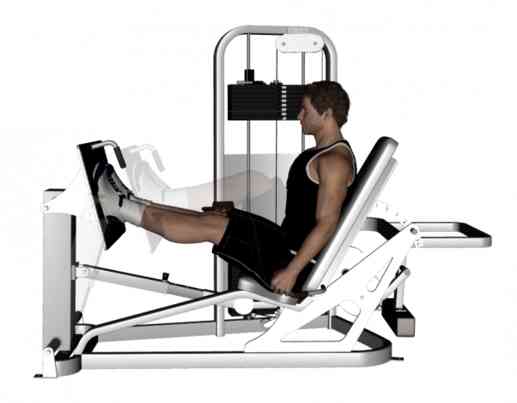
How to perform:
- Sit on the machine with your back firmly against the pad.
- Place your feet shoulder-width apart on the platform.
- Release the safety handles and extend your legs without locking your knees.
- Lower the weight under control until your knees reach about 90 degrees.
- Press the platform back to the starting position.
Why it works:
This variation provides a more upright body position, which some lifters find more comfortable for the lower back. It’s generally easier to control, making it a solid option for beginners or for higher-rep hypertrophy work.
2) Single-Leg Press
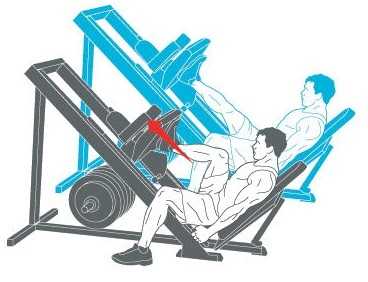
How to perform:
- Place one foot on the platform while keeping the other off to the side.
- Keep your hips square and your back pressed into the pad.
- Lower the platform slowly, maintaining knee alignment.
- Press back up using only the working leg.
Why it works:
This variation is excellent for correcting left-right strength imbalances and improving unilateral control. It also increases the relative load on each leg without requiring excessive weight to be stacked on the machine.
3) Narrow Stance Leg Press
How to perform:
- Position your feet closer together than shoulder-width.
- Keep your feet in the middle or slightly lower on the platform.
- Perform the movement with controlled tempo and full range of motion.
Why it works:
A narrower stance places more emphasis on the outer quadriceps (vastus lateralis) and can help create that “sweeping” look of the thighs.
4) Wide Stance Leg Press
How to perform:
- Place your feet wider than shoulder-width apart.
- Turn your toes slightly outward.
- Maintain proper knee tracking throughout the movement.
Why it works:
This variation increases involvement of the inner thighs (adductors) and vastus medialis, contributing to overall thigh thickness and stability.
5) High Foot Placement Leg Press
How to perform:
- Place your feet higher on the platform than usual.
- Keep your stance moderate to slightly wide.
- Perform controlled repetitions without lifting your hips.
Why it works:
Shifting the feet higher increases glute and hamstring involvement, making this a great option for posterior chain emphasis.
Alternative / Replacement Exercises
While the leg press exercise is one of the most effective machine-based movements for building leg strength and size, it should not be used in isolation in a well-designed program. As a coach, I always emphasize that combining machine work with free-weight exercises creates a more complete and balanced lower-body development.
Depending on your goals, equipment availability, or limitations (such as lower back issues), several exercises can effectively replace or complement the leg press.
- Barbell Squat: The gold standard for lower-body strength, involving the quadriceps, glutes, and core while requiring full-body stabilization.
- Dumbbell Squat: A more accessible variation that still provides strong quad and glute activation with less spinal loading compared to the barbell version.
- Hack Squat (Machine or Barbell): Closely mimics the leg press in terms of quad emphasis while maintaining a more upright torso position.
- Leg Extension: An isolation exercise that directly targets the quadriceps, making it ideal for finishing sets or adding extra volume.
- Step-Ups: A functional unilateral movement that improves balance, coordination, and leg strength.
- Bulgarian Split Squat: One of the most effective unilateral exercises for quad and glute development, with high stability demands.
If you want to see how this exercise fits into a complete leg strategy, check out our guide to the best quadriceps exercises.
In my experience, the leg press works best when used alongside free-weight movements, not as a complete replacement. Squats build overall strength, coordination, and full-body control, while the leg press allows you to push volume and isolate the quads more aggressively without being limited by balance or core fatigue.
If I had to structure a serious leg session, I’d usually use squats as the main lift and the leg press as a secondary hypertrophy driver. That combination consistently delivers excellent results for both strength and muscle growth.
Key Benefits of the Leg Press Exercise
When performed correctly, the leg press exercise offers a powerful combination of muscle-building potential, safety, and versatility, making it a staple in both beginner and advanced training programs. As a coach, I consistently use the leg press to help lifters push their limits in a controlled environment while maximizing lower-body hypertrophy.
- High quad activation with reduced spinal stress: Allows you to heavily load the legs without placing significant pressure on the lower back, unlike squats.
- Ideal for progressive overload: The machine setup makes it easy to safely increase weight over time, which is essential for muscle growth.
- Excellent for hypertrophy training: Enables high training volume and controlled repetitions, both key drivers of muscle development.
- Beginner-friendly movement: The guided path reduces technical complexity, making it easier to learn and perform correctly.
- Adjustable muscle targeting: Foot placement and stance width can shift the emphasis among the quads, glutes, and adductors.
- Improved mind–muscle connection: Stability allows lifters to focus entirely on contracting the working muscles.
- Lower balance and coordination demands: Removes many limiting factors, allowing you to train the legs closer to true muscular failure.
Who Should Use This Exercise?
The leg press exercise is suitable for a wide range of lifters, from complete beginners to advanced athletes. What makes it especially valuable is its ability to adapt to different goals, training levels, and physical limitations.
- Beginners: A safe and controlled way to build foundational leg strength before progressing to more complex movements like squats.
- Intermediate and advanced lifters: Ideal for adding volume and pushing the quadriceps beyond fatigue after heavy compound lifts.
- Bodybuilders: Excellent for targeted quad hypertrophy and improving muscle symmetry through adjustable foot positioning.
- Lifters with lower back limitations: A great alternative to free-weight exercises that reduces spinal loading while still allowing heavy leg training.
- Athletes: Useful for developing lower-body strength that supports performance in sports requiring power and stability.
Leg Press vs Squat: Which Is Better?
The leg press exercise and the squat are often compared because both target the same primary muscle groups—mainly the quadriceps and glutes. However, they serve different roles in a training program, and understanding that difference is key to maximizing both strength and muscle growth.
As a coach working with lifters of all levels, I rarely treat this as an “either-or” decision. Instead, I see these two movements as complementary tools—each with its own advantages depending on the goal.
| Criteria | Leg Press | Squat |
|---|---|---|
| Movement Type | Machine-based compound | Free-weight compound |
| Stability Requirement | Low | High |
| Load Potential | Very high | High |
| Spinal Loading | Low | High |
| Quad Isolation | High | Moderate |
| Core Engagement | Low | Very high |
| Skill Requirement | Low | High |
| Functional Carryover | Moderate | Very high |
Practical Takeaway: If your goal is to build maximum lower-body strength and athletic performance, the squat should be your foundation. But if your focus is quad hypertrophy, controlled volume, and pushing close to muscular failure, the leg press becomes an incredibly powerful tool.
In real training programs, the best results almost always come from using both:
- Squats for strength, coordination, and full-body development
- Leg press for targeted hypertrophy and additional training volume
Where This Exercise Fits in a Workout
The leg press exercise can be used in multiple ways depending on your training goal, experience level, and overall program structure. Because it offers high stability and allows for significant loading, it’s one of the most flexible lower-body exercises when it comes to programming.
As a coach, I most often use the leg press as a secondary compound movement after squats or other free-weight lifts. This allows lifters to safely push their legs closer to failure without being limited by balance or core fatigue.
Recommended Placement
- After squats or primary compound lifts: Ideal for adding volume and fully fatiguing the quadriceps.
- As a primary movement (for beginners or machine-focused workouts): A safe starting point for building foundational leg strength.
- As a finisher: High-rep sets to maximize muscle fatigue and metabolic stress.
Sets & Reps Guidelines
- Hypertrophy (muscle growth): 3–5 sets of 8–15 reps
- Strength focus: 3–5 sets of 5–10 reps (controlled tempo, heavy load)
- Endurance/burnout sets: 2–3 sets of 15–20+ reps
In my experience, the leg press is one of the best exercises for safely pushing beyond your comfort zone. Because you don’t have to worry about balancing the weight, you can focus entirely on effort and muscle fatigue, which is exactly what drives hypertrophy.
However, that also means discipline is crucial—don’t sacrifice range of motion or control just to move more weight. The lifters who get the best results are the ones who stay strict, controlled, and intentional with every rep.
Conclusion
The leg press exercise remains one of the most effective tools for building quadriceps size, lower-body strength, and training volume in a controlled environment. While it doesn’t replace foundational free-weight movements like the squat, it plays a crucial role in any well-structured leg program by allowing you to push intensity safely and target the quads with precision.
As a coach, I consistently see the best results when lifters treat the leg press not as an “easier alternative,” but as a strategic hypertrophy movement—one that’s executed with a full range of motion, controlled tempo, and intentional effort. When used correctly, it can significantly accelerate leg development and help break through plateaus that free-weight training alone often cannot overcome.
Is the leg press exercise good for building muscle?
Yes, the leg press exercise is excellent for building muscle, especially in the quadriceps. It allows for heavy loading and controlled movement, which are key factors for hypertrophy.
What muscles does the leg press exercise work the most?
The leg press exercise primarily targets the quadriceps, while also engaging the glutes, hamstrings, and adductors as supporting muscles.
Is the leg press better than squats?
The leg press exercise is not necessarily better than squats—it serves a different purpose. Squats build overall strength and coordination, while the leg press is better for isolating the quads and increasing training volume.
How deep should you go on the leg press?
You should lower the weight until your thighs approach your torso or your knees reach about a 90-degree angle, while keeping your lower back pressed against the pad.
Should you lock your knees on the leg press?
No, you should avoid locking your knees at the top of the leg press exercise, as this increases joint stress and reduces muscle tension.
What is the best foot placement for quad development?
For maximum quad activation in the leg press exercise, place your feet lower on the platform and keep a shoulder-width stance.
Can beginners do the leg press exercise?
Yes, the leg press exercise is beginner-friendly because it provides stability and reduces the need for balance compared to free-weight exercises.
Why does my lower back lift during the leg press?
This usually happens when the weight is too heavy or the range of motion is too deep. Keeping your lower back pressed into the pad is essential for safety.
Is the leg press exercise safe for people with back pain?
In many cases, yes. The leg press exercise places less stress on the spine than squats, making it a suitable alternative for some individuals with lower back issues—provided proper form is maintained.
How many reps should I do on the leg press?
For hypertrophy, 8–15 reps per set is ideal. Higher reps (15–20+) can also be used for endurance and metabolic stress.
