Close Menu
Bodybuilding Wizard

    Subscribe to Updates

    Join our mailing list to receive the latest updates from our team.

    Facebook X (Twitter) Instagram
    Trending
    • Does Soy Lower Testosterone or Increase Estrogen in Men? What the Science Says
    • Does Training Legs Really Boost Testosterone? What the Science Says
    • Does Sauna Really Boost Growth Hormone 16x? Myth vs. Science
    • Does Power Posing Really Boost Testosterone? Myth, Science & the Retraction
    • Does Ashwagandha Really Boost Testosterone and Lower Cortisol? Myth vs. Science
    • Progesterone and Exercise: How It Affects Training, Metabolism & the Menstrual Cycle
    • Estrogen and Exercise: How Estradiol Affects Muscle, Fat, Bone Health & Performance
    • Thyroid Hormones and Metabolism: T3, T4, Muscle Growth & Fat Loss Explained
    RSS Facebook X (Twitter) LinkedIn YouTube Pinterest Instagram
    Bodybuilding Wizard
    Subscribe Login
    • Home
    • Tools
      • Interactive Muscle Anatomy
      • Interactive Human Skeleton
      • Bodybuilding & Fitness Calculators
      • Dietary & Nutrition Calculators
      • Body Measurement Calculators
      • Fitness Tests
      • Bodybuilding Glossary
      • DIY Projects
    • Training
      • Weight training basics
      • Advanced bodybuilding
      • Strength training for women
      • Workout programs
      • Home weight training programs
      • Cardio workout
      • Exercise equipment
      • Weight training accessories
      • Weight lifting injuries
      • Weight training for sports
    • Exercises
      • Chest exercises
        • Middle chest exercises
        • Upper chest exercises
        • Lower chest exercises
      • Back exercises
        • Middle back (latissimus dorsi)
        • Upper back (trapezius)
        • Lower back (erector spinae)
      • Arm exercises
        • Bicep exercises
        • Tricep exercises
        • Forearm exercises
        • Grip-strengthening exercises
      • Shoulder exercises
        • Front deltoid
        • Side deltoid
        • Rear deltoid
        • Rotator Cuff
        • Scapular & Shoulder Stability
        • Neck strengthening exercises
      • Leg and glute exercises
        • Quadricep exercises
        • Hamstring exercises
        • Calf exercises
        • Glute & Hip exercises
        • Shin exercises
      • Abdominal exercises
        • Upper abdominal exercises
        • Lower abdominal exercise
        • Oblique exercises
      • Core exercises
      • Kettlebell exercises
      • Foam rolling & Stretching
      • Explosive (dynamic) lifts
    • Motivation
      • Greatest physiques
      • Motivation techniques & tips
      • Events and competitions
      • Latest fitness news
      • Videos
        • Funny gym reels
        • Motivational videos
        • Funny workout videos
      • Pictures
      • Quotes
      • Funny Fitness
      • Transformations
    • Diet
      • Nutrition Fundamentals
      • Diet Types & Strategies
      • Foods & Superfoods for Athletes
      • Muscle Building & Performance Nutrition
      • Weight Loss & Fat Management
      • Food Psychology & Myths
      • Recipes & Meal Ideas
    • Supplements
      • Supplements Review
      • Muscle Building Supplements
      • Anabolic Steroids
      • Fat Burners & Weight Loss
      • Pre-Workout & Energy Boosters
      • Recovery & Sleep Aids
      • Cognitive & Nootropic Support
      • General Supplement Advice
      • Health Supplements
        • Joint & Bone Support
        • Gut Health & Digestion
        • Vitamins & Minerals
        • Superfoods & Greens
      • Steroid Alternatives
    • Anatomy
      • Upper-Body Muscles
      • Lower-Body Muscles
      • Bones & Skeletal Anatomy
      • Muscle Growth & Genetics
      • Joints, Tendons & Connective Tissue
      • Hormones & Endocrine System
      • Physiology & Body Systems
      • Body Composition & Fat
      • General Anatomy & Basics
    • Health
    Bodybuilding Wizard
    You are at:Home»Exercises»Leg and glute exercises»Quadricep exercises»Pendulum Squat Exercise Guide
    Quadricep exercises

    Pendulum Squat Exercise Guide

    No Comments6 Mins ReadkrunoslavBy krunoslavOctober 8, 2023Updated:January 25, 2026
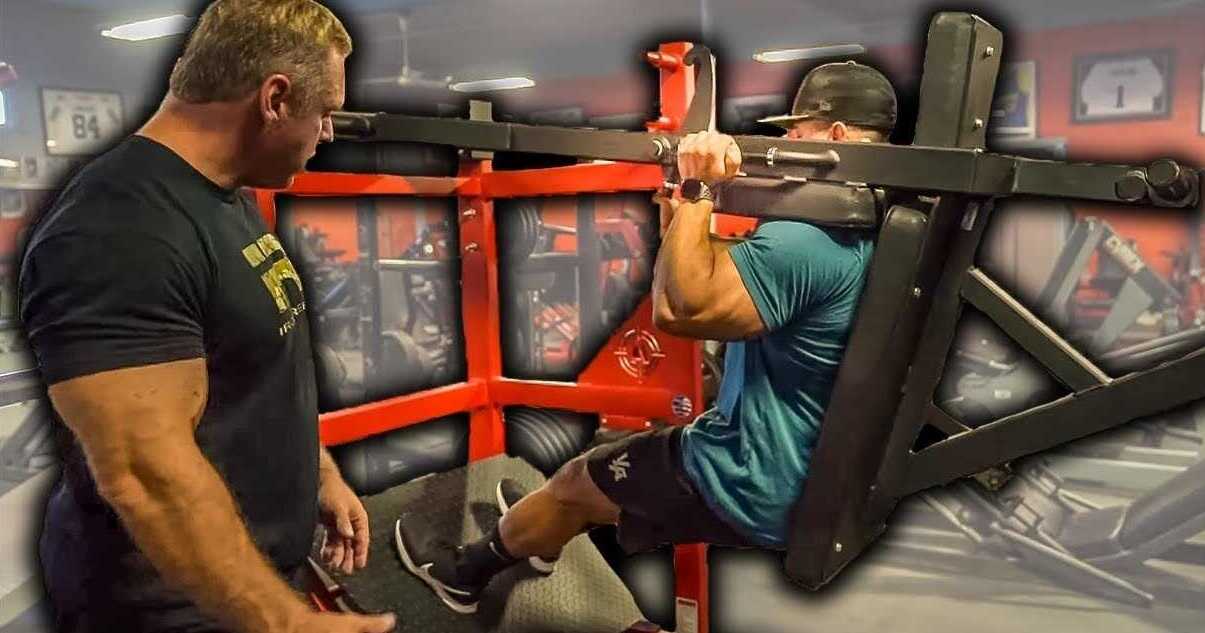
    pendulum squat machine exercise
    Share
    Facebook Twitter Pinterest LinkedIn Email Tumblr WhatsApp Telegram

    Sometimes, you step into the gym despite how many years you’ve been lifting, and see a piece of equipment, that you don’t know how to use, let alone know the name of. The pendulum squat is one of those pieces of equipment. At first sight, It may even look like a medieval torture device. The pendulum squat is very similar to the hack squat. So if you are already familiar with the hack squat machine, this machine will not be too much of an unknown. The only real difference between the two is the bar path. The pendulum squat has a curved path whereas the hack squat will usually have a straight path upwards and downwards. 

    What is the pendulum squat

    The pendulum squat is an exercise machine that has a counterbalance helping you squat into an arching motion, like a pendulum. This is how the pendulum squat gets its name. As a squat variation, this exercise is great for adding some variety into your training regimen, to help build size and strength in your quadriceps, glutes, adductors, and calves. But obviously, this exercise can never ever compete with the barbell squat – king of the exercises. But for those gym goers who, for some reason, can’t perform barbell squats this is an interesting substitution.

    Pendulum squats proper form

    In order to perform pendulum squats, you will need access to a pendulum squat machine. Here are step-by-step instructions on how to perform pendulum squats using the perfect form.

    STARTING POSITION (SETUP):

    1. Adjust the machine to fit your body. This means adjusting the angle of the platform (the most important adjustment) and the height or depth of the shoulder pads.
    2. Load the machine with the required number of weight plates to ensure the exercise will be challenging enough. However, keep in mind that the weight of the unloaded machine itself could be difficult enough on its own, so don’t overdo it.
    3. Walk inside the machine’s footprint and set your back against the back pad with your shoulders tucked comfortably under the shoulder pads.
    4. Stand on the footplate with your feet between hip and shoulder-width apart.
    5. Extend your arms to grab the handles in front of you (or, depending on the type of the machine, next to your shoulders) and place your feet shoulder-width apart on the platform below.
    6. Straighten your legs to release the safety bar. This is your starting position.
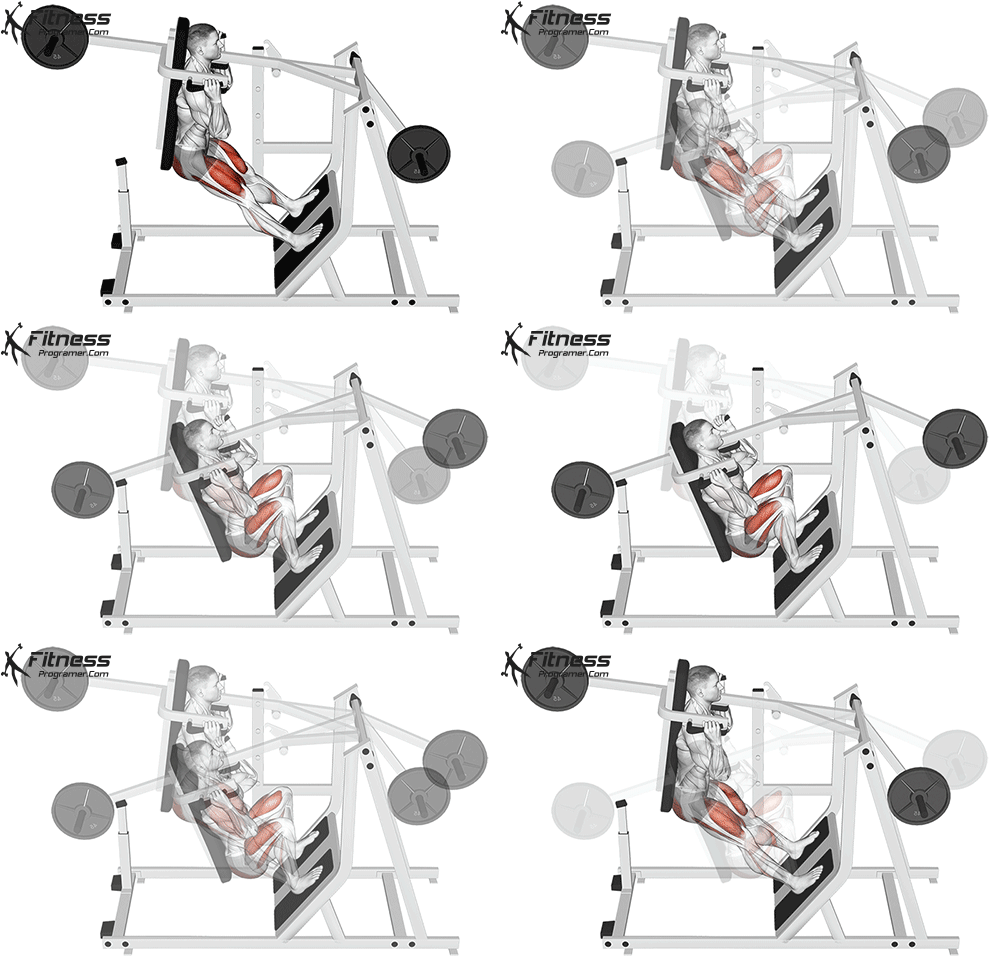
    pendulum squat exercise
    Image credit: FitnessProgramer

    ACTION (MOVEMENT):

    1. Begin the movement by bending your legs, descending down and forward into a squat. Try to hit 90 degrees at the knees or deeper.
    2. Extend your legs and return to the starting position, stopping just short of complete lockout to keep the tension on your quads.
    3. Repeat for the required number of reps.

    Additional tips (performance pointers)

    These additional tips will help you even further with the proper execution of the exercise.

    • There are lots of different pendulum squat machine manufacturers and designs, and each one works slightly differently. Maybe the instructions given above will not be 100% applicable. Always use the pendulum squat machine according to instructions provided with the machine or as directed by the gym staff.
    • An angle that puts the platform in the middle of its height selector is usually a good starting point. Too flat or too angled will often feel awkward or force you to raise your heels as you squat down, which is not recommended.
    • Vary the foot position according to your desires. There’s no right or wrong foot position, per se, so it’s important to play with different setups and to cross-reference and see what allows you to perform strong reps comfortably at high intensities. A narrow stance shifts the focus to your quads. A wider stance increases glute activation.

    Main benefits of the pendulum squat machine

    • Its guided trajectory creates a unique movement halfway between a squat and a 45-degree leg press.
    • The presence of the backrest reduces stress on the lower back during the movement (lower back friendly exercise). Back squats and front squats are great but they can lead to higher degrees of fatigue due to the stress they place on the spine.
    • The backrest and shoulder pads make pendulum squats quite comfortable, even when lifting heavy weights.
    • Since you don’t have to balance the weight (using lower back and core muscles) like in a barbell squat, you are free to push your quads and glutes closer to failure, which is optimal for hypertrophy.
    • You don’t need spotters.
    • Easy to adjust for different lifters.
    • Suitable for beginners because the pendulum machine guides your movements. It’s, therefore, hard to do this exercise incorrectly.
    • Pendulum squats can be very useful for working around injuries.

    The main disadvantages of the pendulum squat machine

    • Most gyms don’t have pendulum squat machines. However, that’s been steadily changing over the last few years.
    • The movement you perform on this machine is not very functional – is unlike anything you’ll ever do in real life or any sports activity.
    • Pendulum squats are of little use to athletes looking to build functional strength.
    • It barely works your core muscles and stabilizers.

    Pendulum squat muscles worked

    The pendulum squat is a compound or multi-joint exercise that works many of your lower body muscles simultaneously. Like the barbell back squat, the pendulum squat works the same muscles, such as the quadriceps (the rectus femoris, vastus lateralis, vastus medialis, and vastus intermedius), glutes (gluteus maximus, gluteus medius, and gluteus minimus), hamstrings, adductors, and calves (gastrocnemius) without balancing a barbell. Since you don’t have to balance the weight, all the numerous stabilizing muscles (core muscles, muscles of the lower back and along the spine) will be excluded.

    Exercise variations

    As already mentioned, vary the foot position in order to emphasize different muscles. If your goal is crushing the quads then you’ll want to bring your feet closer together (around hip to shoulder width apart) and down a little bit on the platform. To squat more for your glutes, keep your feet wider apart and slide up on the platform. To squat more for your adductors, keep your feet around the hip to shoulder-width apart and turn your toes out slightly.

    Replacement exercises for the pendulum squat

    With all the different types of squats to choose from, you can say goodbye to workout boredom. Try these squats for every need and fitness level.

    • Basic bodyweight squat
    • Barbell squat
    • Pistol squat
    • Double kettlebell front squat
    • Dumbbell front squat
    • Spanish squat
    • Single-leg squat
    • Goblet squat
    • Zercher squat
    • Sissy squat
    • Dumbbell squat
    • Front barbell squat
    • Smith-machine squat
    • Cyclist Squat

    Closing thoughts

    The pendulum squat is an excellent squat variation. It’s back-friendly, easy to learn, and still targets the same lower body muscles as a regular squat. It’s a rare machine that offers a unique way of loading the squat pattern, so consider yourself lucky if you have access to one!

    Share. Facebook Twitter Pinterest LinkedIn Tumblr Email WhatsApp
    krunoslav
    • X (Twitter)

    Hey! My name is Kruno, and I'm the owner and author of Bodybuilding Wizard. I am a licensed fitness trainer with a Ph.D. in kinesiology. Throughout my career, I have dedicated myself to helping individuals achieve their health and fitness goals through personalized training programs. In addition to my academic qualifications, I have completed various specialized courses, including certifications in nutrition and strength training, which have further enhanced my ability to provide comprehensive fitness guidance. I started this website back in late 2014, and it has been my pet project ever since. My goal is to help you learn proper weight training and nutrition principles so that you can get strong and build the physique of your dreams!

    Related Posts

    Best Quadriceps Exercises: Build Bigger, Stronger Legs with the Right Movements

    Walking Lunge: Proper Form, Muscles Worked & How to Build Strong Legs While Moving

    Reverse Lunge: Proper Form, Muscles Worked & Why It’s Easier on Your Knees

    Leave A Reply Cancel Reply

    You must be logged in to post a comment.

    WE ARE SOCIAL
    • Facebook 3.6K
    • Twitter
    • YouTube 133
    • Instagram
    RECENT POSTS
    August 27, 2026

    Does Soy Lower Testosterone or Increase Estrogen in Men? What the Science Says

    August 26, 2026

    Does Training Legs Really Boost Testosterone? What the Science Says

    August 24, 2026

    Does Sauna Really Boost Growth Hormone 16x? Myth vs. Science

    August 24, 2026

    Does Power Posing Really Boost Testosterone? Myth, Science & the Retraction

    August 23, 2026

    Does Ashwagandha Really Boost Testosterone and Lower Cortisol? Myth vs. Science

    RECENT COMMENTS
    • Justin Dew on Designing your own home gym
    • krunoslav on Meet Your Muscles: How muscles are named?
    • Christina on Meet Your Muscles: How muscles are named?
    • igtropin on Stiff-Leg Deadlift: Proper Form, Muscles Worked & Hamstring Growth Guide
    • teragon labs on Barbell Back Squat: Proper Form, Benefits, Muscles Worked & Expert Tips
    LATEST GALLERIES

    Subscribe to Updates

    Join our mailing list to receive the latest updates from our team.

    ABOUT
    ABOUT

    We are a group of bodybuilding enthusiasts and this is our effort to have all the details about bodybuilding on a single website. We strive to educate and inform our visitors so that they can make the correct training, nutrition, and supplement decisions on their own. Bodybuilding Wizard will make your dream body your reality and take you to a whole new level!

    POPULAR POSTS
    April 2, 2014

    Lying Leg Curl: Complete Guide to Hamstring Isolation, Strength & Muscle Growth

    February 18, 2019

    Meet Your Muscles: How muscles are named?

    March 28, 2014

    Free weights: The main tool for building muscles

    BODYBUILDING WIZARD
    Bodybuilding Wizard Footer Logo
    Facebook X (Twitter) Instagram Pinterest YouTube
    • About
    • Authors
    • Editorial Policy
    • Write for us
    • Privacy
    • Contact
    • Terms of Use
    • Advertising
    • FAQ
    Copyright © 2014-2026 BodybuildingWizard. All rights reserved. Powered by WordPress. Made with love and lots of caffeine.

    Type above and press Enter to search. Press Esc to cancel.

    Sign In or Register

    Welcome Back!

    Login to your account below.

    Lost password?