
Overview (Why This Exercise Matters)
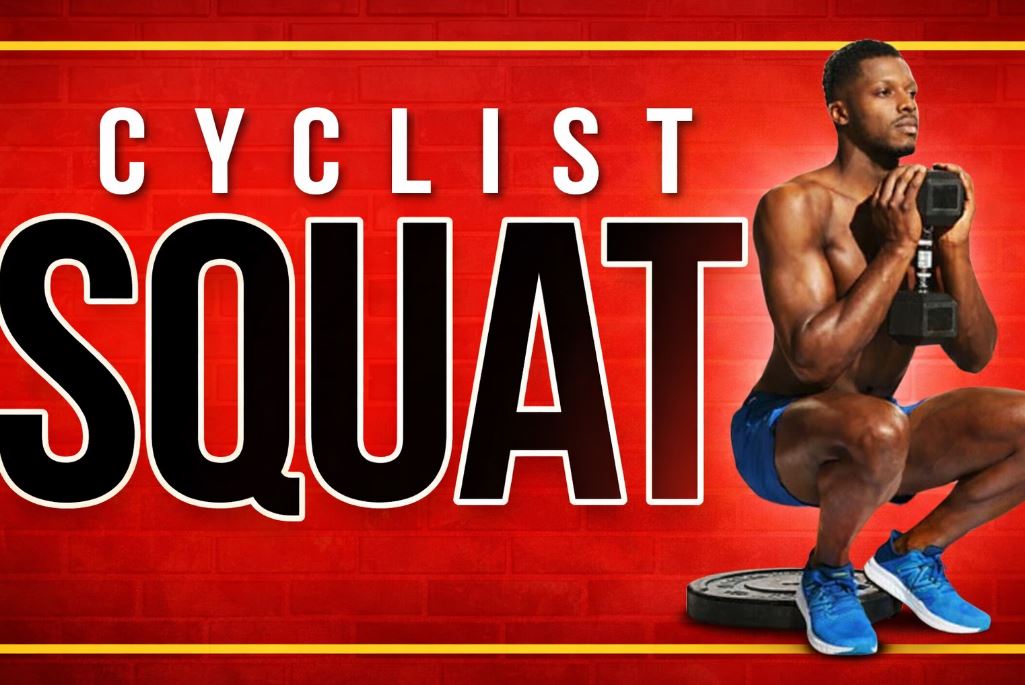
The cyclist squat is a highly specialized squat variation designed to place maximal emphasis on the quadriceps while minimizing hip contribution. By elevating the heels and using a very narrow stance, this exercise dramatically increases knee flexion and shifts the workload almost entirely to the quads.
Often used by bodybuilders, physique athletes, and advanced trainees, the cyclist squat is not about lifting maximal loads. Instead, it excels at creating deep quad stretch, constant tension, and intense metabolic stress, making it one of the most effective quad-focused squat variations available.
Coach’s Note
The cyclist squat is defined by two key characteristics: elevated heels and a very narrow stance. Elevating the heels allows the knees to travel further forward, increasing knee flexion and placing the quadriceps under significantly greater tension. At the same time, the narrow stance limits hip involvement, reducing glute dominance and forcing the quads to do most of the work.
This is precisely why the exercise is called the cyclist squat. The movement pattern closely resembles the knee-dominant mechanics seen in cycling, where the quads produce force through deep and repeated knee extension while the hips remain relatively quiet. Much like a cyclist’s pedal stroke, this squat variation emphasizes quad endurance, control, and constant tension rather than maximal load.
Equipment Needed
Despite its advanced stimulus, the cyclist squat requires only minimal equipment.
To perform this exercise properly, you will need:
- Heel elevation (small plates, wedge, or squat shoes)
- Barbell (optional – dumbbells or Smith machine also work)
- Squat rack or Smith machine (recommended for safety)
- Optional: Lifting belt (light support only)
Step-by-Step Instructions
A. Starting Position (Setup)
Correct setup is essential, as stance and heel elevation define the entire exercise.
Set yourself up as follows:
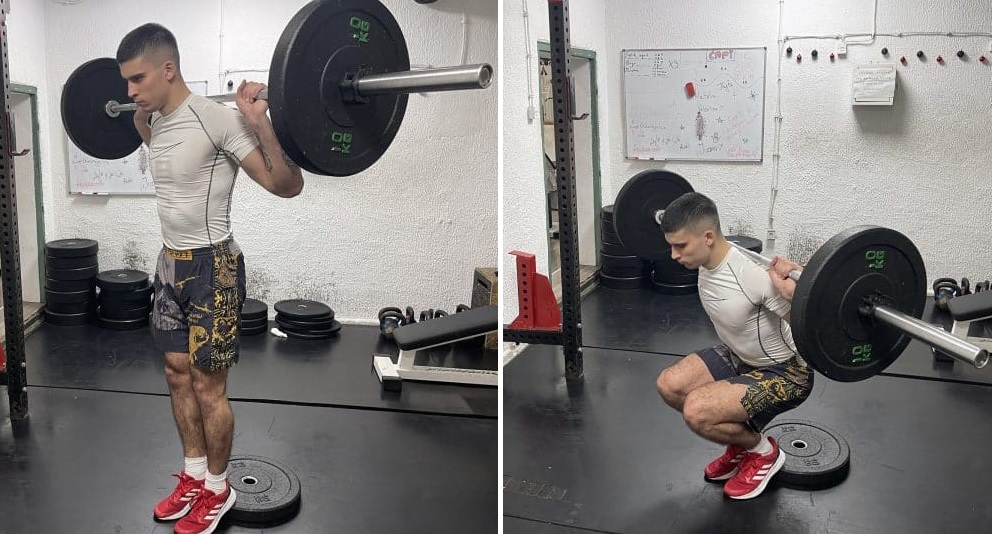
- Place your heels on a wedge or small plates (2–5 cm elevation)
- Take a very narrow stance, feet almost touching
- Keep toes slightly pointed forward or very mildly outward
- Maintain an upright torso with ribs down
- Brace your core before initiating the descent
Key setup principle: Heels elevated, knees free to travel forward.
B. Movement (Execution)
The movement should feel controlled, deep, and quad-dominant from start to finish.
Execute the cyclist squat as follows:
- Inhale and brace your core
- Initiate the squat by allowing the knees to travel forward
- Descend slowly until maximum comfortable knee flexion is reached
- Keep your torso upright throughout the movement
- Pause briefly in the bottom position to eliminate momentum
- Drive upward by extending the knees, not the hips
- Exhale as you approach the top position
Tempo recommendation:
Slow eccentric (3–4 seconds), controlled concentric.
Muscles Worked in Cyclist Squat
Understanding muscle involvement helps clarify why the cyclist squat feels so different from traditional squats.
Primary Muscles
The main muscles responsible for the movement include:
- Quadriceps femoris (especially vastus medialis and rectus femoris)
Secondary Muscles
Several muscles assist or stabilize during execution:
- Gluteus maximus (minimal contribution)
- Adductors (as stabilizers)
Stabilizers
To maintain posture and control, these muscles are active:
- Core musculature
- Calves (ankle stabilization)
- Spinal erectors (isometric)
Common Mistakes
Because of its unique mechanics, the cyclist squat is often performed incorrectly.
Be careful to avoid these common errors:
- Using excessive weight, turning it into a grind
- Letting the hips shoot back, reducing quad emphasis
- Bouncing out of the bottom, increasing knee stress
- Allowing heels to lift off the platform
- Cutting depth, which defeats the purpose of the exercise
Performance Tips (Coaching Cues)
Small cues make a significant difference in quad engagement and comfort.
Keep these cues in mind during execution:
- “Let the knees travel forward.”
- “Stay tall through the torso.”
- “Sit straight down, not back.”
- Pause in the bottom position for better control
- Think quads first, load second
Exercise Variations for the Cyclist Squat
The cyclist squat can be modified slightly depending on equipment and goals.
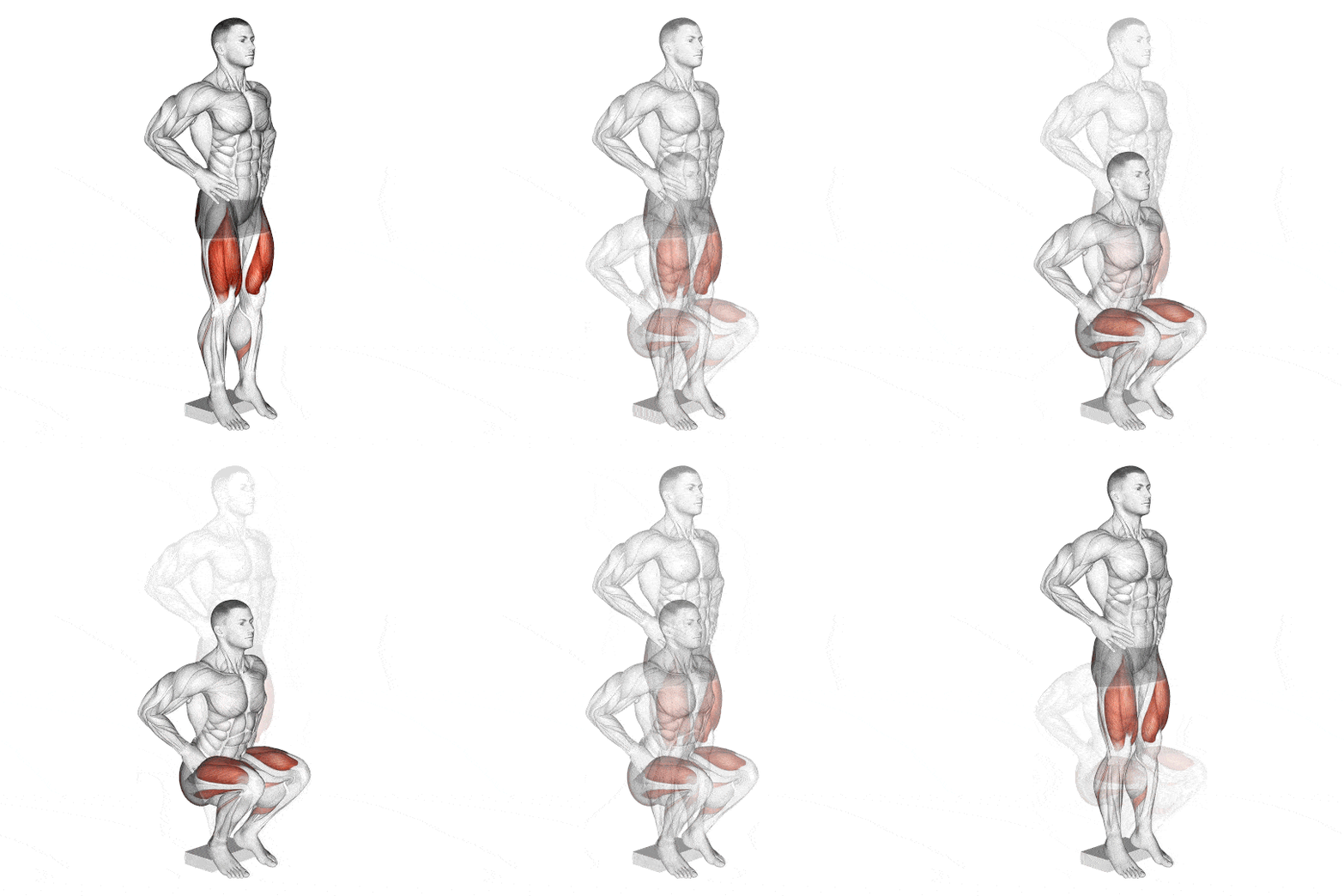
1) Bodyweight Cyclist Squat
This variation removes external load and focuses entirely on control, balance, and quadriceps tension.
- No external load, making it joint-friendly and accessible
- Excellent quad activation through deep knee flexion
- Ideal for warm-ups, rehab phases, or high-rep finishers
2) Smith Machine Cyclist Squat
Using a Smith machine provides additional stability.
- Allows greater quad focus
- Reduces balance demands
- Ideal for hypertrophy sets
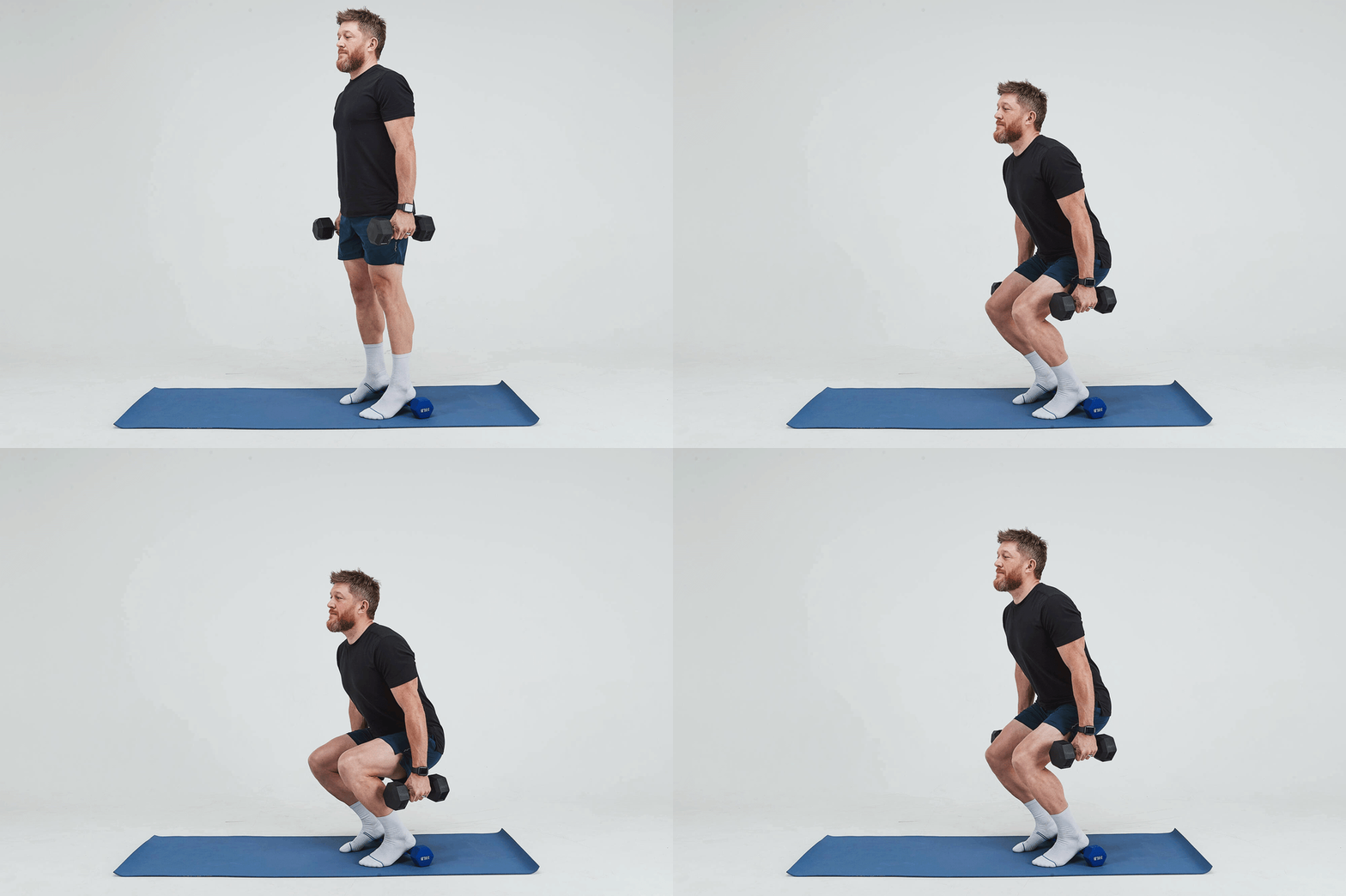
3) Dumbbell Cyclist Squat
Holding dumbbells at the sides or goblet-style.
- Lower spinal loading
- Easier to learn for advanced beginners
4) Tempo Cyclist Squat
Using extended eccentrics and pauses.
- Maximizes time under tension
- Excellent for quad growth without heavy loads
Alternative / Replacement Exercises
If cyclist squats are not suitable, several alternatives offer a similar quad bias.
Consider these options:
- Heel-elevated goblet squat
- Hack squat
- Sissy squat
- Spanish squat
- Leg press (feet low and narrow)
Key Benefits of Doing the Cyclist Squat
The cyclist squat offers a unique combination of hypertrophy stimulus and technical simplicity.
Its main benefits include:
- Extreme quad isolation
- Reduced hip dominance
- Excellent stretch-mediated hypertrophy
- Low spinal loading
- Ideal for higher-rep hypertrophy work
Who Should Use the Cyclist Squat?
This exercise is best suited for lifters with specific goals.
It is especially useful for:
- Bodybuilders targeting quad development
- Lifters with strong posterior chains and lagging quads
- Athletes seeking quad hypertrophy without heavy axial load
- Advanced trainees comfortable with deep knee flexion
Who Should Be Cautious?
Despite its benefits, the cyclist squat is not ideal for everyone.
Exercise caution if you have:
- Acute knee pain or recent knee injuries
- Limited ankle mobility that causes heel instability
- Poor squat control under fatigue
Always start with light loads and controlled tempos.
Programming Insight
Cyclist squats work best as a secondary or accessory squat movement. Use 2–4 sets of 8–15 reps, focusing on tempo and depth rather than load. They pair exceptionally well after compound squats or as a finisher on quad-focused leg days.
Barbell Cyclist Squat vs. Classic Barbell Back Squat — Key Differences Explained
Although both exercises are barbell-based squat variations, the barbell cyclist squat and the classic barbell back squat differ significantly in their mechanics, muscular emphasis, and training intent. The cyclist squat is designed to maximize knee flexion and quadriceps loading through heel elevation and a narrow stance, while the classic back squat distributes the load more evenly across the hips and knees. As a result, these two movements serve very different purposes within a training program, despite sharing a similar basic pattern.
| Criteria | Barbell Cyclist Squat | Classic Barbell Back Squat |
|---|---|---|
| Stance width | Very narrow | Shoulder-width or wider |
| Heel position | Elevated | Flat on the floor |
| Primary joint emphasis | Knee-dominant | Hip and knee are balanced |
| Quadriceps activation | Very high | Moderate to high |
| Glute involvement | Low to moderate | High |
| Load potential | Low to moderate | High |
| Torso angle | Very upright | Forward-lean varies |
| Knee travel | Extensive forward travel | Moderate |
| Spinal loading | Low to moderate | High |
| Primary training goal | Quad hypertrophy & tension | Max strength & total leg mass |
| Best rep range | 8–15 reps | 3–8 reps |
Practical Takeaway
The barbell cyclist squat and the classic back squat are not interchangeable. The cyclist squat excels as a quad-focused hypertrophy tool that emphasizes control, depth, and constant tension, while the classic back squat remains superior for building maximal strength and overall lower-body mass. When used together, they complement each other by addressing both quad specialization and total-body strength development.
Conclusion
The cyclist squat is a brutally effective quad-focused squat variation that rewards precision over load. Elevating the heels, narrowing the stance, and encouraging forward knee travel place the quadriceps under constant tension through a deep range of motion. When programmed intelligently, it can dramatically improve quad size, shape, and endurance without excessive spinal stress.
