



Are you looking to add a dynamic and functional exercise to your fitness routine? Look no further than the tire flip. This intense, full-body workout not only challenges your strength and power but also adds a fun twist to your training sessions. Imagine the thrill of lifting and flipping a heavy tire, engaging multiple muscle groups, and feeling a rush of accomplishment with each successful flip. It’s an exercise that goes beyond the traditional gym movements, offering a unique way to build strength and endurance.
“The tire flip is more than just an exercise; it’s a test of raw power and determination.”
Brian Shaw, American retired professional strongman
In this article, we’ll explore everything you need to know about the tire flip exercise. We’ll cover the necessary equipment, including specialized tire flip machines found in some commercial gyms, and provide you with a detailed, step-by-step guide on how to perform the tire flip correctly. Additionally, we’ll share performance tips and tricks, highlight common errors and precautions, and delve into the specific muscles engaged in this powerful exercise. You’ll also learn about the benefits and drawbacks of the tire flip, discover various exercise alternatives, and understand the differences between a tire flip and a deadlift to help you decide which is better for your fitness goals.
What equipment do you need to perform the tire flip?
Necessary equipment includes either a heavy tire or a tire flip machine.
- Heavy Tire: The cornerstone of the exercise, you will need a large, heavy tire, often weighing between 200 to 500 pounds. The weight of the tire should align with your fitness level and strength. These tires are typically sourced from industrial or agricultural vehicles.
- Tire Flip Machine: This machine simulates the motion of flipping a tire, providing a safer and more controlled environment. It often comes with adjustable resistance settings to tailor the workout to different strength levels.

It is also very useful to have the following fitness equipment/accessories.
- Proper Footwear: Sturdy, non-slip athletic shoes are necessary to ensure stability and grip during the exercise, reducing the risk of slipping and injury.
- Protective Gloves: Wearing gloves can prevent blisters and provide a better grip on the tire, making the flipping motion more manageable.
- Chalk or Grip Enhancers: These can help improve your hold on the tire by keeping your hands dry and reducing slippage.
- Support Equipment (Optional): Tools like straps or lifting belts can provide additional support and stability, especially for those new to the exercise or lifting heavier tires.
Can this exercise be performed in commercial gyms?
One common question is whether the tire flip exercise can be performed in commercial gyms. The answer largely depends on the specific gym and its available equipment. Many commercial gyms do not have large tires due to space constraints and safety concerns. However, some gyms, especially those that focus on functional fitness, CrossFit, or strongman training, may have the necessary equipment. Additionally, some gyms may offer tire flip machines, which provide a safer and more controlled environment for performing the exercise.
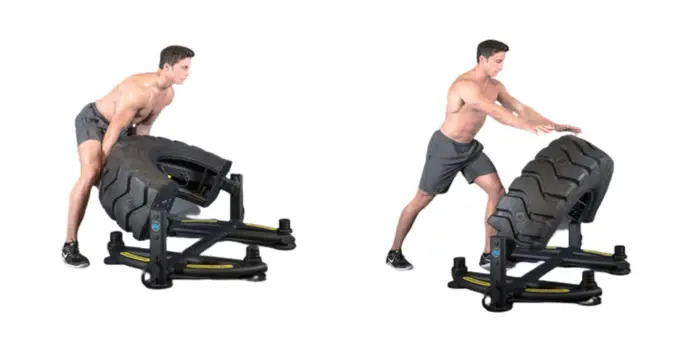
If your gym does not have a tire or a tire flip machine, you might need to look for specialized fitness centers or outdoor training facilities that cater to strongman or functional fitness enthusiasts.
Step-by-step instructions for performing the tire flip
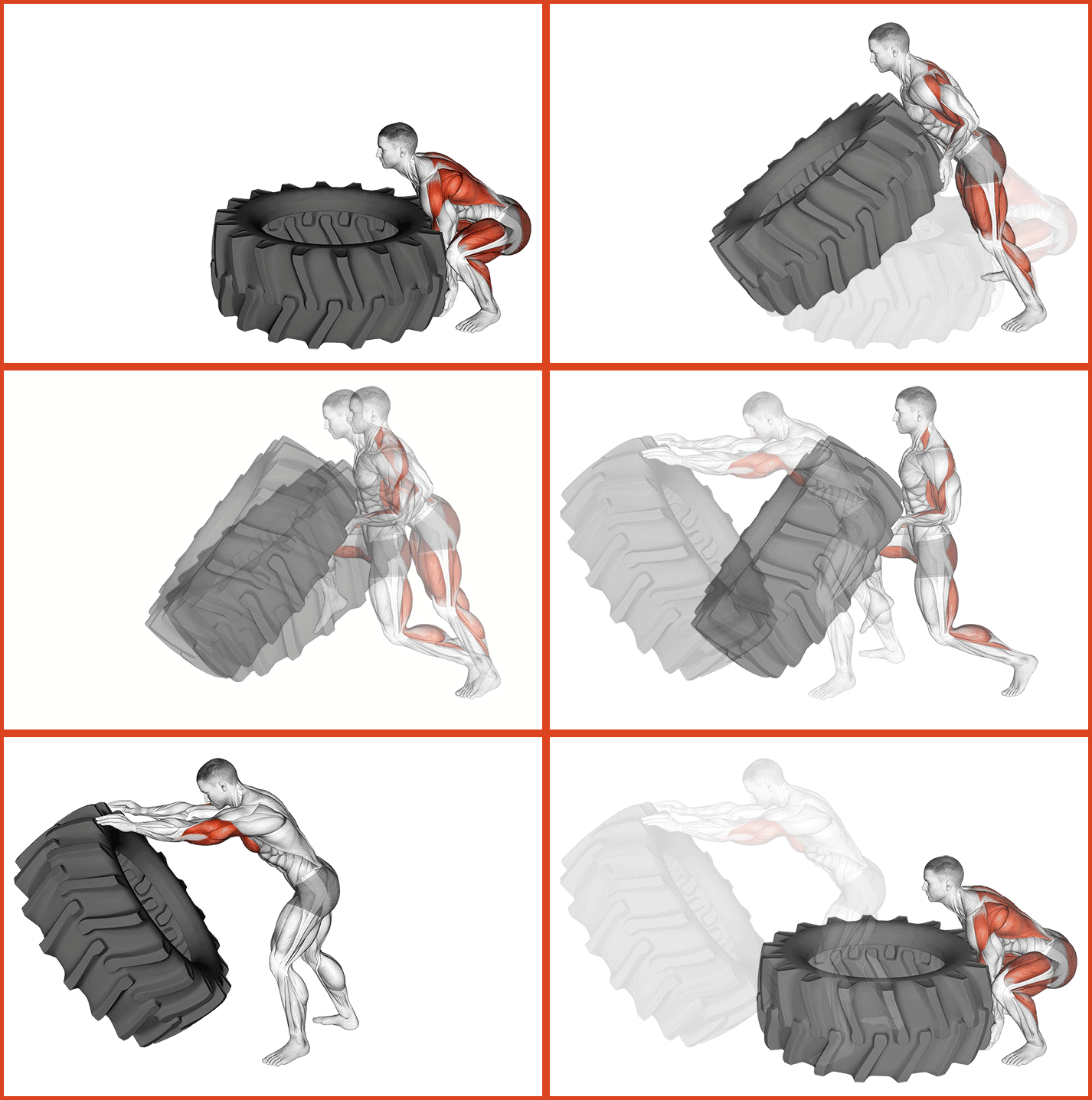
- Position Your Feet: Start by placing your feet wider than shoulder-width apart to ensure a stable and balanced stance.
- Grip the Tire: Squat down and extend your arms fully to grip the bottom of the tire with an underhand grip. Your hands should be placed slightly wider than shoulder-width apart.
- Maintain Proper Form: Ensure your back remains straight and your chest is aligned with your knees to avoid unnecessary strain.
- Engage Your Lower Body: Begin the lift by driving your feet firmly into the ground, using the strength of your legs and hip muscles to initiate the movement, rather than relying solely on your upper body strength.
- Lift the Tire: As the tire starts to lift, engage your core muscles to provide additional strength and stability.
- Flip the Tire: As the tire reaches knee height, shift your grip by moving one hand to the center of the tire and the other hand to the top edge. This will help you control the tire as you prepare to flip it over. Also, use your knee to support the tire weight.
- Follow Through: Step forward slightly to engage your triceps and chest, completing the flip by pushing the tire over onto the opposite side.
- Reset and Repeat: After completing the flip, reset your stance and prepare for the next repetition.

Additional tips & Common errors for the Tire Flip exercise
Performance pointers
- Warm-Up Thoroughly: A proper warm-up is essential to prepare your muscles and joints for the intense effort required in tire flipping. Consider dynamic stretches and mobility exercises that target your entire body.
- Focus on Leg Drive: The power in a tire flip comes primarily from your legs (mainly quadriceps), not your back. Push through your heels and drive with your legs to ensure a strong and safe lift.
- Maintain a Neutral Spine: Keep your back straight and avoid rounding it during the lift. A neutral spine helps prevent injuries and ensures effective power transfer.
- Engage Your Core: A strong core is crucial for stability and power. Tighten your abdominal muscles throughout the movement to maintain balance and control.
- Use a Progressive Approach: Start with a lighter tire and gradually increase the weight as you build strength and improve your technique. This approach minimizes the risk of injury.
Common Errors
- Rounding the Back: Lifting with a rounded back puts unnecessary strain on your spine, increasing the risk of injury.
- Improper Foot Placement: Standing with your feet too close together can reduce your stability and power output. Aim for a stance wider than shoulder-width apart.
- Using Too Much Back: Relying excessively on your back muscles rather than your legs can lead to improper form and potential injuries.
- Neglecting the Catch: Failing to transition to an overhand grip and control the tire as it tips over can make the movement less efficient and more dangerous.
- Skipping the Warm-Up: Jumping straight into tire flipping without a proper warm-up increases the risk of muscle strains and joint injuries.
Muscles involved in tire flipping
- Quads: Your quadriceps are heavily involved as you squat down and stand back up. They help generate the force necessary to lift and flip the tire.
- Hamstrings: The hamstrings assist in the lifting part of the flip. They work with your quads and glutes to generate upward momentum.
- Glutes: The gluteal muscles engage during the initial squat and lift. They provide power as you drive upwards and forward with the tire.
- Core: The core muscles provide stability and power transfer throughout the entire movement. They help keep your body balanced and aligned.
- Biceps: The biceps are crucial for gripping and lifting the tire. They assist in the curling motion as you lift the tire towards your chest.
- Back: The back muscles, especially the lats, play a dominant role in stabilizing and lifting the tire. They take on much of the effort as you pull the tire up and push it over.
- Shoulders: The shoulders assist in pushing the tire over during the final phase of the flip. They also help stabilize the tire as you prepare to flip it.
- Triceps: The triceps come into play as you push the tire over at the end of the flip. They help extend the arms to complete the movement.
Benefits and drawbacks of tire flipping
Benefits
- Full-Body Workout – Tire flipping engages multiple muscle groups simultaneously, offering a comprehensive workout. This makes it an efficient exercise for building overall strength and muscular endurance.
- Core Strength and Stability – By requiring significant core activation to stabilize the body during the flip, this exercise helps improve core strength and overall balance.
- Cardiovascular Fitness – The explosive movements and sustained effort in tire flipping elevate the heart rate, enhancing cardiovascular health and increasing oxygen uptake.
- Calorie Burning – With the high-intensity nature of tire flipping, it serves as an excellent aerobic workout that helps burn substantial calories, aiding in weight loss and fitness level improvement.
- Functional Strength – This exercise helps develop functional strength that is transferable to everyday activities and other athletic endeavors.
Drawbacks
- Risk of Injury – Improper execution or inadequate warm-up can lead to injuries, particularly in the back and arms. It’s crucial to maintain proper form and start with manageable weights.
- Equipment Accessibility – Access to a large tractor tire or a tire-flip machine might be limited, making it hard for some people to perform this exercise outside specialized training facilities.
- Advanced Skill Requirement – This exercise might be challenging for beginners or those with limited strength, requiring a build-up of foundational fitness before attempting tire flips safely.
What are the differences between a deadlift and tire flipping, and which is better?
- Movement Pattern: Deadlifts involve lifting a barbell straight up from the ground, focusing on a vertical pulling motion. Tire flipping combines a squat-like lift with a pushing motion, involving both vertical and horizontal elements.
- Muscle Engagement: Deadlifts primarily target the posterior chain, including your hamstrings, glutes, and lower back, along with your core and forearms. Tire flipping activates a broader range of muscles, incorporating your legs, core, shoulders, and arms.
- Cardiovascular Demand: Tire flipping tends to have a higher cardiovascular impact due to the continuous movement and the effort needed to flip the tire repeatedly. Deadlifts generally focus more on strength and less on cardiovascular endurance.
- Skill and Technique: Deadlifts require a strict form to avoid injury and maximize effectiveness. Tire flipping, while also technique-driven, can be more forgiving and allows for more dynamic movements.
- Equipment and Space: Deadlifts require a barbell and weights, which are commonly found in commercial gyms. Tire flipping requires a large, open space and a tire, which can be less accessible in typical gym settings.
- Versatility: Deadlifts offer various variations like sumo and Romanian deadlifts, catering to different training goals. Tire flipping has fewer variations but can be incorporated into more dynamic and functional strength workouts.
Which is better? It depends on your goals. If you’re looking to build maximal strength and enjoy structured weightlifting, deadlifts are an excellent choice. For a more dynamic, full-body workout that includes cardiovascular elements, tire flipping might be better. Ideally, integrating both into your workout regime can provide a well-rounded fitness program.
Best replacement exercises for tire flipping
- Deadlift: A foundational strength exercise that targets the glutes, hamstrings, lower back, and core, mimicking the lifting motion of tire flipping.
- Power Clean: This explosive exercise focuses on the same explosive power and full-body coordination, engaging the legs, back, shoulders, and arms.
- Farmer’s Walk: Enhances grip strength, core stability, and overall strength endurance, working similarly to the grip and carry aspect of tire flipping.
- Kettlebell Swings: Targets the hips, glutes, and hamstrings, offering a dynamic movement pattern akin to initiating the tire flip.
- Sandbag or Medicine Ball Slams: These exercises develop explosive power and full-body coordination, challenging the core, shoulders, and legs.
- Sled Push/Pull: Mimics the pushing phase of a tire flip, engaging lower body strength, core stability, and cardiovascular endurance.
- Squat to Press: This compound movement works the lower body and shoulders, similar to the lower-to-upper body transition in tire flips.
Final thoughts
The tire flip can be an incredibly effective exercise, offering a dynamic and challenging way to build strength, power, and endurance. With the proper technique and equipment, this exercise is accessible to athletes at all levels, enhancing both physical capabilities and mental toughness. While it may not be available in all commercial gyms, the benefits of incorporating this movement into your routine are substantial, provided you take the necessary precautions and avoid common errors. As with any exercise, understanding the muscles engaged and balancing the potential drawbacks with thoughtful alternatives can help you make the most out of this powerful workout. Whether you’re flipping tires or integrating similar movements, the key is to keep pushing your boundaries and stay consistent with your training efforts. Stay fit, stay strong!
