



Introduction
Hamstrings are among the most important — and most neglected — muscle groups in the body. While many people focus heavily on the quadriceps, chest, or arms, weak hamstrings often become the hidden reason behind poor athletic performance, lower back discomfort, knee instability, limited sprint speed, and stalled lower-body development.
Strong hamstrings do far more than simply flex the knees. They play a major role in hip extension, posture, sprinting, jumping, deceleration, and overall posterior-chain strength. Well-developed hamstrings are essential not only for athletes and lifters, but also for long-term movement health and injury prevention.
As a coach working with lifters and athletes, I frequently notice that strengthening the hamstrings dramatically improves deadlift mechanics, sprint power, lower-body stability, and overall movement quality. In many cases, stronger hamstrings also help reduce excessive stress on the knees and lower back.
In this ultimate guide, we’ll break down the best hamstring exercises for strength, muscle growth, posterior-chain development, and injury prevention. You’ll also learn which exercises are best for different training goals, how to structure effective hamstring workouts, and the most common mistakes people make when training the backside of the legs.
Hamstring Anatomy & Function

The hamstrings are a group of muscles located on the backside of the upper leg. Together, they play a crucial role in lower-body movement, athletic performance, posture, and posterior-chain stability.
The hamstring muscle group consists of three primary muscles:
- Biceps femoris
- Semitendinosus
- Semimembranosus
These muscles originate near the pelvis and insert below the knee, so the hamstrings cross both the hip and knee joints. Because of this unique anatomical structure, the hamstrings are involved in multiple major movement functions simultaneously.
Main Functions of the Hamstrings
The hamstrings perform two primary movement actions:
Knee Flexion
The hamstrings bend the knee during movements such as:
- Leg curls
- Sprinting
- Running
- Walking
- Sliding leg curls
Hip Extension
The hamstrings also help extend the hips during movements such as:
- Romanian deadlifts
- Deadlifts
- Sprinting
- Jumping
- Kettlebell swings
Because the hamstrings contribute heavily to both knee flexion and hip extension, they are considered one of the most important muscle groups within the posterior chain.
Hamstrings and Athletic Performance
The hamstrings are heavily involved in:
- Sprint acceleration
- Deceleration
- Jumping
- Explosive hip extension
- Change-of-direction speed
- Pelvic stabilization
Athletes with weak hamstrings often struggle with sprint mechanics, explosive power, and injury resilience.
This is one reason hamstring strengthening has become such an important focus in modern sports-performance training.
Hamstrings and Injury Prevention
Strong hamstrings help stabilize the:
- Knees
- Hips
- Pelvis
- Lower back
Well-developed hamstrings may help reduce the risk of:
- Hamstring strains
- ACL-related injuries
- Knee instability
- Lower-back compensation
Eccentric hamstring strength is especially important for sprinting and athletic deceleration.
As a coach, I frequently notice that athletes who consistently include eccentric hamstring work tend to move more efficiently and experience fewer recurring lower-body injuries.
Why Strong Hamstrings Matter
Strong hamstrings are essential for far more than just aesthetics. They influence athletic performance, posture, lower-body strength, spinal stability, and injury resilience. In many ways, the hamstrings act as a critical bridge between the hips, knees, pelvis, and lower back.
Unfortunately, many people underestimate how much weak hamstrings can negatively affect movement quality and overall physical performance.

Better Athletic Performance
Hamstrings play a major role in explosive movement.
Strong hamstrings contribute heavily to:
- Sprint acceleration
- Jumping ability
- Deceleration control
- Change-of-direction speed
- Explosive hip extension
This is especially important in sports that involve sprinting, cutting, jumping, or rapid movement transitions.
Athletes with powerful hamstrings generally produce force more efficiently and maintain better lower-body stability during explosive movement.
Improved Posterior Chain Strength
The hamstrings are one of the key muscle groups within the posterior chain.
Strong hamstrings help improve performance in exercises such as:
- Deadlifts
- Romanian deadlifts
- Kettlebell swings
- Hip thrusts
- Olympic lifts
Weak hamstrings often become a limiting factor in lower-body strength development.
Better Lower-Back Support
The hamstrings work closely with the glutes and spinal stabilizers to help control pelvic positioning and hip mechanics.
Weak hamstrings may contribute to:
- Excessive lumbar compensation
- Poor hip-hinge mechanics
- Reduced pelvic stability
- Increased lower-back stress
Developing stronger hamstrings often improves movement efficiency while reducing unnecessary spinal overload.
Reduced Risk of Injury
Hamstrings play an important role in deceleration and force absorption.
Strong hamstrings help stabilize the knees and hips during:
- Sprinting
- Landing
- Cutting
- Athletic direction changes
Poor eccentric hamstring strength is commonly associated with an increased risk of hamstring strain.
This is one reason why exercises such as Nordic curls and sliding leg curls are widely used in injury-prevention programs.
Improved Knee Stability
The hamstrings help stabilize the knee joint by working alongside the quadriceps and surrounding stabilizers.
Balanced hamstring development may help support:
- Better knee mechanics
- Joint control
- Movement efficiency
- Lower-body stability
This balance becomes especially important in athletic populations.
Better Posture and Pelvic Control
Weak hamstrings often contribute to poor pelvic positioning and postural imbalance.
Strong hamstrings help support:
- Hip alignment
- Pelvic stability
- Proper movement mechanics
- Posterior-chain integration
This is particularly important for people who spend long hours sitting.
Enhanced Physique Development
Well-developed hamstrings significantly improve lower-body aesthetics.
Strong hamstrings contribute to:
- Better leg symmetry
- Improved posterior-chain appearance
- More complete lower-body development
- Athletic-looking physique balance
Many people focus heavily on the quadriceps while neglecting the backside of the legs, which often creates a visible muscular imbalance.
Common Causes of Weak Hamstrings
Weak hamstrings are extremely common — even among people who train regularly. In many cases, the problem is not a complete lack of exercise but rather poor training balance, sedentary habits, and movement patterns that fail to properly challenge the backside of the legs.
Modern lifestyles tend to weaken the posterior chain while overemphasizing the muscles on the front side of the body.

Prolonged Sitting
One of the biggest causes of weak hamstrings is prolonged sitting.
Sitting for long periods may contribute to:
- Reduced glute activation
- Tight hip flexors
- Poor hip mechanics
- Reduced posterior-chain engagement
- Limited movement variability
Over time, the body gradually becomes more anterior-dominant while the hamstrings become weaker and less active.
Overemphasis on Quadriceps Training
Many gym programs heavily prioritize:
- Squats
- Leg press
- Leg extensions
- Front-dominant lower-body training
while neglecting direct hamstring work.
This often creates a muscular imbalance between the quadriceps and hamstrings, which may negatively affect:
- Knee stability
- Sprint mechanics
- Lower-body symmetry
- Athletic performance
As a coach, I frequently notice lifters with strong quads but severely underdeveloped hamstrings and glutes.
Lack of Hip-Hinge Training
The hamstrings play a major role in hip extension.
However, many people rarely perform proper hip-hinge exercises, such as:
- Romanian deadlifts
- Stiff-leg deadlifts
- Good mornings
- Kettlebell swings
Without hip-dominant training, the hamstrings often remain weak and poorly coordinated.
Ignoring Eccentric Training
The hamstrings are heavily involved in eccentric deceleration during sprinting and athletic movement.
Many people train only the concentric portion of exercises while neglecting the slow lowering phases and eccentric overload.
Poor eccentric strength may increase the risk of:
- Hamstring strains
- Sprint injuries
- Movement instability
- Athletic inefficiency
This is one reason why Nordic curls and tempo hamstring exercises are so valuable.
Poor Exercise Technique
Bad movement mechanics often reduce hamstring activation.
Common mistakes include:
- Excessive lumbar rounding
- Turning hip hinges into squats
- Using momentum
- Poor pelvic control
- Limited range of motion
In many cases, improving technique dramatically improves hamstring recruitment even without increasing weight.
Lack of Unilateral Training
Hamstring weakness is often asymmetrical.
Many people unknowingly develop:
- One dominant leg
- Hip instability
- Poor single-leg control
- Left-to-right muscular imbalance
Exercises such as:
- Single-leg Romanian deadlifts
- Reverse lunges
- Walking lunges
help expose and correct these asymmetries.
Poor Mobility and Recovery
Restricted mobility may adversely affect hamstring mechanics and posterior chain function.
Common limitations include:
- Tight hip flexors
- Poor pelvic mobility
- Limited hamstring flexibility
- Reduced hip-hinge depth
Recovery is also important.
Hamstrings experience high tension during training and sprinting, especially during eccentric loading, which means insufficient recovery may impair performance and adaptation.
19 Best Hamstring Exercises for Strength, Size & Injury Prevention
Building stronger hamstrings requires more than simply adding a few leg curls at the end of a workout. The best hamstring exercises challenge the muscles through different movement patterns, including:
- Knee flexion
- Hip extension
- Eccentric loading
- Single-leg stability
- Posterior-chain integration
Some exercises are better for hypertrophy and muscle isolation, while others are superior for athletic performance, injury prevention, and total-body posterior-chain strength.
The goal is not necessarily to find one “perfect” hamstring exercise, but rather to combine multiple movement patterns for complete development.
As a coach working with lifters and athletes, I typically recommend including:
- At least one hip-hinge movement,
- One knee-flexion exercise,
- And one unilateral exercise
in most hamstring-focused training programs.
Below are some of the best hamstring exercises for building stronger, more athletic, and more resilient legs.

Hamstring Machine Isolation Exercises
1. Lying Leg Curl (Machine)

The lying leg curl is one of the most popular and effective hamstring isolation exercises for directly training knee flexion strength. Because the torso remains stabilized against the bench, the movement allows lifters to focus heavily on hamstring contraction without requiring significant balance or spinal stabilization.
This exercise is especially effective for hypertrophy because it places a relatively constant tension on the hamstrings throughout the movement while minimizing involvement of the lower back.
How To
Lie face down on the leg curl machine with the roller pad positioned just above the heels. Curl the pad toward the glutes by flexing the knees while keeping the hips pressed into the bench, then slowly lower the weight under control.
Why It’s Effective
The lying position slightly lengthens the hamstrings at the hips while training active knee flexion under resistance. This creates strong direct hamstring recruitment with relatively low technical complexity.
Best For
- Hamstring hypertrophy
- Beginners
- Isolation work
- Lower-back-friendly training
- Bodybuilding-style programs
Coach’s Insight
In my experience, many lifters rush the eccentric phase during leg curls. Slowing the lowering phase dramatically improves hamstring tension and often makes lighter weights feel significantly harder.
2. Seated Leg Curl

The seated leg curl is one of the best hamstring exercises for placing the hamstrings under stretch tension because the hips remain flexed throughout the movement.
Research and practical experience both suggest that training hamstrings in a lengthened position may be highly beneficial for hypertrophy.
How To
Sit on the machine with the back supported and the roller pad positioned near the lower calves. Flex the knees to pull the pad downward while keeping the torso stable, then return slowly to the stretched position.
Why It’s Effective
The seated position places the hamstrings in a more stretched state compared to lying leg curls, which may increase muscular tension during knee flexion.
Best For
- Hamstring hypertrophy
- Stretch-mediated growth
- Controlled tempo training
- Joint-friendly hamstring work
Coach’s Insight
I often find that seated curls create a stronger, deeper hamstring contraction when lifters fully control the bottom position instead of bouncing through reps.
3. Standing Leg Curl (Machine)

The standing leg curl trains the hamstrings unilaterally while also challenging balance and pelvic control.
Because the movement is performed one leg at a time, it can help identify and improve muscular asymmetries between sides.
How To
Stand with your feet apart and position one ankle behind the roller pad. Curl the heel upward toward the glutes while maintaining stable hips and controlled movement throughout the exercise.
Why It’s Effective
Unilateral loading improves focus on individual hamstring activation while reducing compensation from the stronger leg.
Best For
- Unilateral hamstring development
- Correcting muscular imbalances
- Mind-muscle connection
- Knee-flexion strength
Coach’s Insight
Standing curls work best when performed slowly with strict pelvic control. Excessive swinging usually reduces actual hamstring tension considerably.
4. Cable Leg Curl

The cable leg curl provides smooth resistance and allows constant tension throughout the movement.
Unlike many machine variations, cables offer greater freedom of movement and adjustable angles.
How To
Attach an ankle strap to a low cable pulley and secure it around one ankle. Flex the knee to curl the foot backward while keeping the hips stable, then slowly return to the starting position.
Why It’s Effective
Cable resistance keeps tension on the hamstrings throughout both the concentric and eccentric phases while requiring additional stabilization.
Best For
- Constant tension training
- Home or functional gym setups
- Controlled tempo work
- Hamstring isolation
Coach’s Insight
Cable curls are excellent for high-rep burnout work at the end of hamstring sessions because they maintain tension extremely well without excessive joint stress.
Bodyweight & Stability Hamstring Exercises
5. Sliding Leg Curl

The sliding leg curl is one of the best bodyweight hamstring exercises for developing eccentric strength, posterior-chain control, and core stability simultaneously. Because the movement combines knee flexion with hip stabilization, it challenges the hamstrings in a highly functional way.
This exercise can be performed using sliders, towels on a smooth floor, or specialized gliding discs.
How To
Lie on your back with your heels on sliders and your hips elevated into a bridge position. Slowly extend the legs outward while maintaining hip elevation, then curl the heels back toward the body under control.
Why It’s Effective
The hamstrings must work both dynamically and isometrically to maintain pelvic positioning while controlling the sliding movement. The eccentric component makes the exercise especially valuable for injury prevention and athletic development.
Best For
- Eccentric hamstring strength
- Home workouts
- Posterior-chain stability
- Athletic training
- Core integration
Coach’s Insight
Most people underestimate how demanding sliding leg curls become when the hips stay fully elevated throughout the set. Maintaining glute tension is the key to maximizing the exercise.
6. Stability Ball Leg Curl

The stability ball leg curl combines hamstring training with demands for balance and core stabilization.
Because the body must continuously stabilize on an unstable surface, movement improves posterior chain coordination while training the hamstrings through simultaneous knee flexion and hip extension.
How To
Lie on your back with the heels positioned on a stability ball and the hips elevated. Curl the ball toward the glutes by flexing the knees while maintaining a stable bridge position, then slowly extend the legs again.
Why It’s Effective
The instability of the ball increases demands for stabilization throughout the posterior chain while also training pelvic control and coordination.
Best For
- Functional hamstring training
- Beginners
- Core integration
- Athletic movement quality
- Low-impact posterior-chain work
Coach’s Insight
The biggest mistake with stability ball curls is letting the hips drop during the movement. Keeping the hips elevated dramatically increases hamstring and glute involvement.
7. TRX Hamstring Curl

The TRX hamstring curl further increases the demands on stability by suspending the feet throughout the exercise.
This movement strongly activates the:
- hamstrings,
- glutes,
- core musculature,
- and hip stabilizers
while also requiring significant body control.
How To
Place both heels inside the TRX straps and lie on your back with the hips elevated. Curl the heels toward the glutes while maintaining a stable bridge position, then slowly extend the legs again under control.
Why It’s Effective
Suspension instability forces the hamstrings and core to work harder to maintain alignment and pelvic control throughout the movement.
Best For
- Athletic training
- Core stability
- Posterior-chain integration
- Functional strength
- Advanced bodyweight training
Coach’s Insight
TRX curls become significantly harder when performed with slower eccentrics and a stronger hip bridge. Small technique changes make a huge difference with suspension training.
8. Nordic Hamstring Curl

The Nordic hamstring curl is widely considered one of the best exercises for eccentric hamstring strength and injury prevention.
Research consistently shows strong benefits for reducing hamstring strain risk in athletes who sprint frequently.
How To
Secure the ankles under a stable anchor and kneel upright with the torso straight. Slowly lower the body forward under control while resisting the descent with the hamstrings, then push lightly off the floor if needed to return to the starting position.
Why It’s Effective
Very few exercises overload the hamstrings eccentrically as aggressively as Nordic curls. This creates exceptional stimulus for deceleration strength and posterior-chain resilience.
Best For
- Injury prevention
- Sprint athletes
- Eccentric strength
- Advanced hamstring development
- Athletic performance
Coach’s Insight
Beginners should not expect full-range Nordic curls immediately. Even controlled partial reps can produce enormous hamstring stimulus when performed correctly.
9. Glute-Ham Raise

The glute-ham raise is one of the most advanced posterior-chain exercises available. Unlike standard leg curls, it trains both knee flexion and hip extension simultaneously.
This creates extremely high hamstring activation while also heavily involving the glutes and spinal stabilizers.
How To
Position yourself on a glute-ham raise machine, with your feet secured and your knees supported on the pad. Lower the torso under control, then drive the body upward by contracting the hamstrings and glutes.
Why It’s Effective
The glute-ham raise trains the hamstrings in both of their primary functions simultaneously, making it one of the most comprehensive hamstring exercises available.
Best For
- Advanced posterior-chain development
- Athletic performance
- Integrated hamstring strength
- Sprint carryover
- Glute-hamstring coordination
Coach’s Insight
Many lifters confuse glute-ham raises with back extensions. The key difference is that the hamstrings should drive the movement, not excessive spinal extension.
Hip Hinge & Posterior Chain Hamstring Exercises
10. Stiff-Leg Deadlift

The stiff-leg deadlift is one of the best hamstring exercises for developing posterior-chain strength and stretch tension. Compared to conventional deadlifts, this movement uses less knee flexion, shifting more emphasis to the hamstrings and glutes.
This exercise strongly challenges the entire posterior chain, including the spinal erectors and hip stabilizers.
How To
Stand with feet hip-width apart, holding a barbell in front of the thighs. Hinge at the hips with only a slight bend in the knees, lower the weight while maintaining a neutral spine, then drive the hips forward to return upright.
Why It’s Effective
Reduced knee flexion increases hamstring stretch tension while heavily loading hip extension mechanics throughout the movement.
Best For
- Posterior-chain development
- Hamstring hypertrophy
- Hip-hinge strength
- Stretch-mediated tension
- Intermediate and advanced lifters
Coach’s Insight
The goal is not to lower the bar as far as possible, but to maintain hamstring tension without compromising spinal positioning. Depth should always match mobility and control.
11. Dumbbell Stiff-Leg Deadlift

The dumbbell stiff-leg deadlift offers many of the same benefits as the barbell variation while allowing greater freedom of movement and potentially a greater range of motion.
Dumbbells also make the exercise more accessible for home workouts and beginner-to-intermediate lifters.
How To
Hold a pair of dumbbells in front of the thighs, feet hip-width apart. Push the hips backward while maintaining only a slight knee bend, lower the dumbbells toward the floor under control, then extend the hips to stand upright again.
Why It’s Effective
The independent loading of dumbbells increases stabilization demands while allowing a more natural movement path for many lifters.
Best For
- Home workouts
- Hamstring hypertrophy
- Posterior-chain strength
- Beginners learning hip hinges
- Increased range of motion
Coach’s Insight
Many people allow the dumbbells to drift too far forward during the lowering phase. Keeping the weights close to the legs usually dramatically improves hamstring loading.
12. Single-Leg Romanian Deadlift

The single-leg Romanian deadlift combines posterior-chain strengthening with balance, coordination, and hip stability training.
Because the exercise is performed unilaterally, it helps expose muscular asymmetries and improve lower-body control.
How To
Stand on one leg while holding a dumbbell or kettlebell in the opposite hand. Hinge at the hips while extending the free leg backward, lower the weight under control, then drive through the planted foot to return upright.
Why It’s Effective
The movement trains the hamstrings dynamically while also heavily challenging pelvic stability and glute coordination.
Best For
- Athletic development
- Unilateral posterior-chain strength
- Hip stability
- Balance training
- Correcting asymmetries
Coach’s Insight
Balance is often the limiting factor at first. Slowing the movement and focusing on pelvic control usually quickly improves both stability and hamstring activation.
13. Reeves Deadlift

The Reeves deadlift is a unique deadlift variation where the plates themselves are gripped rather than the barbell shaft. This dramatically increases grip demands while also heavily challenging posterior chain stability and upper back control.
Although less common today, the exercise remains highly effective for total-body posterior-chain development.
How To
Load a barbell with large plates and grip the outer edges of the plates instead of the bar itself. Maintain a strong hip-hinge position, brace the core, and stand upright by extending the hips and knees together.
Why It’s Effective
The wide grip and unstable loading increase demands on the:
- hamstrings,
- glutes,
- spinal erectors,
- upper back,
- and grip musculature
simultaneously.
Best For
- Advanced lifters
- Posterior-chain integration
- Grip strength
- Total-body tension
- Athletic pulling strength
Coach’s Insight
The Reeves deadlift is often limited more by grip endurance than posterior-chain strength. Using lighter loads with perfect positioning usually produces the best training effect.
Lunge-Based Hamstring Exercises
14. Dumbbell Lunge

The dumbbell lunge is an excellent unilateral lower-body exercise that can strongly involve the hamstrings when performed with proper mechanics. Although lunges are often viewed primarily as quad exercises, a longer stride length and controlled hip loading significantly increase posterior-chain involvement.
The exercise also improves balance, coordination, and pelvic stability.
How To
Hold a pair of dumbbells at your sides and step forward into a lunge position. Lower the body under control while keeping the torso slightly inclined forward, then drive through the front heel to return to the starting position.
Why It’s Effective
Longer stride positioning increases hip flexion and glute-hamstring recruitment while also training unilateral lower-body stability.
Best For
- Unilateral hamstring training
- Functional lower-body strength
- Athletic movement
- Balance and coordination
- Beginner-to-intermediate lifters
Coach’s Insight
Many people take lunges too short. A slightly longer step usually increases glute and hamstring involvement significantly while reducing excessive quad dominance.
15. Barbell Lunge
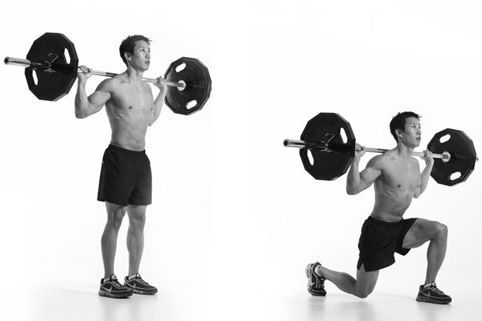
The barbell lunge allows heavier loading than most dumbbell variations while strongly training the:
- glutes,
- hamstrings,
- quadriceps,
- and stabilizers
simultaneously.
Because the load sits across the upper back, trunk stability becomes even more important.
How To
Place a barbell across the upper back and step forward into a controlled lunge. Lower the body until both knees are bent appropriately, then drive through the front heel to stand back up.
Why It’s Effective
The added load increases posterior-chain demand while also improving lower-body strength, balance, and hip stability.
Best For
- Strength development
- Athletic training
- Lower-body hypertrophy
- Advanced unilateral training
- Posterior-chain integration
Coach’s Insight
Keeping a slight forward torso lean often shifts more tension onto the glutes and hamstrings, rather than turning the movement into a purely quad-dominant exercise.
16. Walking Lunge
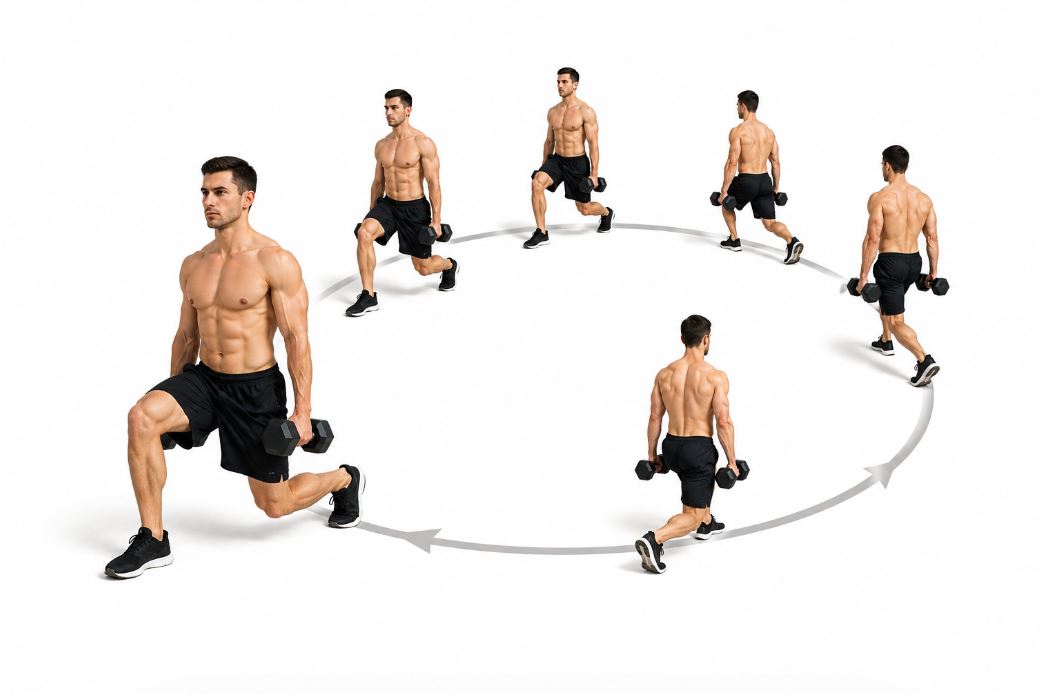
The walking lunge adds continuous movement and coordination demands compared to stationary lunges.
Because each step requires dynamic stabilization and force transfer, the exercise strongly challenges the posterior chain while also improving athletic movement quality.
How To
Hold dumbbells or a barbell and step forward into a lunge position. Push through the front foot to bring the rear leg forward directly into the next repetition while maintaining controlled posture throughout the movement.
Why It’s Effective
Continuous stepping increases stabilization demands and trains the posterior chain through repeated unilateral hip extension patterns.
Best For
- Athletic conditioning
- Functional movement
- Glute and hamstring development
- Coordination
- Lower-body endurance
Coach’s Insight
Walking lunges become far more effective for posterior-chain development when performed slowly and under control rather than rushed for conditioning alone.
17. Reverse Lunge
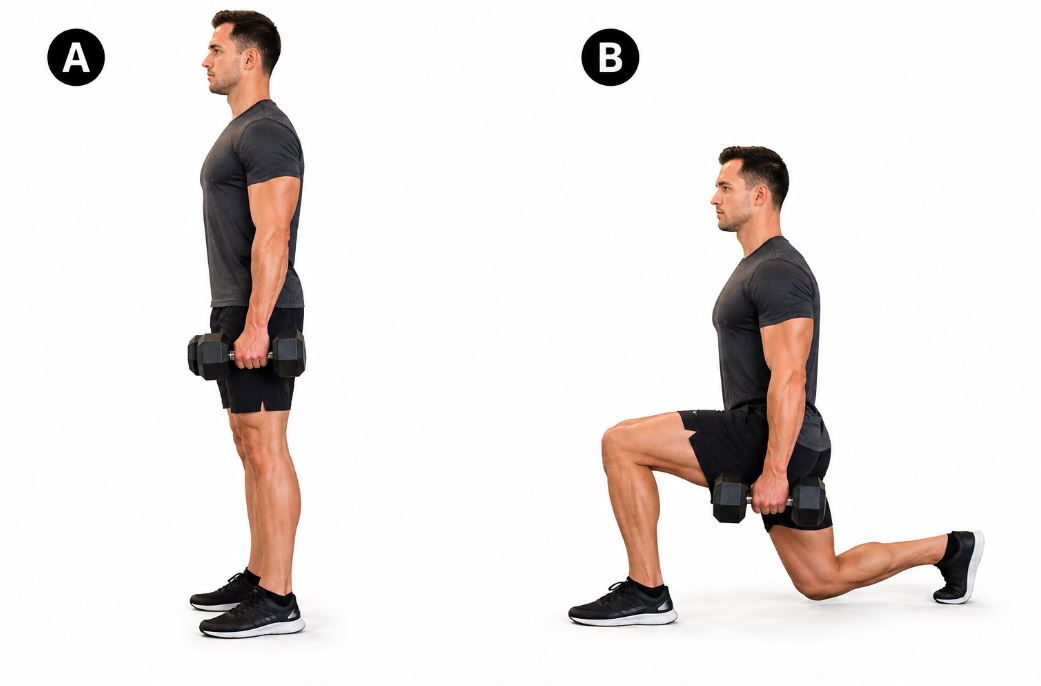
The reverse lunge is often more joint-friendly than forward lunges because stepping backward reduces forward knee stress while increasing hip loading.
This frequently makes the exercise feel more stable and glute- and hamstring-dominant.
How To
Stand upright and step one leg backward into a lunge position. Lower the body under control while maintaining balance, then drive through the front heel to return to standing.
Why It’s Effective
Backward stepping increases the posterior chain’s contribution while often reducing stress on the knees compared to forward lunges.
Best For
- Glute-hamstring emphasis
- Knee-friendly training
- Beginners
- Unilateral strength
- Hip stability
Coach’s Insight
Many lifters immediately notice stronger glute activation during reverse lunges compared to standard forward lunges, especially when the movement is controlled properly.
18. Lateral Lunge

The lateral lunge introduces frontal-plane movement, which is often neglected in traditional hamstring training.
This exercise challenges the:
- glutes,
- hamstrings,
- adductors,
- and hip stabilizers
through side-to-side movement mechanics.
How To
Step laterally to one side while pushing the hips backward and keeping the opposite leg straight. Lower into the movement under control, then drive through the planted foot to return to the starting position.
Why It’s Effective
The lateral movement pattern improves hip mobility, pelvic control, and lower-body coordination while also training the posterior chain in a way that differs from sagittal-plane exercises.
Best For
- Athletic movement
- Hip mobility
- Lateral stability
- Functional lower-body development
- Injury prevention
Coach’s Insight
Most people initially feel limited more by hip mobility than strength during lateral lunges. Controlled depth and gradual progression usually improve movement quality quickly.
19. Romanian Deadlift (RDL)

The Romanian deadlift is widely considered one of the best hamstring exercises ever created for developing posterior-chain strength, hip-hinge mechanics, and hamstring hypertrophy.
Unlike conventional deadlifts, the RDL maintains continuous hamstring tension by emphasizing controlled hip hinging with limited knee movement.
How To
Hold a barbell or dumbbells in front of the thighs, maintaining a slight knee bend. Push the hips backward while lowering the weight close to the legs, then extend the hips powerfully to return upright.
Why It’s Effective
The Romanian deadlift places the hamstrings under significant stretch tension while heavily training hip extension mechanics and posterior-chain coordination.
Best For
- Hamstring hypertrophy
- Posterior-chain strength
- Hip-hinge development
- Athletic performance
- Intermediate and advanced lifters
Coach’s Insight
The Romanian deadlift is often more effective when lifters focus on “pushing the hips back” rather than simply lowering the weight downward. The hip hinge is the foundation of the movement.
Best Hamstring Exercises by Goal
Not all hamstring exercises serve the same purpose. Some are better for hypertrophy and stretch tension, while others excel for athletic performance, eccentric strength, or lower-back-friendly isolation work.
Choosing the right hamstring exercises depends heavily on your:
- Training experience,
- Injury history,
- Athletic demands,
- Recovery capacity,
- And overall training goals.
As a coach working with lifters and athletes, I rarely rely on only one category of hamstring exercises. The best results usually come from combining:
- Isolation work,
- Hip hinges,
- Unilateral training,
- And eccentric-focused movements.
Below are some of the best hamstring exercises based on specific training goals.
Best Hamstring Exercises for Muscle Growth
For hypertrophy, the goal is typically to maximize:
- Muscular tension,
- Stretch loading,
- Controlled eccentrics,
- And overall training volume.
Exercises that place the hamstrings under significant stretch tension tend to work especially well for growth.
Best Hamstring Exercises for Athletes
Athletic hamstring training should emphasize:
- Eccentric strength,
- Deceleration,
- Hip extension power,
- And movement efficiency.
Best Hamstring Exercises for Beginners
Beginners usually benefit most from exercises with:
- Lower technical complexity,
- Better stability,
- And easier learning curves.
Hamstring Exercises vs Quad Exercises
Hamstring and quadriceps training should not be in competition with each other — both muscle groups are essential for balanced lower-body development, athletic performance, and joint stability.
However, modern training culture often places far greater emphasis on the quadriceps while neglecting the backside of the legs. Many lifters perform:
- Heavy squats,
- Leg press,
- Leg extensions,
- And quad-focused movements
far more frequently than true posterior-chain exercises.
Over time, this imbalance may negatively affect posture, sprint mechanics, knee stability, and overall lower-body function.
The Quadriceps Are Anterior-Chain Muscles
The quadriceps are located on the front side of the thigh and primarily perform:
- Knee extension,
- Force production during squatting,
- Pushing mechanics,
- And lower-body stabilization.
Quad training is extremely important for:
- Jumping,
- Squatting,
- Athletic movement,
- And lower-body size.
However, strong quads alone do not create a balanced or resilient lower body.
The Hamstrings Are Posterior-Chain Muscles
The hamstrings function differently because they:
- Flex the knee,
- Extend the hips,
- Stabilize the pelvis,
- Assist sprinting,
- And control deceleration.
Hamstrings are also heavily involved in:
- Hip hinges,
- Posterior-chain force transfer,
- And lower-back support.
This makes them essential for both athletic performance and injury prevention.
Why Muscle Balance Matters
Balanced development between the hamstrings and quadriceps helps improve:
- Knee stability,
- Movement efficiency,
- Sprint mechanics,
- Pelvic control,
- And force distribution.
When the quadriceps become excessively dominant relative to the hamstrings, problems may develop such as:
- Knee instability,
- Increased ACL injury risk,
- Poor hip mechanics,
- Lower-back compensation,
- And reduced posterior-chain power.
This imbalance is especially common in people who:
- Train mostly machines,
- Avoid hip hinges,
- Skip posterior-chain work,
- Or spend long periods sitting.
Hamstrings Are Often More Important for Athletic Movement
Although both muscle groups are important, many explosive athletic movements depend more heavily on the posterior chain.
Sprinting, jumping, decelerating, and changing direction all require strong:
- Hamstrings,
- Glutes,
- And hip extensors.
This is one reason athletes often place enormous emphasis on:
- Nordic curls,
- Romanian deadlifts,
- Glute-ham raises,
- And posterior-chain training overall.
A Complete Leg Program Trains Both
The best lower-body programs include both:
- Quad-dominant exercises,
- Qnd hamstring/posterior-chain exercises.
Quad-dominant examples:
- Squats
- Leg press
- Front squats
- Leg extensions
Hamstring-dominant examples:
- Romanian deadlifts
- Leg curls
- Nordic curls
- Glute-ham raises
- Hip hinges
The goal is not to “replace” quad training with hamstring training — it is to create balanced lower-body development.
How Often Should You Train Hamstrings?
For most people, training the hamstrings 2–3 times per week is highly effective for building strength, muscle mass, and posterior chain development.
The ideal frequency depends on:
- Training experience,
- Recovery ability,
- Exercise selection,
- And overall training volume.
Beginners usually do well with:
- 1–2 sessions per week
while intermediate and advanced lifters often benefit from:
- 2–3 weekly exposures,
- Combining:
- Hip hinges,
- Knee-flexion exercises,
- Unilateral work,
- And eccentric training.
Heavy posterior-chain exercises such as:
- Romanian deadlifts,
- Stiff-leg deadlifts,
- and Nordic curls
typically require more recovery than machine isolation work.
As a coach, I usually find that consistent, high-quality training with proper recovery produces far better results than excessively increasing hamstring frequency.
Sample Hamstring Workout Plans
The best hamstring workouts usually combine:
- Hip-hinge movements,
- Knee-flexion exercises,
- Unilateral training,
- And controlled eccentric work.
Different training goals require slightly different exercise selection and volume. A beginner typically needs more movement practice and stability work, while advanced lifters and athletes often benefit from heavier posterior-chain loading and eccentric-focused exercises.
Below are a few simple examples of effective hamstring workouts.
Beginner Hamstring Workout
This workout focuses on:
- Basic hamstring activation,
- Movement quality,
- And posterior-chain coordination.
Hamstring Hypertrophy Workout
This workout emphasizes:
- Stretch tension,
- Controlled eccentrics,
- And direct hamstring overload.
Athletic Posterior Chain Workout
This workout focuses on:
- Eccentric hamstring strength,
- Posterior-chain integration,
- And athletic movement quality.
Final Thoughts
Strong hamstrings are essential for athletic performance, posterior-chain strength, posture, lower-body stability, and injury prevention. Although many people focus heavily on quadriceps and upper-body training, the hamstrings often become the missing link, limiting movement quality and overall lower-body development.
The best hamstring programs combine hip hinges, knee-flexion exercises, unilateral training, and eccentric-focused work, rather than relying on a single movement pattern. In my experience as a coach, improving hamstring strength frequently leads to better deadlift mechanics, stronger athletic performance, improved posture, and more balanced leg development overall.
At the end of the day, strong hamstrings are not just about aesthetics — they are one of the foundations of powerful, resilient, and healthy movement.
