



Introduction
The TRX hamstring curl — also known as the suspension trainer hamstring curl — is one of the most effective bodyweight posterior-chain exercises for simultaneously developing hamstring strength, glute activation, and core stability. By suspending the feet in straps while performing a bridge-and-curl movement, the exercise places enormous stabilization demands on the entire body.
Unlike traditional machine-based hamstring curls that externally stabilize the body, the TRX hamstring curl forces the hamstrings, glutes, and core musculature to work together to control hip position and lower-body movement. This makes the exercise highly functional and especially valuable for athletic performance training.
One of the biggest advantages of the TRX hamstring curl is the instability created by the suspension straps. Because the feet are unsupported and constantly moving, the posterior chain must remain engaged throughout the entire movement to maintain balance and body alignment.
The exercise also strongly emphasizes eccentric hamstring control, which plays an important role in sprint mechanics, deceleration, injury prevention, and overall athletic resilience. Despite using only bodyweight resistance, properly performed TRX hamstring curls can become extremely challenging even for experienced lifters and athletes.
Required Equipment
To perform the TRX hamstring curl correctly, you need:
- TRX straps or suspension trainer
- Stable anchor point
- Exercise mat or soft surface (optional)
Suspension trainers allow the feet to move freely during the exercise, dramatically increasing the demands on stabilization compared to traditional machine- or floor-based hamstring curls.
Because the body must constantly control balance, the TRX hamstring curl often feels significantly harder than many people expect — even though it uses only bodyweight resistance.
Other Names for the TRX Hamstring Curl
This exercise may also be referred to as:
- Suspension Trainer Hamstring Curl
- TRX Leg Curl
- Suspension Hamstring Curl
- TRX Hamstring Bridge Curl
- Suspension Strap Leg Curl
Although there are variations in setup, all versions involve suspended knee flexion combined with elevated hip stabilization and posterior-chain control.
How to Perform the TRX Hamstring Curl
Starting Position (Setup)
Proper setup is extremely important because suspension instability significantly affects balance, muscle recruitment, and overall exercise difficulty.
- Adjust the TRX straps so the foot cradles hang several inches above the floor.
- Lie on your back underneath the anchor point.
- Place both heels securely inside the suspension straps.
- Keep the legs extended and the arms resting at the sides of the body.
- Press the heels downward into the straps and lift the hips into a bridge position.
- Brace the core and maintain a straight line from the shoulders through the ankles.
At the start of the exercise, the hips should remain elevated rather than resting on the floor.

Execution (Movement Phase)
- Flex the knees and pull the heels toward the glutes.
- Keep the hips elevated throughout the movement.
- Maintain full-body tension and avoid excessive swinging.
- Curl until the knees reach deep flexion.
- Pause briefly and squeeze the hamstrings at peak contraction.
- Slowly extend the legs back to the starting position under control.
The eccentric lowering phase should remain especially controlled, as suspension instability dramatically increases the difficulty during leg extension.

Technique Optimization Tips for the TRX Hamstring Curl
The TRX hamstring curl requires significant posterior-chain coordination, pelvic stability, and body control to perform correctly.
- Keep the hips elevated throughout the set.
- Avoid arching the lower back excessively.
- Control the eccentric phase slowly.
- Press downward into the straps with the heels.
- Maintain constant core tension.
- Avoid allowing the straps to swing excessively.
- Focus on smooth, controlled movement rather than speed.
A highly effective coaching cue is: “Pull the heels toward the glutes while keeping the hips high, and the core braced.”
Mechanical Resistance Analysis
The TRX hamstring curl differs from traditional hamstring curls because instability becomes a major component of the resistance profile.
During the concentric phase, the hamstrings flex the knees while the glutes and core stabilize the pelvis against rotational forces created by the suspension straps. During the eccentric phase, the hamstrings must slowly resist leg extension while simultaneously preventing hip collapse and uncontrolled strap movement.
Compared to sliding leg curls or stability ball leg curls, TRX hamstring curls generally place even greater demands on stabilization and coordination because the feet remain completely suspended rather than supported against the floor or ball surface.
Common Mistakes
Although the TRX hamstring curl uses only bodyweight resistance, instability and poor body control can quickly reduce exercise effectiveness and place unnecessary stress on the lower back.
- Allowing the hips to drop during the curl
- Swinging excessively in the straps
- Hyperextending the lower back
- Pulling too quickly without control
- Losing core tension during the movement
- Letting the knees flare excessively outward
- Using a short or incomplete range of motion
One of the biggest mistakes is focusing solely on moving the straps rather than maintaining full-body posterior-chain tension throughout the exercise.
Muscles Involved in the TRX Hamstring Curl
Although the hamstrings are the primary target, the TRX hamstring curl requires multiple muscle groups to stabilize the body and control suspension movement simultaneously.
MAIN MUSCLES:
SECONDARY MUSCLES:
Gastrocnemius, spinal erectors
STABILIZERS:
Core musculature, obliques, gluteus medius, and shoulder stabilizers
ANTAGONISTS:
TRX Hamstring Curl Pros and Cons
The TRX hamstring curl is one of the best suspension-training posterior-chain exercises because it simultaneously targets hamstring strengthening, instability control, and core activation.
Advantages
- Excellent hamstring and core integration
The exercise forces the posterior chain and core to work together continuously. - Very high stabilization demand
Suspension instability increases neuromuscular coordination and body control. - Strong eccentric hamstring training
The lowering phase creates substantial posterior-chain tension. - Minimal spinal loading
Unlike heavy hip-hinge exercises, the movement places little compressive stress on the spine. - Excellent for athletic training
The exercise develops coordination, stability, and posterior chain resilience, all of which are useful for sports performance.
Potential Drawbacks
Despite its benefits, the TRX hamstring curl also has limitations.
- Very difficult for beginners
Suspension instability dramatically increases exercise difficulty. - Limited maximal loading potential
Progressive overload options are more limited than those for free-weight exercises. - Requires suspension equipment
Not everyone has access to TRX straps or suspension trainers. - Technical breakdown occurs easily under fatigue
Hip position and body control often deteriorate quickly during longer sets.
TRX hamstring curls are brutally honest because instability immediately exposes weak hamstrings, poor pelvic control, and lack of core tension. Many athletes discover that suspension training is far more demanding than machine-based hamstring work.
As a coach working with athletes and functional-training clients, I especially like TRX hamstring curls for improving posterior-chain coordination and teaching people how to maintain hip stability under fatigue and instability.
TRX Hamstring Curl Variations
Small adjustments in body position, tempo, or unilateral loading can dramatically increase exercise difficulty and posterior-chain recruitment.
Single-Leg TRX Hamstring Curl
The unilateral version greatly increases hamstring loading, demands on pelvic stabilization, and core activation while exposing side-to-side imbalances.

TRX Hamstring Curl with Hip Lift
Adding an exaggerated hip bridge increases gluteal involvement and posterior chain tension throughout the movement.

TRX Hamstring Curl with Tempo Eccentrics
Using slow eccentric lowering phases dramatically increases hamstring time under tension and muscular fatigue.

Sliding Leg Curl
Sliding leg curls provide similar bodyweight hamstring training while reducing instability slightly through floor contact.

Nordic Hamstring Curl
The Nordic curl creates even greater eccentric hamstring overload and is one of the most difficult bodyweight posterior chain exercises.

Alternative Exercises for Hamstring Development
Although the TRX hamstring curl is excellent for suspension-based posterior-chain training, combining it with machine and free-weight exercises usually produces more complete hamstring development.
Lying Leg Curl
The lying leg curl allows direct hamstring isolation with greater external loading and minimal balance demands.

Standing Leg Curl
The standing leg curl trains each hamstring independently and improves unilateral muscular balance.

Single-Leg Romanian Deadlift
This unilateral hip-hinge exercise simultaneously improves hamstring strength, balance, hip stability, and posterior-chain coordination.

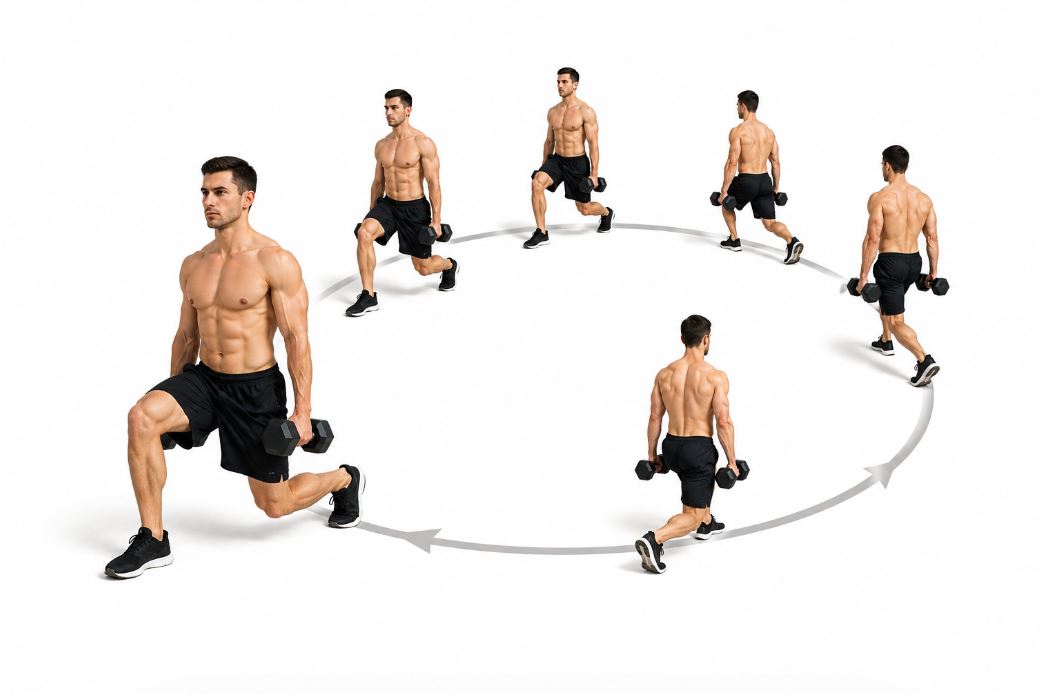
Walking Lunge
Longer strides and slight torso lean during walking lunges significantly increase hamstring and glute involvement.
Glute-Ham Raise
The glute-ham raise is one of the most advanced bodyweight posterior-chain exercises for eccentric hamstring strength and athletic performance.

TRX Hamstring Curl vs Sliding Leg Curl
Both exercises are excellent bodyweight posterior-chain movements that combine knee flexion with hip stabilization. However, the way instability and resistance are created significantly changes the overall training emphasis.
Conclusion: Both exercises are excellent for developing the bodyweight hamstring and posterior chain. TRX hamstring curls place greater emphasis on instability and coordination, while sliding leg curls generally create more direct eccentric hamstring tension.
Why Suspension Training Changes Hamstring Activation
Suspension trainers create a unique training environment because the feet remain completely unsupported and unstable throughout the movement. This forces the body to constantly recruit stabilizing musculature to maintain alignment and control.
In traditional machine exercises, stabilization demands are minimal because the equipment externally supports the body. In contrast, TRX hamstring curls require continuous interaction between the hamstrings, glutes, abs, obliques, and spinal stabilizers to prevent unwanted movement.
For athletes, this type of integrated posterior-chain training may provide more transferable benefits for sprinting, change-of-direction ability, and movement efficiency because real-world athletic movement rarely occurs in fully stabilized environments.
Final Thoughts
The TRX hamstring curl is one of the best suspension-training exercises for building stronger hamstrings, improving posterior-chain coordination, and developing core stability simultaneously.
When performed with elevated hips, controlled tempo, and strict body positioning, the exercise becomes an extremely effective tool for athletic development, injury prevention, and bodyweight posterior-chain training.
Why do TRX hamstring curls feel so unstable compared to machine leg curls?
Unlike machines that stabilize the body externally, suspension straps force the hamstrings, glutes, core, and stabilizers to constantly work together to control movement and maintain pelvic alignment throughout the exercise.
Are TRX hamstring curls effective for building muscle without weights?
Yes. Even though the exercise uses bodyweight resistance, the combination of instability, hip elevation, and eccentric hamstring loading can create a very strong hypertrophy stimulus — especially when tempo control is emphasized.
Why do TRX hamstring curls challenge the abs so much?
The abdominal muscles must work continuously to prevent excessive lumbar extension and pelvic instability while the lower body moves dynamically in suspended straps.
Are TRX hamstring curls useful for athletes?
Very much so. The exercise improves posterior-chain coordination, eccentric hamstring strength, pelvic stability, and body control — all important qualities for sprinting, jumping, and reducing hamstring injury risk.
Why do the straps start swinging during the exercise?
Swinging usually occurs because of uneven force production, poor core tension, or uncontrolled movement speed. Slower tempo and stronger abdominal bracing typically improve stability significantly.
Should the hips remain elevated during the entire movement?
Absolutely. Keeping the hips elevated maintains constant posterior-chain tension and significantly increases hamstring and glute recruitment. Allowing the hips to drop makes the exercise far less effective.
Are TRX hamstring curls harder than sliding leg curls?
For most people, yes. Suspension instability creates much greater coordination and stabilization demands because the feet are unsupported and free-moving throughout the exercise.
Can TRX hamstring curls help improve lower-body injury resilience?
Potentially yes. Stronger hamstrings, improved eccentric control, and better pelvic stability all contribute to more resilient movement mechanics during sprinting, deceleration, and athletic change-of-direction tasks.
