



Diving into dumbbell strength training at home is one of the most intelligent, most empowering fitness decisions women can make. You don’t need fancy equipment or a gym membership to build muscle, increase strength, and boost your confidence—just a pair of dumbbells, some guidance, and consistency.
As a certified strength coach who’s worked with hundreds of women training from their living rooms, I can confidently say: you can achieve excellent results with dumbbells alone. This guide will show you exactly how to structure your training and progress safely and effectively.
🏡 Why Dumbbell Training Works So Well at Home
Dumbbells are incredibly versatile and practical for building strength at home. Here’s why they’re ideal:
- Space-friendly: No bulky machines or need for racks
- Joint-friendly: Natural range of motion minimizes strain
- Progressive overload: It is easy to increase the challenge with small weight jumps
- Unilateral training: Great for correcting muscle imbalances (you can’t achieve this with barbells)
Plus, dumbbells help improve coordination and stability, unlike machines that do the balancing for you.
Buying the correct type of dumbbells for your home gym is not rocket science. You’ll find three types of dumbbells on the market, but which type you choose to invest in depends entirely on what works best for you.
🔄 Progressive Overload at Home
To keep making progress, you must apply the progressive overload principle—gradually increasing the stress placed on your muscles. At home, this can be done by:
- Increasing the weight of your dumbbells
- Adding extra sets or reps
- Decreasing rest time
- Slowing down the tempo (especially during the eccentric phase)
- Using advanced variations (e.g., Bulgarian split squat instead of regular lunge)
Consistency + progressive overload = results.
📋 4-Week Dumbbell-Only Strength Training Plan for Women
This plan is designed to train your entire body 3–4 days per week, using only dumbbells. It includes lower-body, upper-body, core, and total-body movements.
Week 1–2: Foundation Phase (3 Days/Week)
For weeks 1–2, train on Mondays, Wednesdays, and Fridays, resting on the other days.
| Exercise | Sets x Reps | Target Muscle Group | Why It’s Useful |
|---|---|---|---|
| Dumbbell Goblet Squat | 3 x 12 | Quads, Glutes | Builds lower-body strength and core engagement |
| Dumbbell Chest Press | 3 x 10 | Chest, Triceps | Great upper body pressing movement without a bench |
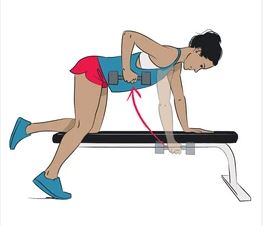
| One-Arm Dumbbell Row | 3 x 10/side | Back, Biceps | Enhances unilateral pulling strength and posture |
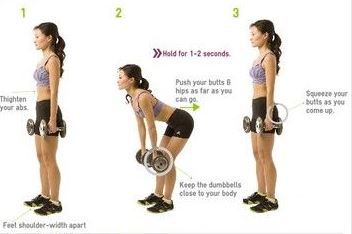
| Romanian Deadlift | 3 x 12 | Glutes, Hamstrings | Strengthens the posterior chain and improves hip hinge |
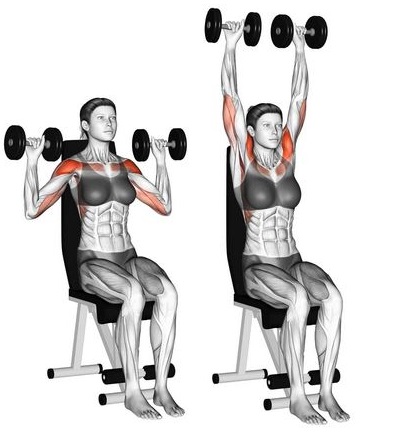
| Overhead Shoulder Press | 3 x 10 | Shoulders | Boosts upper-body pushing strength |
| Side Plank | 3 x 30s/side | Core, Obliques | Core stability and spine alignment |
Week 3–4: Progression Phase (4 Days/Week)
For weeks 3–4, train on Monday, Tuesday, Thursday, and Friday, resting on Wednesday and the weekend for recovery.
| Exercise | Sets x Reps | Target Muscle Group | Why It’s Useful |
|---|---|---|---|
| Bulgarian Split Squat | 3 x 8/leg | Glutes, Quads | Builds single-leg strength and stability |
| Dumbbell Row to Kickback | 3 x 10 | Back, Triceps | Combines pulling and pressing mechanics |
| Dumbbell Thrusters | 3 x 12 | Full body | Full-body movement is great for fat loss and endurance |
| Glute Bridge with Dumbbell | 3 x 15 | Glutes, Hamstrings | Targets the glutes while protecting the back |
| Dumbbell Lateral Raise | 3 x 12 | Shoulders | Defines the shoulders and improves posture |
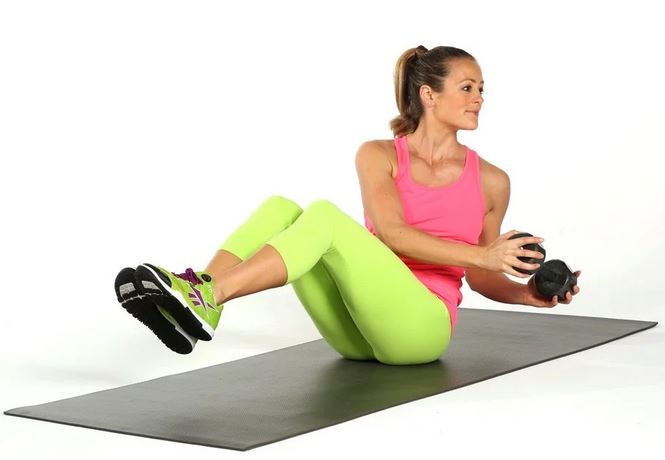
| Russian Twist with Dumbbell | 3 x 20 | Core | Engages obliques and core rotation |
🔎 Quick Guide: Exercise Descriptions
Before you start your dumbbell strength training at home for women, it’s essential to understand how to perform each exercise correctly. Here’s a quick guide to the key moves in this program so you can train safely, confidently, and effectively.
- Goblet Squat – Hold a dumbbell at chest height; squat down keeping chest up. Builds lower body strength and core stability.

- Dumbbell Chest Press – Lying on the floor (or bench if you have one at your home), press the dumbbells straight up from the chest. Strengthens chest and triceps.

- One-Arm Dumbbell Row – Support one hand on a bench or knee, and pull the dumbbell toward your hip. Improves back strength and posture.
- Dumbbell Romanian Deadlift – Stand tall holding dumbbells; hinge hips backward, keeping back flat. Targets hamstrings and glutes.
- Overhead Shoulder Press – Press dumbbells overhead while seated or standing. Builds shoulder and upper chest strength.
- Side Plank – Hold a straight body line on your side, supported by one forearm. Engages obliques and core stabilizers.

- Bulgarian Split Squat – Rear foot elevated on a chair; lower into a single-leg squat. Enhances balance and leg strength.

- Dumbbell Row to Kickback – Row dumbbells to ribs, then extend arms back. Works the upper back and triceps together.

- Dumbbell Thrusters – Squat with dumbbells at shoulders, then explode into overhead press—full-body power exercise.

- Glute Bridge with Dumbbell – Place the dumbbell on your hips, lift your hips by squeezing your glutes. Strengthens glutes and lower back.

- Dumbbell Lateral Raise – Raise dumbbells out to the sides to shoulder height. Defines shoulders and improves posture.

- Russian Twist with Dumbbell – Sit, lean back slightly, twist torso side to side with dumbbell. Works obliques and rotational core strength.
💡 Remember: In our comprehensive Exercise Index, you can find detailed instructions for performing every dumbbell exercise for each muscle group. If any exercise in this program doesn’t suit you, feel free to swap it for another that targets the same muscle, so you can personalize your routine without compromising effectiveness
Stronger, Focused, and Ready to Train
Get the extra push you need with women’s pre-workout supplements designed to improve energy, motivation, and performance — without overstimulation.
Explore Top Pre-Workouts for Women💡 Tips for Success With Dumbbell Workouts at Home
- Warm up before every session (e.g., 5 minutes of bodyweight squats, arm circles, glute bridges)
- Focus on controlled form, not just completing reps
- Track your workouts in a journal or app
- Rest 30–60 seconds between sets
- Aim to increase either reps or load every 1–2 weeks
🧠 What Weight Should You Start With?
As a general rule:
- Beginner women: Start with 5–10 lb dumbbells
- Intermediate: 10–20 lb dumbbells
You should struggle on the last two reps, but not lose form. If the set feels easy, increase the weight.
🧭 What If You Only Have One Pair of Dumbbells?
No problem! You can adjust intensity by:
- Doing more reps or sets
- Slowing down the movement
- Doing isometric holds (e.g., hold the bottom of a squat for 3–5 seconds)
Creativity + consistency = progress.
🌟 Client Success Story: Olivia’s Home Transformation
Olivia, a 47-year-old accountant and mother of three, had always believed she needed a gym to see results.
When Olovia started the Dumbbell-Only Strength Training Plan for Women Without Gym Access, everything changed. “In the first week, I realized the plan was different — it was structured, progressive, and made me feel like I was in control,” Olivia said.
I honestly thought home workouts were a waste of time. I tried random YouTube videos before, but I never felt like I was getting stronger. Now, I look forward to my workouts. I don’t dread them. I feel powerful, and I know I can keep progressing — right here at home.


After just four weeks, Olivia’s results were undeniable. She reported:
“My core feels stronger than it has in years. My legs don’t ache after a day of errands, and I’m finally seeing definition in my arms. Plus, I’ve never felt this confident in my own living room!”
As her coach, I noticed Olivia’s dedication from the very beginning. She checked in after every workout, asking questions about form and how to improve. By week three, she was adding pauses and slow negatives on her own, which demonstrated that she truly understood the concept of progressive overload.
Olivia also highlighted the flexibility of the program:
“Some days, I only had 25 minutes between Zoom calls, but I could still get my workout in without worrying about driving to the gym or waiting for machines.”
What impressed me most as her trainer was Maria’s mindset shift. Early on, she admitted feeling intimidated by strength training.
Olivia’s journey shows that dumbbell strength training at home for women isn’t just a backup plan — it can be the key to building lasting strength, confidence, and a healthier lifestyle without ever stepping foot in a gym.
💬 A Trainer’s Final Word
Dumbbell strength training at home for women is not just a temporary fix—it’s a sustainable lifestyle strategy. The key is to stay consistent, focus on form, and continually challenge yourself.
You don’t need a gym to get strong. You need a plan, a pair of dumbbells, and a commitment to yourself.
What dumbbell weight should women start with at home?
Most beginner women should start with 5–10 lb dumbbells. Choose a weight that challenges you for the last 2–3 reps of each set without compromising form. If you finish all reps easily, increase the weight next session.
Can I build muscle at home with just dumbbells?
Yes! Progressive overload with dumbbells—by adding weight, reps, sets, or tempo changes—stimulates muscle growth as effectively as many gym machines.
How many times per week should I do dumbbell workouts at home?
For optimal results, aim for 3–4 full-body sessions per week with rest days in between. This allows muscle recovery and maximizes strength gains.
Is dumbbell training effective for fat loss in women?
Absolutely. Strength training boosts your metabolism, increases lean muscle mass, and supports fat loss when combined with a balanced diet.
What exercises should I include in a home dumbbell routine?
A balanced routine includes squats, lunges, chest presses, rows, overhead presses, deadlifts, glute bridges, and core exercises like Russian twists or planks.
Can I replace a missed workout day or should I skip it?
If you miss a workout, try to fit it in the next day or adjust the week’s schedule. Consistency matters more than perfection, so avoid skipping multiple days.
Do I need adjustable dumbbells for home workouts?
Adjustable dumbbells are convenient if you have limited space or budget, but a small range of fixed-weight dumbbells (light, medium, heavy) can also work very well.
How do I progress if I only have one pair of dumbbells?
Use strategies like increasing reps, adding sets, slowing tempo, doing isometric holds, or choosing unilateral exercises (e.g., single-arm rows) to make the weight feel heavier.
Is it safe to train with dumbbells alone at home?
Yes—if you prioritize good form, warm up properly, avoid ego lifting, and train in a clutter-free area to prevent tripping. Filming yourself or using a mirror helps spot mistakes.
How soon will I see results from dumbbell strength training at home?
Most women notice improvements in strength and muscle tone within 4–6 weeks if they train consistently, follow a structured plan, and eat a nutritious diet.
