

Introduction
Fats are one of the most misunderstood nutrients in sports nutrition. For decades, they were demonized as the enemy of health and physique, often replaced by “low-fat” products that offered more marketing hype than real benefits. Yet science has proven that fats are not only essential for health but also critical for performance, recovery, and long-term athletic development.
Understanding fats in sports nutrition is crucial for athletes and bodybuilders who want to optimize hormone balance, maintain energy levels, and support muscle growth or fat loss. This guide will cover everything you need to know: the role of fats, different types, hormonal effects, timing strategies, recommended intake, and practical food choices. It builds on the principles covered in our Fundamentals of Bodybuilding Nutrition, so if you want a big-picture overview of all nutrients, start there first.
What Are Fats?
Fats, or lipids, are a group of macronutrients made primarily of carbon, hydrogen, and oxygen atoms. The most common form in the diet is triglycerides, composed of three fatty acids bound to a glycerol backbone.
Key characteristics of fats:
- Energy-dense: 9 kcal per gram (more than twice protein and carbs).
- Storage form of energy: The body stores excess energy as fat.
- Carrier of fat-soluble vitamins: Vitamins A, D, E, and K need fats for absorption.
- Structural role: Essential for cell membranes and nerve tissue.
The Role of Fats in Sports Nutrition
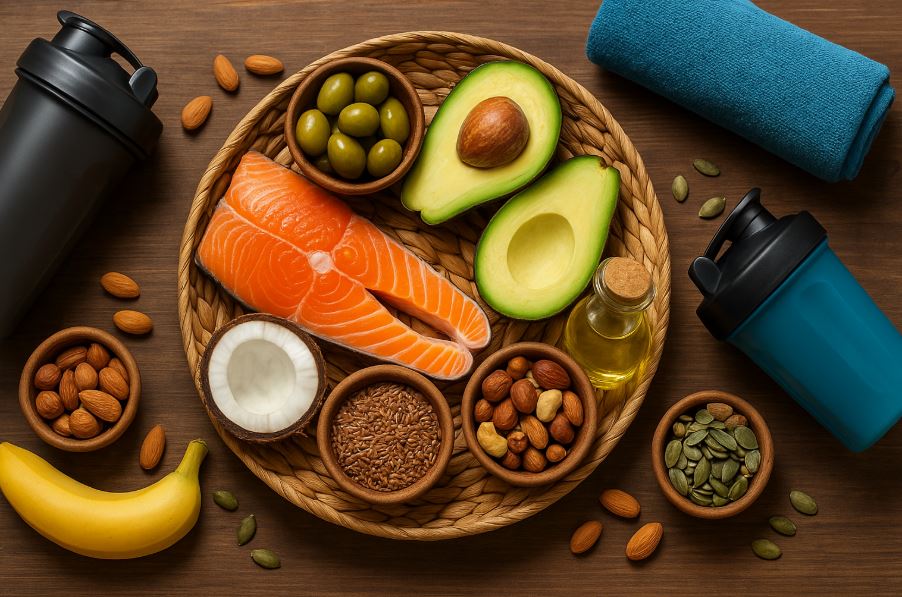
Fats are far more than just stored energy. They play diverse physiological roles that directly influence performance, recovery, and long-term health. Ignoring them—or cutting them too aggressively—can derail even the best training program.
Energy source at rest and during low-intensity activity
At rest, and during low-to-moderate intensity exercise (like walking, recovery cardio, or even long steady-state sessions), fats are the body’s primary energy source. Efficient fat metabolism spares glycogen for high-intensity training, making athletes more resilient across different types of effort.
Hormone production and regulation
Cholesterol, often demonized, is in fact the precursor for steroid hormones like testosterone, estrogen, and cortisol. Adequate fat intake (especially saturated and monounsaturated fats) supports optimal hormone levels, which in turn regulate muscle growth, energy, and recovery. Diets that drop fats too low (<15% of calories) consistently lead to reduced testosterone levels in male athletes.
Vitamin absorption and utilization
The fat-soluble vitamins A, D, E, and K cannot be absorbed without dietary fat. These vitamins play roles in vision, immune defense, bone density, and antioxidant protection. Athletes who habitually eat “fat-free” meals may actually impair their micronutrient status. For example, taking vitamin D supplements without any dietary fat significantly reduces its absorption.
Inflammation control and recovery
Not all fats affect inflammation equally. Omega-3 fatty acids (from salmon, flaxseeds, chia seeds) are strongly anti-inflammatory and help reduce joint pain, support heart health, and accelerate recovery from training stress. Conversely, excess omega-6 fatty acids (from processed vegetable oils) can promote pro-inflammatory pathways. Balancing the ratio is crucial for staying healthy under heavy training loads.
Brain and nervous system function
The brain is nearly 60% fat by dry weight, and nerve cells are coated with myelin—a fatty sheath that enables fast and efficient signal transmission. Adequate fat intake supports cognition, coordination, reaction time, and mood stability. For athletes, this translates to sharper focus, better motor control, and more consistent performance under stress.
Satiety and energy balance
Fats slow down gastric emptying, making meals more satisfying and helping to control appetite. This is especially valuable for athletes in a calorie deficit (cutting phase), helping them adhere to the plan without constant hunger.
| Function | Key Food Sources | Impact on Athletes & Bodybuilders |
|---|---|---|
| Energy source at rest and low-intensity training | Nuts, seeds, olive oil, fatty fish | Spares glycogen for high-intensity work; improves endurance and metabolic flexibility |
| Hormone production (testosterone, estrogen, cortisol) | Whole eggs, red meat, avocado, and coconut oil | Supports anabolic hormones, maintains libido, recovery, and training capacity |
| Vitamin absorption (A, D, E, K) | Salmon, dairy, olive oil, nuts | Ensures strong immunity, bone density, antioxidant defense, and vision health |
| Inflammation control & recovery | Salmon, chia seeds, flaxseed oil, walnuts | Omega-3 fats reduce muscle soreness and joint pain; balance excess omega-6 intake |
| Brain and nervous system function | Fatty fish, walnuts, almonds | Enhances focus, coordination, and reaction time during training and competition |
| Satiety & appetite regulation | Avocado, peanut butter, cheese | Keeps hunger under control during fat loss phases, aids diet adherence |
Types of Dietary Fats
Not all fats are created equal. Their structure, sources, and biological effects vary, which is why athletes need to understand which ones to prioritize and which to limit.
1. Saturated (“Bad”) Fats
- Sources: Red meat, butter, cheese, whole milk, coconut oil, and palm oil.
- Role: Provide energy, stabilize cell membranes, and serve as a building block for steroid hormones like testosterone.
- Sports Nutrition Perspective: Moderate saturated fat intake can actually support hormone health. Completely cutting them out may reduce testosterone levels, which is counterproductive for bodybuilders aiming for muscle growth. However, excessive intake—especially from processed meat and fried foods—may negatively impact cardiovascular health.
- Guideline: Keep saturated fats to ~8–10% of total daily calories.
2. Unsaturated (“Good”) Fats
These are generally considered the “healthy fats” and should form the majority of fat intake.
a) Monounsaturated Fats (MUFA)
- Sources: Olive oil, avocado, almonds, cashews, peanuts.
- Role: Improve blood lipid profile, reduce inflammation, and provide steady energy.
- Sports Nutrition Perspective: Excellent for maintaining energy during long training blocks and supporting cardiovascular health.
b) Polyunsaturated Fats (PUFA)
- Omega-3 fatty acids:
- Sources: Salmon, sardines, chia seeds, flaxseeds, walnuts.
- Role: Strong anti-inflammatory effect, improves recovery, protects joints, and enhances brain function.
- Sports Nutrition Perspective: Critical for athletes under high training stress—reduce soreness and improve endurance and strength recovery.
- Omega-6 fatty acids:
- Sources: Sunflower oil, corn oil, soybean oil, walnuts.
- Role: Essential for growth and brain function, but pro-inflammatory in excessive amounts.
- Sports Nutrition Perspective: The problem isn’t omega-6 itself, but the imbalance: modern diets often provide 15–20 times more omega-6 than omega-3. Athletes should aim closer to a 2:1 or 3:1 ratio.
3. Trans (“Worst”) Fats
- Sources: Hydrogenated oils, margarine, packaged baked goods, and fried fast food.
- Role: None beneficial; associated with increased inflammation, cardiovascular risk, and impaired performance.
- Sports Nutrition Perspective: For athletes, trans fats add nothing—only harm. They don’t improve energy, don’t aid recovery, and may actually worsen inflammation and fatigue.
- Guideline: Avoid altogether. Even “small amounts” are cumulative over time.
Summary: Which Fats to Prioritize
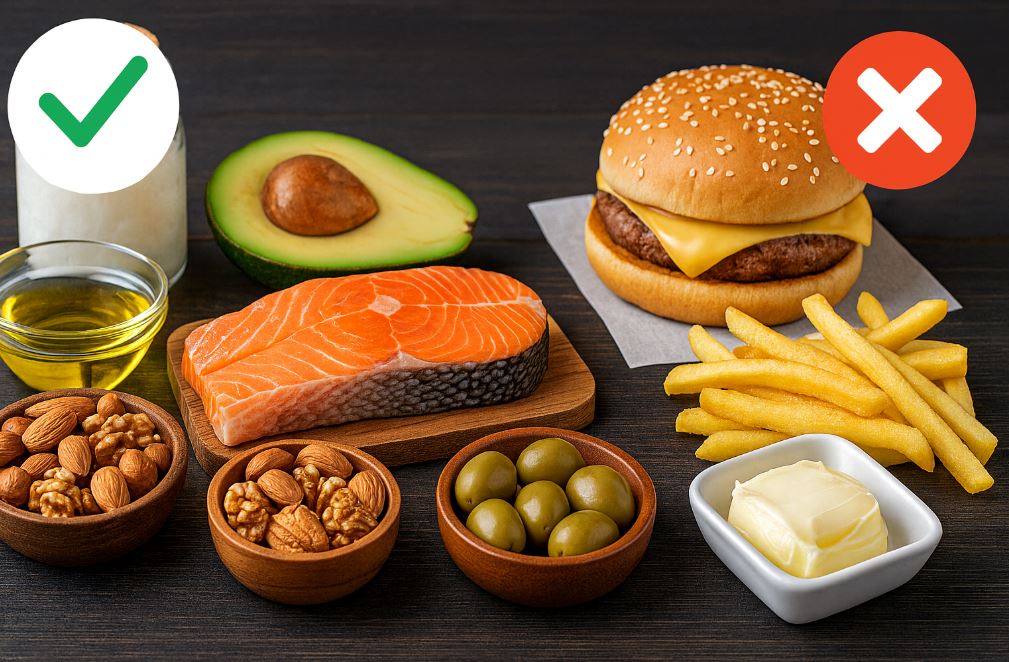
- Base your diet on: monounsaturated fats (olive oil, avocado, nuts) + omega-3s (fatty fish, chia, flax).
- Include in moderation: saturated fats from whole foods (eggs, dairy, lean red meat, coconut).
- Limit: omega-6 fats from refined vegetable oils.
- Avoid: trans fats from processed foods and hydrogenated oils.
| Type of Fat | Main Food Sources | Primary Role | Recommendation for Athletes & Bodybuilders |
|---|---|---|---|
| Saturated Fats | Red meat, whole milk, cheese, butter, coconut oil | Energy, cell membrane stability, hormone synthesis (testosterone) | Include in moderation (~8–10% of calories). Best from whole foods like eggs, dairy, and lean red meat. Avoid excess from processed/fried foods. |
| Monounsaturated Fats (MUFA) | Olive oil, avocado, almonds, peanuts, cashews | Improve heart health, reduce inflammation, steady energy | Should form a major part of fat intake. Ideal for daily meals (cooking oils, snacks, salads). |
| Polyunsaturated Fats (PUFA) – Omega-3 | Salmon, sardines, chia seeds, flaxseed oil, walnuts | Anti-inflammatory, joint protection, brain & heart health | Prioritize these daily. Essential for recovery, reducing soreness, and improving performance. |
| Polyunsaturated Fats (PUFA) – Omega-6 | Sunflower oil, soybean oil, corn oil, walnuts | Growth, brain function, energy | Necessary but often over-consumed. Balance with omega-3s (aim for a 2–3:1 ratio). |
| Trans Fats | Margarine, hydrogenated oils, fried fast food, packaged baked goods | No beneficial role; increases inflammation and cardiovascular risk | Avoid completely. Provides no benefit to performance or health. |
Fats and Hormonal Health
Fats play a direct role in regulating hormones critical for athletes and bodybuilders:
- Testosterone & Estrogen: Cholesterol is the precursor for these hormones. Extremely low-fat diets can reduce testosterone levels, harming muscle growth.
- Cortisol: Balanced fat intake supports better stress hormone regulation.
- Leptin & Ghrelin: Fats help regulate hunger and satiety.
Recommended Fat Intake
General Population
- 20–35% of daily calories (WHO/USDA guidelines).
Athletes and Bodybuilders
- 20–30% of daily calories.
- At least 0.6 g per kg of body weight to maintain hormonal health.
| Bodyweight | Moderate Training (0.8 g/kg) | High Training Load (1.0 g/kg) |
|---|---|---|
| 70 kg | 55 g fat/day | 70 g fat/day |
| 80 kg | 65 g fat/day | 80 g fat/day |
| 90 kg | 72 g fat/day | 90 g fat/day |
To make things easier, we’ve developed a Daily Fat Intake Calculator —a simple tool that helps you estimate how much fat you should consume per day based on your body weight, goals, and training load.
When and What Fats to Eat
Unlike carbohydrates and protein, the timing of fats is less critical for immediate performance. Fats digest slowly and don’t directly fuel high-intensity training. However, when and what type of fats you eat can still influence how you feel, recover, and perform across the day.
Before Training
- Why limit fats pre-workout?
Fats slow gastric emptying. If you eat a heavy, high-fat meal right before training, you may feel sluggish, bloated, or even nauseous. Blood flow is diverted to digestion instead of muscles, which can compromise performance. - What works best?
Pre-workout meals should emphasize carbs + moderate protein, with minimal fats. - Example (bad): Burger and fries an hour before leg day = sluggish, heavy stomach.
- Example (good): Oats with banana and whey protein = quick-digesting fuel, minimal fat.
During Training
- Why avoid?
Fats don’t provide immediate fuel for high-intensity work. Since they digest slowly, they won’t provide immediate support to your muscles during a workout and may even cause discomfort. - Exception: In ultra-endurance sports (multi-hour events), small amounts of fats (nuts, nut butters) may help provide long-lasting energy. For bodybuilders and strength athletes, this is unnecessary.
After Training
- Myth: “Fats block protein absorption post-workout.”
- Reality: Moderate amounts of fat after training do not reduce glycogen resynthesis or protein uptake in any meaningful way.
- Best practice: Focus on carbs + protein first, but including some healthy fats in your post-workout meal is fine and can even enhance satiety.
- Examples:
- Grilled salmon with white rice and spinach (omega-3s + fast carbs).
- Chicken, sweet potato, and a drizzle of olive oil.
Throughout the Day
- Primary strategy: Spread fats across meals to avoid overloading the digestive system.
- Why? This keeps energy stable, supports nutrient absorption, and prevents large calorie spikes.
- Tips:
- Use olive oil or avocado in salads.
- Snack on nuts or nut butter between meals.
- Add fatty fish 2–3 times per week.
- Eliminate trans fats from the menu.
Evening & Pre-Sleep
- Fats at dinner or before bed can promote satiety and stabilize blood sugar overnight. Combined with slow-digesting protein (casein, cottage cheese), this supports recovery and reduces nighttime hunger.
- Examples:
- Cottage cheese with a handful of walnuts.
- Casein shake with peanut butter.
| Timing | Why It Matters | Recommendation | Best Fat Sources / Examples |
|---|---|---|---|
| Pre-Workout (1–2 h before) | Fats slow digestion; too much can cause sluggishness and discomfort. | Keep fats low, focus on carbs + protein for quick energy. | Oats with banana and whey (minimal fat), rice cakes with turkey slices. |
| Intra-Workout | Fats are slow to digest and don’t fuel high-intensity training. | Not recommended for strength/bodybuilding. Small amounts only in ultra-endurance sports. | Not applicable for bodybuilding; ultra-endurance may use nuts or nut butter. |
| Post-Workout (0–2 h after) | Myth says fats block protein absorption, but moderate amounts are fine. | Base the meal on carbs + protein; add small amounts of healthy fats if desired. | Salmon with rice and spinach, chicken with sweet potato + olive oil drizzle. |
| Evening / Pre-Sleep | Fats promote satiety and stabilize blood sugar overnight; combined with protein, they aid recovery. | Moderate healthy fats with slow-digesting protein. | Cottage cheese + walnuts, casein shake with peanut butter. |
| Daily Meals (Breakfast, Lunch, Dinner) | Fats distributed evenly across meals support hormones, nutrient absorption, and stable energy. | 20–30% of daily calories, mostly from unsaturated fats. | Avocado on toast, olive oil in salad, nuts or seeds as snacks, fatty fish 2–3x per week. |
Best Food Sources of Fats
| Food | Serving | Grams of Fat | Notes |
|---|---|---|---|
| Avocado | 1 medium | 21 g | High in monounsaturated fats, fiber, and potassium |
| Almonds | 30 g (handful) | 14 g | Convenient snack, vitamin E |
| Olive oil | 1 tbsp | 14 g | Great for cooking and salads |
| Salmon | 120 g fillet | 12 g | Rich in omega-3 fatty acids |
| Whole eggs | 2 large | 10 g | Balanced protein and fat source |
| Peanut butter | 2 tbsp | 16 g | Calorie-dense, good for bulking |
| Chia seeds | 2 tbsp | 9 g | Omega-3s, fiber-rich |
| Walnuts | 30 g (handful) | 18 g | Excellent source of omega-3 ALA, supports brain health |
| Greek yogurt (full-fat) | 200 g | 10 g | Combines protein and healthy fats; good breakfast base |
| Cheese (cheddar) | 30 g slice | 9 g | Provides calcium and protein; use in moderation |
| Sunflower seeds | 30 g | 14 g | Rich in vitamin E and polyunsaturated fats |
| Dark chocolate (70–85% cocoa) | 30 g | 12 g | Antioxidants + healthy fats; satisfying snack |
| Coconut oil | 1 tbsp | 13 g | Source of medium-chain triglycerides (MCTs); fast energy |
Fats in Muscle Gain and Fat Loss
Muscle Gain
- Healthy fats provide calorie-dense fuel, making it easier to maintain a surplus.
- Monounsaturated and omega-3 fats reduce inflammation and support recovery.
Fat Loss
- Don’t cut fats too low—hormone production suffers.
- Instead, balance carbs and fats while keeping protein high.
- Aim for ~20–25% of calories from fats even in a cutting phase.
Common Myths About Fats
| Myth | Reality | Coach’s Insight |
|---|---|---|
| “All fats are bad.” | Certain fats (omega-3s, monounsaturated) are essential and highly beneficial. | Eliminate trans fats, but embrace healthy fats daily. |
| “Fat makes you fat.” | Only a calorie surplus leads to fat gain. Fats are calorie-dense, but not inherently fattening. | I’ve seen athletes lean out while eating 70+ g of healthy fats per day. |
| “Bodybuilders should avoid fats.” | Too little fat lowers testosterone and impairs performance. | I advise 20–30% of calories from fats for most athletes. |
| “High-fat diets are best for everyone.” | Some thrive on low-carb, high-fat diets, but strength athletes often need carbs. | Personalization is key; fat isn’t superior or inferior—it’s context. |
Conclusion & Key Takeaways
Fats in sports nutrition are not the enemy—they are essential allies in supporting hormones, recovery, and performance. The key is quality, balance, and consistency.
