
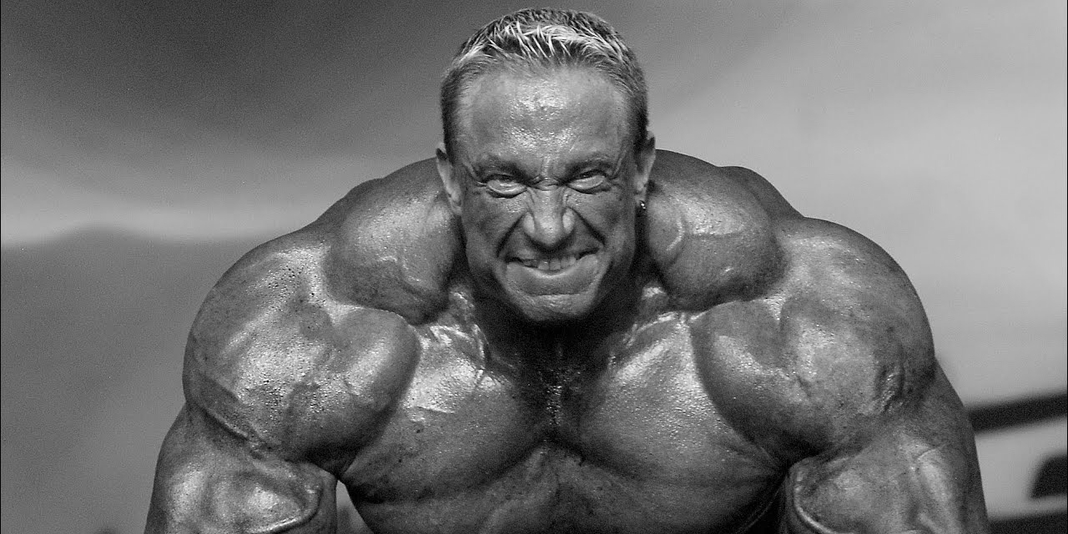
When people discuss the true “mass monsters” of bodybuilding, one name that always stands out is that of professional bodybuilder Markus Rühl. Known as “The German Beast” or “The German Mass Monster”, Rühl built a reputation for pushing human size and muscularity to new extremes. Standing 5’10’’ (178 cm) and weighing over 285 lbs (129 kg) in contest shape — and sometimes well above 310 lbs (140+ kg) in the off-season — he became a symbol of the freak era of bodybuilding in the late 1990s and early 2000s.
Unlike many of his rivals, Markus did not start training from childhood. In fact, he only began lifting weights in his late teens after a knee injury ended his soccer career. Yet, within a decade, he had transformed himself from a casual gym-goer into one of the most massive professional bodybuilders to ever step on stage.
Over the years, Markus competed in multiple Mr. Olympia contests, the Arnold Classic, and numerous IFBB Pro shows, earning respect for his sheer size and freakish proportions. While he never claimed the Olympia crown, his physique became unforgettable — with his colossal shoulders, enormous quadriceps, and one of the widest upper bodies in bodybuilding history.
This article will explore the life, career, competition history, training philosophy, nutrition, and legacy of Markus Rühl, one of the most iconic figures of modern bodybuilding.
Markus Rühl’s Profile Summary & Quick Facts
These two tables provide an in-depth look at Markus Rühl’s physical statistics (body measurements) and personal details.
Personal Details
| Full Name | Markus Rühl |
| Date of Birth | February 22, 1972 |
| Place of Birth | Darmstadt, Hesse, Germany |
| Nationality | German |
| Era | 1990s–2000s |
| Division | Men’s Open |
| Status | Retired IFBB Pro Bodybuilder |
| Spouse | Simone Rühl |
| Children | 1 Daughter |
| Profession | Professional Bodybuilder, Entrepreneur, Fitness Coach |
Physical Statistics (Body Measurements)
| Height | 5’10” (178 cm) |
| Contest Weight | 285–290 lbs (129–132 kg) |
| Off-Season Weight | 310–325 lbs (140–147 kg) |
| Arms | 24 in (61 cm) |
| Chest | 60 in (152 cm) |
| Waist | 36 in (91 cm) |
| Legs | 32 in (81 cm) |
| Calves | 21 in (53 cm) |
Physique Analysis – A Coach’s Commentary
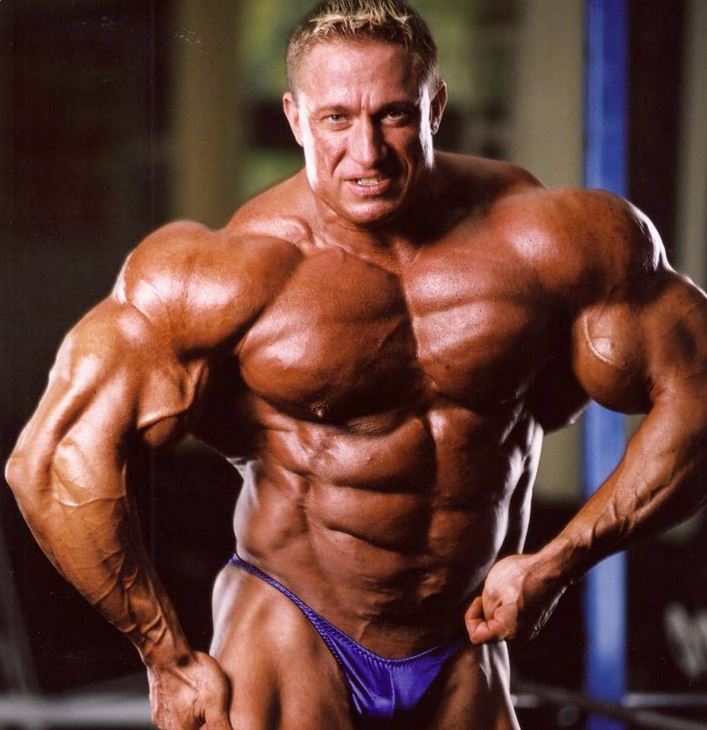
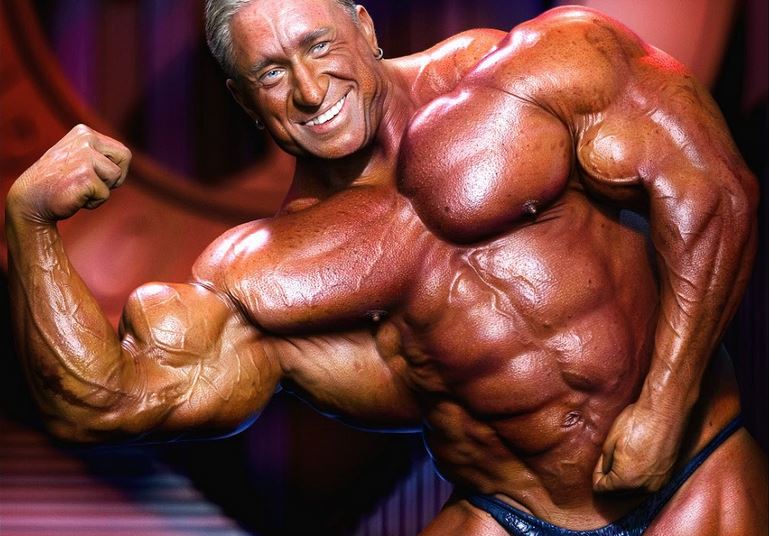
When we break down the body statistics of professional bodybuilder Markus Rühl, it becomes immediately apparent why he earned the title of “Mass Monster.” Unlike more aesthetic-focused athletes, Markus was built almost exclusively for sheer size, density, and thickness.
- Arms (24 in / 61 cm): His arm measurements were among the biggest in bodybuilding history. The sheer girth of his biceps and triceps gave him one of the most imposing front double biceps poses ever, although sometimes the detail and separation were not as refined as his rivals.
- Chest (60 in / 152 cm): A massive barrel chest, which, when combined with his huge delts, made his upper body appear like an impenetrable wall of muscle. It contributed significantly to his reputation for size but also added to the “blocky” look critics often mentioned.
- Waist (36 in / 91 cm): Unlike competitors such as Flex Wheeler or Frank Zane, Markus did not possess a small, aesthetic waistline. His waist was thick, but that worked in harmony with his gigantic lats and delts to create a different kind of V-taper — one based on overwhelming mass rather than symmetry. In the freak era of the 1990s–2000s, this became less of a liability, as the sport increasingly rewarded mass and conditioning.
- Legs (32 in / 81 cm): His quadriceps were famously monstrous. The sweep and size of his thighs rivaled even those of Tom Platz, and in many photos his legs looked almost cartoonishly oversized.
- Calves (21 in / 53 cm): In an era when many pros neglected calves, Markus brought impressive lower leg development that matched his upper body mass. This gave him balance, even if his proportions were not considered “aesthetic.”
From a coach’s perspective, Markus Rühl’s physique embodied the freak era of bodybuilding: extreme mass, brutal training intensity, and shock value on stage. His physique was not about flow or beauty — it was about pushing the human body to its absolute limit in terms of size. While he lacked the lines, symmetry, and aesthetics of competitors like Kevin Levrone or Flex Wheeler, his goal was never to be the most aesthetic — it was to be the biggest. And in that regard, Markus succeeded spectacularly.
Early Life and Background
Markus Rühl was born on February 22, 1972, in Darmstadt, Germany. Unlike many professional bodybuilders who start lifting in their early teens, Markus came to the sport relatively late. As a child, he was very active and initially dreamed of a soccer career. He played football throughout his youth until a severe knee injury at the age of 18 forced him to give up the sport altogether.
Following his doctor’s advice, Markus began weight training as a form of rehabilitation for his injured knee. What started as simple exercises with modest weights quickly turned into a passion. He discovered not only that his strength increased rapidly, but also that his body responded exceptionally well to resistance training. Within a short time, he was hooked on the gym lifestyle.
Raised in Germany, Markus came from a working-class background. His discipline and strong work ethic shaped his approach to bodybuilding. Unlike many athletes who had mentors from the start, Markus essentially trained on his own in the early days, experimenting with exercises and building his physique with relentless effort. His genetic potential for mass and muscle thickness soon became evident — traits that would later make him famous in the bodybuilding world.
By the mid-1990s, Markus had made such significant progress that people at his local gym encouraged him to enter competitions. What began as rehabilitation for an injury had now transformed into a professional pursuit that would eventually make him one of the most recognizable IFBB pros of the 2000s.
Markus Rühl’s Bodybuilding Career
Rühl’s First Steps into Bodybuilding
Markus Rühl officially entered the bodybuilding scene in 1997, when he won the Hessen State Championship and the German Nationals as an amateur. These victories earned him his IFBB Pro Card, allowing him to step onto the international stage. Later that year, he made his professional debut at the 1997 Grand Prix of Germany, where he placed 10th, competing at a stage weight of approximately 117 kg (258 lbs).
Professional Bodybuilding Career & Major Accomplishments
After turning pro, Markus quickly established himself as a competitor to watch. In 1998, he placed 9th at the Night of Champions, already competing at an impressive weight of 120 kg (265 lbs).
In 1999, he earned a 7th-place finish at the English Grand Prix and 4th at the Night of Champions, which qualified him for his first Mr. Olympia appearance. However, his debut was cut short when he was disqualified for testing positive for diuretics — a setback that made headlines at the time.
The year 2000 marked a significant breakthrough. Markus won the Toronto Pro Invitational, finished 2nd at the Night of Champions, and placed 5th at the World Pro Cup. At the Mr. Olympia that year, he finished 7th, solidifying his reputation as one of the most massive competitors on the planet.
In 2001, his Olympia performance slipped to 14th place, but he made a historic comeback in 2002, winning the Night of Champions in what was arguably the best shape of his career. Weighing nearly 129.5 kg (285 lbs) on stage, Rühl’s package of freakish size and fullness is still remembered as one of the most shocking physiques in bodybuilding history.
In 2003, he took 3rd at the Arnold Classic, and in 2004, he achieved his best Mr. Olympia placing — 5th overall. Although he never claimed the Olympia crown, that performance remains his career highlight on bodybuilding’s biggest stage.
In later years, Markus continued to compete at a high level, securing 3rd at the 2006 Austria Pro Grand Prix and another 3rd at the 2009 New York Pro. His final Olympia appearance came in 2009, marking the end of his professional stage career, but not the end of his influence on the sport.
Markus Rühl Full Competition History
| Year | Competition | Placement |
|---|---|---|
| 1997 | Grand Prix Germany | 10th |
| 1998 | Night of Champions | 9th |
| 1999 | English Grand Prix | 7th |
| 1999 | Night of Champions | 4th |
| 1999 | Mr. Olympia | Disqualified |
| 2000 | Toronto Pro | 1st |
| 2000 | Night of Champions | 2nd |
| 2000 | English Grand Prix | 5th |
| 2000 | Mr. Olympia | 7th |
| 2001 | Mr. Olympia | 14th |
| 2002 | Toronto Pro Classic | 2nd |
| 2002 | Night of Champions | 1st |
| 2002 | Mr. Olympia | 8th |
| 2003 | Arnold Classic | 3rd |
| 2004 | Mr. Olympia | 5th |
| 2005 | Mr. Olympia | 15th |
| 2006 | Mr. Olympia | 8th |
| 2006 | Austria Pro Grand Prix | 3rd |
| 2009 | New York Pro | 3rd |
| 2009 | Mr. Olympia | 15th |
| 2010 | Europa Super Show | 7th |
Toughest Rivals
During his professional career, Markus Rühl often stood alongside some of the most dominant figures in bodybuilding history. His biggest challenge was not simply building mass — he already had that in abundance — but rather competing against athletes who combined size with sharper conditioning and aesthetics.
- Ronnie Coleman: As the eight-time Mr. Olympia, Coleman was the ultimate standard in the late 1990s and early 2000s. While Rühl’s sheer size and width were shocking, Ronnie’s combination of freakish mass and conditioning made him nearly untouchable. Standing next to Coleman highlighted the importance of both size and detail in the sport of bodybuilding.
- Jay Cutler: Another rival of Markus’s prime years, Cutler’s ability to come in shredded and symmetrical gave him a competitive edge. While Markus could outmass Jay in certain poses, Jay’s more balanced package typically scored higher with judges.
- Günter Schlierkamp: Known as “The Gentle Giant,” Schlierkamp was another German bodybuilding star of the same era. Their rivalry was significant to fans in Germany, where both men were celebrated icons. Günter’s conditioning and stage presence often contrasted with Markus’s raw size.
- Nasser El Sonbaty: A fellow mass monster, Nasser and Markus had similar strengths — enormous physiques and overwhelming thickness. However, Nasser’s ability to present more definition and flow often gave him the competitive edge.
As a coach, I see Markus’s rivals as both a challenge and a gift. Competing against Coleman and Cutler forced Rühl to push his training and conditioning further, even though his blockier structure limited his chances of placing at Olympia. His battles with Günter, however, symbolized the pride of German bodybuilding — proving that his presence on stage elevated the sport in his home country and beyond.
Health Issues
Like many mass monsters of the late 1990s and early 2000s, Markus Rühl’s career was marked not only by incredible muscle gains but also by significant health challenges. The extreme training volumes, heavy weights, and enormous food intake that fueled his growth also placed immense stress on his joints, connective tissue, and overall health.
- Injuries: Markus battled several shoulder and knee injuries throughout his career. These limited his ability to train at 100% intensity, particularly in the later years. He often spoke openly about how joint pain made it difficult to maintain the same ferocious training style that built his physique.
- Conditioning Struggles: One of Markus’s recurring challenges on stage was coming in fully conditioned. While his size and fullness were never in question, achieving the razor-sharp detail needed at the Mr. Olympia level was often compromised by the physical toll his body endured.
- Digestive Stress: Rühl admitted in interviews that the sheer amount of food required to maintain his size — often exceeding 8,000 calories per day in the off-season — took a toll on his digestion and overall comfort. This was a common issue among mass monsters that had to be force-fed to maintain their competitive size constantly.
- Retirement: By the late 2000s, Markus’s injuries and health struggles ultimately led to his retirement. He competed at the 2010 Europa Super Show, placing 7th, after which he officially stepped away from the stage. Despite stepping down, he maintained his popularity as a public figure, coach, and entrepreneur in the bodybuilding industry.
From a trainer’s perspective, Markus Rühl’s health struggles highlight the price of extreme bodybuilding. His career demonstrates that while size can be shocking and impressive, the long-term sustainability of such an approach is limited. It also serves as a cautionary tale for athletes who push their bodies to the limit without prioritizing recovery, mobility, and long-term health and well-being.
Training and Diet Tips
Markus Rühl’s Training Style
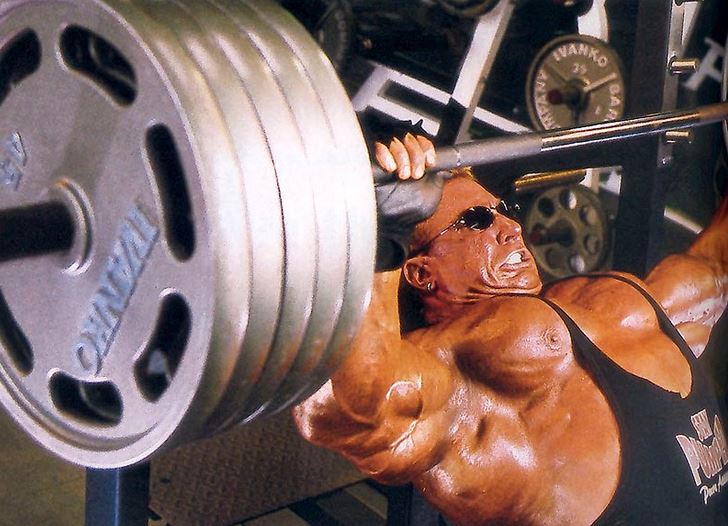
Bodybuilder Markus Rühl was known for his brutal high-volume workouts. Unlike Mike Mentzer’s HIT philosophy, Rühl followed the traditional mass-building approach of the 1990s: numerous sets, heavy weights, and pushing nearly every exercise to the point of failure. He favored basic compound lifts combined with isolation movements for detail, but always with heavy loads.
Markus Rühl’s Workout Routine
Markus Rühl – 1-Week High-Volume Training Plan
Guideline: 2–3 warm-up sets per first compound; listed sets are working sets. Rest 90–120 s (isolations) / 2–3 min (heavy compounds). Last set = near failure.
| Day | Exercise | Sets | Reps | Notes |
|---|---|---|---|---|
| Day 1 | Chest & Triceps | Heavy compounds + pump finishers | ||
| Barbell Bench Press | 5 | 6–8 | Last set heavy; controlled eccentric | |
| Incline Dumbbell Press | 4 | 8–10 | Full stretch; slight pause at bottom | |
| Pec Deck / Cable Fly | 3 | 12–15 | Squeeze 1–2 s at peak | |
| Weighted Dips | 3 | 8–12 | Chest angle; avoid lockout | |
| EZ-Bar Skull Crushers | 4 | 8–12 | Elbows tucked; full ROM | |
| Cable Triceps Pushdown (rope) | 3 | 12–15 | Pump finisher | |
| Day 2 | Back & Biceps | Width + thickness emphasis | ||
| Deadlift (conventional) | 4 | 5–6 | Heavy; neutral spine; reset reps | |
| Weighted Pull-Ups (wide) | 4 | 6–8 | Full hang; chest to bar cue | |
| T-Bar Row / Chest-Supported Row | 4 | 8–10 | Elbows 45°; squeeze back | |
| Lat Pulldown (neutral/underhand) | 3 | 10–12 | MMC; avoid swinging | |
| EZ-Bar Curl | 4 | 8–12 | Strict; no hip drive | |
| Incline DB Curl / Cable Curl | 3 | 12–15 | Pump; full stretch | |
| Day 3 | Legs (Quads-Hamstrings-Calves) | High volume lower body | ||
| Back Squat (low-bar or high-bar) | 5 | 5–8 | Depth; braced core; 2–3 min rest | |
| Leg Press (feet mid-low) | 4 | 10–12 | Controlled 3–1–1 tempo | |
| Hack Squat | 3 | 8–10 | Heels planted; knees track toes | |
| Romanian Deadlift | 4 | 8–10 | Hinge; hamstring stretch; neutral back | |
| Leg Extension (pump) | 3 | 12–15 | Top squeeze 1–2 s | |
| Standing Calf Raise | 5 | 10–15 | Full stretch & peak contraction | |
| Day 4 | Shoulders (Delts) + Traps | Width & density focus | ||
| Seated Barbell Overhead Press | 5 | 6–8 | Bar path straight; brace hard | |
| Dumbbell Lateral Raise | 5 | 12–15 | Constant tension; slight lean | |
| Cable Rear Delt Fly / Reverse Pec Deck | 4 | 12–15 | Slow eccentrics; scap control | |
| Machine Upright Row / Cable Upright Row | 3 | 10–12 | Elbows high; no shoulder impingement | |
| Heavy Dumbbell Shrugs | 4 | 8–12 | 2 s hold at top; full range | |
| Day 5 | Arms (Biceps & Triceps) | High pump + controlled form | ||
| Barbell Curl (straight or EZ) | 5 | 8–12 | Strict; elbows pinned | |
| Incline DB Curl / Preacher Curl | 3 | 10–15 | Peak contraction focus | |
| Hammer Curl (DB) | 3 | 10–12 | Brachialis/forearm emphasis | |
| Close-Grip Bench Press | 4 | 6–8 | Heavy triceps compound | |
| Overhead Cable Extension (rope) | 3 | 12–15 | Long-head focus; big stretch | |
| Day 6 | Full Pump / Weak Points | Giant sets; MMC; higher reps | ||
| Cable Lateral Raise → Machine Press (giant set) | 4 rounds | 15–20 / 10–12 | Minimal rest between moves | |
| Lat Pulldown (high-rep) → Straight-Arm Pulldown | 3 rounds | 12–15 / 12–15 | MMC; continuous tension | |
| Leg Extension → Walking Lunges | 3 rounds | 15–20 / 20 steps | Quad pump; steady pace | |
| Calf Raise (any) – slow tempo | 4 | 12–20 | 2 s stretch bottom / top | |
| Day 7 | Rest / Active Recovery | Walks, mobility, light cardio 20–30 min | ||
Progression: add 2.5–5 kg when you hit top of rep range on all sets with clean form. Optional intensity (top set only): drop-set or rest-pause.
Markus Rühl’s Diet Approach
Markus followed the classic mass monster diet: extreme calorie intake in the off-season, followed by precise cutting before competitions. He prioritized lean protein, complex carbs, and healthy fats, but his sheer size meant he consumed massive amounts of food.
Here’s a simplified look at his daily diet plan:
Markus Rühl – Sample Diet Plan
| Meal | Foods |
|---|---|
| Breakfast | Oatmeal, Eggs (10 whites + 2 yolks), Banana |
| Mid-Morning Snack | Protein Shake, Almonds |
| Lunch | Chicken Breast, Brown Rice, Broccoli |
| Afternoon Meal | Lean Beef, Sweet Potatoes, Spinach |
| Dinner | Salmon, Quinoa, Asparagus |
| Pre-Bed Snack | Cottage Cheese, Walnuts, Casein Protein Shake |
Coach’s Note – A Trainer’s Perspective
From a coaching standpoint, Markus Rühl’s approach to bodybuilding was both impressive and extreme. His training style relied heavily on high-volume, heavy-weight sessions, often pushing close to or beyond failure. While this kind of intensity is effective for building mass — and clearly worked for Markus, given his reputation as one of the biggest “mass monsters” ever — it also comes with drawbacks. The sheer stress placed on joints, tendons, and the nervous system can shorten a competitive career if recovery is not managed correctly. Markus himself admitted that injuries limited his later competitive performances.
His diet approach was textbook “mass monster.” By consuming thousands of calories per day, mostly from lean proteins and complex carbohydrates, he was able to fuel his brutal workouts and maintain his enormous size. The downside is that this style of eating is unsustainable and unhealthy for the average person. Off-season bulking often involves extreme fluctuations in body weight, which can stress the cardiovascular system and metabolism.
The positives: Markus proved that with discipline, consistency, and relentless effort, even someone who started bodybuilding relatively late could become a world-famous professional. His physique inspired a generation of gym-goers who admired his sheer size and intensity.
The negatives: From a modern sports science perspective, Rühl’s approach lacked balance. The training volume was so high that recovery was often compromised, and his diet, while effective for growth, would be considered excessive by today’s standards of longevity and health-conscious bodybuilding.
In short, Markus Rühl embodied the freak era of bodybuilding — a time when being the biggest was the ultimate goal. His training and diet strategies were effective for his competitive goals, but for most lifters today, a more measured and recovery-friendly approach would be the smarter long-term choice.
Net Worth & Business Ventures
Even after retiring from professional competition, bodybuilder Markus Rühl remained one of the most recognizable faces in the bodybuilding world. His massive physique, charismatic personality, and sense of humor made him a favorite in the industry, helping him transition into a successful business career.
- Net Worth: Estimates place Markus Rühl’s net worth at around $2–3 million. While not at the level of Mr. Olympia champions like Ronnie Coleman or Jay Cutler, Markus built a strong financial foundation through a combination of sponsorships, business ventures, and his ongoing presence in the bodybuilding community.
- Rühl’s Bestes: Markus founded his own supplement company called Rühl’s Bestes, which produces protein powders, pre-workouts, and other nutritional products. The brand has become particularly popular in Germany, with a loyal fan base that associates the products with Markus’s authenticity and humor.
- YouTube and Media Presence: Markus has maintained relevance through his YouTube channel and social media platforms. His videos often mix serious training content with lighthearted humor, making him a relatable and entertaining figure for fans.
- Seminars and Guest Posing: Even after retirement, Markus remained active in the bodybuilding scene by hosting workshops, guest appearances, and motivational talks. His ability to connect with fans and share his unique perspective on bodybuilding continues to inspire new generations of lifters.
- Merchandise and Branding: Markus leveraged his popularity into a line of merchandise, including apparel, accessories, and fan memorabilia. His larger-than-life personality became an integral part of his brand identity, ensuring his continued presence in the bodybuilding culture.
From a business standpoint, Markus Rühl is a great example of how athletes can reinvent themselves after retirement. He turned his status as a fan favorite into a successful supplement brand and media presence. Unlike many competitors who disappear after their stage careers, Markus built a lasting platform that continues to grow.
Personal Life & Media Presence
Outside of bodybuilding, Markus Rühl has built a reputation as one of the sport’s most approachable and entertaining personalities.
- Family Life: Markus is married to his wife, Simone, and they have a daughter together. While he keeps much of his private life out of the spotlight, he has occasionally shared moments with his family on social media, showing a softer and more personal side that fans rarely see from bodybuilders of his era.
- Known for Humor: Unlike many of his peers who maintained a serious, “hardcore” persona, Markus became beloved for his humor. His interviews and videos often go viral in the bodybuilding community due to his humorous commentary, blunt honesty, and willingness to laugh at himself.
- Media Appearances: Markus appeared in bodybuilding documentaries, interviews, and numerous magazines throughout his career. His most notable media recognition came during the 2000s, when his freakish size made him a popular subject in European bodybuilding publications.
- YouTube & Social Media: Today, Markus is particularly active on YouTube and Instagram, where his channel features workout demonstrations, Q&A sessions, and comedic takes on the fitness industry. His presence on Instagram and other platforms also allows him to engage with fans worldwide.
- Public Persona: Unlike some bodybuilders who fade away after retirement, Markus remained highly visible. He combined his intimidating physique with a friendly personality, making him not just respected but genuinely liked by fans around the globe.
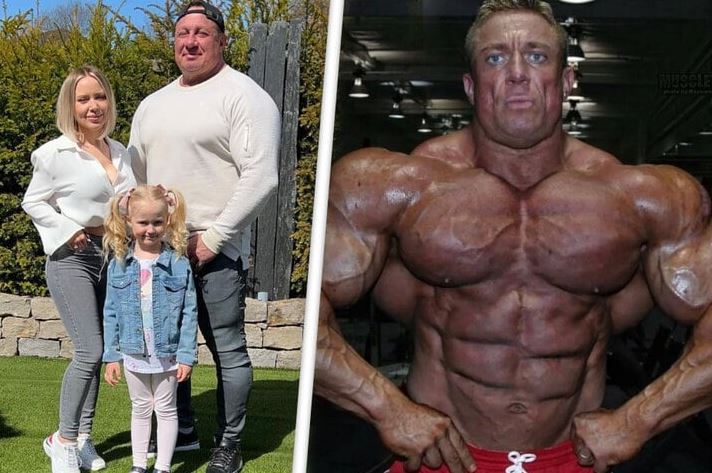
From my perspective as a trainer, Markus’s media presence is as essential as his contest history. By showing personality, humor, and humility, he created a lasting bond with fans that goes far beyond trophies or placings. This is why Markus Rühl continues to be remembered as one of the most iconic figures of the “mass monster” era.
Legacy and Influence
Markus Rühl’s name is forever etched in bodybuilding history as one of the most extreme “mass monsters” to ever step on stage. His combination of jaw-dropping width, gigantic shoulders, and sheer presence made him unforgettable, even in an era filled with legends like Ronnie Coleman and Jay Cutler.
- Redefining Size Standards: Markus pushed the boundaries of what was considered possible in terms of upper-body width and shoulder mass. Fans often joked that he needed custom door frames just to walk through — an exaggeration, but one that captured the freakish scale of his physique.
- Fan Favorite Despite Placings: Though he never won the Mr. Olympia, Markus is remembered far more fondly than many athletes who placed higher. His charisma, humor, and raw mass earned him a cult following that persists to this day.
- Influence on German Bodybuilding: Alongside Günter Schlierkamp, Markus became one of Germany’s most famous bodybuilding exports. His success inspired countless young German athletes to take up the sport, proving that champions could emerge from outside the traditional American scene.
- The “Freak Era” Symbol: Markus represented the early 2000s era, where bigger was better. While his physique wasn’t the most aesthetic or balanced, it embodied the direction bodybuilding was headed — prioritizing size and shock value.
- Modern Perspective: Today, coaches and athletes often look back on Markus’s career as both inspirational and cautionary. Inspirational because he showed what relentless training and eating could achieve; cautionary because his approach pushed the limits of health and sustainability.
As a trainer, I view Markus Rühl’s legacy as twofold: he remains a symbol of raw power and size in bodybuilding, but also a reminder that aesthetics, health, and longevity are just as important as muscle mass. His career proves that fans remember personality and presence just as much as contest results.
Conclusion about “The German Mass Monster”
Markus Rühl will always be remembered as one of the most iconic figures of bodybuilding’s mass monster era. His enormous shoulders, unmatched width, and larger-than-life personality made him unforgettable both on and off the stage. Although he never won a Mr. Olympia title, he carved out a legacy built on fan admiration, incredible mass, and the kind of humor and authenticity that kept him relatable.
From my perspective as a coach, Markus represents the extreme side of bodybuilding — the pursuit of maximum size at any cost. While modern sports science would encourage a more balanced approach, Rühl’s story remains an important chapter in bodybuilding history. He showed that dedication, passion, and the courage to stand out can create a lasting legacy, even without the ultimate title.
How tall is Markus Rühl?
Markus Rühl stands at 5’10” (178 cm), which gave him a powerful frame to carry his massive muscle mass.
What is Markus Rühl’s competition weight?
On stage, Rühl competed around 275–285 lbs (125–130 kg), while his off-season weight often reached over 300 lbs (136+ kg).
Who is Markus Rühl’s wife?
Markus Rühl is married to Simone Rühl, who has often supported his bodybuilding career and business ventures.
Does Markus Rühl have children?
Yes, Markus Rühl and his wife Simone have a daughter, showing his dedication as both a father and professional athlete.
What is Markus Rühl’s net worth?
Estimates place Markus Rühl’s net worth between $1 million and $5 million, earned through bodybuilding, sponsorships, guest appearances, and his supplement company Rühl’s Bestes.
What is Markus Rühl best known for in bodybuilding?
He is widely recognized as one of the ultimate “mass monsters” of the 2000s, famous for his enormous shoulders and chest, as well as his entertaining personality.
What is Markus Rühl’s workout routine like?
Rühl trained with a very high-volume approach, performing 6–8 exercises per session with multiple sets close to failure, focusing on heavy compounds and extreme intensity.
What diet did Markus Rühl follow during his career?
His diet was built around very high protein (meat, eggs, whey shakes), large amounts of carbohydrates (rice, pasta, potatoes), and moderate healthy fats to fuel his massive training sessions.
Has Markus Rühl appeared in films or documentaries?
Yes, Markus Rühl gained popularity in bodybuilding documentaries such as Rühl in Action and Rühl in Action 2, which became cult classics among fans for showing his hardcore training and sense of humor.
What is Markus Rühl doing today?
After retiring from competition, Markus Rühl remains active in the fitness community, running his supplement brand Rühl’s Bestes, attending expos, and sharing content with fans online.
