



Creatine is one of the most researched supplements in sports nutrition, and yet many women are still hesitant to use it. My years of coaching female athletes, combined with my academic background in kinesiology, have demonstrated that creatine is not only safe but also a game-changer for enhancing performance, strength, and body composition.
In this guide, I’ll walk you through the 10 best creatine supplements for women in 2025, explain how to choose the right one, and share insights from both the lab and the gym.
⚡ Quick Summary – Our Top Picks
| Rank | Product | Best For | Highlights |
|---|---|---|---|
| 1 | Optimum Nutrition Micronized Creatine Monohydrate | Overall Best | Pure, lab-tested, affordable |
| 2 | Kaged Creatine HCl | Best for Beginners | Easy digestion, no bloating |
| 3 | Beast Sports Creature | Best Multi-Blend | Multiple creatine types |
| 4 | Naked Creatine | Best Budget | One-ingredient, cheap & effective |
| 5 | Onnit Creatine Monohydrate | Best Transparent Label | Informed-Sport certified |
| 6 | Thorne Creatine | Best for Professional Athletes | NSF-certified, medical-grade |
| 7 | MuscleTech Cell-Tech | Best Creatine + Carbs | Enhanced recovery formula |
| 8 | Bulk Supplements Creatine Monohydrate | Best Value in Bulk | Large bag, lowest cost per serving |
| 9 | Legion Recharge (Creatine + Post-Workout) | Best All-in-One Recovery | Includes creatine, carnitine, and electrolytes |
| 10 | RSP Nutrition Creatine Gummies | Best Fun Option | Easy to take, travel-friendly |
Detailed Reviews: Best Creatine Supplements for Women
When it comes to choosing the best creatine supplements for women in 2025, it’s essential to go beyond flashy marketing and look at what actually works in practice. Every product on this list has been thoroughly examined for quality, effectiveness, and real-world results among female athletes. As a coach and kinesiologist, I’ve added my own perspective to help you understand not just what’s inside the tub, but also how it performs in the gym and supports the unique training needs of women.
Optimum Nutrition Micronized Creatine Monohydrate
A classic that has stood the test of time. Micronized for easier mixing and absorption, this creatine is clean, affordable, and effective. For most women, this is the safest and most reliable starting point.
Pros:Cons:

Women new to creatine or those who want a simple, research-backed product.
Key details: Coach’s Note:Most of my female clients start with this product. If you’re hesitant, remember: 3–5 g daily is all you need. Skip the “loading phase” — consistency is more important.
Kaged Creatine HCl
A hydrochloride form that many find gentler on the stomach, with excellent solubility. Great if you’ve had GI issues with monohydrate.
Pros:Cons:

Beginners worried about bloating or evening trainees who want less GI “heaviness.”
Key details: Coach’s Note:If you’ve dropped monohydrate because of GI discomfort, try HCl before giving creatine up.
Beast Sports Creature
A multi-blend that combines several creatine forms in one scoop. Palatable and easy to stick with if flavor is a big deal.
Pros:Cons:

Lifters who like flavored creatine and the idea of a “complete” blend.
Key details: Coach’s Note:Adherence wins. If flavor keeps you consistent, blends can be worth it even if they’re not “better” than mono on paper.
Naked Creatine (Micronized Monohydrate)
Ultra-simple ingredient list: just micronized creatine monohydrate. A great budget pick in larger bags with a solid reputation for purity claims.
Pros:Cons:
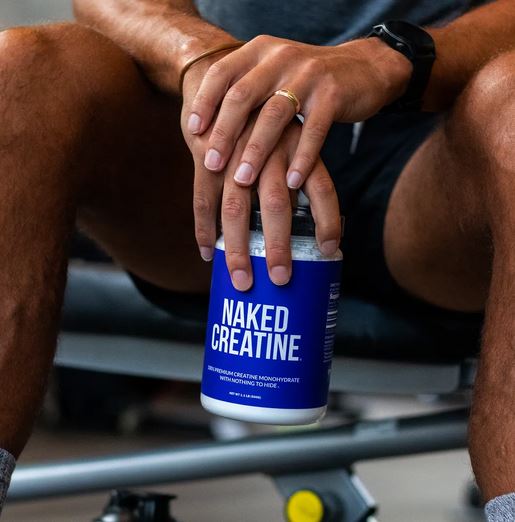
Budget-minded women who want clean labeling and big-bag savings.
Key details: Coach’s Note:For clients who ask “What’s the cleanest, cheapest option that still works?” — this is usually my first suggestion.
Onnit Creatine Monohydrate
Straightforward monohydrate in a smaller, travel-friendly tub. Nice if you like Onnit’s ecosystem and want a tidy, 30-serving format.
Pros:Cons:

Women who prefer reputable “small tub” convenience over bulk bags.
Key details: Coach’s Note:If a small tub helps you actually take it daily, you’ll see better results than a giant bag that sits in the pantry.
Thorne Creatine
Medical-grade reputation and NSF Certified for Sport status make this attractive for tested athletes and pros.
Pros:Cons:

Competitive athletes who need third-party certification for peace of mind and compliance.
Key details: Coach’s Note:When doping control matters, I steer athletes toward NSF/Informed-Sport products to reduce risk.
MuscleTech Cell-Tech
Creatine with a deliberate carb matrix to drive insulin and nutrient uptake — handy for post-workout refueling if you like an all-in-one.
Pros:Cons:
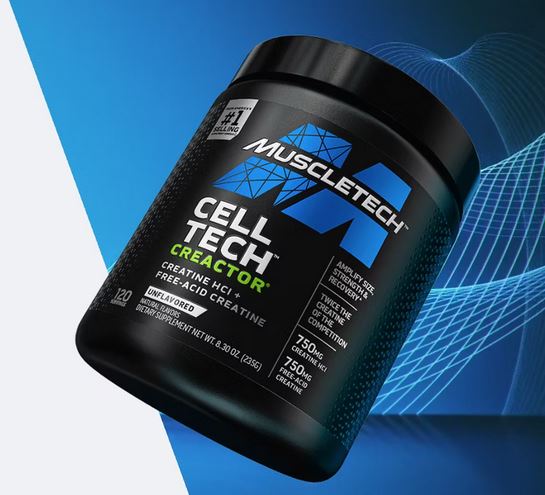
Women training hard in a surplus or high-volume block who want creatine + carbs together.
Key details: Coach’s Note:In a cut, I’d switch to plain mono to control carbs precisely; in a bulk, Cell-Tech can be efficient.
BulkSupplements Creatine Monohydrate (Micronized)
No-frills bulk bags at some of the lowest costs per serving. Great value when you already have a supplement routine dialed in.
Pros:Cons:

Budget-focused lifters or households where multiple people use creatine.
Key details: Coach’s Note:I often set clients up with a kilogram bag and a kitchen scale — cheap, simple, effective.
Legion Recharge (Creatine + Post-Workout)
A post-workout formula that includes creatine monohydrate plus recovery aids (like L-carnitine L-tartrate) and is third-party tested, with fully transparent labeling.
Pros:Cons:

Women who prefer one post-workout scoop for creatine + recovery instead of piecing together multiple products.
Key details: Coach’s Note:When a client struggles with supplement “complexity,” Recharge-style stacks keep adherence high.
Creatine Gummies (Legion Creatine Gummies)
A fun format for travel or “I hate powders,” with 5 g creatine per serving and third-party lab testing published by the brand. Important caution: independent testing has found some gummy brands grossly underdosed — choose rigorously tested options.
Pros:Cons:

Busy athletes who won’t take powders — and who will only buy gummies from brands that publish testing.
Key details: Coach’s Note:If you’re set on gummies, stick to brands that show current third-party results — otherwise, use powder and know you’re getting the dose.
After reviewing these 10 options, it’s clear that the best creatine supplements for women share common traits: purity, consistency, and proven results. The next step is understanding how to choose the one that truly fits your lifestyle and training goals — which is precisely what we’ll cover in the Buyer’s Guide.
📊 Comparison Table — Best Creatine for Women 2025
Choosing the right creatine can feel overwhelming, especially for women who want strength and performance without unnecessary side effects. To simplify the process, I’ve compared the top 10 creatine supplements for 2025 using clear, practical criteria. Each product was evaluated not only for lab-tested quality but also for how it performs in real training settings with female athletes.
Here’s what each scoring category means:
- Effectiveness – How well the product actually delivers the proven benefits of creatine: increased strength, power, recovery, and lean muscle support.
- Mixability & Digestion – How easily the powder dissolves, whether capsules are comfortable to take, and whether the supplement is gentle on digestion (necessary for many women who want to avoid bloating).
- Value – The balance between price and quality, measured by cost per serving and whether the benefits justify the investment.
- Overall Score – A weighted average that combines all criteria into a straightforward rating so you can quickly see which products stand out.
| Product | Effectiveness | Mixability & Digestion | Value | Overall Score |
|---|---|---|---|---|
| Optimum Nutrition Micronized Creatine | 9.5 | 9 | 10 | 9.3 |
| Kaged Creatine HCl | 9 | 9.5 | 7.5 | 8.8 |
| Beast Sports Creature | 8.5 | 8.5 | 7.5 | 8.3 |
| Naked Creatine | 9 | 9 | 9.5 | 8.8 |
| Onnit Creatine | 9 | 9 | 8 | 8.6 |
| Thorne Creatine | 9.5 | 9 | 7.5 | 8.8 |
| MuscleTech Cell-Tech | 9 | 8.5 | 7 | 8.4 |
| BulkSupplements Creatine | 9 | 8.5 | 10 | 8.7 |
| Legion Recharge | 9 | 9 | 7.5 | 8.8 |
| Legion Creatine Gummies | 8.5 | 9 | 7 | 8.6 |
Table 2: Detailed Comparison of the 10 Best Creatine Supplements for Women (2025 Edition)
🛒 Buyer’s Guide: How to Choose the Best Creatine Supplements for Women
Finding the best creatine supplements for women in 2025 is not just about picking the cheapest tub on the shelf. It’s about knowing your training goals, understanding how different forms of creatine work, and choosing a product that fits your lifestyle, health needs, and budget. Over the years, I’ve seen many women become overwhelmed by marketing claims, so here’s a practical guide with the exact questions you should ask yourself before making a purchase.
1. What type of creatine fits my body and goals?
- Monohydrate: The gold standard — cheapest, most researched, and effective for almost everyone.
- HCl: Easier on the stomach, often preferred by women worried about bloating.
- Blends: Attractive on labels but rarely more effective than monohydrate.
- Gummies/Chews: Fun and convenient, but fewer servings for the money.
2. How consistent can I be with daily use?
- Creatine only works if you take it regularly. If you dislike mixing powders, capsules or gummies may help you stay consistent.
3. What’s my budget per month?
- Calculate cost per serving. A tub may look cheap, but it delivers fewer servings than a bulk bag. Budget-friendly doesn’t mean low quality if you choose well-tested monohydrate.
4. Do I care about certifications and testing?
- If you’re an athlete, look for Informed-Sport or NSF Certified labels. Even if you don’t compete, third-party testing means you can trust purity and safety.
5. Am I sensitive to taste, digestion, or additives?
- Some women prefer flavored options to mask the “chalky” taste, while others want plain, additive-free powders.
- If you’ve had stomach discomfort with supplements, consider HCl or micronized monohydrate.
6. Does timing matter for me?
- Science shows timing is less critical than daily consistency. Please select a form that easily integrates into your existing routine (e.g., mix it into a protein shake).
7. Am I buying from a brand I trust?
- Stick with companies that publish lab results or are known for transparency. Avoid “mystery blends” where creatine content isn’t straightforward.
🎓 Coach’s Advice
Bottom line: Before you buy, ask yourself “Will I actually take this product every day, and does it fit my goals and lifestyle?” If the answer is yes, you’ve found the right creatine for you.
Expert Insight: The Female Perspective
As a strength coach and kinesiologist, I’ve worked with many women who were hesitant to try creatine. Most of the resistance comes from long-standing myths and misconceptions that don’t hold up when compared to scientific evidence. Let’s break them down one by one:
- “Creatine makes you bulky.”
False. Creatine draws water into muscle cells, but this is intracellular water — stored inside the muscle fibers — not subcutaneous water that makes you look “puffy.” The result is fuller, stronger muscles, which actually improve body composition and definition. In my experience, women are often pleasantly surprised that creatine gives them a leaner, tighter look rather than bulkiness. - “Creatine is only for men.”
False. Women often stand to benefit even more than men. Studies show that females generally have lower baseline creatine stores, indicating that supplementation can help close this gap and lead to noticeable improvements in strength and endurance. Many of my female clients report faster progress in compound lifts, such as squats and deadlifts, within the first month of consistent use. - “Creatine causes kidney damage.”
False. Extensive research has demonstrated that creatine is safe for healthy individuals, even when used long-term. Kidney concerns often stem from the misinterpretation of blood tests, where creatinine (a breakdown product) is elevated — but that’s a normal outcome of supplementation, not an indicator of kidney harm. For women with no pre-existing kidney issues, creatine remains one of the safest and most effective supplements available. - “Creatine causes bloating.”
Partially true, but misunderstood. Some women may experience mild stomach discomfort or water retention when starting, but this is usually linked to very high “loading doses.” A steady, consistent dose of 3–5 grams daily avoids this issue entirely. Micronized or HCl forms are also easier on digestion. - “Creatine is unnecessary unless you’re a competitive athlete.”
False. Creatine supports everyday performance, not just elite competition. Women who train recreationally, run marathons, or want to preserve lean muscle while dieting can all benefit. There is also emerging evidence that creatine may support cognitive health and energy metabolism, which makes it a wise choice for active women beyond just strength training.
🎓 Coach’s Advice
Coach’s takeaway: Women who overcome these myths and start using creatine almost always see a boost in training performance, recovery, and confidence. If you train consistently and want stronger, leaner results, creatine is one of the most evidence-based tools you can add to your routine.
Conclusion
Creatine is safe, effective, and essential for women serious about strength, performance, and recovery. My top recommendation is Optimum Nutrition Micronized Creatine Monohydrate, due to its balance of price, purity, and reliability.
Whether you’re new to supplements or an advanced athlete, creatine is the one product that consistently delivers results.
Can creatine help women who don’t lift weights but do cardio or HIIT?
Yes. Creatine improves energy availability in all high-intensity activities, not just weightlifting. Women who do sprints, HIIT, or circuit training can benefit from faster recovery and sustained performance.
Is creatine safe for women over 40 or during menopause?
Research shows creatine may actually support bone density and muscle preservation, which become even more important with age. Many women over 40 find creatine useful for maintaining strength and preventing sarcopenia.
Do women need a loading phase with creatine supplements?
No. While some protocols suggest “loading” with 20 g per day for 5–7 days, women achieve the same long-term results by simply taking 3–5 g daily without loading.
Which form of creatine is best for women with sensitive stomachs?
Micronized creatine monohydrate and creatine HCl are usually gentler options. They dissolve better and reduce the chance of bloating or GI discomfort.
Can creatine support fat loss for women who are dieting?
Indirectly, yes. Creatine itself doesn’t burn fat, but it allows you to train harder and preserve muscle while in a calorie deficit, leading to better body composition outcomes.
Should vegetarian or vegan women take creatine supplements?
Absolutely. Since creatine is found mostly in animal foods, vegetarians and vegans typically have lower baseline levels, and supplementation can bring significant performance benefits.
Does creatine affect women’s hormones or menstrual cycles?
Current evidence shows creatine does not negatively affect female hormones or menstrual health. In fact, some research suggests potential benefits for cognitive performance during different phases of the menstrual cycle.
How long does it take for women to notice results from creatine?
Most women report strength and endurance improvements within 3–4 weeks of consistent daily use, though changes in body composition may take longer depending on training and diet.
Is flavored creatine less effective than unflavored versions?
No. Flavoring doesn’t reduce creatine’s effectiveness. The key is ensuring the product clearly lists creatine monohydrate or HCl as the main ingredient without hidden blends.
Can women combine creatine with other supplements like protein or BCAAs?
Yes. Creatine stacks well with protein powders, BCAAs, and pre-workouts. Many women find it easiest to mix creatine directly into their post-workout protein shake.
