

Close Menu
Bodybuilding Wizard

    Subscribe to Updates

    Join our mailing list to receive the latest updates from our team.

    Facebook X (Twitter) Instagram
    Trending
    • Decline Machine Press (Hammer Strength Decline Press): How To, Muscles Worked, Benefits & Alternatives
    • Ring Dips: How To, Muscles Worked, Benefits & Alternatives
    • Reverse-Grip Incline Dumbbell Press: How To, Muscles Worked, Benefits & Alternatives
    • Landmine Chest Press: How To, Muscles Worked, Benefits & Alternatives
    • Reverse-Grip Bench Press: How-To, Muscles Worked, Benefits & Alternatives
    • Dumbbell Squeeze Press (Hex Press): How To, Muscles Worked, Benefits & Alternatives
    • Muscle-Tendon Unit: How Muscles Transfer Force to Bones
    • Anatomical Position and Directional Terms: A Guide for Lifters
    RSS Facebook X (Twitter) LinkedIn YouTube Pinterest Instagram
    Bodybuilding Wizard
    Subscribe Login
    • Home
    • Tools
      • Interactive Muscle Anatomy
      • Interactive Human Skeleton
      • Bodybuilding & Fitness Calculators
      • Dietary & Nutrition Calculators
      • Body Measurement Calculators
      • Fitness Tests
      • Bodybuilding Glossary
      • DIY Projects
    • Training
      • Weight training basics
      • Advanced bodybuilding
      • Strength training for women
      • Workout programs
      • Home weight training programs
      • Cardio workout
      • Exercise equipment
      • Weight training accessories
      • Weight lifting injuries
      • Weight training for sports
    • Exercises
      • Chest exercises
        • Middle chest exercises
        • Upper chest exercises
        • Lower chest exercises
      • Back exercises
        • Middle back (latissimus dorsi)
        • Upper back (trapezius)
        • Lower back (erector spinae)
      • Arm exercises
        • Bicep exercises
        • Tricep exercises
        • Forearm exercises
        • Grip-strengthening exercises
      • Shoulder exercises
        • Front deltoid
        • Side deltoid
        • Rear deltoid
        • Rotator Cuff
        • Scapular & Shoulder Stability
        • Neck strengthening exercises
      • Leg and glute exercises
        • Quadricep exercises
        • Hamstring exercises
        • Calf exercises
        • Glute & Hip exercises
        • Shin exercises
      • Abdominal exercises
        • Upper abdominal exercises
        • Lower abdominal exercise
        • Oblique exercises
      • Core exercises
      • Kettlebell exercises
      • Foam rolling & Stretching
      • Explosive (dynamic) lifts
    • Motivation
      • Greatest physiques
      • Motivation techniques & tips
      • Events and competitions
      • Latest fitness news
      • Videos
        • Funny gym reels
        • Motivational videos
        • Funny workout videos
      • Pictures
      • Quotes
      • Funny Fitness
      • Transformations
    • Diet
      • Nutrition Fundamentals
      • Diet Types & Strategies
      • Foods & Superfoods for Athletes
      • Muscle Building & Performance Nutrition
      • Weight Loss & Fat Management
      • Food Psychology & Myths
      • Recipes & Meal Ideas
    • Supplements
      • Supplements Review
      • Muscle Building Supplements
      • Anabolic Steroids
      • Fat Burners & Weight Loss
      • Pre-Workout & Energy Boosters
      • Recovery & Sleep Aids
      • Cognitive & Nootropic Support
      • General Supplement Advice
      • Health Supplements
        • Joint & Bone Support
        • Gut Health & Digestion
        • Vitamins & Minerals
        • Superfoods & Greens
      • Steroid Alternatives
    • Anatomy
      • Upper-Body Muscles
      • Lower-Body Muscles
      • Bones & Skeletal Anatomy
      • Muscle Growth & Genetics
      • Joints, Tendons & Connective Tissue
      • Hormones & Endocrine System
      • Physiology & Body Systems
      • Body Composition & Fat
      • General Anatomy & Basics
    • Health
    Bodybuilding Wizard
    You are at:Home»Exercises»Back exercises»Middle back (latissimus dorsi)»Machine Pullover: Proper Form, Muscles Worked, Benefits & Lat Activation Guide
    Middle back (latissimus dorsi)

    Machine Pullover: Proper Form, Muscles Worked, Benefits & Lat Activation Guide

    No Comments7 Mins ReadkrunoslavBy krunoslavFebruary 26, 2026Updated:April 9, 2026
    machine pullover exercise guide
    Share
    Facebook Twitter Pinterest LinkedIn Email Tumblr WhatsApp Telegram
    Table of Contents
    • Introduction
    • Required Equipment
    • Other Names for Machine Pullover
    • How to Perform the Machine Pullover
    • Quick Form Checklist
    • Mechanical Resistance Analysis
    • Technical Emphasis & Targeting Adjustments
    • Common Mistakes
    • Muscles Involved in Machine Pullovers
    • Machine Pullover Pros and Cons
    • Machine Pullover vs Dumbbell Pullover
    • Replacement Exercises/Substitutes
    • Where This Exercise Fits in a Workout
    • Programming Recommendations
    • Conclusion

    Introduction

    The machine pullover is a highly effective isolation exercise that primarily targets the latissimus dorsi, though it also engages the chest muscles depending on torso angle and shoulder mechanics. While often categorized strictly as a back movement, it shares biomechanical similarities with the dumbbell pullover and can also stimulate the lats and pectoralis major.

    Unlike free-weight variations, the machine pullover provides a guided resistance path, reduced stabilization demand, and more consistent tension across the range of motion. This makes it particularly valuable for hypertrophy-focused training and safer progression.

    When programmed correctly, it serves as a powerful accessory lift to build back thickness and improve shoulder extension strength.

    Definition — Machine Pullover

    The machine pullover is a shoulder extension isolation exercise performed on a guided resistance machine, primarily targeting the latissimus dorsi while secondarily engaging the pectoralis major and triceps long head through a controlled arc of motion.

    EXERCISE PROFILE
    Primary Muscles:
    Latissimus dorsi
    Secondary Muscles:
    Pectoralis major, triceps (long head), serratus anterior
    Exercise Type:
    Isolation / Machine-based
    Equipment Required:
    Plate-loaded or selectorized pullover machine
    Mechanics:
    Single-joint (shoulder)
    Force Type:
    Shoulder extension
    Resistance Curve:
    Machine-guided (more consistent tension)
    Stability Demand:
    Low to moderate
    Experience Level:
    Beginner to advanced
    Best Rep Range:
    8–15 reps
    Training Focus:
    Lat isolation & stretch tension
    Grip Type:
    Neutral / Machine handles

    Required Equipment

    • Pullover machine (plate-loaded or weight stack)
    • Adjustable seat or chest pad

    Other Names for Machine Pullover

    The machine pullover may appear under different brand names depending on the manufacturer, but the underlying shoulder extension mechanics remain the same. Understanding these naming variations helps avoid confusion when training in different gyms.

    • Nautilus Pullover
    • Hammer Strength Pullover
    • Selectorized Pullover Machine
    • Plate-Loaded Pullover

    How to Perform the Machine Pullover

    Because the machine guides the movement path, many lifters underestimate the importance of technique. However, correct setup and controlled execution are essential to maximize lat engagement and minimize shoulder strain.

    Starting Position (Setup)

    • Adjust seat height so elbows align with the machine axis.
    • Sit with your back firmly against the pad.
    • Place forearms or hands against the machine levers.
    • Keep chest up and core braced.
    • Slight bend in elbows maintained.

    Key principle: The movement should originate from the shoulder joint, not the elbow flexion.

    machine pullover for latissimus dorsi

    Execution Phase

    • Pull the handles downward in an arc using shoulder extension.
    • Keep elbows slightly bent and fixed.
    • Squeeze lats at the bottom position.
    • Return slowly to the stretched position.
    • Avoid jerking or bouncing.

    Quick Form Checklist

    Even small technical errors can shift stress away from the lats and toward the shoulders or triceps. Use this checklist to ensure every repetition remains precise and mechanically sound.

    • Back supported against the pad
    • Neutral spine
    • Elbow angle fixed
    • Controlled eccentric
    • Full stretch without shoulder pain
    • Strong lat contraction at the bottom
    • No momentum
    • Core braced
    • Smooth arc motion
    • No shrugging

    Mechanical Resistance Analysis

    Unlike dumbbell pullovers, the machine version provides more consistent tension across the range of motion. Many modern pullover machines are cam-based, meaning resistance changes dynamically to match strength curves.

    This reduces tension drop-off at the top and improves contraction quality at peak shoulder extension. It also decreases anterior shoulder stress compared to free weights.

    Technical Emphasis & Targeting Adjustments

    Subtle adjustments in elbow path and torso position can slightly alter muscle recruitment. These refinements allow you to emphasize specific regions of the lats without changing the overall movement pattern.

    • Lower elbow path → more lower-lat emphasis
    • Higher arc trajectory → slightly more chest contribution
    • Slower eccentric → increased stretch stimulus
    • Full scapular depression at the bottom → stronger lat engagement

    Common Mistakes

    • Turning it into a triceps extension
    • Lifting hips off the seat
    • Excessive shoulder elevation
    • Partial range of motion
    • Using excessive weight

    Muscles Involved in Machine Pullovers

    Main Muscles

    • Latissimus dorsi

    Secondary Muscles

    • Pectoralis major
    • Triceps long head
    • Serratus anterior
    • Teres major

    Stabilizers

    • Core musculature
    • Scapular stabilizers

    Machine Pullover Pros and Cons

    Advantages

    • More controlled resistance curve. The guided path reduces instability and improves contraction quality.
    • Safer for the shoulders. Compared to dumbbell variations, joint stress is typically lower.
    • Excellent for hypertrophy. Consistent tension enhances muscle stimulus.
    • Reduced lumbar strain. Back support decreases spinal loading.

    Potential Drawbacks

    • Less stabilization demand. Does not train the core like free-weight versions.
    • Machine-dependent setup. Different brands vary in feel and resistance curve.
    • Limited athletic carryover. Not a functional movement pattern.

    Machine Pullover vs Dumbbell Pullover

    CriteriaMachine PulloverDumbbell Pullover
    StabilityGuidedFree-weight
    Shoulder StressLowerHigher
    TensionConsistentDrops at the top
    Core DemandLowModerate
    Best UseHypertrophyLoaded stretch

    Conclusion: The machine version is superior for controlled hypertrophy and shoulder safety, while the dumbbell pullover provides a stronger stretch stimulus.

    Replacement Exercises/Substitutes

    If the machine is unavailable:

    Straight-Arm Lat Pulldown

    A cable-based shoulder extension movement that provides constant tension throughout the entire range of motion. It is one of the closest biomechanical alternatives to the machine pullover and is excellent for controlled lat isolation with reduced shoulder stress.

    Straight-Arm Lat Pull-Down Exercise
    Straight-Arm Lat Pull-Down Exercise

    Dumbbell Pullover

    A free-weight variation emphasizing a loaded stretch of the lats. While tension drops at the top position due to gravity, it offers a unique stretch stimulus that can complement heavier compound pulling exercises.

    Dumbbell Pullover Across A Flat Bench
    Dumbbell Pullover Across A Flat Bench

    Barbell Pullover

    Allows slightly greater loading potential than the dumbbell version but requires more shoulder mobility and control. Because both hands are fixed on a straight bar, shoulder positioning is less adjustable, which may increase joint stress if the range is excessive.

    ez-bar pullover for chest

    Plate Pullover

    Performed by holding a weight plate instead of a dumbbell. It simplifies grip mechanics and often feels more stable for beginners. Resistance mechanics remain similar to the dumbbell version, with emphasis on the stretch portion of the movement.

    weight plate pullover variation

    Wide-Grip Lat Pulldown

    A vertical pulling movement that emphasizes lat width rather than pure shoulder extension. Although not identical biomechanically, it remains an effective alternative for overall lat development when isolation machines are unavailable.
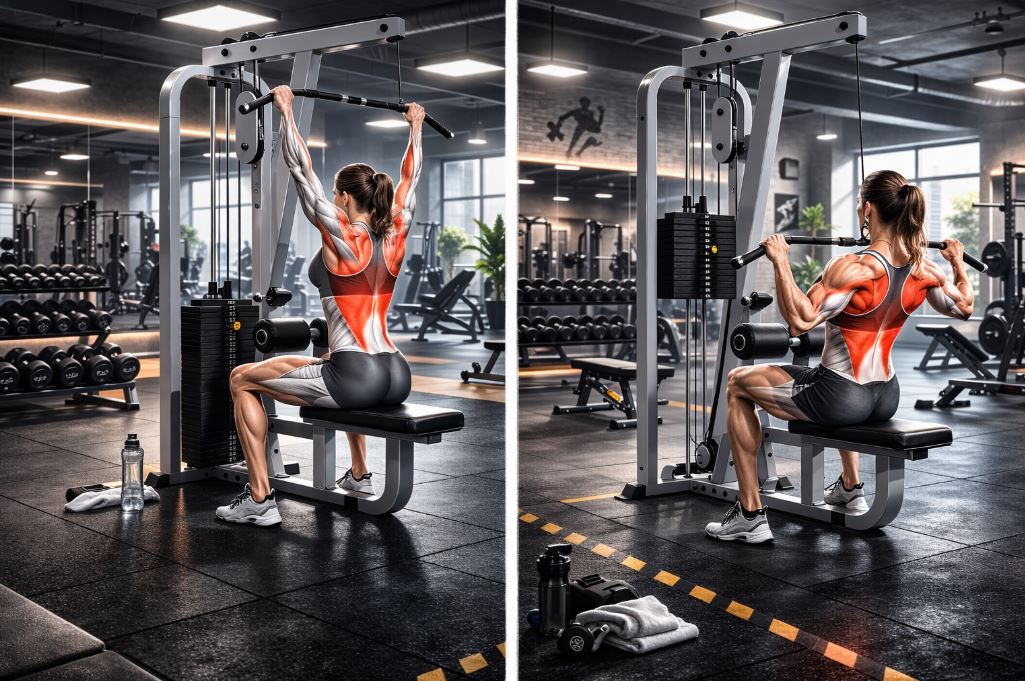
    wide-grip lat pulldown benefits
    Wide Grip Lat Pulldown Exercise

    Assisted Pull-Ups

    A machine-assisted bodyweight vertical pull that reduces load while maintaining compound pulling mechanics. While it involves elbow flexion, it effectively trains the lats and can replace isolation work when equipment options are limited.
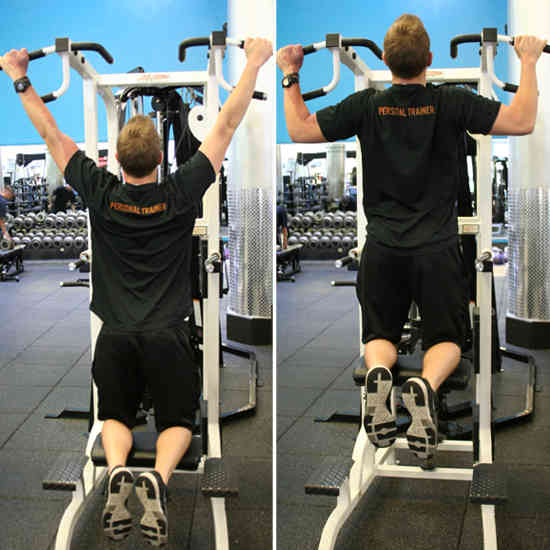
    Assisted Pull-Ups

    Where This Exercise Fits in a Workout

    • After heavy rows or pull-ups
    • As hypertrophy accessory
    • During the back specialization phases
    • Not ideal as the first compound lift

    Programming Recommendations

    The effectiveness of this movement depends on load selection, repetition range, and tempo control. Strategic programming ensures it complements, rather than replaces, heavier compound lifts.

    • 2–4 sets
    • 8–15 reps
    • Controlled 2–3 second eccentric
    • Moderate load
    • Avoid ego loading

    Conclusion

    The machine pullover is one of the most effective isolation exercises for targeting the latissimus dorsi with consistent, guided tension. While it may resemble chest movements biomechanically, its primary role is to develop the lat through controlled shoulder extension.

    When integrated strategically into a back training program, it enhances hypertrophy without excessive spinal stress — making it a valuable addition for both beginners and advanced lifters.

    ✅ Key Takeaways — Machine Pullover
    • Machine pullover primarily trains the latissimus dorsi through shoulder extension.
    • It provides more consistent tension across the range of motion than most dumbbell pullover variations.
    • Compared to free weights, it typically reduces shoulder and lumbar stress thanks to guided resistance and support.
    • It works best as a hypertrophy accessory movement after heavier compound pulls (rows or pull-ups).
    • Proper setup (seat height, elbow path, controlled range) determines how well you actually hit the lats.

    What muscles does the machine pullover work the most?

    The machine pullover primarily targets the latissimus dorsi, making it one of the most effective isolation exercises for shoulder extension. Secondary involvement includes the pectoralis major, triceps long head, serratus anterior, and teres major. The movement emphasizes lat contraction with minimal elbow flexion.

    Is the machine pullover a back or chest exercise?

    Although it may feel similar to certain chest movements, the machine pullover is primarily a back exercise. The dominant joint action is shoulder extension, which is controlled mainly by the latissimus dorsi. Chest activation varies depending on torso position and machine design but is not the primary driver.

    Is the machine pullover better than the dumbbell pullover?

    The machine pullover provides more consistent tension throughout the range of motion and generally places less stress on the shoulder joint. The dumbbell pullover offers a greater loaded stretch but has a tension drop-off at the top. For controlled hypertrophy and joint safety, the machine version is often superior.

    Does the machine pullover build back thickness or width?

    The machine pullover contributes more to lat development and back density than width. While it trains the lats effectively, vertical pulling movements such as wide-grip pull-ups and lat pulldowns are more effective for maximizing back width.

    Is the machine pullover safe for the shoulders?

    When performed with proper seat adjustment and controlled range, the machine pullover is generally safer than free-weight pullovers. The guided resistance reduces unwanted shoulder drift and minimizes anterior capsule stress, especially compared to deep dumbbell stretch positions.

    Should I keep my elbows straight during machine pullovers?

    Your elbows should remain slightly bent but fixed throughout the movement. Excessive elbow flexion turns the exercise into a triceps extension and reduces lat activation. The motion should originate at the shoulder joint, not the elbow.

    Where should machine pullovers be placed in a workout?

    Machine pullovers work best after compound pulling exercises such as rows or pull-ups. They are ideal as a hypertrophy-focused accessory movement and should not replace primary compound lifts in a back training program.

    Can beginners use the machine pullover?

    Yes. Because the machine provides back support and a guided path, it is suitable for beginners learning how to activate their lats. However, proper setup and seat alignment are essential to ensure correct shoulder mechanics.

    How heavy should I go on machine pullovers?

    The optimal range for hypertrophy is typically 8–15 controlled repetitions. Excessive loading often leads to reduced range of motion or compensatory movements. Focus on smooth contraction and full stretch rather than maximal weight.

    What is the main advantage of the machine pullover compared to rows?

    The machine pullover isolates the lats without requiring significant spinal stabilization or elbow flexion. Unlike rows, which involve multiple joints and heavy core activation, the machine pullover provides targeted shoulder extension with reduced systemic fatigue.

    Share. Facebook Twitter Pinterest LinkedIn Tumblr Email WhatsApp
    krunoslav
    • X (Twitter)

    Hey! My name is Kruno, and I'm the owner and author of Bodybuilding Wizard. I am a licensed fitness trainer with a Ph.D. in kinesiology. Throughout my career, I have dedicated myself to helping individuals achieve their health and fitness goals through personalized training programs. In addition to my academic qualifications, I have completed various specialized courses, including certifications in nutrition and strength training, which have further enhanced my ability to provide comprehensive fitness guidance. I started this website back in late 2014, and it has been my pet project ever since. My goal is to help you learn proper weight training and nutrition principles so that you can get strong and build the physique of your dreams!

    Related Posts

    Kneeling Lat Prayer Pulldown: Proper Form, Muscles Worked, Benefits & Alternatives

    Single-Arm Lat Pulldown: Proper Form, Muscles Worked, Benefits & Alternatives

    Yates Row: How to Do It, Muscles Worked, Benefits & Alternatives

    Leave A Reply Cancel Reply

    You must be logged in to post a comment.

    WE ARE SOCIAL
    • Facebook 3.6K
    • Twitter
    • YouTube 134
    • Instagram
    RECENT POSTS
    October 10, 2026

    Decline Machine Press (Hammer Strength Decline Press): How To, Muscles Worked, Benefits & Alternatives

    October 10, 2026

    Ring Dips: How To, Muscles Worked, Benefits & Alternatives

    October 6, 2026

    Reverse-Grip Incline Dumbbell Press: How To, Muscles Worked, Benefits & Alternatives

    October 4, 2026

    Landmine Chest Press: How To, Muscles Worked, Benefits & Alternatives

    October 3, 2026

    Reverse-Grip Bench Press: How-To, Muscles Worked, Benefits & Alternatives

    RECENT COMMENTS
    • Justin Dew on Designing your own home gym
    • krunoslav on How Skeletal Muscles Are Named: A Simple Guide to Muscle Names
    • Christina on How Skeletal Muscles Are Named: A Simple Guide to Muscle Names
    • igtropin on Stiff-Leg Deadlift: Proper Form, Muscles Worked & Hamstring Growth Guide
    • teragon labs on Barbell Back Squat: Proper Form, Benefits, Muscles Worked & Expert Tips
    LATEST GALLERIES

    Subscribe to Updates

    Join our mailing list to receive the latest updates from our team.

    ABOUT
    ABOUT

    We are a group of bodybuilding enthusiasts and this is our effort to have all the details about bodybuilding on a single website. We strive to educate and inform our visitors so that they can make the correct training, nutrition, and supplement decisions on their own. Bodybuilding Wizard will make your dream body your reality and take you to a whole new level!

    POPULAR POSTS
    April 2, 2014

    Lying Leg Curl: Complete Guide to Hamstring Isolation, Strength & Muscle Growth

    February 18, 2019

    How Skeletal Muscles Are Named: A Simple Guide to Muscle Names

    March 28, 2014

    Free weights: The main tool for building muscles

    BODYBUILDING WIZARD
    Bodybuilding Wizard Footer Logo
    Facebook X (Twitter) Instagram Pinterest YouTube
    • About
    • Authors
    • Editorial Policy
    • Write for us
    • Privacy
    • Contact
    • Terms of Use
    • Advertising
    • FAQ
    Copyright © 2014-2026 BodybuildingWizard. All rights reserved. Powered by WordPress. Made with love and lots of caffeine.

    Type above and press Enter to search. Press Esc to cancel.

    Sign In or Register

    Welcome Back!

    Login to your account below.

    Lost password?