



Introduction
The machine pullover is a highly effective isolation exercise that primarily targets the latissimus dorsi, though it also engages the chest muscles depending on torso angle and shoulder mechanics. While often categorized strictly as a back movement, it shares biomechanical similarities with the dumbbell pullover and can also stimulate the lats and pectoralis major.
Unlike free-weight variations, the machine pullover provides a guided resistance path, reduced stabilization demand, and more consistent tension across the range of motion. This makes it particularly valuable for hypertrophy-focused training and safer progression.
When programmed correctly, it serves as a powerful accessory lift to build back thickness and improve shoulder extension strength.
Required Equipment
- Pullover machine (plate-loaded or weight stack)
- Adjustable seat or chest pad
Other Names for Machine Pullover
The machine pullover may appear under different brand names depending on the manufacturer, but the underlying shoulder extension mechanics remain the same. Understanding these naming variations helps avoid confusion when training in different gyms.
- Nautilus Pullover
- Hammer Strength Pullover
- Selectorized Pullover Machine
- Plate-Loaded Pullover
How to Perform the Machine Pullover
Because the machine guides the movement path, many lifters underestimate the importance of technique. However, correct setup and controlled execution are essential to maximize lat engagement and minimize shoulder strain.
Starting Position (Setup)
- Adjust seat height so elbows align with the machine axis.
- Sit with your back firmly against the pad.
- Place forearms or hands against the machine levers.
- Keep chest up and core braced.
- Slight bend in elbows maintained.
Key principle: The movement should originate from the shoulder joint, not the elbow flexion.

Execution Phase
- Pull the handles downward in an arc using shoulder extension.
- Keep elbows slightly bent and fixed.
- Squeeze lats at the bottom position.
- Return slowly to the stretched position.
- Avoid jerking or bouncing.
Quick Form Checklist
Even small technical errors can shift stress away from the lats and toward the shoulders or triceps. Use this checklist to ensure every repetition remains precise and mechanically sound.
- Back supported against the pad
- Neutral spine
- Elbow angle fixed
- Controlled eccentric
- Full stretch without shoulder pain
- Strong lat contraction at the bottom
- No momentum
- Core braced
- Smooth arc motion
- No shrugging
Mechanical Resistance Analysis
Unlike dumbbell pullovers, the machine version provides more consistent tension across the range of motion. Many modern pullover machines are cam-based, meaning resistance changes dynamically to match strength curves.
This reduces tension drop-off at the top and improves contraction quality at peak shoulder extension. It also decreases anterior shoulder stress compared to free weights.
Technical Emphasis & Targeting Adjustments
Subtle adjustments in elbow path and torso position can slightly alter muscle recruitment. These refinements allow you to emphasize specific regions of the lats without changing the overall movement pattern.
- Lower elbow path → more lower-lat emphasis
- Higher arc trajectory → slightly more chest contribution
- Slower eccentric → increased stretch stimulus
- Full scapular depression at the bottom → stronger lat engagement
Common Mistakes
- Turning it into a triceps extension
- Lifting hips off the seat
- Excessive shoulder elevation
- Partial range of motion
- Using excessive weight
Muscles Involved in Machine Pullovers
Main Muscles
Secondary Muscles
Stabilizers
- Core musculature
- Scapular stabilizers
Machine Pullover Pros and Cons
Advantages
- More controlled resistance curve. The guided path reduces instability and improves contraction quality.
- Safer for the shoulders. Compared to dumbbell variations, joint stress is typically lower.
- Excellent for hypertrophy. Consistent tension enhances muscle stimulus.
- Reduced lumbar strain. Back support decreases spinal loading.
Potential Drawbacks
- Less stabilization demand. Does not train the core like free-weight versions.
- Machine-dependent setup. Different brands vary in feel and resistance curve.
- Limited athletic carryover. Not a functional movement pattern.
Machine Pullover vs Dumbbell Pullover
| Criteria | Machine Pullover | Dumbbell Pullover |
|---|---|---|
| Stability | Guided | Free-weight |
| Shoulder Stress | Lower | Higher |
| Tension | Consistent | Drops at the top |
| Core Demand | Low | Moderate |
| Best Use | Hypertrophy | Loaded stretch |
Conclusion: The machine version is superior for controlled hypertrophy and shoulder safety, while the dumbbell pullover provides a stronger stretch stimulus.
Replacement Exercises/Substitutes
If the machine is unavailable:
Straight-Arm Lat Pulldown
A cable-based shoulder extension movement that provides constant tension throughout the entire range of motion. It is one of the closest biomechanical alternatives to the machine pullover and is excellent for controlled lat isolation with reduced shoulder stress.

Dumbbell Pullover
A free-weight variation emphasizing a loaded stretch of the lats. While tension drops at the top position due to gravity, it offers a unique stretch stimulus that can complement heavier compound pulling exercises.

Barbell Pullover
Allows slightly greater loading potential than the dumbbell version but requires more shoulder mobility and control. Because both hands are fixed on a straight bar, shoulder positioning is less adjustable, which may increase joint stress if the range is excessive.

Plate Pullover
Performed by holding a weight plate instead of a dumbbell. It simplifies grip mechanics and often feels more stable for beginners. Resistance mechanics remain similar to the dumbbell version, with emphasis on the stretch portion of the movement.

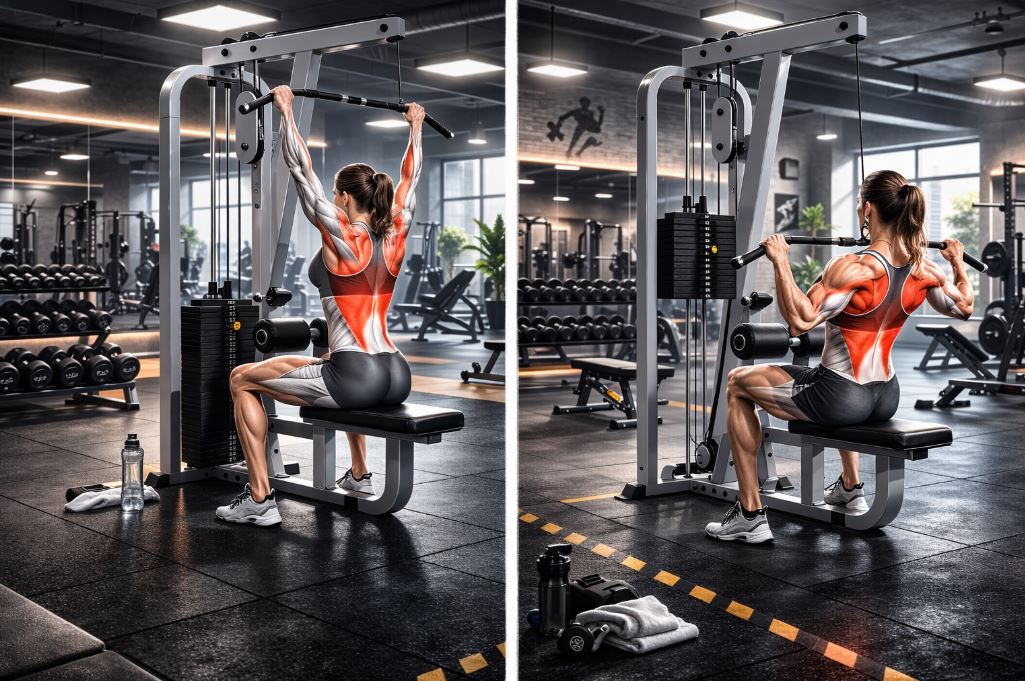
Wide-Grip Lat Pulldown
A vertical pulling movement that emphasizes lat width rather than pure shoulder extension. Although not identical biomechanically, it remains an effective alternative for overall lat development when isolation machines are unavailable.
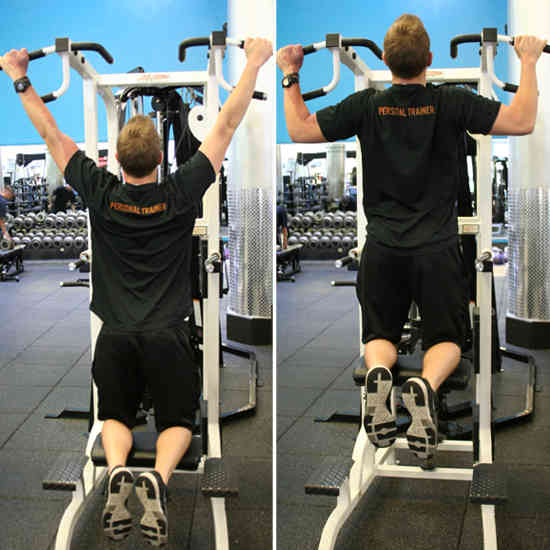
Assisted Pull-Ups
A machine-assisted bodyweight vertical pull that reduces load while maintaining compound pulling mechanics. While it involves elbow flexion, it effectively trains the lats and can replace isolation work when equipment options are limited.
Where This Exercise Fits in a Workout
- After heavy rows or pull-ups
- As hypertrophy accessory
- During the back specialization phases
- Not ideal as the first compound lift
Programming Recommendations
The effectiveness of this movement depends on load selection, repetition range, and tempo control. Strategic programming ensures it complements, rather than replaces, heavier compound lifts.
- 2–4 sets
- 8–15 reps
- Controlled 2–3 second eccentric
- Moderate load
- Avoid ego loading
Conclusion
The machine pullover is one of the most effective isolation exercises for targeting the latissimus dorsi with consistent, guided tension. While it may resemble chest movements biomechanically, its primary role is to develop the lat through controlled shoulder extension.
When integrated strategically into a back training program, it enhances hypertrophy without excessive spinal stress — making it a valuable addition for both beginners and advanced lifters.
What muscles does the machine pullover work the most?
The machine pullover primarily targets the latissimus dorsi, making it one of the most effective isolation exercises for shoulder extension. Secondary involvement includes the pectoralis major, triceps long head, serratus anterior, and teres major. The movement emphasizes lat contraction with minimal elbow flexion.
Is the machine pullover a back or chest exercise?
Although it may feel similar to certain chest movements, the machine pullover is primarily a back exercise. The dominant joint action is shoulder extension, which is controlled mainly by the latissimus dorsi. Chest activation varies depending on torso position and machine design but is not the primary driver.
Is the machine pullover better than the dumbbell pullover?
The machine pullover provides more consistent tension throughout the range of motion and generally places less stress on the shoulder joint. The dumbbell pullover offers a greater loaded stretch but has a tension drop-off at the top. For controlled hypertrophy and joint safety, the machine version is often superior.
Does the machine pullover build back thickness or width?
The machine pullover contributes more to lat development and back density than width. While it trains the lats effectively, vertical pulling movements such as wide-grip pull-ups and lat pulldowns are more effective for maximizing back width.
Is the machine pullover safe for the shoulders?
When performed with proper seat adjustment and controlled range, the machine pullover is generally safer than free-weight pullovers. The guided resistance reduces unwanted shoulder drift and minimizes anterior capsule stress, especially compared to deep dumbbell stretch positions.
Should I keep my elbows straight during machine pullovers?
Your elbows should remain slightly bent but fixed throughout the movement. Excessive elbow flexion turns the exercise into a triceps extension and reduces lat activation. The motion should originate at the shoulder joint, not the elbow.
Where should machine pullovers be placed in a workout?
Machine pullovers work best after compound pulling exercises such as rows or pull-ups. They are ideal as a hypertrophy-focused accessory movement and should not replace primary compound lifts in a back training program.
Can beginners use the machine pullover?
Yes. Because the machine provides back support and a guided path, it is suitable for beginners learning how to activate their lats. However, proper setup and seat alignment are essential to ensure correct shoulder mechanics.
How heavy should I go on machine pullovers?
The optimal range for hypertrophy is typically 8–15 controlled repetitions. Excessive loading often leads to reduced range of motion or compensatory movements. Focus on smooth contraction and full stretch rather than maximal weight.
What is the main advantage of the machine pullover compared to rows?
The machine pullover isolates the lats without requiring significant spinal stabilization or elbow flexion. Unlike rows, which involve multiple joints and heavy core activation, the machine pullover provides targeted shoulder extension with reduced systemic fatigue.
