Close Menu
Bodybuilding Wizard

    Subscribe to Updates

    Join our mailing list to receive the latest updates from our team.

    Facebook X (Twitter) Instagram
    Trending
    • Decline Machine Press (Hammer Strength Decline Press): How To, Muscles Worked, Benefits & Alternatives
    • Ring Dips: How To, Muscles Worked, Benefits & Alternatives
    • Reverse-Grip Incline Dumbbell Press: How To, Muscles Worked, Benefits & Alternatives
    • Landmine Chest Press: How To, Muscles Worked, Benefits & Alternatives
    • Reverse-Grip Bench Press: How-To, Muscles Worked, Benefits & Alternatives
    • Dumbbell Squeeze Press (Hex Press): How To, Muscles Worked, Benefits & Alternatives
    • Muscle-Tendon Unit: How Muscles Transfer Force to Bones
    • Anatomical Position and Directional Terms: A Guide for Lifters
    RSS Facebook X (Twitter) LinkedIn YouTube Pinterest Instagram
    Bodybuilding Wizard
    Subscribe Login
    • Home
    • Tools
      • Interactive Muscle Anatomy
      • Interactive Human Skeleton
      • Bodybuilding & Fitness Calculators
      • Dietary & Nutrition Calculators
      • Body Measurement Calculators
      • Fitness Tests
      • Bodybuilding Glossary
      • DIY Projects
    • Training
      • Weight training basics
      • Advanced bodybuilding
      • Strength training for women
      • Workout programs
      • Home weight training programs
      • Cardio workout
      • Exercise equipment
      • Weight training accessories
      • Weight lifting injuries
      • Weight training for sports
    • Exercises
      • Chest exercises
        • Middle chest exercises
        • Upper chest exercises
        • Lower chest exercises
      • Back exercises
        • Middle back (latissimus dorsi)
        • Upper back (trapezius)
        • Lower back (erector spinae)
      • Arm exercises
        • Bicep exercises
        • Tricep exercises
        • Forearm exercises
        • Grip-strengthening exercises
      • Shoulder exercises
        • Front deltoid
        • Side deltoid
        • Rear deltoid
        • Rotator Cuff
        • Scapular & Shoulder Stability
        • Neck strengthening exercises
      • Leg and glute exercises
        • Quadricep exercises
        • Hamstring exercises
        • Calf exercises
        • Glute & Hip exercises
        • Shin exercises
      • Abdominal exercises
        • Upper abdominal exercises
        • Lower abdominal exercise
        • Oblique exercises
      • Core exercises
      • Kettlebell exercises
      • Foam rolling & Stretching
      • Explosive (dynamic) lifts
    • Motivation
      • Greatest physiques
      • Motivation techniques & tips
      • Events and competitions
      • Latest fitness news
      • Videos
        • Funny gym reels
        • Motivational videos
        • Funny workout videos
      • Pictures
      • Quotes
      • Funny Fitness
      • Transformations
    • Diet
      • Nutrition Fundamentals
      • Diet Types & Strategies
      • Foods & Superfoods for Athletes
      • Muscle Building & Performance Nutrition
      • Weight Loss & Fat Management
      • Food Psychology & Myths
      • Recipes & Meal Ideas
    • Supplements
      • Supplements Review
      • Muscle Building Supplements
      • Anabolic Steroids
      • Fat Burners & Weight Loss
      • Pre-Workout & Energy Boosters
      • Recovery & Sleep Aids
      • Cognitive & Nootropic Support
      • General Supplement Advice
      • Health Supplements
        • Joint & Bone Support
        • Gut Health & Digestion
        • Vitamins & Minerals
        • Superfoods & Greens
      • Steroid Alternatives
    • Anatomy
      • Upper-Body Muscles
      • Lower-Body Muscles
      • Bones & Skeletal Anatomy
      • Muscle Growth & Genetics
      • Joints, Tendons & Connective Tissue
      • Hormones & Endocrine System
      • Physiology & Body Systems
      • Body Composition & Fat
      • General Anatomy & Basics
    • Health
    Bodybuilding Wizard
    You are at:Home»Exercises»Shoulder exercises»Rotator Cuff»Empty Can Exercise: Proper Form, Muscles Worked & Shoulder Safety
    Rotator Cuff

    Empty Can Exercise: Proper Form, Muscles Worked & Shoulder Safety

    No Comments16 Mins ReadkrunoslavBy krunoslavApril 5, 2015Updated:April 16, 2026
    Empty-Can Exercise
    Empty-Can Exercise
    Share
    Facebook Twitter Pinterest LinkedIn Email Tumblr WhatsApp Telegram
    Table of Contents
    • Overview (Why This Exercise Exists)
    • Equipment Needed
    • Step-by-Step Instructions for the Empty Can Exercise
    • Resistance Curve Insight
    • Muscles Worked in the Empty Can Exercise
    • Performance Tips (Coach's Cues)
    • Common Mistakes
    • Video Demonstration – Proper Empty Can Exercise Technique
    • Exercise Variations & Alternatives for the Empty Can Exercise
    • Key Benefits of the Empty Can Exercise
    • Who Should Use This Exercise?
    • Empty Can vs Full Can Exercise
    • Where This Exercise Fits in a Workout
    • Conclusion

    Overview (Why This Exercise Exists)

    The empty can exercise is a classic rotator cuff movement that targets the supraspinatus, one of the most important and commonly injured muscles in the shoulder. It is performed by raising the arms in the scapular plane while internally rotating the shoulders, mimicking the motion of pouring liquid out of a can.

    This exercise has been widely used in both rehabilitation and strength training settings because of its ability to isolate the supraspinatus and improve shoulder stability. The movement places the arm in a position where the rotator cuff must actively stabilize the humeral head, making it useful for developing control and coordination.

    However, the empty can position (thumbs pointing downward) also has important considerations. Internally rotating the shoulder while lifting the arm can reduce the subacromial space in some individuals, potentially increasing stress on the shoulder structures. For this reason, many modern training approaches compare it with the “full can” variation (thumbs up), which may be more joint-friendly.

    As a coach working with lifters and athletes, I view the empty can exercise as a situational tool rather than a universal recommendation. When performed with light weight, proper control, and appropriate range of motion, it can be effective for targeting the supraspinatus—but it should always be used with awareness of individual shoulder mechanics.

    EXERCISE PROFILE
    Primary Muscles:
    Supraspinatus
    Secondary Muscles:
    Middle deltoid, anterior deltoid
    Exercise Type:
    Stability / Isolation
    Equipment Required:
    Dumbbells
    Mechanics:
    Isolation
    Force Type:
    Pull (shoulder elevation in scapular plane)
    Resistance Curve:
    Increasing toward the top
    Stability Demand:
    Moderate
    Experience Level:
    Beginner to advanced
    Best Rep Range:
    12–20 reps
    Training Focus:
    Supraspinatus activation and shoulder stability
    Grip Type:
    Pronated (thumbs down)

    Equipment Needed

    The empty can exercise requires very minimal equipment, but proper weight selection and control are critical for safety and effectiveness. Because this movement places the shoulder in a potentially sensitive position, using the right setup is more important than adding resistance.

    Required equipment:

    • Light dumbbells (very light weight is essential)

    Optional (recommended):

    • Mirror (to monitor arm angle and control)
    • Bench (optional support for beginners)

    Because this exercise targets the supraspinatus—a small and often vulnerable muscle—using heavy weights is not only unnecessary but can also increase the risk of improper movement and shoulder irritation.

    Key insight: The effectiveness of the empty can exercise comes from precise positioning and control, not from the amount of weight used.

    Step-by-Step Instructions for the Empty Can Exercise

    Proper execution of the empty can exercise is essential, as the shoulder position used in this movement can place additional stress on the joint if performed incorrectly. The focus should always be on control, alignment, and smooth movement.

    A. Starting Position (Setup)

    The correct setup ensures that the supraspinatus is properly targeted while minimizing unnecessary strain on the shoulder.

    • Stand upright with your feet about hip-width apart
    • Hold a light dumbbell in each hand
    • Let your arms hang naturally at your sides
    • Slightly move your arms forward so they are positioned about 30–45 degrees in front of your body (scapular plane)
    • Rotate your arms inward so your thumbs are pointing down (as if pouring out a can)
    • Keep a slight bend in your elbows
    • Maintain an upright posture with your chest up and shoulders relaxed

    Key cue: Position your arms in the scapular plane—not directly to the side.
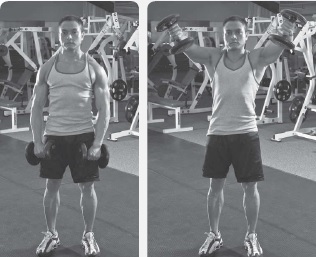
    Empty Can Exercise
    Empty Can Exercise

    B. Movement (Execution)

    The movement should be controlled and focused on lifting within a safe and effective range.

    • Inhale and lightly brace your core
    • Raise both arms upward in a controlled motion
    • Keep the thumbs pointing downward throughout the movement
    • Lift your arms until they reach shoulder height (or slightly below if needed)
    • Avoid lifting too high, especially if it causes discomfort
    • Pause briefly at the top
    • Slowly lower the weights back to the starting position
    • Maintain full control during the entire movement
    • Exhale as you lower the weights

    Movement analogy: Imagine slowly pouring liquid out of two cans as you raise your arms.

    Tempo recommendation: 2 seconds up, 2–3 seconds controlled down

    Want better results? Combine this with other rotator cuff exercises in a structured routine.

    Resistance Curve Insight

    The empty can exercise follows a gravity-based resistance profile, meaning the load on the shoulder increases as the arms move upward away from the body.

    At the starting position, when the arms are hanging down, there is very little tension on the supraspinatus because the dumbbells are aligned with gravity. As you raise your arms in the scapular plane, the moment arm increases, gradually placing more demand on the shoulder muscles.

    The greatest resistance occurs around shoulder height, where the lever arm is longest, and the supraspinatus must work hardest to stabilize and elevate the arm. This is also the most sensitive portion of the movement, especially because the shoulder is internally rotated in the empty can position.

    Because of this, control becomes critical near the top of the range. Any loss of control or excessive weight can increase stress on the shoulder joint, particularly in individuals with limited mobility or pre-existing issues.

    Practical takeaway: The top half of the movement is where the exercise is most demanding—and where proper control and appropriate load matter the most for both effectiveness and safety.

    Muscles Worked in the Empty Can Exercise

    The empty can exercise is primarily designed to target the supraspinatus, one of the four rotator cuff muscles. However, due to the nature of the movement (arm elevation in the scapular plane), several other shoulder muscles also contribute.

    Primary Muscle

    • Supraspinatus – the key muscle responsible for initiating arm elevation and stabilizing the shoulder joint during the movement

    Secondary Muscles

    These muscles assist the movement, especially as the arms approach shoulder height.

    • Middle deltoid – plays a major role in lifting the arms, especially in the upper range
    • Anterior deltoid – contributes to forward elevation and stabilization

    Stabilizers

    These muscles help maintain the proper positioning of the shoulder and scapula.

    • Rotator cuff group (infraspinatus, teres minor, subscapularis) – stabilizes the humeral head
    • Scapular stabilizers (trapezius, serratus anterior) – control shoulder blade movement
    • Core musculature – maintains posture and prevents body sway

    Antagonists

    These muscles perform the opposite action (adduction and downward movement of the arm).

    • Latissimus dorsi
    • Pectoralis major

    Key insight: Although the exercise targets the supraspinatus, the deltoid can easily dominate if the weight is too heavy, making proper load selection essential for correct muscle activation.

    Performance Tips (Coach’s Cues)

    The empty can exercise requires precision and awareness. Because of the internally rotated shoulder position, small adjustments in technique can significantly impact both effectiveness and safety.

    • Use very light weights. This exercise is about control, not strength. If you feel it mostly in your deltoids, the weight is too heavy.
    • Lift in the scapular plane. Keep your arms slightly forward (30–45°), not directly to the side. This aligns the shoulder in a more natural and stable position.
    • Control the range of motion. Stop at shoulder height or slightly below. There is no need to lift higher, especially if it causes discomfort.
    • Avoid excessive internal rotation. Thumbs should point down, but don’t force the rotation aggressively. A moderate position is enough to achieve the desired effect.
    • Keep the shoulders relaxed. Avoid shrugging. Focus on smooth arm movement without involving the neck or upper traps.
    • Move slowly and with control. The lowering phase is especially important. Control the descent to maintain tension and protect the shoulder.
    • Listen to your shoulders. If you feel any pinching or discomfort, reduce the range of motion or switch to the full-can variation.

    Coach’s insight: As a coach working with lifters and athletes, I often modify this exercise or replace it entirely depending on the individual. Some people respond well to it, while others feel immediate discomfort due to shoulder structure. Always prioritize joint comfort over sticking strictly to one variation.

    Common Mistakes

    The empty can exercise is highly technique-sensitive. Because it places the shoulder in an internally rotated position while lifting, even small mistakes can increase joint stress and reduce effectiveness.

    • Using too much weight. This is the most common issue. Heavy dumbbells shift the load to the deltoids and increase the risk of shoulder irritation, especially in the top position.
    • Lifting above shoulder height. Raising the arms too high can reduce the subacromial space and increase the risk of impingement. Shoulder height is typically the safest and most effective range.
    • Incorrect arm angle (not in scapular plane). Lifting directly to the side instead of slightly forward (30–45°) changes the mechanics and can place unnecessary stress on the shoulder.
    • Excessive internal rotation. Forcing the thumbs too far downward can increase joint stress. The rotation should be controlled and not exaggerated.
    • Using momentum. Swinging the weights or using body movement reduces muscle activation and increases injury risk.
    • Shrugging the shoulders. Elevating the shoulders during movement shifts the load away from the target muscles and can create neck tension.
    • Poor posture. Leaning back or arching excessively reduces control and changes the mechanics of the exercise.

    Key takeaway: If the movement feels uncomfortable or strained—especially at the top—it’s usually a sign of poor technique, excessive weight, or unsuitable shoulder positioning.

    Video Demonstration — Proper Empty Can Exercise Technique

    Watching a proper demonstration is especially important for the empty can exercise, because small changes in arm angle, rotation, or range of motion can significantly affect both effectiveness and shoulder safety.
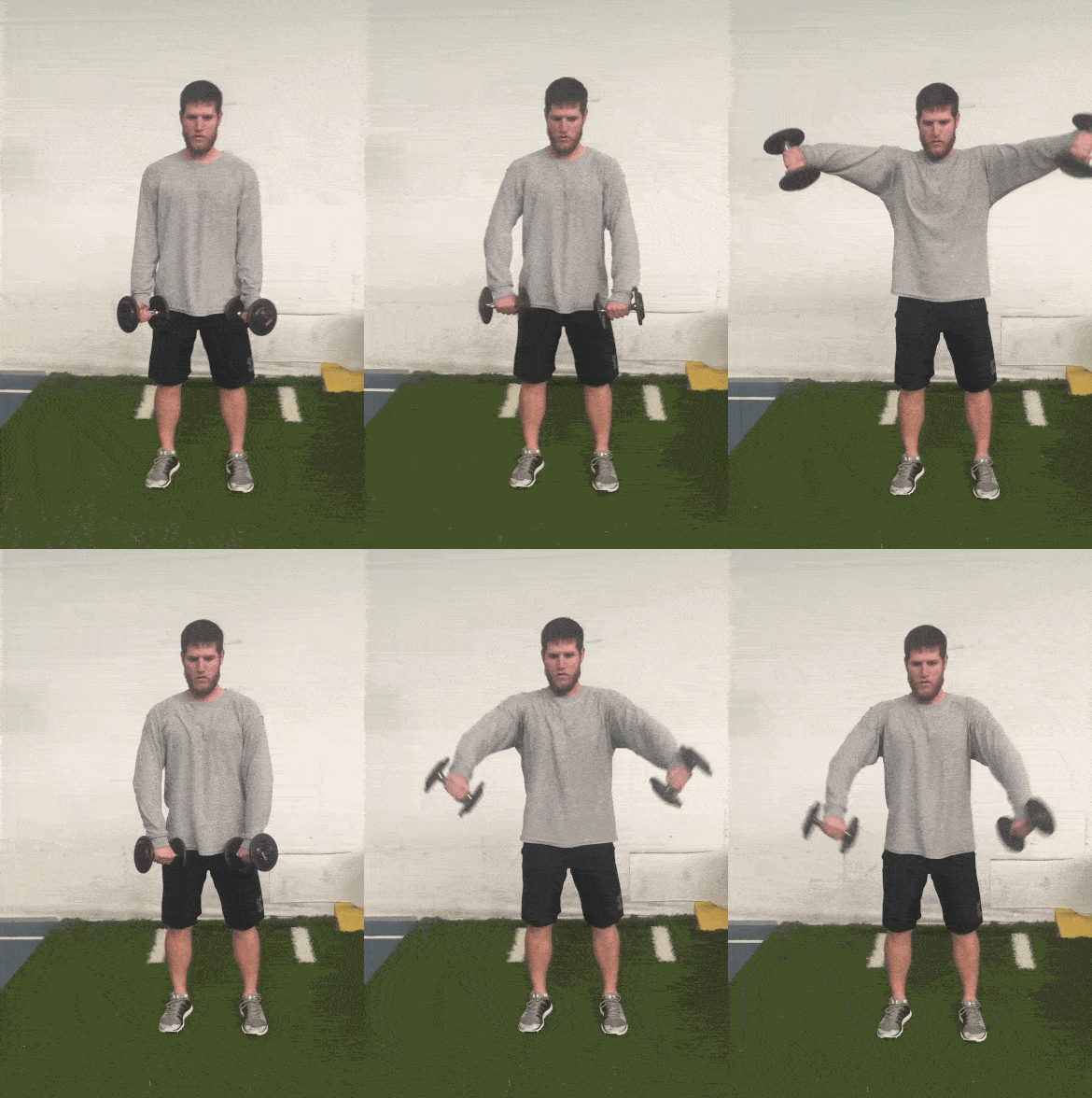
    empty can exercise animation

    In a correct execution, you should notice:

    • The body is standing upright with a stable posture
    • The arms are lifted in the scapular plane (slightly forward, not directly to the side)
    • The thumbs are pointing downward (but not excessively forced)
    • The arms are raised only to shoulder height
    • The movement is slow, controlled, and free of momentum

    Pay close attention to how the shoulders remain relaxed and stable throughout the movement. The motion should come from the shoulder joint, not from swinging the body or shrugging the shoulders.

    What to look for: If the movement appears smooth, controlled, and comfortable—without excessive strain at the top—it’s being performed correctly. If there is visible tension, shrugging, or forced range of motion, the technique needs adjustment.

    Exercise Variations & Alternatives for the Empty Can Exercise

    Because the empty can exercise can place the shoulder in a potentially sensitive position, it’s important to understand the available variations and alternatives. In many cases, these alternatives may be more joint-friendly while still effectively targeting the supraspinatus.

    1) Full Can Exercise (Highly Recommended Alternative)
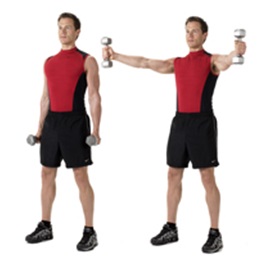
    Full-Cam Supraspinatus Exercise
    Full-Cam Supraspinatus Exercise

    How to perform:

    • Stand upright with a dumbbell in each hand
    • Raise your arms in the scapular plane (30–45° forward)
    • Keep your thumbs pointing upward (not downward)
    • Lift to shoulder height and lower slowly

    Why it works:
    This variation maintains similar supraspinatus activation but reduces stress on the shoulder by preserving more space in the subacromial area. It is generally considered safer for most individuals.

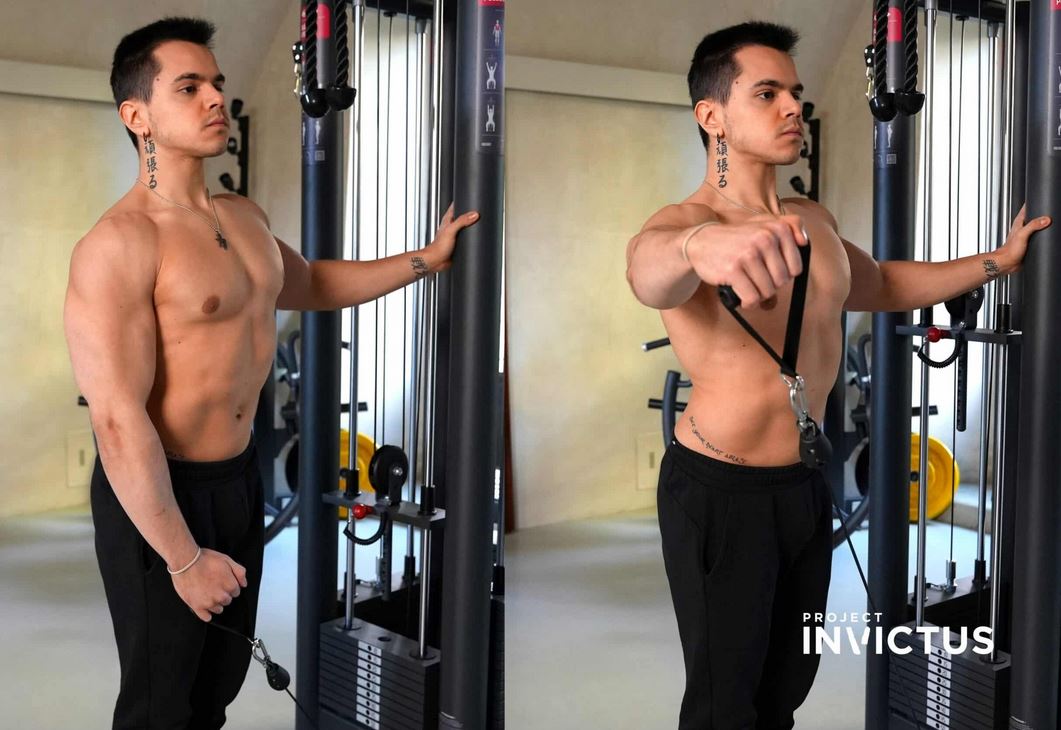
    2) Cable Lateral Raise (Scapular Plane)
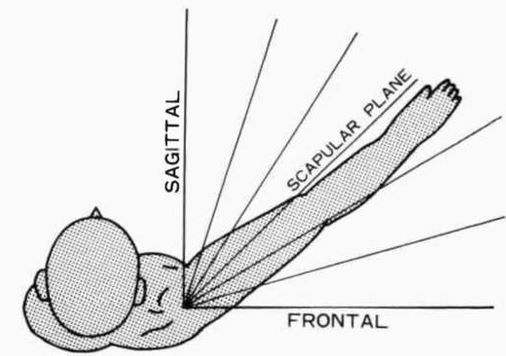
    scapular plane
    scapular plane cable lateral raise

    How to perform:

    • Use a cable machine with a low pulley
    • Raise the arm in the scapular plane. The scapular plane is not directly to the side (90° from the body), but rather positioned approximately 30–45° in front of the body.
    • Keep the movement controlled and aligned

    Why it works:
    Cables provide consistent tension and allow for controlled movement without forcing internal rotation.

    3) Resistance Band Scaption
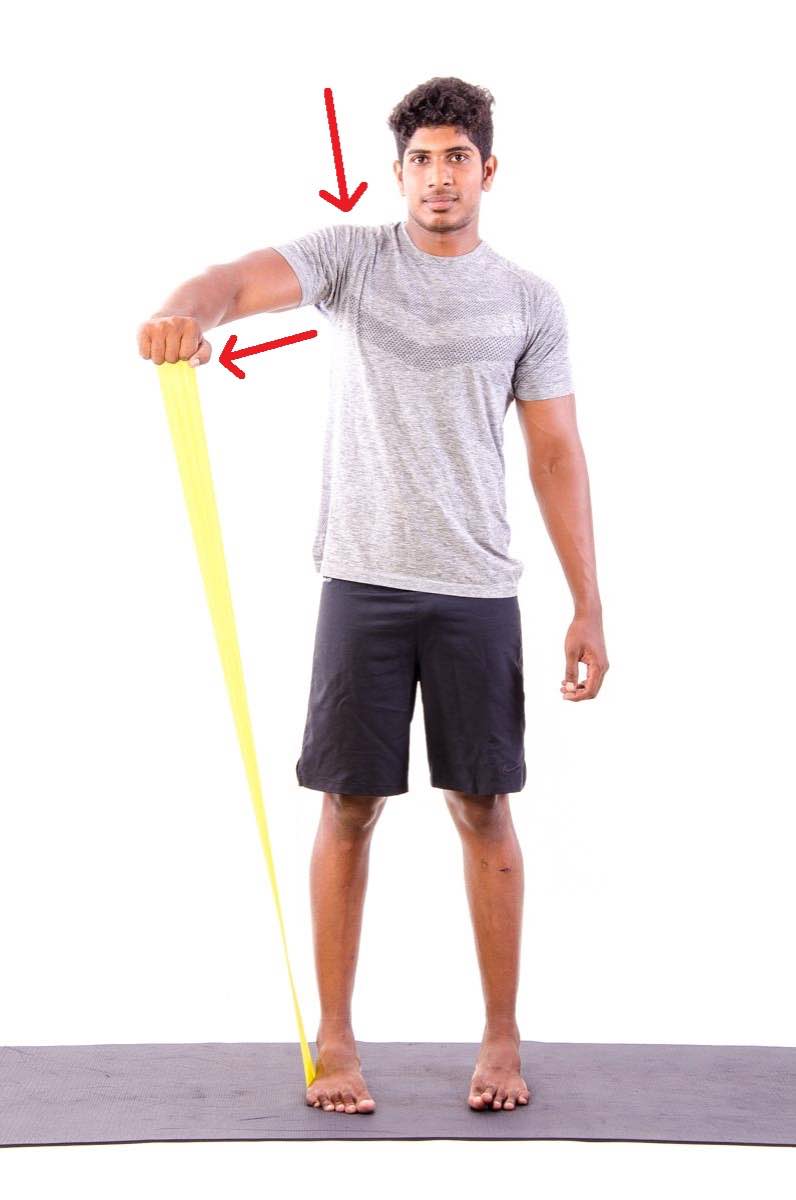
    resistance band scaption

    How to perform:

    • Stand on a resistance band
    • Raise your arms in the scapular plane
    • Maintain control throughout the movement

    Why it works:
    Provides variable resistance and is ideal for rehab or home workouts.

    Key insight: While empty can exercises can be effective, many lifters benefit more from full can or neutral-grip variations due to improved shoulder comfort and a reduced risk of impingement.

    Key Benefits of the Empty Can Exercise

    The empty can exercise can be an effective tool for targeting the supraspinatus and improving shoulder function—when used appropriately and with proper technique. Despite some limitations, it offers several specific benefits.

    • Targets the supraspinatus directly. This exercise is specifically designed to activate the supraspinatus, one of the most important muscles for initiating arm elevation and stabilizing the shoulder.
    • Improves shoulder stability. Helps reinforce control of the humeral head during arm elevation, which is essential for healthy shoulder mechanics.
    • Enhances neuromuscular coordination. Teaches the shoulder to move in a controlled, coordinated manner, especially in the scapular plane.
    • Useful in rehabilitation settings. Often used in controlled rehab environments to restore function and strengthen the rotator cuff.
    • Requires minimal equipment. Only light dumbbells are needed, making it easy to include in most training programs.
    • Promotes awareness of shoulder positioning. Encourages proper alignment and control, which can transfer to other upper-body exercises.
    • Can highlight movement imbalances. If performed correctly, it can reveal differences in control or strength between shoulders.

    Key insight: The effectiveness of the empty can exercise depends heavily on proper technique and individual shoulder mechanics—it is beneficial but not universally ideal.

    Who Should Use This Exercise?

    The empty can exercise can be beneficial for certain individuals, but it is not suitable for everyone. Because of the internally rotated shoulder position, it should be used selectively and with proper awareness.

    • Individuals focusing on supraspinatus activation. This exercise is specifically designed to target the supraspinatus, making it useful for isolating this often-injured rotator cuff muscle.
    • Rehabilitation and corrective training programs. In controlled environments, it can be used to rebuild strength and improve shoulder stability—provided it is performed with proper technique and range of motion.
    • Athletes in overhead sports. Sports like tennis, swimming, and baseball place high demands on shoulder stability. This exercise can help improve control when used appropriately.
    • Lifters with good shoulder mobility and no pain. Those without existing shoulder issues may tolerate the movement well and benefit from its targeted activation.
    • Advanced trainees who understand shoulder mechanics. Because of its potential downsides, this exercise is better suited for individuals who can control positioning and avoid compensations.

    Who should be cautious or avoid it:

    • Individuals with shoulder pain or impingement symptoms
    • Those who feel pinching or discomfort during the movement
    • Beginners with poor control or limited shoulder awareness

    Key takeaway: The empty can exercise is best used selectively. If it feels uncomfortable or unnatural, safer alternatives like the full can variation are often a better choice.

    Empty Can vs Full Can Exercise

    The empty can and full can exercises are very similar in appearance and purpose, but the position of the arm—specifically the rotation of the shoulder—creates important differences in muscle activation and joint stress.

    CriteriaEmpty Can (Thumbs Down)Full Can (Thumbs Up)
    Shoulder rotationInternal rotationNeutral/slight external rotation
    Primary muscleSupraspinatusSupraspinatus
    Deltoid involvementHigherLower
    Subacromial spaceReducedMore preserved
    Impingement riskHigher (in some individuals)Lower
    Joint comfortCan feel uncomfortableGenerally more comfortable
    Safety profileSituationalMore joint-friendly
    Recommended useSelective/advancedGeneral use / preferred
    Table 1: Empty Can vs Full Can Exercise

    Conclusion: Both exercises effectively target the supraspinatus, but they differ significantly in their effects on the shoulder joint. The empty can position (thumbs down) increases internal rotation, which can reduce the subacromial space and potentially increase stress on the shoulder—especially in individuals with limited mobility or pre-existing issues.

    The full can variation (thumbs up) maintains a more natural shoulder position, allowing for better joint alignment and typically greater comfort during the movement. For this reason, it is often recommended as the safer and more practical option for most people.

    Practical takeaway: While the empty can exercise can still be useful in specific cases, the full can variation is generally the better choice for long-term shoulder health and consistent training.

    Coach’s Note

    As a coach working with lifters and athletes, I rarely use the empty can exercise as a default choice. While it does target the supraspinatus effectively, the internally rotated position can feel uncomfortable or even problematic for many people—especially those with tight shoulders or a history of impingement.

    In practice, I almost always start with the full can variation and only introduce the empty can if the individual tolerates it well and understands proper control. The goal is not to force a specific exercise, but to find the variation that allows clean, pain-free movement. If something feels off in your shoulder, that’s your cue to adjust—not push through it.

    Where This Exercise Fits in a Workout

    The empty can exercise is not a primary strength movement, but a targeted shoulder stability exercise. Because of its specific mechanics and potential joint stress, it should be used strategically rather than as a main exercise in a workout.

    As a Warm-Up (Selective Use)

    It can be used to activate the supraspinatus before upper-body training—if it feels comfortable and pain-free.

    • 2–3 sets of 12–15 reps
    • Very lightweight
    • Controlled tempo

    Best used before: shoulder workouts, pressing movements

    As a Prehab / Corrective Exercise

    This is the most appropriate use for most people. It helps improve shoulder control and stability when performed carefully.

    • 2–4 sets of 12–20 reps
    • Focus on perfect form and control
    • Can be paired with full can or external rotation exercises

    Ideal for: improving rotator cuff function

    As a Technique / Awareness Tool

    Because of its unique position, this exercise can help develop awareness of shoulder mechanics.

    • Use a slow tempo
    • Emphasize control and positioning

    Important Guidelines

    • Do not use heavy weights
    • Avoid if you feel shoulder discomfort or pinching
    • Do not prioritize over safer alternatives (like a full can)

    Practical takeaway: The empty can exercise works best as a selective tool for shoulder control—not as a primary strength exercise. Use it only if it feels natural and pain-free.

    Conclusion

    The empty can exercise is a well-known rotator cuff movement that targets the supraspinatus and improves shoulder stability. When performed with proper form and light resistance, it can help develop control and coordination within the shoulder joint.

    However, because the exercise places the shoulder in internal rotation during arm elevation, it may not be suitable for everyone. This position can increase shoulder stress in some individuals, particularly those with limited mobility or a history of discomfort.

    For this reason, the empty can exercise should be used selectively and with awareness. In many cases, the full can variation offers similar benefits with better joint comfort and safety.

    Final takeaway: The empty can exercise can be effective, but it is not essential. Choose it based on how your shoulders respond—and prioritize movements that allow controlled, pain-free training for long-term shoulder health.

    Share. Facebook Twitter Pinterest LinkedIn Tumblr Email WhatsApp
    krunoslav
    • X (Twitter)

    Hey! My name is Kruno, and I'm the owner and author of Bodybuilding Wizard. I am a licensed fitness trainer with a Ph.D. in kinesiology. Throughout my career, I have dedicated myself to helping individuals achieve their health and fitness goals through personalized training programs. In addition to my academic qualifications, I have completed various specialized courses, including certifications in nutrition and strength training, which have further enhanced my ability to provide comprehensive fitness guidance. I started this website back in late 2014, and it has been my pet project ever since. My goal is to help you learn proper weight training and nutrition principles so that you can get strong and build the physique of your dreams!

    Related Posts

    Rotator Cuff Exercises: The Complete Guide to Shoulder Strength, Stability & Injury Prevention

    Band External Rotation: Proper Form, Muscles Worked & Shoulder Rehab Benefits

    Supraspinatus: Complete Functional Anatomy Guide for Lifters

    Leave A Reply Cancel Reply

    You must be logged in to post a comment.

    WE ARE SOCIAL
    • Facebook 3.6K
    • Twitter
    • YouTube 134
    • Instagram
    RECENT POSTS
    October 10, 2026

    Decline Machine Press (Hammer Strength Decline Press): How To, Muscles Worked, Benefits & Alternatives

    October 10, 2026

    Ring Dips: How To, Muscles Worked, Benefits & Alternatives

    October 6, 2026

    Reverse-Grip Incline Dumbbell Press: How To, Muscles Worked, Benefits & Alternatives

    October 4, 2026

    Landmine Chest Press: How To, Muscles Worked, Benefits & Alternatives

    October 3, 2026

    Reverse-Grip Bench Press: How-To, Muscles Worked, Benefits & Alternatives

    RECENT COMMENTS
    • Justin Dew on Designing your own home gym
    • krunoslav on How Skeletal Muscles Are Named: A Simple Guide to Muscle Names
    • Christina on How Skeletal Muscles Are Named: A Simple Guide to Muscle Names
    • igtropin on Stiff-Leg Deadlift: Proper Form, Muscles Worked & Hamstring Growth Guide
    • teragon labs on Barbell Back Squat: Proper Form, Benefits, Muscles Worked & Expert Tips
    LATEST GALLERIES

    Subscribe to Updates

    Join our mailing list to receive the latest updates from our team.

    ABOUT
    ABOUT

    We are a group of bodybuilding enthusiasts and this is our effort to have all the details about bodybuilding on a single website. We strive to educate and inform our visitors so that they can make the correct training, nutrition, and supplement decisions on their own. Bodybuilding Wizard will make your dream body your reality and take you to a whole new level!

    POPULAR POSTS
    April 2, 2014

    Lying Leg Curl: Complete Guide to Hamstring Isolation, Strength & Muscle Growth

    February 18, 2019

    How Skeletal Muscles Are Named: A Simple Guide to Muscle Names

    March 28, 2014

    Free weights: The main tool for building muscles

    BODYBUILDING WIZARD
    Bodybuilding Wizard Footer Logo
    Facebook X (Twitter) Instagram Pinterest YouTube
    • About
    • Authors
    • Editorial Policy
    • Write for us
    • Privacy
    • Contact
    • Terms of Use
    • Advertising
    • FAQ
    Copyright © 2014-2026 BodybuildingWizard. All rights reserved. Powered by WordPress. Made with love and lots of caffeine.

    Type above and press Enter to search. Press Esc to cancel.

    Sign In or Register

    Welcome Back!

    Login to your account below.

    Lost password?